Pavlos Prosalentis ( Greek Παύλος Προσαλέντης ; January 28, 1784 , Kerkyra - 1837 , Kerkyra ) - Greek sculptor and painter . Characterized by art historians as the first professional sculptor of modern Greece [1] .
| Pavlos Prosalentis | |
|---|---|
| Greek Αύλος Προσαλέντης | |
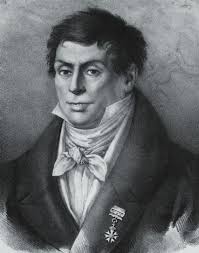 | |
| Date of Birth | 1784 |
| Place of Birth | Corfu , Ionian Islands |
| Date of death | 1837 |
| Place of death | Corfu |
| Allegiance |  Greece Greece |
| Genre | sculpture |
| Study | Academy of St. Luke |
Biography
Pavlos Prosalentis was born on January 28, 1784 on the island of Corfu .
Occurred from a noble Byzantine family, who found refuge on the islands under the Venetian control, after the Fall of Constantinople .
His teachers were on Kerkyra Italian, woodcarver, Ludovico Bossi and, later, in 1805 , in Rome , the famous Italian sculptor Canova, Antonio [2] Together with him, in the "Academy of St. Luke", at Canova , studied his countryman and friend Trivolis-Pieris Dimitris.
Art School of Corfu
Prosalentis returned in 1806 to Corfu, where he began his artistic career. In the period 1808-1809, he took part in the creation, initiated by the French, to whom the island passed, the "Academy of Sciences".
In 1811 he created a private “Art School”, the first in the Greek lands.
When Prosalentis created his own art school, in the Greek lands occupied by the Ottomans, sculpture was limited to traditional marble carving (mainly on the island of Tinos ) [3] . The British Governor Thomas Maitland (Thomas Maitland (British Army officer)), immediately after his appointment to the Ionian Islands , transformed the private art school Prosalentis in 1815 into the Public Academy of Fine Arts . In 1819, 80 students studied at the Academy.
Lord Guilford, after the creation of the Ionian Academy, suggested that Prosalentis be taught there. Prosalentis accepted the offer, but declined the offer. Instead, he suggested using this amount to make copies of sculptures and fragments of the Parthenon , broken off from the Parthenon by Elgin and taken to England. Prosalentis intended to use copies for school purposes. Since, ultimately, the British sent him a large number of copies free of charge, Prosalentis used this amount as a scholarship to his students. Despite the fact that Propalentis himself was not a well-to-do person, he gave free lessons and asked for payment for material and transportation for many of his works. Prosalentis also enriched the family archaeological collection and created a collection of coins from ancient Egypt and Greece. For his multifaceted contribution to art, Prosalentis was awarded by the British authorities in 1820, the Order and became a knight of the "Order of Saints Michael and George."
Sculptor
In the period 1806-1808 Prosalentis worked together with Dimitrios Trivolis-Pieris. Their main works were mainly busts and works on mythological themes, which expressed their classical education. After the death of his friend, Prosalentis worked alone, performing his most significant work from 1815 until his death. Many of his works were destroyed or disappeared. Others were transported to England. Significantly fewer works remained on the Ionian Islands.
In 1815, he performed the bust of the “Demonic Plato ”, which is now in the National Gallery of Athens . With his inscription ("ΕΡΜΟΓΛΥ / ΦΙΚΗΣ / ΑΥΘΙΣ ΤΕΧΝΗΣ / ΚΟΡΚΥΡΑΙΩΝ / ΔΕΙΓΜΑ ΠΡΩΤΟΝ / ΤΟΥΤΟ ΠΑΥΛΟΣ / ΕΠΟΙΕΙ ΑΩΙΕ"), Prosalentius himself describes this work as the initial line of sculpture of the newest Greece.
In addition to the mythological themes, his works included monuments and busts, as well as reliefs on pedestals of monuments.
Using the tradition of casting church bells living in Corfu, Prosalentis cast, in copper, in 1831 , the statue of the governor of the Ionian Islands, Frederick Adam (Frederick Adam), installed in Mont Repos Corfu, a bust of Thomas Metland and the reliefs on the pedestals of monuments of the two governors.
Other works
In addition to his own work, Prosalentius did drawings for other people's work. He owns a drawing of the statue of "Britain", installed on the facade of the Palace of Saints George and Michael, as well as reliefs with symbolic images of the "Seven Islands" on the pediment of the same palace.
Prosalentis was the author of the costumes of teachers and students of the Ionian Academy. He was executed 4 reliefs on the pedestal of the bust of King George IV of England by the English sculptor Francis Chantry .
Artist
Prosalentis was also a painter, but his paintings are less known and significantly inferior to the number of his sculptural works. The theme of his painting is mostly religious. The two most famous works of Prosalentius - "St. Dmitry" and "St. George" are in the monastery of the Virgin of Corfu (Platiter). His son, Prosalentis, Spiridon (1830–1897) became a famous artist [4] . His grandsons, Prosalentis, Pavlos (junior) and Prosalentis, Emilios also became famous artists.
Illness and death
Continuous casting work caused irreparable damage to health and led to the death of Prosalentis. He died at the age of 53, February 1, 1837. [5]
The role of Pavlos Prosalentis in the art of modern Greece
Art historians consider Pavlos Prosalentis one of the most significant personalities of his era, the first professional sculptor and founder of the first art school in modern Greece.
Historians believe that Prosalentis freed the sculpture from the secondary and decorative role that was given to it, after the establishment of the domination of Christianity, and contributed to the revival of the sculpture.
His bust of Plato (1815) is considered to be the first in chronology professional sculpture of modern Greece and, at the same time, a characteristic example of his technique. Together with his friend and collaborator Dimitrios Trivolis-Pieris (1785–1808) and his pupil Ioannis the Baptist Kalosguros (1794–1878), Prosalentis was one of the three representatives of the semi- school of Greek sculpture, which remained independent of the sculpture of continental Greece and had no heirs Kefalini Georgy Bonanos (1863-1940). [6]
Links
- ↑ National gallery
- ↑ Στέλιος Λυδάκης, "Παύλος Προσαλέντης, o πρεσβύτερος", στο: Στέλιος Λυδάκης (επιμ.), Οι Έλληνες ζωγράφοι τομ.4ος, Λεξικό των Ελλήνων ζωγράφων και χαρακτών (16ος-20ος αιώνας), εκδ. Μέλισσα, Αθήνα, σελ.367
- ↑ National gallery
- Οροσωπικότητες κοινωνικής - πνευματικής ζωής
- ↑ Ιστοσ. Θνική Πινακοθήκη, ροσαλέντης Παύλος
- ↑ National gallery
Sources
- Μαρίνος Καλλιγάς, Ζωγραφική, γλυπτική, χαρακτική, Ιστορία του Ελληνικού Έθνους, Εκδοτική Αθηνών, τομ. ΙΓ (1977), σελ.529
- Στέλιος Λυδάκης, "Παύλος Προσαλέντης, ο πρεσβύτερος", στο: Στέλιος Λυδάκης (. Επιμ), Οι Έλληνες ζωγράφοι τομ.4ος, Λεξικό των Ελλήνων ζωγράφων και χαρακτών (16ος-20ος αιώνας), εκδ. Μέλισσα, Αθήνα, σελ.367
Links
- Ιστοσ. Θνική Πινακοθήκη, ροσαλέντης Παύλος