The species was first scientifically described in 1853. The holotype is a female 38 cm long, caught off the coast of Tasmania [3] . Species epithet comes from the word lat. vario - "diverse" [4] .
Volatile collar sharks live in the eastern Indian Ocean. They are endemic to the temperate waters of the southern coast of Australia ( Victoria , Tasmania, Western and Southern Australia). These sharks are found along the continental shelf at a depth of up to 180 m [3] .
Variable collar sharks have a thin elongated body and a short snout. The base of the first dorsal fin is located behind the free tip of the ventral fins. The mouth is located before the eyes, there are narrow nasal grooves, the nostrils are surrounded by folds. Slit-like eyes are elongated horizontally. Behind the eyes are tiny splatter . Dorsal fins of the same size, spines at their base absent. The pectoral fins are rounded. The anal fin is smaller than the second dorsal fin. The caudal fin is asymmetric, with an ventral notch at the edge of the upper lobe. The lower lobe is absent. Around the gill zone there is a characteristic “necklace” representing a lot of white spots on a plain dark background. The body, tail and caudal fin cover dark marks. The fins are covered with large dark spots [3] .
Volatile collar sharks breed by egg- born [3] . These sharks lead a nocturnal lifestyle, and during the day they hide in shelters [5] .
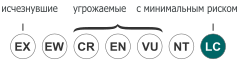
These sharks are not subject to commercial fishing. Occasionally, by- catch is caught in fishing nets. The International Union for Conservation of Nature has assigned this species a conservation status of “Least Concerns” [5] .