Luigi Mancinelli ( Italian: Luigi Mancinelli ; February 5, 1848 , Orvieto , Papal States - February 2, 1921 , Rome , Kingdom of Italy ) - Italian composer , conductor and cellist . [one]
| Luigi Mancinelli ital. Luigi Mancinelli | |
|---|---|
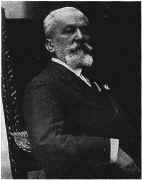 Luigi Mancinelli | |
| basic information | |
| Full name | Luigi Mancinelli |
| Date of Birth | February 5, 1848 |
| Place of Birth | Orvieto , Papal Region |
| Date of death | February 2, 1921 (72 years old) |
| Place of death | Rome , Kingdom of Italy |
| Buried | |
| A country |  , Kingdom of Italy , Kingdom of Italy |
| Professions | composer , conductor , cellist |
| Instruments | cello |
| Genres | classical music |
Content
Biography
Luigi Mancinelli was born on February 5, 1848 in Orvieto, in the family of a music lover and member of the city orchestra Raffaele Mancinelli and Giacinta Ferracci. He was the brother of conductor Marino Mancinelli .
In 1863 he was admitted to the chapel of the cathedral in Orvieto, where he played the double bass. After moving to Florence, he studied under Jeffte Sbolchi ( cello ) and Teodulo Mabellini ( composition ). In 1867 he was accepted as a cellist in the orchestra of the Pergola Theater in Florence, from where in 1871 he transferred to the theaters of Argentina and Apollo in Rome. In 1874, he was accepted as the main cellist at the Morlacca Theater in Perugia, where he made his debut in the same year as the conductor with the opera Aida Giuseppe Verdi . Since that time he worked as a conductor of orchestras in the theaters of Rome and Bologna.
It was one of the first great Italian conductors, known not only in Italy, but also abroad - in Spain, Great Britain, France, Germany, Austria, the USA, Argentina. His conductor and composer debut at the international level took place at concerts in Paris at the 1878 World Exhibition, during which three symphonic interludes by Luigi Mancinelli were performed. He conducted the opening of opera houses in New York and Buenos Aires.
In 1881, he married Louise Cora, a singer and artist who came from an aristocratic family. In the same year he became director of the Bologna Musical Lyceum , but in 1886, after the failure of the opera Izora from Provence ( Italian: Isora di Provenza ), he resigned and left the city.
Despite the support of the publishing house Ricordi, his composing work was not successful. He also wrote movie music. From 1907 and 1921 he wrote eleven works, including the opera Midsummer Night's Dream ( Italian: Sogno d'una notte d'estate ).
Luigi Mancinelli died on February 2, 1921 in Rome. The largest theater of the city of Orvieto - Teatro Mancinelli was named after him.
Creative heritage
The composer's creative heritage includes 4 operas , 3 stage works, 2 cantatas , a number of symphonic compositions.
Notes
- ↑ Alberto Pironti. Mancinelli, Luigi (Italian) . Enciclopedia Dantesca (1970) . Treccani.it.
Links
- Lorenzo Mattei. Mancinèlli, Luigi . Treccani.it. - Dizionario Biografico degli Italiani - Volume 68 (2007). (ital.)
- Mancinèlli, Luigi . Treccani.it. - Enciclopedie on line. (ital.)