
Catholicism or Catholicism ( lat. Catholicismus from Greek καθολικός “universal”, “universal”) is the largest number of followers in Christianity , uniting more than 1.3 billion people [1] .
The Catholic Church was formed during the first millennium A.D. e. in the territory of the Western Roman Empire and played an important role in the history of Western civilization [2] . It is distinguished by organizational centralization and the largest number of adherents among Christian churches. The Roman Catholic Church, adhering to the Western liturgical rites , together with twenty-three Eastern Catholic churches, constitutes a single Catholic church, which considers itself to be a Church with all the fullness of truth.
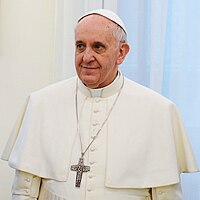
The Catholic Church sees itself as the only catholic church , the founder and Head of which is Jesus Christ . The visible head of the Catholic Church is the Pope, who heads the Holy See and the city-state of the Vatican in Rome .
The main provisions of the creed are set forth in the Nicene Creed , the Nicene-Tsaregradsky Creed (usually with a filioque ), the Chalcedon Creed , the Apostolic and Afanasyevich Creeds, as well as in the decrees and canons of the Ferraro-Florentine , Trent and First Vatican Councils. A generalized doctrine is set forth in the Catechism of the Catholic Church .
Content
- 1 Name
- 2 History
- 2.1 Middle Ages and the Renaissance
- 3 Distribution
- 4 Organization and management
- 4.1 Clear
- 5 creed
- 5.1 Sacraments
- 5.2 Life after death
- 5.3 Differences from other Christian creeds
- 6 worship
- 6.1 Characteristics of worship in the Latin rite
- 7 Social Doctrine
- 8 Schismatic groups based on Catholic traditions
- 9 See also
- 10 notes
- 11 Literature
- 12 Links
Title
The word “Catholic” (or “ catholic ” in a different pronunciation), which has become the generally accepted name for the church, united around the Roman throne, is borrowed from the Greek language ( Greek καθολικός - “universal”, from other Greek καθ όλη - “throughout "Or" according to everything "). According to the interpretation of the Catechism of the Catholic Church, this term is understood as "universal", in the sense of "comprehensive", "universal" [3] [~ 1] .
For the first time in relation to the church, the term “ ἡ Καθολικὴ Εκκλησία ” was applied around 110 in a letter from St. Ignatius to the inhabitants of Smyrna and is fixed in the Nicene Creed . After the split of the church in 1054 , it was divided into the Catholic Church in the West with a center in Rome and the Orthodox Church in the East with a center in Constantinople . Breaks in the Eucharistic communion of the Constantinople and Roman Chairs occurred more than once, beginning in the middle of the first millennium BC. e. but they were all overcome.
After the Reformation in the 16th century, the church used the term “Catholic” to distinguish itself from the various Protestant groups that separated from it. The name "Catholic Church" appears in the name of the Catechism of the Catholic Church. In addition, this term was used by Pope Paul VI when signing the sixteen documents of the Second Vatican Council [4] [5] [~ 2] .
History
Christianity is based on the teachings of Jesus Christ , who lived and preached in the 1st century AD (" apostolic times") in the province of Judea of the Roman Empire. The creed of the Church, according to the conviction of its adherents, dates back to that time. At the beginning of our era, Christianity spread throughout the Roman Empire, despite the persecution and conflicts with pagan priests. Emperor Constantine legalized Christianity in 313, and in 380 it became the state religion. The barbarian conquerors who seized the territory of the empire in the 5th and 6th centuries, and many of whom had already adopted Arian Christianity by that time, as a result converted to Catholicism. The modern Roman Catholic Church views the entire history of the Church before the Great Schism of 1054 as its history.
The Catholic doctrine teaches that the modern Catholic Church is a continuation of the early Christian community founded by Jesus: [6] this church was "proclaimed in prototypes from the very beginning of the world, wonderfully prepared in the history of the Israeli people and in the Old Testament and founded in recent times, appeared through the outpouring of the Holy Spirit will come to a glorious end at the end of the ages. ” [7] Just as Eve was created from the rib of a sleeping Adam , the Church was born from the pierced heart of Christ who died on the Cross [8] .
Middle Ages and Renaissance
Catholicism had a dominant influence on Western civilization from late antiquity to the beginning of the New Time [2] . Thanks to her support, Romanesque, Gothic, Renaissance, Mannerist and Baroque styles arose in art, architecture and music [9] . Many Renaissance figures, such as, for example, Rafael Santi , Michelangelo , Leonardo da Vinci , Sandro Botticelli , Fra Beato Angelico , Tintoretto , Titian , were supported by the Catholic Church [10] .
In the XI century, by the efforts of Pope Gregory VII, the right to elect popes was assigned to the college of cardinals . The meeting of cardinals at which such elections were held became known as the conclave ( lat. Con clave - with a key).
Distribution
Catholicism is the largest (according to the number of believers) branch of Christianity. According to 2017 data , there were 1.333 billion Catholics in the world [1] . The five largest countries in the world in terms of the total Catholic population are Brazil , Mexico , the Philippines , the USA and Italy [11] .
Catholicism is the main religion in many European countries ( Italy , France , Spain , Portugal , Austria , Belgium , Lithuania , Poland , Czech Republic , Hungary , Slovakia , Slovenia , Croatia , Ireland , Malta , etc.). In total, in 21 European countries, Catholics make up the majority of the population, in Germany , the Netherlands and Switzerland - half [12] . Catholicism is common in the Western Hemisphere throughout South and Central America , in Mexico , Cuba , Canada, and the United States .
In Asia, Catholics prevail in the Philippines and in East Timor , a large number of Catholics are in Vietnam , South Korea and China .
In the Middle East there are many Catholics in Lebanon ( Maronites , etc.)
According to various estimates, from 110 to 175 million Catholics live in Africa [13] . The official figures of the Catholic Church for 2017 are read by 234 million Catholics in Africa [1] .
In Australia and New Zealand, the number of Catholics prevails over Protestants.
Until 1917 , according to official figures, more than 10 million Catholics lived in the Russian Empire (mainly in the Kingdom of Poland ). According to the census of 1897, the total number of Roman Catholics was 11 million 468 thousand people [14] . In modern Russia ( 2005 ), there are 426 parishes [12] , a quarter of them do not have temple buildings. Estimates of the total number of Catholics in Russia vary from 200 thousand to one and a half million people. Reference "Catholic-hierarchy" gives a figure of 789 thousand [14] . About 4.7 million Catholics live in Ukraine (mainly in the west of the country), of which more than 4 million are Catholics of the Eastern rite [12] . There are more than a million Catholics in Belarus [12] .
Greek Catholicism (or the Byzantine rite Catholicism ) is widespread among Belarusians, Slovaks, Hungarians, Romanians, Ukrainians, Ruthenians and Melkites of Syria , Lebanon and the USA ; as well as in small numbers among Albanians, Greeks, Bulgarians, Croats and Russians. Catholics of other Eastern rites live in India , the Middle East, Egypt , Ethiopia , Eritrea , Iraq and the diaspora.
Eastern Catholic churches use one of the eastern liturgical rites in church life. They are under the jurisdiction of the Pope through the Congregation for the Eastern Churches - one of the branches of the Roman Curia , formed in 1862 as part of the Congregation for the Promotion of the Faith ( Propaganda Fide , now the Congregation for the Evangelization of Peoples ), engaged in the missionary activities of the Church. In 1917, it was transformed by Pope Benedict XV into an autonomous Congregation.
The Eastern Catholic churches are in complete religious and liturgical communion with the Holy See. They use their own canon law , which is different from that adopted for the Latin Church, and therefore the term “Churches of their own right” ( sui iuris ) is often applied to them. In 1990, the Apostolic See published the Code of Canons of the Eastern Churches , containing the rules of canon law common to all Catholic churches of the Eastern rites.
Organization and Management
The highest, complete, direct, universal and ordinary authority in the Catholic Church is vested in the Pope [15] . The advisory bodies under the pope are the college of cardinals and the synod of bishops . The administrative apparatus of the Church is called the Roman Curia , which includes congregations , courts, and other institutions. The Pope’s Episcopal Chair together with the Curia form the Holy See , located in the independent Vatican City . The Holy See is a subject of international law.
The World Catholic Church consists of the Latin Rite Church and the Eastern Catholic Churches , which practice one of the eastern liturgical rites and have the status of “ Sui iuris ” (their right). In practice, this is expressed in the fact that these churches, remaining in communion with the Pope in Europe and America, have their own hierarchical structure and their own canonical law, usually completely sharing Catholic dogma. But some of the East Catholic churches in Africa and Asia also include myaphysites and Nestorians along with supporters of the orthodox Diophelic Chalcedonian Christology of Rome . The largest Eastern Catholic churches are headed by the Patriarch or High Archbishop . The Eastern Patriarchs and supreme archbishops are equated with the cardinal bishops of the Latin rite and occupy a place in the Catholic hierarchy immediately after the pope.
The main separate territorial unit is a diocese headed by a bishop . Some important dioceses have historically been called archdioceses . Several dioceses (and archdioceses) may constitute a metropolis or church province. The center of the metropolis necessarily coincides with the center of the archdiocese, thus the metropolitan in the Catholic Church is necessarily the archbishop. In some countries ( Italy , USA , etc.), the metropolis is united in church regions. Bishops of most countries are united in a conference of Catholic bishops , which has great authority in organizing the church life of the country.
Dioceses consist of parishes headed by parish priors subordinate to the bishop. The priest in the parish can be assisted by other priests called vicars . Sometimes nearby parishes are united into deans .
A special role in the Catholic Church is played by the so-called institutions dedicated to God’s life , that is, monastic orders and congregations ; as well as societies of apostolic life . Institutes of consecrated life have their own charters (approved by the pope); their territorial organization does not always correlate with the church diocesan system. Local units of monastic orders and congregations are sometimes subordinate to local diocesan bishops, and sometimes directly to the pope. A number of orders and congregations have a single chapter (Order General, General Rector) and a clear hierarchical structure; others are an association of fully autonomous communities.
Collegiality in governing the Church ( extra Ecclesiam nulla salus ) is rooted in apostolic times. The Pope exercises administrative authority in accordance with the Code of Canon Law and may consult with the World Synod of Bishops. Diocesan clerics (archbishops, bishops, etc.) operate within the framework of ordinary jurisdiction, that is, legally related to the office. A number of prelates and abbots also have this right, and priests within their parish and in relation to their parishioners.
Clear
Only men enter the clergy . There are white clergy (consisting of priests serving diocesan churches) and black clergy ( monasticism ). As in all other historical churches , the clergy is clearly separated from the laity and is divided into three degrees of the priesthood:
- bishop (bishop);
- priest (priest);
- deacon .
Church clergy (ministers of the Church who are not ordained during the sacrament of the priesthood ) have two degrees - acolytes and readers - and do not belong to the clergy.
Celibacy is obligatory for priests and bishops of the Latin rite. In the XX century, the institution of a permanent deaconate was restored, for permanent deacons celibacy is not necessary, but such a deacon will no longer be able to become a priest. In the Eastern rites, celibacy is mandatory only for bishops and monks.
As of the end of 2014, the total number of Catholic bishops in the world amounted to 5,237 people, the number of priests - 415,792, more than 44.5 thousand permanent deacons. The number of members of male monastic orders that are not priests amounted to more than 54 thousand people, women nuns - 682 thousand. In 2014, 116,939 seminarians were trained at Catholic seminaries [16] .
Creed
A creed is based on scripture and scripture . Catholic dogma is given in the Nicene Creed and described in detail in the Catechism of the Catholic Church , canon law is systematized and set forth in the Code of Canon Law .
Holy Tradition includes canons - a set of rules of the apostles and Ecumenical Councils , liturgical texts authorized by the church, theological creations of the Church Fathers , the lives of the saints , as well as the customs of the church. Moreover, Tradition, in the understanding of patristic literature, "is the life of the Holy Spirit in the Church." According to the dogmatic Constitution of the second Vatican Council “Dei Verbum ” “Holy Tradition and Holy Scripture constitute the single sacred pledge of the Word of God entrusted to the Church” [17] . The concept of “teaching the church” (the Magisterium) is closely connected with Holy Scripture and Holy Tradition. According to the Catholic doctrine, the “teaching of the church” has the obligation of authentic interpretation of both Scripture and Tradition, and the teaching does not exceed the Word of God, but serves it [17] .
The Catholic faith declares that there is one eternal God in three persons: God the Father, God the Son (Jesus Christ) and God the Holy Spirit; The church is "... this is the continued presence of Jesus on earth." The Church teaches that salvation reliably exists only in the Catholic Church, but recognizes that the Holy Spirit can use other Christian communities to bring people to salvation [18] [19] .
Sacraments
There are seven sacraments in Catholicism:
- Epiphany
- church marriage
- anointing (confirmation)
- Eucharist
- confession
- bare blessing
- priesthood
According to the teachings of the Roman Catholic Church, sacraments are sacraments in which Catholics see signs of the presence of God, and the ways of sending God's grace to all those who accept the faith. The sacrament is the visible image of invisible grace. With the exception of baptism, sacraments can only be performed by the Catholic clergy. Baptism is the only sacrament that can be performed by any Christian, and, if necessary, even by an unbaptized person who has the required intention, but only if it is not possible to call a priest or the baptized person is in danger of death [20] .
Belief in life after death is part of the Catholic faith; “The four last things” - death, judgment, resurrection, heaven or hell [21] . The Catholic Church teaches that immediately after death, the soul of every person falls into God's judgment , based on the actions of his earthly life. Also in the Catholic faith there is the doctrine of the Last Judgment , when Christ will judge all people at once. Это решение, в соответствии с католическим учением, положит конец человеческой истории и ознаменует начало новой и улучшенной Божьей справедливостью. Основы, по которым будет оцениваться душа каждого человека, подробно изложены в Евангелии от Матфея [22] [23] [24] .
Отличия от других христианских вероучений
Католическое вероучение имеет ряд доктринальных положений, которые отличают её от учения других христианских конфессий:
- филиокве (filioque) — догмат об исхождении Святого Духа как от Отца, так и от Сына (но не как от разных источников);
- догмат о Непорочном зачатии Девы Марии и догмат о Её телесном вознесении;
- учение о чистилище ;
- учение об индульгенциях ;
- особо широкое почитание Девы Марии ( hyperdulia, ὑπερδουλεία ), хотя оно распространено также в Русской, Кипрской православных и в несторианских церквах;
- как у православных, почитание мучеников, святых и блаженных при различии между поклонением, подобающим одному лишь Богу ( latria, λατρεία ), и почитанием святых ( dulia, δουλεία );
- утверждение монархической власти Римского епископа над всею Церковью как преемника апостола Петра ;
- централизованность церковной организации (схожая черта с некоторыми протестантскими движениями), в отличие от автокефальности православных поместных церквей;
- утверждение о безошибочности учительства Папы Римского в вопросах веры и нравственности, провозглашаемого ex cathedra ;
- нерасторжимость таинства брака ; существует лишь возможность признания недействительности брака.
Богослужение
В католичестве существуют несколько обрядов. Преобладающим обрядом является латинский или римский, распространённый по всей планете. Прочие Западные обряды ограничены территориальными рамками или рамками монашеских орденов. В северо-западной Ломбардии , кроме города Монца , около 5 миллионов человек практикуют амвросианский обряд , в городе Брага (Португалия) — брагский обряд , а в городе Толедо и ряде других испанских городов — мосарабский обряд , в которых есть ряд отличий от литургии римского обряда. Восточные обряды употребляются в богослужении восточнокатолических церквей .
Характерные черты богослужения в латинском обряде
Подробнее смотри статьи: Месса , Литургия часов
- добавление «и Сына» ( филиокве ) в Никео-Константинопольский символ веры
- обязательный целибат священства
- крещение , в большинстве случаев, через возлияние воды на голову, а не погружение в воду
- совершение миропомазания только епископом (священник может преподать это таинство лишь в исключительных случаях, например, в случае смертельной опасности для принимающего таинство)
- употребление для Евхаристии , как правило, пресного хлеба , а не квасного
- причастие мирян или Телом, или Телом и Кровью Христа — и то и другое считается причастием во всей полноте; причастие священства только Телом и Кровью
- крестное знамение слева направо, а не справа налево как в византийском обряде (в том числе у православных), при этом знамение, чаще всего, совершается пятью пальцами, как символ пяти ран Христовых
- Ноги Иисуса Христа на распятии скрещены (в отличие от православия, где они лежат параллельно друг другу). При этом на католическом распятии правая нога Иисуса Христа лежит поверх левой
Богослужение до Второго Ватиканского собора традиционно совершалось на латинском языке . После данного собора совершается также и на национальных языках.
Литургия латинского обряда, месса — главное богослужебное действие, на котором совершается таинство евхаристии . Состоит из Литургии Слова (главный элемент которой — чтение Библии ) и Евхаристической Литургии. Причащение в латинском обряде до Второго Ватиканского собора осуществлялось под одним видом для мирян и под двумя видами для священнослужителей. После Второго Ватиканского собора всё большее распространение получает практика причащения под двумя видами и мирян. Для таинства используется пресный хлеб — гостия .
Литургический год начинается с Адвента (Рождественского поста). Среди периодов литургического года выделяются два постных периода — Адвент и Великий Пост , два праздничных — рождественское и пасхальное время. Прочие периоды литургического года объединены под названием « рядовое время ». Выделяется три ранга церковных праздников — «память» (святого или события), «праздник» и «торжество». Два главных праздника литургического года — Пасха и Рождество празднуются с октавой, то есть в течение восьми дней после самого торжества ( Октава Пасхи , Октава Рождества ). Три дня, предшествующих пасхальному воскресенью — Великий четверг , Великая пятница и Великая суббота представляют собой вершину богослужебного годового цикла и объединены под названием Пасхальное триденствие .
Ежедневное чтение Литургии часов (бревиария) обязательно для священнослужителей и монашествующих. Миряне могут использовать бревиарий в своей личной религиозной практике.
Внелитургические богослужения включают в себя пассийные службы, в том числе Крестный путь , поклонение Святым Дарам , молитвенные процессии, храмовое общинное чтение молитв (главным образом, Розария ) и т. д.
По традиции в латинском обряде дети начинают приступать к таинству евхаристии в возрасте 7-10 лет, первое Причастие ребёнка становится семейным торжеством. Конфирмация ( миропомазание ) проводится над подростками в возрасте 13 лет и старше.
У христиан-католиков (как западного, так и восточного обрядов) принято приветствовать друг друга восклицанием « Слава Иисусу Христу !», на которое, как правило, следует ответ «Во веки веков! Аминь!», а в некоторых общинах «Во веки слава!» или «Навеки слава!».
Социальная доктрина
Социальная доктрина католичества наиболее развита по сравнению с другими христианскими конфессиями и течениями. В XVII веке немецкий теолог (1626), по другим исследованиям первое авторство принадлежит Марку Антонию Доминису (1617) [25] , выдвинул знаменитую максиму: « in necessariis unitas, in dubiis libertas, in omnibus caritas » — «в необходимом — единство, в сомнениях — свобода, во всём — любовь» [26] . Известный теолог кардинал Йозеф Хёффнер определил католическое социальное учение как «совокупность социально-философских (взятых, в сущности, из социальной природы человека) и социально-теологических (взятых из христианского учения о Спасении) знаний о сущности и устройстве человеческого общества и о вытекающих отсюда и применимых к конкретным общественным отношениям нормам и задачам строя».
Католическое социальное учение опиралось сначала на августинизм , а позже — на томизм и основывается на ряде принципов, среди которых выделяются персонализм и солидаризм . Католическая церковь предложила свою трактовку теории естественного права, сочетающую религиозные и гуманистические идеи. Первичный источник достоинства и прав личности — Бог , однако, сотворив человека как существо телесное и духовное, личностное и социальное, Он наделил его неотъемлемыми достоинством и правами. Это стало результатом того, что все люди стали равны, уникальны и причастны Богу, но имеют свободную волю и свободу выбора. Грехопадение повлияло на природу человека, но не лишило его естественных прав, а поскольку его природа до окончательного Спасения человечества неизменна, то даже Бог не властен отнять или ограничить свободу человека. По мнению Иоанна Павла II , «человеческая личность есть и должна оставаться принципом, субъектом и целью всех социальных обществ». В решениях Второго Ватиканского Собора и энцикликах Иоанна Павла II отстаивалась необходимость разделения властей и правового характера государства, при котором первичны законы, а не воля уполномоченных должностных лиц. В то же время, признавая различие и самостоятельность природы и цели Церкви и государства, католические теологи подчёркивают необходимость их сотрудничества, поскольку общей целью государства и общества является «служение одним и тем же». Одновременно католичество противостоит тенденциям закрытости государств, то есть противопоставляет «национальные традиции» общечеловеческим ценностям.
Социальное учение восточных католических церквей принципиально не отличается от социальной доктрины Римско-католической церкви, хотя некоторые поместные церкви имеют свой собственный подход к социальным проблемам, обусловленный историческими и общественно-культурными реалиями народов. В частности, Украинская Греко-Католическая Церковь делает особенный акцент на биоэтике и этике политических отношений [27] .
Раскольнические группы на основе католических традиций
Старокатолики откололись от Католической церкви вследствие неприятия некоторых решений Первого , и, как следствие, — Второго Ватиканского собора . Кроме того, существуют маргинальные группировки, называющие себя католиками, но непризнаваемые в качестве таковых Святым Престолом. Многие такие группы доктринально стоят на консервативной христианско-фундаменталистской платформе, фактически представляют собой свою собственную организационную автономию и доктринально являются тем или иным вариантом православия или протестантизма.
| Неримский католицизм | Маргинальный католицизм |
|---|---|
| Старокатолицизм : Старокатолическая церковь Германии , Старокатолическая церковь Австрии , Старокатолическая церковь Нидерландов , Христианско-католическая церковь Швейцарии , Католическая апостольская церковь Европы , Польская национальная католическая церковь , Польская национальная католическая церковь Америки | Апостольский католицизм : Католическая апостольская церковь (Германии и Англии ), Новоапостольская церковь (Германии, ЮАР и др.) |
| Консервативный католицизм : Бразильская католическая апостольская церковь , Католическая американская православная церковь , Мексиканская православная католическая апостольская церковь , Католическая апостольская галликанская церковь , Старороманская католическая церковь Франции , Старокатолическая мариавитская церковь Польши , Африканский легион Марии ( Кения ), Национальная католическая апостольская церковь | Либеральный католицизм : Православная католическая церковь, Автокефальная галликанская католическая церковь , Апостольская гностическая церковь (все 3 - во Франции), Либеральная католическая церковь США |
| Реформированный католицизм : Филиппинская независимая церковь, Чехословацкая гуситская церковь | |
| Англороманский католицизм ( англокатолицизм ) : Свободная протестантская епископальная церковь Великобритании , Свободная протестантская епископальная церковь Нигерии , Африканская православная церковь Зимбабве , Африканская православная церковь ЮАР | |
| Католические церкви, возглавляемые независимыми епископами («episcopi vagantes») : Католическая апостольская православная церковь Востока ( Алуэтт-Писсак , Жирика , Франция), Смешанный независимый главный приход Восток-Запад (Беэмское миссионерское аббатство, Франция) |
See also
- Кафоличность церкви [28] [29] [30] [31] [32]
- Список католических орденов и конгрегаций
- Святая инквизиция
Notes
- Comments
- ↑ Как поясняет Катехизис, церковь вселенская, потому что в ней присутствует Христос. Отдельные Церкви, то есть, в первую очередь, диоцезы (епархии) — полностью вселенские через общение с одной из них — Римской Церковью. Эти отдельные Церкви «созданы по образу Вселенской Церкви»
- ↑ Подпись папы появляется в латинской версии.
- Sources
- ↑ 1 2 3 Presentation of the Pontifical Yearbook 2019 and the Annuarium Statisticum Ecclesiae 2017, 06.03.2019
- ↑ 1 2 O'Collins , p. v (preface).
- ↑ Катехизис Католической Церкви, § 830—831 . Дата обращения 1 марта 2016. Архивировано 25 мая 2013 года.
- ↑ Катехизис Католической Церкви . — Libreria Editrice Vaticana, 2003.
- ↑ Документы Второго Ватиканского собора . Дата обращения 19 мая 2013. Архивировано 25 мая 2013 года.
- ↑ Vatican congregation reaffirms truth, oneness of Catholic Church . Catholic News Service. Дата обращения 17 марта 2012.
- ↑ Догматическая конституция о Церкви II Ватиканского собора «Lumen gentium». Глава 1-2
- ↑ Катехизис Католической Церкви, ст. 766 Архивная копия от 15 февраля 2008 на Wayback Machine
- ↑ Woods, pp. 115-27
- ↑ Duffy, p. 133.
- ↑ Country Comparison to the World // CIA World Factbook
- ↑ 1 2 3 4 Статистика сайта catholic-hierarchy
- ↑ Данные сайта adherents.com
- ↑ 1 2 Первая всеобщая перепись населения Российской империи 1897 г. Распределение населения по вероисповеданиям и регионам Архивная копия от 24 октября 2012 на Wayback Machine
- ↑ Кодекс канонического права, 331—335
- ↑ В мире насчитывается 1,3 млрд католиков
- ↑ 1 2 Dei Verbum. &10
- ↑ John Paul II, Pope Laetamur Magnopere . Vatican (1997). Дата обращения 9 марта 2008. Архивировано 25 мая 2013 года.
- ↑ Катехизис Католической Церкви, § 777—778 . Дата обращения 3 января 2016. Архивировано 25 мая 2013 года.
- ↑ Катехизис Католической Церкви, § 1256 . Дата обращения 18 мая 2013. Архивировано 25 мая 2013 года.
- ↑ Краткий катехизис . Дата обращения 19 мая 2013. Архивировано 25 мая 2013 года.
- ↑ Катехизис Католической Церкви, § 1021—1022, 1051 . Дата обращения 3 января 2016. Архивировано 25 мая 2013 года.
- ↑ Катехизис Католической Церкви, § 1023—1029, 1042—1050 . Дата обращения 3 января 2016. Архивировано 25 мая 2013 года.
- ↑ Катехизис Католической Церкви, § 1030—1032, 1054 . Дата обращения 3 января 2016. Архивировано 25 мая 2013 года.
- ↑ Friedrich Meinecke. Neue Briefe und Dokumente. — Oldenbourg Verlag, 2012.
- ↑ Выражение часто приписывают Августину Блаженному .
- ↑ Социальное учение УГКЦ . Дата обращения 19 мая 2013. Архивировано 25 мая 2013 года.
- ↑ История философии — Виндельбанд В. — Google Books
- ↑ Католицизм — Рашкова Р Т — Google Books
- ↑ История христианской церкви. Том IV. Средневековое христианство. От Григория … — Филип Шафф — Google Books
- ↑ Письма о должностяхъ священнаго сана. Изданіе четвёртое.. — Alexander STOURZAS — Google Books
- ↑ КАТОЛИКИ — Словарь Кольера — Русский язык
Literature
- На русском языке
- Барсов Н. И. ,. Католическая церковь // Энциклопедический словарь Брокгауза и Ефрона : в 86 т. (82 т. и 4 доп.). - SPb. , 1890-1907.
- Браницкий А. Г. , Корнилов А. А. Религии региона . — Н. Новгород : ННГУ имени Н. И. Лобачевского , 2013. — 305 с. Архивировано 28 июля 2014 года. Архивная копия от 28 июля 2014 на Wayback Machine
- Волконский А. М. Католичество и Священное Предание Востока . — Париж, 1933.
- Густерин П. Католическое духовенство по законодательству Российской империи. — Саарбрюккен, 2014. — ISBN 978-3-659-63693-6
- Иоанн Павел II . Верую в Церковь Единую, Святую, Вселенскую и Апостольскую
- Католическая энциклопедия . — М.: Изд. францисканцев, 2005. — ISBN 5-89208-054-4
- Р. Конрад Вера Католической Церкви
- Лортц Й. История Церкви. — М.: Христианская Россия, 1999. — ISBN 5-87468-065-9
- Омэнн Дж. Христианская духовность в католической традиции. — Рим - Люблин : Изд. Святого Креста, 1994.
- Католицизм / Сказкин С. Д. , Мчедлов М. П. // Италия — Кваркуш. — М. : Советская энциклопедия, 1973. — ( Большая советская энциклопедия : [в 30 т.] / гл. ред. А. М. Прохоров ; 1969—1978, т. 11).
- Табак Ю. Православие и католичество. Основные догматические и обрядовые расхождения.
- Католицизм / Тюшагин В. В. (Социальное учение), Ткаченко А. А. (Богослужение), Ванеян С. С. , Николаева О. А. (Архитектура и изобразительное искусство) // Большая российская энциклопедия : [в 35 т.] / гл. ed. Ю. С. Осипов . — М. : Большая российская энциклопедия, 2004—2017.
- Цимбаева Е. Н. Русский католицизм. Забытое прошлое российского либерализма.
- In other languages
- Barry, Rev. Msgr. John F (2001). One Faith, One Lord: A Study of Basic Catholic Belief. Gerard F. Baumbach, Ed.D. ISBN 0-8215-2207-8 .
- Bauer, Susan Wise (2010). The History of Medieval World: From the Conversion of Constantine to the First Crusade. Norton. ISBN 978-0-393-05975-5 .
- Bethell, Leslie (1984). The Cambridge history of Latin America. Cambridge University Press . ISBN 0-521-23225-2 .
- Bokenkotter, Thomas (2004). A Concise History of the Catholic Church. Doubleday. ISBN 0-385-50584-1 .
- Bunson, Matthew (2008). Our Sunday Visitor's Catholic Almanac. Our Sunday Visitor Publishing. ISBN 1-59276-441-X .
- Bruni, Frank; Burkett, Elinor (2002). A Gospel of Shame: Children, Sexual Abuse, and the Catholic Church. Harper Perennial. p. 336. ISBN 978-0-06-052232-2 .
- Robert A. Burns. Roman Catholicism after Vatican II. 2001
- Chadwick, Henry (1990), «The Early Christian Community», in McManners, John, The Oxford Illustrated History of Christianity , Oxford University Press , pp. 20-61, ISBN 0-19-822928-3
- Chadwick, Owen (1995). A History of Christianity. Barnes & Noble. ISBN 0-7607-7332-7 .
- Clarke, Graeme (2005), «Third-Century Christianity», en Bowman, Alan K., Peter Garnsey and Averil Cameron. The Cambridge Ancient History dua eldono, volumo 12: The Crisis of Empire, AD 193—337 , Cambridge University Press , pp. 589—671, ISBN 978-0-521-30199-2 .
- Lisa M. Coleman et al. Basics of the Catholic Faith. 2000
- William J. Collinge. Historical Dictionary of Catholicism. 1997
- Collins, Michael; Price, Mathew A. (1999). The Story of Christianity. Dorling Kindersley. ISBN 0-7513-0467-0 .
- Collinson, Patrick (1990). «The Late Medieval Church and its Reformation (1400—1600)». en John McManners. The Oxford Illustrated History of Christianity. Oxford University Press . ISBN 0-19-822928-3 .
- Cook, Bernard A. (2001). Europe since 1945: an encyclopedia, Volume 2. Taylor & Francis. ISBN 978-0-8153-4058-4 .
- Coriden, James A; Green, Thomas J; Heintschel, Donald E. (1985). The Code of Canon Law: A Text and Commentary, Study Edition. Paulist Press. ISBN 978-0-8091-2837-2 .
- HW Crocker. Triumph — The Power and the Glory of the Catholic Church
- G Daly, Transcendence and Immanence: A Study in Catholic Modernism and Integralism
- Marcellino D'Ambrosio. Exploring the Catholic Church: An Introduction to Catholic Teaching and Practice
- Davidson, Ivor (2005). The Birth of the Church. Monarch. ISBN 1-85424-658-5 .
- Deák, István (2001). Essays on Hitler's Europe. University of Nebraska Press . ISBN 978-0-8032-6630-8
- Duffy, Eamon (1997). Saints and Sinners, a History of the Popes. Yale University Press . ISBN 0-300-07332-1 .
- Dussel, Enrique (1981). A History of the Church in Latin America. Wm. B. Eerdmans. ISBN 0-8028-2131-6 .
- Faulk, Edward (2007). 101 Questions and Answers on Eastern Catholic Churches. Paulist Press. ISBN 978-0-8091-4441-9 .
- Fahlbusch, Erwin (2007). The Encyclopedia of Christianity. Wm. B. Eerdmans. ISBN 0-8028-2415-3 .
- Bryan T. Froehle, Mary L. Gautier. Catholicism USA: A Portrait of the Catholic Church in the United States. 2000
- Froehle, Bryan; Mary Gautier (2003). Global Catholicism, Portrait of a World Church. Orbis books; Center for Applied Research in the Apostolate, Georgetown University . ISBN 1-57075-375-X .
- Hamnett, Brian R (1999). Concise History of Mexico. Port Chester, NY: Cambridge University Pres . ISBN 0-521-58120-6 .
- Hastings, Adrian (2004). The Church in Africa 1450—1950. Oxford University Press . ISBN 0-19-826399-6 .
- Herring, George (2006). An Introduction to the History of Christianity. Continuum International. ISBN 0-8264-6737-7 .
- P. Hughes. A Popular History of the Catholic Church
- Johansen, Bruce (2006). The Native Peoples of North America. Rutgers University Press . ISBN 0-8135-3899-8 .
- Johnson, Lonnie (1996). Central Europe: Enemies, Neighbors, Friends. Oxford University Press . ISBN 978-0-19-510071-6 .
- Kirkwood, Burton (2000). History of Mexico. Westport, CT: Greenwood Publishing Group, Incorporated. pp. 101—192. ISBN 978-1-4039-6258-4 .
- Koschorke, Klaus; Ludwig, Frieder; Delgado, Mariano (2007). A History of Christianity in Asia, Africa, and Latin America, 1450—1990. Wm B Eerdmans Publishing Co. ISBN 978-0-8028-2889-7 .
- Kreeft, Peter (2001). Catholic Christianity. Ignatius Press . ISBN 0-89870-798-6 .
- Hans Kung. The Catholic Church: A Short History (Modern Library Chronicles)
- Lahey, John (1995). «Roman Curia». in McBrien, Richard; Attridge, Harold. The HarperCollins Encyclopedia of Catholicism. HarperCollins . ISBN 978-0-06-065338-5 .
- Le Goff, Jacques (2000). Medieval Civilization. Barnes & Noble. ISBN 0-631-17566-0 .
- Leith, John (1963). Creeds of the Churches. Aldine Publishing Co. ISBN 0-664-24057-7 .
- MacCulloch, Diarmaid (2010). Christianity: The First Three Thousand Years. Viking. ISBN 978-0-670-02126-0 . origine publikigita en 2009 fare de Allen Lane, kiel A History of Christianity
- MacCulloch, Diarmaid (2003). The Reformation. Viking. ISBN 0-670-03296-4 .
- MacMullen, Ramsay (1984), Christianizing the Roman Empire: (AD 100—400). New Haven, CT: Yale University Press , ISBN 978-0-585-38120-6
- Markus, Robert (1990), «From Rome to the Barbarian Kingdom (339—700)», en McManners, John, The Oxford Illustrated History of Christianity , Oxford University Press , pp. 62-91, ISBN 0-19-822928-3
- Marthaler, Berard (1994). Introducing the Catechism of the Catholic Church, Traditional Themes and Contemporary Issues. Paulist Press. ISBN 0-8091-3495-0 .
- Marvin, John Wade (2008). "The Occitan War: a military and political history of the Albigensian Crusade, 1209-1218." Cambridge University Press . ISBN 0-521-87240-5
- Richard P. McBrien, ed. The HarperCollins Encyclopedia of Catholicism. 1995
- McDonough, Elizabeth. (1995). Cardinals, College of. en McBrien, Richard; Attridge, Harold. The HarperCollins Encyclopedia of Catholicism. HarperCollins. ISBN 978-0-06-065338-5 .
- JL McKenzie. The roman catholic church
- McManners, John (1990). "The Expansion of Christianity (1500-1800)." en McManners, John. The Oxford Illustrated History of Christianity. Oxford University Press. ISBN 0-19-822928-3 .
- Morris, Colin (1990). Christian Civilization (1050-1400). en McManners, John. The Oxford Illustrated History of Christianity. Oxford University Press . ISBN 0-19-822928-3 .
- Murray, Chris (1994). Dictionary of the Arts. Helicon Publishing Ltd. ISBN 0-8160-3205-X .
- Noble, Thomas; Strauss, Barry (2005). Western Civilization. Houghton Mifflin Company. ISBN 978-1-84603-075-8 .
- Norman, Edward (2007). The Roman Catholic Church, An Illustrated History. University of California Press . ISBN 978-0-520-25251-6 .
- O'Collins, Gerald; Farrugia, Maria (2003). Catholicism. Oxford University Press . ISBN 978-0-19-925995-3 .
- John O'Grady. Roman Catholic Church: Its Origin & Nature
- Payne, Stanley G (2008). Franco and Hitler: Spain, Germany and World War II. Yale University Press. ISBN 0-300-12282-9 .
- Phayer, Michael (2000). The Catholic Church and the Holocaust, 1930-1965. Indiana University Press . ISBN 0-253-33725-9 .
- Pollard, John Francis (2005). Money and the Rise of the Modern Papacy, 1850-1950. Cambridge University Press . ISBN 978-0-521-81204-7 .
- Rhodes, Anthony (1973). The Vatican in the Age of the Dictators (1922-1945). Holt, Rinehart and Winston. ISBN 0-03-007736-2 .
- Riley-Smith, Jonathan (1997). The First Crusaders. Cambridge University Press . ISBN 978-0-511-00308-0 .
- Ring, Trudy; Salkin, Robert M; La Boda, Sharon (1996). International Dictionary of Historic Places Volume 3: Southern Europe. Chicago: Fitzroy Dearborn. p. 590. ISBN 978-1-884964-02-2 .
- Schama, Simon (2003). A History of Britain 1: At the Edge of the World ?. BBC Worldwide. ISBN 0-563-48714-3 .
- Scheina, Robert L. (2007). Latin America's Wars: The Age of the Caudillo. Brassey's. ISBN 1-57488-452-2 .
- Schreck, Alan (1999). The Essential Catholic Catechism. Servant Publications. ISBN 1-56955-128-6 .
- Stacy, Lee (2003). Mexico and the United States. Marshall Cavendish ISBN 0-7614-7402-1 .
- Solt, Leo Frank (1990). Church and State in Early Modern England, 1509-1640. Oxford University Press . ISBN 0-19-505979-4 .
- Vatikano, Centra Statistika Oficejo (2007). Annuario Pontificio (Jarlibro Papa, itale). Libreria Editrice Vaticana. ISBN 978-88-209-7908-9 .
- Vidmar, John (2005). The Catholic Church Through the Ages. Paulist Press. ISBN 0-8091-4234-1 .
- Wilken, Robert (2004). "Christianity". in Hitchcock, Susan Tyler; Esposito, John. Geography of Religion. National Geographic Society . ISBN 0-7922-7317-6 .
- Woods Jr, Thomas (2005). How the Catholic Church Built Western Civilization. Regnery Publishing, Inc. ISBN 0-89526-038-7 .
Links
- Official website of the Holy See
- Catechism of the Catholic Church
- Catholic Encyclopedia
- Yu. Tobacco. Orthodoxy and Catholicism. The main dogmatic and ritual differences
- Catholic Media Portal: Video, Music, Documents and Images
- Saints and Blessed of the Catholic Church
- Prince A. Volkonsky. Catholicism and sacred tradition of the East
- Catholics in Russia