Ramses II the Great - the pharaoh of Ancient Egypt from the XIX dynasty , who ruled around 1279 - 1213 BC. e.
| Pharaoh of Egypt |
Ramses II |
|---|
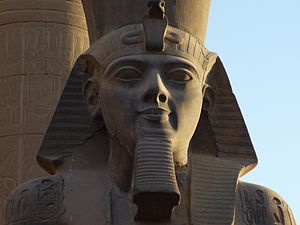
The head of the statue of Ramses II in the Luxor Temple . Egypt |
| Dynasty | XIX dynasty |
|---|
| Historical period | New kingdom |
|---|
| Predecessor | Network I |
|---|
| Successor | Merneptah |
|---|
| Chronology |
- 1279 - 1213 BC e. (66 years) - according to J. von Bekerat, KA Kitchen, R. Krauss and W. Helck
- 1279 - 1212 years. BC e. (67 years) - by E.F. Vente
- 1290 - 1224 BC e. (66 years) - according to E. Hornung
- 1290 - 1223 years BC e. (67 years) - according to R. Parker
|
|---|
| Father | Network I |
|---|
| Mother | Thuja |
|---|
| Spouse | 1) Nefertari Merenmouth
2) Meritamon
3) Isitnofret
4) Bent-Anat
5) Nebettavi
6) Henutmir
7) Maathornefrura |
|---|
| Children | sons: Amonherkhopschef , Haemuas , Merneptah |
|---|
| Burial place | KV7 ( Valley of the Kings ) |
|---|
|
The son of Seti I and Queen Touilly . One of the greatest pharaohs of ancient Egypt. He was mainly awarded the honorary title of A-Nakhtu, that is, "Winner" . Monuments and papyri often call him the national nickname Sesu or Sessu. This is undoubtedly the same name that is mentioned in the tradition of Manetho in this way: "Setosis, which is also called Ramesses . " Among the Greeks, this name turned into Sezostris , the hero of legendary legends and the world conqueror.
The number of its monuments of varying degrees of conservation in Egypt and Nubia is extremely large.
Beginning of Reign
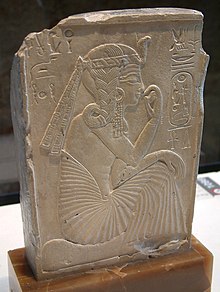
Image of Ramses II as a child with a
lock of youth ,
LouvreAccession to the throne
Ramses II ascended the throne on the 27th day of the third month of the season of Shemu (i.e., Drought). The young king was about twenty years old at that time.
Despite the huge number of monuments and documents bearing the name of Ramses II, the history of his more than 66-year reign is covered in the sources rather unevenly. Dated documents exist for each year of his reign, but they are extremely heterogeneous: from religious monuments to honey pots from Deir al-Medina .
Victory over Nubians and Libyans
The change of the pharaohs could, as in previous times, inspire the hope of successful rebellion among the oppressed peoples. From the first months of Ramses' reign, the image of the drive of the Canaanite prisoners to the pharaoh was preserved, but it is somewhat arbitrary. But the rebellion in Nubia was, apparently, so significant that to suppress it required the personal presence of the pharaoh. The country was pacified.
During this campaign, only one sparsely populated area of Irem killed 7 thousand people. The governor of Ramses in Nubia was able in the first months of his reign to give him a rich tribute and was blessed for this with awards and royal favor. Perhaps at the very beginning of his reign, Ramses also had to deal with the Libyans. In any case, the image of his triumph over his western neighbor, relating to the first months of his reign, has been preserved.
Defeat Sherdans
Not later than the 2nd year of rule, Ramses defeated the Sherdans - representatives of one of the " peoples of the sea " (they believe that they subsequently settled the island of Sardinia ). Egyptian inscriptions speak of the enemy’s ships and their defeat during sleep. From this we can conclude that the case took place at sea or on one of the Nile branches and that the warlike sherdans were taken by surprise by the Egyptians.
Captured sherdans were included in the ranks of the Egyptian army. They felt, apparently, not bad at the service of the pharaoh, since later images show them fighting in Syria and Palestine in the front ranks of the warriors of Ramses [1] .
Success in the Interior
Certain successes have been achieved in domestic affairs. In the autumn of the first year of his reign, the first priest Amon Ramses put the loyal Nebunenef who previously held the post of the first priest of the Tinian god Onuris (An-Hara) in his vacant place. In the third year of Ramses’ reign, at a depth of 6 meters, he finally managed to find water in the gold mines in Wadi Alaki , which significantly increased gold production there.
Name
| Name type | Hieroglyphic writing | Transliteration - Russian-language vowels - Translation |
|
"Choral name"
(like a chorus ) | | | | kȝ-nḫt mrj-Mȝˁt - ka-nakht meri-Maat -
"A powerful bull loving the truth" |
| | identical to previous |

 | C177 |
|
| | identical to previous |
| | kȝ-nḫt mrj-Mȝˁt nb-ḥȝbw-sd-mj-jt.f-Ptḥ-Tȝṯnn -
“A mighty bull, beloved by truth, lord of the holidays cheb-sed , similar to his father Ptah” |
| | kȝ-nḫt mrj-Rˁ |
| | kȝ-nḫt mrj-Rˁ ptpt-ḫȝst-nb (t) -ḫr-ṯbwj.f |
| | kȝ-nḫt ḥˁj-ḥr-Mȝˁt |
| | kȝ-nḫt sqȝj-Wȝst |
| | kȝ-nḫt sḫm-pḥtj |
| | kȝ-nḫt wsr-pḥtj |
| | kȝ-nḫt wr-pḥtj |
| | kȝ-nḫt zȝ-Jtm |
| | kȝ-nḫt ˁḥȝ-ḥr-ḫpš.f |
| | kȝ-nḫt wr-nḫtw ˁḥȝ-ḥr-ḫpš.f |
| | kȝ-nḫt ˁȝ-nsyt |
| | kȝ-nḫt ˁȝ-šfjt |
| | kȝ-nḫt wṯz-Mȝˁt |
| | kȝ-nḫt wsr-ḫpš |
| | kȝ-nḫt spd-ˁbwj |
| | kȝ-nḫt qȝj-ḥḏt |
| | kȝ-nḫt ḥwj-tȝ-nb |
| | kȝ-nḫt ṯz-tȝwj |
| | kȝ-nḫt mn-jb sḫm-pḥtj |
| | kȝ-nḫt wr ḥȝbw-sd mrj-tȝwj |
| | kȝ-nḫt sḏ-Sṯtjw |
| | kȝ-nḫt n-Rˁ sḏ-Sṯtjw |
| | kȝ-n-ḥqȝw |
| | wr-ḥȝbw (-sd) -mj-Tȝtnn |
|
"Nebty name"
(as the lord of the double crown) | | | | mk-Kmt wˁf.-ḫȝswt |
| | mk-Kmt wˁf.-ḫȝswt Rˁ-msj-nṯrw grg-tȝwj -
"The brave man of Egypt, who inherited foreign lands, the offspring of the gods, who put in order the two lands" |
| | šzp-nṯrj-n-Ḫprj |
| | wr-šfjt mk-Kmt -
wer-shefit-mek-Kemet -
"Dear Defender of Egypt" |
| | smnḫ-mnw-m-Jpt-rsj (t) -n-jt.f-Jmn-dj-sw-ḥr-nst.f |
| | ḥˁj-ḥr-Mȝˁt-mj-ȝḫtj |
| | ˁḥȝ-n-ḥḥw mȝj-sḫm-jb |
| | ˁḥȝ-ḥr-ḫpš.f mk-mšˁw.f |
| | sḫr-pḥw-sw jnj-pḥwj-tȝ |
|
Golden Name
(like the Golden Choir) | | | | wsr-rnpwt ˁȝ-nḫtw - “Strong for years, great victories” |
| | identical to previous |
| | ˁȝ-ḫpš mry-tȝwj - aa-hepesh meri-taui -
“Proactive and beloved in both countries” |
| | wsr-ḫpš mrj-tȝwj |
| | wḫȝ-mj-jmj-Wȝst |
| | ḥḥ-ȝḫwt-n-msj-sw |
| | sḫm-ḫpš dr-pḏt-9 |
| | wr-nḫtw-ḥr-ḫȝst-nbt |
| | wr-fȝw sḫm-pḥtj |
| | wˁf.-ḫȝswt dr-bšṯw |
|
"Throne name"
(as king of Upper and Lower Egypt) | | | | wsr-Mȝˁt-Rˁ - user-maat-Ra -
“Mighty is the truth of Ra ” |
| | identical to previous |
| | identical to previous |
| | identical to previous |
| | wsr-Mȝˁt-Rˁ tjt-Rˁ |
| | wsr-Mȝˁt-Rˁ ḥqȝ-Wȝst - user-maat-Ra heka-Wasset -
“The strong truth of Ra, the lord of Thebes ” |
| | wsr-Mȝˁt-Rˁ jwˁ-Rˁ |
| | wsr-Mȝˁt-Rˁ mrj-Rˁ |
| | wsr-Mȝˁt-Rˁ stp.n-Rˁ |
| | identical to previous |
| | identical to previous |
| | wsr-Mȝˁt-Rˁ nb-ḫpš |
| | identical to previous |
| | wsr-Mȝˁt-Rˁ stp.n-Rˁ pḥtj-mj-Mnṯw |
| | wsr-Mȝˁt-Rˁ |
|
"Personal name"
(like son of Ra ) | | | | Rˁ-msj-sw mrj-Jmn - Ra-Mesi-su Meri-Amon -
“Born Ra Beloved Amon ” |
| | identical to previous |
| | identical to previous |
| | identical to previous |
| | identical to previous |
| | identical to previous |
| | identical to previous |
| | identical to previous |
| | identical to previous |
| | identical to previous |
| | identical to previous |
| | Rˁ-msj-sw mrj-Jmn nṯr-ḥqȝ-Jwnw - Ra-Mesi-su Meri-Amon neter-heka-Iunu—
“Born Ra , Beloved Amon , Divine Ruler of Heliopolis ” |
| | identical to previous |
| | identical to previous |
| | Rˁ-msj-sw mrj-Jmn mrwtj-mj-Jtm |
| | Rˁ-msj-sw mrj-Jmn wr-mnw |
| | Rˁ-msj-sw mrj-jmn |
| | ss (j) -sw mrj-jmn |
| | ss-sw |
| | s-sw |
Diodorus of Sicily calls Ramses II Osimandius ( dr. Greek Ὀσυμανδύας ) [2] , apparently building this name on the throne name of Ramses - User-maat-Ra (or “Uashmuariya”, as the Semites wrote).
The Hittite War
First trip
Having strengthened the state in this way, Ramses began to prepare for a big war with the Hittites . Since Ramses called the “second expedition” the campaign, which ended with the Battle of Kadesh in the 5th year of reign, it can be assumed that the stela, established in the 4th year in Nahr al-Kelb, north of Beirut , is a reminder of the first campaigns. Despite the fact that almost the entire text has been lost, the image of Ra-Khorakhti , holding out his hand to the king, leading the captive, allows us to talk about a certain military event.
Apparently, in the 4th year of rule, Ramses took his first trip to Western Asia, aimed at subjugating the sea coast of Palestine and Phenicia , as a necessary prerequisite for the further successful fight against the Hittites. During this campaign, Ramses took the city of Berith and reached the Eleutheros River (El-Kebira, "The Dog River"), where he placed his memorial stele. The fact that Nahr al-Kelb is located on the territory occupied by the Amurra tribes probably indicates the submission of the king to the Ammur Benteshin by the Egyptian authorities. This happened primarily due to the intensification of the Hittite raids, while the Egyptian presence guaranteed at least some peace. It was this event that became the reason for declaring war between Ramses II and the Hittite ruler of Muwatalli II : this is quite clear from the text of the agreement signed by Shaushkamuya, son of Benteshin and Tudhali, son of Muvatalli.
Battle of Kadesh
Egyptian Army
In the spring of the 5th year of his reign, Ramses, having gathered more than 20 thousandth army, came out of the border fortress of Chilu in the second campaign. After 29 days, counting from the day of the speech from Chilu, four Egyptian military formations named after Amon , Ra , Ptah and Seth , each of which had about 5 thousand soldiers, set up camp at the distance of one passage from Kadesh . One of the formations, called in Canaan "well done" ( nearim ), and composed by the pharaoh, apparently of the most selected warriors, was sent earlier along the sea coast, for subsequent reunification with the main forces at Kadesh.
The next day, in the morning, an army of thousands of Egyptians began crossing the Orontes at Shabtun (later known to the Jews as Ribla ). Misled by the Hittite scouts sent to the Egyptian camp who claimed that the Hittites had retreated far north to Aleppo , Ramesses, with one of Amon’s crossing, without waiting for the rest of the troops to cross, moved to Kadesh.
Hittite army
In the north, on a small toe at the confluence of Orontes with its left tributary, the battlements and towers of Kadesh were piled up. And in the across the plain, northeast of the fortress, hidden by the city in full combat readiness stood the entire army of the Hittite kingdom and its allies.
According to Egyptian sources, the Hittite army totaled 3,500 chariots with three soldiers on each and 17 thousand infantry. The total number of soldiers was approximately 28 thousand. But the Hittite army was utterly mixed and largely hired. In addition to the Hittite warriors, almost all Anatolian and Syrian kingdoms were represented in it: Artsava , Lucca, Kizzuvatna, Arawanna, Syria, Karkemish , Halab , Ugarit , Nuhash , Kadesh , nomadic tribes and so on. Each of these diverse tribes allies appeared under the command of their rulers and, therefore, it was extremely difficult for Muvatalli to manage all this congregation.
King Hatti Muwatalli had every reason to avoid a fight with the Egyptians in open battle. To reckon with such hordes to defeat in an open battle the Egyptian army, united, well-trained and guided by a single will, was difficult. The ensuing sixteen-year struggle showed that Hatti’s troops avoided open-field battles and more sat in Syrian fortresses. In any case, not one of the countless monuments of Ramses II shows a single major battle with the Hatti kingdom outside the city walls after the battle of Kadesh. But the Battle of Kadesh itself proves that the Hittites hoped more for deception and surprise attacks than for their military strength.
Battle

The final stage of the battle of Kadesh. Broken Hittite chariot army is trying to cross the stormy waters of Orontes. The Hittite foot soldiers, not participating in the battle, are rushing to the rescue of their drowning comrades. The warriors of King Aleppo are trying to revive their drowned ruler, turning him upside down and shaking water out of him. The relief on the wall of the
RamesseumCrossing the Orontes, the compound “Ra” did not wait for the compounds “Ptah” and “Set”, which had not even come to the ford, and went north to meet the pharaoh. Meanwhile, south of Kadesh, out of sight of the Egyptians, the bulk of the enemy’s chariot troops concentrated. The passage of his chariots through Orontes, obviously, was carried out in advance and passed unnoticed by the Egyptians.
The Ra compound, in a marching order, not ready for battle, was attacked by enemy chariots, and it was immediately dispersed, and the chariots fell upon the Amon compound, which was engaged in the breakdown of the camp. Part of the Egyptian warriors fled, and part along with the pharaoh was surrounded. The Egyptians suffered huge losses. Ramses managed to rally his guard around him and take up a circular defense . Ramses' salvation from the inevitable defeat was facilitated only by the fact that the Hittite infantry could not cross the stormy waters of Orontes and did not come to the aid of their chariots. A happy accident - the unexpected appearance on the battlefield of yet another Egyptian unit, the one that was walking along the seashore, somewhat improved its position, and the Egyptians were able to hold out until the evening when the “Ptah” compound approached Kadesh.
The Hittites were forced to retreat beyond the Orontes, receiving, in turn, damage when crossing the river. In this battle, two brothers of the Hittite king Muwatalli, several military leaders and many other noble Hittites and their allies were killed. The next day, in the morning, Ramses again attacked the Hittite army, but failed to defeat the enemy in this battle. In any case, not a single source says that the pharaoh took possession of Kadesh. Bloodless opponents were clearly unable to defeat each other.
The Hittite king Muwatalli offered the Pharaoh a truce, which gave Ramses the opportunity to retreat with honor and safely return to Egypt. The Hittite king successfully continued his actions with the goal of subjugating Amurra and, in the end, removed the ruler of Benteshin. The Hittites even advanced further south and captured the country of Ube (that is, the oasis of Damascus ), formerly owned by Egypt.
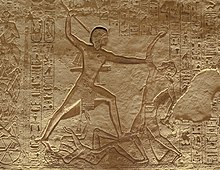
Ramses beats enemies. Relief at the
Abu Simbel Temple
Sources of the Battle of Kadesh
The battle of Kadesh greatly impressed Ramesses II, who ordered a story about this event and grandiose panoramic "illustrations" to be reproduced on the walls of many temple complexes, including in Abydos , Karnak , Luxor , Ramesseum and Abu Simbel .
The main sources telling what happened are three different texts: a long detailed story with lyrical digressions included - the so-called “ Pentaura Poem ”; a short story about the events of the battle itself - “Report” and comments on relief compositions. The battle of Kadesh is also mentioned in several Hittite documents.
The Capture of Dapur

The capture of Dapur. The relief on the wall of the
RamesseumSources regarding the further course of the war with the Hittites are scarce, and the order of events is not entirely reliable. The wars in Asia that Ramses II waged after the 5th year of rule were caused, first of all, by a new strengthening of the Hittite kingdom , hostility of the Syrian north and the loss of Amurru . In the 8th year of rule, Ramses again invaded Western Asia. The result of this campaign was the capture of Dapur . With the assistance of his sons, Ramses besieged and took this strategically important fortress.
The capture of Dapur, depicted on the walls of the Ramesseum , Ramses considered one of his most glorious deeds. He assigned this feat the second place after the “victory” near Kadesh. Dapur, who, according to Egyptian texts, is “in the country of Amur, in the region of the city of Tunip ”, probably by this time had already entered the Hittite empire , as some sources speak of his whereabouts at the same time “in the country of Hatti”. As usual, the attack was preceded by a battle on the plain under the fortress, and soon it was taken by itself, and a representative of King Hatti came to Ramses, leading a bullock intended for Pharaoh, accompanied by women carrying vessels and baskets of bread.
Smash Syria and Phenicia
By the time of Ramses II, the Egyptian martial art stepped far ahead compared to the time of the slow moves of Thutmose III , who founded the "Egyptian world power" two centuries earlier. He preferred to take the fortified cities by starvation, and often, not achieving his goal, in impotent rage devastated the surrounding gardens and cornfields. On the contrary, the wars of Ramses II turned into a continuous seizure by attack of large and small fortresses. In the difficult situation in which the Egyptians found themselves in Syria-Palestine, the pharaoh could not spend time on a long siege.
The list of cities “captured by His Majesty” in Asia has been preserved on the wall of the Ramesseum . Many place names are poorly preserved, some are still not localized. In the country of Kede, possibly located on the outskirts of Anatolia , a fortified city with a magnificent princely palace was taken. Apparently, at the same time, Acre was taken and plundered on the Phoenician coast, Yenoam on the border with the south of Lebanon, and other north-Palestinian cities are also mentioned on the Ramesseum list. Although not one of the documents speaks of the capture of Kadesh , but in view of the fact that Ramses made conquests far to the north of this city, the latter was undoubtedly captured by the Egyptians.
Ramses also took the city of Tunip , where he erected his own statue. But when Ramses returned to Egypt, the Hittites again occupied Tunip, and in the 10th year of his reign, Ramses was again forced to take this city. Moreover, during this some incident happened to him again; For some reason, Ramses even had to fight without armor, but the information about this feat, unfortunately, is too fragmentary to accurately comprehend what happened to him. This event is mentioned in the text of a stele in the Nahr al-Kelb valley.
Continuation of hostilities
Apparently, during the period of the struggle of Ramesses in Syria or somewhat later, some unrest occurred in Palestine . The undated scene in Karnak depicts the subjugation of the city of Ascalon . In the 18th year, Ramses conducted military operations in the area of the city of Beit Shean . Between the 11th and 20th years of his reign, Ramses was busy strengthening Egyptian rule in Palestine. Undated military campaigns are depicted on the walls of Luxor , Karnak and Abydos .
Among the reliefs of Luxor, a military campaign in the Moab region is mentioned; it is also known that Ramses fought with the Shasu tribes in the south of the Dead Sea in the region of Seir, later renamed Edom . To the east of Lake Hennisareth, Ramses placed a stove to commemorate his visit to the area. The Ramesseum list mentions Bet-Anat, Kanah, and Merom, cities that are located in the Galilee by biblical tradition. The inscriptions of Ramses claim that he conquered Nakharin (the Pre-Euphrates region), Lower Rechen (Northern Syria), Arvad , Keftiu (about. Cyprus ), Katna .
However, despite the large number of victories, the “world” power of Thutmose III was not fully restored: in all endeavors, Ramses was hindered by the Hatti kingdom , being the support of the small princes of Syria-Palestine. Ultimately, northern Syria and even the kingdom of Amurru remained behind the kingdom of Hatti. Only in the coastal strip, already according to the evidence of Egyptian sources, did the possession of the pharaoh reach at least Simira .
Peace Treaty between Egypt and the Hittite Kingdom
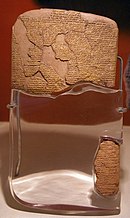 | |  |
Left: A plate with a fragment of a contract from the Bogazkoy archive. Archaeological Museum of Istanbul .
Right: Hieroglyphic text of a peace treaty. Karnak Temple |
With the death of Muwatalli , which probably occurred in the 10th year of Ramses II's rule, relations between Egypt and Hatti noticeably improved. Muvatalli's son, Urhi-Teshub, inherited the throne under the name of Mursili III , but was soon removed by his uncle Hattusili III , who made peace with Egypt .
It may be that the reconciliation of rivals was gradually facilitated by the formation of a strong Assyrian power and the associated fears .
At the beginning of the winter of the 21st year of the reign of Ramses II, Ambassador Hattusili, accompanied by an Egyptian translator, arrived in the Egyptian capital Per-Ramses and handed the pharaoh on behalf of his lord a silver tablet with cuneiform text of the treaty, certified by seals depicting the king and queen Hatti in the arms of their deities. The treaty was translated into Egyptian and subsequently immortalized on the walls of Karnak and Ramesseum .
The text of the contract, which the pharaoh sent Hattusili in exchange for his tablet, was also cuneiform, composed in the then international Akkadian language . Its fragments are preserved in the Bogazkoy archive . Basically, the contract was aimed at ensuring mutual inviolability of possessions and providing assistance, infantry and chariots, in the event of an attack on one of the contracting parties or the rebellion of subjects. Both parties have committed themselves to extradite defectors. This was the first diplomatic treaty in world history that has survived to the present day [3] .
Whether due to the signing of this agreement or due to poor health, but the period of active military campaigns of Ramses II came to an end. The time for active diplomatic correspondence between the two countries began. In the Bogazkoy archive, the messages of Ramses II, his family and Vezir Pazer , addressed to King Hattusili III and his wife Puduhepe . Egyptian doctors often went to the Hittite court.
The marriage of Ramses to the Hittite princes
The result of the agreement, 13 years after its signing, in the 34th year of the reign of the pharaoh, was the diplomatic marriage of Ramses II and daughter Hattusili , who accepted the Egyptian name Maathornefrur ( "The Seeing Beauty of the Sun" , that is, the pharaoh). The princess did not become one of the tsar’s secondary wives, as was usually the case with foreigners in the Egyptian court, but the “great” wife of the pharaoh [4] .
The princess left Hattus accompanied by her mother and dowry caravans: gold, silver, bronze, cattle, sheep and slaves. On the border they were met by the people of the pharaoh to accompany the princess through Canaan to Egypt. She arrived in Pere Ramses in February 1245. [5] On the Egyptian side, the princess was accompanied by the “ Tsar’s son Kush ”. King Hatti 's daughter “was brought to his majesty, and she fell in love with his majesty” . On the reliefs of a stele in Abu Simbel , telling about this event, Hattusili III is depicted accompanying his daughter to Egypt; indeed, a letter of Ramses II was found in the Bogazkoy’s archive with a proposal to his father-in-law to visit Egypt, however, whether such a journey was carried out is not known .
The second daughter of Hattusilis III also became the wife of Ramses. The exact date of this marriage is not known, but it happened shortly before the death of the Hittite king, around the 42nd year of the reign of Ramses II.
World Trade Expansion
The peace between Egypt and Asia was established for more than half a century, which caused an “explosion” of trade activity in the region. For many cities, such as, for example, Ugarit , this era has become a time of unprecedented growth and strengthening of economic well-being. Since then, relations between Egypt and Asia have undergone qualitative changes. If earlier participants in Egyptian military campaigns with booty returned to the banks of the Nile , now some of them have remained to live in many Syrian-Palestinian cities. In any case, a similar population was recorded under Ramesses III (XX dynasty).
Construction activities
Founding of Pere Ramses
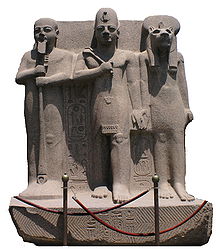
Statues of Ramses II,
Ptah and
Sekhmet . Egyptian Museum
Ramses is characterized by an extremely broad construction activity. The war against the Hittites prompted Ramses to relocate his residence to the northeastern part of the Delta , possibly on the site of the former capital of the Hyksos, Avaris , the city of Per-Ramses was built (the full name of Pi-Ria-mase-sa-Mai-Aman, “The House of Ramses, beloved Amon "). Pere Ramses has developed into a large and flourishing city, with a magnificent temple. Above the huge pylons of this temple towered a monolithic colossus of Ramses made of granite, more than 27 m high and weighing 900 tons. This colossus was visible for many kilometers from the flat plain surrounding the Delta.
Wadi Tumilat , through which the Nile Canal , which constitutes the natural route of communication between Egypt and Asia, probably passed east to the Big and Small Gorky Lakes, was also the subject of careful care on the part of Ramses. The Pharaoh built on it, halfway to the Suez Isthmus, the “folding yard” by Pif , or the “House of Atum”. At the western end of Wadi Tumilat, he continued the construction of a city founded by his father, known as Tel el Yehudiye, and located just north of Heliopolis . Ramses built temples in Memphis , of which only scanty remnants have survived; buildings in Heliopolis, from which nothing was left. Ramses also built in Abydos , where he finished the magnificent temple of his father, but was not satisfied with this and erected his own memorial temple near the temple of Seti . Another memorial temple of Ramses ordered to build in Thebes . Этот храм (так называемый Рамессеум ), построенный архитектором Пенра, был окружён кирпичной стеной, внутри которой располагались кладовые, хозяйственные постройки и жилища для целой армии жрецов и слуг. Гранитная монолитная статуя перед пилонами Рамессеума хотя и была несколько ниже, чем в Пер-Рамсесе, но зато весила 1000 тонн. Рамсес расширил Луксорский храм , пристроив там обширный двор и пилоны. А также достроил колоссальный Гипостильный зал Карнакского храма , величайшее по размерам здание, как древности, так и нового мира. Этот чертог занимал площадь 5000 кв. м. 12 колонн по бокам среднего прохода Гипостильного зала имели в высоту 21 м, а вместе с покоящимися на них навершиями ( архитравами ) и перекладинами — 24 м. На вершине такой колонны могли разместиться 100 человек. Остальные 126 колонн, расположенные по 7 рядов с каждой стороны среднего прохода, имели высоту 13 м.
В Нубии , в Абу-Симбеле , в отвесной скале вырублен огромный пещерный храм, вход которого высечен в виде пилона и украшен четырьмя 20-метровыми статуями Рамсеса, воплощающие идею прославления мощи фараона. Рядом вырублен пещерный храм, посвящённый его жене, царице Нефертари Меренмут .
Однако при строительстве Рамсес разрушал древние памятники страны. Так, постройки фараона Тети ( VI династия ) служили материалом для храма Рамсеса в Мемфисе. Он расхитил пирамиду Сенусерта II в Эль-Лахуне , разрушил вокруг неё замощённую площадь и разбил на куски сооружения, стоявшие на этой площади, с целью получения материала для своего собственного храма в Гераклеополе . В Дельте он использовал памятники Среднего царства . Чтобы получить нужное пространство для расширения Луксорского храма , Рамсес срыл гранитную молельню Тутмоса III и употребил в дело добытые таким путём материалы.
Войны и огромные средства, затрачиваемые на строительство и содержание храмов, разоряли трудящихся [ прояснить ] , обогащая знать и жрецов. Бедняки закабалялись, средние прослойки теряли постепенно экономическую независимость. Рамсесу приходилось прибегать к помощи наёмников, что ослабило военный потенциал страны .
Во время его длительного правления, по праву считающегося одной из эпох высочайшего расцвета египетской цивилизации, создано огромное количество храмовых комплексов и монументальных произведений искусства, в том числе уникальные скальные храмы Нубии — в Абу-Симбеле , Вади эс-Себуа, западной Амаре, Бет-эль-Вали, Дерре, Герф Хуссейне, Анибе, Каве, Бухене и Гебель-Баркале . Ещё больше поражает своим размахом строительная программа фараона в самом Египте: несколько храмов и знаменитые колоссы в Мемфисе ; двор и колоссальный первый пилон храма в Луксоре , украшенный царскими колоссами и обелисками; Рамессеум — заупокойный комплекс на западном берегу Нила в Фивах; храм в Абидосе, завершение строительства и отделка Большого гипостильного зала храма Амона -Ра в Карнаке . Кроме того, памятники Рамсеса II зафиксированы в Эдфу , Арманте, Ахмиме , Гелиополе , Бубастисе , Атрибисе, Гераклеополе. При Рамсесе II сооружена часть храма богини Хатхор в Серабит-эль-Хадим на Синае. В итоге Рамсес II построил множество статуй и храмов в свою честь в различных уголках Египта. Самыми крупными на сегодняшний день являются четыре 20-метровые статуи сидящего Рамсеса II в Абу-Симбеле на юге страны.
Family

Статуя Нефертари Меренмут у ног колосса Рамсеса II в Луксоре
Жёны и дети Рамсеса
- Нефертари Меренмут — первая законная супруга, считавшаяся главной царицей уже на первом году самостоятельного правления Рамсеса [6] (как свидетельствует надпись в гробнице жреца Амона Небуненефа ). Она принадлежала к одной из придворных семей родом из Фив. Брак Рамсеса с представительницей фиванской знати был политически оправдан, поскольку род Рамсеса происходил из Дельты и не имел родственных связей с египетской аристократией [7] . Имеются предположения о её родстве с фараоном Эйе из XVIII династии [8] [9] , но достоверных свидетельств тому нет [10] . Нефертари Меренмут вела дружескую переписку с хеттской царицей Пудухепой , обменивалась с нею подарками [11] [12] . На празднике в приблизительно 1255 году до н. e. (между 24 и 26 годами царствования Рамсеса II) в честь завершения строительства двух храмов Абу-Симбел , малый храм которого был посвящён ей, старшая дочь царевна Меритамон заменила уже болеющую мать царицу Нефертари, которая скончалась в том же году [12] . Сыновья Рамсеса и Нефертари не пережили отца и не взошли на престол [7] . Детьми Нефертари считаются [7] [11] :
- Амонхирвенемеф — сын скончался в детстве;
- Амонхерхопшеф , возглавляющий все списки сыновей Рамсеса II. Упоминается в стандартных храмовых списках из Рамессеума , Луксора и Дерра, а также на туринской статуе.
- Парахерунемеф известен по нескольким спискам, в частности по записям в абу-симбельском храме. Имеется и скарабей с его именем.
- Меритамон — дочь Рамсеса II. В луксорском списке стоит четвёртой, а в абу-симбельском — пятой. Она, как и Бент-Анат , была погребена в Долине цариц и также носила титул «великая жена царя», получив его после кончины матери [13] [14] . Её изображение сохранилось в Абу-Симбеле, а статуя найдена в Танисе .
- Хенуттави — седьмая дочь Рамсеса II.
- Мерира (Рамери) — 11-й сын Рамсеса II.
- Мериатум — 16-й сын Рамсеса II.
- Сети — девятый сын Рамсеса II, сын царицы Нефертари Меренмут , в 53-й год царствования Рамсеса II ещё был жив. Он изображён при осаде Дапура и в военных сценах в Карнаке.
- возможно, другими её детьми были Бакетмут , Нефертари и Небеттави .
- Второй законной женой Рамсеса II — возможно, одновременно с Нефертари Меренмут была Иситнофрет . Истнофрет изображена со своими детьми на многих монументальных сооружениях. Вместе со своими сыновьями она представлена в скульптурной группе, ныне хранящейся в Париже.

Дочь Рамсеса II —
Бент-Анат- Бент-Анат — старшая дочь Рамсеса II, возглавляла луксорский список его дочерей. Её статуи помещались на Синае, в Танисе, в Карнаке, в Абу-Симбеле. Её гробница находится в Долине цариц, в западной части Фив. Бент-Анат стала Главной женой царя на 25-м году царствования её отца, после смерти матери. Существует предположение, что Бент-Анат родила от фараона дочь Бент-Анат-младшую, изображённую на стене её гробницы QV71 [15] [16] .
- Рамесесу — второй сын Рамсеса II. Изображён вместе со своей матерью и братом Хаэмуасом в небольшой скульптурной группе, ныне хранящейся в Париже, а также на стелах в Асуане и в Гебель-эль-Сильсиле. Его можно обнаружить и в абу-симбельском храме. Ему же как умершему, посвящена статуя, изготовленная по заказу сына его брата Хаэмуаса. Принадлежащая Рамесесу фигурка ушебти помещена в Серапеуме на 26-й год правления Рамсеса II.
- Хаэмуас — четвёртый сын Рамсеса II, долгое время был наиболее влиятельным при дворе своего отца. Он исполнял обязанности верховного жреца Птаха в Мемфисе и был признан наследником престола на 30-й год правления Рамсеса II. Он фигурирует в трёх списках детей Рамсеса II. В юности он принимал участие в войнах в Сирии, о чём свидетельствуют изображения и тексты в Рамессеуме и в Карнаке. Как верховный жрец Птаха в Мемфисе, Хаемуас засвидетельствован фигурками ушебти , изготовленными в связи с церемонией захоронения священных быков Аписов на 16, 26, 30-й и в ещё один неизвестный год правления Рамсеса II. С 30-го по 40-й (или 42-й) годы царствования Рамсеса II Хаэмуас руководил четырьмя (возможно, пятью) юбилеями «тридцатилетия» своего отца. В должности верховного жреца Птаха Хаэмуасу в 55-й год правления Рамсеca II наследовал его брат Мернептах. Известны ушебти и гробницы Хаемуаса, а также различные предметы (нагрудные украшения, амулеты), найденные в Серапеуме в погребениях быков Аписов. В Британском музее хранится прекрасная статуя Хаэмуаса.
- Мернептах — 13-й сын Рамсеса II. На 55-й год правления Рамсеса II наследовал Хаэмуасу в должности верховного жреца Птаха в Мемфисе. В этот же год он был объявлен наследником престола. После смерти Рамсеса II он стал фараоном.
- Маатхорнефрура («Зрящая красоту Ра »; её хеттское имя неизвестно) — третья законная жена Рамсеса II, старшая дочь хеттского царя Хаттусили III и царицы Пудухепы . Акт дипломатического брака на 33 год правления Рамсеса закреплял подписанный годами ранее мирный договор между государствами [17] . Она прибыла в Пер-Рамсес в феврале 1245 года [18] . По одной версии, Маатхорнефрура жила в гареме Mer-wer (современный Гуроб) [19] , по другой — родила фараону ребёнка и вскорости умерла [20] . Маатнефрура изображена вместе со своим отцом Хаттусили III на стеле, высеченной на южной стороне внутреннего зала большого храма в Абу-Симбеле, и представлена рядом с Рамсесом II на одном из его колоссов в Танисе.
- Четвёртой законной женой Рамсеса II стала другая дочь Хаттусили III, однако, имя её неизвестно.
- Хенутмира («Подобная Ра ») — младшая сестра либо дочь Рамсеса II [9] [21] . Эта гипотеза поддерживается изображением Хентмиры на статуе её матери, и, одновременно, матери Рамсеса II — царицы Туйи в Ватиканском музее . Согласно сохранившимся источникам её роль была скромной, она не имела сыновей и, по-видимому, прожила недолго. Известны её немногочисленные рельефы на некоторых поздних статуях Рамсеса II. В сороковые годы царствования брата-супруга она скончалась и была погребена в Долине цариц ( QV75 ). Саркофаг из розового гранита с головой сокола, принадлежащий Хенутмире, узурпирован во времена XXII династии ; памятник хранится в Каирском музее (JE 60137).
- Известно, что в гареме Рамсеса II была также дочь царя Вавилона и дочь правителя страны Зулапи (Северная Сирия).
- У большинства сыновей и дочерей Рамсеса неизвестны имена их матерей.
- Монтухерхепшеф — пятый сын Рамсеса II, принимал участие в военных походах в Азию. Его скарабей хранится в Берлине. Он же присвоил статую в Бубастисе. Ментухерхопшеф был начальником над лошадьми и колесницами.
- Небенхару — шестой сын Рамсеса II, участвовал, в осаде города Дапур.
- Мериамун — седьмой сын Рамсеса II, упомянут в Рамессеуме и в Луксоре изображён при осаде Дапура.
- Аменемуа — восьмой сын Рамсеса II, представлен в храме в Дерре под именем Сетимуа. Он участвовал в осаде Дапура.
- Известны имена царевичей Сетепенра (10-й сын), Рамери (11-й сын), Хорхерунемеф (12-й сын) и многих других.
- Небеттави — дочь Рамсеса II. Изображена рядом с его колоссом Абу-Симбеле. Её гробница QV60 находится в Долине цариц . Она также носила титул «жена царя» и, вероятно, состояла в браке со своим отцом. Позднее она стала женой кого-то другого, поскольку её дочь Истмах не считалась дочерью царя .
На передней стене храма Абидоса сохранились изображения и отчасти имена 119 детей Рамсеса (59 сыновей и 60 дочерей), которые предполагают большое количество наложниц, кроме известных нам законных жён, а по некоторым подсчётам — 111 сыновей и 67 дочерей.
Родословие Рамсеса II
XIX династия
| | | | Сети | |
|
| | | | | | | |
|
| | | |  Рамсес I Рамсес I | | Ситра | | | |
| |
| | | | | | | | | | | | | | | | | | | | | | |
|
| | | | | | Сети I | | Туя | | | | Хаттусили III | | Пудухепа | | |
| | | |
| | | | | | | | | | | | | | | | | | | | | | | | | | | | | | | |
| | | | | | |
| | | | Иситнофрет | | Рамсес II | | | | Нефертари | | | | Маатхорнефрура | | | |
| | | | | | |
| | | | | | | | | | | | | | | | | | | | | | | | |
| | | | | | | | | | |
| | | | | | | | | | | Аменхерхепешеф | | Меритамон | | Небеттави |
|
| | | | | | | | | | | | | | | | | | | | | | | | | | |
| | | | | | | | | | | | | | | | | | | | | | | |
| Рамсес | | Бент-Анат | | Хаэмуас | | Иситнофрет II | | Мернептах | | Тахат |
| | | |
| | | | | | | | | | | | | | | | | | | | | | | | | | | |
| | | | |
| | | | | | | | | | Тиа | | Сети II | | Таусерт | | Аменмес |
| | |
| | | | | | | | | | | | | | | | |
|
| | | | | | | | | | | | Саптах | |
|
Результаты правления
На северо-востоке Дельты Нила, откуда происходила его семья, Рамсес II основал на месте старого дворца своего отца Сети I новую столицу — Пер-Рамсес (совр. Кантир и Телль эд-Даба). Этот город оставался основной резиденцией царей XIX —XX династий. Тем не менее, религиозная столица страны оставалась в Фивах, а царские погребения по-прежнему высекались в скалах Долины Царей . Гробница Рамсеса II ( KV7 ) не была завершена и в настоящее время находится в крайне плохом состоянии из-за губительного воздействия почвенных вод и ливней; его мумия там оставалась крайне непродолжительное время из-за древних грабителей могил.
В царствование Рамсеса II особым почитанием пользовались культы Амона, Ра, Птаха и Сета; однако, именно в это время в религиозной жизни страны всё заметнее становится азиатское влияние, выразившееся во включении в египетский пантеон иноземных божеств, ассоциировавшихся с войной или враждебной египтянам морской стихией.
В последние годы правления Рамсес II был обожествлён как «Великая Душа Ра-Хорахте », объявив себя, таким образом, воплощением солнечного бога на земле. Рамсес II скончался на 67-м году правления и пережил 12 своих сыновей, среди которых двое — военачальник Аменхерхепшеф и Хаэмуас особенно долго носили титул наследника престола. Египетский трон унаследовал 13-й сын фараона — Мернептах , сын царицы Иситнофрет I, к этому времени — мужчина средних лет. Он был первым из нескольких наследников Рамсеса II, краткие правления которых завершили XIX династию.
Спустя тысячелетие после правления Рамсеса II его культ процветал в Мемфисе и Абидосе. Весьма показательным стало наследие образа царя и его сыновей в древнеегипетских и античных сказаниях и легендах. В Фивах около 300 года до н. e. жрецы бога Хонсу для поддержания авторитета их храма воздвигли в святилище бога массивную стелу, текст которой, рассказывающий о путешествии целительной статуи бога Хонсу в страну Бахтан, был навеян азиатскими походами Рамсеса II и его свадьбой с хеттскими царевнами .
В сентябре 2008 года в ходе раскопок в районе Айн-Шамс на востоке Каира группа египетских археологов обнаружила руины храма фараона Рамсеса II, также в этом районе обнаружены фрагменты гигантской статуи Рамсеса II [22] .
Посмертная судьба
Тело Рамсеса в древности хоронилось жрецами пять раз (перезахоранивалось четыре) — из-за грабителей могил. Сначала его перенесли из собственной гробницы в гробницу его отца Сети I. Её ограбили. Тогда мумию перезахоронили в гробницу царицы Имхапи . Её также ограбили. Затем перенесли в гробницу фараона Аменхотепа I .
Наконец, в итоге, мумию Рамсеса с мумиями других ограбленных фараонов ( Тутмосом III , Рамзесом III ) жрецы спрятали в скальный тайник Херихора в современном Дейр-эль-Бахри [23] .
Во второй половине XIX века этот тайник обнаружен арабским семейством грабителей могил во главе с шейхом Абд-эль-Расулом, который постепенно продавал ценности оттуда европейским туристам [23] . Это привлекло внимание египетских властей. Египетская служба древностей провела целую спецоперацию по выявлению источника поступлений, и в итоге шейх был вынужден выдать местонахождение скального подземного тайника Дейр-эль-Бахри 320 , сооружённого по приказу царя Херихора в XI веке до нашей эры.
В результате хорошо сохранившаяся мумия фараона была обнаружена там в 1881 году среди других ограбленных царских тел и стала доступной науке.
В Каирском музее , где хранилась мумия фараона, учёные заметили разрушительные действия грибков при контакте с воздухом и решили отправить мумию в Музей человека в Париже для консервации. 26 сентября 1976 года военный самолёт с останками Рамсеса II приземлился в аэропорту Ле-Бурже . Рейс встречали госсекретарь по делам университетов Алис Сонье-Сеите и армейский отряд. В стерильной комнате Парижского этнологического музея учёные несколько месяцев занимались общей консервацией и исследованием мумии фараона [24] [25] . Исследования показали, что Рамсес был высокого роста (1,90 м), светлокожим с лейкодермой и рыжими волосами, принадлежал к средиземноморскому типу, близкому к африканским берберам " [26] [27] .
Другие факты
- Находка обломка одной из статуй Рамсеса с надписью вдохновила Перси Шелли на создание стихотворения «Озимандия» (1817) [28] [29] (см. текст сонета в переводе Константина Бальмонта ).
- Предположительно, Рамсес был левшой и рыжеволосым [30] .
- Предположительно, Рамсес II родился 22 февраля, а взошёл на трон 20 октября. В храме Абу Симбел в эти дни свет падает на грудь и корону его статуи. Факт спорный, так как Абу Симбел переносили.
- Одно из предположений гласит, что Рамсеc II правил во время Исхода евреев из Египта [31] .
Рамзес II в культуре
- Рамсес II присутствует в игре Sid Meier's Civilization и в последующих частях этой серии в качестве лидера цивилизации Египта .
- В серии книг «Наследники Богов» Рамсес Великий является предком главных героев со стороны семьи Фауст.
- Рамсес II является одним из главных героев романа Г. Эберса «Уарда».
- История Рамсеса II и его жены Нефертари Меренмут на фоне раскопок в её гробнице лежит в основе сюжета компьютерной игры Нэнси Дрю « Усыпальница пропавшей королевы ».
- В музыке, а именно в творчестве Майи Котовской (псевдоним Канцлер Ги ) и рок-группы Брэган'Дэрт есть лирическая баллада посвящённая Рамзесу II (альбом «Лирика» (2017).
- Немного изменённая история Рамсеса II и его жены Нефертари Меренмут , можно прочитать в манге «Песнь песка и моря: наложница фараона».


 Рамсес I