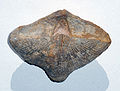
In a 1998 publication, British biologist Thomas Cavalier-Smith proposed combining a brachiopod and phoronid into one type called Brachiozoa. Moreover, he was based on the analysis of ribosomal RNA , from which it followed that the phoronids are descendants of the brachiopods that have lost their conch. According to the figurative expression of this author, phoronids are in the same relationship with brachiopods as slugs with snails [2] . From now on, both groups were proposed to be considered as subtypes of the new Brachiozoa type, although earlier they were considered independent types [2] . This step was connected with the desire of Cavallier-Smith to reduce the number of types, since an excessively large number of them, in his opinion, makes it difficult to understand the diversity of the animal world and the evolutionary relations between different groups of animals [3] .
Almost simultaneously with the work of T. Cavallier-Smith, an article was published by a group of Czech researchers. Based on morphological data, as well as analysis of 18S rDNA , the authors of this article also concluded that phoronids are closely related to brachiopods and combined them into a group called Phoronozoa [1] [4] .
In 2001, American researchers Kevin Peterson and Douglas Eerniss used the name Lophophorata for this group [5] . However, this name is often used in a broader sense, combining brachiopods not only with phoronids, but also with bryozoans [6] .
In 2005, Bernard Cohen and Agatha Weidman (as before T. Cavallier-Smith), based on molecular biology data, concluded that phoronids are descendants of brachiopods. According to these authors, phoronids should be included in the Brachiopoda type as a class of Phoronata [7] . In this interpretation, brachiopods correspond in volume to Brachiozoa.
The most frequently used name of this group, apparently, is still Brachiozoa [1] .
It should be noted that some data contradict the idea of a close relationship between brachiopods and phoronids and cast doubt on the validity of this taxon. For example, an analysis of mitochondrial DNA by South Korean researchers showed a greater similarity between brachiopods and bryozoans , and phoronids with intrapowder ones . However, the authors themselves are not sure that this result corresponds to the real phylogenetic relations of these groups [8] .