

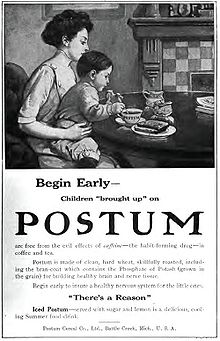
Coffeeshafts - food products of plant origin, used for the manufacture of beverages, somewhat resembling the appearance and taste of coffee beverage. Fried barley, rye, chicory roots and beets are commonly used as a coffee substitute.
Overview
Coffee substitutes for the most part do not contain caffeine and therefore, in varying degrees, imitate only the taste of the drink. In many Asian countries , such drinks are called tea substitutes and occupy a niche of soft sweetened drinks there. Traditionally, coffee substitutes have been obtained by roasting grains, nuts or roots of plants. Plants containing the polysaccharide inulin are widely used for this purpose.
Among the ingredients used for coffee substitutes are acorns , asparagus , malted barley , carrots , chicory root, corn , soybeans , cotton seed, dandelion root, rice , roasted chickpea beans, evaporated molasses , peas , persimmon , potato peel, rye , sweet potatoes , wheat bran , apples , pears , plums (pitted), mountain ash , vegetable and sugar beets , parsnip , scorzoner , goat , bread ( millet , rye , barley, wheat, spelled , oats , corn), baked bread, noodles , figs , dates , different types of legumes - wiki, lupins , peas , beans, lentils , asparagus seeds, grains, beech, walnuts, hazelnuts, almonds and pomace, peanuts , rhizomes of ferns , wheatgrass , salep (root tubers of forest orchids), sago , potatoes, iglitsa seeds, yellow iris , mulberries , hemp seed, sweet horns, wild rose, fenugreek seeds, sheep peas , soybeans, linden fruits, and the like.
| Plant name | part of the plant | Inulin content (up to) | Notes |
|---|---|---|---|
| Burdock (Arctium lappa L.) | dry roots | 37–45% | |
| Jerusalem artichoke (Helianthus tuberosus) | tubers | 16-18% or more | |
| Medicinal Dandelion (Taraxacum officinale) | root | 40% | |
| Elecampane (Inula helenium L.) | root | 44% |
Some coffee substitutes
Chicory
The most common of all coffee substitutes are chicory blends. Use washed, dried and roasted roots of this plant. The chicory root of ordinary water contains 75% of water, and one sixth of the dry residue falls on inulin , a high molecular weight carbohydrate , which gives glucose during hydrolysis [1] . Chicory is sold in its pure form, in the form of mixtures with roasted and ground grains of barley , rye , oats and spices , with the addition of berry and fruit extracts, as well as mixed with natural coffee.
Acorn Coffee
During World War II, the majority of the German population drank ersatz to a coffee made of oak acorns. Harvest ripe large acorns, green, hard to the touch (nerve). Then dried. To make a coffee drink, harvested acorns are grinded in a coffee grinder and brewed just like coffee.
Mugitia
Mugita is a Japanese drink made from roasted cereals (usually wheat or barley ). Untreated barley grains are well roasted and then infused. Brew and drink cold. It tastes like Soviet coffee substitutes, especially the Summer drink. Also happens in powder.
Guarana
Guarana fruit is about the size of a hazelnut nut, from deep yellow to orange in color, which bursts and opens one purple-brown or black seed. These seeds can serve as a coffee substitute.
Jerusalem artichoke
In the US, from the rhizomes of Jerusalem artichoke prepare diet coffee. Tubers are cleaned and cut into pieces and poured boiling water for two or three minutes. Then dried, roasted in the oven. Crushed in a mortar or coffee grinder and brewed.
Pear Seeds
Coffee substitute is obtained from roasted pear seeds containing a large amount of oils.
Dog Rose
Coffee substitute is obtained from canine hips [2] and cinnamon rosehips.
Beech Nut
From beech nuts get high-quality edible oil of light yellow color. It is used in the food and confectionery industry. Another method of processing is a technical oil. The mass remaining after the spin is used to make a coffee substitute.
Hymnoclusus dioecious
The anthropomorphus dioecious (Canadian bundle) is a tree. In America, the bundle is called the coffee tree, since in the past, its roasted seeds were used as a cheap coffee substitute.
Batat
As a coffee substitute, seeds of flowering sweet potato varieties can be used.
Notes
- ↑ Lavrenova G.V. Healing properties of coffee. - Neva, 2004. - 96 p. - ISBN 5765435084 .
- ↑ The genus Rosa L. Rosehip // Wild-growing useful plants of Russia / Ed. ed. A. L. Budantsev, E. E. Lesiovskaya. - SPb. : SPHFA, 2001. pp. 493–495. - 663 s.