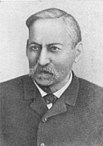
Ivan Ivanovich Bunin ( October 10 [22], 1870 , Voronezh - November 8, 1953 , Paris ) - Russian writer , poet and translator, Nobel Prize winner in literature .
| Ivan Alekseevich Bunin | |
|---|---|
 | |
| Birth name | |
| Date of Birth | |
| Place of Birth | |
| Date of death | |
| A place of death | |
| Citizenship (citizenship) | |
| Occupation | poet , prose writer , translator |
| Years of creativity | 1887-1953 |
| Language of Works | |
| Awards | Pushkin Prize (1903, 1909)  Nobel Prize in Literature (1933) Nobel Prize in Literature (1933) |
| Awards | Nobel Prize in Literature ( 1933 ) Pushkin Prize ( 1903 , 1909 , 1901 ) |
| Autograph | |
As a representative of an impoverished noble family, Bunin early began an independent life; in his youth, he worked in newspapers, chancelleries, traveled a lot. The first of the published works of Bunin was the poem "Over the Tomb of S. Ya. Nadson" (1887); the first poetry collection was published in 1891 in Orel . In 1903 he received the Pushkin Prize for the book Listopad and the translation of Songs of Hiawatha ; in 1909 he was re-awarded this award for the 3rd and 4th volumes of the Collected Works. In 1909, he was elected an honorary academician in the category of elegant literature of the Imperial St. Petersburg Academy of Sciences . In 1920 he emigrated to France . The author of the novel “The Life of Arsenyev ”, the stories “ Sukhodol ”, “The Village”, “Mitina Love”, the stories “The Master from San Francisco ”, “ Easy Breath ”, “ Antonov Apples ”, diary entries “ Cursed Days ” and other works. In 1933, Ivan Bunin became a Nobel Prize in Literature for "strict mastery with which he develops the traditions of Russian classical prose." He died in 1953, was buried in the cemetery of Saint-Genevieve-des-Bois . Bunin's works have been repeatedly filmed. The image of the writer is embodied in the film by Alexei Uchitel “ Diary of his wife ” (2000).
Content
- 1 Origin, family
- 2 Childhood and adolescence
- 3 "Oryol Bulletin." Wanderings
- 4 Entry into the literary environment. First marriage
- 5 First recognition. Pushkin Prize (1903)
- 6 second marriage
- 7 Pushkin Prize (1909)
- 8 “Cursed days”
- 9 In Paris and Grasse
- 10 Nobel Prize
- 11 During the Second World War
- 12 Appearance, character, lifestyle
- 13 Recent years. Death
- 14 Creativity
- 14.1 Poetry
- 14.2 Stories and Tales
- 14.3 "Life of Arseniev"
- 14.4 Journalism, diaries, memoirs
- 14.5 Translations
- 15 The originality of creativity. Innovation. Influences
- 15.1 Work system
- 15.2 Creative evolution
- 15.3 Elements of innovation
- 15.4 Picturesque prose
- 15.5 Influences
- 16 Relations with contemporaries
- 16.1 Bunin and Gorky
- 16.2 Bunin and Chekhov
- 16.3 Bunin and Nabokov
- 16.4 Bunin and Kataev
- 16.5 Bunin and emigre writers
- 17 The fate of the archive
- 18 Bunin and Soviet censorship
- 19 Bunin and cinema
- 19.1 Films of works
- 19.2 Image in the cinema
- 20 Notes
- 21 Literature
- 22 Links
Origin, family

Ivan Alekseevich Bunin is a representative of a noble family , which was rooted in the 15th century and had a coat of arms included in the General Herb of the Noble Clans of the All-Russian Empire (1797). Among the writer's relatives were the poetess Anna Bunina , the writer Vasily Zhukovsky and other figures of Russian culture and science. The great-great-grandfather of Ivan Alekseevich - Semyon Afanasevich - served as secretary of the State Patrimonial College [4] . Great-grandfather - Dmitry Semenovich - resigned as a titular adviser [5] . My grandfather, Nikolai Dmitrievich, served in the Voronezh Chamber of the Civil Court for a short time, then was engaged in farming in the villages that he got after the property section [6] .
The father of the writer, the landowner Alexei Nikolaevich Bunin (1827-1906), did not receive a good education: after leaving the first class of the Oryol gymnasium, he left school, and at the age of sixteen he got a job in the office of the provincial noble assembly . As part of the Yelets militia squad, he participated in the Crimean campaign . Ivan Alekseevich recalled his father as a man who had remarkable physical strength, ardent and generous at the same time: "His whole being ... was saturated with a sense of his lordly origin." Despite his dislike of studies, which had been ingrained from adolescence, he, until his old age, “read everything that came to hand with great desire” [6] .
Having returned home from a campaign in 1856, Alexei Nikolaevich married his cousin niece Lyudmila Alexandrovna Chubarova (1835 (?) - 1910) [6] . Unlike an energetic, temperamental husband (who, according to the writer, “sometimes drank terribly, although he didn’t have a single typical trait of an alcoholic”), she was a meek, soft, pious woman; it is possible that her sensibility was transmitted to Ivan Alekseevich [7] . In 1857, the first-born son, Julius , appeared in the family, and in 1858, the son Yevgeny. In total, Lyudmila Alexandrovna gave birth to nine children, five of whom died in early childhood [8] .
Childhood and Youth
Ivan Alekseevich was born on October 10 [22], 1870 in Voronezh , in house No. 3 on Bolshaya Dvoryanskaya Street , owned by the provincial secretary Anna Germanovskaya, who rented rooms to the tenants [9] . The Bunin family moved to the city from the village in 1867 to give the gymnasium education to the elder sons Julia and Eugene [10] . According to the writer, his childhood memories were connected with Pushkin , whose poems were read aloud in the house by everyone - both parents and brothers [11] . At the age of four, Bunin, together with his parents, moved to the family estate at the Butyrki farm of the Yelets district [12] . Thanks to the tutor, Moscow University student Nikolai Osipovich Romashkov, the boy became addicted to reading; home education also included language training (among which special attention was paid to Latin ) and drawing. Among the first books read by Bunin on their own were Homer 's Odyssey and a collection of English poetry [13] .
In the summer of 1881, Alexei Nikolaevich brought his youngest son to the Yelets men's gymnasium . In a petition addressed to the director, the father wrote: “I wish to educate my son Ivan Bunin at the educational institution entrusted to you”; in an additional document, he promised to pay a fee for the “right to teach” in a timely manner and to notify about changes in the boy’s place of residence. After passing the entrance exams, Bunin was enrolled in the 1st grade [14] . At first, Ivan Alekseevich, together with his friend Yegor Zakharov, lived in the house of the Yelets tradesman Byakin, who took 15 rubles a month from each of the tenants. Later, the gymnasium student moved to a certain cemetery sculptor, then he changed his housing twice more [15] . In the training course, Bunin was given the hardest mathematics - in one of his letters to his older brother he mentioned that the exam in this subject was “the most terrible” for him [16] .
Studying at the gymnasium was completed for Ivan Alekseevich in the winter of 1886. Having gone on vacation to his parents who had moved to his Ozerka estate, he decided not to return to Yelets. In early spring, the teacher's council expelled Bunin from the gymnasium for his failure to appear “from a Christmas vacation” [17] . From that time on, Julius became his home teacher, who was exiled to Ozerki under police supervision. The older brother, realizing that mathematics was rejecting the younger one, concentrated his main teaching efforts on the humanities [18] [19] .
Bunin’s first literary experiments also belong to this period - he wrote poetry from school years, and at the age of fifteen he composed the novel “Passion”, which was not accepted by any edition [20] . In the winter of 1887, learning that one of his literary idols, the poet Semyon Nadson , had died, Ivan Alekseevich sent several poems to the Rodina magazine. One of them, entitled “Over the Tomb of S. Ya. Nadson,” was published in the February issue [21] . Another - "Village Beggar" - appeared in the May issue. Later, the writer recalled: “Morning, when I went with this number from the post office to Ozeryki, tore dewy lily of the valley through the woods and re-read my work every minute, I will never forget” [22] .
"Oryol Bulletin." Wandering
In January 1889, the publisher of Orlovsky Vestnik Nadezhda Semyonova invited Bunin to take the position of assistant editor in her newspaper. Before giving consent or refusing, Ivan Alekseevich decided to consult with Julius, who, having left Ozerki, moved to Kharkov . So in the life of the writer began a period of wanderings [23] . In Kharkov, Bunin settled with his brother, who helped him find a simple job in the Zemstvo administration. Having received a salary, Ivan Alekseevich went to the Crimea, visited Yalta , Sevastopol [24] [25] . He returned to the editorial office of the Oryol newspaper only in the fall [26] .
At that time, in the Oryol Bulletin, she worked as a proofreader for Varvara Pashchenko (1870–1918), which researchers call the first — “unmarried” —wife of the writer. She graduated from the seven classes of the Yelets female gymnasium, then enrolled in an additional course “for a special study of the Russian language” [27] . In a letter to his brother, Ivan Alekseevich said that at the first acquaintance of Varvara - "tall, with very beautiful features, in a pince-nez" - seemed to him a very arrogant and emancipated girl; later he characterized her as an intelligent, interesting conversationalist [28] .
Relations between the lovers were difficult: the father of Barbara refused to see Bunin as his future son-in-law, and that, in turn, was burdened by worldly disorder. The financial situation of his family at that time was precarious, the parents of Ivan Alekseevich, who sold Butyrki and handed Ozerki to his son Eugene, actually parted; according to the testimony of the younger sister Bunin Maria, they sometimes "sat completely without bread" [29] . Ivan Alekseevich wrote to Yulia that he constantly thinks about money: “I don’t have a penny; I can’t earn, write something - I can’t, I don’t want to” [30] .
In 1892, Ivan Alekseevich moved to Poltava , where, with the assistance of Julia, he got a job in the statistical department of the provincial administration. Soon Barbara arrived there too [31] . The attempt to start a family in a new place failed: Bunin devoted much time to meetings with representatives of populist circles, talked with Tolstoyans , and traveled [32] . In November 1894, Pashchenko left Poltava, leaving a note: “I’m leaving, Vanya, don’t remember me badly” [33] . Ivan Alekseevich suffered such a hard time parting with his lover that the older brothers seriously feared for his life. Returning with them to Yelets, Bunin came to Barbara’s house, but the girl’s relative who went out on the porch said that her address was not known to anyone [34] . Pashchenko, who became the wife of writer and actor Arseniy Bibikov , died in 1918 from tuberculosis [35] . According to researchers, the relationship with her is captured in Bunin's artistic autobiographies - in particular, in the novel “The Life of Arsenyev ” [36] .
Entry into the literary environment. First marriage
People who knew the young Bunin characterized him as a person who had a lot of “life force, thirst for life” [37] . Perhaps these qualities helped the beginning poet, the author of the only poetry collection at that time (published in Orel in 1891 with a circulation of 1250 copies and distributed free of charge to the Orylovskiy Vestnik subscribers [38] ), quickly entered the literary circles of Russia at the end of the 19th century. In January 1895, Ivan Alekseevich, having left his service in Poltava, first arrived in St. Petersburg. For the incomplete two weeks spent in the capital, he met critic Nikolai Mikhailovsky , publicist Sergei Krivenko , poet Konstantin Balmont , visited the editorial office of the New Word magazine, met writer Dmitry Grigorovich in the bookstore (the seventy-two-year-old author of Anton-Goremyki struck him with his liveliness gaze and raccoon coat to the heels), visited Alexei Zhemchuzhnikov’s house and received an invitation from him for dinner [39] .
A series of meetings was continued in Moscow and other cities. Having come to Tolstoy at his house in Khamovniki , the young writer talked with the writer about the recently published story of Lev Nikolaevich “The Master and the Worker” [40] . Later he met Chekhov , who surprised Bunin with affability and simplicity: “I, then a young man who was not used to such a tone at the first meetings, took this simplicity for coldness” [41] . The first conversation with Valery Bryusov was remembered by revolutionary maxims about art, loudly proclaimed by the symbolist poet : “Long live only the new and down with the old!” [42] . Quite quickly, Bunin became close to Alexander Kuprin - they were peers, together they entered the literary community and, according to Ivan Alekseevich, “wandered endlessly and sat on cliffs above the pale lethargic sea” [43] .
In those years, Bunin became a member of the literary circle " Wednesday ", whose members, gathering in the house of Nikolai Teleshov , read and discussed each other's works [44] . The atmosphere at their meetings was informal, and each of the members of the circle had nicknames associated with the names of Moscow streets - for example, Maxim Gorky , who loved to talk about the life of tramps, was called Khitrovka; Leonid Andreev for his commitment to the theme of death was called Vagankov; Bunin for leanness and irony "got" Flayer [45] . Writer Boris Zaitsev , recalling the Bunin performances in the circle, wrote about the charm of Ivan Alekseevich and the ease with which he moved around the world [46] . Nikolai Teleshov called Bunin a fidget - he did not know how to linger in one place for a long time, and letters from Ivan Alekseevich came either from Orel, then from Odessa, or from Yalta [47] . Bunin knew that he had a reputation as a sociable person, eagerly reaching for new impressions, organically fitting into his bohemian-artistic time. He himself believed that behind his desire to constantly be among people was inner loneliness:
This beginning of my new life was the darkest sincere time, internally the deadliest time of all my youth, although outwardly I lived very varied, outgoing, in public, so as not to be alone with myself [48] .
In 1898, Bunin met with the editor of the publication "Southern Review" - Odessa resident Nikolai Tsakni. His daughter, nineteen-year-old Anna, became the first official wife of Ivan Alekseevich. In a letter to Julia, talking about the upcoming marriage, Bunin said that his chosen one is “beautiful, but the girl is amazingly clean and simple” [49] . In September of the same year, a wedding took place, after which the newlyweds went on a trip on a boat [50] . Despite the entry into the family of wealthy Greeks, the writer's financial situation was difficult - for example, in the summer of 1899 he turned to his older brother with a request to send “immediately at least ten rubles,” while noting: “I won’t ask for Tsakni, even though I die” [51 ] . After two years of marriage, the couple broke up; their only son, Nikolai, died of scarlet fever in 1905 [44] . Subsequently, already living in France, Ivan Alekseevich admitted that he didn’t have “special love” for Anna Nikolaevna, although she was a very nice lady: “But this pleasantness consisted of this Langeron , big waves on the shore, and even that every day for dinner there was excellent trout with white wine, after which we often went to the opera with her ” [52] .
First recognition. Pushkin Prize (1903)
Bunin did not hide his frustrations due to the weak attention of critics to his early works; many of his letters included the phrase “Praise, please praise!” [53] . Having no literary agents capable of organizing reviews in the press, he sent his books to friends and acquaintances, accompanying the newsletter with requests to write reviews [54] . The debut collection of poems by Bunin, published in Orel, almost did not arouse interest in the literary environment - the reason was indicated by one of the authors of the journal Observer (1892, No. 3), who noted that “Mr. Bunin’s verse is smooth and correct, but who is now writes in nonsmooth verses? ” [55] . In 1897, the second book of the writer, “To the End of the World and Other Stories,” was published in Petersburg. At least twenty reviewers responded to it, however, the general intonation was “complacent-condescending” [56] . In addition, two dozen reviews looked, according to Korney Chukovsky , “microscopically small amount” against the background of the resonance that caused the output of any of the works of Maxim Gorky, Leonid Andreev and other “favorites of the public” of the turn of the century [57] .
A certain recognition came to Bunin after the release of the poetry collection “Listopad”, published by the symbolic publishing house “ Scorpion ” in 1901 and which, according to Vladislav Khodasevich , became “the first book to which it owes its fame” [58] . Somewhat earlier - in 1896 - the Bunin translation of “ Songs of Hiawatha ” by Henry Longfellow [59] appeared , which was very welcomed by the literary community [60] [61] [51] . In the spring of 1901, Ivan Alekseevich asked Chekhov to present "Leaf Fall" and "Song of Hiawatha" for the Pushkin Prize . Chekhov fulfilled this request, after consulting with lawyer Anatoly Koni : “Please, teach me how to do this, and to what address to send. I myself once received a prize, but I did not send my books ” [62] .
In February 1903, it became known that the award committee appointed Count Arseniy Golenishchev-Kutuzov as reviewer of Bunin's works. Almost immediately after this news, the writer Platon Krasnov published the Literary Description of Yves. Bunina ”(“ Literary Evenings of the New World ”, 1903, No. 2), in which he noted that the poetry of the candidate for the award is distinguished by“ extreme uniformity ”, and his poem“ Leaf fall ”is“ only a series of pictures of the forest in autumn ”. Comparing the poems of Ivan Alekseevich with the works of Tyutchev and Fet , Krasnov stated that, unlike them, the young poet does not know how to “captivate the reader with such a topic as descriptions of nature” [63] . Golenishchev-Kutuzov gave a different assessment of Bunin's work - in a review sent to the commission, he pointed out that Ivan Alekseevich has “a beautiful, imaginative, borrowed his own language from nobody” [64] .
On October 18, 1903, the commission for awarding the Pushkin Prize voted (the chairman was the literary historian Alexander Veselovsky ). Bunin received eight electoral votes and three non-selective. As a result, he was awarded half the prize (500 rubles), the second part went to the translator Peter Weinberg [65] . The Pushkin Prize strengthened Bunin's reputation as a writer, but contributed little to the commercial success of his works. According to Korney Chukovsky, in the Moscow Metropol hotel, where the Scorpion publishing house was located, for several years lay unopened packs of the Listopad collection: “There were no customers for it. Every time I came to the publisher, I saw these dusty packs serving visitors as furniture. ” As a result, Scorpio announced a price reduction: “Ivan Bunin. “Leaf fall” instead of the ruble 60 kopecks ” [66] [67] .
Second marriage
In October 1906 , Bunin, who lived very chaotically that fall, “migrated from guests to restaurants”, once again arrived in Moscow and stayed in the furnished rooms of Gunst . Among the events with his participation, a literary evening was planned in the apartment of the writer Boris Zaitsev. At the evening, November 4, was attended by twenty-five-year-old Vera Muromtseva , who was friends with the mistress of the house. After reading poetry, Ivan Alekseevich became acquainted with his future wife. [68]
Vera Muromtseva (1881-1961) was the daughter of Nikolai Muromtsev, a member of the Moscow City Council, and the niece of Sergei Muromtsev, Chairman of the First State Duma [68] . Her father was distinguished by a very calm disposition, while her mother, according to Boris Zaitsev, resembled the heroine of Dostoevsky - “something like General Yepanchina” [69] . Vera Nikolaevna, a graduate of the Higher Women's Courses , was engaged in chemistry, knew several European languages, and at the time of her acquaintance with Bunin was far from the literary and bohemian milieu [68] [70] . Contemporaries described her as “a very beautiful girl with huge, light-transparent, as if crystal eyes” [69] .
Since Anna Tsakni did not give Bunin a divorce, the writer could not formally formalize her relationship with Muromtseva (they got married after leaving Russia in 1922; the best man was Alexander Kuprin) [71] [72] . The beginning of their life together was a trip abroad: in April-May 1907, Bunin and Vera Nikolaevna toured the countries of the East. The voyage money was given to them by Nikolai Dmitrievich Teleshov [73] .
In those blessed days, when the sun of my life stood at noon, when, in the color of strength and hope, hand in hand with the one whom God judged to be my companion to the grave, I made my first long journey, the marriage trip, which was at the same time and pilgrimage to the holy land [74] .
- I. A. Bunin
Pushkin Prize (1909)
The unsuccessful experience of cooperation with Scorpio forced Bunin to abandon further work with symbolist publishing houses; as Ivan Alekseevich himself wrote, at some point he lost his desire to play with “new companions in the Argonauts, in demons, in magicians” [75] . In 1902, he got another publisher - the St. Petersburg partnership “ Knowledge ”. For eight years, it was engaged in the release of the collected works of the writer. The greatest resonance was caused by the publication of the third volume containing new poems by Bunin (1906, circulation of 5205 copies, price of 1 ruble) [76] [77] .
In the fall of 1906 (or in the winter of the following), the 3rd volume, together with the translation of Byron 's Cain, was sent by Bunin to the Academy of Sciences for nomination for the next Pushkin Prize. Two years later, Kuprin’s wife, Maria Karlovna, informed Ivan Alekseevich that the commission had not received his books, and therefore Valery Bryusov was considered a likely contender for the award. The overlay may have occurred due to the fact that Peter Weinberg, who died in the summer of 1908, was appointed a reviewer of Bunin's works; the books he had taken for study were lost. Bunin quickly reacted to the information received from Kuprina: he again sent the 3rd and 4th volumes of his essays to the Academy of Sciences, as well as a letter with the necessary explanations [78] .
In February 1909, Grand Duke Konstantin Konstantinovich , who became the new reviewer of Bunin's works, prepared a review of his writings. The report noted that the candidate for the prize is not a novice author, but a poet, "who won the hard work of presenting poetic thought with an equally poetic speech." At the same time, according to the reviewer, a realistic description of the inner experiences of his lyrical hero sometimes borders almost with cynicism - in particular, it was about the poem "Loneliness" [79] . A detailed analysis, which also listed other “roughnesses” (foggy thoughts, unsuccessful comparisons, inaccuracies found when comparing the translated “Cain” with the original), ended with a verdict: Bunin's works submitted to the commission do not deserve a prize, but are worthy of an “honorable reviews ” [80] .
This review did not affect the voting results, and already in early May, Alexander Kuprin, who received information on the preliminary results of the competition, informed Bunin that they were both awarded the half Pushkin Prize; the letter jokingly noted: “I am not angry with you for whistling at me five hundred” [81] . In response, Bunin assured his comrade that he was satisfied with the situation: “I am glad ... that fate has connected my name with yours” [82] . Relations between Kuprin and Bunin were friendly, but nevertheless, there was always an element of easy rivalry in them [72] . They were different in character: Alexander Ivanovich forever retained the qualities of a “big child”, while Ivan Alekseevich, who had become independent early on, had been distinguished by his maturity of judgment from his youthful years [83] . According to the memoirs of Maria Karlovna Kuprina, once during a dinner at their house, Bunin, who was proud of his pedigree, called her husband “a noble mother”. In response, Kuprin composed a parody of Ivan Alekseyevich’s story “ Antonov apples ”, entitled “Pies with breasts”: “I am sitting at the window, thoughtfully chewing a washcloth, and a beautiful sadness shines in my eyes ...” [84] .
In October, it was officially announced that the 1909 Pushkin Prize was divided between Bunin and Kuprin; each of them received 500 rubles [85] . Less than two weeks later, the Academy of Sciences received new news - about the election of Bunin as an honorary academician in the category of fine literature . A corresponding performance was made as early as spring by the writer Konstantin Arsenyev , who, in his characterization sent to the Academy, indicated that Bunin's works are distinguished by “simplicity, intimacy, and artistic form” [86] . During the election to honorary academics, eight out of nine votes were cast for Ivan Alekseevich [87] .
Cursed Days
In the 1910s, Bunin and Muromtseva traveled a lot - they visited Egypt , Italy , Turkey , Romania , visited Ceylon and Palestine [88] . Some works of Ivan Alekseevich (for example, the story “Brothers”) were written under the influence of travel impressions [89] . During this period, the received many responses were the stories “The Lord from San Francisco ” (1915), “Grammar of Love” (1915), “ Easy Breath ” (1916), “Dreams of Chang” (1916) [90] . Despite his creative successes, the writer's mood was overcast, as evidenced by his diary entries made in 1916: "Mental and mental dullness, weakness, literary infertility all continue." According to Bunin, his fatigue was largely connected with the First World War , which brought “great spiritual disappointment” [91] .
The writer met the October events in Moscow - together with Vera Nikolaevna, he lived in house number 26 on Povarskaya Street from the autumn of 1917 until the next spring [92] . The diary, which Ivan Alekseevich kept in the 1918-1920s, became the basis for his book " Cursed Days ", called by researchers a significant document of a turning point. Having categorically refused to accept Soviet power, Bunin in his notes actually polemicized with the block poem Twelve written in 1918. According to the literary critic Igor Sukhikh , in those days “The bloc heard the music of the revolution, Bunin - the cacophony of rebellion” [88] .
June 5, 1918 Ivan Alekseevich and Vera Nikolaevna left Moscow; at Savyolovsky station they were escorted by Julius Alekseevich Bunin [93] . The couple traveled to Odessa, a city well known to the writer, in complex ways: according to Muromtseva’s recollections, they traveled with other refugees in a crowded ambulance to Minsk, then stayed for several days in Kiev; once, looking for a place to sleep, we got into a dubious den. Ivan Alekseevich and Vera Nikolaevna arrived in Odessa on June 16 or 17 [94] . At first they lived in a country house behind the Big Fountain , in October they moved to Princes' Street in the mansion of the artist Evgeny Bukovetsky , who offered them two rooms. In a letter sent to critic Abram Derman in the fall of 1918, Bunin said that he was experiencing “constant pain, horror and rage when reading every newspaper” [95] .
Bunin lived in Odessa for almost a year and a half - he wrote articles for local publications, headed the literary department of the newspaper Southern Word, participated in the activities of the OSVAG agency founded by General Anton Denikin [96] . In private conversations, he periodically referred to the desire to join the Volunteer Army [97] . In an interview with the newspaper Odessa Leaf (1918, No. 120), the writer spoke very sharply about the “terrible contrasts” of the era — the coincidence of Turgenev’s centenary with the anniversary of the revolution [98] [99] . The prose writer Ivan Sokolov-Mikitov , who spoke with Bunin at that time, said that in Odessa, Ivan Alekseevich was in an extremely depressed state [100] .
On January 24, 1920, Bunin and Muromtseva boarded the small French ship Sparta. Having stood two (according to some reports, three [101] ) days in an external roadstead , the ship headed for Constantinople [102] . As Vera Nikolaevna wrote in the diary, there were so many people on the ship that all decks, walkways and tables were used for the night; he and Bunin managed to take one close sleeping place for two [103] . On the sixth day, Sparta went astray, on the seventh entered the Bosphorus , on the ninth it reached Tuzla [104] . Then there were short stops in Bulgaria and Serbia. At the end of March 1920, the writer and his companion arrived in Paris [105] .
Suddenly, I woke up completely, suddenly it dawned on me: yes - and so it’s - I’m in the Black Sea, I’m on a strange ship, for some reason I’m sailing to Constantinople, Russia is the end, and everything, my whole previous life is also the end, even if a miracle happens and we do not perish in this evil and icy abyss! [105]
- I. A. Bunin
In Paris and Grasse
In the first years of his life in France, Bunin was little engaged in literary activity. According to the poet Gleb Struve , the writer’s temporary “creative impoverishment” was due to his sharp reaction to the political situation in Russia. Nevertheless, the books of Ivan Alekseevich continued to be published - in the early 1920s, collections of his stories were written in Paris, Berlin and Prague , written back in the pre-revolutionary era [106] . A certain turning point occurred in 1924. On February 16, an event entitled “Mission of Russian Emigration” took place in Paris, in which prose writers Ivan Shmelev , Dmitry Merezhkovsky , church historian Anton Kartashev and others participated. Bunin made a report in which he pointed out that the task of the Russian emigration was to reject the " Leninist commandments." Responding to the reproaches of those who believed that people who did not recognize the revolution “want the rivers to flow back”, the writer remarked: “No, not that, we want not the opposite, but only a different course ... Russia! Who dares to teach me love for her? ” [107] [108] .
In the same 1924, the Bunin collection “The Rose of Jericho” was published in Berlin, which, along with pre-revolutionary works, included poems and short stories written in France [106] . A year later, the journal " Modern Notes " (1925, No. 23-24) published a new story by Bunin, "Mitina Love", which caused a large number of reviews in emigrant publications. Then the stories were written “Sunstroke”, “The Case of Cornet Elagin”, “Ida” [109] . In 1927, the writer began work on the novel “The Life of Arsenyev, ” in which he began to reproduce the impressions that have been preserved in memory since childhood and adolescence [110] . Literary scholars noted that the works inherent in Bunin's previously social message completely disappeared from the works created during the emigrant period - the writer was completely immersed in that “pre-revolutionary world that could not be verified with the original” [88] .
In the winter months, Bunins, as a rule, lived in a Paris apartment located at Jacques Offenbach Street 1. In the warm season, the family usually moved to the Alpes-Maritimes to rent the Belvedere villa in Grasse [105] . In the mid-1920s, Galina Kuznetsova appeared in the writer's life, which researchers called him a student and “Grasse Laura” [111] . Kuznetsova, the wife of officer D.M. Petrov, left Russia in 1920 with her husband. In the spring of 1927, she broke up with Petrov and settled in the Grasse house of Bunin [112] . In her book, The Grasse Diary, the almost idyllic atmosphere that reigned in the villa is reproduced: “I cut roses in the mornings ... I fill the jugs in the house with flowers.” These notes contrast with Muromtseva’s diary confessions: “Today I’m all alone. Maybe it's better - freer. But the longing is terrible ” [113] . Kuznetsova lived in Grasse with interruptions until 1942; in 1949, she moved to the United States [114] .
In 1929, the writer Leonid Zurov joined the inhabitants of the Grasse villa, who later became the heir to the Bunin archive. His acquaintance with Ivan Alekseevich happened by correspondence. Absentee communication ended with an invitation to France; Bunin personally promised to pat about a visa and find the money to move. According to Kuznetsova, the young man appeared in the house with suitcases containing brown bread, Antonov apples revered by Bunin, and linden honey. “When IA first came to him, he stood up, stretched himself out in front of him, as if he were watching.” Zurov's work as secretary of Ivan Alekseevich lasted several years, but his relationship with the Bunins continued for decades [115] .
Nobel Prize
Bunin's first nomination for the Nobel Prize in Literature took place shortly after the writer arrived in France. At the origins of the Nobel "Russian project" was the prose writer Mark Aldanov , who wrote in one of the questionnaires in 1922 that among the emigrant community the most authoritative figures were Bunin, Kuprin and Merezhkovsky; their joint nomination for the award could enhance the prestige of “exiled Russian literature”. With a proposal for such a nomination, Aldanov turned to Romain Rolland . He replied that he was ready to support Bunin separately, but not in conjunction with Merezhkovsky. In addition, the French prose writer noted that if Gorky were among the applicants, he would give his preference to him. As a result, Rolland made changes to the list proposed by Aldanov: in a letter sent to the Nobel Foundation , he indicated three names - Bunin, Gorky and Balmont. The Nobel Committee had questions about each of the candidates, and the prize for 1923 was received by the poet from Ireland, William Yates . In the future, emigre writers did not abandon attempts to nominate Bunin. So, in 1930, Aldanov was negotiating this with Thomas Mann . He first said that, respecting Ivan Alekseevich, it is difficult to make a choice between him and another Russian writer - Ivan Shmelev . Mann later admitted that since there was a representative of German literature on the list of candidates, he was ready to vote just like him as a German [116] [117] .
Muromtseva was the first to know of Bunin’s award for 1933. According to her recollections, on the morning of November 9, a telegram from the Swedish translator Calgren, who asked about the citizenship of Ivan Alekseevich, came to their Grass villa. An answer was sent to Sweden: "Russian exile." In the afternoon, Bunin and Galina Kuznetsova went to the cinema. During the session, Leonid Zurov appeared in the hall, asking the writer to stop watching and return home, - according to the secretary, Vera Nikolaevna received a phone call from Stockholm ; despite the poor quality of communication, she managed to make out the phrase: “Your husband is a Nobel laureate, we would like to talk with Monsieur Bunin!” [118] . Information about the award spread quickly - by evening, reporters and photojournalists arrived in Grasse. The writer Andrei Sedykh , who temporarily assumed some of the secretary duties, later said that on that day the Bunins had no money and there was nothing to pay for the work of couriers who constantly brought congratulatory telegrams [119] .
The official text of the Swedish Academy said that "the Nobel Prize in Literature ... is awarded to Ivan Bunin for the strict mastery with which he develops the traditions of Russian classical prose" [122] . In a creative environment, the reaction to the award was mixed. So, if the composer Sergey Rakhmaninov was among the first to send a telegram from New York with the words “Sincere congratulations” [123] , then Marina Tsvetaeva expressed her disagreement with the decision of the academy - the poetess noted that Gorky or Merezhkovsky much more deserved the award: “Gorky - the era, and Bunin - the end of the era ” [124] .
The presentation of the prize took place on December 10, 1933 in the concert hall of Stockholm . In a Nobel speech, over which the writer worked for a long time, Bunin noted that the prize was first awarded to an exiled writer. The Nobel medal and laureate diploma was awarded to him by the King of Sweden, Gustav V [125] . The writer received a check for 170,331 Swedish kronor (715,000 francs ) [126] . Part of the prize, Ivan Alekseevich listed the needy. According to him, in the very first days after the news of the academy’s decision, he received almost 2,000 letters from people in difficult financial situations, so “I had to give out about 120,000 francs” [122] .
During World War II
At the beginning of World War II, the Bunins moved to the alpine villa "Jeannette", which was located at the exit of Grasse, next to the Napoleonic road . There Ivan Alekseevich and Vera Nikolaevna almost without a living lived for about six years. In addition to them, friends and acquaintances of the family were constantly in the villa. The upper floor was occupied by Galina Kuznetsova with her friend Margarita Stepun - the sister of the philosopher Fedor Stepun [127] . In 1940, Leonid Zurov returned to Grasse [128] . The American pianist Alexander Liberman and his wife found temporary shelter in Bunin’s house. According to the memoirs of Lieberman, in 1942, when he and his wife, learning about the upcoming arrests of foreign Jews in Cannes , searched for the "underground", Ivan Alekseevich insisted on their settlement in the "Jeannette": "So we did - and we had some disturbing days ” [129] . From 1940 to 1944, the writer Alexander Bakhrakh was in Bunin's house, who himself came to the villa with a request to give him asylum. Muromtseva arranged a baptismal rite for him in a small church, and Zurov, through a familiar priest, issued documents that saved Bahraha’s life during his arrest on the street [129] [130] . Subsequently, Alexander Vasilievich published the book “Bunin in a dressing gown,” in which, in particular, he mentioned that Pushkin’s granddaughter, Elena Rosenmeier, brought by Ivan Alekseevich from Nice , was among the guests of the writer [131] .
The artist Tatyana Loginova-Muravyova, who was in Grasse during the war years, said that Bunin constantly listened to English and Swiss news bulletins on the radio [132] . In his office, cards were hung on which the writer made notes with arrows. In his diaries, he almost daily recorded information on the movement of Soviet troops [133] . From radio messages and letters, Ivan Alekseevich learned about the fate of friends: “Balmont and Professor Olan died. Balmont has disappeared from the world and from my life! But I vividly see my acquaintance with him in Moscow, in the Madrid rooms on Tverskaya ... A letter from Vera Zaitseva: Nilus died ” [133] .
During the war, Villa Jeannette lost its original respectability: the heating system ceased to function, there were difficulties with water and electricity supply, and the furniture was dilapidated [134] . In letters to acquaintances, Bunin mentioned the “cave-hunger all the time” [135] . The Nobel Prize was spent, new publications were not expected; according to the memoirs of Zurov, Bunin received job offers in publications published in the occupied lands, but Ivan Alekseevich refused [136] . In those days, he wrote: “I was rich - now, by the will of fate, I suddenly became a beggar ... I was famous all over the world - now no one in the world needs it ... I really want to go home!” Trying to get at least a small fee, Ivan Alekseevich asked who had left for United States Andrei Sedykh to publish the book " Dark Alleys ", which includes works written in 1937-1942. In the letter, Bunin noted that he agreed to any conditions. Andrei Sedykh, who created the Novaya Zemlya publishing house in New York specially for this project, in 1943 released Dark Alleys in Russian with a circulation of 600 copies. There were many problems with the English version of the book, and it was published after the war. For “Dark Alleys” Bunin was paid $ 300 [137] .
Appearance, character, lifestyle
Bunin was a nobleman by descent, but his lifestyle - especially in his youth - turned out to be akin to raznochinsky . Having left his parental home early (and not having found his own until the end of his life), he was accustomed to rely only on himself [88] . For many years, his home was removable corners, furnished rooms, hotels - he lived either in the Stolichnaya, then in the Patchwork , in the village, or in friends ’apartments [46] . In private conversations, the writer admitted that from his youth he was tormented by "conflicting passions" [138] . The poetess Irina Odoevtseva suggested that both unbridled disposition and the ability to act heroically were largely determined by his heredity: “he got nervousness ... not only from his alcoholic father, but also from his mother’s martyr” [139] . People who spoke with Ivan Alekseevich drew attention to his unusually sharp sense of smell, hearing and vision — he called his hypersensitivity “interior” [140] . According to Bunin, in his youth he easily distinguished stars that other people could see only with the help of powerful optical devices; thanks to excellent hearing, he could hear the sound of approaching horse bells within a few miles of the house. Equally aggravated were his “mental sight and hearing” [141] .
The memoirists wrote about Bunin’s “masterly posture” [142] , his innate elegance, ability to hold on freely and naturally feel in any society. According to the remark of Kuprin's wife Maria Karlovna, her husband — even in the most fashionable costumes — along with Ivan Alekseevich looked awkward and awkward [143] . Tatyana Loginova-Muravyova, who looked at Bunin's appearance as an artist, drew attention to the mobility of all the features of his face; at times it seemed that even his eyes were able to change color depending on his mood: they could be green, gray, blue. The writer knew about his "many faces", so reluctantly agreed to the proposals of artists to work on his portraits [142] .
The best time for work, Bunin considered morning - as a rule, he sat at his desk before breakfast [140] . Both editors and colleagues knew about his strictness to the word and any punctuation mark. Kuprin, in a conversation with Ivan Alekseevich, once noticed that he “has sweat in every line” [144] . According to the memoirs of Mark Vishnyak , an employee of the Parisian journal "Modern Notes", Bunin's attitude to constructing a phrase in the text sometimes reached "painful scrupulousness"; the publishing houses with which he collaborated, before the manuscript was submitted to the press, received his urgent telegrams asking him to change the word or rearrange the comma. The writer explained his desire to immediately make the last amendment as follows: “Tolstoy demanded a hundred corrections from the Northern Herald “ The owner and the worker ”... But I ask only two!” [145] . The reform of Russian spelling , in which the decimal , yat , fita and izhitsa disappeared from the alphabet, was met by Ivan Alekseevich very negatively - he argued that “the forest without yati loses all its resinous aroma” [146] .
Opinions of contemporaries about the nature of Bunin were contradictory. In some memoirs, he was presented as a light, witty interlocutor [147] , who, nevertheless, could not be called an open person [148] . Others wrote that in a creative environment, he was perceived as a sharp writer, inanimate, inconsiderate [149] . According to Irina Odoevtseva , sometimes he "could be very unpleasant, without even noticing it." Ivan Alekseevich greatly helped those who needed support, but at the same time loved the students to accompany him at events — such a public demonstration of the “retinue” sometimes annoyed his colleagues, who called the followers of the writer “Buninsky serf ballet” [150] . Having lived in France for 33 years, Bunin never mastered the French language completely and did not write in languages other than Russian [151] .
According to Bunin, he never knew how to properly manage money [122] , and the Nobel Prize, which, according to friends, could provide the writer a comfortable old age, was wasted very quickly. The Bunins did not purchase their own housing, did not postpone any amounts “for a rainy day” [152] . Andrei Sedykh, who, together with Ivan Alekseevich, sorted out the mail received in Grasse after receiving the award, recalled the letters that came from all over the world. When a sailor asked the writer to send him 50 francs, he responded to the request [153] . It was just as easily that he presented unfamiliar admirers, and Vera Nikolaevna handed out money to writers for the publication of books or tuition. The writer Zinaida Shakhovskaya claimed that the Bunin’s open house attracted unscrupulous publishers and lawyers with a dubious reputation. The impracticality of the family led to the fact that three years after receiving the prize, Ivan Alekseevich wrote in his diary: “Agents who will always receive interest from me, returning the Collected Works for free ... I don’t get a penny of income ... And old age is ahead. Entry into circulation ” [154] .
Last years. Death
After the war, the Bunins returned to their Paris apartment. In June 1946, a decree was issued in the Soviet Union “On the restoration of citizenship of the USSR to citizens of the former Russian Empire, as well as persons who lost their Soviet citizenship, living in France” [155] . As Vera Nikolaevna wrote in those days, the publication of the document caused a lot of unrest in the emigrant community, a split occurred in some families: “Some wanted to go, others to stay” [156] . Bunin, answering a question by the correspondent of Russkiye Novosti about his attitude to the decree, restrainedly remarked that he hoped to spread this “generous measure” to other countries where emigrants live, in particular, Bulgaria and Yugoslavia. The USSR ambassador to France, Alexander Bogomolov, held two meetings, at which, in addition to him, Konstantin Simonov and Ilya Ehrenburg , who arrived in Paris, spoke. In addition, the ambassador personally invited Bunin for breakfast; during the meeting, Ivan Alekseevich was invited to return to his homeland. According to Bogomolov, the writer thanked for the proposal and promised to think [155] [157] . Here is what Konstantin Simonov recalls [158] :
| Talking about returning, he said that, of course, I really want to go, see, visit familiar places, but he is confused by his age. Late, late ... I am already old, and no one was left alive. Of close friends, there was only Teleshov, and he, I am afraid, would not have died until I arrived. I'm afraid to feel empty. (...) And I became attached to France, very used to it, and it would be difficult for me to wean from it. But to take a passport and not go, stay here with a Soviet passport - why take a passport if you do not go? Since I’m not going, I’ll live the way I lived, because it’s not in my documents, but in my feelings ...Konstantin Simonov |
The return did not take place, and Bunin, having an emigrant passport , remained a stateless person until the last days [159] .
In the post-war period, relations with Soviet writers began to recover. Konstantin Simonov, whom he met at one of the meetings, visited Bunin more than once. Judging by Muromtseva’s diaries, she was somewhat alarmed by the conversations about Simonov’s well-being, and the message that he had secretaries and stenographers made him think about the problems of emigrant writers: “Zaitsev has no [typewriter] typewriter, Zurov has no minimum for a normal life, Jan [ Ivan Alekseevich] - the opportunity to go and treat bronchitis ” [160] . At that time, Bunin was given some literary works that were published in the USSR, for example, he read and spoke very warmly about “ Vasily Terkin ” by Alexander Twardovsky and the story “Korchma on Braginka” by Konstantin Paustovsky [161] .
In 1947, Bunin, who was diagnosed with pulmonary emphysema , at the insistence of doctors, went to the resort of Juan-les-Pins , located in southern France [162] . After a course of treatment, he returned to Paris and managed to take part in an event organized by friends in his honor; in the autumn of the same 1947, his last speech to a large audience took place [163] . Soon, Ivan Alekseevich turned to Andrei Sedykh with a request for help: “I became very weak, lay in bed for two months, went broke completely ... I was 79 years old, and I am so poor that I don’t know at all how and how I will exist” . Sedykh managed to agree with the American philanthropist Frank Atran about transferring a monthly pension of 10,000 francs to the writer. This money was sent to Bunin until 1952; after the death of Atran, payments ceased [164] .
In October 1953, the state of health of Ivan Alekseevich sharply worsened. The family’s friends were almost always in the house, helping Vera Nikolaevna take care of the sick, including Alexander Bahrakh; Dr. Vladimir Zernov came daily [165] . A few hours before his death, Bunin asked his wife to read Chekhov's letters aloud to him. As Zernov recalled, on November 8 he was called to the writer twice: for the first time he underwent the necessary medical procedures, and when he arrived again, Ivan Alekseevich was already dead [166] . The cause of death, according to the doctor, was cardiac asthma and pulmonary sclerosis. Bunin was buried in the cemetery of Sainte-Genevieve-des-Bois [167] . The monument on the grave was made according to the drawing of the artist Alexandre Benois [168] .
Creativity
Poetry
Bunin, who published several poetry collections and received two Pushkin Prizes for them, for a long time had a reputation in the literary community as an old-fashioned landscape painter [169] . In the years of his youth, Russian poetry was looking for new forms for self-expression, and the follower of the classics Bunin looked conservative against the background of Bryusov, who brought the lyrics “the breath of city streets”, or the early Blok with its unsettled characters, invading the thick of life [170] . As Maximilian Voloshin wrote in his review, who responded to the Bunin collection of “Poems” (1903-1906, publishing house “Knowledge”), Ivan Alekseevich was on the side “of the general movement in the field of Russian verse”. At the same time, according to Voloshin, from the point of view of painting, Bunin's poetic paintings reached “the ultimate points of perfection” [171] .
In the lyrics of young Bunin, one can feel the influence of Jacob Polonsky , Apollon Maykov , Alexei Zhemchuzhnikov and Athanasius Fet [172] . The critic Konstantin Medvedsky, when analyzing the works of the Pushkin Prize laureates for 1903, cited several quotes from the Bunin collection Listopad, in which the Fet school is found, in particular, these lines are: “Hollow water is raging, - / Noises and deaf and lingering. / Rooks flying flocks / Shouting is both fun and important ” [173] . In addition, contemporaries of Ivan Alekseevich linked his poetic sketches with landscapes from the prose works of Turgenev and Chekhov [174] . In the early decades of the 20th century, critics wished Bunin to quickly get rid of the “rehash” and take the independent road in poetry [175] .
The main theme in Bunin's early verses was nature, with its seasons, “gray sky” and “forests on the far slopes” [176] . Later a turn of philosophical thoughts came when graveyards and tombstones appeared among the landscape elements, and the lyrical hero turned to cosmic problems, began to look for answers to eternal questions: “And the shadow fades, and the moon moves, / It is immersed in its pale light, like smoke. / / And it seems that I’ll understand right now / The Invisible - walking in smoke ” [177] . Bunin has few poems about love, but the intimate experiences of his characters became a kind of prologue to the prose works of Ivan Alekseevich, written much later. For example, in his love lyrics there is that sensuality that is peculiar to the hero of Mitin’s love ( “I entered her at midnight. / She slept - the moon shone” ), as well as the sadness that appears in the story “Easy breathing” ( “ Pogost, chapel above the crypt, / Wreaths, icon lamps, image / And in a frame interwoven with a crepe - / Big clear eyes ” ) [178] .
Stories and Tales
Bunin’s debut as a prose writer took place in 1893, when his story “Village Sketch” was later published in the Russian magazine “ Russian Wealth ”, which later received a different name - “Tank”. The editor of Russian Wealth, Nikolai Mikhailovsky, after meeting with the manuscript, wrote to the twenty-three-year-old author that, over time, “a great writer will come out of it” [179] . In subsequent years, his short stories Kastryuk, To the End of the World, Antonovskie apples , A Little Romance and others were published in various publications. Critics showed restrained interest in the work of young Bunin, mentioned the “poetic colors” present in his prose [180] , but for the time being, none of the works of Ivan Alekseevich was perceived in the literary community as a major event [181] . According to Korney Chukovsky’s remarks, his early “semi-elegies, half-well ... lacked iron and stone” [182] .
The turning point occurred after the release of the novel “The Village”. Bunin began to work on it in 1909, read fragments in literary circles, and they started talking about the work long before the manuscript was put into print. The newspaper Birzhevye Vedomosti (1909, No. 11348) wrote that Bunin’s new work is likely to “cause conversations and polemics on the right and left” [183] . The first part of “The Village” was published in the “ Modern World ” in March 1910, and the first review appeared before the issue was published - columnist of the newspaper Utro Rossii V. Baturinsky managed to get acquainted with the editorial board with the proofreading option and, ahead of his colleagues, prepared a review in which he called the story “an outstanding work of the current season” [184] . Both critics and writers joined the discussion about the “Village”: the author was presented with claims of “loss of a sense of artistic credibility” ( G. Polonsky ) [185] ; he was accused of “scaring his own sketches and sketches” ( Alexander Amfiteatrov ) [186] ; they wrote about the story as “an outrageous, thoroughly false book” ( A. Yablonovsky ) [187] . Among those who supported Bunin was Zinaida Gippius , who noted in the magazine Russian Thought (1911, No. 6) that the story “The Village” is strict, simple and harmonious: “... you just believe her” [188] .
Despite the sharpness of individual assessments, Derevnya, as well as the story Sukhodol ( Vestnik Evropy , 1912, No. 4) published after it consolidated Bunin's reputation as a sought-after prose writer - his works became much more willing to acquire magazines and newspapers, and “ A.F. Marx Publishing and Printing Partnership invited the writer to conclude a contract for the publication of the Complete Works of his works. The six-volume edition was published in 1915 with a very impressive circulation of 200 000. 200 000 copies [189] .
In the same year, Bunin's short story, “The Lord of San Francisco, ” appeared. According to Muromtseva, the idea of the work arose with Ivan Alekseevich during their journey on the ship, following from Italy. A discussion about social inequality began among the passengers, and the writer invited his opponent to present their ship in the context: on the upper deck people walk and drink wine, and in the lower compartments they work: “Is this fair?” [190] . The story was generally welcomed by the reviewers: for example, the literary historian Abram Derman (Russian Thought, 1916, No. 5) found in it some artistic techniques characteristic of Leo Tolstoy - for example, the test of death [191] , and the writer Elena Koltonovskaya , who had previously found many flaws in Bunin's prose, after the release of “The Lord from San Francisco,” she called Ivan Alekseevich “the largest representative of new literature” [192] . This work was more restrained by Alexander Izmailov , who thought the story of a rich 58-year-old American who went to the Old World for entertainment was too long - according to the critic, it could fit in the format of a small sketch [193] .
One of the last works of art written by Bunin in the pre-revolutionary time was the story “ Easy Breath ” (“ Russian Word ”, 1916, No. 83). The story of the schoolgirl Olya Meshcherskaya, who was shot dead at the station by a Cossack officer, was invented by the writer while walking around the cemetery of the island of Capri , when he saw a portrait of a cheerful girl on one of the tombstones [194] . The young heroine of the story is that particular female type that has always been interesting to Ivan Alekseevich - she has a mystery that subjugates men and forces them to commit reckless acts. The same gallery of femme fatal images with a natural gift for charm includes characters from the Bunin short stories “Klasha” and “Aglaya”, as well as the story “Mitina Love”, already created in exile, [195] .
Autobiographical motifs are present in the novel Mitina Love, first published in the Parisian journal Modern Notes (1925, No. 13-14) and telling about the love of a student of Mitya for a student at the private theater school Katya. They do not relate to the plot, but to the depth of feelings experienced by the young hero, and make us recall the mental torment of young Bunin, who lost Varvara Pashchenko. Her features - “inconstancy, unreliability of feelings” - are guessed in the image of Katya. As Muromtseva wrote, “nowhere did Ivan Alekseevich reveal his love experiences like in Mitina’s love, carefully camouflaging them” [196] . This story, stylistically reminiscent of a large poem in prose, marks a new stage in Bunin's work:
Before Bunin, they didn’t write about love like that. Bunin's innovation consists in the fact that modern courage (“modernity”, as they used to say) in portraying the feelings of heroes is combined with classical clarity and perfection of verbal form. The experiences of Mitya, endowed with supernatural emotionality, capable of sensing with exorbitant sharpness, pain and bliss the awakening of nature and himself ... are undoubtedly autobiographical [197] .
- Anna Sahakyants
The book "Dark Alleys" (1943-1946), on which the writer worked in the prewar and war years, caused an mixed reaction among colleagues and readers of Bunin. If the poet Gleb Struve called the works included in the collection “the best stories of love and passion in Russian literature,” then Mark Aldanov informed the author of the letters received by the editors of the New Journal , which published several short stories. According to Aldanov, the subscribers of the publication were outraged by the excess of erotic scenes, and a certain scientist sent a letter asking: “Well, how can it be? I have a wife. ” [198] The collection, the title of which was suggested to the writer by the lines of Nikolai Ogaryov “A rose hip was blooming all around, / There were dark linden alleys”, included the stories “Rus”, “Late hour”, “Cold autumn”, “Muse”, “Young lady Klara”, “ Iron wool ”and others [199] .
The Life of Arsenyev
The idea of Arsenyev’s novel, a book that influenced the decision of the Swedish Academy to award the Nobel Prize, appeared in Bunin in October 1920, on the eve of his fiftieth anniversary [200] . A little later, in 1921, the writer made preliminary notes, in which he tried to outline the outline of the work on growing up and becoming a person. Initially, its names varied: “The book of my life”, “At the source of days”, “Unnamed note” [110] . The idea took several years, and direct work began on June 27, 1927 [200] . Judging by the memoirs of Muromtseva, each time completing the next part, Ivan Alekseevich intended to stop work - he argued that "human life cannot be written." As a result, Bunin created five parts and “brought” his hero Alexei Arsenyev to the age of twenty [201] .
Researchers have not reached a consensus on the genre of Bunin's novel. Literary critic Boris Averin , who studied the creative history of the work, noted that the early author’s manuscripts, which reflected the “passage of memory,” allow us to speak of Arsenyev’s Life as memoirs prose. At the same time, when making changes, Ivan Alekseevich deliberately distanced himself from the heroes of the work - he changed names and removed from the text those details in which episodes of his own biography would be guessed [202] . According to the literary critic Anna Saakyants, “The Life of Arsenyev” combined several genres - the book contains intertwined artistic biography, memoirs, lyrical and philosophical prose. The literary critic Igor Sukhikh wrote that the novel is based on the "poetic transformation of the past" [88] . Bunin himself urged not to perceive the story of Alexei Arsenyev as the story of the author; he explained that “Arsenyev’s Life” is “an autobiography of a fictional person” [201] .
The fifth part of the work, originally called Lika, was called by the researchers the most important: it is in it that the hero grows up, experiencing the first acute feeling. The test of love gives rise to the artist and poet in him [203] . Assumptions that the prototype of Alexey Arsenyev’s beloved Lika is Varvara Pashchenko was repeatedly refuted by Muromtseva. According to her, the heroine combines the features of those women whom Bunin loved in different years. For example, outwardly the heroine of “Life of Arsenyev” more closely resembles the writer’s first wife, Anna Nikolaevna Tsakni; individual episodes reproduce details of the relationship that developed between Bunin and Muromtseva herself [204] . However, the feeling experienced by Alexei Arseniev in relation to Lika, in many respects coincides with the experiences of young Bunin. The final lines of the novel (“Recently I saw her in a dream ...”) are close to the confession that sounded in one of Ivan Alekseevich’s letters after breaking up with Pashchenko: “I saw you today in a dream - you seemed to be lying, sleeping, dressed, on your right side” [205] .
In “The Life of Arsenyev” Bunin did what Young Arsenyev dreamed of without understanding, when he longed to write and did not know what to write. Here the simplest and deepest that can be shown in art is shown: a direct vision of the world by an artist: not the intellect of the visible, but the very process of vision, the process of intelligent vision [206] .
- Vladislav Khodasevich
Journalism, Diaries, Memories
In the pre-revolutionary period, many of Bunin's contemporaries saw in him only a chilly life-painter, with nostalgia recalling disappearing noble nests. The appearance of his polemical notes, articles, and essays on the October events allowed readers to see another Bunin, a caustic and caustic one [207] , who perceived the revolution as a Russian rebellion, and its participants as characters from the novel Demons . According to the literary critic Oleg Mikhailov , many of the articles by Ivan Alekseevich written at that time were akin to the monologues of the characters of Dostoevsky [208] . In the emigrant press of the 1920s, Bunin made publications in which, on the one hand, he insisted on refusing to compromise with the Bolsheviks, on the other, he praised the leaders of the white movement . The writer knew General Denikin personally and spoke of him as a noble and easy-going person. Admiral Alexander Kolchak , according to Ivan Alekseevich, has earned a special place in history: “The time will come when, with golden letters ... his name will be inscribed in the annals of Russian land” [97] .
In 1925, the Paris exile newspaper Vozrozhdenie began to publish excerpts from Bunin's diaries, called The Cursed Days. Researchers draw attention to the fact that the daily notes that Ivan Alekseevich kept in the 1918-1920s are different from the diaries presented in the book version. The writer prepared for printing not so much a calendar as a mosaic diary, which includes many scattered fragments. The first part of “Cursed Days” consists mainly of miniature sketches that recreate the general atmosphere in post-revolutionary Moscow: the writer captures the texts of street posters, newspaper headlines, random remarks of passers-by. The image of the city is created by people snatched from the crowd, flashing with kaleidoscopic speed, as in a snapshot. The second part, which tells about Odessa in 1919, is dominated by short stories and notes [209] .
There was V. Kataev (young writer). The cynicism of today's young people is simply unbelievable. He said: “For one hundred thousand I will kill anyone. I want to eat well, I want to have a good hat, excellent boots ... ”I went out with Kataev to take a walk, and suddenly for a moment I felt the charm of spring with my whole being, which this year (for the first time in my life) I did not feel at all [210] .
- I. A. Bunin. Cursed days
From the second half of the 1920s, the political message began to gradually leave Bunin's journalism - the writer focused on literary and critical articles and memoirs, published the book “Liberation of Tolstoy” (1937), wrote essays on Semenov-Tyan-Shansky and poetess Anna Bunina, and began to the memoirs about Chekhov, which remained incomplete and were published by Muromtseva after the death of Ivan Alekseevich [211] . The previous polemic returned to Bunin while working on the book “Memoirs”, published in 1950, in which, according to researchers, the eighty-year-old writer demonstrated the temperament that was characteristic of him in the post-revolutionary era [212] . According to Andrei Sedykh, who visited Ivan Alekseevich in Paris in the summer of 1949, one day the landlord read to the guests excerpts from the unwritten Memoirs. Present at the reading, the writer Taffy and the poet George Adamovich experienced some confusion from the harsh assessments that Bunin gave to many of his contemporaries. Sedykh tried to soften the situation with the phrase: “You are a good man, Ivan Alekseevich! All were kindly received. ” [213]
Translations
Bunin, who left the gymnasium after the fourth grade, was constantly engaged in self-education. So, at the age of sixteen he began to seriously study English, and in his mature years - for the sake of reading and translating the works of Adam Mickiewicz - he independently mastered Polish. The debut of Ivan Alekseevich as a translator took place in the second half of the 1880s. He himself later admitted that, having taken up the translation of Shakespeare’s tragedy " Hamlet " into Russian, "he tortured himself over him with unusual and ever-increasing pleasure." At different times in his life, Bunin turned to Byron's dramas, Tennyson's poems, Petrarch's sonnets, and Heine's lyric works as a translator [214] .
The Bunin translation of the poem “ Song of Hiawatha ”, first published in the newspaper Oryol Bulletin in 1896, was called by critics “highly poetic” [215] . However, “Song ...” is not the only work of the American poet that interested Ivan Alekseevich. In 1901, his translation of Henry Longfellow 's poem, The Psalm of Life, was published. A textual analysis conducted by linguists showed that Bunin used different tricks for two works. While translating the text of the poem, which was based on the legends and traditions of the Indians , the translator strove to preserve the intonation of the original, then in the “Psalm of Life” he introduced his own poetic motives: “The life of the great calls us to go to the great, / so that in the sands of time / The trace of our path. ” Linguists explain the difference in approaches by the “artistic nature” of the originals, which either set a certain framework for the translator or allow them to go beyond them [216] .
The originality of creativity. Innovation. Influences
Bunin, whose creative style began to take shape at the turn of the 19th and 20th centuries, was far from currents that arose at that time and considered himself free from the influence of any literary schools [217] . Researchers called him one of the most “difficult to comprehend artists” [218] , because even when trying to determine his creative method a variety of options arose, including “realistic symbolism”, “extraordinary realism”, “hidden modernism” [219] . The author of the monograph on Bunin, Yuri Maltsev, believed that Ivan Alekseevich was a prose writer who existed outside the usual cultural trends, and this gave rise to philologist Tamara Nikonova to note: Ivan Alekseevich’s legacy does not have “a single, all explaining and unifying scheme or system” [218] .
Work System
Textologists, studying Bunin's manuscripts, drew attention to the fact that, as a rule, he began work on the next work without preliminary plans. The writer did not draw diagrams showing the relationships between the characters, did not think through the order of the chapters - he immediately reproduced the finished story [220] , which he polished and improved in the future, achieving accurate intonation and maximum expressiveness. Sometimes his stories were born instantly (for example, “Easy breathing” Bunin wrote with “amazing speed”); sometimes it took hours and even days to search for the right word: “I start writing, I say the simplest phrase, but suddenly I remember that either Lermontov or Turgenev said something similar to this phrase. I turn the phrase in a different way, it turns out vulgarity ” [221] . This complex work was already taking place at that time when the process of composing was started, when the author not only had a story, but also a sound, rhythm, melody of the story or story took shape [222] .
Creative Evolution
For decades, Bunin's creative style has changed. His early stories, as if born from his own early poems, were lyrical and almost uninventional. Such works as “Antonov apples”, “Golden Bottom”, “New Road” are elegant, subtle and musical, and the narrator in them is a contemplator and observer, reminiscent of a hero of poetic works [223] [224] . В первой половине 1910-х годов сюжетная основа бунинских произведений несколько усложнилась, хотя писатель по-прежнему не стремился к «внешней занимательности» или увлекательности повествования, — на первый план у него вышел человек, судьба и мироощущение которого раскрывались на фоне времени, причём для создания конкретной истории писателю порой хватало нескольких повседневных эпизодов. В ту пору Горький, оценивая ритм и интонацию рассказов Ивана Алексеевича, говорил: «Он так стал писать прозу, что если скажут о нём: это лучший стилист современности — здесь не будет преувеличения» [225] .
В годы Первой мировой войны тематика произведений Бунина расширилась — в сферу его интересов вошли другие страны, культуры и цивилизации. Среди его героев — переживающий из-за потери невесты цейлонский рикша («Братья»), американский миллионер, умирающий в гостинице на Капри («Господин из Сан-Франциско»), молодой немецкий учёный, мечтающий вписать своё имя в историю науки («Отто Штейн»). В этот период в произведениях Бунина появился социальный пафос, а их создание, по признанию автора, сопровождалось внутренними «публицистическими монологами»: «Горе тебе, Вавилон , город крепкий!» — эти страшные слова Апокалипсиса неотступно звучали в моей душе, когда я писал «Братья» и задумывал «Господина из Сан-Франциско» [226] . В эмиграции социальные мотивы практически полностью ушли из творчества Бунина, писатель вновь вернулся к стремлению раскрыть внутренний мир отдельного человека, но уже в другом ракурсе, вне привязки к конкретной исторической эпохе с её надломами и потрясениями: «Остались любовь, страдания, тоска по идеалу» [224] [227] . По мнению литературоведа Ольги Сливицкой, содержание прозы Бунина в определённый момент начало укладываться в модель «Космос и душа человека», когда героев того или иного времени заменил «человек как часть Вселенной» [228] .
Широко известны слова Бунина: «Нет никакой отдельной от нас природы, <…> каждое движение воздуха есть движение нашей собственной жизни»… В этих словах сформулировано самое существенное: место человека в мироздании. Подобно тому как атом, невообразимо малая часть солнечной системы, повторяет в себе всю её структуру, так и человек — и противостоит Космосу, и включает его в себя [229] .
Элементы новаторства
Писатель Иван Наживин в романе- памфлете «Неглубокоуважаемые!» ( Харбин , 1935) составил список претензий, адресованных Бунину. По мнению Наживина, нобелевский лауреат не создал ни одного типа или образа, которые могли бы войти в историю русской литературы наравне с Наташей Ростовой , Лизой Калитиной , Евгением Онегиным , Тарасом Бульбой , Раскольниковым , Хлестаковым , Обломовым и другими героями. Персонажи Бунина — это «мутные пятна, призраки, слова», утверждал Наживин [230] . Литературовед Татьяна Марченко, отвечая на его упрёки, заметила, что все упомянутые Наживиным типы и архетипы были представителями определённого времени или социальной среды. Бунин — возможно, неосознанно — развивал эти же характеры, но с учётом «неиспользованных возможностей»: «не Татьяна, разлучённая с Онегиным, но Татьяна, соединившаяся с Буяновым или с Иваном Петушковым и т. д. до бесконечности художественного воображения» [231] .
Так, переживания героя «Митиной любви» соотносятся со страданиями гётевского Вертера , нажимающего на курок из-за личной драмы. Но если Вертер кончает жизнь самоубийством из-за «мировой скорби», то бунинский герой — из-за «мирового счастья». Он уходит из жизни с «радостным вздохом», потому что слишком истерзан земными испытаниями. Незадолго до смерти Митя слышит ночную музыку из оперы Шарля Гуно « Фауст », видит себя воспаряющим над миром — и в этот момент ощущает необычную лёгкость и свободу от страданий. Одна из фраз, произнесённых героем — «Ах, да когда же всё это кончится!», — звучит как антитеза по отношению к фаустовскому восклицанию «Остановись, мгновенье: ты прекрасно!» При этом Иван Алексеевич также был способен «остановить мгновение» — он делал это в таких рассказах, как «Солнечный удар» и «Ида». По словам Юрия Мальцева, « „миг“ — та новая единица времени, которую Бунин вводит в русскую прозу» [232] .
Another peculiar discovery of Bunin is the appearance in his prose of short sketches resembling miniatures, which the literary critic Ivan Ilyin called “dreams” and Yuri Maltsev “fragments” . A significant part of them (including “Calf's Head”, “Cranes”, “Roman Hunchback”, “First Class”) was presented in the book “Modern Notes” (Paris, 1931), where they look like episodes from a large, colorful, polyphonic work. Sometimes they are perceived as short everyday jokes, sometimes as travel notes, but in all cases “fragments” are completed works [233] .
In Bunin’s poem “Giordano Bruno”, written in 1906, there are lines that largely determine the author’s attitude: “My joy is always longing, / The longing is always mysterious sweetness!” This antinomy allowed the writer to create many contrasting combinations (in the dictionary its epithets are about 100,000 word-uses [234] ), which show that directly opposing emotions, passions and feelings can coexist in a person simultaneously: “sadly funny songs”, “heart beat wildly and joyfully”, “mockingly-sad cuckoo”, “Complaint joyful squeal ”,“ mysteriously bright wilds ”,“ suffering-happy rapture ”,“ sad-festive ”,“ sultry-cold wind ”,“ happiness of guilt ”,“ unhappy with happiness ”,“ horror of delight ”,“ joyful anger ” “Sobbing enthusiastically” [235] .
One of the features of the work of a mature Bunin was his ability to organize sudden finals in his works. For example, the beginning of the story “Rus” (1940), which is the memory of an unnamed hero who once worked as a tutor at a station near Podolsk , looks completely mundane: a train stop, a lazy dialogue between a passenger and his wife, a conductor with a flashlight. However, gradually through the lulling intonation signs of mysticism begin to emerge. The hero mentally goes into the past, and the same area "magically blooms." Then a girl artist appears in his mind, whose real name is Maroussia. The reduction is rooted either in Russia or mermaids, and the heroine herself, living among the swamps, is "picturesque, even icon-painted." A forgotten love story of twenty years ago, which ended in a dramatic breakup, thanks to the stop of the train, turns into a stopped “beautiful moment” [236] .
Picturesque Prose
Literary scholars drew attention to the picturesque prose of Bunin. So, Oleg Mikhailov wrote that for some of Bunin's stories of the 1910s, Mikhail Nesterov could become the best illustrator. The gallery created by the writer of martyrs and the righteous (among them - the farm laborer Averky from "The Thin Grass", the curved beggar Anisya from the "Merry Court", the sentimental servant Arseny from the "Saints", the basky beauty Aglaya from the eponymous story) resembles the heroes of the Nesterov painting "On Russia. The soul of the people ” [237] .
According to Tatyana Marchenko, there is also a certain relationship between the Bunin landscapes and the works of Viktor Vasnetsov , with whom the writer was personally acquainted. However, according to the internal attitude, Ivan Alekseevich’s prose is closer to the paintings of Mikhail Vrubel . For example, his work Pan (like Bogatyr, Lilac, Tsaritsa Volkhova) reflects the pagan element of the story Rus more than the Vasnetsov’s Alyonushka , Marchenko believes. Vasnetsov’s picture, which depicts a girl sitting near a sedge-covered pond, correlates well with the content of “Rusi,” while “Pan” allows you to “look into the mysterious essence of things” [238] .
Influences
Speaking about the influences that are found in Bunin's prose, researchers most often call the names of Leo Tolstoy, Chekhov, Turgenev, Gogol . According to Oleg Mikhailov, the Bunin image of a person - with its multilayered and inexhaustible nature - largely comes from Tolstoy's idea of "fluidity of character" [239] . The critic Alexander Izmailov wrote that Ivan Alekseevich is “one of many bewitched, enchanted, carried away by Chekhov” [240] . In Bunin's early story-free stories, critics heard either the intonations of Turgenev’s poems in prose or the author’s voice from lyrical digressions in the poem Dead Souls [241] . Bunin himself wrote that with all his love for Russian literature, he “never imitated anyone” [240] . When the literary critic Pyotr Bitsilli drew attention to some similarities between “Mitin’s Love” and Tolstoy’s work “The Devil,” beginning with the words “But I tell you that anyone who looks at a woman with lust has already committed adultery with her in his heart,” Ivan Alekseevich answered : “Of course, without Tolstoy, without Turgenev, without Pushkin, we would not write as we write ... And if we talk about Tolstoy’s assimilation, is that so?” [242]
Critics and some colleagues of Bunin claimed that in his late work he collected so many hidden quotes, reminiscences and images borrowed from Russian classics that it was just right to talk about “elementary epigonism”. For example, Nina Berberova claimed that Ivan Alekseevich “created beauty in primitive forms, ready and already existed before him”. Objecting to those who reproached the writer for “rehashing” and “revising traditions”, literary critic Yuri Lotman remarked: “It is in this perspective that Bunin the innovator is revealed who wants to continue the great classical tradition in the era of modernism , but in order to rewrite this whole tradition again ” [243] .
Relations with Contemporaries
Bunin and Gorky
For decades, Bunin's name was often mentioned - in a different context - next to Gorky. In their relations, researchers identify a number of key stages: the period of gradual rapprochement (the turn of the 19th and 20th centuries) gave way to a time of very close communication (1900s), then a break (1917) followed with a complete rejection of each other's views, accompanied by public, sometimes very harsh estimates [244] . The writers met in Yalta in 1899; according to Bunin’s memoirs, Gorky, in a sentimental mood, said at the first meeting: “You are the last writer from the nobility, the culture that gave Pushkin and Tolstoy the world” [245] . A few days later, Ivan Alekseevich sent Gorky his book, "Open Air" [246] ; correspondence began, which lasted about eighteen years [247] .
The responses to the early works of Bunin by Alexei Maksimovich were mostly friendly. For example, after reading the story "Antonov apples", Gorky wrote: "This is good. Then Ivan Bunin sang like a young god ” [248] . Feeling a growing sympathy for Alexei Maksimovich, Bunin dedicated his poem, Leaf Fall, to him. Gorky, in turn, invited the young writer to collaborate in the journal Life ; then the publishing house “ Knowledge ” headed by him proceeded to release the collected works of Bunin. Since 1902, in the newspaper news, the names of Gorky and Bunin often stood side by side: writers were considered to be representatives of the same literary group; Ivan Alekseevich attended the premieres of performances staged on the plays of Alexei Maximovich [249] .
In 1909, Bunin and Muromtseva went to travel in Italy. On the island of Capri, the couple visited Gorky who lived there, who, telling about this meeting in a letter addressed to Ekaterina Peshkova , remarked that Ivan Alekseevich was still active and pleased with his “serious attitude to literature and the word” [250] . Muromtseva, recalling the long dialogues at the Spinolla villa, noted that at that time Alexey Maksimovich and her husband “looked at a lot differently, but still they really loved the main thing” [251] .
The last meeting of Bunin and Gorky took place in April 1917 in Petrograd . According to the memoirs of Ivan Alekseevich, on the day of his departure from the capital, Alexei Maximovich organized a large meeting at the Mikhailovsky Theater , where he introduced special guests - Bunin and Fedor Chaliapin . The audience in the hall seemed dubious to Ivan Alekseevich (like Gorky's speech addressed to the audience and beginning with the word “Comrades!”), But they parted quite amicably. In the first post-revolutionary days, Gorky arrived in Moscow and expressed a desire to meet with Bunin - he in response asked to be transferred through Ekaterina Peshkova, which he considered “relations with him forever over” [252] .
From that time on, Gorky became an absentee opponent for Bunin: in the journalism of the 1920s, Ivan Alekseevich referred to him mainly as a “propagandist of Soviet power” [253] . Alexey Maksimovich also remotely polemicized with his former friend: in a letter sent to his secretary Pyotr Kryuchkov , he noticed that Bunin was “wildly brutalized”. In another letter addressed to Konstantin Fedin , Gorky gave very harsh assessments to emigre writers: “ B. Zaitsev mediocrely writes the lives of saints. Shmelev - something unbearably hysterical. Kuprin does not write - he drinks. Bunin rewrites the “ Kreutzer Sonata ” under the title “Mitina Love”. Aldanov also writes off L. Tolstoy ” [254] .
Bunin and Chekhov
Bunin wrote several essays about A.P. Chekhov , included a separate chapter on Anton Pavlovich in his Memoirs, and planned to prepare a large work devoted to him. According to the memoirs of Muromtseva, in the 1950s her husband managed to acquire the Complete Works of Chekhov, issued by the State Goslitizdat , as well as the book in which his letters were published: “We re-read them ... On sleepless nights, Ivan Alekseevich ... took notes on scraps of paper, sometimes even on cigarette boxes –– recalled conversations with Chekhov » [255] . Their first meeting took place in Moscow in 1895 [41] , and the rapprochement began in 1899, when Bunin arrived in Yalta. Quite quickly, Ivan Alekseevich became his man in Chekhov's house - he stopped at his dacha in Outka even in those days when Anton Pavlovich was away [245] [256] . In his memoirs, Bunin admitted that he did not have such a warm relationship with any of his literary colleagues as with Chekhov [257] . Anton Pavlovich invented a playful nickname for his comrade - “Mr. Marquis Bukison” (sometimes simply “Marquis”), and he called himself “Autsky landowner” [258] .
According to Nikolai Teleshov , who visited Chekhov before his departure to Badenweiler , Anton Pavlovich already knew about his deadly illness. Saying goodbye, he asked to bow to the participants of the literary circle "Wednesday", and also to tell Bunin to "write and write": "A great writer will come out of him. So tell him from me. Do not forget. " [259] Ivan Alekseevich, who was in the village of Ognevka in the summer of 1904, found out about Chekhov’s death from the newspaper: “I unfolded it ... - and suddenly it was like an ice razor slashed across my heart.” A few days later he received a letter from Gorky — Alexey Maksimovich informed that the writers were beginning preparations for the release of memoirs about Chekhov, and asked Bunin to take part in this work [260] . In November, after reading the manuscript sent by Ivan Alekseevich, Gorky noted that his essay on Anton Pavlovich was written very carefully [261] .
Researchers tried to determine the degree of influence of Chekhov on Bunin's work. So, the writer Valery Heydeko drew attention to the poetry of prose of both, the "rhythmic organization of speech" inherent in both writers [262] , as well as their attraction to impressionism [263] . Literary critic Oleg Mikhailov, on the contrary, argued that the creative writing of Chekhov and Bunin is completely different - the writers have neither thematic nor stylistic kinship; the only thing that brings them together is the “direction of common searches” [264] . Chekhov himself in one of his conversations with Bunin noted that they "look like a greyhound to a hound ": "I could not steal a single word from you. You are sharper than me. You write: “the sea smelled of watermelon” ... It's wonderful, but I would not say that ” [264] .
Bunin and Nabokov
Relations Bunin with Vladimir Nabokov interpreted by researchers in different ways. If the literary critic Maxim D. Schraer sees in them a “poetry of rivalry” [265] , then philologist Olga Kirillina discovers similarities at the level of “nervous system and blood circulation” [266] . Communication between two writers has long been in absentia. At the end of 1920, Nabokov’s father, Vladimir Dmitrievich , asked Ivan Alekseevich to give an assessment of his son’s poem, published in the Berlin newspaper Rule . Bunin, in response, sent the Nabokovs not only a warm, encouraging letter, but also his book, Mr. from San Francisco. Correspondence ensued, in which, in the spring of 1921, twenty-two-year-old Vladimir Nabokov, published under the pseudonym Vladimir Zirin, joined. In his first letter, the budding poet called Bunin “the only writer who calmly serves the beautiful in our blasphemous age” [267] .
In 1926, Nabokov’s first novel “ Mashenka ” was released, which, according to researchers, is “the most Bunin's” work of Vladimir Vladimirovich. On the copy presented to Bunin, the author wrote: “Do not judge me too harshly, please. With all your soul, V. Nabokov ” [268] . Three years later, Nabokov, who published the collection “The Return of Chorb ”, sent Bunin a book with a dedicatory inscription: “To the Grand Master from a diligent student” [269] . Ivan Alekseevich was devoted to the Nabokovsky story "Resentment" (1931) [269] . Vladimir Vladimirovich reacted very positively to the award of the Nobel Prize to Bunin - in a telegram sent to Grasse it was written: “I am so happy that you received it!” At the end of 1933 the first meeting of two writers took place - Bunin arrived in Berlin for an event, arranged in his honor by the publicist Joseph Hesse , and during the festivities he personally met Nabokov [270] .
Then the cooling period began. According to Olga Kirillina, the evidence of the changed relationship is Nabokov’s dedicatory inscriptions - previous enthusiastic confessions disappeared from them, intonations became different. Releasing the novel “ Invitation to Execution ” (1936), he wrote on the volume sent to Bunin: “To dear Ivan Alekseevich Bunin with the best regards from the author” [271] . A complete break did not occur, although mutual irritation grew. The tension was created - including - due to public attempts by the emigrant community to determine which of the writers belongs to the main place in the literary Olympus. For example, in the second half of the 1930s, Mark Aldanov urged Bunin to admit that the championship passed to Nabokov [272] .
In the autobiographical book “ Other Shores ” (1954), Nabokov spoke about one of the meetings with Bunin, which took place in a Paris restaurant in 1936. Its initiator was Ivan Alekseevich. The dinner made a heavy impression on Nabokov: “Unfortunately, I do not tolerate restaurants, vodka, snacks, music - and intimate conversations. Bunin was puzzled by my indifference to grouse and my refusal to open my soul. By the end of dinner, we were already unbearably bored with each other. " Nabokov included the same fragment, with some changes, in the second version of his memoirs - “ Memory, Speak .” According to Maxim D. Schraer, this meeting demonstrated that the creative dialogues between writers have ended, and humanly they have completely estranged from each other [273] .
Nevertheless, their literary rivalry continued, and the release of the book “Dark Alleys” became, in Schraer's opinion, Bunin's attempt to “equalize the score with Nabokov.” In one of the letters sent shortly before the war to the American Slavic Elizabeth Malozyomova, Ivan Alekseevich remarked: “If there hadn’t been me, there would have been no Sirin.” Around the same period, Nabokov, who was asked in a written interview about the influence of Bunin on his work, said that he was not among the followers of Ivan Alekseevich [274] . In 1951, an event dedicated to Bunin's eightieth birthday was being prepared in New York. Mark Aldanov invited Nabokov to read some work of the hero of the day at this evening. Nabokov replied in writing:
As you know, I’m not a big fan of I. A. I really appreciate his poems, but the prose ... or the memories in the alley ... You say that he is 80 years old, that he is sick and poor. You are much kinder and more condescending than me - but go into my position: how can I say this before a bunch of more or less general acquaintances, the anniversary, that is, completely golden, word about a person who is alien to me in all his way, and about the prose writer that I put lower than Turgenev? [275]
Bunin and Kataev
Valentin Kataev , like Nabokov, was considered a writer who most accurately took the lessons of Bunin [276] . Seventeen-year-old Kataev, who first heard about the poems of Ivan Alekseevich from the poet Alexander Fedorov , in 1914 he came to Bunin, who was in Odessa at that time [277] . Subsequently, talking about his acquaintance with the writer in the book “The Grass of Oblivion, ” Valentin Petrovich mentioned that he appeared before him “a forty-year-old gentleman, dry, biliary, dapper,” dressed in trousers sewn by a good tailor, and English yellow low shoes [278] . Galina Kuznetsova in her diary notes noted that Bunin also remembered the moment of the appearance of a young man in his house, who gave him a notebook with verses and said bluntly: “I am writing ... I imitate you” [277] .
The audience was short, but when two weeks later Kataev came to Ivan Alekseevich for an answer, a “first miracle” occurred in his life: Bunin suggested that he find time for an additional conversation [279] . From this moment, their communication began, which continued - with interruptions - until 1920. In 1915, Kataev dedicated Bunin's poem "And the days flow in a dull succession." A year later, the newspaper “Southern Thought” published his small work, in which there were lines: “At home - tea and voluntary captivity. / A sonnet, thrown in a notebook the day before, / So, it’s rough ... Pensive Verlaine , / Songblock and lonely Bunin ” [280] .
When in 1918, Bunin and Muromtseva, along with other refugees, reached Odessa, the meetings became almost daily: Kataev brought the writer new verses, and he worked a lot on his manuscripts, made notes, made corrections, and gave advice, including additional reading. "Initiation into disciples," according to Valentin Petrovich, happened only after he heard the first praise from Bunin [281] . Kataev became a member of the Odessa literary circle "Wednesday", at the meetings of which Ivan Alekseevich was always present. The conversations there were very free, and Bunin recorded them in a diary. According to the writer Sergei Shargunov , who compared Bunin’s daily notes with the version that was prepared for the book “Cursed Days”, Ivan Alekseevich deliberately removed some very sharp Kataev’s remarks from the final editorial board - the writer didn’t want to “substitute the“ literary godson ”who remained in the Soviet Of Russia ” [282] . While in France, Muromtseva was sorting out the exported archives and among the many envelopes she found a letter from Kataev “from the White Front”, dated October 1919. It began with the words: “Dear teacher Ivan Alekseevich” [283] .
Bunin, leaving Odessa on the Sparta steamboat, before leaving, could not say goodbye to his student: in the winter of 1920 he fell ill with typhus and ended up in a hospital, and later, as a former tsarist officer, went to prison [284] . They did not meet again. At the same time, Ivan Alekseevich followed Kataev’s work - according to Muromtseva, having received the book “ The Lone Sail Whitens ” (in which the author tried to “cross Pinkerton’s storyline with Bunin's artistry” [285] ), the writer read it aloud, with comments: “Well, who else can it be so? ” [286] . In 1958, Kataev and his wife Esther Davydovna visited Vera Nikolaevna in Paris. Muromtseva said that in the perception of her husband, Valentin Petrovich was forever a young man, so Bunin could not imagine that his student became a father: “It seemed to Ivan Alekseevich somehow incredible: the children of Vali Kataev!” [287] .
For at least half a century, Bunin was not only a teacher for Kataev, but also a kind of artistic idol, the personification of a certain artistic ideal ... “To write well” for Kataev always meant “to write like Bunin”. (Of course, not imitating Bunin, not copying him, not reproducing his manner, and if possible achieving the same stereoscopic volume and accuracy in his descriptions, revealing the ability to find the most accurate verbal expression for each of his visual reactions.) [288]
- Benedict Sarnov
Bunin and Emigrant Writers
Bunin made some efforts to help some Russian writers move to France. Among them was Alexander Kuprin , a writer whose creative development took place in the same years as Ivan Alekseevich. Their relationship was by no means cloudless - as Muromtseva wrote, “it took Dostoevsky himself to understand everything” [289] . In 1920, having arrived in Paris, Kuprin settled in the same house where Bunin lived, and even on the same floor with him [290] . Perhaps this neighborhood sometimes bothered Ivan Alekseevich, accustomed to clearly plan his working day and forced to observe the constant visits of guests who came to Kuprin. Nevertheless, having received the Nobel Prize, Bunin brought 5,000 francs to Alexander Ivanovich. According to Ksenia's daughter Ksenia Alexandrovna , this money helped a lot to their family, whose financial situation was difficult [291] . The return of Kuprin to the USSR in 1937 caused a great resonance among the emigrant community - opinions about his act were divided. Bunin, unlike some colleagues, refused to condemn the "old sick man." In his memoirs, he spoke of Kuprin as an artist who was characterized by “warm kindness to all living things” [292] .
On the recommendation of Bunin, Boris Zaitsev also moved to Paris in 1923, a prose writer in whose Moscow house Ivan Alekseevich had once met Muromtseva. For a long time, Zaitsev and Bunin communicated very closely, were considered literary like-minded people, and together participated in the activities of the French Writers' Union [293] . When the news arrived in Stockholm about the awarding of the Nobel Prize to Ivan Alekseyevich, Zaitsev was one of the first to inform the public about this by transmitting urgent news under the heading “Bunin Crowned” to the newspaper Vozrozhdenie [294] . A serious quarrel between writers occurred in 1947, when Ivan Alekseevich left the Writers' Union in protest against the exclusion of those who decided to accept Soviet citizenship from the post-war period. Together with them, the union left Leonid Zurov, Alexander Bakhrakh, Georgy Adamovich , Vadim Andreev . Zaitsev, as the chairman of this organization, did not approve of Bunin’s act. He tried to communicate with him in writing, but the dialogue led to a final break [295] .
Bunin took measures to move the prose writer Ivan Shmelyov . The rapprochement of writers took place in the post-revolutionary period, when they both collaborated with the Odessa newspaper "Southern Word". Leaving Russia, Bunin received a power of attorney from Shmelev to publish his books abroad. In 1923, Shmelev moved to France and lived for several months - at the insistence of Ivan Alekseevich - in his villa in Grasse; there he worked on the book “The Sun of the Dead” [296] . Their relationship was sometimes uneven, in many situations they acted as opponents. For example, in 1927, after Peter Struve left the Vozrozhdenie newspaper, Bunin refused to participate in the activities of this publication; Shmelev believed that such an approach was beneficial to his opponents. In 1946, Ivan Sergeyevich extremely negatively reacted to Bunin’s consent to meet with the Soviet ambassador Alexander Bogomolov. The difference in approaches to some vital issues was also reflected in the work: thus, arguing with Bunin's frankness when describing the hero’s sensual experiences in Mitin’s love, Shmelyov in his book History of Love (1927) showed his rejection of “sinful passion”. Shunyov perceived Bunin’s book “Dark Alleys” as pornography [297] .
Bunin did not communicate with the poet- acmeist Georgy Adamovich in the pre-revolutionary era. According to Adamovich, when he once saw Ivan Alekseevich in the St. Petersburg artistic cafe "The Halt of Comedians", he made no attempt to get to know him, because the founder of the Acmeism school Nikolai Gumilyov did not welcome "possible extraneous influences" [298] . In France, Adamovich, who was seriously engaged in literary criticism, devoted a number of works to Bunin; he did not always approvingly react to the reviews of Georgy Viktorovich. However, on a number of key issues, especially during the post-war split in the emigrant environment, Bunin and Adamovich acted as like-minded people. After the death of Ivan Alekseevich, Georgy Viktorovich supported the writer's widow, advised Muromtseva during her work on the memories of Bunin, and defended against opponents [299] .
Bunin's acquaintance with the poet Vladislav Khodasevich occurred in 1906, but up to the move to France their relationship was superficial [300] . In emigration, their rapprochement occurred, Bunin invited Vladislav Felitsianovich to Grasse, in the second half of the 1920s, writers corresponded. Some cooling took place after Khodasevich praised Ivan Alekseevich as a prose writer and very restrained as a poet in a review of the Bunin collection “Selected Poems” written in 1929 [301] . Vladimir Nabokov in one of his letters to his wife told about a visit to the Paris cafe of Muir in 1936: “There I caught a glimpse of Khodasevich, who had turned very yellow; Bunin hates him. ” Researchers claimed that, on the contrary, Ivan Alekseevich helped Vladislav Felitsianovich with money, they met at literary events, exchanged books [302] .
The writer Nina Berberova in the book “Italics Mine” (1972) recalled Bunin as an extremely ambitious, wayward, capricious person [303] . Their communication began in 1927 when Khodasevich and his wife Berberova arrived at the Belvedere villa in Grasse. Judging by the diaries of Muromtseva, Nina Nikolaevna made a pleasant impression on the owners of the villa: “Simple, sweet, educated” [304] . During the war, Berberova, along with Boris Zaitsev, participated in the rescue of the Bunin archive, which was stored in the Turgenev library [305] . In the post-war era, Bunin and Berberova, as the literary critic Maxim Shraer noted, were “in hostile camps of the Russian emigration” [306] . In her memoirs, Berberova wrote: “I try to avoid decay, and he started for Bunin that day ... when S. K. Makovsky drove after him to take him to the Soviet ambassador Bogomolov to drink for Stalin’s health” [307] .
The fate of the archive
Bunin’s archive was fragmented. In May 1918, Ivan Alekseevich, leaving Moscow together with Muromtseva, transferred a significant part of his documents (previously stored in the Moscow branch of Lyonsky Credit Bank ) to his older brother. Bunin took only some materials with him to Odessa and then to Paris, including letters and youth diaries. Julius Alekseevich died in 1921. The Bunin pre-revolutionary manuscripts that remained in his house, photographs, drafts, journal and newspaper publications with critical reviews, books with dedicatory inscriptions were transferred to the translator Nikolai Pusheshnikov, whose mother was a cousin of Ivan Alekseevich. Pusheshnikov passed away in 1939. Since the late 1940s, his family began to transfer manuscripts and autographs to the Central State Archive of Literature and Art and other public repositories. In addition, some documents came from the Pusheshnikovs in private collections [308] .
In France, a new Bunin archive was formed, which remained after the death of the writer at his widow. During the early “ thaw ”, Muromtseva agreed to send her husband’s materials in small batches to the Soviet Union — they went to TsGALI, A. Gorky Institute of World Literature , the State Literary Museum and other institutions. After the death of Vera Nikolaevna in 1961, Leonid Zurov [309] became the successor to the archive, who, in turn, bequeathed it to Militsa Green, a professor at the University of Edinburgh . In the early 1970s, she transported dozens of boxes of scattered materials from Paris to Edinburgh and was engaged in their inventory and systematization for several years; the only catalog reproducing the list of documents she received consisted of 393 pages. Under the editorship of Militsa Green, the three-volume edition The Mouths of the Bunins ( Frankfurt am Main , Sowing , 1977-1982) was published, containing diary notes by Ivan Alekseevich and Vera Nikolaevna [310] . Militsa Green, who died in 1998, during her lifetime handed over the Bunin archive to the University of Leeds [311] .
Bunin and Soviet Censorship
Bunin has been under the scrutiny of Soviet censorship for decades. Two years after the writer's departure from Russia, the Main Directorate for Literature and Publishing (Glavlit) was established, the body that oversees all printed materials published in the USSR. The first circular issued by Glavlit prescribed a ban on "importing from abroad ... works of a definitely hostile nature to the Soviet regime." In 1923, a secret bulletin was published in the censorship department, containing a detailed review of books written by emigre writers. The document also mentioned Bunin. An employee of Glavlit, who was preparing the certificate, noted that the pre-revolutionary works included in his collection “The Scream” (Berlin, Slovo Publishing House, 1921) could not be accepted for publication, because the author of “naturalistic stories” tried to “find a rationale in them” revolutionary disaster ” [312] .
In 1923, the poet Pyotr Oreshin prepared the almanac “The Village in Russian Poetry”, in which he collected poems by Bunin, Balmont and other authors. The political editor of the State Publishing House , who considered the handwritten version of the book, instructed to remove from it all the works of emigrant poets. The processing of “The Village ...” did not take place, the publication never came out [313] . Some softening of ideological attitudes occurred during the NEP period , when publishing cooperatives managed to print several works of Bunin, including “The Master from San Francisco” and “Dreams of Chang”. The orders of the censors were not always followed at that time. For example, Glavlit did not recommend Mitin’s love for release, because “her author is an emigrant White Guard,” however, a story written in Paris was published in 1926 by the Priboy Leningrad publishing house [314] .
Very strict measures against emigrant writers were undertaken in the 1920s by the Glavpolitprosvet , created under the People's Commissariat of Education . This institution periodically audited libraries, saving them from "counterrevolutionary literature." In the lists circulated by the State Political Enlightenment and accompanied by the demand "to clear the funds", Bunin's name always appeared. After 1928, his books were not published in the USSR for almost three decades. The position of the Soviet government regarding Ivan Alekseevich was expressed by the People's Commissar of Education Anatoly Lunacharsky , who reported in the journal "Bulletin of Foreign Literature" (1928, No. 3) that Bunin was "a landowner ... who knows that his class is bulging in life" [315] .
The gradual return of the works of Ivan Alekseevich to the Soviet reader began in the years of the “ thaw ” - for example, in 1956 a collection of his works was published in five volumes, which included novels and short stories written both in pre-revolutionary Russia and in France. In 1961, the Tarusa Pages almanac was published in Kaluga , containing Paustovsky's essay Ivan Bunin. The release of the collection entailed the dismissal of the chief editor of the Kaluga Book Publishing House; the director of the company received a reprimand "for the loss of vigilance." Nevertheless, in the following decades, a significant part of the writer's creative heritage (including the novel “Arsenyev’s Life” and the book “Dark Alleys”) became available to the Soviet reader. The exception was the Cursed Days diary, which was published only in the late 1980s in several journals at once [316] .
Bunin and Cinema
Screen versions of works
Researchers drew attention to the fact that Bunin's prose is cinematic - it is not by chance that the concepts “close-up” and “general plan” [317] [318] [319] [320] were used in relation to his stories. For the first time, the possibility of an adaptation of the Bunin work appeared in October 1933, when the Hollywood producer informed Ivan Alekseevich of his readiness to buy the story “Mr. from San Francisco” from him. The writer turned for consultation to Mark Aldanov, who gave recommendations on compiling a power of attorney and disposition of copyright. However, the matter did not go beyond a brief dialogue with a representative of the film company [321] . Later, Bunin mentioned a possible film adaptation of his stories such as “On the Road” and “The Case of the Cornet Elagin,” but these plans remained unfulfilled [317] .
Soviet and Russian cinematographers began to turn to Bunin's work in the 1960s, but there were few successful adaptations, according to journalist V. Nuriev ( Nezavisimaya Gazeta ), [322] . Vasily Pichul , being a student at VGIK , removed the short Mitina Love educational film in 1981 [323] . In 1989, the film “ Non-urgent spring ” was released, based on the story of the same name, as well as the works “Rus”, “Prince in Princes”, “Flies”, “Cranes”, “Caucasus”, the story “Sukhodol” and diary entries Bunina (director Vladimir Tolkachikov ) [324] . In 1994, the melodrama “ Dedication to Love ” was shot (directed by Lev Tsutsulkovsky ); the painting was based on the stories “Easy Breath”, “Cold Autumn” and “Russia” [325] . A year later, the director Boris Yashin presented the film " Meshchersky ", based on the Bunin stories "Natalie", "Tanya", "In Paris" [326] .
A very notable event was the release in 2011 of the film “ Sukhodol ” (directed by Alexandra Strelyanaya), based on the story of the same name by Bunin. The film received several awards at film festivals, and also received the attention of critics. Their opinions on the work of Alexandra Streliany were divided: some called the tape "ethnographic research, as if specially created for great aesthetic pleasure"; others regarded it as a “bulky stylization” [322] . Nikita Mikhalkov ’s film “ Sunstroke ”, shot in 2014 based on the eponymous story and the book “Cursed Days”, caused a lot of feedback. According to the journalist Leonid Radzikhovsky , Mikhalkov was not mistaken in deciding to combine a work of love with diary entries: “Bunin's stories about love (especially“ Dark Alleys ”, but also“ Sunstroke ”written in 1925) are highlighted by this same Sun, this sunset fire destroying both the heroes and the “country that does not exist” and where they lived and “breathed easily” ” [327] .
Movie Image
The complex history of the relationship between Bunin and his relatives, based on the diaries of Muromtseva, became the plot of the film “The Diary of His Wife ” (directed by Alexei Uchitel ). Screenwriter Dunya Smirnova said that the idea of the film arose in her in Paris; sharing her idea with Alexei Uchitel, she proposed taking her father, the director Andrei Smirnov , who was well acquainted with Bunin's work, as the writer. The tape and its creators received a number of festival awards and film awards [328] [329] .
Notes
- ↑ 1 2 3 4 Mikhailov O.N. Brief Literary Encyclopedia - M .: Soviet Encyclopedia , 1962. - T. 1.
- ↑ 1 2 3 Mikhailov O.N. Bunin Ivan Alekseevich // Great Soviet Encyclopedia : [in 30 vol.] / Ed. A. M. Prokhorov - 3rd ed. - M .: Soviet Encyclopedia , 1969.
- ↑ 1 2 BNF identifier : Open Data Platform 2011.
- ↑ Morozov, 2011 , p. 10.
- ↑ Morozov, 2011 , p. 10-11.
- ↑ 1 2 3 Morozov, 2011 , p. eleven.
- ↑ Baboreko, 1967 , p. 8.
- ↑ Morozov, 2011 , p. 12.
- ↑ Akinshin A., Lasunsky O. Notes of the old pedestrian. - Voronezh : Petrovsky Square, 1995 .-- S. 24. - 350 p.
- ↑ Morozov, 2011 , p. 13.
- ↑ Morozov, 2011 , p. fourteen.
- ↑ Morozov, 2011 , p. fifteen.
- ↑ Morozov, 2011 , p. 17.
- ↑ Morozov, 2011 , p. 20-21.
- ↑ Baboreko, 1967 , p. 9-10.
- ↑ Baboreko, 1967 , p. 10.
- ↑ Baboreko, 1967 , p. fourteen.
- ↑ Morozov, 2011 , p. twenty.
- ↑ Morozov, 2011 , p. 32.
- ↑ Baboreko, 1967 , p. 16.
- ↑ Morozov, 2011 , p. 38-39.
- ↑ Morozov, 2011 , p. 40–41.
- ↑ Mikhailov, 1987 , p. 40.
- ↑ Morozov, 2011 , p. 60–61.
- ↑ Mikhailov, 1987 , p. 42-43.
- ↑ Baboreko, 1967 , p. 21.
- ↑ Baboreko, 1967 , p. 28.
- ↑ Mikhailov, 1987 , p. 49.
- ↑ Baboreko, 1967 , p. 35.
- ↑ Baboreko, 1967 , p. 29.
- ↑ Morozov, 2011 , p. 150.
- ↑ Baboreko, 1967 , p. 42-44.
- ↑ Baboreko, 1967 , p. 47.
- ↑ Morozov, 2011 , p. 185.
- ↑ Gomorev A.K. Unknown playful poem by Ivan Bunin in a letter to Varvara Pashchenko // Our Heritage . - 2012. - No. 101 .
- ↑ Baboreko, 1967 , p. 48.
- ↑ Averin, 2001 , p. 94.
- ↑ Morozov, 2011 , p. 125-126.
- ↑ Morozov, 2011 , p. 187-188.
- ↑ Morozov, 2011 , p. 193-194.
- ↑ 1 2 Morozov, 2011 , p. 209.
- ↑ Morozov, 2011 , p. 212.
- ↑ Baboreko, 1967 , p. 63.
- ↑ 1 2 Smirnova, 1991 , p. 25.
- ↑ Smirnova, 1991 , p. 26.
- ↑ 1 2 Averin, 2001 , p. 91.
- ↑ Averin, 2001 , p. 95.
- ↑ Baboreko, 1967 , p. 51.
- ↑ Morozov, 2011 , p. 279.
- ↑ Morozov, 2011 , p. 286-287.
- ↑ 1 2 Morozov, 2011 , p. 326.
- ↑ Morozov, 2011 , p. 284.
- ↑ Melnikov, 2010 , p. 5.
- ↑ Melnikov, 2010 , p. 9.
- ↑ Melnikov, 2010 , p. 23-27.
- ↑ Melnikov, 2010 , p. 23.
- ↑ Melnikov, 2010 , p. 6.
- ↑ Melnikov, 2010 , p. 47.
- ↑ Morozov, 2011 , p. 302.
- ↑ Morozov, 2011 , p. 309.
- ↑ Morozov, 2011 , p. 312.
- ↑ Morozov, 2011 , p. 412.
- ↑ Morozov, 2011 , p. 499.
- ↑ Morozov, 2011 , p. 512.
- ↑ Morozov, 2011 , p. 515-516.
- ↑ Melnikov, 2010 , p. 49.
- ↑ Chukovsky K.I. Diary. 1901-1969. In 2 volumes. - M .: OLMA-PRESS , 2003. - T. 2. - S. 494. - ISBN 5-94850-033-0 .
- ↑ 1 2 3 Baboreko, 1967 , p. 104.
- ↑ 1 2 Zaitsev, 1999 , p. 373.
- ↑ Zaitsev, 1999 , p. 374.
- ↑ Baboreko, 1967 , p. 106.
- ↑ 1 2 Averin, 2001 , p. 88-89.
- ↑ Baboreko, 1967 , p. 107.
- ↑ Baboreko, 1967 , p. 111.
- ↑ I.A. Bunin. Collected works in six volumes. - M .: Fiction , 1988. - T. 6. - S. 554. - 718 p. - ISBN 5-280-00058-2 .
- ↑ Melnikov, 2010 , p. 71-74.
- ↑ Morozov, 2011 , p. 607.
- ↑ Morozov, 2011 , p. 761.
- ↑ Morozov, 2011 , p. 785.
- ↑ Morozov, 2011 , p. 786-787.
- ↑ Morozov, 2011 , p. 804.
- ↑ Morozov, 2011 , p. 806.
- ↑ Mikhailov, 1987 , p. 63-64.
- ↑ Averin, 2001 , p. 89.
- ↑ Morozov, 2011 , p. 830.
- ↑ Morozov, 2011 , p. 802.
- ↑ Morozov, 2011 , p. 834.
- ↑ 1 2 3 4 5 Sukhikh I.N. Russian literature. XX century // Star . - 2009. Archived on February 8, 2017.
- ↑ Sahakyants, 1988 , p. 644.
- ↑ Sahakyants, 1988 , p. 645-647.
- ↑ Mikhailov, 1987 , p. 191.
- ↑ Baboreko, 1967 , p. 212.
- ↑ Morozov, 2017 , p. 934.
- ↑ Morozov, 2017 , p. 939.
- ↑ Baboreko, 1967 , p. 213.
- ↑ Mikhailov, 1987 , p. 203.
- ↑ 1 2 Mikhailov, 1998 , p. 8.
- ↑ Mikhailov, 1998 , p. 22.
- ↑ Mikhailov, 1998 , p. 470.
- ↑ Baboreko, 1967 , p. 214.
- ↑ The Diaries, 1977 , p. 340.
- ↑ The Diaries, 1977 , p. 341.
- ↑ The Diaries, 1977 , p. 344-345.
- ↑ The Diaries, 1977 , p. 346—347.
- ↑ 1 2 3 Kryzhitsky, 1972 , p. 108.
- ↑ 1 2 Melnikov, 2010 , p. 265.
- ↑ The Diaries, 1981 , p. 303.
- ↑ I.A. Bunin. Mission of the Russian emigration . Bunin. Date of treatment January 22, 2016. Archived March 4, 2016.
- ↑ Melnikov, 2010 , p. 320.
- ↑ 1 2 Melnikov, 2010 , p. 368.
- ↑ Demidova, 2009 , p. four.
- ↑ Demidova, 2009 , p. 360.
- ↑ Demidova, 2009 , p. fourteen.
- ↑ Demidova, 2009 , p. 21.
- ↑ Belobrovtseva I. “It is evident, my fate, that they will appreciate me after death” // Star . - 2005. - No. 8 . Archived on February 8, 2017.
- ↑ Baboreko, 1967 , p. 215-218.
- ↑ Bongard-Levin B. M. Who is entitled to crown? // Our legacy . - 2001. - No. 59-60 . Archived February 7, 2017.
- ↑ Muromtseva, 1989 , p. 482.
- ↑ Averin, 2001 , p. 146-147.
- ↑ Muromtseva, 1989 , p. 385.
- ↑ Averin, 2001 , p. 152-153.
- ↑ 1 2 3 Baboreko, 1967 , p. 218.
- ↑ Baboreko, 1967 , p. 294.
- ↑ Partis Z. Invitation to Bunin // Word \ Word. - 2006. - No. 52 . Archived on February 8, 2017.
- ↑ Averin, 2001 , p. 153-154.
- ↑ Burlak V.N. Russian Paris. - M .: Veche, 2008 .-- S. 325. - 416 p. - ISBN 978-5-9533-3022-0 .
- ↑ Muravyova-Loginova, 1973 , p. 309.
- ↑ Muravyova-Loginova, 1973 , p. 314.
- ↑ 1 2 Baboreko, 1967 , p. 230-231.
- ↑ Demidova, 2009 , p. 491.
- ↑ Averin, 2001 , p. 198.
- ↑ Muravyova-Loginova, 1973 , p. 321.
- ↑ 1 2 Mikhailov, 1987 , p. 251-252.
- ↑ Muravyova-Loginova, 1973 , p. 320.
- ↑ Baboreko, 1967 , p. 235.
- ↑ Baboreko, 1967 , p. 226.
- ↑ Baboreko, 1967 , p. 228-229.
- ↑ Averin, 2001 , p. 201.
- ↑ Averin, 2001 , p. 200.
- ↑ 1 2 Muravyova-Loginova, 1973 , p. 302.
- ↑ Averin, 2001 , p. 202-203.
- ↑ 1 2 Muravyova-Loginova, 1973 , p. 310.
- ↑ Averin, 2001 , p. 86.
- ↑ Averin, 2001 , p. 88.
- ↑ Averin, 2001 , p. 138.
- ↑ Averin, 2001 , p. 194.
- ↑ Muravyova-Loginova, 1973 , p. 304.
- ↑ Muravyova-Loginova, 1973 , p. 311.
- ↑ Schmidt, 1973 , p. 333.
- ↑ Averin, 2001 , p. 199-200.
- ↑ Bunin.velchel.ru About the Author
- ↑ Averin, 2001 , p. 242.
- ↑ Averin, 2001 , p. 147.
- ↑ Averin, 2001 , p. 242-244.
- ↑ 1 2 Dubovikov, 1973 , p. 400.
- ↑ Diaries, 1982 , p. 181.
- ↑ Baboreko, 1967 , p. 237.
- ↑ Simonov K. M. Stories heavy water. - M .: Vagrius , 2005 .-- S. 216—229. - (My 20th century). - ISBN 5-9697-0056-8 .
- ↑ Dubovikov, 1973 , p. 401.
- ↑ Diaries, 1982 , p. 182.
- ↑ Baboreko, 1967 , p. 238-239.
- ↑ Muravyova-Loginova, 1973 , p. 324.
- ↑ Muravyova-Loginova, 1973 , p. 324-326.
- ↑ Baboreko, 1967 , p. 239-240.
- ↑ Baboreko, 1967 , p. 244-245.
- ↑ Zernov, 1973 , p. 362.
- ↑ I. Grezin. Alphabetical list of Russian burials in the cemetery of Sainte-Genevieve-des-Bois. / Ed. A.A. Shumkova . - Series "Russian Necropolis". - Vol. 9. - M .: LLC "Old Basmannaya", 2009. - S. 76. - ISBN 978-5-904043-16-2
- ↑ Baboreko, 1967 , p. 252.
- ↑ Mikhailov, 1973 , p. 16.
- ↑ Mikhailov O.N., 1987 , p. 569.
- ↑ Averin, 2001 , p. 263-264.
- ↑ Mikhailov O.N., 1987 , p. 568.
- ↑ Averin, 2001 , p. 258.
- ↑ Averin, 2001 , p. 265.
- ↑ Averin, 2001 , p. 260.
- ↑ Mikhailov O.N., 1987 , p. 569-570.
- ↑ Mikhailov O.N., 1987 , p. 572.
- ↑ Mikhailov O.N., 1987 , p. 574.
- ↑ Melnikov, 2010 , p. 28.
- ↑ Melnikov, 2010 , p. 85.
- ↑ Melnikov, 2010 , p. 6-7.
- ↑ Melnikov, 2010 , p. 226.
- ↑ Baboreko A.K. Comments // I.A. Bunin. Collected works in six volumes. - M .: Fiction , 1987. - T. 3. - S. 610. - 671 p.
- ↑ Melnikov, 2010 , p. 113.
- ↑ Melnikov, 2010 , p. 116.
- ↑ Melnikov, 2010 , p. 118.
- ↑ Melnikov, 2010 , p. 119.
- ↑ Melnikov, 2010 , p. 120.
- ↑ Melnikov, 2010 , p. 171.
- ↑ Sahakyants, 1988 , p. 667.
- ↑ Melnikov, 2010 , p. 202.
- ↑ Melnikov, 2010 , p. 200.
- ↑ Melnikov, 2010 , p. 198.
- ↑ Sahakyants, 1988 , p. 669.
- ↑ Sahakyants, 1988 , p. 646-647.
- ↑ Sahakyants, 1988 , p. 683.
- ↑ Sahakyants, 1988 , p. 659-660.
- ↑ Melnikov, 2010 , p. 432.
- ↑ Sahakyants A.A., 1988 , p. 584-585.
- ↑ 1 2 Sahakyants A.A., 1988 , p. 595.
- ↑ 1 2 Sahakyants A.A., 1988 , p. 572.
- ↑ Averin, 2001 , p. 653–655.
- ↑ Sahakyants A.A., 1988 , p. 579.
- ↑ Baboreko, 1967 , p. 49-50.
- ↑ Sahakyants A.A., 1988 , p. 579-580.
- ↑ Melnikov, 2010 , p. 388-389.
- ↑ Mikhailov, 1998 , p. 5.
- ↑ Mikhailov, 1998 , p. 7.
- ↑ Rutsky A. N. “Cursed days” by I. A. Bunin: poetics of the genre // World of science, culture, education. - 2009. - No. 6 . Archived on February 8, 2017.
- ↑ Bunin I.A. Complete works in 13 volumes. - M .: Sunday, 2006. - T. 6. - S. 332. - 488 p.
- ↑ Mikhailov, 1998 , p. 16.
- ↑ Mikhailov, 1998 , p. eighteen.
- ↑ Mikhailov, 1988 , p. 665.
- ↑ Meshcheryakova O. A. Bunin-translator // Bulletin of the Chelyabinsk State Pedagogical University. - 2009. - No. 11-1 . Archived on February 8, 2017.
- ↑ Mikhailov O.N., 1987 , p. 634-635.
- ↑ Zakharov N.V. Bunin, translator of Shakespeare's Hamlet // Knowledge. Understanding. Skill. - 2010. - No. 2 . Archived on February 8, 2017.
- ↑ Averin, 2001 , p. 465.
- ↑ 1 2 Averin, 2001 , p. 599.
- ↑ Marchenko, 2015 , p. 38.
- ↑ Krutikova, 1973 , p. 97.
- ↑ Krutikova, 1973 , p. 90.
- ↑ Krutikova, 1973 , p. 91.
- ↑ Mikhailov, 1973 , p. 9.
- ↑ 1 2 Marchenko, 2015 , p. 64.
- ↑ Averin, 2001 , p. 488.
- ↑ Averin, 2001 , p. 489.
- ↑ Averin, 2001 , p. 491.
- ↑ Marchenko, 2015 , p. 52.
- ↑ Slivitskaya O. V. Cosmic attitude of I. A. Bunin // Transactions of the Joint Scientific Center for the Problems of Cosmic Thinking. - 2009 .-- T. 2 . - S. 217 .
- ↑ Marchenko, 2015 , p. 91.
- ↑ Marchenko, 2015 , p. 92.
- ↑ Marchenko, 2015 , p. 46-47.
- ↑ Marchenko, 2015 , p. 49-50.
- ↑ Krasnyansky V.V. Foreword // Dictionary of Epithets Iv. Bunina: About 100,000 word usage. - M .: Azbukovnik, 2008. - S. 3-12. - 776 p. - ISBN 978-5-911-72-013-1 .
- ↑ Maltsev Yu.V. Bunin. - Sowing , 1994 .-- S. 79 .-- 432 p. - ISBN 5-85824-007-0 .
- ↑ Marchenko, 2015 , p. 166-176.
- ↑ Mikhailov, 1973 , p. 26.
- ↑ Marchenko, 2015 , p. 182-182.
- ↑ Mikhailov, 1973 , p. thirty.
- ↑ 1 2 Polotsk, 1973 , p. 66.
- ↑ Mikhailov, 1973 , p. eighteen.
- ↑ Marchenko, 2015 , p. 7.
- ↑ Marchenko, 2015 , p. 60–61.
- ↑ Revyakina, 2010 , p. 126.
- ↑ 1 2 Morozov, 2011 , p. 317.
- ↑ Morozov, 2011 , p. 319.
- ↑ Mikhailov, 1987 , p. 79.
- ↑ Mikhailov, 1987 , p. 67.
- ↑ Revyakina, 2010 , p. 129-130.
- ↑ Morozov, 2011 , p. 793.
- ↑ Revyakina, 2010 , p. 131.
- ↑ Revyakina, 2010 , p. 140-141.
- ↑ Revyakina, 2010 , p. 141.
- ↑ Revyakina, 2010 , p. 143-144.
- ↑ Mikhailov, 1988 , p. 658-661.
- ↑ Morozov, 2011 , p. 384.
- ↑ Morozov, 2011 , p. 397.
- ↑ Heideko, 1987 , p. 9-10.
- ↑ Teleshov N. D. Notes of the writer. - M .: Moscow Worker , 1958. - S. 85. - 384 p.
- ↑ Morozov, 2011 , p. 543-544.
- ↑ Mikhailov, 1988 , p. 659
- ↑ Heideko, 1987 , p. 295-296.
- ↑ Heideko, 1987 , p. 298-299.
- ↑ 1 2 Mikhailov, 1987 , p. 76.
- ↑ Schraer, 2000 , p. 128.
- ↑ Kirillina, 2010 , p. 186.
- ↑ Schraer, 2000 , p. 133-134.
- ↑ Schraer, 2000 , p. 138.
- ↑ 1 2 Schraer, 2000 , p. 147.
- ↑ Schraer, 2000 , p. 157.
- ↑ Kirillina, 2010 , p. 187.
- ↑ Kirillina, 2010 , p. 189.
- ↑ Schraer, 2000 , p. 160-162.
- ↑ Schraer, 2000 , p. 169.
- ↑ Schraer, 2000 , p. 188-189.
- ↑ Shargunov, 2016 , p. 42.
- ↑ 1 2 Shargunov, 2016 , p. 45.
- ↑ Kataev, 1984 , p. 248.
- ↑ Kataev, 1984 , p. 252.
- ↑ Shargunov, 2016 , p. 47.
- ↑ Shargunov, 2016 , p. 68-70.
- ↑ Shargunov, 2016 , p. 71.
- ↑ Shargunov, 2016 , p. 96.
- ↑ Shargunov, 2016 , p. 101.
- ↑ Shargunov, 2016 , p. 348.
- ↑ Shargunov, 2016 , p. 352.
- ↑ Shargunov, 2016 , p. 540.
- ↑ Sarnov, 1998 , p. 134.
- ↑ Averin, 2001 , p. 388.
- ↑ Bonami, 2010 , p. 103.
- ↑ Bonami, 2010 , p. 104.
- ↑ Bonami, 2010 , p. 105.
- ↑ Gordienko, 2010 , p. 156-157.
- ↑ Gordienko, 2010 , p. 159.
- ↑ Gordienko, 2010 , p. 162-164.
- ↑ Gordienko, 2010 , p. 173.
- ↑ Gordienko, 2010 , p. 174.
- ↑ Korostelev, 2004 , p. 9.
- ↑ Korostelev, 2004 , p. 10.
- ↑ Malmstad, 2004 , p. 165.
- ↑ Malmstad, 2004 , p. 166.
- ↑ Malmstad, 2004 , p. 167.
- ↑ Schraer, 2010 , p. 9.
- ↑ Schraer, 2010 , p. 13.
- ↑ Schraer, 2010 , p. twenty.
- ↑ Schraer, 2010 , p. 37.
- ↑ Schraer, 2010 , p. 38.
- ↑ Dinesman, 1973 , p. 447.
- ↑ Dinesman, 1973 , p. 448.
- ↑ Prechsky, 2010 , p. 279-281.
- ↑ Belobrovtseva, 2004 , p. 233.
- ↑ Averin, 2001 , p. 683-684.
- ↑ Averin, 2001 , p. 685.
- ↑ Averin, 2001 , p. 686.
- ↑ Averin, 2001 , p. 687.
- ↑ Averin, 2001 , p. 690–692.
- ↑ 1 2 Kapinos, 2014 , p. 115.
- ↑ Shakhova A. A. General and close-ups in the stories of I. A. Bunin // Bulletin of the Nizhny Novgorod University. N.I. Lobachevsky. - 2011. - No. 6 . - S. 753 .
- ↑ Razina A.V. Cinematography as a stylistic feature of the creative style of Ivan Bunin // I.A. Bunin and Russian literature of the XX century: Based on materials from the International Scientific Conference dedicated to the 125th anniversary of the birth of I. A. Bunin. - M .: Legacy; Gorky Institute of World Literature , Russian Academy of Sciences , 1995. - P. 258-267. - 270 p.
- ↑ Yangirov R. M. “Passion for the survey of the world”: Ivan Bunin and cinema // Russian Thought . - 1999. - No. 4290 . - S. 12-13 .
- ↑ Yangirov R. Historical cinema of Mark Aldanov // The Art of Cinema . - 2000. - No. 4 . Archived on February 8, 2017.
- ↑ 1 2 Sukhodol . Encyclopedia of domestic cinema edited by Lyubov Arkus . Date of treatment February 5, 2017. Archived on February 7, 2017.
- ↑ Mitin's love . Encyclopedia of domestic cinema edited by Lyubov Arkus . Date of treatment February 5, 2017. Archived on February 7, 2017.
- ↑ Non-urgent spring . Encyclopedia of domestic cinema edited by Lyubov Arkus . Date of treatment February 5, 2017. Archived on February 8, 2017.
- ↑ Initiation of love . Encyclopedia of domestic cinema edited by Lyubov Arkus . Date of treatment February 5, 2017. Archived on February 7, 2017.
- ↑ Meshchersky . Encyclopedia of domestic cinema edited by Lyubov Arkus . Date of treatment February 5, 2017. Archived on February 8, 2017.
- ↑ Radzikhovsky L. Carte Blanche. Why Mikhalkov’s new film caused such a serious discussion in society // Nezavisimaya Gazeta . - 2014 .-- October 15. Archived December 14, 2016.
- ↑ The diary of his wife . Encyclopedia of domestic cinema edited by Lyubov Arkus . Date of treatment February 5, 2017. Archived on September 3, 2016.
- ↑ Lyubarskaya I. Explosive rapprochement of mania and diary // The Art of Cinema . - 2000. - No. 11 . Archived on February 8, 2017.
Literature
- Baboreko A.K. I.A. Bunin. Materials for biography (from 1870 to 1917). - M .: Fiction , 1967. - 303 p.
- Belobrovtseva I. “A hunch tells me that I am a short-lived guest”: correspondence of I. A. Bunin and G. N. Kuznetsova with L. F. Zurov (1928-1929) // I. A. Bunin: New materials. Issue I / Compiled by O. Korostelev , R. Davis. - M .: Russian Way , 2004 .-- S. 232—238. - 584 p. - ISBN 5-85887-176-3 .
- Bonami T. M. I. A. Bunin and A. I. Kuprin. On the history of personal and creative relations // I. A. Bunin and his entourage: on the 140th anniversary of the writer / V. A. Prechysky. - M .: Russian Impulse, 2010. - S. 99-126. - 304. - ISBN 978-5-90252542-X .
- I.A. Bunin: pro et contra / Compiled by B.V. Averin , D. Riniker, K.V. Stepanov. - SPb. : RHGI , 2001 .-- 1016 p. - ISBN 5-88812-138-X .
- Geideko V. A. A. Chekhov and Yves. Bunin: Monograph. - M .: Soviet writer , 1987. - 368 p.
- Gordienko T.V. I. A. Bunin and B. K. Zaitsev in Moscow and in exile // I. A. Bunin and his entourage: from the 140th anniversary of the writer / V. A. Prechysky. - M .: Russian Impulse, 2010.- T. 84. - S. 146-172. - 549 p. - ISBN 978-5-90252542-X .
- Demidova G. N. Diary as a space of silence; Comments // Kuznetsova G.N. Grasse diary. - SPb. : Mir, 2009. - S. 3-24; 355-494. - 496 p. - ISBN 978-5-98846-047-3 .
- Dinesman T.G. Bunin materials in the archives of the Soviet Union // Ivan Bunin. Book Two / Editor-in-Chief V.R.Sherbin . - M .: Nauka , 1973.- T. 84. - S. 447-448. - 549 p. - ( Literary heritage ).
- Dubovikov A.N. Bunin's exit from the Paris Union of Writers // Ivan Bunin. Book Two / Editor-in-Chief V.R.Sherbin . - M .: Nauka , 1973. - T. 84. - S. 398-406. - 549 p. - ( Literary heritage ).
- Zaitsev B.K. Collected works in five volumes. Volume 6 (add.). My contemporaries. Memories. Portraits. Memorial novels. - M .: Russian book, 1999 .-- 553 p. - ISBN 5-268-00446-8 .
- Zernov V. M. Memoirs of a doctor // Ivan Bunin. Book Two / Editor-in-Chief V.R.Sherbin . - M .: Nauka , 1973.- T. 84. - S. 358-364. - 549 p. - ( Literary heritage ).
- Kapinos E.V. Poetry of the Maritime Alps: stories of I. A. Bunin of the 1920s. - M .: Languages of Slavic culture, 2014 .-- 248 p. - ISBN 978-5-9905762-6-1 .
- Kataev V.P. Grass of Oblivion // Kataev V.P. Collected Works. In 10 volumes. - M .: Fiction , 1984. - T. 6. - S. 245-446. - 535 s.
- A classic without retouching: The literary world about the work of I. A. Bunin / N. G. Melnikov. - M .: Knizhnitsa, 2010 .-- 928 p. - ISBN 978-5-903081-12-7 .
- Kirillina O. M. I. Bunin and V. Nabokov: similarity at the level of “nervous system and blood circulation” // I. A. Bunin and his entourage: on the 140th anniversary of the writer / V. A. Prechysky. - M .: Russian Impulse, 2010 .-- S. 186—205. - 304. - ISBN 978-5-90252542-X .
- Korostelev O. A. Correspondence of I. A. and V. N. Bunin with G. V. Adamovich // I. A. Bunin: New materials. Issue I / Compiled by O. Korostelev , R. Davis. - M .: Russian Way , 2004. - S. 8-164. - 584 p. - ISBN 5-85887-176-3 .
- Krutikova L.V. In the world of art searches of Bunin // Ivan Bunin. Book Two / Editor-in-Chief V.R.Sherbin . - M .: Nauka , 1973.- T. 84. - S. 90-116. - 549 p. - ( Literary heritage ).
- Kryzhitsky S. Life and work of I. A. Bunin in exile // Russian literature in exile. Collection of articles / Edited by N.P. Poltoratsky . - Pittsburgh : Department of Slavic Languages and Literature of the University of Pittsburgh, 1972. - S. 107-120. - 393 p.
- Malmstad J. Correspondence of I. A. and V. N. Bunin with V. F. Khodasevich // I. A. Bunin: New materials. Issue I / Compiled by O. Korostelev , R. Davis. - M .: Russian Way , 2004 .-- S. 165—219. - 584 p. - ISBN 5-85887-176-3 .
- Chronicle of the life and work of I. A. Bunin / Compiled by S. N. Morozov. - M .: IMLI RAS , 2011 .-- T. 1 .-- 944 p. - ISBN 978-5-9208-0395-5 .
- Chronicle of the life and work of I. A. Bunin / Compiled by S. N. Morozov. - M .: IMLI RAS , 2017 .-- T. 2 .-- 1183 p. - ISBN 978-5-9208-0499-0 .
- Marchenko T.V. Poetics of perfection: On the prose of I. A. Bunin. - M .: Alexander Solzhenitsyn House of Russian Abroad , 2015 .-- 208 p. - ISBN 978-5-98854-053-3 .
- Mikhailov O. N. , Baboreko A. K. Journalism - diaries - criticism. Comments // I. A. Bunin. Collected works in six volumes. - M .: Fiction , 1988. - T. 6. - S. 625-718. - 719 p. - ISBN 5-280-00058-2 .
- Mikhailov, O. N. The Way of the Bunin-Artist // Ivan Bunin. Book One / Editor-in-Chief V.R.Sherbin . - M .: Nauka , 1973. - T. 84. - S. 7-58. - 696 p. - ( Literary heritage ).
- Mikhailov O.N. I.A. Bunin. Life and Creativity: A Literary Critical Essay. - Tula : Prioksky Book Publishing House , 1987. - 319 p.
- Mikhailov O. N. Comments // Bunin I. Collected works in 6 volumes. - M .: Fiction , 1987. - T. 1. - S. 565-635. - 687 p.
- Mikhailov O. N. Passionate word // Bunin I.A. Journalism of 1918-1953. - M .: A. Gorky Institute of World Literature, Russian Academy of Sciences ; Heritage, 1998. - S. 5-20. - 635 s.
- Muravyova-Loginova T. D. Living past. Memoirs of I. A. and V. N. Bunin // Ivan Bunin. Book Two / Editor-in-Chief V.R.Sherbin . - M .: Nauka , 1973. - T. 84. - S. 300-330. - 549 p. - ( Literary heritage ).
- Mikhailov O. N. The Way of the Bunin-Artist // Ivan Bunin. Book One / Editor-in-Chief V.R.Sherbin . - M .: Nauka , 1973. - T. 84. - S. 7-59. - 692 p. - ( Literary heritage ).
- Muromtseva-Bunina V.N. Life of Bunin. Conversations with memory. - M .: Soviet writer , 1989 .-- 508 p. - ISBN 5-265-01035-1 .
- Polotskaya E. A. Chekhov in the artistic development of Bunin // Ivan Bunin. Book Two / Editor-in-Chief V.R.Sherbin . - M .: Nauka , 1973.- T. 84. - S. 66-89. - 549 p. - ( Literary heritage ).
- Prechysky V. A. The fate of the archive of I. A. Bunin and his closest Paris entourage // I. A. Bunin and his entourage: on the 140th anniversary of the writer / V. A. Prechsky. - M .: Russian Impulse, 2010 .-- S. 278-298. - 304. - ISBN 978-5-90252542-X .
- Revyakina I. A. Bunin and Gorky: a history of relations // I. A. Bunin and his entourage: on the 140th anniversary of the writer / V. A. Prechysky. - M .: Russian Impulse, 2010 .-- S. 125-145. - 304. - ISBN 978-5-90252542-X .
- Smirnova L.A. Ivan Alekseevich Bunin: Life and work. - M .: Education , 1991 .-- 192 p. - ISBN 5-09-002599-1 .
- Sahakyants A. A. Comments // I. A. Bunin. Collected works in six volumes. - M .: Fiction , 1988. - T. 4. - S. 643-699. - 699 p.
- Sahakyants A.A. , Baboreko A.K. Prose of the late Bunin. Comments // I. A. Bunin. Collected works in six volumes. - M .: Fiction , 1988. - V. 5. - S. 571-635. - 636 p.
- Sarnov B. M. If Pushkin lived in our time .... - M .: Agraf, 1998. - 448 p. - ISBN 5-7784-0057-8 .
- Solntseva N. M. I. Bunin and I. S. Shmelev: on the issue of style // I. A. Bunin and his entourage: on the 140th anniversary of the writer / V. A. Prechysky. - M .: Russian Impulse, 2010 .-- T. 84. - S. 173-185. - 549 p. - ISBN 978-5-90252542-X .
- Bunin’s mouth. Diaries. In three volumes / Green M. .. - Frankfurt : Sowing , 1977. - T. 1. - 366 p.
- Bunin’s mouth. Diaries. In three volumes / Green M. .. - Frankfurt : Sowing , 1981. - T. 2. - 318 p.
- Bunin’s mouth. Diaries. In three volumes / Green M. .. - Frankfurt : Sowing , 1982. - T. 3. - 221 p.
- Shargunov S. A. Kataev: “The Pursuit of the Eternal Spring”. - M .: Young Guard , 2016 .-- 703 p. - ISBN 978-5-235-03917-9 .
- Schmidt V.V. Meetings in Tartu // Ivan Bunin. Book Two / Editor-in-Chief V.R.Sherbin . - M .: Nauka , 1973.- T. 84. - S. 331—338. - 549 p. - ( Literary heritage ).
- Schraer M.D. Nabokov: themes and variations. - SPb. : Academic project, 2000. - 384 p. - ISBN 5-7331-0197-0 .
- Shraer M. D. Correspondence of I. A. Bunin and N. N. Berberova // I. A. Bunin: New materials. Issue II / Compiled by O. Korostelev , R. Davis. - M .: Russian Way , 2010 .-- S. 8-108. - 584 p. - ISBN 978-5-85887-339-6 .
- Schraer M.D. Bunin and Nabokov. A history of rivalry. - Moscow: Alpina non-fiction, 2014 .-- 222 p. - ISBN 978-5-91671-342-8 .