Borovichi is a city (since 1770 [2] ) in the Novgorod region of Russia .
| City | |||||
| Borovichi | |||||
|---|---|---|---|---|---|
 | |||||
| A country |  Russia Russia | ||||
| Subject of the federation | Novgorod region | ||||
| Municipal District | Borovichsky | ||||
| Urban settlement | Borovichi city | ||||
| Head of urban settlement | Strygin Oleg Alexandrovich | ||||
| History and Geography | |||||
| First mention | XV century | ||||
| City with | 1770 years | ||||
| Square | 45.41 km² | ||||
| Center height | 90 m | ||||
| Timezone | UTC + 3 | ||||
| Population | |||||
| Population | ↘ 50,144 [1] people ( 2018 ) | ||||
| Density | 1104.25 people / km² | ||||
| Katoykonim | Borovichi, Borovichi, Borovichi | ||||
| Digital identifiers | |||||
| Telephone code | +7 81664 | ||||
| Postal codes | 174401, 174403 ... 174409, 174411 | ||||
| OKATO Code | 49408 | ||||
| OKTMO Code | |||||
| borovichi-adm.ru | |||||

By order of the Government of the Russian Federation dated July 29, 2014 No. 1398-r “On approval of the list of single-industry towns”, the urban settlement of Borovichi was included in the category “Single-industry municipalities of the Russian Federation (single-industry towns), in which there are risks of worsening socio-economic conditions” [3] .
The population is 50,144 [1] people. (2018). By the number of inhabitants, the city is the second in the region.
The city is located on the Msta River , 170 km from Veliky Novgorod , 320 km from St. Petersburg, 430 km from Moscow. 30 km from the city there are Okulovka and Uglovka railway stations, where Sapsan high-speed trains of the St. Petersburg - Moscow line and the Lastochka Bologoe-St. Petersburg high-speed train make stops. A daily train runs Borovichi-Uglovka.
History

Borovitsky pogost was first mentioned in the census enumeration book of the Derevskaya Pyatina of Novgorod land around 1495 . In 1564 it was already mentioned as a commercial and industrial settlement of Borovitskaya Ryadok .
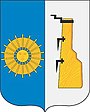
The main occupation of the inhabitants of Borovichi and the surrounding area was the pilotage of ships on the Mstinsky rapids ( Borovitsky rapids in Gorny Msta), which is reflected in the emblem of the city bestowed by Catherine II on the image of the legendary Petrovsky feather wheel [4] .
“... Not a single estate of the common people lives as freely as the pilots of these places,” wrote the famous Russian poet N. A. Nekrasov in the novel "Three countries of the world."
As far back as the 9th-12th centuries, the Volga, or Volga-Baltic trade route, was the first of the three great river routes connecting Scandinavia with the Caliphate in the early Middle Ages along the Msta River.
Throughout the XVIII century and in the XIX century, the Msta River was part of the most important Vyshnevolotsk water system - the oldest artificial water system in Russia, which connected the new capital of the empire - St. Petersburg with the rest of the country and solved the issue of its food supply.
Borovitsky rapids were the most difficult and dangerous place for navigation in all of Russia (40 rapid rapids over 31 kilometers, of which only 8 kilometers are still water). The breakthrough of all these thresholds with special steering teams from local residents (15 people for each of the four steering gears of the barge and the threshold pilot himself) took only an hour and a half and was regulated by a special manual semaphore on the banks.
Even in the 1870s, 10% of the baroque crashed on the thresholds was considered an acceptable loss. The last transit barge from the Volga along the Mstinsky rapids took place in 1893. [five]
During the Time of Troubles during the Russo-Swedish War of 1610-1617 (in Swedish “Ingermanländska kriget” - “Ingermanland War”) in February 1612, on the 25th, the battle of Borovichi took place - the crossing point across the Mstu river, where they converged five ancient tracts [6] .
About 9,000 people on both sides took part in the Battle of Blood (Cow) Mountain between the Swedish invaders (who promoted the new contender for the Russian throne - the 10-year-old Swedish prince Karl-Philippe Vasa , the younger brother of the future King Gustav II Adolf ) [7] The Russian state (supporters of the 16-year-old Polish Korolevich Vladislav Zhigimontovich Vasa (Vazy) (the future Polish king Vladislav IV), who was sworn to the Moscow government (Semiboyarschina) and Muscovites as Russian on August 27 ( September 6 ), 1610 the king ).
Both Muscovites and later Novgorodians occupied by the Swedes in the conditions of the deep socio-economic and political crisis of the Russian state, which put it on the brink of a national catastrophe, were forced by circumstances to try to use an alien factor to preserve national sovereignty.
They explained their choice of foreign princes by the ethnic kinship of their candidates with the Rurikovich dynasty that had been cut short on Ivan the Terrible: "our former sovereigns, and their royal root from their own Varangian reign, from Rurik."
Torn to pieces by the crowd of conspirators, the “good king” Dmitry Ioanovich (False Dmitry I) and the “Tushinsky thief” killed by his bodyguard - False Dmitry II could not become the sacred supreme arbiters of the struggle of the boyar clans, which essentially were always Russian tsars.
Now the representative of one of the boyar clans mortally warring among themselves could not be a king. Forced tonsure in the monks of Tsar Vasily Shuisky this is clearly shown.
Most of all, for the role of the king in those conditions, it was Prince Vladislav who was not involved in internal conflicts (“We don’t want to listen to our brother: the soldiers of the Russian tsar are not afraid, do not listen and do not serve him”). [eight]
Giving the royal throne to Prince Vladislav, the Russian people (originally they were Tushins from the False Demetrius II camp led by their Patriarch Filaret [Fedor Romanov, father of the future tsar Mikhail Romanov], and later Semiboyarschina with the Zemsky Cathedral on Sukharev Field), in fact, thereby rejected the proposal of the Polish king Sigismund III to subordinate his power and advocated maintaining the integrity of the Russian state.
In the same way, the Novgorodians occupied by the Swedes stubbornly motivated their refusal to swear allegiance to King Gustav II Adolf of Sweden of what they consider their grand duke to be his son, Prince Carl Philip.
VB Kobrin raised the question of alternatives to the Troubles. He believed that such a dynamic period as the Time of Troubles was extremely rich not only in bright events, but also in development alternatives. In particular, he suggested that “the accession of the Orthodox Vladislav in Russia would have brought good results ... he would have turned into a Russian Tsar of Polish descent, just as his father Sigismund was the Polish king of Swedish descent ... If this document (Tushino project) worked, all of Russian history would go the other way. " [9]
The famous Russian historian N. M. Karamzin in his “History of the Russian State” regretted that the “crown of the Monomakhs” did not return to the “Varangian dynasty”, which would include Russia in the system of powers that founded the “equilibrium in Europe until modern times”. [ten]
The commander of the hired army of the puppet-occupied Novgorod state occupied by the Swedes was the 27-year-old Swedish colonel, future field marshal Evert Karlsson Horn (1585–1615), the conqueror Yam (now Kingisepp), Koporye and Ivangorod, the royal governor (staffhalter) in Narva and the conquered Russians , son of Field Marshal Karl Heinrichson Horn , father of Field Marshal Gustav Evertson Horn , older brother of Field Marshal Gustav Horn , uncle of Field Marshals Heinrich Horn , Bengt Horn and Christer Klasson Horn [11]
About his army of mercenaries, ancient sources say: "... three in nine hundred," that is, the army was assembled from approximately 900 Scots and Dutch ( presbytarian ), 900 French ( Huguenots ) and 900 Novgorodians conquered by the Swedes .
The absence of Swedish royal soldiers in the army is explained by the fact that the Polish-Swedish war itself (1600-1611) was stopped at that time in April 1611 by a ceasefire for 9 months (in April 1612 both states extended the cease-fire for another 10 months, and On January 20, 1614, they conclude an armistice agreement until September 29, 1616).
The Swedish Colonel Evert Horn defeated the troops of the Cossack Colonel Andrei Nalyvaiko, a former ally of False Dmitry II, who later went to the service of King Sigismund in this battle of Borovitsky. In 1611, Nalivaiko participated in repeated trips to Moscow of the great Lithuanian hetman, Jan Karol Khodkevich, to deliver food to the Polish-Lithuanian garrison in the Moscow Kremlin , invited there by the Semiboyarschina as the retinue of the newly elected Russian Tsar Vladislav Zhigimontovich with the aim of preparing for his coronation. [12]
The Nalivaiko army consisted of 5,200 (according to Swedish sources from 2,000) Cossacks and Moscow military men who had previously brought a kiss of the cross to the uncrowned Russian Tsar Vladislav Zhigimontovich, officially invited by the Semiboyarschina to the Russian throne.
According to the historian Andrei Petrovich Polevikov, among the defenders of the city from the hired army of the "Germans" (Gentiles-invaders and the Novgorodians subjugated by them) there were also a lot of Borovichi [13] . They could also be supporters of the former legitimate crowned Russian Tsar Dimitry Ioannovich Rurikovich (in reality, instead of this tsar there probably was a whole cohort of consecutive impostors of False Dmitry , posing as the infant son of Ivan IV the Terrible , Tsarevich Dmitry, who was saved from death). Three months earlier - on December 4, 1611, another impostor False Dmitry III entered Pskov, where he was “announced” by the tsar and led the defense of Pskov from the Swedes.
A serious threat to the occupation of Borovitsky Row by a common enemy: the Latins of the Gentiles could unite the former enemies of the co-religionists - Cossacks and local militias. Cossacks, Moscow military men and militias were defeated, some of them took refuge behind the walls of the Holy Spirit Monastery.
The Swedish colonel forced Andrei Nalivaiko, who was seated in the monastery, to surrender and swear allegiance to the puppet Novgorod state and persecuted the rest who did not surrender "for several miles, forcing them to accept the battle and having killed 800 people, captured ... a lot of people with almost all supplies and sixteen banners.
Borovitsky Row was completely burned and burnt. Most of the mercenary troops remained at least until the end of winter with the wounded in the Holy Spirit Monastery, having expelled the Orthodox monks.
As the Swedish historian Johan Videkind wrote about the events of that time period: “... the Swedish soldiers rewarded themselves for everything, even the wives and daughters of the peasants were at their full disposal.” [14]
A long stay in the area of such diverse troops affected the diversity of the gene pool of future residents of the city and the region. So there was a "melting pot" of the Mstinsk pit, with its own customs, dialect, traditions, way of life.
The bodies of thousands of dead were interred on the spot where the original wooden Vvedensky church stood.
In 1874 the stone-built Vvedensky Cathedral rebuilt from it, a fire occurred. During repair work, a three-meter layer of human bones was found lying under an ancient stone “cathedral” cross, which was found in 1758 at the bottom of the Msta River and which was built into stone in the reconstruction of the Vvedensky Cathedral in stone.
Currently Borovitsky cross is in the Russian Museum of St. Petersburg [15] .
Now this mass grave of the soldiers of the Time of Troubles was rolled up under the asphalt of Gagarin Avenue in front of the Summer Garden, next to the Trinity Cathedral and the Eternal Flame.
The Museum of Local Lore of the city contains numerous exhibits of weapons and armor from the time of this medieval “battle of peoples”.
In 1744, the savior and owner of the Vyshnevolotsk water system Mikhail Serdyukov was transferred from the treasury to clear the fairway of the Borovitsky rapids on Mst, while the treasury guaranteed compensation for its costs. In carrying out this work, Serdyukov showed remarkable engineering talent - he guessed to lock the tributaries of Msta with dams, after which the bottom of the river was exposed, which made it possible to carry out work on cleaning the fairway of rapids all season.
To eliminate the dangers on the rapids, some of their ridges were cleared, the ledges of the river were destroyed, the whirlpools were enclosed; some capes protruding into the river are cut off; in order to prevent ships from breaking into stone ridges, elastic floats were arranged, and above all this, the water level was raised four times a year by dumping accumulated water from the Vyshnevolotsky and Mstinsky reservoirs for transporting baroque caravans through rapids. The Vyshnevolotsk water system began to work after clearing the fairway of rapids in full force (up to 6,000 barrels of bread per year) and from that moment the flowering of the Borovichi and St. Petersburg began. [sixteen]
The status of the city was assigned on May 28, 1770 by Catherine the Great (until this time Borovichi was considered a village [2] ). In April 1772, the Governing Senate approved the plan and coat of arms of the city of Borovichi.
In the summer of 1785, Catherine II made an exploratory journey along the waterway. The empress arrived in Vyshny Volochek, examined the canals, watched from the shore the passage of her caravan through the Borovitsky rapids. After that, on the pier of Poterpelitsa, located after the thresholds in three vestiges below Borovichi, where her flotilla was waiting, a dinner was given, for which all 200 pilots serving the Vyshnevolotsky water system were called. Then she boarded a barge specially prepared for her, and, accompanied by a caravan of ships with a retinue, sailed to St. Petersburg 10 days later.
In 1786, a school of water communications and a hospital were opened. In 1787, classes began in a small public school . By 1785, there were already 16 stone houses in Borovichi, 317 on a stone foundation and 373 wooden houses, 3 brick factories, a mill. And also the stone Cathedral of the Entry of the Blessed Virgin Mary into the Temple (founded back in the 15th century) was completed. Twice a year, fairs took place [17] .
The history of the Borovichi region is closely connected with the name of the great Russian commander Suvorov . 35 kilometers from the city is the village of Konchanskoye-Suvorovskoye , in which he served a link from May 5, 1797 to February 6, 1799, it was from here that he went on the famous alpine trek. Since 1942, the A.V. Suvorov Museum-Reserve was opened there.
In 1893-1905, the mayor of Borovichi was the merchant of the 1st guild, Matvey Yakovlevich Shulgin , who did a lot for the development of education and improvement of the city, in particular, thanks to his efforts, an iron arch bridge was built across the Mstu river.
The industrial development of the city is associated with the production of refractory bricks for the metallurgical industry, first of all, and began in the 70s of the XIX century . After the opening of the Mariinsky water system in 1810, the opening of the Nikolaev railway and in 1851 , especially after the opening of the Rybinsk-Bologovsky railway in 1870, the significance of Msta as the most important state water transport artery practically lost, and the development of the refractory industry became a new stage in history cities. In the vicinity of Borovichi, large reserves of lime, pyrites, brown coal and refractory clays were discovered. Back in 1786, at the mouth of Krupa, a tributary of the Msta, the first Russian adit for lignite mining was broken. In 1855, not far from Borovichi, Emanuel Emanuelovich Nobel founded the first refractory products factory.
Another large enterprise of the city is the Borovichi Combine of Building Materials, founded in 1910 . The plant owns the only electrified narrow gauge railway with a length of over 2 kilometers in the Novgorod Region and one of the few in Russia [18] .
On October 28 ( November 10 ), 1917 , when the Soviet in power took control of the Council of Workers 'and Soldiers' Deputies , Soviet power was established in Borovichi [19] . In the 1930s, the Cathedral of the Presentation of the Blessed Virgin Mary was completely demolished, the bell tower was destroyed and the domes and towers of the Trinity Cathedral, turned into a house of culture, were removed. [one]
In 1939, ITL (forced labor camp) was formed around the Borovichi, who were in the Leningrad Region at that time, at the construction of the Mstinskaya hydroelectric power station. К 1940 году численность заключённых на строительстве достигала 40 тысяч, при том, что в самих Боровичах тогда жило тогда всего 35 тысяч жителей. Строительство Боровического, Ивановского и Чернецкого гидроузла велось до начала войны. Из-за неё были законсервирована не только ГЭС на Мсте, но и стройки ГЭС на Клязьме, Куйбышевской на Волге, Соликамской на Каме.
В то же время продолжалось строительство и наполнение водохранилищ Угличской и Рыбинской ГЭС. До начала военных действий в 1941 году строители соорудили каналы в обход Мсты и котлован ГЭС.
Заключёнными в лаготделениях были заняты здание бывшей Спасской церкви, Устье, Боровичи-Бобровик, Опочно, Шиботово, Свято-Духов монастырь, значительная их часть находилась в селе Ёгла.
В апреле 1941 года Боровичский горисполком принял решение разместить в здании Успенской церкви склад управления строительства Мстинской ГЭС. С началом войны работы приостановились, часть заключённых призвали в армию, других направили на строительство оборонительных сооружений.
После войны рассматривались планы построить в Боровичах металлургический комбинат с достройкой водохранилищ , ГЭС, каналов, шлюзов и развитием по ним судоходства. Но изыскания показали, что воду в водохранилищах будет не удержать, она просочится через пористые известняки.
В годы войны Боровичи стали ближним тылом фронта и не узнали ни уличных боев, ни артиллерийских обстрелов и перенесли лишь отдельные очень немногочисленные бомбежки.
«Боровичи — стал подлинным городом госпиталем. Здесь их развернуто 22»- так написал в своих дневниках знаменитый военный хирург Вишневский, много работавший в войну в городе. Под госпитали было отдано 10 школ, 5 жилых домов, 9 административных зданий.
Вся промышленность была переведена на военные рельсы. «Все для фронта все для победы!» Выпускали миномёты, мины, снаряды, оборудование для походных хлебозаводов, котлы для приготовления пищи, армейские котелки, походные бани, печки-буржуйки для землянок, ложи для винтовок, пулемётов, вязали свитера, подшлемники, обмотки, перчатки, шили гимнастёрки, брюки.
Город принял детей-сирот в свои детские дома и семьи.
В 1949 году на городском кладбище устанавливается первый памятный обелиск советским воинам, умершим в Боровичских госпиталях (свыше 4 тысяч человек).
В феврале 1942 года на территории ИТЛ создан сборно-пересыльный пункт для бывших военнослужащих Красной Армии, попавших в плен или вышедших из окружения. В том же году пункт преобразован в лагерь-распределитель НКВД для военнопленных и становится одним из лаготделений лагеря № 270 для военных преступников под Боровичами в селе Ёгла.
Кроме них в лагере было много интернированных в конце 1944 года в Польше солдат Армии Крайовой. Ёгольский лагерь не был только рабочим лагерем, здесь подлечивались и восстанавливали силы ослабленные. Восстановивших силы снова отправляли в рабочие лагеря, здесь же они занимались самообслуживанием, оборудованием лагеря и помогали колхозам. In sec. Ёгла на сельском кладбище созданы памятные знаки умершим раненным из военнопленных в этих лагерях 306 немцам, 32 австрийцам и 30 венграм, мемориал интернированным и умершим от ран 96 жолнежам польской Армии Крайовы.
Во время войны в город были эвакуированы Ленинградская областная филармония, ленинградский областной театр оперетты, в котором с 1944 года выступала Галина Вишневская, областные театры драмы и кукольный, которые выступали перед ранеными, на сцене гортеатра, в соседних районах, выезжали на фронт.
В Боровичах был крупнейший из двенадцати в Советском Союзе обозостроительный завод «Смена» [20] .
Population
| Population | ||||||||||
|---|---|---|---|---|---|---|---|---|---|---|
| 1856 [21] | 1897 [21] | 1913 [21] | 1931 [21] | 1939 [21] | 1959 [22] | 1967 [21] | 1970 [23] | 1973 [21] | 1976 [21] | 1979 [24] |
| 8600 | ↗ 9400 | ↗ 11,000 | ↗ 23 500 | ↗ 41 000 | ↗ 44 123 | ↗ 55 000 | ↘ 54 763 | ↗ 56 000 | ↗ 57 000 | ↗ 59 646 |
| 1982 [25] | 1986 [21] | 1987 [26] | 1989 [27] | 1992 [21] | 1996 [21] | 1998 [21] | 2000 [21] | 2001 [21] | 2002 [28] | 2003 [21] |
| ↗ 61,000 | ↗ 63 000 | ↗ 69,000 | ↘ 63 009 | ↘ 62 500 | ↘ 61 500 | → 61 500 | ↘ 61 400 | ↘ 60 700 | ↘ 57 755 | ↗ 57 800 |
| 2005 [21] | 2006 [21] | 2007 [21] | 2008 [21] | 2009 [29] | 2010 [30] | 2011 [21] | 2012 [31] | 2013 [32] | 2014 [33] | 2015 [34] |
| ↘ 57 500 | ↘ 57 200 | ↘ 56 700 | ↘ 56 100 | ↘ 55 412 | ↘ 53 690 | ↗ 53 700 | ↘ 53 383 | ↘ 53 141 | ↘ 52 687 | ↘ 52 212 |
| 2016 [35] | 2017 [36] | 2018 [1] | ||||||||
| ↘ 51 555 | ↘ 50 896 | ↘ 50 144 | ||||||||
На 1 января 2019 года по численности населения город находился на 328 месте из 1115 [37] городов Российской Федерации [38] .
Industry
- ОАО « Боровичский комбинат огнеупоров » — производство огнеупорных изделий
- ЗАО ПК «Корона» — производство замороженных полуфабрикатов, колбасных изделий, молочной продукции, хлебобулочных и кондитерских изделий.
- ЗАО «Боровичский мясокомбинат» — производство колбасных изделий и полуфабрикатов.
- ОАО «Боровичский молокозавод» — производство молочной продукции.
- ОАО «Деметра» — производство хлебо-булочных и кондитерских изделий.
- ОАО «Мстатор» — разработка и производство электромагнитных компонентов радиоэлектронной аппаратуры.
- ООО «Боровичский завод силикатного кирпича» — производство силикатного кирпича
- ЗАО «Боровичский комбинат строительных материалов» — производство красного кирпича , тротуарной плитки и др. строительных материалов.
- ООО «Боровичский опытный специализированный завод»
- Боровичский завод «Двигатель» — филиал Санкт-Петербургского ОАО «Красный Октябрь» .
- ОАО «Боровичский завод „Полимермаш“» — производство вулканизационных прессов и инструментов для стыковки и ремонта конвейерных лент.
- ООО « Боровичский завод деревообрабатывающих станков », расположенный на производственных площадях ОАО "Боровичский завод «Полимермаш» — производство четырёхсторонних станков.
- АО « Эльбор » — производство взломостойких стальных дверей и замков.
- ЗАО Боровичи-мебель
- ООО ЭЛЕГИЯ
- ООО ЛИОН
Twin Cities
Боровичи является городом-побратимом следующих городов:
| A country | Город-побратим | Год установления связи |
|---|---|---|
| Finland | Суолахти [39] | - |
| USA | Бингемтон ( штат Нью-Йорк ) [39] | - |
| Estonia | Хаапсалу [39] | - |
Culture
Музей истории города Боровичи и Боровичского края
Расположен в исторической части города, в доме купца I гильдии М. Я. Шульгина , городского головы (1894—1906). Экспозиции насчитывает более 2 тыс. экспонатов, охватывающих период от эпохи неолита до революционных событий 1917 года.
Attractions
Мост Белелюбского (арочный мост)
Station
Боровичи являются конечной станцией на тупиковой линии Угловка — Боровичи . В городе сохранилось здание деревянного железнодорожного вокзала построенного в 1876 году . Формирование вокзального комплекса определило расположение подъездных путей. Большая часть построек (главное здание вокзала, деревянная платформа с резной крышей, багажное отделение, водонапорная башня, склад, локомотивное депо) выстроена в одну линию вдоль путей. Редкий по сохранности комплекс сформировался в два основных строительных периода — в 1870-е годы и в начале XX века. Хорошо сохранился и используется по назначению, несмотря на малоинтенсивное пассажирское сообщение на линии Боровичи-Угловка. На станции Угловка делают остановку скоростные поезда "Сапсан" и другие поезда линии Москва-Петербург.
Так как Боровичский железнодорожный вокзал сохранил исторический облик 1870-х годов, он был выбран в качестве места съёмок многих художественных фильмов и телесериалов.
Свято-Духов монастырь
Свято-Духов монастырь был основан в излучине реки Мсты , на северной окраине села Боровичи. Он являлся важным видовым ориентиром в застройке села, а затем города. Точная дата основания монастыря остаётся неизвестной. Самое раннее упоминание относится к 1572 году . Все монастырские постройки в 1582 году были деревянными. До 1657 года в монастыре покоились мощи св. Иакова Боровичского . За период с конца XVII века до 1765 года монастырский комплекс во многом обновляется. Окончательно сформировался монастырский ансамбль к 1870-м годам. После того как монастырь закрыли в 1927 году , разобрали главы церквей. В 1998 году комитетом по управлению государственным имуществом Новгородской области принято решение передать в безвозмездное пользование Новгородскому Епархиальному управлению комплекса Свято-Духова монастыря для использования по первоначальному назначению. В настоящее время монастырь восстанавливается [40] .
Education
Schools
| No. | Address | Углублённое изучение | Site |
|---|---|---|---|
| МАОУ СОШ № 1 | Коммунарная ул., 46 | Social Studies | link |
| МАОУ СОШ № 2 | Ленинградская ул., 95 | link | |
| МАОУ НОШ № 3 | st. Гоголя, 65 | link | |
| МАОУ СОШ № 4 | Школьный бульв., 10 | link | |
| МАОУ СОШ № 7 | Ботаническая ул., 9 | link | |
| МАОУ СОШ № 8 | Гончарная ул., 33 | математика , английский язык | link |
| МАОУ СОШ № 9 | Кооперативная ул., 51 | link (inaccessible link) | |
| МАОУ СОШ № 11 | Парковая ул., 1 | экономика , биология | link |
| МАОУ СОШ № 12 | Пушкинская ул. | школа с производственным обучением | |
| МАОУ Гимназия | st. Софьи Перовской, 90 | English | link |
Main Streets
Со времени распада Советского Союза в 1991 году ни одной из центральных улиц города не вернули исторические названия.
- Leningradskaya street
- улица Подбельского
- Коммунарная улица
- улица Софьи Перовской
- Пушкинская улица
- улица Карла Либкнехта
- улица Декабристов
- Сушанская улица
- Park street
- улица Гоголя
- улица А. Кузнецова
- Окуловская улица
Спорт в Боровичах
- Боровичи (хоккейный клуб)
- Stadiums
- Металлург (снесён, вместо него построен «Ледовый дворец»)
- Волна
- Физкультурно-оздоровительные комплексы
- Ледовый Дворец Металлург [41]
- Olympus
- Elegy
- КСК Сосновка
- КСК Эрнест
Prison
В городе осуществляет деятельность лечебное учреждение для отбывания наказания и лечения осуждённых (мужчин), болеющих туберкулёзом № 3 УФСИН России по Новгородской области.
Образовано в 1939 году как Мстинский исправительно-трудовой лагерь при Управлении строительства ГЭС на реке Мста. В феврале 1942 года на территории ИТЛ создан сборно-пересыльный пункт для бывших военнослужащих Красной Армии, попавших в плен или вышедших из окружения. В том же году пункт преобразован в лагерь-распределитель НКВД для военнопленных и становится одним из лаготделений лагеря № 270, позднее лагерь для военных преступников. В 1951 году преобразован в ИТК-8. С 1953 года — ИТК-3. С 1964 года — колония строгого режима для больных туберкулёзом, с 1965 года — межобластная колония для больных туберкулёзом. С 2005 года — лечебно-исправительное учреждение № 3.
В 1998 году на территории учреждения построен храм для нужд верующих. В 2009 году было построено новое двухэтажное здание общежития на 100 человек [42] .
In the cinema
Город Боровичи можно увидеть в фильмах:
- « Я тебя никогда не забуду », режиссёр Павел Кадочников , 1983
- « Серебряные струны » [43] , Павел Кадочников , 1987
- Сериал « Конь Белый » [44] , Гелий Рябов , 1993
- « Тихие омуты », Эльдар Рязанов , 2000
- « Статский советник », Филипп Янковский , 2005
- Сериал « Дорогой мой человек », Егор Абросимов , 2011
- Документальный фильм «Borowitschi» («Боровичи»). Режиссёр Виола Стефан, сценарист Виктор Косаковский, Германия, 1996 год.
- Короткометражный художественный фильм «Барабаниада» . Киностудия «Ленфильм» . Режиссёр Сергей Овчаров. 1981 год.
- Документальный фильм «Боровичи — любимый город». Телекомпания «Мста» 2016 год.
Famous People
Уроженцы города и района
- Путилов Николай Иванович (1820—1880) — русский предприниматель, математик, инженер, основатель Путиловского завода в Санкт-Петербурге.
- Кузнецов Алексей Александрович (1905—1950) — советский государственный и партийный деятель, первый секретарь Ленинградского обкома и горкома партии в 1945—1946 годах.
- Романов Григорий Васильевич (1923—2008) — советский партийный и государственный деятель. Член Политбюро ЦК КПСС (1976—1985). Секретарь ЦК КПСС (1983—1985 гг.).
- Воробьёв Лев Васильевич (1931—2010) — советский космонавт [45] .
- Аничков Иван Васильевич (1863—1921) — русский учёный, археолог, этнограф, краевед. Брат Е. В. Аничкова.
- Аничков, Евгений Васильевич (1866—1937) — историк литературы, критик, фольклорист, прозаик.
- Аничков Игорь Евгеньевич (1897—1978) — российский и советский лингвист, профессор, доктор филологических наук. Сын Е. В. Аничкова.
- Кокорин Анатолий Александрович (1921—1941) — Герой Советского Союза [46] .
- Павлов Лаврентий Фёдорович — Герой Советского Союза [47] .
- Молодчиков Владимир Николаевич (1914—1960) — Герой Советского Союза [48] .
- священномученик Варсонофий (Лебедев Василий Петрович) (1871—1918) — епископ Русской православной церкви , епископ Кирилловский , викарий Новгородской епархии .
- Епископ Дими́трий (Сперовский Николай Андреевич) (1865—1923, по др. сведениям, в 1925) — епископ Русской православной церкви, епископ Рязанский и Зарайский , искусствовед.
- Игумения Таисия (Солопова Мария Васильевна) (1842—1915) — настоятельница Иоанно-Предтеченского Леушинского первоклассного женского монастыря , подвижница Русской православной церкви .
- Андреев Юрий Иванович (1936—2018) — народный артист Карелии , сценарист и режиссёр театра кукол в Петрозаводске.
- Павлов, Лавр Петрович — (1922—1944) советский лётчик, Герой Советского Союза.
Люди, связанные с городом и районом
- Михаил Сердюков (при рождении Бароно Силингинов или Бароно Имегенов ; 1678 [49] — 1754 ) — российский купец монгольского происхождения, судостроитель, гидротехник-самоучка, известный спасением и развитием Вышневолоцкой водной системы — важнейшей транспортной артерии России в XVIII веке и первой половине XIX века, сыгравшей исключительную роль в строительстве и развитии новой имперской столицы — Санкт-Петербурга и её продовольственной безопасности. Фактический создатель крупнейшей гидротехнической системы Европы XVIII века и, следовательно, главное лицо в истории города Боровичи, развитие и расцвет которого состоялись благодаря особо значительной роли его жителей в функционировании вышеупомянутой стратегической водной транспортной системы России XVIII—XIX веков.
- Эммануил Эммануилович Нобель (1801―1872) ― шведский и русский инженер , архитектор , изобретатель и промышленник . Основатель промышленной династии Нобелей . Основатель производства огнеупоров в Боровичах, спасшего экономику города после прекращения транзитного движения по Вышневолоцкой водной системе.
- Суворов Александр Васильевич (1730—1800) — великий русский полководец, военный теоретик, национальный герой России.
- Лядов Анатолий Константинович (1855—1914) — русский композитор, дирижёр и педагог, профессор Петербургской консерватории.
- Рерих Николай Константинович (1874—1947) — русский художник, сценограф, философ-мистик, писатель, путешественник, археолог, общественный деятель.
- Бианки Виталий Валентинович (1894—1959) — советский писатель, автор многих произведений для детей.
- Вишневский Александр Александрович (1906—1975) — советский хирург, учёный, доктор медицинских наук, профессор, главный хирург Министерства обороны СССР. В качестве главного хирурга Волховского фронта во время ВОВ часто бывал и работал в боровичских госпиталях.
- Белелюбский Николай Аполлонович (1845—1922) — русский инженер и учёный в области строительной механики и мостостроения.
- Засодимский Павел Владимирович (1843—1912) — русский писатель. Жил, умер и похоронен в селе Опеченский Посад, могила находится у стен церкви Успения Пресвятой Богородицы.
- Шишков Вячеслав Яковлевич (1873—1945) — российский и советский писатель, автор романа «Угрюм-река». Лауреат Сталинской премии первой степени.
- Конарев Михаил Устинович (1902—1984) — директор Боровичского комбината огнеупоров имени В. И. Ленина, Герой Социалистического Труда.
- Волкович Тимофей Иванович (1899—1981) — советский военачальник, генерал-майор.
- Вишневская Галина Павловна (1926—2012) — советская, российская оперная певица (сопрано), актриса, театральный режиссёр, педагог. Народная артистка СССР. Full holder of the Order of Merit to the Fatherland. В официальной биографии говорится, что Вишневская с 1947 по 1952 годы работала в Ленинградской областной филармонии, но сохранились архивные документы, показывающие, что в эти годы она числилась и в составе Новгородской филармонии, располагавшейся с 1944 по 1959 годы в здании ГДК в Боровичах.
Honorary Citizens
- Александр Аркадьевич Суворов (1804—1882) — князь Италийский, граф Рымникский, внук генералиссимуса Александра Васильевича Суворова .
- Шульгин Матвей Яковлевич (1859—1933) — боровичский городской голова в 1893—1905 гг., член III Государственной думы от Новгородской губернии.
See also
- Боровичская ТЭЦ
Notes
- ↑ 1 2 3 The population of the Russian Federation by municipalities as of January 1, 2018 . Date of treatment July 25, 2018. Archived July 26, 2018.
- ↑ 1 2 USSR. Administrative and territorial division of the Union republics on January 1, 1980 / Comp. V.A. Dudarev, N.A. Evseeva. - M .: Izvestia, 1980 .-- 702 p. — С. 180.
- ↑ Decree of the Government of the Russian Federation of July 29, 2014 No. 1398-r “On approval of the list of single-industry towns”
- ↑ Воейков А. И. Боровичи // Энциклопедический словарь Брокгауза и Ефрона : в 86 т. (82 т. и 4 доп.). - SPb. , 1890-1907.
- ↑ Максимов С. В. Куль хлеба. М. Директ-Медиа, 2014.стр. 174-178.
- ↑ 405 лет битве Боровичской. . xn--80abdyagbec8aaxhj3g.xn--p1ai. Дата обращения 8 апреля 2017.
- ↑ Almquist, H: Sverige och Ryssland 1595—1611. Tvisten om Estland, förbundet mot Polen, de ryska gränslandens eröfring och den stora dynastiska planen, s. 117—118, 124, Almqvist & Wiksell 1907
- ↑ Коваленко Геннадий. Великий Новгород 1611—1617. Между Москвой и Стокгольмом (по материалам Государственного архива Швеции)
- ↑ Кобрин В. Б. Смутное время — утраченные возможности // Исто- рия Отечества: люди, идеи, решения. Очерки истории России IX — начала ХХ в. — М., 1991.
- ↑ Карамзин Н. М. История Государства Российского. Т. XII. — М., 1989.
- ↑ Ödberg, F.(1904): Om Konung Johan III:s förföljelse mot ståthållaren Karl Henriksson Horn och hans bröder 1590—1592, Vestergötlands fornminnesförenings tidskrift del II:4-5 s. 8-13, 17-21, 30-32, 36, 38-39, 41, 45, 47-49, 55
- ↑ Majewski W. Nalewajko Andrzej (zm. po r. 1613) // Polski Słownik Biograficzny. — Wrocław — Warszawa — Kraków — Gdańsk : Zakład Narodowy Imienia Ossolińskich Wydawnictwo Polskiej Akademii Nauk, 1977. — T. XXIІ/3, zeszyt 94.— S. 488—489.
- ↑ Полевиков А. П. Боровичи на Мсте — прекрасный город. Боровичи, 2006.
- ↑ Юхан Видекинд. История шведско-московитской войны XVII века. М. Российская Академия Наук. 2000
- ↑ Порфиридов Н. Г. Малоизвестный памятник древнерусской скульптуры (каменный крест из Боровичей) // Древнерусское искусство XV — начала XVI вв. М., 1963. С. 184—195).
- ↑ Максимов С. В. Куль хлеба. М. Директ-Медиа, 2014.
- ↑ Ермолов В. А., Кутузов Н. И. Боровичи. — Л. : Лениздат , 1980. — 88 с. — ( Города Новгородской области ).
- ↑ Болашенко С. Узкоколейная железная дорога Боровичского комбината строительных материалов
- ↑ The Great October Socialist Revolution: Encyclopedia. 3rd ed. - M .: Sov. Encyclopedia, 1987 .-- 639 p. — С. 339.
- ↑ Обозостроительный завод «Смена» (недоступная ссылка) . Дата обращения 18 августа 2009. Архивировано 8 августа 2011 года.
- ↑ 1 2 3 4 5 6 7 8 9 10 11 12 13 14 15 16 17 18 19 20 Народная энциклопедия «Мой город». Боровичи . Дата обращения 8 октября 2013. Архивировано 8 октября 2013 года.
- ↑ 1959 All-Union Census. The number of urban population of the RSFSR, its territorial units, urban settlements and urban areas by gender . Demoscope Weekly. Date of treatment September 25, 2013. Archived on April 28, 2013.
- ↑ 1970 All-Union Population Census. The number of urban population of the RSFSR, its territorial units, urban settlements and urban areas by gender. . Demoscope Weekly. Date of treatment September 25, 2013. Archived on April 28, 2013.
- ↑ 1979 All-Union Population Census. The number of urban population of the RSFSR, its territorial units, urban settlements and urban areas by gender. . Demoscope Weekly. Date of treatment September 25, 2013. Archived on April 28, 2013.
- ↑ National Economy of the USSR 1922-1982 (Anniversary Statistical Yearbook)
- ↑ National Economy of the USSR for 70 years : anniversary statistical yearbook: [ arch. June 28, 2016 ] / USSR State Committee for Statistics . - Moscow: Finance and Statistics, 1987. - 766 p.
- ↑ 1989 All-Union Population Census. The urban population . Archived on August 22, 2011.
- ↑ 2002 All-Russian Population Census. Tom. 1, table 4. The population of Russia, federal districts, constituent entities of the Russian Federation, regions, urban settlements, rural settlements - district centers and rural settlements with a population of 3 thousand or more . Archived February 3, 2012.
- ↑ The number of permanent population of the Russian Federation by cities, urban-type settlements and districts as of January 1, 2009 . Date of treatment January 2, 2014. Archived January 2, 2014.
- ↑ 2010 All-Russian Population Census. 12. The population of municipal districts, settlements, urban and rural settlements of the Novgorod region . Date of treatment February 2, 2014. Archived February 2, 2014.
- ↑ Population of the Russian Federation by municipalities. Table 35. Estimated resident population as of January 1, 2012 . Date of treatment May 31, 2014. Archived May 31, 2014.
- ↑ The population of the Russian Federation by municipalities as of January 1, 2013. - M.: Federal State Statistics Service of Rosstat, 2013. - 528 p. (Table 33. The population of urban districts, municipalities, urban and rural settlements, urban settlements, rural settlements) . Date of treatment November 16, 2013. Archived November 16, 2013.
- ↑ Table 33. The population of the Russian Federation by municipalities as of January 1, 2014 . Date of treatment August 2, 2014. Archived on August 2, 2014.
- ↑ The population of the Russian Federation by municipalities as of January 1, 2015 . Date of treatment August 6, 2015. Archived on August 6, 2015.
- ↑ Population of the Russian Federation by municipalities as of January 1, 2016
- ↑ The population of the Russian Federation by municipalities as of January 1, 2017 (July 31, 2017). Date of treatment July 31, 2017. Archived July 31, 2017.
- ↑ taking into account the cities of Crimea
- ↑ The population of the Russian Federation by municipalities as of January 1, 2019. Table "21. The population of cities and towns by federal districts and constituent entities of the Russian Federation as of January 1, 2019 ” (RAR archive (1,0 Mb)). Federal State Statistics Service .
- ↑ 1 2 3 Международная ассоциация «Породненные города» (недоступная ссылка) . Дата обращения 21 ноября 2015. Архивировано 1 июня 2016 года.
- ↑ Комитет культуры и туризма Боровичского муниципального района
- ↑ Ледовый дворец "Металлург" . АО «БКО» - Общественный сайт .
- ↑ Лечебно-исправительное учреждение № 3 . www.53.fsin.su. Date of treatment February 12, 2019.
- ↑ Серебряные струны (1987) — информация о фильме — советские фильмы — Кино-Театр. RU
- ↑ Конь Белый (1993) — информация о фильме — российские фильмы и сериалы — Кино-Театр. RU
- ↑ Биографии космонавтов на сайте Космической энциклопедии. Воробьёв Лев Васильевич
- ↑ Тэммо, Вязинин, 1987 .
- ↑ Тэммо, Вязинин, 1987 , с. 191.
- ↑ Тэммо, Вязинин, 1987 , с. 235.
- ↑ Также в качестве даты рождения упоминается 1677 год.
Literature
- Воейков А. И. Боровичи // Энциклопедический словарь Брокгауза и Ефрона : в 86 т. (82 т. и 4 доп.). - SPb. , 1890-1907.
- Ермолов В. А., Кутузов Н. И. Боровичи. — Л. : Лениздат , 1980. — 88 с. — ( Города Новгородской области ).
- Тэммо А. М., Вязинин И. Н. Золотые звёзды новгородцев. — Л. : Лениздат , 1987. — 272 с.
- Боровичи // Большая советская энциклопедия : в 66 т. (65 т. и 1 доп.) / гл. ed. O. Yu. Schmidt . - M .: Soviet Encyclopedia , 1926-1947.