The agalloch tree [2] , or the exsecaria agalloch [3] ( lat. Excoecaria agallocha ) is a poisonous mangrove tree , a species of the genus Exceecaria ( Excoecaria ) of the family Euphorbiaceae . Wood is used in medicine, construction, perfume production.
| Agalloch tree |
 |
| Scientific classification |
|---|
|
| International scientific name |
|---|
Excoecaria agallocha L. , 1759 |
| Security status |
|---|
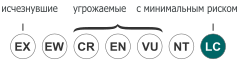
Least ConcernedIUCN 3.1 Least Concern : 178842 |
|
Content
Thickets of agalloch tree. India,
Andhra Pradesh The main places of growth are Southeast Asia , Bangladesh , Bhutan , Myanmar , China , Vietnam , Cambodia , India (foothills of the Himalayas ).
Since the 1950s, attempts have been made to grow precious wood in India, but due to the absence of disease insects, the wood was not sick and did not bring valuable agar wood .
The milky juice of the plant is highly toxic. Leaking with a strong jet incision in the cortex, it can get on the mucous membrane of the eye, which causes severe inflammation and can lead to complete blindness [2] .
The plant contains tannins - substances with significant biological activity [3] .
Agar oil is the result of the defense mechanism of this plant. After damage by a fungus, the production of resin begins at the site of the lesion, which eventually saturates the wood, forming valuable agar oil. The ripening time of the essential oil can take from several decades to hundreds of years.
The essential oils contained in damaged wood are used in medicine, perfumery and cosmetology.
Traditional Application
The roots of the plant secrete substances that are poisonous to many aquatic creatures, in connection with which the local population plants this tree near water bodies for water purification. In addition, pieces of plant wood affected by the fungus were traditionally added to drinking water, which changed the taste of any water to pleasant.
Uncontrolled felling of the plant led to the fact that the species was in danger of complete extinction. Currently, the agalloch tree is included in CITES Annex II (Convention on the International Trade in Endangered Species of Wild Fauna and Flora).
- ↑ For the conventionality of specifying the class of dicotyledons as a superior taxon for the plant group described in this article, see the APG Systems section of the Dicotyledonous article .
- ↑ 1 2 Cherneva, 1981 , p. 140.
- ↑ 1 2 Golovkin et al., 2001 .
- Scarlet tree // Brockhaus and Efron Encyclopedic Dictionary : in 86 volumes (82 volumes and 4 additional). - SPb. , 1890-1907.
- Scarlet tree // A - Engob. - M .: Soviet Encyclopedia, 1969. - ( Great Soviet Encyclopedia : [in 30 vol.] / Ch. Ed. A. M. Prokhorov ; 1969-1978, vol. 1).
- Cherneva O. V. Euphorbiaceae family (Euphorbiaceae) // Plant Life. In 6 t. / Ch. ed. Takhtadzhyan A.L. - M .: Education, 1981. - T. 5. Part 2. Flowering plants. / Ed. A. L. Takhtadzhyana . - S. 135-141. - 512 s. - 300,000 copies.
- Golovkin B.N. et al. Tannin (tannin) (tannin) // Biologically active substances of plant origin / Ed. ed. V.F. Semikhov. - M .: Nauka, 2001 .-- T. II. - S. 591-594. - 764 s. - 1000 copies. - ISBN 5-02-013184-9 . - UDC 58