The autonomous government of Inner Mongolia ( Chinese р 自治 政府 ) is a state structure that exercised power over the territories in Northern China in 1947-1949.
| Historical state | |||
| Autonomous Government of Inner Mongolia | |||
|---|---|---|---|
| 内蒙古 自治 政府 | |||
| |||
←   → →1947 - 1949 | |||
| Capital | Wangmyao | ||
| Languages) | Mongolian , Chinese | ||
| Currency unit | Yuan of Inner Mongolia | ||
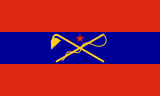
After World War II, various governments arose in the Mongolian-occupied territories of northern and northeastern China. The Chinese Communist Party tried to take control of this process, and gradually the Joint Assembly of the Inner Mongolia Autonomy Movement accumulated all these structures in itself.
On April 23, 1947, an Assembly of People's Representatives of Inner Mongolia was held in Wangyiao , which was attended by 393 delegates. The meeting participants represented various nationalities living in the territory of Inner Mongolia: Mongols, Daurs, Evenks, Haitians, Manchu, Hui Tzu, Koreans. On May 1, 1947, the Assembly elected the Autonomous Government of Inner Mongolia of 21 people (of which only 3 were Chinese), headed by Ulanfu .

The Inner Mongolia People’s Self-Defense Army participated in the civil war along with the Communist forces , moving southwest, and gradually new lands fell under the control of the Autonomous Government.
After the formation of the PRC, the Autonomous Government of Inner Mongolia on December 2, 1949 was officially transformed into the People's Government of the Autonomous Region of Inner Mongolia .