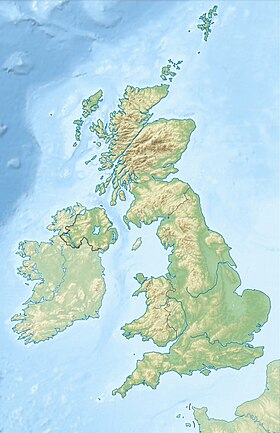
Barry Holmes ( born Burry Holms , Wall. Ynys Ianwol ) is a small tidal island located at the northern tip of the Gower Peninsula in South Wales .
| Barry holmes | |
|---|---|
| English Burry Holms , Wall. Ynys ianwol | |
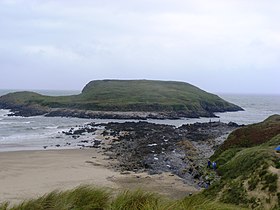 Barry Holmes at high tide | |
| Location | |
| Water area | Irish sea |
| A country |
|
| Region | Wales |



In the spring and summer, the Barry Holmes is covered in flowers such as a rose . The island is also popular with shell collectors [1] .
History
9000 years ago, the island was removed up to 12 miles (19 km) from the sea. It was inhabited by nomadic Mesolithic hunters. Flint tools, discovered in 1919, were the first evidence of their existence. Since then, many tools made of wood and bone have been discovered [2] .
In 1998, the National Museum of Wales excavated the island and discovered that Barry Holmes was used as a seasonal camp during the Mesolithic era. The Iron Age people subsequently built 5 acres (20,000 square meters) of earthworks and ditches on the island. In the Middle Ages, the monastery was located on the island [3] .
Notes
- ↑ Burry Holms - Gower Peninsular (link not available) . Date of treatment January 4, 2013. Archived January 27, 2013.
- ↑ Burry Holms (link unavailable) . Date of treatment January 4, 2013. Archived January 27, 2013.
- ↑ Burry Holms, Gower Early Mesolithic and later Prehistoric Site (link not available) . Date of treatment January 4, 2013. Archived January 27, 2013.
Links
- BBC history article
- www.geograph.co.uk: photos of Burry Holms and surrounding area
- Artifacts from Burry Holms on Gathering the Jewels (link not available) . Archived January 5, 2006.