Korematsu v. United States , [1] , was one of the key US Supreme Court cases, which examined constitutional compliance under Emergency Ordinance No. 9066 , under which Japanese-Americans were required to relocate to internment camps during World War II , regardless of their nationality.
| Korematsu v. United States | |
|---|---|
 US Supreme Court US Supreme Court | |
| The debate took place on October 11–12, 1944 Closed December 18, 1944 | |
| Full title | Fred Korematsu v. United States |
| A source | 323 US 214 ( more ) 65 S. Ct. 193; 89 L. Ed. 194; 1944 US LEXIS 1341 |
| Decision | |
| The isolation act leading to the internment of Japanese-Americans was found constitutionally compliant | |
| Opinions | |
| Most | Black, joined by Stone, Reed, Douglas, Rutledge, Frankferter |
| Coinciding with the majority | Frankferter |
| Special opinion | Roberts, joined Murphy, Jackson |
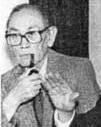
By a decision of 6 judges versus 3, the court agreed with the government [2] , declaring that the order was consistent with the constitution . A decision made by Judge Hugo Black ruled that the need to protect against espionage outweighed the individual rights of Fred Korematsu , as well as the rights of other Americans of Japanese descent (the court limited itself to considering only this specific decree, adding that “The provisions of other decrees requiring people of Japanese descent to be noted at the collection points and the detention of these persons are not related to this case.” ) During the hearing, Deputy Minister of Justice Charles Fahey allegedly hiding evidence without attaching a report from the Naval Intelligence Directorate informing that “there was no evidence that the Japanese-Americans were not loyal, acted like spies or gave signals to enemy submarines.” [3 ]
The decision in the Korematsu v. United States case was extremely controversial. [2] The conviction of Korematsu for evading internment was refuted on November 10, 1983, after Korematsu challenged a previous court decision by filling out a court order to review the case. The case was tried by Judge Marilyn Patel in the court of the northern district of the state of California , which ruled in favor of Korematsu (thus overturning the previous conviction of Korematsu), since in the original case the government deliberately provided false information to the supreme court, which influenced the decision of the supreme court.
In 2011, the US Department of Justice issued a formal notice [4] , recognizing that this happened by mistake, thereby destroying the value of this case as a precedent for the internment of citizens. Despite this, the court’s decision remains important as the first case when the Supreme Court used the standard of strict examination in in relation to racial discrimination of citizens by the state, and as one of the few court cases when the court considered that the state complies with this standard.
Introduction
On May 19, 1942, during World War II, many Japanese-Americans were resettled in internment camps , in accordance with Civil Restrictive Decree No. 1, 8, Federal Regulation 982. This decree, like other similar decrees, was based on an emergency decree No. 9066 (February 19, 1942).
Fred Korematsu is a Japanese-American who has decided to stay in San Leandro and intentionally violating US Army Civil Insulation Act No. 34. Fred Korematsu argued that Emergency Ordinance No. 9066 was not constitutional, as it violated the Fourteenth Amendment to the US Constitution . He was arrested and convicted. The issue of Korematsu's loyalty to the United States, however, has not been raised. The Federal District Court of Appeals upheld the conviction, which was sent to the Supreme Court.
Assistant Concealment of Evidence by Deputy Minister of Justice
May 20, 2011, Neil Katyal Being the acting deputy minister of justice, he issued a non-standard statement condemning one of his predecessors more than 65 years ago, the deputy minister of justice, Charles Fahey. [5] He accused Fahey of possessing “concealed critical evidence” in the Hirabayashi case and Korematsu during World War II.
Court Decision
The decision in this case, recorded by Judge Hugo Black, was almost entirely consistent with the decision in the case of Hirabayashi v. United States ”And was based on the same principle of respect for Congress and military administration, especially in light of the uncertainty that followed the attack on Pearl Harbor . Judge Black further denied the connection of this case with racial prejudice:
| Korematsu was not expelled from the war zone due to hostility towards him or his race. He was expelled because we are at war with the Japanese empire, because the military administration fears an invasion of the west coast and is forced to take appropriate security measures, because they felt that the situation requires the urgent temporary isolation of all citizens of Japanese descent from the west coast, and finally, because the congress transfers its trust during the war to military leaders, as he is obligated to do, giving them the power to do so. |
Judge Murphy's Opinion
Judge Frank Murphy published a sharply negative opinion on the case, saying that the isolation of the Japanese “is an example of the ugly abyss of racism” and is similar to “the vile and disgusting treatment of national minorities inherent in the dictatorial despotism that our country vowed to destroy.” He also compared attitudes toward Japanese-Americans with attitudes toward Americans of German and Italian descent, as evidence that race, and not just extreme necessity, led to an isolation act for violation of which Korematsu was convicted:
| I am therefore against the legalization of racism. Racial discrimination in any form and in any capacity is in no way permissible in our democratic society. It is unattractive in any situation, but it is especially disgusting among free people who follow the principles set forth in the United States Constitution. All inhabitants of our nation are blood or culturally connected with other countries. Despite this, they are primarily certainly part of the new and separate civilization of the United States. Accordingly, they should always be regarded as the successors of the American experience, as a result of which they should be granted all the rights and freedoms guaranteed by the Constitution. |
The double use of the term “ racism ” by Judge Murphy in his judgment, along with two additional uses in his agreement with the majority in Steve v. Louisville and Nashville R. Co., on the same day, was one of the first occurrences of the word “racism "In the supreme court of the United States. The first appearance was in agreement with the majority of Judge Murphy in the case of “ Endo ", . [6] The term has also been used in other cases, such as Duncan v. Kahanamoku ", and Oyama v. California State ", . Subsequently, he disappeared from the court dictionary for 18 years - appearing again in Brown v. Louisiana ", . He was absent from Lawing v. Virginia , , [7] even though racial discrimination and interracial marriage were discussed in this case.
Judge Jackson's Opinion
Unlike Murphy, the document on the disagreement of Judge Robert Jackson with the majority claimed that “defense measures cannot, and often should not, be restrained within the framework that holds civilian authorities in peacetime” and that it would probably be unreasonable to force the military, those who have passed the isolation act, adhere to the same level of constitutionality that the rest of the government follows. “In the nature of things,” he wrote, “that military decisions are not susceptible to a reasonable judicial assessment.” He acknowledged the court’s impotence in this matter, writing that “the court will never have any real alternative to accepting the assurances of the authorities issuing the act that he and the truth is necessary from a military point of view. ”
Nevertheless, he did not support the majority, arguing that, although the court should not doubt the correctness or obstruct the representative of the military command, this does not mean that he is obliged to ratify or enforce these acts if they are not consistent with the constitution. Moreover, he warned that the precedent set by the Korematsu case could have consequences later on after the end of the war and the isolation of Japanese-Americans:
| A military order, no matter how unconstitutional it may be, cannot last longer than martial law. Moreover, during this period, the new commander-in-chief may completely cancel it. However, once having confirmed in court that such an order is consistent with the Constitution, or having justified that the Constitution allows such an order, the court once and for all gives legal force to the principle of racial discrimination in criminal proceedings against American citizens. This principle in this case, like a loaded weapon, is ready to be used by any power structures that can lead a specious cause of emergency. Each such use will more and more deeply introduce this principle into our legislation and will allow its use in other situations. |
Jackson acknowledged racial issues, stating that:
| Korematsu was born on our land by parents born in Japan. The Constitution applies to natives of the United States and to California citizens at the place of residence. It was not stated that he was disloyal to our country. There is not a single hint that, apart from the facts set forth in the present case, he is not law-abiding and benevolent. Korematsu, however, was found not guilty of an offense. It consists only in the presence in the state of which he is a resident, near the place of his birth and where he lived his whole life. [...] [His] crime is not that something that he did, said or thought, is different from others, but only that he was born into a family of a different race. If we consider some fundamental principles of our system, it is that guilt is a personal thing and is not inherited. Even if all the ancestors of someone were found guilty of treason, the Constitution prohibits transferring their punishments to him. Here, however, there is an attempt to expose otherwise a harmless act as a crime, only because the prisoner is the son of his parents, whom he could not choose, and belongs to a race, which he can not refuse. If Congress proposed a similar criminal law in peacetime, I have no doubt that this court would refuse to enforce it. |
Notes
- ↑
- ↑ 1 2 Richey, Warren . Key Guantánamo cases hit Supreme Court , The Christian Science Monitor (December 5, 2007).
- ↑ Savage, David G .. US official cites misconduct in Japanese American internment cases (May 24, 2011).
- ↑ Tracy, Russo . Confession of Error: The Solicitor General's Mistakes During the Japanese-American Internment Cases (May 20, 2011). Archived February 19, 2013.
- ↑ Los Angeles Times, May 24, 2011 “US official cites misconduct in Japanese American internment cases.” Full Statement on White House blog “Initiative on Asian American and Pacific Islanders” posted by Neal Kaytal on May 20, 2011.
- ↑ jerrykang.net - jerrykang.net
- ↑ Lopez, Ian F. Haney. 'A nation of minorities': race, ethnicity, and reactionary colorblindness (English) // Stanford Law Review : journal. - 2007. - Vol. 59 , no. 4 . - P. 985-1064 .