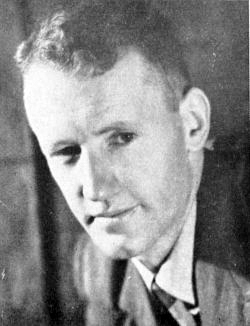
Ian Douglas Smith ( born Ian Douglas Smith , April 8, 1919 , Selukwe - November 20, 2007 , Cape Town ) is a Rhodesian politician and statesman. The head of government of the British dominion of Southern Rhodesia from April 1964 to November 1965 . Leader of the Rhodesian Nationalist Movement for Independence of Rhodesia , Chairman of the Rhodesian Front Party. In 1965 - 1979 - Prime Minister of the self-proclaimed state of Rhodesia. In independent Zimbabwe, an opposition politician.
| Ian Smith | |||||||
|---|---|---|---|---|---|---|---|
| English Ian smith | |||||||
 | |||||||
| Monarch | Elizabeth II | ||||||
| Predecessor | position established | ||||||
| Successor | Abel Muzoreva (as Prime Minister of Zimbabwe-Rhodesia ) | ||||||
| |||||||
| Monarch | Elizabeth II | ||||||
| Predecessor | Winston Field | ||||||
| Successor | position abolished | ||||||
| |||||||
| Predecessor | Clifford dupont | ||||||
| Successor | James graham | ||||||
| Birth | Shurugwi , Southern Rhodesia | ||||||
| Death | |||||||
| Spouse | Janet Watt (1948-1994) | ||||||
| Children | Robert Watt (adopted) Gene Watt (adopted) Alec Smith | ||||||
| The consignment | Rhodesian front | ||||||
| Education | |||||||
| Activities | |||||||
| Religion | |||||||
| Awards |
| ||||||
| Military service | |||||||
| Years of service | 1941–1945 | ||||||
| Affiliation | British empire | ||||||
| Type of army | Air Force | ||||||
| Rank |  Captain Captain | ||||||
| Battles | |||||||


Origin and youth
Ian Smith was born in Selukwa [5] , a small mining and farming town about 300 kilometers south of Salisbury . He had two sisters, was the youngest child in the family (the younger brother of Jan died in infancy from pneumonia).

Jan's father, John Douglas Smith, a Scot by birth, emigrated to Southern Rhodesia from Hamilton in 1898 . He hoped to become a gold digger, but did not find a deposit. He started a farm, a car repair shop, a mine, opened meat and grocery stores at four mines in the Selukwe region. He raised racehorses and was considered one of the most famous riders of Rhodesia. He became the winner of the derby in honor of the coronation of George V in 1911 . He presided at rugby and cricket sports clubs.
Smith Sr. was also a public activist, local government activist, and captain of local volunteers. He served in the city government of Selukva, presided over the national military fund. He founded the Masonic lodge in Selukva. During the Second World War he was engaged in fundraising for the military needs of Great Britain, for which he was awarded the Order of the British Empire .
Jan's mother, Agnes Hudson, was originally from Cumbria ( England ). She founded a department of the Women's Institute of Rhodesia in Selukva. She was also awarded the Order of the British Empire [6] .
According to the memoirs of Jan Smith, his parents raised him on solid moral principles, British traditions [7] and respect for human rights of any race: "Father told me that we have the right to our half of the country, blacks to our own . " At the same time, this concept suggested a certain level of racial segregation and the unequivocal social dominance of the white community [8]
Having received primary education at a local Selukwe school, Ian Smith entered Gweru High School. He was fond of sports, was the captain of school teams in rugby, croquet and tennis . Subsequently, Ian Smith remarked: “I was absolutely obsessed with sports. Looking back, I admit that I should have devoted more time to studying and less time to sports ” [9] .
After leaving school, Ian Smith entered Rhodes University in Grahamstown ( South Africa ), studied as a businessman .
Military Service
During World War II, Ian Smith interrupted his studies and went to serve in the British Royal Air Force . However, he circumvented the ban on students to interrupt their studies for military service.
After completing the aerobatics training course, Smith was promoted to lieutenant . He served in the Middle East . In Baalbek, he was trained at the Hurricanes , in the British-occupied southern Iran he covered the oil fields from possible attacks of the Luftwaffe .
On October 4, 1943 , when landing in a sandstorm, the aircraft’s landing gear caught on the roof of the bomb shelter and Jan Smith’s plane crashed. He himself was badly injured, having suffered serious damage to his face, a fracture of his jaw, legs and shoulders, as well as a spinal injury. He spent five months in a British military hospital in Cairo . After being discharged from the hospital, Smith refused the offer to return to Rhodesia to become a flight instructor, and was transferred to Corsica in the 237th Rhodesian Squadron of the Royal Air Force.
In the summer of 1944, the 237th squadron was transferred to Italy . On June 22, Ian Smith's Supermarine Spitfire was hit by German air defenses over the Padansky Plain . A family of local peasants helped him take refuge from German patrols and establish contact with the Italian Garibaldi partisans . For three months, Ian Smith participated in the fighting of the Italian Resistance. Subsequently, he was transported to the French partisans - poppies and further to London . From there, in early 1945, Ian Smith was transferred to the 130th Royal Air Force squadron in West Germany . He ended the war in Norway .
After the war, Ian Smith graduated from Rhodes University and received a bachelor 's degree in business. During training, Smith was elected chairman of the student council. After graduation, he bought a farm in the vicinity of Selukwe. In 1948 he married Janet Watt, a widowed teacher from South Africa . In 1949, their son Alec was born. Ian Smith adopted two of Janet’s children from their first marriage - their son Robert and daughter Jean. Subsequently, Jean will become the wife of the famous Rhodesian folk rock singer Clem Tolet .
Politician of Rhodesian Nationalism
Since 1948, Ian Smith has been actively involved in Rhodesian politics. He successfully participated in the parliamentary elections of 1948 as a candidate from the Liberal Party of Southern Rhodesia . He was elected from the Selukwe to the Legislative Assembly of Southern Rhodesia, becoming the youngest Rhodesian parliamentarian. Subsequently, he was elected chairman of the Committee on State Accounts [6] . In 1953, the union supported the creation of the Federation of Rhodesia and Nyasaland - the union of Southern Rhodesia with Northern Rhodesia (now Zambia ) and Nyasaland (now Malawi ). He joined the United Federal Party ( UFP ) of Prime Minister Godfrey Huggins . In the 1953 election, he was elected to the federal parliament from the Midlands province.
After the 1958 election , Ian Smith was appointed the main parliamentary party organizer and representative in the Commonwealth Parliamentary Association. However, he soon became disillusioned with the UFP and the new Prime Minister Roy Velenski . At a party congress in 1961, Smith publicly condemned the party’s platform for proposals for a new constitution for Southern Rhodesia. He rejected the project of securing 15 out of 65 seats in the parliament of Southern Rhodesia for representatives of the black population. According to Smith, this went against the principles of the party: “Our policy in the past has always been that the government of Rhodesia is formed on the basis of merit and that no one should care if you are black or white” [9] .
Ian Smith's political views were based on Rhodesian nationalism - the concept of Rhodesian Anglo-Africans as an independent nation (like the Afrikaners of South Africa), claiming national independence and state sovereignty. By the early 1960s, Smith was a strong and consistent supporter of the proclamation of Rhodesian independence under the leadership of the white community. Under his leadership, a circle of nationalist activists was formed, mainly farmers and planters.
In early 1962, Ian Smith left the UFP and founded the Rhodesian Reform Party . In the same year, it teamed up with the Dominion Party and was called the Rhodesian Front ( RF ). Initially, the chairman of the new batch was Winston Field , a large tobacco cluster entrepreneur. In the 1962 election, RF won, Field became prime minister of Southern Rhodesia.
Field’s moderate stance on independence raised the frustration of radical Rhodesian nationalists. A group of influential figures of RF - Douglas "Boss" Lilford , Peter van der Beale , John Wrathall , Clifford Dupont , Desmond Lardner-Burke , Gerald Clark , John Howman - consolidated around Ian Smith. The decisive financial and organizational support for Smith was provided by tobacco mogul Boss Lilford [10] , who allocated a large sum for political purposes [11] . Smith described this situation in his memoirs [12] with an expression of gratitude to Lilford.
In April 1964, Ian Smith succeeded Winston Field as Chairman of the RF and Prime Minister of Southern Rhodesia. Smith became the first head of the South Rhodesian government - a native of Southern Rhodesia (before this post was occupied by immigrants from the UK).
In the 1965 election, the Rhodesian front won a triumphant victory. A course was taken towards the declaration of independence [13] .
Premier Independent Rhodesia
On November 11, 1965, at 11 hours 11 minutes, the Government of Ian Smith adopted the Declaration on the Unilateral Declaration of Independence of Southern Rhodesia from Great Britain [14] . The country was called Rhodesia . In 1970, Rhodesia was proclaimed a republic. The permanent head of government was Ian Smith. Key government posts were held by his closest RF leadership associates.
We struck in the name of justice, civilization and Christianity.
Ian Smith [15]
British Prime Minister Harold Wilson declared Smith's action a rebellion against the crown. The leftist rebel movements of Zimbabwean nationalists ZAPU and ZANU did not recognize Rhodesian statehood and called on the Wilson government to use force against the " racist Smith regime" (however, Wilson immediately refused this option) [16] . Tense negotiations between the Rhodesian delegation of Smith and the British delegation of Wilson off the coast of Gibraltar on the warships Tiger (December 1966 ) and Fearless (October 1968 ) did not lead to any result [17] .
Rhodesia was expelled from the British Commonwealth. At the suggestion of London, the UN imposed international sanctions against Rhodesia. No state in the world recognized Rhodesian independence. The negative position of the international community was due to the fact that the decision was made on the basis of the position of only the white population, without equal consideration of the opinion of the black majority. For their part, the Rhodesian Front and personally Jan Smith categorically opposed the "black government", arguing that it would mean a Marxist dictatorship and destructive chaos [18] .
The socio-political system of Rhodesia was considered racist, but it was noticeably different from apartheid in South Africa. The dominance of the white minority in Rhodesia was ensured not so much by punitive-administrative as by economic methods, first of all by strict property and educational qualifications that cut off the bulk of blacks from participating in the elections.
Apartheid laws were not introduced in Rhodesia. Formally, the Rhodesians of all colors had equal rights. And at the level of everyday life, the attitude towards blacks was much more loyal. Smith's party did not defend the racial hierarchy, but the social order ... People like Smith and Lilford, with their pragmatic Anglo-Saxon thinking, did not bother with the racial mysticism of Bruderbond . Theoretically, they had nothing against democracy. British parliamentarism acted for the white community. But not for black. Why, Ian Smith himself explained with his characteristic black humor: in Africa, the formula “one person - one vote” has a continuation - “once” [19] ...
The scandalous resonance in the world was caused by Smith’s phrase, uttered in a television speech on March 20, 1976 : "I do not believe in the rule of the majority in Rhodesia even after a thousand years . " This statement was presented as racist cynicism. However, the quote was taken out of context, as it followed: “I repeat: I believe in the work of black and white. But if whites rule today and blacks rule tomorrow, it will be a disaster for Rhodesia ” [20] . “The future of Rhodesia is a country of white and black, not white or black,” Smith also said, but these words were not quoted by the world press [21] .
Among the White Rhodesians, Ian Smith enjoyed high authority and wide popularity. Among other things, openly populist socio-economic policies contributed to this.
In the white social network, the Rhodesian Front gave odds to any party of the Socialist International : generous state subsidies to farmers, solid social guarantees for workers. But the blacks were urged to use the benefits of private initiative, to indulge in entrepreneurial creativity in conditions of free competition. It is clear that in such a bicycle-to-airplane competition, the property qualification worked flawlessly ... Big white capital was dissatisfied with Smith's policy. The bloated social program for white farmers and workers was seen as outrageous populism. But if the capitalists squinted at Smith, then the workers and peasants were his support. Along with, of course, white officials and officers [22] .
An important element of Jan Smith’s personal worldview and his government’s policies was anti-communism . The war in Southern Rhodesia , the confrontation with the Marxist ZANU and ZAPU were considered as one of the sectors of the global Cold War . In the USSR, Rhodesia was characterized as “one of the most reactionary states on the globe,” Jan Smith was ranked as the “fire brigade of world imperialism” (along with Francisco Franco , Antonio Salazar , Alfredo Stroessner , Francois Duvalier , Baltazar Forster , Park Jeong Hee , Nguyen Cao Ki ) [23] .
Almost the entire existence of Rhodesia took place in the civil war of the RF government with ZAPU and ZANU. It acquired particular intensity from 1971-1972, and since 1975 it began to pose a serious danger to white civilians. The military superiority of the government army over partisan movements was undeniable, but they could not be suppressed. Great difficulty was created by the international boycott of Rhodesia (to which South Africa actually joined since 1979), while ZAPU and ZANU enjoyed the support of the USSR and its allies under the Warsaw Pact , the PRC and the DPRK .
Since the mid-1970s, the Smith government has been trying to establish dialogue with the moderate wing of the Negro elite on the unifying basis of anti-communism. Negotiations were conducted with tribal leader Jeremy Chirau , Methodist Bishop Abel Muzoreva , former leader of ZANU Ndabaningi Sitole . On March 3, 1978, Ian Smith concluded an agreement with Muzoreva, Sitole and Chirau on an internal settlement - a gradual transition to multi-racial rule. All four were members of the Executive Board, which was called upon to organize transition processes. Then the Auxiliary Security Forces were formed from black anti-communists.
These steps caused sharp discontent among consistent white racists. Twelve members of parliament led by Ina Bersi and Ted Sutton Price withdrew from the RF and established the ultra-conservative Rhodesian action party . Under the slogan “Save Rhodesia!” [24] they demanded refusal from negotiations and toughening repressive policies. On the other hand, a liberal party of the National Unity Force was created, led by the famous ecologist Allan Sawori , who, on the contrary, sought national reconciliation and racial equality [25] . But, despite the emergence of active opposition, in the elections of 1977 the Rhodesian Front again received all 50 "white" seats. Ian Smith remained an unquestioned authority for white voters.
During this period, the country's economic situation worsens. The state budget deficit for 1977-1978 reached 81 million, and in 1979 - 135 million Rhodesian dollars. In July 1979, Jan Smith was forced to admit that military spending quadrupled to 1.1 million Rhodesian dollars a day. There were strikes by African workers in major industrial centers that were political in nature. The government resorted to arrests.
Leaving power
In April 1979, parliamentary elections were held with black voters. The largest number of mandates - 51 - was received by the United African National Council ( UANC ) of Bishop Muzoreva. The second place - 28 seats - took the Rhodesian Front. On June 1, 1979 , the creation of the new Zimbabwe-Rhodesia state was proclaimed. The government was headed by Abel Muzorev. Ian Smith received the post of minister without a portfolio.
The partisan movements did not recognize the new government and continued the armed struggle. Zimbabwe-Rhodesia has not received international recognition either.
Internal and external pressure — primarily from the British government of Margaret Thatcher and the American administration of Jimmy Carter — forced Muzorev and Smith to agree to direct negotiations with ZANU and ZAPU. In September-December 1979, the Lancasterhouse Conference was held in London. In accordance with the agreement, December 21, 1979 Southern Rhodesia was temporarily restored to the status of a British colony.
In February 1980, general elections were held. Smith and his supporters were guided by the parties of Abel Muzoreva, Joshua Nkomo or James Chikerema , but they obviously did not have a chance to win. Shortly before the vote, Ian Smith met with Peter van der Beale and General Peter Walls, commander of the Rhodesian army. They discussed ways to counter ZANU Mugabe. Smith and van der Beale insisted on military intervention if Mugabe wins [26] . But Walls thought time was lost.
A confident victory in the elections was won by ZANU Mugabe. The Rhodesian Front received in the 100-seat parliament all 20 seats reserved for the white population.
On April 18, 1980 , Zimbabwe declared independence.
Oppositionist in Zimbabwe
Under the new conditions, the Rhodesian Front continued to express and defend the interests of the white citizens of Zimbabwe. At the same time, Ian Smith, who was elected to parliament by the quota for whites (20 out of 100 mandates), at first called on white citizens not to emigrate from Zimbabwe, “to give Mugaba a chance.”
The Rhodesian front was in opposition to the Mugabe regime. Ian Smith characterized the Mugabe regime as a Marxist-Leninist dictatorship, criticized corruption and managerial incompetence. [27] In 1982, when the Mugabe government repressed former allies from the ZAPU, Joshua Nkomo described the situation in Zimbabwe as “worse than with Smith.” At the same time, more than half of the RF parliamentary faction left the party and created the Zimbabwe Independent Group , focused on supporting the government.
Despite regular threats from Mugabe, Ian Smith and his associates were not directly repressed. The restraint of the authorities was explained by image interest: in contacts with foreign representatives, Mugabe called Smith's stay at large a proof of his democracy and peaceful disposition. However, Douglas Lilford was killed in December 1985 by unknown persons on his own farm [28] .
In June 1981, the party was renamed the Republican Front . In July 1984, the name was again changed to the Zimbabwe Conservative Alliance ( CAZ ). In the 1985 election, CAZ won 15 seats in parliament.
В 1987 правительство ZANU осуществило конституционную реформу, установив президентскую систему — главой государства стал Мугабе — и ликвидировав «белую квоту» в парламенте. This eliminated CAZ's chances of being represented in the legislature. Soon after, Ian Smith left the CAZ leadership.
В июле 1992 года Ян Смит провёл расширенное совещание с целью создания оппозиционной коалиции. Along with CAZ, representatives of UANC Abel Muzoreva, ZANU - Ndonga Ndabaningi Sitole, ZUM Edgar Tekere , FP Enok Dumbutsheni participated in the meeting . However, the project could not be implemented. The party and government of Mugabe tightly controlled the political system of Zimbabwe.
Поначалу вокруг него консолидировалась оппозиция, причём не только белая, но и чёрная. Но из политики Смита постепенно выжали. И тогда он превратился в морального бунтаря-обличителя. Но не пафосного, а едко-ироничного. Например, предложил Мугабе выбрать любое место в стране и пройтись вдвоём без охраны: «Посмотрим, как встретят меня, а как — вас». Что интересно, Мугабе отказался [29] .
Recent years
Несмотря на давление властей, Ян Смит, даже отойдя от политики, отказывался покинуть страну. В 2000 году он демонстративно вернулся из Лондона в Хараре несмотря на угрозы Мугабе арестовать его в аэропорту за критические выступления. Арест не состоялся, и Смит с сарказмом говорил журналистам о «психической неуравновешенности» зимбабвийского президента [30] .
В начале 2000-х Ян Смит активно выступал в поддержку белых фермеров и чёрных работников, становившихся жертвами насилия. Резко критиковал власти и погромное движение . На некоторое время он снова активно включился в политику.
When the Mugabe regime plunged into blood and violence, Africans of all sights gathered at Smith's house to consult with him [31] .
He lived on his farm. Wrote the memoirs of The Great Betrayal . He willingly gave interviews in which he criticized Mugabe for communist methods of government. He said that he had previously been proud of Rhodesia, but did not find the strength to be proud of Zimbabwe.
Due to poor health, in 2005 Smith moved to South Africa and settled in a nursing home in the southern suburbs of Cape Town . Died at the age of 88.
Ian Smith - Knight Awards independence Rhodesia and the great commander of the Order of the Legion of Merit Rhodesia .
Notes
- ↑ 1 2 German National Library , Berlin State Library , Bavarian State Library , etc. Record # 119559951 // General regulatory control (GND) - 2012—2016.
- ↑ 1 2 BNF identifier : Open Data Platform 2011.
- ↑ SNAC - 2010.
- ↑ http://news.bbc.co.uk/1/hi/world/africa/7104552.stm
- ↑ Modern Common Transcription - Shurugvi .
- ↑ 1 2 Ian Smith Bitter Harvest // Blake Publishing. - 1997. - ISBN 5-7390-0837-9 .
- ↑ The Great Betrayal: The Memoirs of Ian Douglas Smith
- ↑ THE MAN WHO CRIED UNCLE
- ↑ 1 2 Van Rensburg, 1975 , p. 314.
- ↑ Ian Smith: The diabolic racist ruler of Rhodesia
- ↑ Down the Dusty Road!
- ↑ Bitter Harvest: Zimbabwe and the Aftermath of its Independence
- ↑ Huge Rhodesia election win for Smith
- ↑ Declaration of Independence of Rhodesia
- ↑ Ian Smith, 1919-2007. Prime Minister of Rhodesia
- ↑ 1965: Rhodesia breaks from UK
- ↑ A Matter of Weeks Rather Than Months: The Impasse Between Harold Wilson and Ian Smith: Sanctions, Aborted Settlements and War 1965-1969. Victoria, British Columbia: Trafford Publishing. ISBN 978-1-4251-4807-2 .
- ↑ President Bob will track stock color
- ↑ Lessons from the Black Rebel Chikerema. White will
- ↑ If only Ian Smith had shown some imagination, then more of his people might live at peace
- ↑ Peter Godwin, Ian Hancock (1995). Rhodesians Never Die: The Impact of War and Political Change on White Rhodesia, 1970-1980. Harare: Baobab Books. ISBN 978-0-908311-82-8 .
- ↑ Ibid.
- ↑ Oganisyan Yu. S., Rabin A. Yu. Gallery of tyrants. - M.: Young Guard , 1968.
- ↑ THE “SAVE RHODESIA CAMPAIGN” - WHY IT FAILED
- ↑ White party will fight for Rhodesian blacks
- ↑ OPERATION QUARTZ - RHODESIA 1980
- ↑ Martin Meredith. Mugabe: Power, Plunder, and the Struggle for Zimbabwe's Future. PublicAffairs, 2009.
- ↑ White leader ib Zimbabwe killed
- ↑ The idealist of Chiquerem did not take into account the human factor. Snakes and hares
- ↑ Ian Smith defies Mugabe's threats and flies home
- ↑ Lost paradise of the big white chief
Links
- Radio Message on the Independence of Rhodesia, 1965
- Interview, 2005
- April 18 is the last day of Rhodesia
- Ian Douglas Smith
- Van Rensburg, APJ (1975), Contemporary Leaders of Africa , Cape Town : HAUM, ISBN 0-7986-0156-6 , OCLC 1676807 .