The uprising in Jammu and Kashmir ( Insurgency in Jammu and Kashmir ) - a conflict between the armed forces of India and a number of rebel groups in Jammu and Kashmir . Armed resistance to the Indian authorities broke out in the Kashmir Valley in 1989. Some groups are fighting for state independence, while others are calling for an alliance with Pakistan . India accuses Pakistan of delivering weapons to militants. In the 1990s, many groups fell under the influence of radical Islamic movements .
| Rebellion in Jammu and Kashmir |
|---|
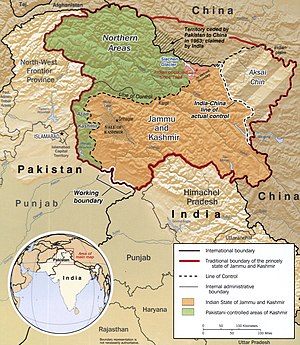 |
| date | from 1989 to the present |
|---|
| A place | Jammu and Kashmir , India |
|---|
| Cause | struggle for independence |
|---|
| Total | the war continues |
|---|
|
|
|
Hafiz Muhammad Said |  Bikram Singh Bikram Singh
|
|
|
|
|
| more than 47,000 civilians died |
|
|
In 1989, armed clashes broke out between the Indian army and the Kashmiri rebels. Muslim political parties were outraged that in 1987 the state legislature was rigged (in their opinion), after which they formed the fighting wings of their movements. Pakistan gave "moral and diplomatic" support to the rebel movement, urging that the issue of the future state be resolved through a referendum under the auspices of the UN .
But the Indian government claims Pakistan’s support for the rebels is to train and supply them with weapons. Indian authorities have repeatedly called on Pakistan to end “cross-border terrorism ."
In the 1990s, the ideological emphasis of the independence movement shifted from nationalist to radical Islamist. This was due to the fact that a large number of Mujahideen arrived in the Kashmir Valley who fought in Afghanistan against the Soviet Union in the 1980s.


