Namib Naukluft is a national park in Namibia , covering most of the Namib desert and the Naukluft mountain range. The total area is 49 768 km², thus it is the largest national park in Namibia and the 4th largest in the world [1] . The most famous object of the park is the clay plateau of Sossussflay . The fauna is represented by numerous snakes, geckos , various insects, hyenas , oryxes , jackals . Most of the moisture falls in the form of fog, from February to April an average of 106 mm of precipitation falls. The park was founded in 1907, when the German colonial administration declared the lands between the Swakop River and Kaseb protected. In modern borders, the park has existed since 1978.
| Namib Naukluft National Park | |
|---|---|
 | |
| IUCN Category II ( National Park ) | |
| basic information | |
| Square | 49768 |
| Established | August 1, 1979 |
| Attendance | 3000 ( 2005 ) |
| Management organization | Ministry of Environment and Tourism |
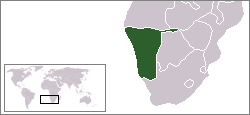
| Location | |
| A country |
|
| Nearest town | Windhoek |


Content
Geography
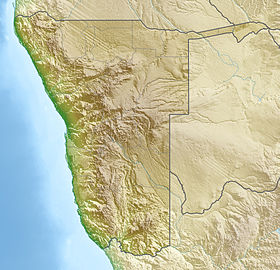
It extends for 1570 km along the entire coast of Namibia from the Orange River in the south to the Kunene River in the north. At its narrowest point it reaches a width of 25 km, and at its widest - 180.
Sussussflay
The plateau is in the middle of the Namib desert. The etymology of the name of this area is formed from two words: sossus, which means “place of water collection”, and vlei is a shallow lake, filled with water in the rainy season. After seasonal precipitation, water in these depressions remains for several months. Plateau is the kingdom of sand dunes, of which about 90% are composed of quartz sand. On some of them, places with sand of darker reddish-black shades are noticeable. Sands appeared here thanks to the east winds that brought them here from the central part of eastern Namibia. Some grains of sand are coated with iron oxide, which gives them a characteristic red color. In some parts of Sossussflay there are two-tone red-yellow dunes.
Flora and Fauna
The most striking representative of the plant world here is velvichia : a tree with a trunk up to a meter thick and a height of only 10-15 centimeters and two leaves two human growth long, which it has not shed for a hundred years.
Satellite photo showing the boundaries of the national park
Onymacris unguicularis
Dunes
Dead 550 Year Old Trees
Typical dunes
Park lunar landscape