Julio Cesar Falcioni ( Spanish: Julio César Falcioni ; born July 20, 1956 in Buenos Aires ) is a former Argentinean footballer, now a coach.
 Julio Cesar Falcioni | |||||||||||||||||||||||||||||||||||||||||||||||||||||||||||||||||||
|---|---|---|---|---|---|---|---|---|---|---|---|---|---|---|---|---|---|---|---|---|---|---|---|---|---|---|---|---|---|---|---|---|---|---|---|---|---|---|---|---|---|---|---|---|---|---|---|---|---|---|---|---|---|---|---|---|---|---|---|---|---|---|---|---|---|---|---|
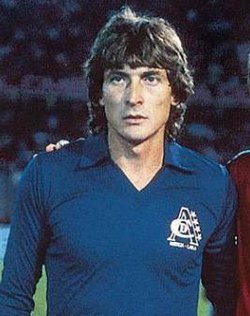 Falcioni during performances for "America" | |||||||||||||||||||||||||||||||||||||||||||||||||||||||||||||||||||
| general information | |||||||||||||||||||||||||||||||||||||||||||||||||||||||||||||||||||
| Nicknames | Pelusa, Bulldog, El Gato, La Araña, El Emperador, El Facha | ||||||||||||||||||||||||||||||||||||||||||||||||||||||||||||||||||
| Born | July 20, 1956 (63 years old) Buenos Aires , Argentina | ||||||||||||||||||||||||||||||||||||||||||||||||||||||||||||||||||
| Citizenship |  Argentina Argentina | ||||||||||||||||||||||||||||||||||||||||||||||||||||||||||||||||||
| Height | 180 cm | ||||||||||||||||||||||||||||||||||||||||||||||||||||||||||||||||||
| Position | goalkeeper | ||||||||||||||||||||||||||||||||||||||||||||||||||||||||||||||||||
| Club Information | |||||||||||||||||||||||||||||||||||||||||||||||||||||||||||||||||||
| Club | without club | ||||||||||||||||||||||||||||||||||||||||||||||||||||||||||||||||||
| Position | Main coach | ||||||||||||||||||||||||||||||||||||||||||||||||||||||||||||||||||
| |||||||||||||||||||||||||||||||||||||||||||||||||||||||||||||||||||
| Awards and medals | |||||||||||||||||||||||||||||||||||||||||||||||||||||||||||||||||||
| |||||||||||||||||||||||||||||||||||||||||||||||||||||||||||||||||||
| |||||||||||||||||||||||||||||||||||||||||||||||||||||||||||||||||||


Content
- 1 Biography
- 2 Achievements
- 2.1 As a player
- 2.2 As a trainer
- 3 notes
- 4 References
Biography
Falcioni began his professional football career at Veles Sarsfield in 1976. At that time, Veles was not yet the leader of Argentinean football, which it became in the mid-1990s. The best achievement for 5 years spent in Veles was the second place in the Metropolitan Championship in 1979, after the River Plate . 5 years after the debut for the “blue and white”, the goalkeeper agreed to the transition to a promising project - Colombian “America”. The best years of a football player’s career have passed here.
In 1982-1986, Falcioni helped his team consistently, 5 times in a row, become the champion of Colombia. That team entered the history of South American football, reaching the final of the Libertadores Cup three times in a row, but invariably losing in decisive confrontations to their rivals. Falcioni played in all of these finals - three games against Argentinos Juniors in 1985 (America lost in the third extra match in the penalty shootout 4: 5), two games against River Plate in 1986 , and three games against Peñarola in 1987 . For the right to play in the last draw in the Colombian championship, “America” had to fight with “ Atletico Nacional ”. Falcioni repelled two penalties in the decisive game with this team and “America” made it to the Copa Libertadores 1987, in the final of which again lost [1] . At the same time, the Colombian team showed the best result in two games, but that year the last time there was a rule to appoint an additional match in the event of an exchange of victories, or two draws in the main final matches. The Peñarol player Diego Aguirre managed to score the winning goal against America at the last minute of the added time.
In 1989, Falcioni took part in the America's Cup , but there he was only the third goalkeeper after Luis Islas and Neri Pumpido (both played at the tournament) [2] . Argentina took third place in this tournament. However, for the Argentina national team, Falcioni still spent two matches in 1989 and 1990.
At the end of the 1989 season, Falcioni left America for 9 seasons. In addition to the fact that the “golden era” in the history of “America” is associated with the goalkeeper’s name, he went down in the history of this club as a goalkeeper who managed to score 5 goals for the club against opponents. This is a club record. In 1990-1991, Falcioni, in fact, ended his career - he spent one year in “Gimnasia” from La Plata , briefly returned to Colombia, where he spent half the season at “ Ons Caldas ” and finally ended his football career in his native “ Veles Sarsfield. ”
In 1997, Falcioni became a coach of youth teams at Veles. In the middle of next year, he first headed the Examples team as a coach. Veles at that time was the champion of Klausura in 1998, but the young specialist did not succeed in developing success - the star generation of the mid-1990s, headed by Chilavert, gradually began to go. In 2000, Falcioni left the team.
In the 2000s, Falcioni worked with varying success with a number of Argentinean clubs, gaining coaching experience. The most titled club in this period was Independiente with Sergio Aguero and Oscar Ustari in the squad. The specialist managed to bring the team to 4th place in Aperture 2005. But Klausura 2006 was unsuccessful - the “Red Devils” flew out of the qualification of the Libertadores Cup and performed poorly in the championship. The next two attempts to lead teams were also unsuccessful.
Only in 2009 did Falcioni succeed in the coaching field. The specialist helped his team win the first Argentina title in its history (Apertura 2009). The contract was extended for 2 years. In the 2010 Libertadores Cup, the team was knocked out only by the future winner of the tournament, the Brazilian Internacional . On December 22, 2010, Falcioni became the coach of Boca Juniors - Banfield went to meet the coach and prematurely terminated the contract due to an invitation from Boca. [3]
Under the leadership of Falcioni, Boca Juniors won the Argentina Championship (Apertura 2011) without losing a single match in the tournament. In 19 matches, only 6 goals were conceded. Also, by March 2012, Boka did not lose for 33 games in a row. She showed the best result only under the leadership of Carlos Bianchi , in which the club did not lose in 40 games in a row [4] . In 2012, Falcioni for the first time in 5 years brought the “Genoese” to the final of the Libertadores Cup . December 10, 2012 left Boku at the end of the contract [5] .
March 22, 2016 appointed head coach of Banfield [6] .
Achievements
As a player
| Season | Club | Title |
|---|---|---|
| 1982 | America Cali | Champion of Colombia |
| 1983 | America Cali | Champion of Colombia |
| 1984 | America Cali | Champion of Colombia |
| 1985 | America Cali | Champion of Colombia |
| 1986 | America Cali | Champion of Colombia |
As a trainer
| Season | Club | Title |
|---|---|---|
| Aperture 2009 | Banfield | Champion of Argentina |
| Aperture 2011 | Boca Juniors | Champion of Argentina |
| 2011/12 | Boca Juniors | Argentina Cup |
Notes
- ↑ Julio César Falcioni le tapa 2 penales a Nacional en el Atanasio Girardot (1987)
- ↑ Martín Tabeira. Copa América 1989 . rsssf.com (August 25, 2011). Date of treatment June 23, 2012. Archived September 26, 2012.
- ↑ Scandolo, Ramiro Se hace la luz . Diario Olé. Date of treatment December 23, 2010. Archived September 26, 2012.
- ↑ El campeón de los records
- ↑ Falcioni ya no es el Técnico de Boca Juniors (Spanish) . Sitio oficial del Club Atlético Boca Juniors (12/10/2012). Date of treatment December 18, 2012. Archived December 28, 2012.
- ↑ Falcioni fue presentado como nuevo entrenador de Banfield (Spanish) . Sitio oficial del Club Atlético Banfield (03.22.2016). Date of treatment May 1, 2016.