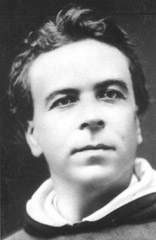
Henri Didon ( fr. Henri Didon ; March 17, 1840 , Le Tuve - March 13, 1900 , Toulouse ) - Dominican monk , French preacher and writer; a well-known champion of the idea of playing sports, a colleague of Pierre de Coubertin on the revival of the Olympic Games; author of the motto of the Games "Faster, Higher, Stronger" ( Citius, Altius, Fortius ).
| Henri Didon | |
|---|---|
| Henri didon | |
 | |
| Date of Birth | March 17, 1840 |
| Place of Birth | Le Tuve , France |
| Date of death | March 13, 1900 (aged 59) |
| Place of death | Toulouse , France |
| Citizenship |  France France |
| Occupation | |
Biography
Known for his sermons in the church of St. Germaine des Prés in Paris, in which he sought to harmonize Christianity with modern philosophical and political doctrines. Particular attention was drawn to his conversation on the topic “What is a monk” (Ou'est-ce qu'un moine ?, 1868), in which Didon argued that the democratic movement is the fruit of Christianity.
From 1872-1876 he lived in Marseille , then was a prior in Paris. A number of his conversations date back to this time: “L'homme selon la science et la foi” (1875); "La science sans Dieu" (1878); L'Eglise devant la société moderne (1879) and others. His essay on the divorce Indissolubilité et divorce (1880) made a lot of noise. In 1884, he published an interesting essay on his stay in Germany : “Les Allemands”. For his extensive work on the life of Jesus Christ, he visited Palestine in 1883 . The result was the essay Jésus Christ (1890). At the beginning of 1890 he was appointed director of the college in Arcueil.
Proceedings
- "Jesus Christ". Russian translation - Publisher: Terra. ISBN 5-300-01898-8 ; 1998 year
Links
- Didon, Henry // Brockhaus and Efron Encyclopedic Dictionary : in 86 volumes (82 volumes and 4 additional). - SPb. , 1890-1907.
- Reynaud, "Le père Didon, sa vie et son oeuvre" (Paris, 1904).