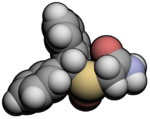
Modafainil is analeptic used to treat sleepiness associated with narcolepsy .
| Modafinil | |
|---|---|
 | |
 | |
| Chemical compound | |
| IUPAC | (±) -2- (Diphenylmethyl) sulfonyl acetamide |
| Gross formula | C 15 H 15 NO 2 S |
| CAS | |
| Pubchem | |
| Drugbank | |
| Classification | |
| Pharmacol. Group | analeptics ; nootropics |
| ATH | |
| Pharmacokinetics | |
| The period is half out. | 12-15 hours |
| Dosage Forms | |
| pills | |
| Other names | |
| Alertec, Alertex, Carim, Modalert, Modapro, Modafil, Modasomil, Modavigil, Modiodal, Provake, Provigil, Resotyl, Mentix, Stavigile, Vigia, Vigil, Zalux | |
The United States Food and Drug Administration (FDA) has also approved modafinil for the treatment of sleep disorders associated with shift work shift (SWSD) and drowsiness associated with obstructive sleep apnea . The European Medicines Agency , however, recommends restricting new prescriptions for drugs containing modafinil to narcolepsy alone, due to the risk of developing neuropsychiatric, skin, and allergic side effects [1] [2] . At the same time, since these side effects are most often observed in the first two weeks of use of the drug, its use on prescriptions made earlier is not limited.
The use of modafinil for non-medical purposes ( off label ) as a relatively safe psychostimulant is also popular.
In Russia, Modafinil is included in the list of narcotic and psychotropic substances [3] . In all other CIS countries, it is permitted and used as a recreational drug.
Indications and Dosing Regime
In addition to the above indications, modafinil in some countries has been approved by government regulatory authorities for the treatment of cases of idiopathic hypersomnia (pathological daytime sleepiness, the causes of which are not precisely diagnosed).
For the treatment of hypersomnia associated with narcolepsy and obstructive sleep apnea, a single dose of the drug in the morning at a dose of 200 mg is recommended [4] , although there are data from clinical trials that two times use (in the morning and at noon) 200 mg is more effective [5] . A single dose of 400 mg does not lead to a significant increase in efficacy compared with a dosage of 200 mg [5] [6] .
In the treatment of drowsiness associated with the shift of work shifts, a single dose of 200 mg [7] of the drug is recommended 1 hour before the shift begins [4] , a good effect is also achieved with a single dose of 300 mg [8] .
In all cases, the daily dosage should not exceed 400 mg [9] ; taking the drug in the second half of the day is not recommended, since modafinil is slowly excreted from the body ( elimination half-life of 12–15 hours) and may interfere with normal night sleep [6] . In general, recommendations for dosing are in the range from 100 to 400 mg per day, in 1-2 doses.
Modafinil is widely used for other purposes , to suppress the need for sleep. It is also used without a doctor's prescription to combat general fatigue that is not associated with a lack of sleep, for example, for the treatment of attention deficit hyperactivity disorder (ADHD) and as an adjunct to antidepressants (in particular, individuals with significant residual fatigue) .
There are different opinions as to whether the cognitive effects that modafinil shows on healthy people who are not suffering from a lack of sleep may be sufficient to consider modafinil as an amplifier of cognitive functions. Researchers agree that modafinil improves some aspects of short-term memory, such as storing numbers, computing, and pattern recognition, but the results related to spatial memory, executive functions, and attention are contradictory. Some of the positive effects of modafinil can only manifest themselves for "low-productivity" people or people with low IQ . One study found that modafinil regained the ability to learn to normal levels in methamphetamine addicts, but showed no effect on healthy people. .
Use by the military and astronauts
Several countries' military have expressed interest in modafinil as an alternative to amphetamines — drugs traditionally used in combat situations where troops face sleep deprivation, such as long-term missions. The French government noted that the Foreign Legion used modafinil during certain covert operations. The United Kingdom Department of Defense gave instructions to investigate modafinil [10] QinetiQ and spent 300,000 euros on one study [11] . In 2011, the Indian Air Force announced the inclusion of modafinil in the plans [12] . The Medical Service of the Indian Armed Forces explores its use.
In the US Army, modafinil was approved for use in several Air Force operations and is being studied for other purposes [13] . In one study of helicopter pilots, it was suggested that 600 mg of modafinil in 3 doses could be used to maintain response and accuracy at the pre-deprivation level for 40 hours without sleep [14] . However, a significant level of nausea and dizziness was observed. In another study of combat pilots, it was shown that modafinil in three divided 100 mg doses retains the accuracy of flight control in sleepless F-117 pilots at about 27% of the primary level for 37 hours without any significant side effects [15] . In a study of 88 hours of sleep deprivation simulating a military operation, 400mg / day, the dose was mildly helpful in maintaining alertness and performance in placebo control, but the researchers concluded that this dose was not high enough to compensate for most of the complete lack of sleep [16] .
The Journal of the Canadian Medical Society reported that modafinil was used by astronauts during long missions on the International Space Station . Modafinil is “available for the crew to optimize fatigue performance,” helps with interrupted circadian rhythms and reduced sleep quality among astronauts [17] . During high-risk, large-scale and long-term police operations, field doctors in Maryland (USA) can issue 200 mg of modafinil 1 time per day to law enforcement officers to improve attention and concentration and facilitate functioning in conditions of limited rest periods.
Other uses
Modafinil is widely used without prescription by a doctor to suppress the need for sleep, while it improves short-term memory after sleep deprivation . In addition to self-use by people in order to enhance their capabilities, modafinil is widely used by doctors for various purposes. In the United States and many other countries, drugs are registered only for one use, but can be prescribed by doctors for various purposes, taking into account the individual needs of the patient. This use, called off-label , is widely practiced. Modafinil is used to treat depression and fatigue in depression [18] [19] , fibromyalgia, chronic fatigue syndrome, myotonic dystrophy [20] , opiate drowsiness [21] , cerebral palsy [22], and Parkinson’s disease [23] . It improves subjective mood and friendliness, at least in shift workers. It is used in the disorder of biorhythms due to the change of time zones. Modafinil can also be an effective and well-tolerated treatment for patients with seasonal affective disorder syndrome. He is also appointed by some doctors for owl syndrome. There is evidence that modafinil, used by itself, is effective for some subgroups of people with depersonalization syndrome — derealization . The subgroups of people on whom he acts most often are people with a lack of attention, low excitability of the nervous system and increased sleepiness. However, no clinical studies have been conducted. Dr. Evan Torch calls the combination of SSRIs and modafinil "a hidden gem that can really help cure depersonalization disorder" [24] .
Experimental use
Treatment of cocaine addiction
Modafinil is being investigated as a possible treatment for cocaine addiction, for several reasons a biochemical mechanism involving these two drugs, and the observation that the clinical effect of modafinil is in many ways the opposite of cocaine abstinence symptoms.
The number of positive urine cocaine samples was significantly lower in the modafinil group compared with the placebo group. [25] Dan Umanoff, of the National Association for the Promotion and Protection of Drug Addicts, criticized the authors of the study for deriving negative results from the discussion and summary of the article. [26] [27]
Later in a double-blind study of modafinil in people seeking treatment for cocaine addiction noted significant improvements in some parameters, such as the maximum number of consecutive days of non-use of cocaine, but found no statistically significant effect on the rate of change in percent from days of non-use of cocaine. [28]
Weight Loss
Studies of modafinil (even in people with a healthy weight) indicate that it has an effect on reducing appetite / weight loss. [29] [30] [31] [32] All studies of modafinil in the Medline database occurring for one month or longer, which show weight changes, reveal that users of modafinil experience weight loss compared with placebo. [33] In 2008, a small study was conducted on people with a simulated shift of work shifts, which showed a 18% reduction in calorie intake when taking 200 mg of modafinil per day and a 38% decrease in consumption of 400 mg / day. [34]
In experimental studies, the effect of reducing appetite caused by modafinil looks similar to that of amphetamines, but, unlike amphetamines, the dose of modafinil, which causes a decrease in food intake, does not significantly increase the pulse rate. Also, an article published in the Annals of Clinical Psychiatry presented a case of a patient weighing 280 pounds (127 kg.) With a body mass index of 35.52, who lost 40 pounds (18 kg.) Within a year of treatment with modafinil (up to a body mass index of 29.59). The authors concluded that it was necessary to conduct a placebo-controlled study using modafinil as a means to reduce weight. At the same time, Cephalon in 2000 issued a US patent (No. 6,455,588) for the use of modafinil as an appetite enhancing agent.
Biliary primary cirrhosis
Modafinil has been shown to help with excessive daytime sleepiness and fatigue caused by liver cirrhosis. After two months of treatment, a significant decrease in the symptoms of fatigue was observed, measured using the Epworth Sleepiness Scale.
Inhibition of cognitive abilities after chemotherapy
Modafinil was also tested when it was not used for its intended purpose in people with symptoms of cognitive decline after undergoing chemotherapy. [35] In a study at the University of Rochester, 68 patients achieved significant results. “From previous studies, we knew that modafinil alleviates deterioration of concentration and memory impairment, and we hoped that it would also help patients with breast cancer experiencing cognitive decline after chemotherapy, which is what happened,” says a study led by Dr. Sadhana Coley, professor of the Cancer Center James P. Wilmot at the University of Rochester. [36]
Bipolar affective disorder
According to the manufacturer (Cephalon) [37] , clinical trials of armodafinil (R-isomer modafinil, has a longer effect than the racemate ) are being conducted as an aid in the treatment of the depressive phase of bipolar disorder . In a preliminary study of this concept, it was found that the use of the drug leads to relief of depression in this disease according to individual (but not all) criteria [38] .
At the same time, it is known that in patients suffering from this disorder, modafinil can provoke a manic phase of the disease [39]
Multiple Sclerosis
Modafinil was not approved, but was used to reduce the symptoms of neurological fatigue in multiple sclerosis. Patients followed the standard dosage or took a single dose of 200–400 mg at the beginning of that day, which they assumed would be tedious. In 2000, Cephalon conducted a study to evaluate the possibility of using modafinil as a potential treatment for fatigue associated with multiple sclerosis. A group of 72 people with varying degrees of seriousness took 2 different doses of modafinil and placebo for 9 weeks. The level of fatigue was evaluated by the patients themselves according to a standardized scale. Participants taking a smaller dose of modafinil felt less tired and a statistically significant difference was found between the levels of fatigue in those who took a lower dose of modafinil compared to those who took a placebo. A large dose of modafinil did not show a significantly greater effect.
Attention deficit hyperactivity disorder
In December 2004, Cephalon introduced a new drug called Sparlon, the brand name for tablets containing a higher dose of modafinil for the treatment of attention deficit hyperactivity disorder (ADHD) in children and adolescents aged 6 to 17 years. Although the research showed positive results, the deliberative committee of the Food and Drug Administration (FDA) voted 12 to 1 against approval of this drug, citing the number of cases of skin rash in the modafinil study, which included 933 patients, including two serious cases were erythema multiforme or Stephen-Johnson syndrome . Double-blind, randomized controlled studies have demonstrated the efficacy of modafinil in ADHD [40] [41] , however in the US it is not used in medical practice to treat ADHD due to dermatological toxicity. In Europe, the European Medicines Agency also does not recommend its use in ADHD, limiting its use only to narcolepsy.
Mechanism
Despite intensive research into the interaction of modafinil with a large number of neurotransmitters, the exact mechanism or complex of interaction mechanisms remains unclear. [42] [43] It is likely that modafinil, like other stimulants, increases the release of monoamines - especially catecholamines of norepinephrine and dopamine - from synaptic clefts. At the same time, modafinil increases the level of histamine of the hypothalamus, [44] which led some researchers to consider modafinil to be a “remedy for drowsiness” rather than a classic amphetamine-like stimulant. [45]
Studies show that modafinil "has a low potential for serious abuse" and "does not develop addiction among first-time users." [46] The combined effect of modafinil on both catecholamine and histamine pathways reduces the potential for abuse compared to traditional stimulant drugs, while at the same time, the efficacy of drugs for drowsiness remains.
Pharmacology
The exact mechanism of action of modafinil is not clear, although numerous studies demonstrate an increase in monoamine levels, namely dopamine in the striatum and the nucleus accumbens, [47] [48] norepinephrine in the hypothalamus and ventrolateral preoptic nucleus [49] [50] and serotonin in the almond-shaped body and the frontal cortex. While co-administration of amphetamine with dopamine receptor antagonists is known to reduce the stimulant effect of amphetamine, co-administration of dopamine receptor antagonists and modafinil does not completely reduce the effect of vigor modafinil. Modafinil activates the glutamatergic chain, inhibiting GABAergic nerve signal transmission.
It is believed that the mechanism involves neuropeptides, called orexins, also known as hypocretins. Orexin neurons are found in the hypothalamus, but are found in many parts of the brain, including areas that regulate wakefulness. Activation of these neurons increases the content of dopamine and noradrenaline in these areas, and excites histaminergic tuber-ammilar neurons, which increase histamine level there. It has been shown in rats that modafinil increases the release of histamine in the brain; the same mechanism of action can occur in humans. [51] There are 2 types of receptors for hypocretins, called Hcrt1 and Hcrt2. Studies on animals with a defective orex system show signs and symptoms similar to narcolepsy, for which modafinil has been approved for treatment by the FDA. It is possible that modafinil activates orexin neurons in laboratory animals, which is supposed to cause an increase in wakefulness. [52] [53] However, studies on genetically modified dogs without orexin receptors have shown that modafinil retains increased wakefulness in these animals; It is assumed that orexin activation is not required for the modafinil effect. Additionally, a study on mice without orexin receptors showed not only increased wakefulness of modafinil, but also its more effective action in them compared to wild-type mice]. [54]
The substantial (but not complete) independence of the mechanism of action of modafinil from both monoaminergic systems and orexins was unclear and difficult to understand compared to the mechanisms of action of other stimulants, such as cocaine. The enhancement of electrotonic conjugation due to the expansion of the efficiency of direct gap junctions between neurons has been suggested in several studies. Most neurons are separated by synapses, and communication between cells is performed through the release and diffusion of neurotransmitters. However, some neurons are directly connected to one another by means of slotted contacts. It has been proposed that modafinil affects the effectiveness of this bond. Urbano et al. Determined that modafinil increases the activity of this mechanism in the thalamocortical loop, which is crucial for the organization of sensory input and modulation of the total brain activity. [55] The joint use of modafinil and the mefloquine gap blocker eliminated this effect, which well confirms that the mechanism of action of modafinil can be explained by an improvement in electrical coupling. Subsequent studies of the same group found the ability of an inhibitor of calmoduline kinase II (CaMKII), KN-93, to eliminate modafinil enhancement of electrotonic conjugation. This leads to the conclusion that the modafinil effect, in part, is provided by CaMKII-dependent exocytosis of gap junctions between GABAergic interneurons and, possibly, even glutamatergic pyramidal cells. Additionally, Garcia-Rill et al. Discovered that modafinil has a pro-electrotonic effect in specific populations of neurons from two sites of the reticular activation system. These sites (sub-blue nucleus and foot-bone nucleus) are supposed to increase excitation through the cholinergic inputs of the thalamus. [56]
Considering more closely electrotonic conjugation, gap junctions allow direct diffusion through the associated cells and as a result, greater resistance to the induction of action potential after the excitatory post-synaptic potential must diffuse through a large area of the membrane. This means, however, the action potential increases in the United cell populations and with the entire cell population it works, as a rule, synchronously. [57] This enhancement of the electrotonic compound leads to a decrease in the tonic activity of the connected cells to rhythmic amplification. The involvement of the kakhetolaminergic mechanisms is consistent with the data, modafinil increases the phase activity in the blue spot (the source of norepinephrine for the CNS) with a decrease in tonic activity relative to the relationship with the prefrontal cortex. [58] This implies an increase in the signal-to-noise ratio in the circuits connecting the two regions. A larger neuronal conjugation could theoretically expand the gamma range of rhythms, a potential explanation for the nootropic effect of modafinil. [59] The beneficial effect of modafinil on memory and motor networks is expected to increase the gamma range. [59]
The direct connection between electrotonic coupling and wakefulness was proposed by Beck et al., Who showed that the control of modafinil increase in excitation-specific P13 caused a potential in a manner dependent on gap contacts. [60] Linking the ineffectiveness of the effect of the monoamine system, increasing the electrotonic conjugation with the assumption of a decrease in the activity of certain populations of GABAcrgic neurons, whose normal function is to decrease the release of neurotransmitters in other cells. [57] For example, the release of dopamine in the nucleus accumbens is demonstrated as a result of a decrease in GABArgic tone. [61] Thus, modafinil has a unique stimulation profile of interaction with the monoamine system; this may well be a secondary event of the downstream effect, specific to electrotonically conjugate populations of GABAergic interneurons. It seems that the exact pharmacology of modafinil will consist in the interaction function of the direct effect of electrotonic conjugation and various receptor-related events.
Recently modafinil was screened on a large panel of receptors and transporters in an attempt to explain its pharmacology. [62] Of these tests, a significant effect was found only on the dopamine transporter (DAT) —inhibition of dopamine reuptake with an IC50 level of 4 µM. [62] Actually, the product of motor activity and an increase in the concentration of extracellular dopamine are similar in method to the dopamine reuptake inhibitor (DRI) vanoxerine, which also blocks methamphetamine-induced dopamine release. [62] As a result, modafinil seems to have an effect as a weak DRI, although it is possible that other mechanisms may play a role. [62] On its account of acting as a DRI and lack of dependence potential, modafinil was proposed as a therapy for methamphetamine addiction by the authors of this work. [62]
The modafinil R-enantiomer was also recently found in the action of a partial D2 receptor agonist with a Ki of 16 nM and an internal activity of 48% and an EC20 of 120 nM in rat tissues [63] . S-enantiomer is inactive (Ki> 10,000). [63]
Pharmacokinetics
Modafinil is an inducer of cytochrome P450 enzymes, namely CYP1A2, CYP2B6 and CYP3A4, while inhibiting CYP2C9 and CYP3C19 in the laboratory. It can also induce P-glycoprotein, which can affect Pgp transported drugs such as digoxin. Bioavailability modafinil more than 80%. Laboratory measurements show that, at therapeutic concentrations, 60% modafinil is bound to plasma proteins. This value changes very little with a change in concentration. The average maximum concentration occurs approximately 2-3 hours after administration. Simultaneous food intake slows down the absorption, but does not affect the total area under the pharmacokinetic curve (“concentration — time”). The half-life is usually in the range of 10-12 hours and may vary depending on the genotype of the cytochrome P450 enzymes and liver and kidney function. Modafinil is metabolized in the liver, inactive metabolites are excreted in the urine. Excretion of unchanged drug with urine varies, depending on various factors, from 0% to a maximum of 18.7%.
Determination in biological fluids.
Modafinil and its main metabolite, modafinilic acid, can be detected in plasma, serum or urine in order to control the dosage in patients receiving the drug or to confirm the diagnosis of poisoning in hospitalized patients. Instrumentation techniques used for these purposes include gas or liquid chromatography. As of 2011, the presence of modafinil is not specifically diagnosed by conventional drug tests (with the exception of anti-doping tests) and it is unlikely that it can cause false positives in the determination of other chemically unrelated drugs, such as amphetamines.
Contraindications and warnings
The manufacturer's instructions for Cephalon say that before taking Modafinil, it is important to consult a doctor, especially for those who:
- has increased sensitivity to the drug or other tablet ingredients (such as lactose or lactose monohydrate), or
- suffered cardiovascular diseases, especially while taking other stimulants, or liver cirrhosis.
- has heart disease, in particular left ventricular hypertrophy or mitral valve prolapse . Asymptomatic mitral valve prolapse is common, but not noticeably discussed in the context of modafinil use.
Modafinil may reduce the effectiveness of some contraceptives, which can lead to unplanned pregnancies. In combination with yohimbine, it causes a dangerous increase in heart rate and an increase in blood pressure. The drug should not be combined with alcohol.
Side Effects
Among the common side effects [64] of modafinil are:
- Backache
- Headache
- Nausea
- Sense of anxiety
- Nasal congestion
- Diarrhea
- Feeling anxious
- Dizziness
- Dyspeptic disorders
- Insomnia
Dangerous side effects include:
- Abundant rash
- Severe allergic reactions involving liver or blood cells
- Urticaria
- Appearance of mouth ulcers
- Blistering or peeling of the skin
- Swelling of the face, eyes, lips, tongue, legs, or throat
- Trouble swallowing and breathing
- Heat
- Shortness of breath
- Yellowing of the skin and whites of the eyes
- Dark urine
Modafinil may have a negative effect on the effect of hormonal contraceptives, which lasts for a month after stopping the drug. [65]
Toxicity
In mice and rats, the average lethal dose (LD 50 ) of modafinil is approximately 1250 mg / kg or slightly more. The oral LD 50 for rats is in the range of 1000 to 3400 mg / kg. Intravenous LD 50 for dogs - 300 mg / kg. Human clinical trials involving up to 1,200 mg / day for a period of 7 to 21 days and known cases of acute single overdose up to 4,500 mg did not cause life-threatening effects, although a certain number of side effects were observed, including anxiety and anxiety, insomnia, anxiety irritability, aggressiveness, disorientation, nervousness, tremor, palpitations, sleep disturbances, nausea and diarrhea. As of 2004, the FDA has not reported cases of fatal overdose, including only modafinil (in contrast to cases of overdose on several drugs, including modafinil). Accordingly, oral LD 50 of modafinil in humans is not exactly known. However, it should be higher than oral LD 50 in caffeine. Bastiji and Juvet (1988) describe a suicide attempt using 4500 mg of modafinil, the patient survived without long-term consequences, experiencing only temporary nervousness, nausea, and insomnia. A similar incident - a suicide attempt by a fifteen-year-old girl using 5000 mg of modafinil (102 mg / kg) was observed in 2008 in Israel. The patient experienced severe headache, nausea, abdominal pain, movement disorder and mild tachycardia, but without cardiovascular disorders or disorders of the liver and kidneys and recovered within a few days with no visible long-term effects.
Severe adverse reactions
Modafinil can induce severe dermatological reactions requiring hospitalization. From the start of sales — December 1998 to January 30, 2007 — the FDA registered 6 cases of severe skin reactions associated with modafinil, such as polymorphic erythremus, Stevens-Johnson syndrome, toxic epidermal necrolysis (Lyell's syndrome), and drug fever with eosinophilia and systemic symptoms (DRESS) in adult patients and children. At the same time, more than 1,050,000 unique patients were taking the medicine. FDA issued a related warning. In this warning, the FDA also notified that there were reports of Quincke edema and multiple organ hypersensitivity during the post-marketing period. [66]
Patent protection and antitrust laws
US patent No. 4,927,855 was issued to Lafon Laboratory on May 22, 1990. It extended to the chemical compound modafinil.After receiving a temporary extension of 1066 days and exclusivity of use in pediatrics for 6 months, it ended on October 22, 2010. On October 6, 1994, Cephalon applied for an additional patent that applies to modafinil in the form of particles of a certain size. This patent (US patent No. 5,618,845) was issued on April 8, 1997, but then was re-issued in 2002 as RE 37,516, which replaced the previous patent 5,618,845. Together with the exclusiveness of pediatric use, this patent will end on April 6, 2015.
24 декабря 2004 г., предвидя окончание эксклюзивных маркетинговых прав, изготовители непатентованных препаратов Mylan, Teva, Barr и Ranbaxy подали запрос в Управление по контролю качества пищевых продуктов и лекарственных средств на производство и продажу непатентованной формы модафинила. По крайне мере один из производителей отозвал свой запрос после ранней оппозиции Cephalon, основанной на патенте 5,618,845. Были определённые вопросы по поводу того, может ли патент на размер частиц быть достаточной защитой от производства незапатентованных аналогов. Существенные вопросы включают: может ли модафинил быть модифицирован или быть изготовлен так, чтобы избежать грануляризации, описанной в новом патенте Cephalon, и не является ли патентование размеров частиц необоснованным, потому что частицы соответствующего размера должны быть очевидны для любого, занимающегося данной индустрией. Тем не менее, согласно патентному законодательству США, патент обладает законной презумпцией обоснованности, что означает, что для того, чтобы признать патент необоснованным, требуется нечто намного большее, чем «существенные вопросы».
31 октября 2011 г., переизданный патент США №RE 37,516 был признан необоснованным и не имеющим законной силы. Окружной суд Восточного округа Пенсильвании постановил, что патент RE 37.516 был необоснованным потому что:
- модафинил был в продаже более одного года до даты подачи патента в нарушение пункта 102(b) статьи 35 Свода законов США;
- модафинил был в действительности открыт другой компанией (французской компанией Лаборатория Lafon);
- предмет патента был очевиден на момент открытия любому, работающему в данной индустрии (в соответствии с пунктом 103(а) статьи 35 Свода законов США) и
- были нарушены требования по письменному описанию пункта 112 статьи 35 Свода законов США. Также было установлено, что патент не имеет законной силы из-за неравноправных действий Cephalon при охране патента.
Literature
- Provigil (недоступная ссылка) . Инструкция производителя . Cephalon (2010). Дата обращения 30 июня 2012. Архивировано 23 сентября 2012 года.
Notes
- ↑ Modafinil: restricted use (неопр.) // Всемирная организация здравоохранения Drug Information. — 2010. — Т. 24 , № 3 . — С. 215 .
- ↑ European Medicines Agency. Questions and answers on the review of medicines containing modafinil (англ.) (27 January 2011). Дата обращения 9 августа 2017. Архивировано 9 августа 2017 года.
- ↑ [ http://www.consultant.ru/document/cons_doc_LAW_136206/2aee6947a8127de6f8394c1b29733e6121dcbc8b/ Список наркотических средств и психотропных веществ, оборот которых в Российской Федерации ограничен и в отношении которых устанавливаются меры контроля в соответствии с законодательством Российской Федерации и международными договорами Российской Федерации (список II)] .
- ↑ 1 2 Применение и дозировка (англ.) . Рекомендации по применению . RxList: The Internet Drug Index. Дата обращения 30 июня 2012. Архивировано 23 сентября 2012 года.
- ↑ 1 2 Jonathan RL Schwartz, Neil T. Feldman, Richard K. Bogan. Dose Effects of Modafinil in Sustaining Wakefulness in Narcolepsy Patients With Residual Evening Sleepiness (англ.) // The Journal of Neuropsychiatry and Clinical Neurosciences : journal. - 2005. - Vol. 17 — P. 405—412 . — DOI : 10.1176/appi.neuropsych.17.3.405 .
- ↑ 1 2 Фармакология, клинические испытания (англ.) . Рекомендации по применению . RxList: The Internet Drug Index. Дата обращения 30 июня 2012. Архивировано 23 сентября 2012 года.
- ↑ Czeisler CA, Walsh JK, Roth T., Hughes RJ, Wright KP, Kingsbury L., Arora S., Schwartz JRL, Niebler GE, Dinges DF Modafinil for Excessive Sleepiness Associated with Shift-Work Sleep Disorder (англ.) // N Engl J Med : journal. — 2005. — August ( vol. 353 , no. 5 ). — P. 476—486 . — DOI : 10.1056/NEJMoa041292 . — PMID 16079371 .
- ↑ Erman MK, Rosenberg R. Modafinil for excessive sleepiness associated with chronic shift work sleep disorder: effects on patient functioning and health-related quality of life (англ.) // Primary Care Companion to the Journal of Clinical Psychiatry : journal. - 2007. - Vol. 9 , no. 3 — P. 188—194 . ( PDF Архивная копия от 15 июля 2011 на Wayback Machine
- ↑ Provigil, 2010 .
- ↑ BBC report on MoD research into Modafinil
- ↑ MoD's secret pep pill to keep forces awake
- ↑ Pilot pill project, News — City — Pune Mirror,Pune Mirror (недоступная ссылка) . Дата обращения 4 июня 2012. Архивировано 19 марта 2012 года.
- ↑ Modafinil and Management of Aircrew Fatigue — United States Air Force memo (недоступная ссылка) . Дата обращения 4 июня 2012. Архивировано 12 июня 2009 года.
- ↑ The Effects of Modafinil on Aviator Performance During 40 Hours of Continuous Wakefulness (недоступная ссылка) . Дата обращения 4 июня 2012. Архивировано 9 июня 2012 года.
- ↑ The efficacy of Modafinil for sustaining alertness and simulator flight performance in F-117 pilots during 37 hours of continuous wakefulness
- ↑ A Double-Blind Placebo-Controlled Investigation of the Efficacy of Modafinil for Maintaining Alertness and Performance in Sustained Military Ground Operations
- ↑ The space-flight environment: the International Space Station and beyond
- ↑ Menza MA, Kaufman KR, Castellanos A. Modafinil augmentation of antidepressant treatment in depression (англ.) // The Journal of Clinical Psychiatry : journal. — 2000. — May ( vol. 61 , no. 5 ). — P. 378—381 . — DOI : 10.4088/JCP.v61n0510 . — PMID 10847314 .
- ↑ DeBattista C., Lembke A., Solvason HB, Ghebremichael R., Poirier J. A prospective trial of modafinil as an adjunctive treatment of major depression (англ.) // Journal of Clinical Psychopharmacology : journal. — 2004. — February ( vol. 24 , no. 1 ). — P. 87—90 . — DOI : 10.1097/01.jcp.0000104910.75206.b9 . — PMID 14709953 .
- ↑ MacDonald JR, Hill JD, Tarnopolsky MA Modafinil reduces excessive somnolence and enhances mood in patients with myotonic dystrophy (англ.) // Neurology : journal. — Wolters Kluwer , 2002. — December ( vol. 59 , no. 12 ). — P. 1876—1880 . — DOI : 10.1212/01.WNL.0000037481.08283.51 . — PMID 12499477 .
- ↑ Webster L., Andrews M., Stoddard G. Modafinil treatment of opioid-induced sedation (неопр.) // Pain Medicine. — 2003. — June ( т. 4 , № 2 ). — С. 135—140 . — DOI : 10.1046/j.1526-4637.2003.03014.x . — PMID 12873263 .
- ↑ Hurst DL, Lajara-Nanson W. Use of modafinil in spastic cerebral palsy (англ.) // Journal of Child Neurology : journal. — 2002. — March ( vol. 17 , no. 3 ). — P. 169—172 . — DOI : 10.1177/088307380201700303 . — PMID 12026230 .
- ↑ Nieves AV, Lang AE Treatment of excessive daytime sleepiness in patients with Parkinson's disease with modafinil (англ.) // Clinical Neuropharmacology : journal. - 2002. - Vol. 25 , no. 2 — P. 111—114 . — DOI : 10.1097/00002826-200203000-00010 . — PMID 11981239 .
- ↑ Simeon D, Abugel J. Feeling Unreal: Depersonalization Disorder and the Loss of the Self. — 2006. — P. 256. — ISBN 978-0-19-517022-1 .
- ↑ Dackis CA, Kampman KM, Lynch KG, Pettinati HM, O'Brien CP A double-blind, placebo-controlled trial of modafinil for cocaine dependence (англ.) // Neuropsychopharmacology : journal. — Nature Publishing Group , 2005. — Vol. 30 , no. 1 . — P. 205—211 . — DOI : 10.1038/sj.npp.1300600 . — PMID 15525998 .
- ↑ Umanoff DF Trial of modafinil for cocaine dependence (англ.) // Neuropsychopharmacology . — Nature Publishing Group , 2005. — Vol. 30 , no. 12 — P. 2298; author reply 2299—300 . — DOI : 10.1038/sj.npp.1300866 . — PMID 16294193 .
- ↑ Dackis CA, Kampman KM, Lynch KG, Pettinati HM, O'Brien CP Reply: Do Self-Reports Reliably Assess Abstinence in Cocaine-Dependent Patients? (англ.) // Neuropsychopharmacology : journal. — Nature Publishing Group , 2005. — Vol. 30 , no. 12 — P. 2299—2300 . — DOI : 10.1038/sj.npp.1300867 .
- ↑ Anderson, AL; Reid, MS; Li, SH; Holmes, T; Shemanski, L; Slee, A; Smith, EV; Kahn, R; Chiang, N. Modafinil for the treatment of cocaine dependence (неопр.) // Drug and alcohol dependence. — 2009. — Т. 104 , № 1—2 . — С. 133—139 . — DOI : 10.1016/j.drugalcdep.2009.04.015 . — PMID 19560290 .
- ↑ Hart CL, Haney M., Vosburg SK, Comer SD, Gunderson E., Foltin RW Modafinil attenuates disruptions in cognitive performance during simulated night-shift work (англ.) // Neuropsychopharmacology : journal. — Nature Publishing Group , 2006. — July ( vol. 31 , no. 7 ). — P. 1526—1536 . — DOI : 10.1038/sj.npp.1300991 . — PMID 16395298 .
- ↑ Efficacy and Safety of Modafinil Film-Coated Tablets in Children and Adolescents (недоступная ссылка) . Дата обращения 4 июня 2012. Архивировано 10 февраля 2012 года.
- ↑ Vaishnavi S., Gadde K., Alamy S., Zhang W., Connor K., Davidson JR Modafinil for atypical depression: effects of open-label and double-blind discontinuation treatment (англ.) // J Clin Psychopharmacol : journal. — 2006. — August ( vol. 26 , no. 4 ). — P. 373—378 . — DOI : 10.1097/01.jcp.0000227700.263.75.39 . — PMID 16855454 .
- ↑ Thase ME, Fava M., DeBattista C., Arora S., Hughes RJ Modafinil augmentation of SSRI therapy in patients with major depressive disorder and excessive sleepiness and fatigue: a 12-week, open-label, extension study (англ.) // CNS Spectr : journal. — 2006. — February ( vol. 11 , no. 2 ). — P. 93—102 . — PMID 16520686 .
- ↑ Makris AP, Rush CR, Frederich RC, Kelly TH Wake-promoting agents with different mechanisms of action: comparison of effects of modafinil and amphetamine on food intake and cardiovascular activity (англ.) // Appetite : journal. — 2004. — April ( vol. 42 , no. 2 ). — P. 185—195 . — DOI : 10.1016/j.appet.2003.11.003 . — PMID 15010183 .
- ↑ Perez GA, Haney M., Foltin RW, Hart CL. Modafinil decreases food intake in humans subjected to simulated shift work (англ.) // Pharmacol Biochem Behav : journal. — 2008. — October ( vol. 90 , no. 4 ). — P. 717—722 . — DOI : 10.1016/j.pbb.2008.05.018 . — PMID 18573275 .
- ↑ «Doctors are finding it harder to deny 'Chemobrain'» Архивная копия от 12 октября 2007 на Wayback Machine , The Virginian-Pilot , © October 2, 2007.
- ↑ Modafinil Relieves Cognitive Chemotherapy Side Effects Архивная копия от 11 октября 2008 на Wayback Machine Psychiatric News, Stephanie Whyche, August 3, 2007 Volume 42 Number 15, page 31
- ↑ Cephalon | Pipeline
- ↑ Calabrese JR, Ketter TA, Youakim JM, Tiller JM, Yang R., Frye MA Adjunctive armodafinil for major depressive episodes associated with bipolar I disorder: a randomized, multicenter, double-blind, placebo-controlled, proof-of-concept study (англ.) // J Clin Psychiatry : journal. - 2010. - Vol. 71 , no. 10 — P. 1363—1370 . — PMID 20673554 .
- ↑ Ravi C. Sharma. Modafinil-Induced Mania in a Patient with Bipolar Affective Disorder (англ.) // Primary Psychiatry : journal. - 2007.
- ↑ Biederman J., Swanson JM, Wigal SB, Boellner SW, Earl CQ, Lopez FA A comparison of once-daily and divided doses of modafinil in children with attention-deficit/hyperactivity disorder: a randomized, double-blind, and placebo-controlled study (англ.) // The Journal of Clinical Psychiatry : journal. - 2006. - Vol. 67 , no. 5 — P. 727—735 . — DOI : 10.4088/JCP.v67n0506 . — PMID 16841622 .
- ↑ Greenhill LL, Biederman J., Boellner SW A randomized, double-blind, placebo-controlled study of modafinil film-coated tablets in children and adolescents with attention-deficit/hyperactivity disorder (англ.) // Journal of the American Academy of Child and Adolescent Psychiatry : journal. - 2006. - Vol. 45 , no. 5 — P. 503—511 . — DOI : 10.1097/01.chi.0000205709.63571.c9 . — PMID 16601402 .
- ↑ Gerrard, P. Malcolm, R. Mechanisms of modafinil: A review of current research (англ.) // Neuropsychiatric Disease and Treatment : journal. — 2007. — June ( vol. 3 , no. 3 ). — P. 349—364 . — PMID 19300566 .
- ↑ Minzenberg MJ, Carter CS. Modafinil: a review of neurochemical actions and effects on cognition (англ.) // Neuropsychopharmacology : journal. — Nature Publishing Group , 2008. — June ( vol. 33 , no. 7 ). — P. 1477—1502 . — DOI : 10.1038/sj.npp.1301534 . — PMID 17712350 .
- ↑ Ishizuka T., Murakami M., Yamatodani A. Involvement of central histaminergic systems in modafinil-induced but not methylphenidate-induced increases in locomotor activity in rats (англ.) // Eur. J. Pharmacol. : journal. — 2008. — January ( vol. 578 , no. 2—3 ). — P. 209—215 . — DOI : 10.1016/j.ejphar.2007.09.009 . — PMID 17920581 .
- ↑ Engber TM, Koury EJ, Dennis SA, Miller MS, Contreras PC, Bhat RV Differential patterns of regional c-Fos induction in the rat brain by amphetamine and the novel wakefulness-promoting agent modafinil (англ.) // Neurosci. Lett. : journal. — 1998. — January ( vol. 241 , no. 2—3 ). — P. 95—8 . — DOI : 10.1016/S0304-3940(97)00962-2 . — PMID 9507929 .
- ↑ Myrick, Hugh; Malcolm, R; Taylor, B; Larowe, S. Modafinil: Preclinical, Clinical, and Post-Marketing Surveillance—A Review of Abuse Liability Issues (англ.) // Annals of Clinical Psychiatry : journal. — 2004. — 1 April ( vol. 16 , no. 2 ). — P. 101—109 . — DOI : 10.1080/10401230490453743 . — PMID 15328903 .
- ↑ Dopheide MM, Morgan RE, Rodvelt KR, Schachtman TR, Miller DK Modafinil evokes striatal [(3)H]dopamine release and alters the subjective properties of stimulants (англ.) // Eur. J. Pharmacol. : journal. — 2007. — July ( vol. 568 , no. 1—3 ). — P. 112—123 . — DOI : 10.1016/j.ejphar.2007.03.044 . — PMID 17477916 .
- ↑ Murillo-Rodríguez E., Haro R., Palomero-Rivero M., Millán-Aldaco D., Drucker-Colín R. Modafinil enhances extracellular levels of dopamine in the nucleus accumbens and increases wakefulness in rats (англ.) // Behav. Brain Res. : journal. — 2007. — January ( vol. 176 , no. 2 ). — P. 353—357 . — DOI : 10.1016/j.bbr.2006.10.016 . — PMID 17098298 .
- ↑ de Saint Hilaire Z., Orosco M., Rouch C., Blanc G., Nicolaidis S. Variations in extracellular monoamines in the prefrontal cortex and medial hypothalamus after modafinil administration: a microdialysis study in rats (англ.) // Neuroreport : journal. — 2001. — November ( vol. 12 , no. 16 ). — P. 3533—3537 . — DOI : 10.1097/00001756-200111160-00032 . — PMID 11733706 .
- ↑ Gallopin T., Luppi PH, Rambert FA, Frydman A., Fort P. Effect of the wake-promoting agent modafinil on sleep-promoting neurons from the ventrolateral preoptic nucleus: an in vitro pharmacologic study (англ.) // Sleep : journal. — 2004. — February ( vol. 27 , no. 1 ). — P. 19—25 . — PMID 14998233 .
- ↑ Ishizuka T., Sakamoto Y., Sakurai T., Yamatodani A. Modafinil increases histamine release in the anterior hypothalamus of rats (англ.) // Neurosci. Lett. : journal. — 2003. — March ( vol. 339 , no. 2 ). — P. 143—146 . — DOI : 10.1016/S0304-3940(03)00006-5 . — PMID 12614915 .
- ↑ Chemelli RM, Willie JT, Sinton CM, Elmquist JK, Scammell T., Lee C., Richardson JA, Williams SC, Xiong Y., Kisanuki Y., Fitch TE, Nakazato M., Hammer RE, Saper CB, Yanagisawa M. Narcolepsy in orexin knockout mice: molecular genetics of sleep regulation (англ.) // Cell : journal. — Cell Press , 199. — August ( vol. 98 , no. 4 ). — P. 437—451 . — DOI : 10.1016/S0092-8674(00)81973-X . — PMID 10481909 .
- ↑ Scammell TE, Estabrooke IV, McCarthy MT, Chemelli RM, Yanagisawa M., Miller MS, Saper CB. Hypothalamic arousal regions are activated during modafinil-induced wakefulness (англ.) // J Neurosci : journal. — 2000. — November ( vol. 20 , no. 22 ). — P. 8620—8628 . — PMID 11069971 .
- ↑ Willie JT, Renthal W., Chemelli RM, Miller MS, Scammell TE, Yanagisawa M., Sinton CM. Modafinil more effectively induces wakefulness in orexin-null mice than in wild-type littermates (англ.) // Neuroscience : journal. — Elsevier , 2005. — Vol. 130 , no. 40 — P. 983—995 . — DOI : 10.1016/j.neuroscience.2004.10.005 . — PMID 15652995 .
- ↑ Urbano F., Leznik E., Llinas R. Modafinil enhances thalamocortical activity by increasing neuronal electrotonic coupling (англ.) // Proceedings of the National Academy of Sciences of the United States of America : journal. — 2007. — June ( vol. 104 , no. 30 ). — P. 12554—12559 . — DOI : 10.1073/pnas.0705087104 . — PMID 17640897 .
- ↑ Garcia-Rill E., Heister D., Ye Meijun, Charlesworth A., Hayar A. Electrical Coupling: Novel Mechanism for Sleep-Wake Control (англ.) // Sleep : journal. — 2007. — November ( vol. 30 , no. 11 ). — P. 1405—1414 . — PMID 18041475 .
- ↑ 1 2 Siegel J . Gaps that wake you up , Department of Psychiatry, University of California, Los Angeles .
- ↑ Minzenberg M., Watrous A., Yoon J., Ursu S., Carter C. Modafinil Shifts Human Locus Coeruleus to Low-Tonic, High-Phasic Activity During Functional MRI (англ.) // Science : journal. — 2008. — December ( vol. 322 , no. 5908 ). — P. 1700—1702 . — DOI : 10.1126/science.1164908 . — PMID 19074351 .
- ↑ 1 2 Minzenberg M., Carter C. Modafinil: a review of neurochemical actions and effects on cognition (англ.) // Neuropsychopharmacology : journal. — Nature Publishing Group , 2007. — August ( vol. 33 , no. 7 ). — P. 1477—1502 . — DOI : 10.1038/sj.npp.1301534 . — PMID 17712350 .
- ↑ Beck P., Odle A., Wallace-Huitt T., Skinner RD, Garcia-Rill E. Modafinil Increases Arousal Determined by P13 Potential Amplitude: An Effect Blocked by Gap Junction Antagonists (англ.) // Sleep : journal. - 2008. - Vol. 31 , no. 12 — P. 1647—1654 . — PMID 19090320 .
- ↑ Ferraro L., Tanganelli s, o'Conoor W., Antonelli T., Rambert F., Fuxe K. The vigilance promoting drug modafinil increases dopamine release in the rat nucleus accumbens via the involvement of a local GABAergic mechanism (англ.) // European Journal of Pharmacology : journal. — 1996. — June ( vol. 306 , no. 1—3 ). — P. 33—9 . — DOI : 10.1016/0014-2999(96)00182-3 . — PMID 8813612 .
- ↑ 1 2 3 4 5 Zolkowska D. , Jain R. , Rothman RB , Partilla JS , Roth BL , Setola V. , Prisinzano TE , Baumann MH Evidence for the involvement of dopamine transporters in behavioral stimulant effects of modafinil. (англ.) // The Journal of pharmacology and experimental therapeutics. - 2009. - Vol. 329, no. 2 — P. 738—746. — DOI : 10.1124/jpet.108.146142 . — PMID 19197004 .
- ↑ 1 2 Seeman P., Guan HC, Hirbec H. Dopamine D2High receptors stimulated by phencyclidines, lysergic acid diethylamide, salvinorin A, and modafinil (англ.) // Synapse : journal. — 2009. — August ( vol. 63 , no. 8 ). — P. 698—704 . — DOI : 10.1002/syn.20647 . — PMID 19391150 .
- ↑ Modafinil Information Page (pdf) (недоступная ссылка) . Teva Pharmaceuticals (1 февраля 2012). Дата обращения 4 июня 2012. Архивировано 23 сентября 2012 года.
- ↑ MedlinePlus Drug Information: Modafinil . NIH (1 июля 2005). Дата обращения 21 июля 2007. Архивировано 10 июня 2007 года.
- ↑ Modafinil (marketed as Provigil): Serious Skin Reactions . FDA (2007). Дата обращения 4 июня 2012. Архивировано 26 января 2008 года.