John-Antoine No (real name and surname Eugene Leon Eduard Torque - fr. John-Antoine Nau, Eugène Léon Édouard Torquet , November 19, 1860 , San Francisco , USA - March 17, 1918 , Trebul, France ) - French writer and poet , representative of symbolism , the first winner of the Goncourt Prize (1903).
| John Antoine But | |
|---|---|
| fr. John-antoine nau | |
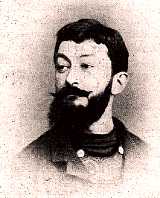 | |
| Birth name | Eugène Léon Édouard Torquet |
| Aliases | John Antoine But |
| Date of Birth | October 19, 1860 |
| Place of Birth | San Francisco , USA |
| Date of death | March 17, 1918 (57 years old) |
| Place of death | Tebul , France |
| Citizenship |  France France |
| Occupation | writer, poet |
| Years of creativity | 1897 - 1918 |
| Direction | symbolism |
| Genre | story, novel, poem |
| Language of Works | French |
| Awards | Goncourt Prize (1903) |
Content
The origin of the alias
Relatives and friends gave the writer the nickname Gino, which could be written as “J. Nau. " "John" reflects American descent, and "Antoine" - French. In Catalan, “nau” means “ship”. In addition, the Haitian poet Ignas No was famous.
Biography
John Antoine But was born into the family of a French engineer and entrepreneur who emigrated from France to California in 1845, married a French immigrant to San Francisco three years later, became a U.S. citizen in 1860 , and died of typhus in 1864 . In 1866, the widow of Torke with three children returned to Le Havre , married for four years, and in 1877 moved to Paris . John-Antoine studied at the Le Havre Lyceum, and then at Rollins College in Paris. There he met with bohemian writers, in particular withzyutists and hydropaths - the forerunners of symbolism . Collaborated with Chat noir (Black Cat) magazine. Relatives wanted John Antoine to become an official, but he chose a different life path.
In 1881, But got a job as an assistant pilot on a three-masted merchant ship, which went to the Antilles . The terrible storm, described later in the novel "Hostile Strength", prompted him to abandon sailing. John Antoine became Deputy Commissioner for Patent Affairs and traveled to New York and the cities of Colombia and Venezuela.
In 1883, But on the ship “La France” he returned to France, stayed in the municipality of Agnières-en-Bessin and in 1885 got married. During the honeymoon, a young couple settled on the island of Martinique , stayed there for a year and intended to stay forever, but family circumstances prompted them to return to their homeland, and before that to visit the Canary Islands and Portugal. In 1886, But tried in San Rafael , in 1887 he moved to the municipality of Piriac-sur-Mer . In Barneville-Carter, he wrote his first collection of poems, Au seuil de l'espoir (On the verge of hope), and in 1897 published it at his own expense. The writer often changed places of residence. In 1898 he ended up in Mallorca , and then in Tenerife . In Puerto de la Orotava, he began writing the novel Hostile Strength and finished it in Andalusia . In 1903 - 1906, but lived in Saint-Tropez . In 1903 , again, at his own expense, he published this novel. The work did not have commercial success, there were not even reviews, because the author did not send typewritten texts or hard copies to the critics. John did not earn a living by his literary work, he simply wrote for his pleasure. In 1906, John-Antoine But moved to Algeria , and in 1909 - to Corsica and lived there for seven years (longer than anywhere else). In connection with the events of the First World War from 1916 to 1917 he was in Paris, later he moved to Rouen , then to Trebul, where he died. Many of his works were not published during his lifetime.
Goncourt Prize
In December 1903, John-Antoine But was awarded the Goncourt Prize for "Enemy Strength." The main character of the novel, the poet Phillip Veli, having come to his senses in a madhouse, only in time learns how and why he got there. Fell in love with a crazy patient, Phillip loses her. A creature from another planet is infused into it. Beaten up by doctors, the poet escapes from a psychiatric clinic and wanders around the world, looking for a lover.
Before the award, John Antoine But was published from time to time - in magazines (in particular in La Revue blanche), but few people knew him. The Goncourt Prize jury ( Joris-Karl Güismans , Octave Mirbo , Leon Daudet, brothers Roni, Paul Marguerite, Lucien Declav, Elemir Bourges, Leon Ennik and Gustave Geffroy) voted for the award with only six votes to four. But in 1906, Paul Leotro ( fr. Paul Léautraud ) said: "The Goncourt Prize was awarded only once, the very first, which became the owner of No." Much later, the chairman of the 1903 jury , Guysmans, stated that “today is the best that we have noted” [1] .
Notes
- ↑ Cité par Lucien Descaves (cf. Sources), d'où proviennent également les citations qui suivent.