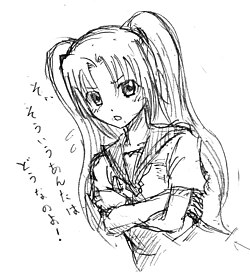
Tsundere ( ツ ン デ レ - ) is a Japanese word for the archetype of the heroine of games and anime , the character and behavior of which in everyday life is characterized by the term “tsunzun” ( ツ ン ツ ン tsunzun , indifferent, closed, prickly) , and then suddenly changes to “dededere” ( デ レ デ レ dederere , languishing with love) , when she is alone with a certain character. Or she, appearing at first as “tsunzun”, as the plot develops, turns into “dederere” [1] . Originally derived from Japanese bisejo games , this word has now become part of the phenomenon of attraction to characters ( moe- phenomenon) among otaku and gets to other multimedia , such as anime , manga , novels and even media .
A well-known tsundere actor is Seiyu Rie Kugimiya , who voiced such popular tsundere characters as Shakugan no Shana , Nagi Sanzenin ( Hayate no Gotoku! ), Louise ( Zero no Tsukaima ) and Taiga Aisaka ( Toradora! ).
Terminology
The term was coined in 2002 [2] . “Tsundere” is a word from network jargon , and, as a result, has a peculiar use; terms of use change accordingly. Thus, this term does not clearly define what types of characters can be described as “tsundere,” and even goes beyond gender and species differences. The wording of the meaning of the term is often influenced by the point of view of its author.
“Tsundere” is a combination of two words: “tsuntsun” ( Japanese ツ ン ツ ン ) and “dederere” ( Japanese デ レ デ レ ) . “Congcun” is defined as “angry, sarcastic, indifferent”, and “dederere” - as “in love, languid” [3] . The derivative noun Tsundereko ( я я デ レ っ 娘 ) is used for a girl with a tsundere personality. Like the Nekomimi , the tsundere emphasizes the character trait that inspires the moe reaction [4] . This concept is gaining more attention in Japan. Thus, a tsundere cafe was opened in Akihabara [5] , thematic “tsundere products” (like portable TVs from Takara Tomy ) are produced [6] .
Notes
- ↑ Definition of the term tsundere (Japanese) (inaccessible link - history ) . goo.ne.jp. Date of treatment March 11, 2009. (unavailable link)
The female character of games, anime and the like, usually behaving like a tsunzun, but, being alone with a man, suddenly becomes dederere in behavior and character. Or, being first a tsunts, along with the development of the plot becomes dederere.
Original text (Japanese)ゲ ー ム · ア ニ メ な ど の 女性 キ ャ ラ ク タ ー が, 普 段 は ツ ン ツ ン し て い る の に, あ る 男性 と 二人 き り に な る と 急 に デ レ デ レ に な る よ う な 性格 や 様 子. ま た は 最初 は ツ ン ツ ン し て い た の に, 物語 の 進行と と も に デ レ デ レ す る よ う な 性格 や 様 子 な ど。
- ↑ AnimeNation Anime News Blog "Blog Archive" Ask John: Are There Any Male Tsundere? (inaccessible link) . Date of treatment June 16, 2010. Archived June 15, 2010.
- ↑ EDICT . Date of treatment January 6, 2007.
- ↑ Wednesday Notes .... Akamatsu-sensei Talks "Moe" (link not available) . Date of treatment March 29, 2006. Archived January 7, 2008.
- ↑
."In Tokyo's Akihabara district there is already reportedly a" tsundere cafe ", and the word" tsunderera ", which resembles the Japanese for" Cinderella "in katakana, was nominated for a prize in the 2006 fashionable word awards, indicating that" tsundere " culture may become more prominent in the future. ”
- February 2 , "Toymaker introduces portable TV with harsh audio guidance that gradually gets kinder", Mainity Shimbun - ↑
"Toy manufacturer Tomy Co. has come up with the world's first "tsundere" portable television set, which gives audio guidance with a harsh voice that gradually becomes kinder as the user gets used to the set ... .'Tsundere 'is a word for a type of feminine personality that is initially uptight and cold, and then kind and loving. "It is well known among Japan's otaku community, and ranks in popularity with the word 'moe', which signifies an enthusiasm or fetish for something, especially in connection with anime.”
- February 2 , Mainity Shimbun
See also
- Yandere
- Bisejo
- Moe