The 1933 Reichstag election [3] is the 9th parliamentary election in the Weimar Republic held on March 5, 1933 [4] .
← 1932 (November)  1933 (November) → 1933 (November) → | |||
| Parliamentary elections in Germany | |||
|---|---|---|---|
| Reichstag election | |||
| March 5, 1933 | |||
| Voter turnout | 88.74% | ||
 |  | 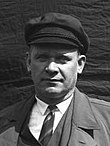 | |
| Party head | Adolf Gitler | Otto Wels | Ernst Thalmann |
| The consignment | NSDAP | SPD | CNG |
| Seats received | 288 [1] ( ▲ 96) | 120 ( ▼ 1) | 81 ( ▼ 19) |
| Votes | 17 277 180 ( 43.91% [2] ) | 7 516 243 (18.25%) | 4 848 058 (12.32%) |
| Change in the percentage of votes | ▲ 10.82% | ▼ 2.19% | ▼ 4.54% |
| Past number of seats | 192 | 121 | 100 |
 |  |  | |
| Party head | Ludwig Kaas | Alfred Hugenberg | Henry Held |
| The consignment | Center Party | DNFP | Bavarian People's Party |
| Seats received | 74 ( ▲ 4) | 52 ( ▬ ) | 18 ( ▼ 2) |
| Votes | 4 424 905 (11.25%) | 3 136 760 (7.97%) | 1,073,552 (2.73%) |
| Change in the percentage of votes | ▲ 0.68% | ▼ 0.69% | ▼ 0.36 |
| Past number of seats | 70 | 52 | 20 |
| Other parties | 14 places | ||
 | |||

Content
The Weimar Republic before the election
The global economic crisis that began in 1929 put an end to the “ Golden Twenties ” and to the government of the “Big Coalition” led by the Social Democrat Hermann Muller . The stumbling block was the issue of unemployment benefits, the reduction of which was required by the centrists and cabinet members, but the Reichstag deputies from the left parties opposed. Against the backdrop of growing unemployment, the positions of far-right parties are strengthening, primarily the National Socialist German Workers Party , led by Adolf Hitler . After the success of the Nazi party in several consecutive parliamentary companies, Reich President Hindenburg appointed Hitler Chancellor on January 30, 1933 . After that, Hitler, who had long sought this post, announced a course towards dissolving parliament and holding early parliamentary elections.
The elections were held in the midst of a tough confrontation between far-right supporters of the newly appointed Reich Chancellor Adolf Hitler and left-wing parties with tolerance from the clerical party of the Center and the extremely low popularity of liberal parties.
On the eve of the elections, on February 27, the Reichstag building was set on fire . The Dutch Communist Marinus van der Lubbe , who was detained in the premises of a burning building, was accused of arson. On February 28, the day after the fire, a decree “On the Protection of the People and the State” was signed by Hindenburg, restricting a number of Germans' freedoms (freedom of the individual, assembly, unions, speech, press), as well as privacy of correspondence and private property rights.
The NSDAP assault troops led by Ernst Rohm began a real war against the paramilitary communist militia Roth Front , led by Ernst Thalmann . Attack aircraft began to attack representatives of trade unions associated with the Communist Party of Germany , offices and houses of the left. Soon, the violence spread to the Social Democrats. For criticism of the new government, a number of parties and print media were banned, including the Catholic German Party and almost all social-democratic newspapers. Soon, repressions began against representatives of the Center Party .
Election Results
The results of the parliamentary elections in Germany on March 5, 1933 [5] :
| The consignment | Votes | % | Places | Difference |
|---|---|---|---|---|
| National Socialist German Workers Party | 17,277,180 | 43.91 | 288 | +92 |
| Social Democratic Party of Germany | 7,181,629 | 18.25 | 120 | -one |
| Communist Party of Germany | 4,848,058 | 12.32 | 81 | -nineteen |
| Center Party | 4,424,905 | 11.25 | 73 | +3 |
| German National People's Party | 3,136,760 | 7.97 | 52 | -one |
| Bavarian People's Party | 1,073,552 | 2.73 | nineteen | -one |
| German People's Party | 432,312 | 1.1 | 2 | -9 |
| Christian Social Folk Service | 383,999 | 0.98 | four | -one |
| German Democratic Party | 334,242 | 0.85 | five | +3 |
| German Farmers Party | 114,048 | 0.29 | 2 | -one |
| Agrarian league | 83,839 | 0.21 | one | -one |
| German Hannover Party | 47,743 | 0.12 | 0 | -one |
| Socialist combat community | 3,954 | 0.01 | 0 | _ * |
| Bavarian workers ’fighting community | 1,110 | 0.00 | 0 | 0 |
| Spoiled / unfilled newsletters | 311,698 | - | - | - |
| Total | 39,655,029 | 100 | 647 | +63 |
| Registered Voters / Turnout | 44,685,764 | 71.60 | - | - |
* Took part in the elections for the first time.
As a result of the election, the composition of the new Reichstag became much more right-wing, due to the large addition of National Socialists to the faction. Representation of the national liberal parties in the new parliament turned out to be insignificant (the German People’s Party won only two seats in the new Reichstag, instead of 11 in the last election and 30 in the 1930 parliamentary elections). The National Conservatives represented by the German National People's Party retained their positions and became part of Hitler's coalition government. The centrists actually retained, and partly strengthened their representation, but the success of the National Socialists made their participation in the future government coalition inappropriate. The Bavarian People's Party, which defends more conservative ideals than the Center Party, has retained its position. The leftists (the Social Democrats and the Communists) suffered the most severe losses, losing a total of 20 seats. This was largely due to the street war against the communist agitators and the Union of Red Front Warriors , in addition, after Hitler came to power, SA attack aircraft were assigned to help the police. Including they protected polling stations during voting.
On the whole, the composition of the parliament has not changed so radically. More than 63 deputies were elected to the new Reichstag than in the previous one; most of the new seats went to representatives of the NSDAP . Hitler's success was not at all as devastating as he had expected and how often modern historians present. The result achieved in the elections was not enough to consolidate the new dictatorship.
The distribution of votes between the main parties in the states that entered the German Empire of the Weimar Republic [6] :
| Candidate | NSDAP | DNFP | Center Party | SPD | CNG | Bavarian People's Party | Other |
|---|---|---|---|---|---|---|---|
| Total | 43.91% | 7.97% | 11.25% | 18.25% | 12.32% | 2.73% | 3.63% |
| Prussia | 43.73% | 9.05% | 14.22% | 17.01% | 13.21% | 2.78% | |
| Bavaria | 43.03% | 4.11% | 3.01% | 15.53% | 6.27% | 24.21% | 3.84% |
| Lower saxony | 44.96% | 6.52% | 1.25% | 26.25% | 16.49% | 4.53% | |
| Württemberg | 42.00% | 12.41% | 16.94% | 15.03% | 9.33% | 4.29% | |
| Baden | 45.36% | 3.64% | 25.35% | 11.93% | 9.75% | 3.97% | |
| Thuringia | 47.60% | 12.41% | 1.19% | 20.62% | 15.28% | 2.90% | |
| Hesse | 43.73% | 2.85% | 13.59% | 21.70% | 10.88% | 7.25% | |
| Hamburg | 38.85% | 7.99% | 1.92% | 26.90% | 17.59% | 6.75% | |
| Mecklenburg-Schwerin | 48.54% | 16.79% | 0.79% | 24.51% | 7.30% | 2.07% | |
| Oldenburg | 46.50% | 11.39% | 14.76% | 18.17% | 6.40% | 2.78% | |
| Braunschweig | 49.05% | 7.61% | 1.71% | 30.45% | 8.77% | 2.41% | |
| Anhalt | 46.11% | 8.39% | 1.31% | 30.78% | 11.43% | 1.98% | |
| Bremen | 32.65% | 14.47% | 2.29% | 30.35% | 13.17% | 7.07% | |
| Lippe-Detmold | 47.09% | 6.88% | 2.41% | 28.00% | 8.24% | 7.38% | |
| Lubeck | 42.79% | 5.64% | 1.06% | 38.27% | 8.17% | 4.07% | |
| Mecklenburg-Strelitz | 51.61% | 15.90% | 0.73% | 22.57% | 7.12% | 2.07% | |
| Waldeck | 70.85% | 9.34% | 2.16% | 10.47% | 3.27% | 3.91% | |
| Schaumburg-Lippe | 43.36% | 7.79% | 0.48% | 39.07% | 5.66% | 3.64% |
Despite the brilliant results of the Nazis compared to previous elections, their hopes did not materialize. They never got the majority in parliament, and Hitler was obliged to maintain a coalition with the German National People’s Party in order to preserve the government. At the same time, the losses of the left, although they were significant, were not fatal. The Social Democrats lost only one place, the Communists - about the fifth from their representation in the former Reichstag.
Consequences
Despite the fact that the ruling ultra-right coalition did not have 2/3 of the votes needed to amend the constitution, Hitler managed to pass through parliament a document according to which he could publish and apply new laws without the approval of parliament. To this end, the Communist Party of Germany was banned by a special decree, and its seats in the parliament were transferred to the NSDAP , while the rest of the Reichstag deputies were actually arrested in the Royal Opera House, which held meetings after the Reichstag fire. Only the Social Democrats voted against, led by Otto Wels. The final result of the vote on this bill in the Reichstag: in favor - 444 while 94 - against.
The “ law to correct the plight of the people and the Reich ” or the “favorable act”, adopted in this way on March 24, 1933, made Adolf Hitler a dictator for a period of up to April 1937 (subsequently twice extended). This law finally approved the Nazi dictatorship in Germany.
On April 1, a nationwide campaign of a boycott of shops and enterprises belonging to Jews began . This action is considered the first on the path of mass deportation, extermination and enslavement of Jews living in Germany and in the territories of countries conquered by Nazi Germany during World War II .
On May 2, all trade unions were banned in Germany, and on July 14 all political parties were banned, with the exception of the NSDAP . After the ban was introduced, many politicians were forced to either cooperate with the authorities (for example, former Reich Chancellor Franz von Papen was sent as an ambassador to Austria , and after the Anschluss - to Turkey , or sent to emigration ( Otto Wels , leader of the Social Democrats, emigrated first to the Saarland- controlled area of the League of Nations , and then to Prague and Paris , where he participated in the creation of the foreign organization of the SPD [7] , Willy Leow , one of the leaders of the Union of Red Front Soldiers ), emigrated to the USSR , where he was shot in 1937 on charges of participation in or in a Trotskyite-fascist terrorist organization), or go to the first concentration camps that they began to create in Germany for politically unreliable Germans ( Ernst Thalmann , who was arrested on election day, March 5, and executed only in August, ended his days in the Buchenwald camp 1944).
In the pre-term parliamentary elections held in November 1933, the NSDAP was the only party to participate, 92.11% of Germans voted for the list with 7.89% of ballots demonstratively corrupted in protest against the actions of the Nazi regime. These elections, as well as the subsequent parliamentary elections, were held under the control of the police, the SA and the SS over the voters.
Notes
- ↑ Germany - Chronology of the Third Reich, 1933-1932
- ↑ Electoral geography 2.0 Weimar Germany. Legislative Election 1933
- ↑ Parliamentary elections in Germany, 1933
- ↑ Germany - Ursa-TM Forum Chronology of the Third Reich 1933-1939
- ↑ Germany - Reichstag election 1933
- ↑ Electoral geography 2.0 Weimar Germany. Legislative Election 1933 (March)
- ↑ Historical Dictionary - Otto Wels (Unavailable link) . Date of treatment April 15, 2012. Archived on February 8, 2015.
See also
- Adolf Gitler
- National Socialists coming to power in Germany
- Weimar Republic
- Third Reich
- Telman, Ernst