Hercules George Robert Robinson ( born Hercules George Robert Robinson , Chinese trad. 罗士敏 勋爵 ; December 19, 1824 , Rosmead, Westmeath , Great Britain - October 28, 1897 , London , United Kingdom) - 1st Baron Rosmead , British colonial official , Montserrat Administrator, St. Christopher 's Lieutenant Governor, Hong Kong Governor, Ceylon Governor, Fiji Governor, New South Wales Governor, New Zealand Governor , High Commissioner for South Africa and ( two terms ), Privy Councilor , UK Peer and Cavalier Pain th Cross of the Order of St Michael and St George . He gained great fame as a governor, whose service was notable for perhaps the greatest geographical diversity in British history.
| Hercules Robinson | |||||||
|---|---|---|---|---|---|---|---|
| English Hercules robinson | |||||||
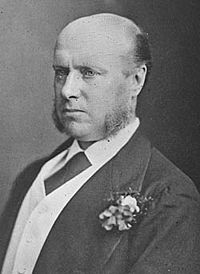 Photograph of Hercules Robinson | |||||||
| |||||||
| Predecessor | John Bowring | ||||||
| Successor | Richard Graves McDonnell | ||||||
| |||||||
| Predecessor | Charles Justin McCarthy | ||||||
| Successor | William Gregory | ||||||
| |||||||
| Predecessor | Somerset Lauri Corrie | ||||||
| Successor | Augustes Loftes | ||||||
| |||||||
| Predecessor | George philipps | ||||||
| Successor | Arthur Hamilton-Gordon | ||||||
| Birth | December 19, 1824 Rosmead, Westmeath , UK | ||||||
| Death | October 28, 1897 (72 years old) London , UK | ||||||
| Burial place | |||||||
| Father | Hercules Robinson | ||||||
| Mother | Francis Elizabeth Wood | ||||||
| Spouse | Neya Arthur Ada Rose D Amour | ||||||
| Children | Hercules Arthur Temple; Elinor Francis Alti Maria; Nora Augusta Maud; Nerida Lita | ||||||
| Education | |||||||
| Awards | |||||||
| Type of army | |||||||


Biography
Hercules George Robert Robinson was born December 19, 1824 in Rosmead, in County Westmeath, in Ireland into the family of Admiral Hercules Robinson and Francis Elizabeth Wood. After completing his studies at the Royal Military College Sandhurst, on January 27, 1843 he entered the service of the 87th Royal Infantry Regiment of the Irish Riflemen with the rank of second lieutenant. September 6, 1844 received the rank of lieutenant for the supply of troops, rose to the rank of captain. Having retired in 1846, under the patronage of Richard Burke, Earl of Mayo, he received a position on the Public Works Council in Ireland and became the chief commissioner for control at fairs and markets.
An active position during the famine of 1848 in Ireland and conscientious service became one of the reasons for his appointment on February 14, 1854 to the post of president of the council of the Montserrat colony. On November 6, 1855, he was appointed vice governor of St. Kitts, where he served until 1859. On June 17, 1859, he was appointed Governor of Hong Kong, becoming the youngest governor in Hong Kong colonial history. He served in this post until March 1865. On June 28, 1859, he was knighted in recognition of his merits in attracting coolies to the colony.
During his tenure, he ensured control of the Kowloon Peninsula, thereby expanding the size of the territory. Until that time, the Hong Kong colony consisted of only the island of the same name. In addition, he ordered the construction of the Poktualm reservoir, which provided a stable supply of drinking water to Hong Kong residents for many years. Conducted gasification for gas lighting of the city streets. Under him, banks were opened in Hong Kong that were allowed to print banknotes on behalf of the government.
March 6, 1865 was appointed governor of Ceylon. June 30, 1869 was elevated to the Knights of the Order of St. Michael and St. George. From March 4, 1872 to February 24, 1879 he was Governor of New South Wales in Australia. For active assistance in the colonization of the Fiji Islands in Oceania, he was elevated to the Grand Cross with the Order of St. Michael and St. George. From October 1875 to June 1879 he was also the Governor of Fiji. February 24, 1879 was appointed to the post of Governor General of New Zealand.
After the liquidation of the independence of the Zulus following the results of the Anglo-Zulu War, he was appointed High Commissioner for South Africa and Governor of the Cape Region. Arrived at the destination shortly before the battle of Majub, in which the British suffered a crushing defeat from Afrikaners. He played an important role in the peace negotiations with the President of the young Republic of South Africa Paul Krueger to determine the status of the Transvaal, which ended with the signing of the London Convention of 1884. The year before, Hercules Robinson was appointed member of the Privy Council. He promoted the British colonial expansion on the continent, in particular the annexation of Bechuanaland (now Botswana). In 1889, he resigned.
February 6, 1891 received the title of Baronet. At the request of Prime Minister Archibald Primrose, he agreed to join the service, becoming the second time governor of the Cape region. On August 10, 1896, he was elevated to the rank of British peer and received the title of Baron Rosmead ( 1st Baron Rosmead ). Deteriorating health condition caused his resignation in April 1897. He spent the last months of his life in London, where he died on October 28, 1897 and was buried in the Brompton cemetery.
Links
- Philip Mennell. Robinson, Right Hon. Sir Hercules George Robert . The Dictionary of Australasian Biography. - Philip Mennell. "Robinson, Hercules George Robert." (eng.)
- Charles Alexander Harris. Robinson, Hercules George Robert . Dictionary of National Biography, 1901 supplement. - Charles Alexander Harris. "Robinson, Hercules George Robert." (eng.)
- Sir Hercules Robinson . Australian Town and Country Journal. - Sir Hercules Robinson. (eng.)