Masaaki Sakai ( Japanese 堺 正 章 Sakai Masaaki , born August 6, 1946 in Tokyo ), real name Masaaki Kurihara ( Japanese 栗 原 正 章 Kurihara Masaaki ), also known by the nickname Mataaki ( Japanese マ チ ャ ア キ ) is a popular Japanese singer, act media person and TV presenter; also a diversified amateur athlete and philanthropist. Outside of Japan, he is best known for playing the leading role of the Monkey King in the popular TV series 1978-1980 based on the classic novel Journey to the West , known in a number of English-speaking countries in the BBC dubbing as “ Monkey ” .
| Masaaki Sakai (Mataaki) | |
|---|---|
| Japanese 堺 正 章 ( Sakai Masaaki ) | |
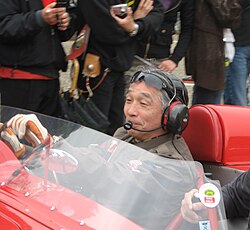 Masaaki Sakai driving a 1957 at La Festa Primavera 2009 | |
| Birth name | Masaaki Kurihara jap. 栗 原 正 章 ( Kurihara Masaaki ) |
| Date of Birth | August 6, 1946 (73 years old) |
| Place of Birth | Tokyo |
| Citizenship |  Japan Japan |
| Profession | musician (flute, guitar, est. tambourine), singer , actor |
| Career | 1954 - to the present. time |
| IMDb | |
Content
- 1 Biography and career
- 1.1 Hobbies and social activities
- 2 Filmography
- 2.1 Films and television films
- 2.1.1 Films about the band The Spiders or with her participation
- 2.1.2 Films with individual acting
- 2.2 TV shows
- 2.1 Films and television films
- 3 Maintaining and participating in a television show
- 4 Musical works
- 4.1 Partial singleography
- 4.1.1 As part of The Spiders or solo with band support
- 4.1.2 Solo career
- 4.2 Participation in Kohaku Uta Gassen
- 4.1 Partial singleography
- 5 Nominations, Prizes and Awards
- 5.1 Government
- 5.2 Cinematographic and television
- 5.3 Musical
- 6 notes
Biography and career
Born as the second child in the family of Japan's famous comedian actor Shunji Sakai (Masashi Kurihara).
Masaaki Sakai’s creative career (from the very beginning using his father’s last name) and some of his fame began with several childhood and teenage film roles in the 1950s and 1960s, but the really wide, including international, popularity came to him approximately mid-1960s, as the frontman of one of the leaders of the Japanese genre of group sounds , the group . The group was formed in 1961 and, before its breakup, released a number of singles and albums that took places on the Oricon chart ; toured in Europe and the USA, and also became a "group character" of 13 comedy films, a pair of which cameo-roles were played by Shunji Sakai.
The B side of the first released (in 1965) single by the group was the song Monkey Dance by Yu Aku and Koji Wakino, based on the dance of the same name invented by Sakai, also illustrated on the cover of the disc [1] , which received considerable popularity in Japan and was first awarded with its corresponding a nickname later associated with his acting work.
In 1971, The Spiders broke up; Sakai, like other members of the group, continued his musical career as a solo singer, and also returned to acting. Of the latter, the main role was played by the main role of the Monkey King in the serial adaptation of the 1978-1980s based on the classic novel of China " Journey to the West ", later dubbed by the BBC and gaining considerable popularity (up to cult status) in a number of English-speaking countries as " The Monkey " Or " Monkey Magic " ; in addition to embodying the main role, Sakai also participated in the recording of the soundtrack of the series, for the most part provided by the band
Former members of the group gathered several times after the breakup of the group for joint performances; in addition, Sakai and two other lead soloists from The Spiders , and , reunited in 1999 for several years, the group, invited the same year to enter the competition "Kohaku" with the song Yei Yei , before the release of the eponymous album with this song in 2000.
Masaaki Sakai was twice married; the first time on a woman not from the world of the media (1974-1980; marriage became widely known only after a divorce), the second time on a model and essayist (1989-2001); from the latter, he has two daughters - Kikuno (born October 5, 1990, model) and (born March 10, 1994; model and actress). According to some reports, in the summer of 2011 he married for the third time.
Worked or works with art agencies , , .
Hobbies and social activities
Masaaki Sakai is known as a car and car racing enthusiast. He repeatedly participated in the Mille Miglia Storica vintage car race in Italy with his wife as a co-pilot, and on October 18, 2000 he won a similar race in Japan on the 1947, where he acted as his co-pilot Takayuki Inoue. Due to his busyness, he stepped aside from racing in 2002, giving his sporty Alfa Romeo , also a popular racing enthusiast. In addition to motorsport, Sakai has repeatedly demonstrated skills in various types of entertainment and demonstration sports, including jogging , juggling , artistic billiards , golf and archery [2] [3] .
He is known for the active support of charities specializing in the fight against AIDS , including the founding of the Masaaki Sakai AIDS Fund .
Filmography
Movies and TV movies
Films about or with The Spiders
(Unless otherwise specified, Sakai plays himself)
| Year | Japanese name | Transliteration | English name | Russian name | Roles |
|---|---|---|---|---|---|
| 1964 | 仲 間 た ち | Nakama tachi | |||
| 1965 | 高原 の お 嬢 さ ん | Kōgen no ojōsan | Girl from the mountains | Saboo | |
| 1966 | 涙 く ん さ よ な ら | Namida-kun sayonara | |||
| 1966 | 青春 ア ・ ゴ ー ゴ ー | Seishun a Gō-Gō | |||
| 1967 | 君 は 恋人 | Kimi wa koibito | |||
| 1967 | 夕陽 が 泣 い て い る | Sekiyō ga Nakuiteiru | |||
| 1967 | ザ ・ ス パ イ ダ ー ス の ゴ ー ゴ ー 向 う 見 ず 作 戦 | Za Supaidāsu no Gō-Gō Mukō Mizu Sakusen | |||
| 1968 | ザ ・ ス パ イ ダ ー ス の 大 進 撃 | Za Supaidāsu no Taishingeki | The spiders on parade | Grand Parade The Spiders | |
| 1968 | ザ ・ ス パ イ ダ ー ス の 大 騒 動 | Za Supaidāsu no Daisōdō | The Spiders and the riots | Tati | |
| 1968 | ザ ・ ス パ イ ダ ー ス の バ リ 島 珍 道 中 | Za Supaidāsu no Baritou chindōchū | The misadventures of “The Spiders” in Bali | ||
| 1968 | 思 い 出 の 指 輪 | Omoide no yubiwa | Ring of memories | ||
| 1968 | に っ ぽ ん 親 不孝 時代 | Nippon Oyafukō Jidai | approx. " Japan: The Time of the Disrespectful " | Kunio Sugimoto | |
| 1969 | ザ ・ テ ン プ タ ー ズ 涙 の あ と に 微笑 み を | Za Tenputāzu: Namida no Ato ni Hohoemi o | gray hair god |
Individual Acting Films
| Year | Japanese name | Transliteration | English name | Russian name | Roles |
|---|---|---|---|---|---|
| 1952 | 東京 騎士 伝 | Tōkyō Kishi Den | The Tale of the Tokyo Horseman | ||
| 1952 | 母 は 叫 び 泣 く | Haha wa sakebi naku | approx. " Mother's sobs " | ||
| 1954 | ハ ワ イ 珍 道 中 | Hawai Chindōchū | Misfortunes in Hawaii | Aboriginal boy | |
| 1963 | 高校 三年 生 | Kōkō san'nensei | approx. " High school students " | Yasui | |
| 1963 | 学園 広 場 | Gakuen hiroba | Schoolyard | ||
| 1964 | 幸 せ な ら 手 を た た こ う | Shiawase Narate o Tatakō | If you're happy, clap your hands | Akira Ogawa | |
| 1964 | 夢 の ハ ワ イ で 盆 踊 り | Yume no Hawai de Bon Odori | Masaya Matsui | ||
| 1965 | 花 咲 く 乙 女 た ち | Hanasaku Otome Tachi | Saboo | ||
| 1965 | 男 の 紋章 喧嘩 街道 | Otoko no Monshō: Kenka Kaidō | |||
| 1967 | 喜劇 駅 前 百年 | Kigeki: Ekimae hyakunen | |||
| 1970 | ズ ン ド コ ズ ン ド コ 全員 集合 !! | Zun-doko-zun-doko! Zen'in Shūgō !! | General collection !! | ||
| 1970 | 喜劇 ド ッ キ リ 大 逃走 | Kigeki: Dokkiri Daitōsō | |||
| 1970 | 喜劇 右 む け ェ 左! | Kigeki: Migimuke Hidari! | Masaaki Gekita | ||
| 1971 | 喜劇 昨日 の 敵 は 今日 も 敵 | Kigeki: Kinō no Tekiwa Kyomoteki | Masaaki Gekita | ||
| 1971 | 野 良 猫 ロ ッ ク 暴走 集 団'71 | Nora-neko rokku: Bôsô shûdan '71 | Stray Cat Rock: Beat '71 | Rock Stray Cats: Rebels 71 | Masaaki |
| 1971 | 起 き て 転 ん で ま た 起 き て | ||||
| 1973 | と し ご ろ | Toshigoro | Mataaki | ||
| 1974 | 街 の 灯 | Machi no hi | City lights | Chiyomatsu Sakanoshita | |
| 1975 | お 姐 ち ゃ ん お 手 や わ ら か に | Oneechan yawarakani | mafiosi | ||
| 1976 | 喜劇 百 点 満 点 | Kideki: Hyakutenmanten | student | ||
| 1977 | ト ラ ッ ク 野 郎 | Torakku Yarō | Truck guys | "Handsome" Momojiro | |
| 1986 | キ ネ マ の 天地 | Kinema no tenchi | Final take | approx. " World of cinema " | Director Naito [4] |
| 1987 | ト リ ナ ク リ ア PORSCHE959 | Trinacria Porsche 959 | |||
| 1991 | 風 の 国 | Kaze no Kuni | Country of winds | ||
| 1998 | 北国 街道 殺人 事件 | Hokkokukaidō satsujinjiken | Murder on the Northern Tract | Lieutenant Iwao Takemura , nicknamed. “ Colombo from Sinano ” | |
| 1999 | 戸 隠 伝 説 殺人 事件 | Togakushi Densetsu Satsujinjiken | Lieutenant Iwao Takemura | ||
| 2000 | 追 分 殺人 事件 | Oiwake satsujinjiken | Crossroads Murder | Lieutenant Iwao Takemura | |
| 2004 | 機関 車 先生 | Kikansha-sensei | Kikansha-sensei | Kikansya Sensei | Shuichiro Sako |
| 2006 | 寝 ず の 番 | Nezu no ban | A Hardest Night !! | Commemoration night | president of a metallurgical company |
| 2007 | ひ ま わ り 〜 夏 目 雅子 27 年 の 生涯 と 母 の 愛 〜 | Himawari: Natsume Masako 27 nen no shōgai to haha no ai | letters. “ Sunflower: Masako Natsume - 27 years of life and motherly love ” | himself (interview) [5] | |
| 2007 | 夕 凪 の 街 桜 の 国 | Yūnagi no Machi, Sakura no Kuni | Town of Evening Calm, Country of Cherry Blossoms | City of Evening Calm, Cherry Blossom Country | Asahi Ishikawa (adult) |
| 2012 | 大 奥 〜 永遠 〜 [右衛門 佐 ・ 綱 吉 篇] | Ōoku ... eien ... (Emonnosuke Tsunayoshi hen) | Castle of Crossed Destinies / The Lady Shogun 2 | monk |
TV Series
| Years, studio | Japanese name | Transliteration | English name | Russian name | Roles |
|---|---|---|---|---|---|
| 1970-1973, Tbs | 時間 で す よ | Jikan desu yo | This time | Ronin Ken Miyazaki | |
| 1970-1971, Tbs | こ け こ っ こ ー! | Kokekokkō! | Kukareku! | ||
| 1970-1971, Tbs | 日 曜 8 時 、 笑 っ て い た だ き ま す | Nichiyō, 8-doki: Waratte itadakimasu | fashion comic book artist Mamoru Hanamoto | ||
| 1971, NET | 大 忠臣 蔵 | Daichūshingura | Epic chushingura | Epic Tuchingura / Epic of 47 Ronin | Matsukiti |
| 1971, TBS | レ ビ は こ れ だ! ド ラ マ が 3 つ も | ||||
| 1972, TBS | は ー い た だ い ま | ||||
| 1972, TBS | お は よ う | Ohayō | Good morning! | ||
| 1974, TBS | 寺内 貫 太郎 一家 | Jinai Kantarō ikka | Kantaro Dzinaya Family | Saburo (cameo) | |
| 1975, NET | マ チ ャ ア キ の 森 の 石松 | Machaaki no mori no ishimatsu | Ishimatsu from Mori | ||
| 1978-1980, NTV | 西遊記 | Saiyūki | Monkey | Journey to the West | Monkey King Song Goku |
| 1978, NTV | お と こ 同志 お ん な 同志 | Otoko Dōshi, Onna Dōshi | |||
| 1980-1981, Tbs | 天皇 の 料理 番 | Tennō no Ryōriban | Imperial cook | imperial cook | |
| 1981-1982, NTV | キ ッ ド | Kiddo | Kid | Kido Ippei | |
| 1982, TBS | さ よ な ら 三角 ま た き て 四角 | Sayonara Sankaku Matakite Shikaku | Tokuji Nozawa | ||
| 1982, TV Asahi | フ ジ 三 太郎 | Fuji Santarō | Santaro Fuji | Santaro Fuji employee | |
| 1983, TV Asahi | あ と は 寝 る だ け | Ato wa neru dake | Youji | ||
| 1988-1994, TV Asahi | ご 存 知! 旗 本 退 屈 男 | Gozonji! Hatamoto taikutsu otoko | I know! Bored Hatamoto! | Kinai, Hatamoto Servant [6] | |
| 1989, Fuji TV | さ よ な ら 李香蘭 | Sayonara Ri Kōran | Goodbye Ri Quran | film producer | |
| 1994, Fuji TV | 警 部 補 古 畑 任三郎 | Keibuho Furuhata Ninzaburo | Lieutenant Ninzaburo Furuhata | Inspector Ninzaburo Furuhata | criminal Ukon Nakamura |
| 1995, TBS | パ パ ・ サ ヴ ァ イ バ ル | Papa survival | Daddy survival | Goro Saeki | |
| 1995, ABC TV | SALE! | SALE! | Ginjiro Otomo | ||
| 1995, YTV | ベ ス ト フ レ ン ド | Best friend | Best friend | Best friend | Michihiko Kurosawa |
| 1998, NHK | 徳 川 慶 喜 | Tokugawa Yoshinobu | Tokugawa Yoshinobu / Tokugawa Generations | Tokugawa Yoshinobu | temple gatekeeper and fireman |
| 2001, 2003, 2004, 2007, NHK | ち ゅ ら さ ん 1-4 | Churasan 1-4 | The Promise to The Chura Sea 1-4 | husband hl heroines Kaibun kohagura | |
| 2005, NHK | 理想 の 生活 | Risis no seikatsu | Ideal life | Masato Todoriki | |
| 2006, Fuji TV | 西遊記 | Saiyūki | Sayyuki | Journey to the West | Shakyamuni Buddha (cameo) |
| 2006, TBS | ク ロ サ ギ | Kurosagi | The black swindler | Tadayuki Shimizu (cameo) | |
| 2007, TBS | ロ ン グ ・ ウ ェ デ ィ ン グ ロ ー ド! | Long Wedding Road! | Long Wedding Road! / Long Wedding 2007 | Naoyuki Azuma | |
| 2007 NHK | 夏雲 あ が れ | Natsu kumo agare | Judah Hatiya | ||
| 2007, Fuji TV | ゾ ウ の は な 子 | Zou no hanako | Those Poor Elephants | Seizo Nishimura Zoo Director | |
| 2008, Fuji TV | 無理 な 恋愛 | Muri na ren'ai | Impossible love | Impossible love | Shogo Tatiki |
| 2008, TV Asahi | 暴 れ ん 坊 将軍 ス ペ シ ャ ル | Abarenbō Shōgun Special | head of the fire artel Edo Tatsugoro | ||
| 2009, CAL , TBS | 水 戸 黄 門 | Mito Kōmon | Mito Komon | poet Matsuo Basho | |
| 2010, NHK | 君 た ち に 明日 は な い | Kimitachi ni Asu wa Nai | No tomorrow | Eiichiro Takahashi | |
| 2012, NHK | 猿 飛 三世 | Sarutobi sansei | Ummiya Shuzen | ||
| 2012, Fuji TV | 任侠 ヘ ル パ ー | Ninkyō Helper | Beautiful world | Yuzo tsutai |
Maintaining and participating in a television show
Musical works
Partial Singleography
(Only entries included in the Oricon chart are listed; the list does not claim to be exhaustive due to the difficulty of searching in Japanese sources. Awarding of songs with music or sound recording awards, as well as the inclusion of Kohaku uta gassen in the competition program, are highlighted in the appropriate sections)
As part of The Spiders or solo with band support
- 1967 - ( い つ ま で も ど こ ま で も / バ ン ・ バ ン ・ バ ン , literally, “Forever and Whatever Happens” / “Bam-bam-bam”; music by Hiroshi Kamayatsu, Hiroto Sasaki and H. Kamayatsu respectively) - 4th place Oricon
- 1968 - ( Japanese あ の 時 君 は 若 か っ た , lyrics by Fumie Sugawara, music Hiroshi Kamayatsu; side B - Mōichido, Mōichido ) - 6th place Oricon
- 1968 - Shinju no Namida / Akai Doresu no Onnanoko ( Japanese 真珠 の 涙 / 赤 い ド レ ス の 女 の 子 ) - 19th place Oricon
- 1968 - Kuro Yuri no Uta / Rock 'n' roll Boy ( Japanese 黒 ゆ り の 詩 / ロ ッ ク ン ロ ー ル ・ ボ ー イ ) - 37th place Oricon
- 1968 - ( ガ ラ ス の 聖女 , lit. “Glass saint”; lyrics by Yuji Matsuzaki, music by ; article B - Kaze Haii Yatsu ) - 50th place Oricon
- 1969 - Namida no Nichyōbi / Akai Ringo ( Japanese 涙 の 日 曜 日 / 赤 い リ ン ゴ ) - 44th place Oricon
- 1969 - Yoake no Futari /Kokekokkō ( Japanese 夜 明 け の 二人 / コ ケ コ ッ コ ー ) - 84th place Oricon
- 1970 - Futari wa Ima / Tomo o Yobu Uta ( Jap. ふ た り は 今 / 友 を 呼 ぶ 歌 ) - 48th place Oricon
- 1970 - ( Japanese エ レ ク ト リ ッ ク お ば あ ち ゃ ん , literally, “Electric Granny”; lyrics by Hiroshi Aso, music by Hiroshi Kamayatsu, cover of The Little Old Lady from Pasadena ; v. B - Itsuwari no Koi ) - 67- place Oricon
- 1970 - Ashita o Inoru / Nande Konnani ( 明日 を 祈 る / な ん で こ ん な に 」 ) - 80th place Oricon
Solo career
- 1971 - ( さ ら ば 恋人 , lit. “Farewell, beloved”; lyrics by , music by v ; v. B - Ki Rakuni Ikiyō ) - 2nd place Oricon
- 1971 - Namida Kara Ashita He ( Japanese 涙 か ら 明日 へ , lit. “Tears tomorrow”; lyrics by , music by ; v. B - Ashita no Tegami ) - 4th place Oricon
- 1973 - ( Japanese 街 の 灯 り , literally “City / Street Lights”; lyrics by , music ; Article B - Chikatetsu no Eki De ) - 20th place Oricon
Participation in Kohaku Uta Gassen
Masaaki Sakai at least ten times (in total by various forms of participation) participated in the most prestigious music competition and New Year's show in Japan "Kohaku uta gassen" (also popular and prestigious for viewers and performers from several other East Asian countries), including:
- 1971, Issue No. 22 [7] - individual participation with the song Saraba Koibito [8]
- 1972, Issue No. 23 - individual participation with the song Un Ga Yokereba Iikoto Arusa ( 運 が よ け れ ば い い こ と あ る さ , letters. “If you're lucky, that's good”) [9]
- 1973, Issue No. 24 - Individual participation with the song Machi no Akari [10]
- 1974, Issue No. 25 - individual participation with the song Kareha no Yado ( Japanese 枯葉 の букв , letters. "Overnight of fallen leaves") [11]
- 1975, Issue No. 26 - individual participation with the song Ashita no Mae Ni ( 明日 の 前 に , literally. “The Past of Tomorrow”) [12]
- 1976, issue No. 27 - individual participation with the song Ichigo no Kisetsu ( п の 季節 , literally. "Strawberry time") [13]
- 1991, Issue No. 42 - Presenter from the White Team [14]
- 1992, Issue No. 43 - Presenter from the White Team [15]
- 1993, Issue No. 44 - Presenter from the White Team [16]
- 1999, Issue No. 50 - participation in the Sans Filtre group with the song Yei Yei [17]
Nominations, Prizes and Awards
Government
- 1996 - The Ministry of Education, Culture, Sports, Science and Technology of Japan (together with Shunji Iwai, Yumiko Inoue, Kiyokazu Kanze, Tamiya Kuriyama, Itiro Nodaira, Motoki Hanayagi and Toeko Tatsuhara)
Cinematographic and television
- 1970 - in the Debut of the Year category [18]
- 1970 - Special Prize [19]
- 1982 - Award Japanese Men's Fashion Association [20]
- 2007 - Special Jury Prize, for his role in the movie
Musical
- 4th Award Ceremony (December 5, 1971) - Award in the category “Prize of Hope” for the song “Farewell, Loved One”
Japan Record Awards
- (December 31, 1971) - award in the Popularity category for the song “Farewell, darling” [21]
- (December 31, 1973) - award for the song “Street Lights” [22]
Notes
- ↑ Disc cover (inaccessible link) on ohmytracks.com .
- ↑ A selection of demonstrations by Masaaki Sakai from 1976 to 2009 (Japanese) on YouTube .
- ↑ O SAMURAI DO BILHAR - truques incríveis de bilhar! .
- ↑ Character Prototype - Director .
- ↑ Biopic about Masako Natsume , the "partner" of Sakai in the series "Journey to the West" (1978-1980), which played the role of Tripitaki (the monk of Xuanzan / Sanzo)
- ↑ The role was “inherited” by Masaaki Sakai from his father, Shunji Sakai , who played her in a series of films with Utaemon Ichikawa in the title role - the latter’s son “inherited” in this series, Kinya Kitaoji .
- ↑ The date "Kohaku uta gassen" in all years is the evening of the last day of the year, December 31.
- ↑ Brief data on the 22nd edition of “Kohaku uta gassen” (Japanese) on the official website of the competition.
- ↑ Brief data on the 23rd issue of "Kohaku" (Japanese) on its official website.
- ↑ Brief data on the 24th issue of Kohaku (Japanese) on its official website.
- ↑ Brief data on the 25th issue of Kohaku (Japanese) on its official website.
- ↑ Brief data on the 26th issue of Kohaku (Japanese) on its official website.
- ↑ Brief data on the 27th issue of Kohaku (Japanese) on its official website.
- ↑ Brief data on the 42nd issue of Kohaku (Japanese) on its official website.
- ↑ Brief data on the 43rd issue of Kohaku (Japanese) on its official website.
- ↑ Brief data on the 44th issue of Kohaku (Japanese) on its official website.
- ↑ Brief data on the 50th issue of Kohaku (Japanese) on its official website.
- ↑ Table of laureates (in Japanese) on the official page of the Élan d'Or Prize on the website of the All-Japan Production Association.
- ↑ Table of laureates (Japanese) on the official page of the Golden Arrow Award on the website of the Association of Journal Publishers of Japan.
- ↑ Laureate table Archived copy of February 26, 2015 on the Wayback Machine (Japanese) on the official website of the Association.
- ↑ 第 13 回 日本 レ コ ー ド 大 賞 (Japanese) . (December 31, 1971). Date of treatment July 1, 2013. Archived October 3, 2009.
- ↑ 第 15 回 日本 レ コ ー ド 大 賞 (Japanese) . (December 31, 1973). Date of treatment July 1, 2013. Archived June 11, 2008.
Category: Japan Television Actors