The transitional systems from the occlusion to the acania are systems of pre- vocalism , noted in a number of Russian dialects , which combine distinction and nondiscrimination of vowels of a non-ascender in the first pre-syllable after hard and soft consonants [1] . In these systems of vocalism, there is a transition from okay in the broad sense (distinctions in unstressed syllables of at least part of vowel phonemes of non-upper elevation) [~ 1] [2] to akanyu in broad sense (nondiscrimination of vowel phonemes of non-upper lift in unstressed syllables) [~ 2] [3] .
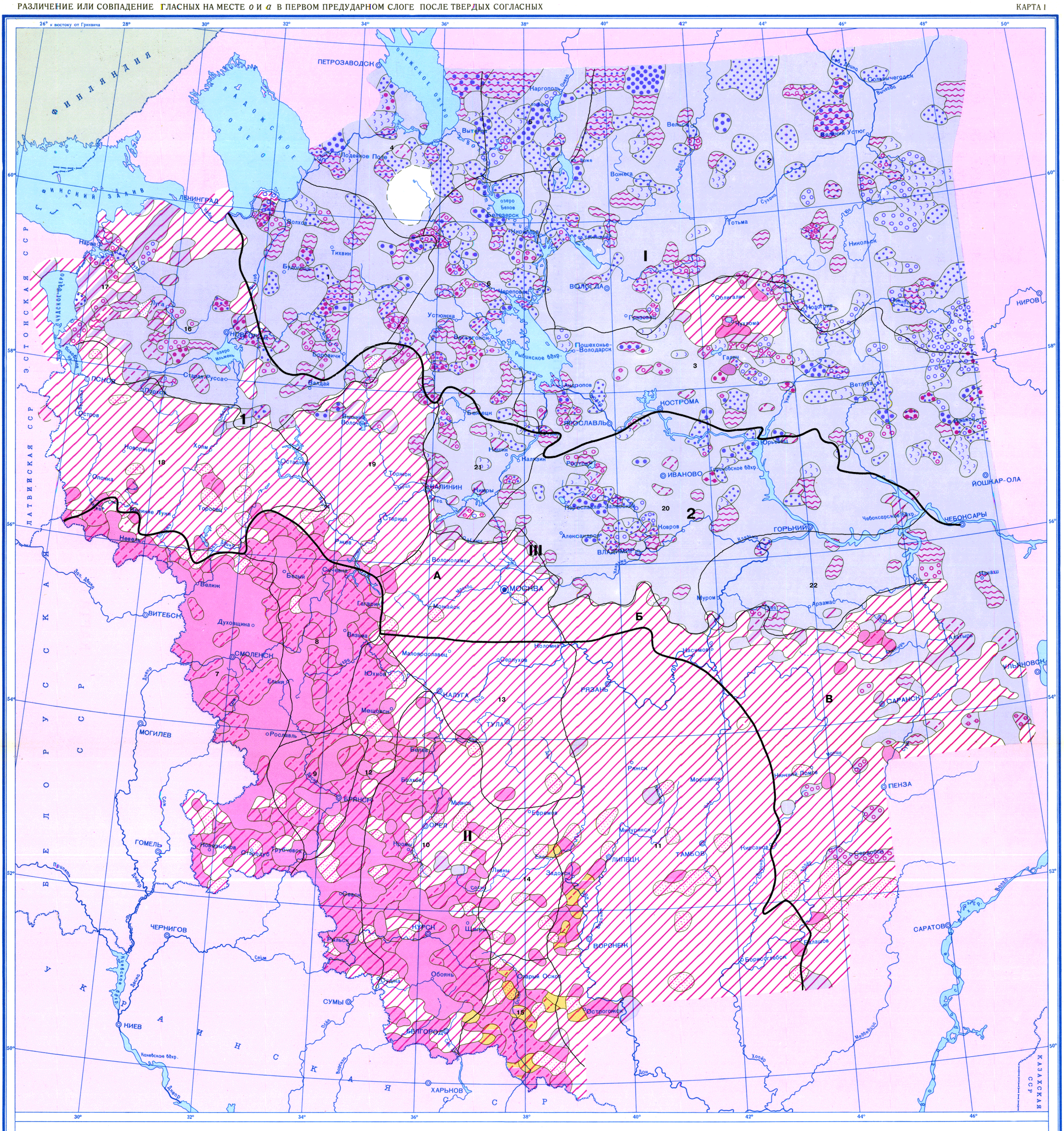
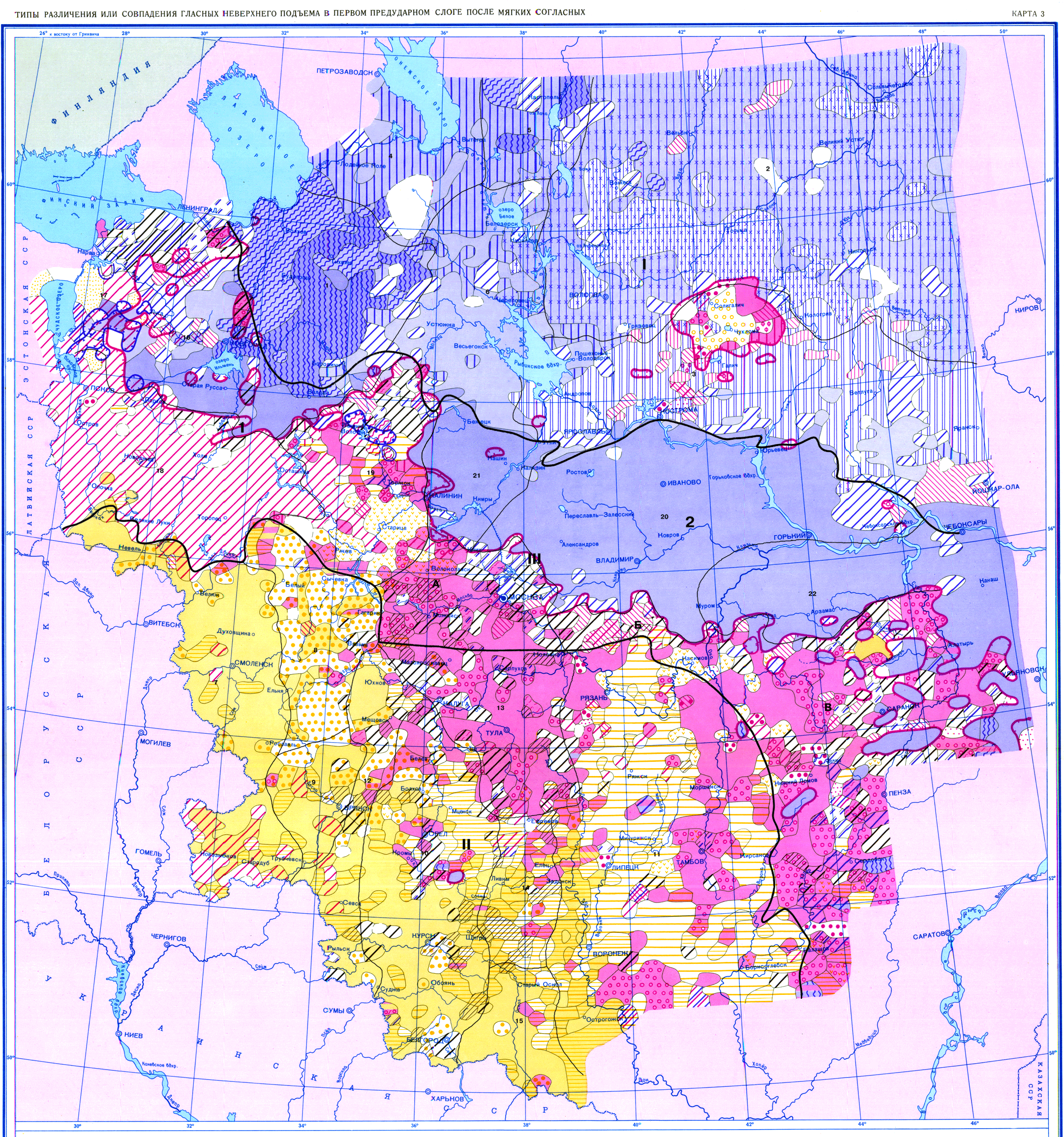
The transitional systems of vocalism include the fullvian okane , the gdovskoe okanie , the beginnings with assimilative acania and the acanje with assimilative ocane [4] [5] . The distinction in these systems of unstressed vowels / o /, / a / after hard consonants and unstressed vowels / o /, / e /, / a / after soft consonants [~ 3] or their coincidence in sound [a] depends on the vowels that are in the word under the stress, in connection with which the ratio of the coverage of vocabulary with distinguishable and indistinguishable unstressed vowels is different for each of the transitional systems [1] [6] .
Polnovsky Okane
The full ovane is characterized by nondiscrimination of / o / and / a / after hard consonants, their coincidence in the vowel [a] , before the stressed vowels of the upper lift , and the distinction of / o / and / a / before the other stressed vowels: in [a] dy , k [a] sy- - tr [a] you- ; in [a] dichka - tr [a] wine ; to [a] su- - tr [a] woo ; but in [o] doyu , to [o] soy - tr [a] voy ; in [o] de- tr [a] ve ; in [o] da- , k [o] ca- - tr [a] ba- , etc. [4] [7]
After soft consonants, as well as after hard consonants, in the first pre-syllable according to / o /, / e /, / a /:
- in front of hard consonants, vowel phonemes of non-upper lift in front of stressed vowels of upper lift (before / and /, / from /) do not differ, and vowels [o] , [e] , [a] before other stressed vowels (before / o /, / a /); in accordance with / o / - y c ′ [a] stry ; c ′ [a] string , n ′ [a] cus ; but with ′ [o] stroy ; c ′ [o] country ; in accordance with / e / - l ′ [a] snye ; in l ′ [a] cus ; but l [e] bitch , for p [e] ; for l [e] sami , p [e] ka ; in accordance with / a / - p ′ [a] b- ; in p ′ [a] dú ; but also p ′ [a] dok , n ′ [a] tok ; p ′ [a] damí , p ′ [a] such and so on.
- in front of soft consonants, vowel phonemes of non-upper lift in front of stressed vowels of upper lift (before / and /, / in /) do not differ, and vowels [e] , [e] , [a] in front of other stressed vowels (in front of / o /, / e /, / a /); in accordance with / o / - l ′ [a] ty ; l ′ [a] ch'u ; but n [e] s′osh ; in c [e] lế ; l [e] t′aat ; in accordance with / e / - l ′ [a] sina , from p ′ [a] ci ; b ′ [a] l'u ; but b [e] lonoy ( b [u] lonoy ); b [e] lt ( b [and] lt ); in accordance with / a / - gl ′ [a] di- , p ′ [a] ti- ; but also n ′ [a] t′orka ; ch ′ [a] dec ; Chapter ′ [a] d′át , etc. [6]
After soft consonants, the distinction of unstressed vowels before the percussion / a / less consistently than before / o /. The coexistence of the vowel [a] with differing vowels in front of the percussion / o /, / e /, (/ a /) [8] is noted in almost all the dialects with the Polnovo system of vocalism.
Polnovsky okane is common in Central Russian dialects of the northern part of the Pskov region [6] [9] [10] . This type of pre-drunk vocalism, along with Gdovskii, is included in the language complex of the Gdov group of Western Central Russian Oktyabrs [11] , its name is associated with the locality where this type of oxy was first discovered and studied - after the name of the village Polna of the Polnovskaya volost of the Gdovsky district of the Pskov region.
T. G. Stroganova associates the type of vocalism with the Polnovsky, as well as with Gdov, with the development of dissimilative acania [12] (despite the fact that speaking with dissimilatory acania does not coexist with Gdov and Polnovsky). At the same time, the primary system of vocalism was the Polnovskaia, on its basis the Gdovian okanie developed. In the opinion of V.N. Chekmonas, the type of full-fledged vocalism arose as a result of the interaction of the okania and the Gdov-type vocalism, which was formed under the influence of Finno-Ugric languages with harmony of vowels [13] [14] .
Gdovskoe okane
In the transitional system of the Gdov okania / o / and / a / after hard consonants, they do not differ before the vowels of the upper and lower rises , and differ before the vowels of the upper-middle and middle rises : in [a] dy , to [a] sy- tr [ a] you ; in [a] dichka - tr [a] wine ; to [a] su- - tr [a] woo ; in [a] da- , to [a] ca- - tr [a] wa- ; but in [o] doyu , to [o] soy - tr [a] voy ; in [o] de- tr [a] ve and so on. [4] [7]
After soft consonants, as well as after hard consonants, in the first pre-syllable according to / o /, / e /, / a /:
- in front of hard consonants, vowel phonemes of the non-upper lift in front of the shock vowels of the upper and lower lifts do not differ (before / and /, / y /, / a /), coinciding in the sound [a] , and the vowels differ [o] , [e] , [ a] before the shock vowels of the upper-middle and middle lifts (before / o /); in accordance with / o / - y c ′ [a] stry ; c ′ [a] lu , n ′ [a] cus ; c ′ [a] country , from c ′ [a] la– ; but with ′ [o] stroj , with ′ [o] lố ; in accordance with / e / - l ′ [a] snye ; in l ′ [a] cus ; for l ′ [a] sami , p ′ [a] ka- ; but l [e] bitch , for p [e] ; in accordance with / a / - p ′ [a] b- ; in p ′ [a] dú ; p ′ [a] d́mi , n ′ [a] such ; but also p ′ [a] to- , n ′ [a] to- and so on.
- Before soft consonants, the vowel phonemes of the non-upper climb before the stressed vowels of the upper and lower lifts (before / and /, / y /, / a /) do not differ, coinciding in the sound [a] , and the vowels differ [e] , [e] , [ a] before the shock vowels of the upper-middle and middle lifts (before / o /, / e /); in accordance with / o / - l ′ [a] ty ; c ′ [a] pour ; l ′ [a] ch'u ; l ′ [a] t′át ; but n [e] s′osh ; in c [e] lế , l [e] aunt ; in accordance with / e / - l ′ [a] sina , from p ′ [a] ci ; b ′ [a] l'u ; but b [e] lonoy ( b [u] lonoy ); b [e] lt ( b [and] lt ); in accordance with / a / - gl ′ [a] di- , p ′ [a] ti- ; Ch ′ [a] d′át ; but also n ′ [a] t′orka ; Chapter ′ [a] det , etc. [6]
Gdovskoe okane is common in Central Russian dialects of the Pskov region [6] [9] [10] . This type of pre-stressed vocalism, along with Polnovsky, is a part of the language complex of the Gdov group of Western Central Russian Okay [11] .
TG Stroganova connects the Gdov type of vocalism, as well as Polnovsky, with the dissimilative acania [12] , while the Gdovian okane developed later on the basis of the full Polnovsky okane. According to V.N. Chekmonas, the Gdov type of vocalism arose as a result of the influence of Finno-Ugric languages on Russian dialects with the harmony of vowels [13] [14] .
In the part of those Gdov dialects in which the distinction between unstressed vowels after hard consonants before vowels of upper-medium and medium lifts is common, along with the distinction of unstressed vowels before soft consonants in the same positions, they are also not distinguished after soft consonants regardless of vowels that are in a word under the stress, called the Gdov yak , or a yd of the Gdov type [15] [16] , in which in the first pre-stressed syllable in accordance with / o /, / e /, / a /:
- before hard consonants, vowel phonemes of a non-upper climb before the stressed vowels of the upper and lower lifts (before / and /, / at /, / a /) coincide in the sound [a] , and before the stressed vowel / o / match in the sound [and] ; in accordance with / o / - y c ′ [a] stry ; c ′ [a] lu , n ′ [a] cus ; c ′ [a] country , from c ′ [a] la– ; with [and] stroi , with [and] lố ; in accordance with / e / - l ′ [a] snye ; in l ′ [a] cus ; for l ′ [a] sami , p ′ [a] ka- ; l [and] bitches , for p [and] which ; in accordance with / a / - p ′ [a] b- ; in p ′ [a] dú ; p ′ [a] d́mi , n ′ [a] such ; p [and] tok , p [and] tok , etc.
- before the soft consonants, the vowel phonemes of the non-upper climb before the stressed vowels of the upper and lower lifts (before / and /, / y /, / a /) coincide in the sound [a] , and before the shock vowels / o /, / e / match in the sound [ and] ; in accordance with / o / - l ′ [a] ty ; c ′ [a] pour ; l ′ [a] ch'u ; l ′ [a] t′át ; n [u] s'osh ; in c [and] lế , l [and] aunt ; in accordance with / e / - l ′ [a] sina , from p ′ [a] ci ; b ′ [a] l'u ; b [and] lonny ; b [and] to fly ; in accordance with / a / - gl ′ [a] di- , p ′ [a] ti- ; Ch ′ [a] d′át ; p [and] t′orka ; Ch. [and] Child , etc. [17]
Almost in all the dialects with the Gdov yakane before the shock / o /, / e / along with the coincidence of unstressed vowels [o] , [e] , [a] in the vowel [u] , their coincidence in [a ] is also noted. The Gdov type of yakanya is part of akanya in a broad sense and does not apply to transitional systems of vocalism.
The name of the Gdov okan and yakan are connected with the name of the linguistic region where this linguistic phenomenon occurs - the Gdov district of the Pskov region.
Assassination Accent
In this type of okanyya / o / and / a / after hard consonants, they differ before all stressed vowels, except for [a] (in the syllable before which [a] is pronounced in place / a / and in place / o /): in [o ] dy , k [o] sy- - tr [a] you- ; in [o] dichka - tr [a] wine ; k [o] su- - tr [a] woo ; in [o] doy , to [o] soy - tr [a] woo ; in [o] de- tr [a] ve ; but in [a] yes- , k [a] ca- - tr [a] ba- , etc. [1] [4] [7]
After soft consonants in the first pre-syllable in accordance with / o /, / e /, / a /:
- in front of hard consonants, vowel phonemes of non-elevated lift [o] , [e] , [a] are distinguished in front of all stressed vowels, except for [a] ; in accordance with / o / - y c ′ [o] stry ; c ′ [o] struma , n ′ [o] su;; c ′ [o] stroy ; but c ′ [a] country ; in accordance with / e / - l [e] dreams ; in l [e] su ; l [e] bitch , for p [e] coy ; but for l ′ [a] sami , p ′ [a] ka- ; in accordance with / a / - p ′ [a] b- ; in p ′ [a] dú ; p ′ [a] dok , n ′ [a] tok ; but also p ′ [a] dāmi , n ′ [a] such , etc.
- Before soft consonants, vowel phonemes of a non-upper lift [e] , [e] , [a] before all stressed vowels, except for [a] , differ; in accordance with / o / - with [e] pour ; l [e] h'u ; n [e] s'osh ; in c [e] le ; but c ′ [a] l′áne , l ′ [a] t′át ; in accordance with / e / - l [e] sin , from p [e] qi ; b [e] l'u ; b [e] ln ; b [e] is old ; but the hare-b ′ [a] l'ak ; in accordance with / a / - gl ′ [a] di- , p ′ [a] ti- ; p ′ [a] t'orka ; ch ′ [a] dec ; but also also gl [a] d′atat , etc. [8]
The territory of distribution of okan'ya with assimilative aqua are the areas of Central Russian dialects on the border of the okan'ya and akanya regions. These include areas north of Tver , south of Murom on the Oka River and some other areas [15] [16] . A similar phenomenon, called assimilative acania, is noted in transitional dialects from the southwestern dialect of the Belarusian language to the Polissya dialects, in which in the first pre-stressed syllable [o] and [a] differ before the drums [i] , [y] , [o] , [s] , [e] , and do not differ before the shock [a] [18] .
Acacia with assimilative digging
In this transitional system, pre-stressed vocalism / o / and / a / after hard consonants do not differ, coinciding in the vowel [a] , before all stressed vowels, except [o] (in the pre-stressed syllable before which [o] is pronounced on the spot / o / and [a] in place / a /): in [a] dy , to [a] sy- - tr [a] you- ; in [a] dichka - tr [a] wine ; to [a] su- - tr [a] woo ; in [a] de- tr [a] ve ; in [a] da- , to [a] ca- - tr [a] wa- ; but in [o] doy , k [o] soy - tr [a] voy , etc. [1] [4] [7]
After soft consonants in the first pre-syllable in accordance with / o /, / e /, / a /:
- in front of hard consonants, vowel phonemes of non-upper elevation in front of all stressed vowels do not differ, except for [o] , in front of which [o] , [e] , [a] are distinguished; in accordance with / o / - y c ′ [a] stry ; c ′ [a] string , n ′ [a] cus ; c ′ [a] country ; but with ′ [o] stroy ; in accordance with / e / - l ′ [a] snye ; in l ′ [a] cus ; for l ′ [a] sami , p ′ [a] ka- ; but l [e] bitch , for p [e] ; in accordance with / a / - p ′ [a] b- ; in p ′ [a] dú ; p ′ [a] d́mi , n ′ [a] such ; but also p ′ [a] dok ; n ′ [a] tok , etc.
- in front of soft consonants, vowel phonemes of non-upper elevation in front of all stressed vowels do not differ, except for [o] , in front of which [e] , [e] , [a] ; in accordance with / o / - l ′ [a] ty ; l ′ [a] ch'u ; l ′ [a] t′át ; in c ′ [a] le- , l ′ [a] tel ; but n [e] s′osh ; in accordance with / e / - l ′ [a] sina , from p ′ [a] ci ; b ′ [a] l'u ; hare-b ′ [a] l'ak ; Vic ′ [a] le ; but b [e] is a lion ; in accordance with / a / - gl ′ [a] di- , p ′ [a] ti- ; Ch ′ [a] d′át ; ch ′ [a] dec ; but also n ′ [a] t′orka , etc.
Acacia with assimilative diving as well as diving with assimilative aqua is common in the Central Russian dialects in the border regions of Ocane and Akanya, including the dialects of the Plus district of the Pskov region . In okavayusche-acacia ( Belor. Okayucha-Akayuchyya gavorki ), common on the border of the south-western dialect of the Belarusian language and Polesia dialects, there is a phenomenon called assimilative style, in which in the first pre-stressed syllable [o] and [a] are different before the syllable [o] , and do not differ before the shock [i] , [y] , [a] , [y] , [e] [18] .
See also
- Ocae
- Acane
- Yakane
- Central Russian dialects
- Gdovskaya group of dialects
Notes
- Comments
- Кан The word in the narrow sense is the distinction of phonemes / o / and / a / in an unstressed position after hard consonants - the pronunciation of an unstressed vowel sound [o] in accordance with / o / (and / ô /) and [a] in accordance with / a /.
- ↑ The term acané , used in the narrow sense, means the nondiscrimination of phonemes / o / and / a / in the unstressed position after hard consonants when they coincide in terms of positions in the vowel sound [a] .
- ↑ In all transitional systems of pre-impact vocalism, after soft consonants, the sound [e] can be heard along with [o] or instead of it, and [and] along with [e] or instead of it.
- Sources
- ↑ 1 2 3 4 Russian dialectology, 1989 , p. 46.
- Russian dialectology, 1989 , p. 43.
- Russian dialectology, 1989 , p. 44-45.
- ↑ 1 2 3 4 5 Knyazev S. V. Russian dialect phonetics. Study guide . - M. , 2008. - P. 21. (Checked February 15, 2012)
- ↑ Educational materials on the website of the Philological Faculty of Moscow State University . - Unstressed vocalism. Vowels without accent. Algorithm for the analysis of unaccented vocalism after paired strong consonants of acausal dialect. (Checked February 15, 2012)
- ↑ 1 2 3 4 5 Russian dialectology, 1989 , p. 52.
- ↑ 1 2 3 4 DARIA, 1986 , p. 86
- ↑ 1 2 DARIA, 1986 , p. 91.
- ↑ 1 2 Educational materials on the website of the Philological Faculty of Moscow State University . - Map. Discrimination or coincidence of vowels in the place of o and a in the first pre-syllable after hard consonants. Archived June 18, 2012.
- ↑ 1 2 Educational materials on the website of the Philological Faculty of Moscow State University . - Legend card. Discrimination or coincidence of vowels in the place of o and a in the first pre-syllable after hard consonants. Archived February 1, 2012.
- ↑ 1 2 Zakharova, Orlova, 2004 , p. 146.
- ↑ 1 2 Zakharova K. F. , Orlova V. G. , Sologub A. I., Stroganova T. Yu. Formation of the North Russian dialect and Central Russian dialects. - M .: Science , 1970. - p. 451.
- ↑ 1 2 Chekmonas V.N. Akane and Okane in the northern part of the Pskov region (Polnovsky dialects) // Kalbotyra. No. 47 (2). Slavistica Vilnesis. - Vilnius, 1998. - pp. 125-130.
- ↑ 1 2 Knyazev S. V. On the issue of the mechanism of the emergence of akanya in Russian // Questions of linguistics. No. 1. - M .: Science , 2000. - S. 16. (Tested February 15, 2012)
- ↑ 1 2 Educational materials on the website of the Philological Faculty of Moscow State University . - Map. Types of distinction or coincidence of vowels of a non-superior rise in the first pre-stressed syllable after soft consonants. Archived June 18, 2012.
- ↑ 1 2 Educational materials on the website of the Philological Faculty of Moscow State University . - Legend card. Types of distinction or coincidence of vowels of a non-superior rise in the first pre-stressed syllable after soft consonants. Archived June 18, 2012.
- ↑ DARIA, 1986 , p. 92–94.
- ↑ 1 2 Belarusian State University. Faculty of Philology. Department of the history of the Belarusian language. Belarusian dialectology (Belor.) (Inaccessible link) . - Informational resources. Tables, p. 165. Archived May 16, 2012. (Checked February 15, 2012)
Links
- Educational materials on the website of the Philological Faculty of Moscow State University . - Phonetics of Russian dialects. Archived February 1, 2012. (Checked February 15, 2012)
- News of local history of Pskov . - Pskov dialects. Archived May 18, 2012. (Checked February 15, 2012)
- Pskov Region . - Gdov's dialects. Archived May 18, 2012. (Checked February 15, 2012)
Literature
- Zakharova KF , Orlova V. G. Dialectal division of the Russian language. - 2nd ed. - M .: Editorial URSS, 2004. - ISBN 5-354-00917-0 .
- Dialectological Atlas of the Russian language. Center of the European part of the USSR . Issue I: Phonetics / Ed. R.I. Avanesova and S.V. Bromley. - M .: Science , 1986.
- Bromley S. V., Bulatova L. N., Zakharova K. F. et al. Russian dialectology / Ed. L. L. Kasatkina . - 2nd ed., Pererab. - M .: Enlightenment , 1989. - ISBN 5-09-000870-1 .