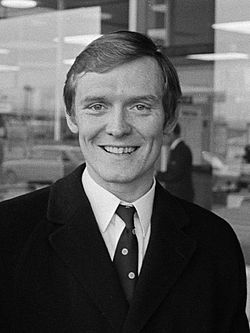
David Hay ( born David Hay ; January 29, 1948 , Paisley , Renfrewshire , Scotland ) - Scottish footballer , coach . He played in the position of a central midfielder .
 David hay | ||||||||||||||||||||||||||||||||||||||||||||||||||||||||||
|---|---|---|---|---|---|---|---|---|---|---|---|---|---|---|---|---|---|---|---|---|---|---|---|---|---|---|---|---|---|---|---|---|---|---|---|---|---|---|---|---|---|---|---|---|---|---|---|---|---|---|---|---|---|---|---|---|---|---|
 | ||||||||||||||||||||||||||||||||||||||||||||||||||||||||||
| general information | ||||||||||||||||||||||||||||||||||||||||||||||||||||||||||
| Nickname | The Quiet Assassin ( Russian. Silent Assassin ) [1] | |||||||||||||||||||||||||||||||||||||||||||||||||||||||||
| Born | Paisley , Renfrewshire , Scotland | |||||||||||||||||||||||||||||||||||||||||||||||||||||||||
| Citizenship | ||||||||||||||||||||||||||||||||||||||||||||||||||||||||||
| Height | 185 cm | |||||||||||||||||||||||||||||||||||||||||||||||||||||||||
| The weight | 78 kg | |||||||||||||||||||||||||||||||||||||||||||||||||||||||||
| Position | midfielder | |||||||||||||||||||||||||||||||||||||||||||||||||||||||||
| Club Information | ||||||||||||||||||||||||||||||||||||||||||||||||||||||||||
| Club | completed his career | |||||||||||||||||||||||||||||||||||||||||||||||||||||||||
| ||||||||||||||||||||||||||||||||||||||||||||||||||||||||||
| ||||||||||||||||||||||||||||||||||||||||||||||||||||||||||


David spent his football career in Scottish Celtic and English Chelsea . In the period from 1970 to 1978, Hay defended the colors of the national team of Scotland , played 27 matches in its composition [3] . Member of the 1974 World Cup , which was held in Germany .
At the end of his football career, David became a coach. He led such teams as the Scottish Motherwell , Celtic, St. Mirren , Livingston , Dunfermline Athletic and the Norwegian Lillestrom .
Content
- 1 Football career
- 1.1 Club career
- 1.1.1 "Celtic"
- 1.1.2 Chelsea
- 1.1.3 Club statistics
- 1.2 Scotland
- 1.2.1 Matches and Goals for Scotland
- 1.2.2 Summary statistics of games / goals for the national team
- 1.3 Achievements as a football player
- 1.1 Club career
- 2 Coaching career
- 2.1 Coaching statistics
- 2.2 Achievements as a coach
- 3 Quotes
- 4 notes
- 5 Links
Football career
Club career
Celtic
David was born on January 29, 1948 in the Scottish city of Paisley in the Renfrewshire region. Educated at the local St. Mirin's Academy . Speaking for the football team of this educational institution, the young player was spotted by representatives of the Celtic Glasgow , who suggested that David try his hand at the Celtic Academy. Hey agreed with a similar perspective and in March 1966 joined the ranks of the youth composition of the “white-green” [1] .
David's “classmates” on the Celtic reserve team were such well-known future players as Kenny Dalglish , Lou Makari , Danny McGrain , George Connelly and others. The selection of this composition was personally carried out by the head coach of the “Celts” Jock Stein , who perfectly understood the importance of searching and educating young talented players. It was these footballers that the specialist considered as a shift for the aging “ Lisbon Lions ” - the team that brought Scotland the European Cup of the 1966/67 season [1] .
David's debut in the first part of the “white-green” took place on March 6, 1968, when the Glazgovites in the national championship match won against Aberdeen 4-1 [4] . Stein originally used Hay as a right-back. However, later the coach, seeing in the young football player the creative potential and a good vision of the field, transferred him to the midfield center, where David spent his entire career, having established himself as one of the best playmakers in the UK of his generation [1] .
Hay managed to gain a foothold in the first squad of Celtic in the fall of 1969 - he proved himself to be the best in the final meeting of the Scottish League Cup of the 1969/70 season , in which the White-Green competed with St. Johnstone . In view of the disqualification of the main left back of the “Celts” Tommy Gemmell, Jock Stein took a risky step, putting young Hay on this position. David did not fail, having held this match at a high level. “Celtic” thanks to the only goal performed by the winger Berti Old celebrated the victory with a minimum score of 1: 0 [5] . For Hey, the League Cup was the first full-fledged trophy won as part of the Glazgovites [1] .
On February 21, 1970, the midfielder held his first goal on a professional level, distinguishing himself in the national Cup match, which was the “ Old Firm ” derby against the arch-rivals of the “Celts” from the “ Rangers ” [6] . Hay sent a shell into the net with an irresistible blow from 25 meters in a tough fight with one of the best defenders of Scotland 60s John Greig [1] . In the same football year, David with the “white-green” reached the final of the European Cup , where, however, “Celtic” lost to the Dutch “ Feyenoord ” [7] . In the next season, Hay firmly “staked out” a place in the main composition of the Glazgovites - this was largely due to David’s ability to play in almost any position on the field. The football player, with his confident game in the defense center or midfield, helped the “Celts” win two more titles in 1971 - the “white-green” became the owners of the National Cup, where the Rangers were stronger in the decisive match after two matches [8] [9] , and became the winners of the Scottish Championship tournament [10] . In the European arena, the Glazgovites also performed well - reaching the quarterfinals of the Champions Cup, they were forced to capitulate to the Ajax Amsterdam, led by Johan Cruyff [1] [11] . Hay won the next world title in the football year 1971/72 [12] . But because of the injury he received at the end of the season, he was forced to miss some of the most important meetings for Celtic - the final of the Scottish Cup against Hibernian [13] and the semifinal matches of the European Cup, in which the “white-green” only in a series of penalty shoot-outs were lost to the Italian club Internazionale [1] [14] . The following year brought the Celts another, eighth consecutive, league title [15] . Celtic mentor Jock Stein said in an interview at the end of the season that “the main smiths of such a remarkable victory for the club are David Hay and Jimmy Johnston ” [1] . At the same time, the British team began to become seriously interested in the Scottish station wagon. In December 1973, David and his teammate George Connelly went into conflict with the leadership of Celtic - the reason for the disagreement was the amount of salary that the players received in the Glasgow team. After long negotiations, refusals of players to enter the field, the parties were able to come to a ceasefire, which involved the continuation of discussions in the offseason [1] . In the summer of 1974, Hay excelled in the national team of Scotland at the world championship . Immediately after the “mundial”, David became a “tidbit” for the English grandees, who suggested “Celtic” to sell the football player to his teams. In particular, the most persistent clubs included Manchester United , Tottenham Hotspur and Chelsea . The team with Stamford Bridge , who managed to sign Hay for 225 thousand pounds, turned out to be the most agile. [1] .
In just seven seasons as part of the “Celtic” David held 230 games in which he defeated the opponents' gates 12 times [16] .
Chelsea
On August 17, 1974, Hay made his debut in an official match for the Londoners. This was the first round of the 1974/75 England Championship ; the rival of the Blues was Carlisle United Club [17] . David did not have his best years with Chelsea - the team showed an unstable game, constantly “barring” between the country's top and first divisions. In 1979, chronic knee injury and vision problems, in particular cataracts , were added to all the problems, after which he was completely blind in the right eye [18] . Then Hay also spoke about his poor health:
| When I was a child, they hit me in the right eye with a toy arrow during some boy’s game. For a long time after that I visited doctors, but I could not completely restore my vision. Naturally, a similar problem could put an end to my career as a football player, so during my performances at Celtic I did not tell anyone about this. I was forced to secretly wear contact lenses during games and training. Soon after my move to London in one of the matches my right eye was injured a second time. On an in-depth examination at the Chelsea Clinic, the doctor made a disappointing diagnosis - cataract. Numerous operations did not help - I completely went blind in my right eye [18] . |
Due to health problems, 31-year-old David was forced to prematurely terminate his football career. His last professional match was on October 14, 1978, with Chelsea rival Bolton Wanderers [19] .
Club statistics
| Club | Season | Championship | Cup | League Cup | Eurocups | Total | |||||
|---|---|---|---|---|---|---|---|---|---|---|---|
| Games | Goals | Games | Goals | Games | Goals | Games | Goals | Games | Goals | ||
| Celtic | 1967/68 | one | 0 | - | - | - | - | - | - | one | 0 |
| 1968/69 | - | - | one | 0 | one | 0 | - | - | 2 | 0 | |
| 1969/70 | 27 | 0 | 5 | one | 6 | 0 | 7 | 0 | 45 | one | |
| 1970/71 | 28 | one | 8 | 0 | eleven | one | 5 | 0 | 52 | 2 | |
| 1971/72 | 28 | 0 | four | 0 | 10 | 3 | four | 0 | 46 | 3 | |
| 1972/73 | 21 | 3 | 6 | 0 | 8 | 0 | 2 | 0 | 37 | 3 | |
| 1973/74 | 25 | 2 | 6 | 0 | 9 | one | 7 | 0 | 47 | 3 | |
| Total for Celtic | 130 | 6 | thirty | one | 45 | 5 | 25 | 0 | 230 | 12 | |
| Chelsea | 1974/75 | 34 | 0 | 2 | 0 | - | - | - | - | 36 | 0 |
| 1975/76 | 28 | one | 2 | 0 | one | 0 | - | - | 31 | one | |
| 1976/77 | 31 | one | 2 | 0 | 3 | one | - | - | 36 | 2 | |
| 1977/78 | 7 | 0 | - | - | - | - | - | - | 7 | 0 | |
| 1978/79 | 8 | 0 | - | - | one | 0 | - | - | 9 | 0 | |
| Just for Chelsea | 108 | 2 | 6 | 0 | 5 | one | 0 | 0 | 119 [20] | 3 | |
| Total career | 238 | 8 | 36 | one | fifty | 6 | 25 | 0 | 349 | fifteen | |
Scotland Team
Haye's debut in the Scottish national team took place on April 18, 1970, when David played the full match in the UK Home Championship against Northern Ireland [21] . On October 17, 1973, the midfielder first brought the “tartan army” to an international meeting with a captain’s armband, on that day the Czechoslovakians opposed the “Highlanders” [22] . The following year, as part of the national team, Hay went to the World Cup , held in Germany . The Scots fell into a difficult group - at this stage their rivals were the teams of Yugoslavia , Brazil and Zaire . In the first round, the Tartan Army defeated the team from the African continent with a score of 2: 0 [23] . With the “selesao” the “highlanders” parted the world - 0: 0 [24] , and a pair of central midfielders of the Scots Hay - Bremner received the most flattering assessments from the specialists. Midfielders “fettered” the main creative football players of Brazil in the person of Rivelino and Jairzinho , which helped a lot in protecting their own goal. After this match, the famous Scottish player and coach Tommy Doherty compared Hay's game to the actions of The Quiet Assassin , in the sense that David’s calmness and composure destroyed the attacks of the South Americans over and over again [1] . In the last meeting of the group tournament, the “tartan army” was unable to achieve its most important victory over direct competitors from Yugoslavia, having left the defeat only in the last minutes of the match [25] . Thus, in the final table, the Scottish team lost to the Balkans in terms of goal difference and was forced to go home. Hay took part in all three matches of his team at the “world Cup”. As it turned out later, the duel against the Yugoslavs was the last for David in the "tartan army".
In just four years, Hay held the Scottish national team 27 matches [3] .
Scotland Matches and Goals
| No. | date of | A place | Opponent | Score | Hay goals | Competition |
| one | April 18, 1970 | Windsor Park , Belfast , Northern Ireland | Northern Ireland | 1-0 | - | UK Home Championship |
| 2 | April 22, 1970 | Hampden Park , Glasgow , Scotland | Wales | 0: 0 | - | UK Home Championship |
| 3 | April 25, 1970 | Hampden Park , Glasgow , Scotland | England | 0: 0 | - | UK Home Championship |
| four | November 11, 1970 | Hampden Park , Glasgow , Scotland | Denmark | 1-0 | - | Qualifying match of the European Football Championship 1972 |
| 5 | February 3, 1971 | Sklessin , Liege , Belgium | Belgium | 0: 3 | - | Qualifying match of the European Football Championship 1972 |
| 6 | April 21, 1971 | Yes Puddle , Lisbon , Portugal | Portugal | 0: 2 | - | Qualifying match of the European Football Championship 1972 |
| 7 | May 15, 1971 | Ninian Park , Cardiff , Wales | Wales | 0: 0 | - | UK Home Championship |
| 8 | May 18, 1971 | Hampden Park , Glasgow , Scotland | Northern Ireland | 0: 1 | - | UK Home Championship |
| 9 | October 13, 1971 | Hampden Park , Glasgow , Scotland | Portugal | 2: 1 | - | Qualifying match of the European Football Championship 1972 |
| 10 | November 10, 1971 | Pittodry , Aberdeen , Scotland | Belgium | 1-0 | - | Qualifying match of the European Football Championship 1972 |
| eleven | December 1, 1971 | Olympic Stadium , Amsterdam , Netherlands | Netherlands | 1: 2 | - | Friendly match |
| 12 | May 12, 1973 | The Racecourse Ground , Wrexham , Wales | Wales | 2-0 | - | UK Home Championship |
| 13 | May 16, 1973 | Hampden Park , Glasgow , Scotland | Northern Ireland | 1: 2 | - | UK Home Championship |
| fourteen | May 19, 1973 | Wembley , London , England | England | 0: 1 | - | UK Home Championship |
| fifteen | June 22, 1973 | Wankdorf , Bern , Switzerland | Switzerland | 0: 1 | - | Friendly match |
| 16 | June 30, 1973 | Hampden Park , Glasgow , Scotland | Brazil | 0: 1 | - | Friendly match |
| 17 | September 26, 1973 | Hampden Park , Glasgow , Scotland | Czechoslovakia | 2: 1 | - | 1974 World Cup Qualifier |
| eighteen | October 17, 1973 | Slovan CHZJD , Bratislava , Czechoslovakia | Czechoslovakia | 0: 1 | - | 1974 World Cup Qualifier |
| 19 | March 27, 1974 | Waldstadion , Frankfurt , Germany | Germany | 1: 2 | - | Friendly match |
| twenty | May 11, 1974 | Hampden Park , Glasgow , Scotland | Northern Ireland | 0: 1 | - | UK Home Championship |
| 21 | May 14, 1974 | Hampden Park , Glasgow , Scotland | Wales | 2-0 | - | UK Home Championship |
| 22 | May 18, 1974 | Hampden Park , Glasgow , Scotland | England | 2-0 | - | UK Home Championship |
| 23 | June 1, 1974 | Klokke , Bruges , Belgium | Belgium | 1: 2 | - | Friendly match |
| 24 | June 6, 1974 | Ullevol , Oslo , Norway | Norway | 2: 1 | - | Friendly match |
| 25 | June 14, 1974 | Westfalenstadion , Dortmund , Germany | Zaire | 2-0 | - | 1974 FIFA World Cup (final games, group stage) |
| 26 | June 18, 1974 | Waldstadion , Frankfurt , Germany | Brazil | 0: 0 | - | 1974 FIFA World Cup (final games, group stage) |
| 27 | June 22, 1974 | Waldstadion , Frankfurt , Germany | Yugoslavia | 1: 1 | - | 1974 FIFA World Cup (final games, group stage) |
Total: 27 matches / 0 goals; 10 wins, 5 draws, 12 losses.
Summary statistics of games / goals for the national team
| National team | Year | World Cup Qualifiers | World Cup Final Matches | European Qualifiers | Final matches | Friendlies | UK Home Championship | Total | |||||||
|---|---|---|---|---|---|---|---|---|---|---|---|---|---|---|---|
| Games | Goals | Games | Goals | Games | Goals | Games | Goals | Games | Goals | Games | Goals | Games | Goals | ||
| Scotland | 1970 | - | - | - | - | one | 0 | - | - | - | - | 3 | 0 | four | 0 |
| 1971 | - | - | - | - | four | 0 | - | - | one | 0 | 2 | 0 | 7 | 0 | |
| 1973 | 2 | 0 | - | - | - | - | - | - | 2 | 0 | 3 | 0 | 7 | 0 | |
| 1974 | - | - | 3 | 0 | - | - | - | - | 3 | 0 | 3 | 0 | 9 | 0 | |
| Total career | 2 | 0 | 3 | 0 | 5 | 0 | 0 | 0 | 6 | 0 | eleven | 0 | 27 | 0 | |
Soccer Achievements
Celtic
- Champion of Scotland (6) : 1967/68, 1969/70, 1970/71, 1971/72, 1972/73, 1973/74
- Scottish Cup Winner (4) : 1968/69, 1970/71, 1971/72, 1973/74
- Scottish League Cup Winner (2) : 1968/69, 1969/70
- Finalist of the European Cup : 1969/70
- Finalist of the Scottish Cup (2) : 1969/70, 1972/73
- Finalist of the Scottish League Cup (4) : 1970/71, 1971/72, 1972/73, 1973/74
Coaching career
Having finished his football career in 1980, Haye received an offer from his last “game” club, Chelsea , to try his hand on the coaching path - David signed a contract for the coach of the blue youth team. In August of the following year, the former midfielder of the Scottish national team was given a chance to try his managerial skills at a more serious level - Motherwell showed interest in the specialist person for the manager position. Hay readily accepted the challenge. In the first season, under the leadership of David, the “steelworkers” achieved an excellent result: they confidently won the country's First Division tournament, having won the right to play in the Scottish elite league in the next football year [26] . However, after such a successful performance, “a bolt from the blue” struck - on May 31, 1982, Hay announced his resignation from the post of mentor of “Motherwell”. David later explained this decision to him as a "fantastic offer from the United States ." But very soon the Scotsman was forced to return to the Old World because of the "mismatch of the mentality of Europeans and Americans." The particular club in which Hay stayed for a short time, the specialist chose to keep secret [1] .
A little less than a year, David remained idle. In May 1983, the legendary Celtic captain Billy McNill left the post of head coach of his native Heyu “ Celtic ”. Surprisingly enough was the appointment of an inexperienced David to this post in August of that year - at that moment he was only 35 years old. At a press conference on introducing Hay in a new capacity, he announced that he was ready to resign in a year if he and Celtic could not win a single trophy [1] . It was quite difficult to do this: at that time the clubs “ New Firm ” - “ Aberdeen ” and “ Dundee United ” dominated in Scottish football. And so it happened - the “Celts” finished second in all domestic competitions, winning the “silver” championship of the country [27] and becoming finalists of the national Cup [28] and League Cup [29] . At the end of the season, the leadership of the “white-green” decided to continue cooperation with Hay. The second season also failed to bring Celtic the Scottish champion - the club again took second place [30] . But in the Cup of the country “Celts” achieved the desired result, beating in the most difficult final match “Dundee United” - 2: 1 [31] . Summing up the season, almost all experts agreed that the failure of the “white-green” in the championship was due to the weak play of the defensive line, as opposed to the Celtic attack, where football players such as Brian Mackler , Murdo MacLeod , Alan McInally and Mo Johnston , constantly threatened the gates of opponents [1] . In the European arena, the affairs of the Glazgovites went even worse - in the 1983/84 season they reached the 1/8 finals of the UEFA Cup , where they lost in the sum of two meetings to the English Nottingham Forest [32] , and a year later they lost their will in the second round of the Cup Winners Cup the Austrian club " Rapid " [33] . In the offseason, Celtic could not strengthen its defense due to lack of funding. It was at this time that the first disagreement arose between Hay and club president Jack McGinn , due precisely to a lack of money to buy new players [1] . Nevertheless, the “white-green” surprised all the experts, in such an environment, unexpectedly becoming champions of the country. The denouement of the championship of Scotland was very dramatic. Before the last round, the standings were led by the Edinburgh Heart of Midlotian , two points ahead of the Celtic. The final games brought the following results - the “Celts” defeated “ Saint Mirren ” with a score of 5-0, and the “hearts” lost to the middle peasants from the Dundee team - 0: 2. As a result, the clubs were equal in terms of score, but due to the difference in goals, the team from Glasgow became the owner of the title [34] . But inside the Celtic, the conflict between Hay and McGinn was increasingly brewing. Before the start of the football year, David defiantly refused finances for transfers in protest against Jack being in the presidency. In response, McGinn convened a press conference where he stated that “Haye will not get more money, and if he still decides to buy someone, he will pay for the football player from his own pocket” [1] . The mood in the team was undermined, and the “Celts” spent the season very unevenly, remaining again without trophies [35] [36] . As Haye later said in his autobiography, in early May 1987, Jack McGinn summoned him to his office and offered to voluntarily resign. The coach refused, but on May 20, by decision of the Board of Directors, Celtic was relieved of his post. Haye's successor was Billy McNill, already the former at the helm of the “white-green” before David [1] .
After Celtic, the coach worked with clubs such as the Norwegian Lillestrom and the Scottish St. Mirren, Dunfermline Athletic and Livingston . With these teams, he achieved two victories: in the Scandinavian team, he became the champion of the 1989 season [37] , and with Livi he won the national League Cup 2003/04 [38] . Then, for about two years, he worked as the main scout in his native “Celtic” [1] .
Coaching Statistics
| Club | A country | Beginning of work | Shutdown | Indicators | ||||||
|---|---|---|---|---|---|---|---|---|---|---|
| AND | AT | N | P | % wins * | ||||||
| Motherwell | Scotland | August 1, 1981 | May 31, 1982 | 40 | 26 | 9 | 5 | 65.00 | ||
| Celtic | Scotland | August 1, 1983 | May 20, 1987 | 209 | 119 | fifty | 40 | 56.94 | ||
| Lillestrom | Norway | 1989 | 1989 | n / a | n / a | n / a | n / a | n / a | ||
| Saint Mirren | Scotland | May 1991 | May 1992 | 55 | 7 | 17 | 31 | 12.73 | ||
| Livingston [39] | Scotland | March 2000 | July 2003 | 146 | 67 | thirty | 49 | 45.89 | ||
| Livingston | Scotland | October 15, 2003 | June 1, 2004 | 39 | fifteen | eleven | 13 | 38.46 | ||
| Dunfermline Athletic | Scotland | June 17, 2004 | May 2, 2005 | 42 | 8 | 12 | 22 | 19.05 | ||
| Livingston | Scotland | April 2009 | May 2009 | 2 | 0 | 2 | 0 | 00.00 | ||
| Total | 533 | 242 | 131 | 160 | 45.40 [40] | |||||
And - games, B - wins, N - draws, P - losses,% wins - percentage of victories
Achievements as a trainer
Motherwell
- Scottish Football League First Division Winner : 1981/82
Celtic
- Champion of Scotland : 1985/86
- Scottish Cup Winner: 1984/85
- Scottish Cup Finalist: 1983/84
- Scottish League Cup Finalist (2) : 1983/84, 1986/87
"Lillestrom"
- Champion of Norway : 1989
Livingston
- Scottish League Cup Winner: 2003/04
Quotes
John Greig , former captain and head coach of the Rangers:
| Our confrontations with Hay were always like card games with a sharpie. You run along with him, fight, and at the end of the match he seems to take a couple of fresh legs out of his sleeve, beat you and give a decisive goal pass [1] . |
Tommy Burns , former Celtic player and head coach:
| Hay has many advantages - he is a solid, honest, strong and direct person [1] . |
Notes
- ↑ 1 2 3 4 5 6 7 8 9 10 11 12 13 14 15 16 17 18 19 20 21 Hay, David , The Celticwiki. Date of treatment January 14, 2012. (English)
- ↑ Transfermarkt.com - 2000.
- ↑ 1 2 David Hay - A Squad , Scottish FA. Date of treatment January 14, 2012. (English)
- ↑ Celtic 4 - 1 Aberdeen , Fitba Stats. Date of treatment January 18, 2012. (English)
- ↑ Celtic 1 - 0 St Johnstone , The Celticwiki. Date of treatment January 22, 2012. (English)
- ↑ Celtic 3 - 1 Rangers , The Celticwiki. Date of treatment January 22, 2012. (English)
- ↑ Celtic 1 - 2 Feyenoord , The Celticwiki. Date of treatment January 22, 2012. (English)
- ↑ Celtic 1 - 1 Rangers , The Celticwiki. Date of treatment January 24, 2012. (English)
- ↑ Celtic 2 - 1 Rangers , The Celticwiki. Date of treatment January 24, 2012. (English)
- ↑ Scottish Championship 1970/71. Division 1 , Wild Stat. Date of treatment January 24, 2012.
- ↑ UEFA Champions Cup 1970/71 , Wild Stat. Date of treatment January 24, 2012.
- ↑ Scottish Championship 1971/72. Division 1 , Wild Stat. Date of treatment January 24, 2012.
- ↑ Celtic 6 - 1 Hibernian , The Celticwiki. Date of treatment January 24, 2012. (English)
- ↑ UEFA Champions Cup 1971/72 , Wild Stat. Date of treatment January 24, 2012.
- ↑ Scottish Championship 1972/73. Division 1 , Wild Stat. Date of treatment January 24, 2012.
- ↑ Hay, Davie , Fitba Stats. Date of treatment January 24, 2012. (English)
- ↑ Chelsea 0 - 2 Carlisle United , Bounder Friardale. Date of treatment January 24, 2012. (English)
- ↑ 1 2 Shiels' misfortune strikes a chord with Hay , Scotsman (January 28, 2006). Date of treatment January 24, 2012. (English)
- ↑ Chelsea 4 - 3 Bolton Wanderers , Bounder Friardale. Date of treatment January 24, 2012. (English)
- ↑ on the official website of Chelsea football club the total number of matches is indicated - 120
- ↑ Northern Ireland v Scotland , Scottish FA. Date of treatment January 25, 2012. (English)
- ↑ Czechoslovakia v Scotland , Scottish FA. Date of treatment January 25, 2012. (English)
- ↑ Zaire v Scotland , Scottish FA. Date of treatment January 25, 2012. (English)
- ↑ Brazil v Scotland , Scottish FA. Date of treatment January 25, 2012. (English)
- ↑ Yugoslavia v Scotland , Scottish FA. Date of treatment January 25, 2012. (English)
- ↑ Scottish Football League championship tables - season 1981/82 , Scottish Football League. Archived December 3, 2012. Date of treatment January 31, 2012. (English)
- ↑ Scottish Championship 1983/84. Top Division , Wild Stat. Date of treatment February 2, 2012.
- ↑ Scottish FA Cup 1983/84 , Soccerbase. Date of treatment February 2, 2012. (English)
- ↑ [ http://www.soccerbase.com/tournaments/tournament.sd?tourn_id=833 Scottish League Cup 1983/84], Soccerbase. Date of treatment February 2, 2012. (English)
- ↑ Scottish Championship 1984/85. Top Division , Wild Stat. Date of treatment February 2, 2012.
- ↑ Celtic 2 - 1 Dundee United , The Celticwiki. Date of treatment February 2, 2012. (English)
- ↑ European Competitions 1983/84 , RSSSF. Date of treatment February 4, 2012. (English)
- ↑ European Competitions 1984/85 , RSSSF. Date of treatment February 4, 2012. (English)
- ↑ Scottish Football League championship tables - season 1985/86 , Scottish Football League. Archived December 5, 2012. Date of treatment February 4, 2012. (English)
- ↑ Scottish Football League championship tables - season 1986/87 , Scottish Football League. Archived December 3, 2012. Date of treatment February 4, 2012. (English)
- ↑ Scottish League Cup 1986/87 , Soccerbase. Date of treatment February 4, 2012. (English)
- ↑ Eliteserien , Aftenposten. Archived February 7, 2012. Date of treatment February 4, 2012. (Nor.)
- ↑ Scottish League Cup 2003/04 , Soccerbase. Date of treatment February 4, 2012. (English)
- ↑ along with Jim Lishman
- ↑ data is incomplete due to lack of information on Hay's work in Lillestrom
Links
- profile and coach profile on soccerbase.com
- David Haye on the Scottish Football Association website
- Player profile on Transfermarkt
- Hay's profile on worldfootball.net
- Hay's profile on footballdatabase.eu
- Statistics of Haye's performances for Celtic on fitbastats.com football statistics website
- Statistics of Haye's performance for Chelsea on the football statistics website bounder.friardale.co.uk