
Underground war (sometimes called mine [1] or tunnel war , English. Tunnel warfare ) - a generic name for military (combat) operations conducted in tunnels and other underground cavities . It includes the construction of underground facilities for attack or defense and the use of existing dungeons of natural (cave) and artificial ( catacombs , urban communications and the like) origin for military purposes [2] . The purpose of such actions is the capture or destruction of enemy fortifications, impregnable for ground attacks [3] , or the shelter of their troops from enemy shelling [4] .
Content
- 1 Current specifics
- 2 Military use of dungeons
- 2.1 The practice of using caves and natural dungeons
- 2.2 Construction and arrangement of artificial underground structures
- 3 Historical Overview
- 3.1 The early period of the underground (mine) war
- 3.1.1 In antiquity
- 3.1.2 In the Middle Ages
- 3.2 The heyday of the underground mine war
- 3.2.1 The development of mine war in the XV-XVIII centuries with the spread of gunpowder
- 3.2.2 Defense of Sevastopol (1854–1855)
- 3.2.3 Port Arthur Defense
- 3.3 Underground war in the XX-XXI centuries
- 3.3.1 World War I
- 3.3.2 World War II
- 3.3.3 War in Korea
- 3.3.4 Vietnam War
- 3.3.5 War in Afghanistan
- 3.3.6 Armed conflict in Chechnya
- 3.3.7 Arab-Israeli conflict
- 3.3.7.1 Hamas in Gaza
- 3.3.7.2 Hezbollah on the Lebanese border
- 3.3.8 Syrian Civil War
- 3.1 The early period of the underground (mine) war
- 4 In art
- 4.1 Movies
- 5 See also
- 6 notes
- 7 Literature
Current Specifics

( Kandahar , January 2002)
Modern military science distinguishes four main forms of using underground space for military purposes [5] :
- mine and countermine fight,
- shelter of personnel, military equipment and military property,
- troop maneuvers using underground communications,
- combat operations in underground rooms and tunnels.
Fighting underground also includes battles for entering / exiting underground structures and communications [6] .
Under each of these forms is understood only the external manifestation of all types of movement, location and command and control of troops, their conduct of hostilities, as well as the interaction of various elements of these processes [5] ; For each of these forms, a rich arsenal of tactics has been developed and tested.
Direct military operations underground are characterized by sudden occurrence, short duration, significant spatial limitations and the inability to use most of the arsenal of modern armed forces [6] . As a rule, they flow over short distances (up to 5-6 meters) in winding, poorly lit and often semi-flooded underground objects [7] . In such circumstances, the skills of high-speed shooting in conditions of extreme psychological stress and sensory (acoustic, visual, etc.) overload of the senses become extremely important for personnel [7] . It is also noted that traditional methods of training fighters, based on training the fine motor skills of the nervous system, which controls the processes of aiming and firing, are useless. The main reason for this situation is considered to be a state of high emotional arousal with such side effects as, for example, tunnel vision , which does not allow you to effectively solve combat tasks and respond to changes in the situation in close combat [7] . One of the ways to overcome these difficulties is called the development of skills of conducting aimless shooting with defocused vision [7] .
When conducting military operations underground, mine-explosive barotraumas are of particular danger to personnel due to the fact that any explosion in a compact enclosed space is significantly enhanced by an air shock wave, capable of multiple re-reflections from the walls of dungeons. A feature of such injuries is the high probability of a wide range of complications: arterial gas embolism , decreased or even loss of mental performance, heart attacks, strokes, etc. [8]
Since the end of the 20th century, in addition to regular armed forces, various kinds of irregular formations and representatives of international terrorist organizations have begun to systematically use dungeons [5] .
Military use of dungeons
For many centuries, the most notable aspect of the underground war was the operational laying of underground galleries-tunnels during hostilities with the aim of laying mines or penetrating enemy territory. In addition, underground cavities of natural or artificial origin (including specially constructed ones) can have the following military applications:
- shelters and shelters (for civilians, military, criminal elements or terrorists , etc.);
- communication facilities (communication lines, communication centers , printing houses , etc.);
- fortifications ( fortified areas , bunkers , etc.);
- factories (for the production of weapons, ammunition, etc.);
- ranges (testing weapons, shooting ranges , training sites) [9] .
Nevertheless, despite the centuries-old experience of using underground space for the purpose of warfare, there is a lack of a comprehensive systematized theory generalizing this topic. There is a clear lack of practical recommendations in combat manuals, and some developments of military theorists are more likely to be fragmentary [6] .
The practice of using caves and natural dungeons
Since the Stone Age, caves have served for man not only as a dwelling, but also as a fortification, protection from dangers and enemies [10] . Although over time, the protective role of natural caves for humans has weakened, it has not been completely lost. So during the Bar Kochba revolt at the beginning of the 2nd century AD, Jews used caves as shelters from Roman troops [11] . Examples of medieval cave fortresses are the Chufut-Kale fortress located in the Crimea or the Dzivgis fortress in Ossetia .
One of the vivid examples of the use of caves as fortifications was the defense of Georgia from the Mongol invasion led by Tamerlane in the XIV century. The Georgians used the cave fortress (now an Orthodox monastery ) of Vardzia [12] . Vardzia fortress was connected by underground passages to the fortresses of Tmovgi , Nakalakevi , Vanis Kvabebi [12] . It was possible to get into the fortress only from below through the caves by a retractable ladder leading in case of danger, leading through the hatch in the ceiling of the cave to the fortress itself [12] . The enemy, who entered this cave to storm the fortress, was bombarded with spears, arrows, and stones, and filled with var through special holes in the ceiling of the cave. Nevertheless, it was taken with the help of wooden platforms, which the Mongols lowered on the ropes from neighboring mountains [12] .
With the wide spread of black gunpowder, caves have become important as one of the sources of nitrate .
Caves, like natural underground cavities, can be used as shelters and shelters both for military or criminogenic elements, and for civilians [9] . The Nubian Mountains became a refuge for thousands of refugees from South Kordofan during the South Sudan War of Independence [13] .
Construction and arrangement of artificial underground structures
It is impossible to imagine modern fortification without underground structures that can perform a wide variety of functions. The most common purpose of underground facilities is to equip them with communication centers, command posts, shelters for expensive military equipment and military equipment, as well as stationary positions of strategic silo-based missiles [14] .
The choice of construction site has its own characteristics and should be carried out taking into account the hydrogeological and soil conditions. The most convenient type of terrain is a sharply rugged, hilly or mountainous terrain, which offers many options for placing entrances and exits, fitting them into the steep slopes of the landscape [14] .
The architecture and layout of underground facilities can be very diverse, but as a rule, it invariably includes some key elements, namely:
- main premises for placement of sheltering property in them,
- transport galleries with reinforced entry heads, security doors, gates and locking devices,
- ventilation and technological shafts with protective mechanisms [14] .
The main stages of the construction of any underground military complex is the device of underground mining and its lining [15] . To create underground cavities, the entire arsenal of high-performance excavation equipment is used: roadheaders, soil conveyors, cranes, excavators, drilling, trench and pit machines, etc. Under particularly difficult conditions, underground mining can be carried out using blasting [14] [ 15] .
The lining of long-term underground structures in most cases is carried out using monolithic reinforced concrete. This method allows you to easily vary the thickness and strength of the lining, however, it requires the use of a large number of various equipment in cramped dungeon conditions, which can affect the pace of work. Because of this, in recent decades, the use of prefabricated reinforced concrete or metal elements: frames, tubing, slabs, etc., has become widespread for lining [14]
The internal equipment of underground structures should include all the necessary means of life support: heating, lighting, filter ventilation, air conditioning, water and energy supply, sewage systems, etc. [14]
Historical Review
The Early Underground (Mine) War
When taking enemy cities and fortifications from ancient times, undermining is used. Underground work was used either to bring down walls, by setting fire to wooden supports holding the walls of a freshly dug gallery, or to covertly enter a besieged city. For the first time, the term mine appeared and was used only in relation to secret undermines, however, with the advent of gunpowder, the term began to mean a device with explosives.
In antiquity
Known mentions of military tactics using undermining related to the IX century BC [16] .
Undermining was usually used in those cases when due to the inaccessibility or strength of the walls it was impossible to hope for the success of using a ram . It was a slow and time-consuming, but much more reliable way of taking fortifications [16] [10] . Around the middle of the 5th century BC e. Greek Aeneas Tactic writes a treatise “On the transfer of the siege,” where, among other things, he describes in detail the structure of undermines under walls with their subsequent collapse due to the burning out of props [17] [18] . The technique of taking cities using undermining was also described in the first century AD by the Roman writer Vitruvius [16] .
So Darius I penetrated in 520 BC. e. into the Greek city of Chalkedonia , bringing a dig to the market square of the city. Servilius also used this technique to seize the Fiden (430 BC), and in 391 BC. e. Camille similarly ended the seven-year siege of the city of Veija .
The arson of the gallery supports for the collapse of the walls of Gaza was used in 322 BC. e. Alexander of Macedon Athens and Piraeus - Sulla (86 BC), Palencia - Pompey (72 BC) [3] [17] [19] were also taken.
The digging for the capture of the city was used by the Persians during the assault on the Roman fortress Dura-Europos in the III century [20] .
In the Middle Ages
The Middle Ages were distinguished by the decline of military art: offensive weapons and fortifications did not develop during this period [10] . The technique of conducting underground war did not change then [10] .
Sometimes the knowledge that a dig was brought under the walls was enough to surrender the garrison of the fortress. This happened after a month-long siege of the citadel of the hospitaliers - Markab fortress Mamluk Sultan of Egypt Calavun . On April 25, 1285, the defenders surrendered, having learned that under the northern wall and the main tower, enemy sappers had brought the gallery [16] .
In fortifying cities, water supply was an important defense element in the event of a siege. Often, the so-called "hiding places" served for this: hidden places on the banks of the river, from where the inhabitants extracted water. An underground gallery led to such a place from inside the city, sometimes towers were arranged above them; The Taynitskaya tower in the Moscow Kremlin once served this purpose [10] .
A mandatory element of knight's castles are secret underground passages.
Judging by the available information, the practice of undermining before the introduction of gunpowder was not widespread in Russia [10] .
In the XIII century, a multi-storey underground labyrinth was created under the Polish city of Sandomierz , which served as a refuge from the raids of the Tatars [21] .
The Rise of the Underground War
Until the beginning of the twentieth century, underground blasting, which was carried out with the help of undermines during the siege of fortresses by both the attacking and defending sides, was called a mine war (or underground mine fight) [22] [23] [24] .
Offensive action is called a mine attack, and defensive is called a mine defense. The set of defense tunnels is called the countermine system. Undermining systems (mines) are called mine buildings. Elements of the mine building: entrances, mine galleries [25] , mine hoses [26] , mine chambers [27] , mine drill pipes and combat wells. For the tunnels, wood trim was used, less often corrugated iron.
For reconnaissance of the enemy, a listening service was organized, the tasks of which were to determine the direction of the underground attacks of the enemy and the distance to the enemy tunnels. The listening service used special instruments: seismostetoscopes, auditory horns, mine compasses and more. While listening to work in their galleries and sleeves stopped. The listening time changed every day. Hearing aids included a listening journal, writing instruments, lighting fixtures, and a clock.
Explosives were placed in special chambers dug on the extension of the axis of the gallery, in the niche of the gallery or below the floor level in the well. Undermining was carried out by electric or fire method [28] .
The development of mine warfare in the 15th-18th centuries with the spread of gunpowder
One of the most serious changes in the technique of underground (mine) war occurred in Italy in the 15th century, when gunpowder was used to undermine the enemy fortress walls [16] .
Ivan the Terrible took Kazan with an explosion under the fortress walls [3] [29] , for which 48 barrels of gunpowder were used [30] . The mine work during the capture of Kazan was led by a foreign specialist, known from the annals as Nemchin Rozmys. This was the first large-scale use of underground explosive work by Russian troops [31] .
In many fortresses, built antminine galleries, "auditory" tunnels, in which the "hearing" were guarded. They could discover the underground work of the enemy at a distance of about fifty steps. A powder charge was also laid in the countermin galleries, the purpose of undermining which was to cause blockage in the undermining under the walls [3] .
In some cases, an underground war during the siege of fortresses was more effective than shelling [3] .
Since the XVI century, during the assault on enemy positions, glanders (undermines and trenches) began to be used, which sappers were engaged in digging. By the method of creating glanders, they are divided into volatile and quiet (loose-leaf). Flying glanders are trenches , wicker baskets (tours), bags, barrels filled with earth were used to protect them. The silent glander was a digging unit that dug without reaching the surface [28] [32] .
Так австрийский генерал итальянского происхождения Монтекуколи (1608—1680) в своих классических трудах по военному делу описывал методы разрушения галерей противника и противодействия подкопам. В работе «Об атаке крепостей» Вобана (1633—1707), создателя французской школы фортификации и «теории постепенной атаки» крепостей, была приведена теория минной атаки, показаны способы расчёта различных подкопов, определения нужного для взрыва количества пороха [33] .
Оборона Севастополя (1854—1855)
Ещё в 1840 году Э. И. Тотлебен и К. А. Шильдер занялись вопросами организации и проведения подземных атак. Для подрыва порохового заряда в подземных тоннелях стали использовать электрический ток. Для ведения подземных работ в боевых условиях Карл Шильдер разработал специальное сверло, испытанное под Киевом в 1840—1845 гг. Оно представляло собой ряд скрепляемых между собой (по мере заглубления сверла в землю) металлических секций, представлявших собой архимедов винт , центром которого служила металлическая труба диаметром 2,5 дюйма. К концу первого стержня крепился собственно бур с дисковым резцом, а вслед за ним направляющий цилиндр, представляющий собой два обруча с закреплёнными между ними четырьмя ножами. Такие цилиндры (с ножами, или без) крепились на секции сверла через определённое расстояние [34] .
При первой обороне Севастополя подземная борьба получила большой размах. Сначала союзники рыли подкопы без всяких предосторожностей. После серии подрывов контрмин союзники попытались увеличить глубину подкопов, но наткнулись на скальный грунт. Подземная война вернулась в поверхностный слой земли. За время осады русские сапёры прорыли 6,8 км подкопов и контрмин, войска союзников за это же время — 1,3 км. Русские израсходовали в подземной войне 12 т пороха, а союзники — 64 т. Эти цифры свидетельствуют о том, что русские старались создать более разветвлённую систему подземных галерей и проводили атаки только наверняка с минимальными затратами пороха. Союзники пользовались устаревшими типами запалов, поэтому многие заряды не сработали. Подземная война шла в тяжёлых условиях: восковые свечи часто гасли, от спёртого воздуха сапёры падали в обморок, тоннели и контрмины заливали грунтовые воды. Русские войска не только отбили все подземные атаки союзников, но и сами начали рыть подкопы под вражескими укреплениями. Это уникальный случай в истории подземных осадных войн. Победу русских в подземной войне признали и союзники. Так, газета « Times » отмечала «… Нет никакого сомнения, что пальма первенства в этом роде военных действий принадлежит русским…» [3] [34] .
Оборона Порт-Артура
Подземную войну на примере обороны Порт-Артура рассмотрел кандидат исторических наук, преподаватель общевойсковой академии, полковник М. В. Виниченко [35] [36] . В отличие от обороны Севастополя, русские войска плохо подготовились к подземной войне. Электрические вентиляторы, электроосветительные станции и специальные буры в Порт-Артур завезены не были. В крепости находилось 760 сапёров, которые не были обучены методам подземной войны. Для ведения контрминной войны можно было привлечь не более 20 сапёров (для сравнения, при обороне 4-го бастиона Севастополя у Э. И. Тотлебена было 75 подготовленных минёров и 200 помощников из числа пехоты). Отсутствие нивелировочного плана крепости и необходимых инструментов вынуждало русских сапёров рыть тоннели наугад, опираясь на интуицию и чутьё. В результате 3 октября один из тоннелей неожиданно вышел на поверхность между расположениями войск (выход успели замаскировать до обнаружения японцами). Из-за нехватки шанцевого инструмента и его низкой прочности строительство тоннелей велось очень медленно — 2,4 м/сут.
Подземная война в XX—XXI веках
Underground operations have retained a certain role in modern conditions. Underground warfare is effective in conditions of superiority of the enemy in the air . The transfer of battles to the ground makes troops less vulnerable to air and artillery attacks. It also reduces all battles to an infantry level and therefore is beneficial for a technically weaker, but more numerous enemy. However, this method of warfare is not conducive to achieving victory. The construction of underground fortifications is very laborious and psychologically inclines the parties to a positional war [4] .
Direct assault on underground fortified areas leads to heavy losses. When taking them, the following techniques can be used: flame throwing , throwing smoke bombs , explosive charges, pouring gasoline into the air ducts and burning it, filling up the entrances with mounted bulldozer equipment. Accordingly, for the defending side, it is recommended to build more outcrops to the surface, including disguised ones, which makes it difficult to block the garrison of the underground fortification and makes it possible to climb to the surface [4] .
The Pentagon has begun the development of an underground robot bomb [37] , designed to destroy underground bunkers.
World War I
In World War I, the Postojnska Jama cave was used by Italians to enter the rear of the Austrian troops [38] .
The underground war was actively waged during the First World War [1] [16] [39] [40] [41] [42] . During the First World War, there was a transition from a siege war of undermines to an underground fortification war on the front lines. The high density of troops and the long periods of positional warfare on the Western Front led to the fact that the positions of the warring parties were well strengthened. Ground attacks led to heavy losses and ended in defeat. Then it was decided to use the underground war to break into a well-prepared defense. By 1916, the British organized 33 mine (tunnel) companies with a total number of up to 25 thousand people to conduct an underground war. On the Eastern Front, an underground war was fought where the enemy created fortified areas. In total, 40 cases of underground attacks were recorded, which were often linked to ground and air operations. A typical example is the underground attack of the Russian troops in 1916 near Illukst (near Dvinsk) [41] .
At the same time, another aspect of the underground fortification war developed: the construction of underground fortifications in order to protect troops from artillery and air shelling. The first example of such an underground war can be considered the battle of Mount Cornille in April-May 1917. As a result of shelling of the French, the ground fortifications were destroyed, but 2 infantry battalions and 1 German sapper company managed to hide in the underground fortifications. Repeated shelling did not produce results. Only the entrances to the underground fortifications and ventilation shafts, which were quickly repaired by sappers, were destroyed. The French launched a chemical attack, but thanks to gas masks and anti-chemical “blockages,” the underground garrison survived. Soon the French captured the ground part of the mountain, but did not go down into the tunnels. In the end, a part of the underground garrison, under cover of night, made their way to their own, the rest were captured. A more successful example was the 56th German Infantry Division, which occupied positions near Ripon (Champagne). The underground fortifications she built had a large number of exits to the surface, which avoided blocking the underground garrison. Special devices have been created to protect the exits. The combination of the underground and ground defense element allowed us to confidently hold our positions [41] .
For military purposes, existing underground cavities were also used. Catacombs near Moaslen with a depth of 20-30 m protected even the largest 42-cm shells [41] .
World War II
On the eve of and during World War II, the British and Germans developed projects of underground military equipment (in England - Nellie , in Germany - " Midgard Serpent " and V. von. Verne substerne ), designed to overcome fortified areas ( Siegfried line, Maginot line ) and hidden sabotage on enemy territory, however, none of them was used on the front lines [43] [44] .
During the Second World War, underground fortifications were used by the Allies on the Maginot Line [45] , the Germans on the Norman coast, and the Japanese on Okinawa [4] .
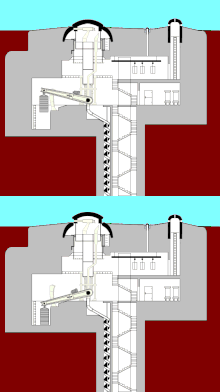
The Maginot Line had a powerful underground element. Underground passages connected the firing structures into a single defensive system. Each firing structure had an underground part: shelters for personnel, ammunition and food depots, medical centers and power plants. The total area of the underground part of the firing structure often reached 0.15 km². On the surface of the earth was only what was necessary for firing. Many underground communications had devices to block them in case of penetration of the enemy. The main underground galleries were 6-8 m wide, and the connecting galleries 2-3 m. The movement of troops and the delivery of materiel was carried out by electric trains along the underground railway. Entrances to the underground part were built in the depths of ground defense and skillfully disguised. It is worth noting the underground fortress of Hakenberg, Fonder-Goltz and Metz. The Mets fortress was called an underground city: it had 6 floors to a depth of 50 m on an area of 2.5 km² [45] .
However, these examples of the underground war were unsuccessful. Too much attention has been paid to the construction of underground fortifications. Exits to the surface were built in small quantities. There was no interaction between underground and ground defense. Most of the soldiers were originally located underground. These miscalculations led to the fact that the enemy suppressed the ground defense with fire, captured an area over underground fortifications with an infantry attack and blocked all exits. The underground garrison could not break through to the surface and eventually perished [4] .
It is generally accepted [32] that the underground mine war in its classical sense did not find wide application during the Great Patriotic War , however, there were isolated cases of the use of undermining by Soviet troops for unexpected attacks of well-fortified enemy positions [32] . At the initial stage of the war, urban quarries sometimes served as a long-term support base for the remnants of the encircled Soviet troops (see the defense of the Adzhimushkay quarries ) [46] . In Odessa catacombs [47] [48] [49] the partisans fought with the Germans until August 1943. In Sevastopol, by December 1941, a significant part of the production capacities and civilian infrastructure was transferred to the caves and quarries of Inkerman ; mortars and ammunition were manufactured there, grenades, knives, trench tools, clothes, uniforms and shoes were sewn, artillery and tanks were repaired, and a hospital for 5,000 people was functioning [50] . During the Battle of Stalingrad, Soviet troops successfully used urban underground communications for sudden attacks on enemy positions [51] [52] .
At the final stage of the war, the tactics of conducting a combined arms battle in the dungeons were again in demand due to the need to overcome the deeply echeloned defense lines of the German troops saturated with capital underground structures (see the Battle of Berlin , the assault on Koenigsberg , etc.). The defensive lines of the German capital were skillfully integrated into the city’s underground transportation system, which put forward a number of problems before the Soviet troops, the severity of which was aggravated by the lack of subway maps and accurate information about the city’s underground economy [28] [32] . The Berlin metro allowed the Germans to actively maneuver their reserves, quickly transferring troops to critical directions and quickly organizing dangerous counterattacks [32] . In the end, it was decided to flood the subway section under the Telt Canal, which not only deprived the German command of the possibility of a safe maneuver, but also led to significant losses [32] .
War in Korea
On the Korean peninsula, the underground war took on a grandiose scope [53] . Based on the experience of World War II, the Americans relied on aviation. North Korean troops suffered heavy losses from air raids, which forced them to begin construction of underground shelters [32] . Initially, underground fortifications were built independently by each unit and their placement was chaotic. Subsequently, the underground fortifications were combined into one system. The following facts testify to the scope of the underground war. With a front length of 250 km, the length of underground passages reached 500 km. Thus, for every kilometer of the front, there were 2 km of underground tunnels. A total of 2 million m³ of rock was recovered.
The DPRK developed its own theory of underground warfare. The manpower , warehouses and small-caliber guns were completely located in the underground premises, which made them less vulnerable to air-artillery attacks. Spacious barracks were built directly below the surface of the earth, which made it possible to bring whole formations to the surface in a short time and quickly hide them underground. To improve ventilation, these structures were built taking into account the direction of movement of natural air flows [32] ; on the surface of the earth above them, the positions of false targets ( pillboxes , trenches and dungeon entrances) were equipped, which made it difficult to detect real targets and forced Americans to waste ammunition. In addition, underground shelters were created for deployed artillery: during the bombing, the guns rolled into special bunkers in the thickness of the mountain, as soon as there was a lull of guns moved to special sites in front of the bunker, fired several shots and rolled back.
Unlike other examples of the underground war, the DPRK troops did not focus on the defense of the underground fortified areas. North Korean troops were hiding from bombing and shelling in the dungeons, waiting for the bayonet attack of the Americans. When the infantry units of the United States penetrated the ground part of the fortified area, North Korean soldiers climbed to the surface in many moves and engaged in hand-to-hand combat, using numerical superiority [4] .
Subsequently, the experience of confronting North Korean forces was analyzed, systematized, and summarized in the combat manual of the American army FM 31-50 (“Combat in Fortified Areas and Cities”) [32] .
Currently, the DPRK military doctrine provides for the construction of the maximum possible number of underground military installations in case of a US attack [54] . The depth of underground objects reaches 80–100 m, which makes it difficult to destroy them even with tactical nuclear weapons [55] .
Vietnam War
The national liberation front of South Vietnam was aware of the complete American superiority in all types of weapons, and especially in aviation, so guerrilla warfare tactics were chosen to confront the Americans [32] . To conduct it on the territory of southern Vietnam, the Viet Cong troops needed camouflaged logistics facilities capable of supporting partisans with everything they needed for a long period of time. For this, a network of underground bases was developed that successfully functioned in the conditions of the occupation of the land territory; there are reports that every villager was required to dig about 90 cm of tunnels daily [56] . The largest underground base was Kuti tunnels with a total length of 200 miles [57] . It is also known that a significant part of the Ho Chi Minh trail was laid along karst caves [58] .
The tunnels of the Vietnamese partisans had the most diverse structure, but as a rule, they were laid at a depth of about one and a half meters in hard clay soil. The clay walls, drying out, quickly hardened and acquired the properties of unbaked brick , which made it possible to do without installing additional supports under the ceiling. To protect against toxic gases, underground passages consisted of separate fragments located at different levels and isolated from each other by wooden hatches. To protect against grenade explosions and small arms fire in the tunnels, right-angle turns were often made, and ventilation shafts made from the remains of American 2.75-inch caliber rockets were located at regular intervals. To protect the underground communications from uninvited guests (see “ tunnel rats ”), the system of moves was supplemented by false branches, while mines and makeshift traps were actively used [59] .
To combat the partisans underground, the American armed forces tried a wide arsenal of means: tear gases , chemical warfare agents , large-caliber air bombs with time bomb fuses, napalm , etc. [32] However, a well-built deep underground communications network equipped with air purification systems , gateways and means of protection allowed the Viet Cong to continue to not only survive, but also quite successfully solve their combat missions [32] . Then, at the next stage, the fighting in the dungeons acquired a mutual character: the American command began to use small groups of specially trained military personnel, colloquially - “ tunnel rats ” [59] [60] . These units were created exclusively from volunteers who passed rigorous selection, the main criterion of which was lean build, good hearing, strong psyche, and complete immunity to claustrophobia ; some preference was given to people of short stature [61] . Such teams were supported by units of sappers , flamethrowers and chemical troops [32] . Equipped with compact weapons [62] , gas masks , modern communications and intelligence, they were able to achieve some success. Vietnamese fighters preferred not to enter into a direct collision with them, leaving for many kilometers of labyrinths of underground passages [32] .
It is interesting to note that the specifics of warfare in the Vietnamese tunnels served as an incentive for the emergence of a number of samples of exotic weapons in the service of the American army. These include the so-called Quiet Special Purpose Revolver [62] , developed by the Ground Operations Research Laboratory of the Aberdeen Proving Ground [63] . This revolver was created on the basis of the Smith & Wesson Model 29 model and was a smooth-bore weapon with a non-standard .40- caliber shotgun cartridge, which provided locking of powder gases in its sleeve after firing in order to reduce the acoustic load on the shooter when firing in a closed space [63] .
War in Afghanistan
The tactical elements of the underground war were also actively used during the armed conflict in the Republic of Afghanistan [32] [64] [65] due to the existence of an extensive irrigation network consisting of, so-called, kyariz - underground water pipes. During the fighting, the Afghans used these tunnels to escape from the persecution and forays into the rear of government troops, and such tactics often caused the Soviet command many problems [32] . Soviet troops had to smoke mujahideen from underground structures: for this, all exits from there were blocked, and tunnels were thrown with smoke bombs and grenades. В целях зачистки кяризов создавались специальные досмотровые группы, оснащённые респираторами , фонарями, сигнальными средствами и т. п. [65] ; они, как правило, продвигались от колодца к колодцу уничтожая или оттесняя мятежников. Как крайний способ, советские войска приступали к разрушению подземелий задействуя минно-взрывную технику. Был даже разработан метод «стереофонического эффекта», в рамках которого подрыв киряза осуществляется двумя зарядами, расположенными на разной глубине подземного хода. Первым подрывался верхний заряд для закупоривания тоннеля, сразу же следом за ним — нижний заряд, ударная волна от которого, не найдя вверху лёгкого выхода наружу, уничтожала всю систему подземных коммуникаций в глубине сооружения [64] . Помимо этого некоторое применение нашёл метод выжигания [32] подземных ходов бензином [64] .
Кроме кяризов для военных целей афганская непримиримая оппозиция обустраивала природные пещеры и специально построенные подземелья. Самой известной подземной базой моджахедов, а потом талибов была Тора-Бора — система тоннелей глубиной до 400 м и общей протяженностью в 25 км. Для борьбы с партизанами в подземельях СССР и США создали специальные войска [66] [67] .
Вооружённый конфликт в Чечне
Сепаратисты в Чечне во всех войнах активно использовали пещеры для создания тайных баз и обеспечения скрытности ухода из блокированных районов [32] [68] . В ходе подготовки к штурму Грозного его подземные коммуникации были тщательно подготовлены боевиками [69] для выстраивания системы огня и других нужд в соответствии с передовыми представлениями того времени [70] . Отмечают, что оборонительные рубежи сепаратистов были удачно привязаны к комплексу подземных сооружений города, в котором располагались медицинские пункты, места отдыха, ремонтные мастерские, склады расходных материалов, продовольствия и боеприпасов [70] . С помощью зарубежных советников была отработана тактика противостояния превосходящим силам противника организацией засад , огневых мешков и танковых ловушек [70] .
В уличных боях чеченская сторона поначалу полагалась на сочетание круговой позиционной обороны отдельных тактически выгодных зданий с действиями мобильных ударно-диверсионных групп [70] . Типичный сценарий такого столкновения выглядел следующим образом: отразив несколько атак российских войск, гарнизон обороняемого сооружения скрытно оттягивался по подземным ходам в соседние здания. Когда федеральные силы поднимались в очередную атаку и врывались в здание, то вдруг выяснялось, что в атакуемом объекте уже никого нет. После того, как подразделение федералов сосредотачивалось в занятом строении — подходы к нему блокировались огнём снайперов и начиналась огневая подготовка, следом за которой немедленно следовала контратака. В это время ударная группа боевиков проникала через подземные ходы в подвал , чтобы нанести решающий удар и завершить разгром [70] .
В дальнейшем чеченские формирования сменили тактику, сделав упор на маневренные действия с широким использованием системы подземелий как транспортных коммуникаций, выходы из которых тщательно маскировались и минировались. Это позволяло диверсионным группам боевиков внезапно появляться в самых неожиданных местах, в том числе — и на зачищенной территории, наносить удары и исчезать [70] . На долю таких групп относят до двух третей потерь федеральных сил [70] .
Арабо-израильский конфликт
Тактика подземной войны получила дальнейшее развитие опираясь на опыт боевиков группировки ХАМАС в секторе Газа и шиитского движения « Хезболла » на израильско - ливанской границе [70] . Стоит однако отметить, что данные действия имеют односторонний характер. Хотя израильская армия уже начала подготовку к ведению боевых действий в искусственно созданных подземных сооружениях [71] , Израиль не пытается разворачивать ответную подземно-минную войну [1] .
ХАМАС в секторе Газа
По мирному соглашению с Египтом Израиль оставлял за собой контроль над границей сектора Газа и египетской территорией. Палестинские боевики в этом анклаве оказались в полной блокаде. Чтобы решить проблему снабжения оружием и боеприпасами, ФАТХ и Хамас начали прокладывать тоннели в Египет . Израиль активно и планомерно занимался поиском и разрушением этих тоннелей [72] .
Особенностью данной подземной войны является использование тоннелей в целях снабжения, а не нападения на позиции противника — хотя известны единичные случаи попыток подкопа под израильские блокпосты . Так, в ночь с 27 на 28 июня 2004 года палестинские боевики уничтожили израильский блокпост путём взрыва 170 кг тротила в специально проложенном туннеле [1] . Однако данный способ войны не нашёл широкого распространения в связи с высокой трудоёмкостью и наличием других методов [72] . Как следствие, в 2006-м году был опробован новый тактический приём: группа боевиков выдвинулась из сектора Газа на территорию Израиля по проложенному под границей туннелю. Им удалось застать врасплох подразделение израильских пограничников; в результате двое солдат погибли, один ранен, а ещё один ( Гилад Шалит ) взят в плен [72] .
Получив власть в секторе Газа, движение ХАМАС приступило к методичному строительству сети капитальных подземных сооружений, связанных сетью тоннелей и галерей, ведущих к многочисленным выходам в жилые кварталы Газы. Особо отмечают, что данная подземная инфраструктура хоть и отдалённо напоминает тоннельную систему Вьетконга , но в отличие от них хорошо оборудована, электрифицирована и возведена с применением железобетонных конструкций [72] .
Для уничтожения подземной инфраструктуры ХАМАС в январе 2009 года израильскими вооружёнными силами была проведена общевойсковая операция « Литой свинец », в которой участвовало более 10 тысяч военнослужащих. Период подготовки к ней продолжался около полутора лет [70] ; в её результате было уничтожено около 30-40 тоннелей подземного комплекса ХАМАС из 250 имеющихся (то есть — около 15 %). По мнению некоторых экспертов, данный эпизод продемонстрировал высокую способность наземно-подземной оборонительной системы иррегулярных формирований эффективно противостоять наступательным действиям современных вооружённых сил, которые задействуют наземную, подземную, воздушную и космическую компоненту [70] .
В дальнейшем, тоннельная сеть нашла широкое применение в целях контрабанды , которая в секторе Газа достигла грандиозных размеров [73] . Не считая уже уничтоженных, под границей прорыто восемь сотен ходов, а на обслуживании контрабандной сети задействовано около 20 тысяч человек. Египет строил подземный забор глубиной 30 м, который должен был перерубить подземные тоннели [74] [75] [76] . После революции Египет приостановил строительство подземного забора. В настоящее время подземная война в секторе Газа продолжается [71] [77] [78] .
Хезболла на ливанской границе
Во ходе Второй Ливанской войны 2006 года значительный размах приобрелa активность бойцов движения « Хезболла ». Во время столкновений с израильскими вооружёнными силами в ливанской «зоне безопасности», которую израильская армия покинула в 2000 году [79] боевики опирались на умелое использование разветвлённой системы подземных укреплений [70] . Данная система, созданная всего за шесть лет с помощью подконтрольных «Хезболле» строительных компаний, представляла из себя комплекс капитальных объектов, размещённых в бетонных бункерах , связанных сетью подземных тоннелей и усиленных противотанковыми и противопехотными минными полями [80] [81] . Глубина залегания некоторых особо важных бункеров ( арсеналов и центров управления) в скалистых грунтах достигала 40 метров [82] . Их гарнизон располагал запасами продовольствия, топлива и боеприпасов для полностью автономного существования в течение многих дней, при этом одной из самых сильных сторон называют многократное и очень эффективное дублирование каналов управления и связи [70] . Для обеспечения секретности никто из высшего руководства организации не обладал всей полнотой информации о точном расположении всех опорных пунктов данной системы [82] . Военнослужащие ЦАХАЛа в обыденной речи называли её «заповедником Хезболлы» [70] .
К особенностям стратегии бойцов «Хезболлы» относят заблаговременную подготовку подземных коммуникаций для действий расчётов ракетных систем, а также — подготовку данных для стрельбы [70] . Многочисленные ответвления подземных ходов позволяли боевикам активно маневрировать, заходя в тыл колоннам израильской бронетехники и нанося им чувствительные удары [70] . Также был введён принцип децентрализации командования, который сделал бессмысленными усилия ЦАХАЛа , направленные на уничтожение руководства «Хезболлы». При этом содействие блокированным подразделениям боевиков оказывалось исходя из условий текущей тактический ситуации, а полевым командирам дозволялось принимать решение самостоятельно [70] .
Отмечается, что неожиданно сильное сопротивление «Хезболлы» заставило израильтян поставить под ружье несколько тысяч резервистов, направив иx в сектор Газа, а высвободившиеся регулярные части перебросить оттуда к Ливану [83] [84] . Осознав неготовность израильских вооружённых сил эффективно бороться с подземной инфраструктурой боевиков, американская администрация передала им партию высокоточных авиабомб с лазерным наведением GBU-28 для поражения целей на глубине до 30 метров, защищенных слоем бетона до 6 метров [70] .
Как отмечают некоторые военные аналитики, данный конфликт выявил некоторые слабые стороны израильской армии, которая, несмотря на значительное превосходство практически во всех отношениях, так и не смогла организовать эффективное противодействие боевикам [6] . Среди основных проблем называют следующие:
- неготовность личного состава ВС Израиля к захвату хорошо укреплённых позиций боевиков (к так называемой «бункерной» войне),
- недостаточно тесное взаимодействие воинских частей с военной разведкой, авиацией и артиллерией,
- низкое качество подготовки резервистов к противостоянию с противником, который использует подземное пространство [70] [82] .
Гражданская война в Сирии
Во время гражданской войны в Сирии вооружённые формирования сирийской оппозиции пытались компенсировать подавляющее превосходство правительственных войск в огневой мощи возведением системы подземных сооружений и коммуникаций. Особо отмечается в этом отношении подземный комплекс в пригороде Дамаска — Восточной Гуте , где туннельная система имеет исключительно сложную конфигурацию и предусматривает даже движение автомобильного транспорта. Данные обстоятельства указывают на высокую актуальность подготовки личного состава и создания специализированных боевых средств для достижения успеха в вооружённом противостоянии под землёй [85] .
In art
- « Пение птиц » — роман британского писателя Себастьяна Чарльза Фолкса (1993), в котором подробно описана подземная война между британскими и немецкими войсками. В опросе о любимых книгах британцев, проведенном БиБиСи в 2010 году, книга заняла 13-е место [86] . Одноимённая пьеса была поставлена в Театре Комедии в Лондоне , в Вест-Энде и шла с 28 сентября 2010 по 15 января 2011 [87] .
- В романе « Обломок империи » цикла « Грозные границы » Майкла Гира показана тактика подземной войны. Подземная битва за гору Макарта описана с середины главы № 29 романа Реквием по завоевателю .
- «Подземная война» — рассказ К. Г. Паустовского о борьбе партизан в Аджимушкайских каменоломнях во время гражданской войны в России .
- « Улица младшего сына » — советские детские повесть ( 1949 , Лев Кассиль совместно с М. Поляновским ), и фильм ( 1962 , реж. Лев Голуб ) о жизни и смерти юного партизана Володи Дубинина — героя Великой Отечественной войны, воевавшего в составе партизанкого отряда в каменоломнях Старого Карантина (Камыш бурун) вблизи Керчи. Талантливо написанная книга советского детского классика Льва Кассиля , и удачная экранизация — сделала образ Володи Дубинина одним из самых известных и даже популярных пионеров-героев . Книга многократно переиздавалась, присутствовала в каждой детской и школьной советской библиотеке, входила в списки рекомендуемого чтения. Фильм « Улица младшего сына » регулярно показывался по телевидению вплоть до конца 80-х. Фильм и/или книга входили в планы лекториев и «внеклассных» обсуждений (политических занятий) для детей. Кроме книги и фильма Володе Дубинину посвящена «Песня о Володе Дубинине» [88] (1975, музыка: Владимир Шаинский , слова: Наум Олев ), диафильм [89] . Образ Володи Дубинина и эпизод его участие в партизанской подземной войне у Старого Карантина включены в книгу «Дети-герои» [90] (1985) и фильм «Долгая память» (1985, реж. Роман Виктюк). Именем Володи Дубинина назван город Дубинино , множество улиц, парков, десятки пионерских отрядов , пионерских дружин, пионерских лагерей по всему СССР. Ему установлено несколько памятников. Насколько можно судить по фильму, подземная война в каменоломнях Старого Карантина (Камыш бурун) развивалась по сценарию линии Мажино. После некоторых начальных успехов партизан (возможно — выдуманных в отчётах их командования, или позднее — пропагандой) немцы успешно блокировали все выходы, залив их бетоном, заминировав или установив посты. После чего партизаны перестали представлять для немцев какую-либо угрозу. Суть же подвига Володи Дубинина в том, что имея субтильное телосложение он мог выбираться по очень узким лазам, что позволяло ему вести визуальную разведку. По отчётам самих партизан полученные данные позволили им дать достойный отпор карателям в декабре 1941 года и вообще планировать свои боевые операции. Повторить свою попытку уничтожения партизан у немцев уже не получилось, поскольку в том же месяце, 26 декабря 1941 началась Керченско-Феодосийская операция и Керченский полуостров был временно освобождён советскими войсками.
Фильмы
- «Подземная война» (1965) — один из немногих китайских игровых фильмов 60-х годов. Отражает идеи Мао Цзэ-дуна о «народной войне» [91] .
- Американский фильм « Тоннельные крысы » (1968) рассказывает о действиях одноимённых подразделений во Вьетнаме
- Основанный на реальных событиях австралийский фильм « Ниже холма 60 » посвящён ведению подземных боевых действий в Первую мировую войну [92] .
- « Улица младшего сына » — советский детский фильм ( 1962 , реж. Лев Голуб , « Беларусьфильм ») по одноименной книге (см.выше). Основан на реальных событиях партизанской подземной войны в каменоломнях Старого Карантина (Камыш бурун) вблизи Керчи в 1941 году.
- Капитан Алатристе (фильм) — в фильме есть эпизод подземной войны, когда солдаты обоих армий ведут борьбу под землей в узких, вырытых в грунте тоннелях при осаде Бреды в 1624 году.
See also
- Минная война
- Тоннельные крысы
- Подземная лодка
- Подземные тоннели для нападения на Южную Корею
Notes
- ↑ 1 2 3 4 Веремеев Ю. Г. Тайная подземная война: Туннельные сети // Популярная механика . — 2010. — № 12 (98) . Архивировано 28 июля 2014 года.
- ↑ Толл Ф. Г., Волленс В. П., Зотов В. Р. Подземная война // Настольный словарь для справок по всѣм отраслям знанія: (Справочный энциклопедическій лексикон), в 3-х томах, Том 3 . - Ed. Ф. Толля, 1864. — С. 131.
- ↑ 1 2 3 4 5 6 Орлов В. А. Подземная гроза // Наука и жизнь . — 1970. — № 5. — С. 54—58.
- ↑ 1 2 3 4 5 6 Маркин А. Подземная война. Тактика наземно-подземной обороны. // Солдат удачи. — 2009. — № 3, 4 . Архивировано 18 января 2012 года.
- ↑ 1 2 3 Виниченко М. В. Война под землёй (рус.) // Армейский сборник : журнал. — 2010. — Март ( т. 190 , № 3 ). — С. 21-24 . Archived March 5, 2016.
- ↑ 1 2 3 4 Виниченко М. В. Системно-структурное представление об использовании подземного пространства войсками (рус.) // Военная мысль : журнал. — 2007. — Июль ( № 7 ). — С. 54-59 . Архивировано 11 августа 2016 года.
- ↑ 1 2 3 4 Астахов В. Ближний бой в тоннеле (рус.) // Оружие : журнал. — 2005. — № 10 . — С. 8-10 . — ISSN 1728-9203 .
- ↑ Логунов А., Гришин В. Средства по оказанию помощи при декомпрессионных поражениях (рус.) // Военный парад : журнал. — 2010. — Т. 99 , № 3 . — С. 78-79 . — ISSN 1029-4678 .
- ↑ 1 2 Дублянский, 2000 , 16. Использование подземных пространств • 16.1. Qui prodest — кому выгодно?.
- ↑ 1 2 3 4 5 6 Яковлев, 2000 , Отдел первый. Фортификационные идеи и формы в древний период и средние века. Первобытные средства и формы защиты.
- ↑ Восстание Бар Кохбы . Дата обращения 17 января 2012. Архивировано 12 ноября 2013 года.
- ↑ 1 2 3 4 Разин, 1999 , Т. II. История военного искусства VI—XVI вв. Глава пятая: военное искусство вооруженной организации монголов и турок. Раздел четвертый: военное искусство вооруженной организации монголов в период распада монгольского государства. Пункт второй: военное искусство в войнах монголов в XIV в..
- ↑ Суданские беженцы в Нубийских пещерах , PixaNEWS (8 июня 2011). Архивировано 1 декабря 2011 года. Дата обращения 18 января 2012.
- ↑ 1 2 3 4 5 6 Левыкин В. И. Подземные сооружения // Фортификация: прошлое и современность. — Москва: Военное издательство, 1987. — С. 99-104. — 159 с.
- ↑ 1 2 Левыкин В. И. Средства механизации фортификационных работ // Фортификация: прошлое и современность. — Москва: Военное издательство, 1987. — С. 99-104. — 159 с.
- ↑ 1 2 3 4 5 6 Jones S. Underground Warfare 1914—1918. — Pen and Sword Books, 15 February 2010. — 288 p. — ISBN 978-1-844-15962-8 .
- ↑ 1 2 Веремеев Ю. Г. История зарождения и развития минного оружия (Краткий очерк) Часть 1 (недоступная ссылка) . Дата обращения 15 января 2012. Архивировано 8 сентября 2012 года.
- ↑ Эней Тактик. О перенесении осады Архивная копия от 2 декабря 2010 на Wayback Machine (Aeneas Tacticus. De obsidione toleranda. Перевод: В. Ф. Беляев) XXXVII. Распознавание и предотвращение подкопов
- ↑ Дублянский, 2000 , 5. Спелеология или спелеистика? . 5.1. Порожденные человеком (23 абзац).
- ↑ Сильнов А. В. Сирийский город Дура-Европос и эллинистическое строительство . — Метаморфозы истории. Архивировано 8 июля 2015 года.
- ↑ Дублянский, 2000 , 5. Спелеология или спелеистика? 5.1. Порожденные человеком.
- ↑ Минное дело // Энциклопедический словарь Брокгауза и Ефрона : в 86 т. (82 т. и 4 доп.). - SPb. , 1890-1907.
- ↑ Подземно-минная борьба // Большая советская энциклопедия : [в 30 т.] / гл. ed. A.M. Prokhorov . - 3rd ed. - M .: Soviet Encyclopedia, 1969-1978. .
- ↑ Минная война // Большая советская энциклопедия : [в 30 т.] / гл. ed. A.M. Prokhorov . - 3rd ed. - M .: Soviet Encyclopedia, 1969-1978. .
- ↑ подземные ходы для продвижения к объекту минной атаки
- ↑ галереи меньшего сечения, выводимые по продолжению галерей или в сторону от них
- ↑ полости для заряда взрывчатых веществ
- ↑ 1 2 3 Виниченко М. В. Подземная война // Журнал «Техника и вооружения». — 2001. — № 2, 3 . — С. 11—15, 4—5 .
- ↑ Виппер Р. Ю. I. Шестнадцатый век (§3) // Иван Грозный. — Издательство Академии Наук СССР, 1944.
- ↑ Терентьев М. А. Глава I. Движение России на восток // Россия и Англия в Средней Азии. - SPb. : тип. П. П. Меркульева, 1875.
- ↑ Яковлев, 2000 , Отдел второй. Фортификационные идеи и формы в огнестрельный период: с XIV по XVI век. Глава X. Развитие военно-инженерного искусства в России с XIV века. §2. Осадное искусство и оборона крепостей.
- ↑ 1 2 3 4 5 6 7 8 9 10 11 12 13 14 15 16 17 18 Виниченко А. Подземная вооружённая борьба (рус.) // Армейский сборник : журнал. — 2014. — Апрель ( т. 238 , № 4 ). — С. 8-13 . Archived March 5, 2016.
- ↑ Разин, 1999 , Т. III. История военного искусства XVI — XVII вв. Глава девятая. Военно-теоретическая мысль в XVII в..
- ↑ 1 2 Виниченко М. В. Подземная война. Оборона Севастополя (1854—1855) // Журнал «Техника и вооружения». — 2001. — № 10 . — С. 32—34 .
- ↑ Виниченко М. В. Подземная война. Форт смерти. Оборона II форта Порт-Артура (Люй-Шунь-Коу) в русско-японской войне 1904–1905 г.г. // Журнал «Техника и вооружения». — 2002. — № 1, 3 . — С. 15—16 .
- ↑ Виниченко М. В. Оборона Порт-Артура. Подземное противоборство. — Экспринт, ноябрь 2005. — 40 с. — ISBN 5-94038-101-4 .
- ↑ Пентагон создаст подземную бомбу-робота , Lenta.ru (17 марта 2010). Дата обращения 11 января 2012.
- ↑ Дублянский, 2000 , 1. Пещеры и пещерники • 1.3. Рождение - "классической" спелеологии.
- ↑ Буккер И. Подземные сражения Первой мировой войны . pravda.ru (26 июня 2011). Дата обращения 11 января 2012. Архивировано 8 сентября 2012 года.
- ↑ Третьяков Н. . В Первую мировую на Западном фронте велись подземные бои , Компьюлента (14 июня 2011). Архивировано 18 июня 2011 года. Дата обращения 16 января 2012.
- ↑ 1 2 3 4 Виниченко М. В. Подземная война. Подземная борьба в Первую мировую. Воздушно-наземно-подземно армейская наступательная операция «Мессин» // Журнал «Техника и вооружения». — 2002. — № 4, 5 . — С. 37—39, 46—48 .
- ↑ Jamet, 1916 .
- ↑ Козырев М., Козырев В., 2009 , с. 383.
- ↑ Зигуненко С. Ушел в поход… подземоход: глубоко копаем // Популярная механика : журнал. — 2006. — № 4 (42) . Архивировано 9 июня 2012 года.
- ↑ 1 2 Виниченко М. В. Подземная война. «Китайская стена» XX века, линия Мажино // Журнал «Техника и вооружения». — 2001. — № 9 . — С. 29—33 .
- ↑ Абрамов В. В. Керченская катастрофа 1942. — М. : Яуза, Эксмо, 2006. — 352 с. — (Сражения ВОВ). - 4000 copies. — ISBN 5-699-15686-0 .
- ↑ В. Егоров, Н. Зотов. Одесские катакомбы и Великая Отечественная (11 февраля 2009). Дата обращения 23 октября 2015. Архивировано 4 марта 2016 года.
- ↑ Одесса. Герои подземной крепости . Russia.tv. Дата обращения 23 октября 2015. Архивировано 6 декабря 2015 года.
- ↑ В одесских катакомбах . Дата обращения 23 октября 2015. Архивировано 4 марта 2016 года.
- ↑ Виниченко М. В. Развитие наземно-подземной обороны и средств вооружённой борьбы в годы Великой Отечественной войны (рус.) // Вооружение и экономика : журнал. — 2015. — Т. 31 , № 02 . — С. 46-57 . — ISSN 1607-2009 . Архивировано 17 сентября 2016 года.
- ↑ Том IV. Второй период войны Глава первая. Капитуляция Италии и Германии 1. Сталинградская битва и капитуляция Италии // История войны на Тихом океане (в пяти томах) / Под общей редакцией Усами Сэйдзиро, Эгути Бокуро, Тояма Сигэки, Нохара Сиро и Мацусима Эйити. — М. : Издательство Иностранной литературы, 1958. — 360 с.
- ↑ Антропов В. . «Подземные» страницы Сталинградской битвы. Волгоградские поисковики ко Дню Победы решили прояснить одну из самых малоизвестных страниц войны и, в частности, Сталинградской битвы , НТВ (211-05-02). Архивировано 15 февраля 2012 года. Дата обращения 16 января 2012.
- ↑ Виниченко М. В. Опыт подземной войны на Корейском полуострове // Независимое военное обозрение . — 2002-09-06. Archived March 15, 2013.
- ↑ Мельников Д. . Корейская война: быть или не быть? , Столетие (29 ноября 2010). Архивировано 4 ноября 2011 года. Дата обращения 14 января 2012.
- ↑ Храмчихин А. А. . Не более чем блеф , Газета «Военно-промышленный курьер» (13 апреля 2010). Архивировано 6 июля 2015 года. Date of appeal April 24, 2015.
- ↑ Бригхэм Р. Краткая история Вьетнамской войны. . ArtOfWar. Дата обращения 25 апреля 2015. Архивировано 10 февраля 2012 года.
- ↑ Вьетнам: Туннели Ку Чи - подземный город партизан . Turj. Мировые достопримечательности. Дата обращения 25 апреля 2015. Архивировано 18 апреля 2015 года.
- ↑ Дублянский, 2000 .
- ↑ 1 2 Дик Л. Р. Крутые и скорые на руку // Солдат удачи : Ежемесячный журнал. — М. : ООО «Солдат удачи», 1994. — № 1 . — С. 50-56 . — ISSN 0201-7121 .
- ↑ Tingey M. TUNNEL RATS: Non Gratum Anus Rodentum. "Not Worth a Rats Ass! . Дата обращения 25 апреля 2015. Архивировано 15 апреля 2015 года.
- ↑ Gordon L. Rottman. Recruitment // Tunnel Rat in Vietnam. — Oxford, UK: Osprey Publishing, 2012. — ISBN 978-1-84908-784-1 .
- ↑ 1 2 Gordon L. Rottman. Equipment and Weapons // Tunnel Rat in Vietnam. — Oxford, UK: Osprey Publishing, 2012. — ISBN 978-1-84908-784-1 .
- ↑ 1 2 3 Ардашев А.Н. Бесшумный «туннельный» револьвер // Оружие специальное, необычное, экзотическое: иллюстрированный справочник. — Москва: ООО «Издательство Астрель», 2003. — С. 77. — 319 с. — ISBN 5-271-01980-2 .
- ↑ 1 2 3 Бек А. Подземная война в Афганистане // «Солдат удачи». — 1997. — № 11 .
- ↑ 1 2 Мельничук А. По законам войны (рус.) // Армейский сборник : журнал. — 2014. — Январь ( т. 235 , № 1 ). — С. 12-15 . Архивировано 12 июня 2015 года.
- ↑ Lester W. Grau, Ali Ahmad Jalali. Underground Combat: Stereophonic Blasting,Tunnel Rats and the Soviet-Afghan War (англ.) // Engineer. — 1998. — No. 11 . Архивировано 6 ноября 2011 года.
- ↑ Доровских И. . И «тоннельные крысы» не справились. США выводят из Афгана спецназ , Красная звезда (2 октября 2002). Архивировано 5 июля 2015 года. Дата обращения 11 января 2012.
- ↑ Белоусова, Таисия . Сим-сим откройся! , Газета « Совершенно секретно » (1 марта 2001). Архивировано 12 июня 2015 года. Date of appeal April 24, 2015.
- ↑ Виниченко М. В. Подземная война // Журнал «Техника и вооружения». — 2001. — № 3 . — С. 4—5 .
- ↑ 1 2 3 4 5 6 7 8 9 10 11 12 13 14 15 16 17 18 Виниченко М. В. Тайны подземелья (рус.) // Армейский сборник : журнал. — 2014. — Декабрь ( т. 246 , № 12 ). — С. 17-21 . Архивировано 12 июня 2015 года.
- ↑ 1 2 ЦАХАЛ готовится к подземной войне (Видео) . Дата обращения 15 марта 2013. Архивировано 9 марта 2012 года.
- ↑ 1 2 3 4 Идо Хект. Как функционирует сеть туннелей ХАМАС в Газе . BBC (31 июля 2014). Дата обращения 24 октября 2015. Архивировано 26 октября 2016 года.
- ↑ Пашков С. Тоннельная война . Вести (9 ноября 2008). Дата обращения 6 июня 2012. Архивировано 8 сентября 2012 года.
- ↑ Египет изолирует Газу стальной подземной стеной . Дата обращения 14 января 2012. Архивировано 15 ноября 2010 года.
- ↑ Египтяне замуровывают тоннели на границе с Газой , Израиль плюс (3 сентября 2011). Дата обращения 11 января 2012.
- ↑ Египет отгородится от Газы подземной стальной стеной , Lenta.ru (9 декабря 2009). Архивировано 28 января 2011 года. Дата обращения 11 января 2012.
- ↑ Израиль: Израильтяне подозревают ХАМАС в подготовке «подземной войны» , Ukraine Daily. Архивировано 6 июля 2015 года. Date of appeal April 24, 2015.
- ↑ «Подземная война»: палестинцы укрепляют туннели металлическими листами , newsru.co.il (29 декабря 2009). Архивировано 5 июля 2015 года. Дата обращения 22 апреля 2015.
- ↑ А. Коляндр. Израильтяне уходят из южного Ливана . BBC (24 мая 2000). Дата обращения 21 октября 2015. Архивировано 3 июня 2016 года.
- ↑ Салех Малек Мохамад. Ливано-израильские отношения в контексте арабо-израильского противостояния в 1990-е - начале 2000-х гг. (рус.) // Веснік БДУ.. — 2013. — № 3 . — С. 43-49 . — ISSN 2308-9172 . Archived March 5, 2016.
- ↑ Alastair Crooke & Mark Perry. How Hezbollah Defeated Israel . Asia Times (13 октября 2006). Дата обращения 22 октября 2015. Архивировано 30 сентября 2015 года.
- ↑ 1 2 3 Matt M. Matthews. Planning for the Second Lebanon War // We Were Caught Unprepared: The 2006 Hezbollah-Israeli War . — Fort Leavenworth, Kansas: US Army Combined Arms Center Combat Studies Institute Press, 2008. — ISBN 978-0-16-079899-3 . Архивная копия от 19 августа 2016 на Wayback Machine
- ↑ После эвакуации иностранных граждан из Ливана начался новый жестокий виток конфронтации . Новостной портал «NewsRu.com» (21 июля 2006). Дата обращения 21 октября 2015. Архивировано 4 марта 2016 года.
- ↑ Израиль задействует в военных действиях резервистов . Информационное агентство «Regnum» (22 июля 2006). Дата обращения 21 октября 2015. Архивировано 19 декабря 2017 года.
- ↑ Киселёв В., Письменский Г., Попов В. Тенденции и возможности. Некоторые формы и способы ведения боевых действий в Сирии (рус.) // Армейский сборник : журнал. — 2016. — Февраль ( т. 260 , № 02 ). — С. 3-7 . — ISSN 1560-036X . Архивировано 16 февраля 2016 года.
- ↑ The Big Read — Top 100 Books . BBC. Дата обращения 12 декабря 2010. Архивировано 31 октября 2012 года.
- ↑ Bamigboye, Baz . It's About to Get Busy on the Western Front , London: Daily Mail (18 June 2010). Архивировано 24 февраля 2015 года.
- ↑ Песня о Володе Дубинине, MP3 . Дата обращения 23 октября 2016. Архивировано 10 ноября 2016 года.
- ↑ Смотреть диафильм Володя Дубинин. Часть 1 . Дата обращения 23 октября 2016. Архивировано 24 октября 2016 года.
- ↑ «Дети-герои». Составители И. К. Гончаренко, Н. Б. Махлин. - 2nd ed. — К.: Радяньска школа, 1985. — 608 с., ил
- ↑ Подземная война — статья из Большой советской энциклопедии .
- ↑ Byrnes P. . Beneath Hill 60 (review) , The Sydnay Morning Herald (April 8, 2010). Архивировано 24 сентября 2015 года. Дата обращения 25 апреля 2015.
Literature
- Белоусова Т. Сим-сим откройся! // Совершенно секретно . — 2002. — № 3/154 .
- Веремеев Ю. Г. Военная история. История зарождения и развития минного оружия (недоступная ссылка) . Дата обращения 25 апреля 2015. Архивировано 8 сентября 2012 года.
- Веремеев Ю. Г. Тайная подземная война: туннельные сети // Популярная механика . — 2010. — № 12 .
- Дублянский В. Н. Занимательная спелеология . — Урал ЛТД, 2000. — 526 с. — ISBN 5-8029-0053-9 .
- Козырев М., Козырев В. Глава 19. Подземные боевые средства // Специальное оружие второй мировой войны. — Центрполиграф, 2009. — ISBN 978-5-9524-4354-9 .
- Маркин А. Подземная война. /Тактика наземно-подземной обороны./ // «Солдат удачи». — 2009. — № 4 .
- Маркин А. Подземная война. /Тактика наземно-подземной обороны. // «Солдат удачи». — 2009. — № №3, 4 .
- Орлов В. А. «Подземная гроза». раздел: «Подземная война» // Наука и жизнь . — 1970. — № 5 . — С. 54-58 .
- Разин Е. А. Глава девятая. Военно-теоретическая мысль в XVII в. // История военного искусства, в 3-х т.. — СПб. : ООО «Издательство Полигон», 1999. — 656 с. — ISBN 5-89173-040-5 (Первое издание — М. , «Воениздат», 1955..
- Смирнов С. С. Подземная крепость // Рассказы о неизвестных героях . — Молодая гвардия, 1964. Архивная копия от 5 июля 2015 на Wayback Machine
- Яковлев В. О подготовке крепостей к подземной минной обороне по опыту Порт-Артура. - SPb. , 1909. — 64 с.
- Яковлев В. В. История крепостей. — М. : АСТ , Полигон, 2000. — 400 с. — 5100 экз. — ISBN 5-237-05176-6 , 5-89173-077-4.
- Jamet J. Заметки по тактике минной войны (По опыту ведения подземной войны на французском фронте в районе Апремона в 1914-1915 г.г.) / Перевод под редакцией полковника В. В. Яковлева. — Печатано по распоряжению Главного Военно-Технического Управления, 1916. — 56 с.
- Jones S. Underground Warfare 1914-1918. — Pen and Sword Books, 15 February 2010. — 288 p. — ISBN 978-1-844-15962-8 .
- Karimov I. “Cave War” // Army collection: Scientific-methodical journal of the Ministry of Defense of the Russian Federation . - M .: Editorial and publishing center of the Ministry of Defense of the Russian Federation, 2008. - No. 02 . - S. 8 . - ISSN 1560-036X .