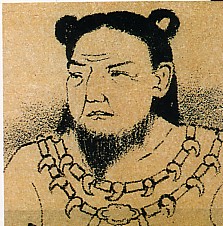
Emperor Kosho ( Japanese 孝 昭天 : ko: sh т : tenno:, 506 - September 5, 393 BC ) - the 5th emperor of Japan , who ruled from February 21, 475 BC. e. 4th of eight unregistered rulers .
| Emperor Kosho | |||||||
|---|---|---|---|---|---|---|---|
 | |||||||
| Predecessor | Emperor Itoku | ||||||
| Successor | Emperor Coan | ||||||
| Birth | 506 BC e. | ||||||
| Death | September 5, 393 BC e. | ||||||
| Burial place | |||||||
| Kind | |||||||
| Father | |||||||
| Mother | |||||||
| Spouse | |||||||
| Children | and | ||||||
Content
- 1 Biography
- 2 Genealogy
- 3 Sources
- 4 notes
- 5 Literature
Biography
According to traditional chronology, it reigned in 475–393 BC. e. However, researchers believe that he lived in the III century BC. e. Apparently, he really had a father to sovereign Coan . Married to a woman from the clan of the lords of Shiki County (Siki-no agata-nosi). He is the ancestor of the clue of Owari-uji (dr.- Vapari-udi). Most likely, he was one of the local rulers of Central Japan, who, to agitate the Yamato dynasty, the compilers of ancient Japanese chronicles recorded as one of the predecessors of the sovereign Mimaki (posthumous honorary name - Suzin).
Genealogy
| (1) Jimmu | Kamuayimimi no Mikoto | 〔 Rod O 〕 | |||||||||||||||||||||||||||||||||||||||||||||||||||
| (2) Suizay | (3) Anney | (4) Itoku | (5) Kosho | ||||||||||||||||||||||||||||||||||||||||||||||||||
| Amatarashi | 〔 Rod Vani 〕 | (8) Cohen | Obiho | 〔 Genus Abe 〕 | |||||||||||||||||||||||||||||||||||||||||||||||||
| (6) Koan | (7) Corey | Momoso | (9) Kayak | ||||||||||||||||||||||||||||||||||||||||||||||||||
| Kibitsu | Hikofutsuoshi | Janusiosi | Takeuchi no Sukune 〔 Soga clan 〕 | ||||||||||||||||||||||||||||||||||||||||||||||||||
| Wakatake | 〔 Kibi clan 〕 | ||||||||||||||||||||||||||||||||||||||||||||||||||||
| (10) Sujin | Toyokiri | 〔 Genus Kenu 〕 | Yamato Takeru | (14) Tuyai | (15) Ojin | ||||||||||||||||||||||||||||||||||||||||||||||||
| (11) Suining | (12) Keiko | (13) Seymu | |||||||||||||||||||||||||||||||||||||||||||||||||||
| Toyosukiiri | Yamato | Yokiiri | ◇ | Nakatsu (Oji) | |||||||||||||||||||||||||||||||||||||||||||||||||
| Hikoimasu | Tamba | Nutesivake | 〔Wake clan 〕 | ||||||||||||||||||||||||||||||||||||||||||||||||||
| ◇ | ◇ | Okinaga | Jingu (Tui) | ||||||||||||||||||||||||||||||||||||||||||||||||||
Sources
- Kojiki : Records of the acts of antiquity. - SPb. : Shar, 1994 .-- T. 2.
- Nihon Shoki : Annals of Japan. - SPb. : Hyperion, 1997 .-- T. 1.
Notes
Literature
- Vorobyov M.V. Japan in the 3rd-7th centuries. M .: Nauka, 1980 .-- 344 p.
- Suroven D. A. Foundation of the Yamato State and the Problem of the Eastern Campaign of Kamu-Yamato-Ivare-Biko // Historical and Legal Studies of Russian and Foreign States. Yekaterinburg, 1998. S.175-198. [one]
- Suroven D. A. The problem of the period of “eight rulers” and the development of the Yamato state during the reign of Mimaki (sovereign Sudzin) // Bulletin of the Ural State University: humanities. Vol. 2. Yekaterinburg, 1999. No. 13. S. 89-113. [2]