
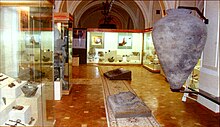
The culture of pitcher burials is an archaeological culture , introduced in the IV century BC. e. - VIII century AD e. in the territory of Transcaucasia , especially in the territory of Caucasian Albania . The deceased are buried in large clay jugs in a strongly crouched position on their sides. Funeral equipment contains metal products ( bronze and mainly iron tools and weapons, bronze, silver and gold jewelry), wood, stone, clay, glass and paste. In later burials, Roman, Arshakid and Sassanid coins are found. This culture belonged to a settled agricultural population, also engaged in cattle breeding, hunting, fishing and crafts.
Under jug burials is meant inhumation , during which the deceased was entirely packed into an earthen vessel of various shapes and sizes and was thus buried in the ground. Cremation burials in similar vessels cannot be considered jug burials [1] .
Content
See also
- Pitcher Burials
Notes
- ↑ A. Noneshvili Funeral rites of the peoples of the Transcaucasus, Georgian Academy of Sciences, Metsnireba, Tbilisi, art. 3, 1992, ISBN 5-520-01028-5
Literature
- Ivashchenko M., Pitcher burials of Azerbaijan and Georgia, Izvestiya AN SSSR, 1947, No. 1;
- Kaziev S.M., Album of pitcher burials, Baku, 1960;
- Golubkina T. I., Culture of pitcher burials in Azerbaijan, in collection: Tr. Museum of the History of Azerbaijan, vol. 4, Baku, 1961.