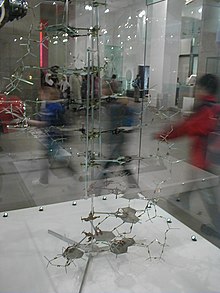
The history of molecular biology begins in the 1930s with the union of previously separate biological disciplines: biochemistry , genetics , microbiology and virology . In addition, in the hope that the new discipline will open up the possibility of understanding the fundamental foundations of life, many chemists and physicists have come to it.
Molecular biology in the modern sense explains the phenomenon of life, starting from the properties of macromolecules. Especially in the focus of molecular biologists were two of their types: 1) nucleic acids , among which DNA is best known, the structure of genes is fixed on it, and 2) proteins , the activity of which ensures life at the molecular level. According to one of the definitions of molecular biology, this discipline characterizes the structure, functions, and relationships between these two types of macromolecules.
Content
- 1 Overview
- 2 Molecular research
- 3 Biochemistry and genetics
- 4 DNA biochemistry studies
- 4.1 Early research
- 4.2 Chromosomes and heritable traits
- 4.3 DNA structure studies
- 4.4 "Central dogma"
- 5 RNA studies
- 5.1 Structure
- 5.2 Ribozymes and ribosome structure
- 6 Protein structure studies
- 6.1 First allocation and classification
- 6.2 Cleaning and weight determination
- 6.3 Spatial structure
- 7 See also
- 8 Literature
- 9 notes
General review
The name of the new discipline was proposed by Warren Weaver, director of the Rockefeller Foundation’s Department of Natural Sciences, in 1938. At first, it was understood that it was expected to explain the physical and chemical foundations of life. After Mendel’s laws were widely recognized in the scientific community in the 1910s and the development of atomic theory in the 1920s led to the development of the principles of quantum mechanics , it seemed that science had come close to discovering the molecular foundation of the phenomenon of life. Weaver, on behalf of the Rockefeller Foundation, supported and funded research at the intersection of biology, chemistry and physics, and even celebrities such as Niels Bohr and Erwin Schrödinger tried to bring the theoretical base under biology in the same way as they did in theoretical physics. However, in the 1930s and 1940s it was not clear which studies would lead to the goal, if that goal is at all achievable. Including research was conducted in colloid chemistry , biophysics , radiobiology and crystallography .
In 1940, George Beadle and Edward Tatem showed the existence of a relationship between genes and proteins [1] , linking genetics with biochemistry. They suggested that geneticists instead of Drosophila use a neurospore fungus as a model organism . The use of a wider range of model organisms was extremely important for the emergence of a new discipline. In 1944, Oswald Avery , who worked at Rockefeller University with bacteria, showed that genes are made of DNA [2] (see Avery, MacLeod, and McCarthy Experiment ). In 1952, Alfred Hershey and Martha Chase confirmed that the genetic material of the bacteriophage also consists of DNA [3] (see the Hershey – Chase experiment ). In 1953, James Watson and Francis Crick proposed a double-stranded structure of a DNA molecule [4] . Their structural model really made it possible to explain many fundamental biological phenomena, such as the existence of very large biological molecules, the way they store and accurately copy information about their structure, the possibility of changing the structure of genes in evolution, etc., as a result of which molecular biology has found its basic principles.
In 1961, François Jacob and Jacques Monot suggested that there should be an intermediary between DNA and protein, which they called messenger RNA . In 1961-1965 with the decoding of the genetic code, it became clear how the information stored on the DNA determines the structure of the protein, and which combinations of nucleotides in the structure of DNA correspond to specific amino acids of the protein. In the early 1960s, Jacob and Mono also showed how protein can regulate transcription and gene expression [5] .
Major discoveries from molecular biology have been made for about a quarter of a century. Then it took another fifteen years of research before new complex technologies were developed on their basis, which are now collectively called genetic engineering . They made it possible to isolate and characterize individual genes, including those from highly complex living organisms, including humans.
Molecule Research
Assessing the molecular revolution in the context of the history of biology, it is easy to see that the birth of molecular biology was the culmination of a long process that began with the first observations made under a microscope. Early researchers tried to understand how living organisms function at the microscopic level. Since the end of the XVIII century. increasing attention was paid to the description of the characteristics of chemical molecules produced by living organisms. So in the writings of prominent chemists such as Justus Liebig , physiological chemistry was born, the forerunner of modern biochemistry , which in turn owed its birth to Eduard Buchner . However, between the molecules studied by chemists and the fine structures visible under the microscope, such as chromosomes, lay a region of the unknown, the “world of lost measurements,” as the eminent physicist chemist Wolfgang Oswald called it. This world was inhabited by colloids , chemical compounds whose structure and properties remained unclear.
The success of molecular biologists in the study of this unknown world has provided the emergence of new methods of physics and chemistry, such as x-ray diffraction analysis , electron microscopy , ultracentrifugation , electrophoresis .
The turning point in this process was the work of Linus Pauling in 1949, in which for the first time a human disease, sickle cell anemia , was associated with a mutation in the hemoglobin molecule.
Biochemistry and Genetics
At the birth of molecular biology, there was a meeting of two disciplines that experienced a period of rapid development in the first half of the 20th century: biochemistry and genetics. Biochemists studied the structure and functions of the molecules that make up living matter. Between 1900 and 1940 central metabolic processes have been described: digestion and absorption of nutrients, in particular carbohydrates. Each of the elementary chemical processes that make up the metabolism is catalyzed by a particular enzyme . Enzymes are proteins, just like blood antibodies and proteins that are responsible for muscle contraction. Therefore, the study of the structure and function of proteins has become one of the most important tasks of biochemistry. Genetics, thanks to the introduction by Thomas Morgan of the fruit fly Drosophila as a model organism, established the validity of Mendel’s laws and discovered many new facts and patterns in the relations between genes. In particular, Morgan showed that genes are localized on chromosomes. Nevertheless, the chemical nature of the genes and the molecular mechanisms of their action remained a mystery.
DNA Biochemistry Research
Early Research
In 1869, Johann Friedrich Mischer discovered a substance that he called nuclein. He later cleaned a salmon semen sample, and in 1889 his apprentice, Richard Altman , called it nucleic acid. In 1919, a chemical analysis of nucleic acid was carried out at the Rockefeller Institute, which included four nitrogenous bases, sugar and phosphate, interconnected by covalent bonds in the order phosphate-sugar-base. Each of these units is called a nucleotide . However, at first it was assumed that four nucleotides are interconnected in short chains of the same structure. It was only in 1934 that Thorbjørn Casperson and Einar Hammersten showed that DNA is a polymer.
Chromosomes and inherited traits
In 1927, NK Koltsov suggested that inherited traits should be passed down from generation to generation together with giant molecules, which consist of two mirror chains replicated in a semi-conservative way, and each of the chains during replication serves as a matrix for the synthesis of a new one [6] . In 1935, Max Delbrück , N.V. Timofeev-Resovsky and Karl Zimmer suggested that chromosomes are giant molecules whose structure can be changed by irradiation with x-rays , which leads to a change in inherited traits. In 1937, William Astbury received the first results of an X-ray analysis of DNA, but failed to draw conclusions about its structure. It was only clear that this structure is regular.
A critical experiment proving that genes are made of DNA was posed in 1943 by Oswald Avery and his coauthors, who continued the work of Frederick Griffith, tragically killed at the beginning of World War II, with pneumococcal strains. In Griffith's experiments , the transformation of non-virulent rough type bacteria (R) into a virulent smooth strain (S) took place. Avery singled out the “transforming principle" and identified it as DNA. A similar experiment was performed in 1953 by Alfred Hershey and Marta Chase, who worked with the bacteriophage T2. In their work, they also showed that the genetic material of the phage is DNA.
DNA structure studies
In the 1950s, three groups of scientists succeeded in studying the structure of biological macromolecules. The first worked at Kings College (London) , it included Maurice Wilkins and Rosalind Franklin . The second consisted of Francis Crick and James Watson of Cambridge . The third group, led by Linus Pauling , worked at the California Institute of Technology (USA) . Watson and Crick constructed models of the structure from balls connected by metal rods based on data on the structure of individual nucleotides and the distances between atoms. Franklin and Wilkins analyzed data from crystallography and X-ray diffraction analysis .
Pauling's group in 1948, based on the same studies, found that in the spatial structure of many proteins there are more or less large parts in the form of a spiral . Similar conclusions could be drawn based on data from Franklin and Wilkins on DNA. The final conclusions about the spiral structure of DNA, the presence of two chains in it, interconnected by hydrogen bonds between individual nucleotides facing each other, and their complementarity were made by Watson and Crick. They were helped by Erwin Charguff , who visited Cambridge in 1952 and recalled his experiments in 1947, when he found that the ratio of nucleotides in different DNA samples varies, but adenine is always present in the same proportion as thymine, and guanine in the same as cytosine.
Watson and Crick built the first accurate DNA model in 1953 on the basis of data obtained by this moment Franklin [7] . Their discovery aroused extraordinary enthusiasm both among scientists and the general public. An article by Watson and Crick was published in Nature on April 25. Its content was duplicated by a public report by the head of the laboratory in which Watson and Crick, William Bragg , worked on May 14. Already on May 15, a note was posted about him in the London newspaper News Chronicle, and on May 16 in The New York Times . In 1962, Watson, Crick, and Wilkins received the Nobel Prize for this discovery [8] .
Central Dogma
In 1957, Crick proposed a formula that became known as the " central dogma of molecular biology ." According to this formula, DNA is a repository of protein structure information. The mediator between them is RNA. The proposed mechanism of semi-conservative DNA replication was confirmed by the experiment of Meselson and Steel . Crick and his co-authors showed that the genetic code consists of nucleotide triplets called codons, each of which encodes a single amino acid residue of the protein. By 1966, Har Koran and others deciphered the genetic code , establishing the relationship between codons of DNA and amino acid residues of the protein.
RNA Research
Structure
Early work on the study of the structure of RNA also dates back to the 1950s. Watson and Crick suggested that the presence of a 2`OH group in ribose prevents the formation of a double helix characteristic of DNA only [9] . There were doubts even about the ability of this macromolecule to form any spiral structure. The high degree of heterogeneity of the purified samples prevented obtaining distinct images of the diffraction pattern on RNA and their X-ray diffraction analysis. In 1955, the polynucleotide phosphorylase enzyme was discovered [10] , with the help of which artificial synthesis of homogeneous nucleic acids became possible, and the data of X-ray diffraction analysis improved significantly. It turned out that RNA can not only form a helix, but, like DNA, is capable of creating a double helix, although its structure was different from the double helix of DNA.
In the late 1950s and early 1960s, many RNA research results were published, including the hybridization of RNA and DNA to form double helices from the chains of both macromolecules [11] and even the triple helix of RNA [12] , as well as the structure of small fragments RNA and GC and AU dinucleotides crystallized in the form of spiral curls [13] . A modern review of these works was published in 2009 [14]
By the mid-1960s, ribosomes were discovered, their role in protein synthesis and the need for messenger RNA for their assembly were shown. In addition to messenger RNA and RNA, which is part of the structure of ribosomes, transport RNAs that deliver amino acids to the ribosome also participated in protein synthesis [15] . In 1965, the primary structure of the first transport RNA was determined [16] , and by 1968 several groups of scientists received crystals of transport RNAs, although they are still not of good enough quality to make it possible to determine their spatial structure [17] . This goal was achieved due to crystallization in 1971 of PHE tRNA from yeast [18] . The study of the spatial structure of PHE tRNA was completed by 1973. [19] Subsequently, the methods of this pioneering work were applied to crystallization and investigation of the spatial structure of other tRNAs [20] [21] . It turned out that in addition to a linear or helical shape, at least RNAs such as transport, like proteins, can have a compact globular structure.
Ribozymes and ribosome structure
In the 1980s, it was shown that some RNAs are capable of autocatalytic cleavage [22] [23] [24] . RNAs capable of catalyzing chemical reactions, like enzymes, such as autocatalytic cleavage, have been called ribozymes . In the 1990s, the spatial structure was studied in some of the ribozymes [25] [26] . These were the first globular RNAs besides transport ones, from which it became possible to study the spatial structure. On this basis, further studies were carried out on the features of the formation of the structure of RNA, the identification of conservative structural motifs, local stabilizing interactions between fragments of the nucleotide sequence, etc. [27] . These advances have been made possible by the advent of the in vitro transcription method. Кроме того, для изучения структуры РНК начали применять ядерный магнитный резонанс , который оказался особенно полезен для исследования малых РНК (RNAs) [28] [29] [30] .
Впоследствии развитие методов изучения структуры РНК позволило исследовать пространственную структуру ещё целого ряда макромолекул этого вида, включая рибосомальную РНК [31] [32] . За работу по исследованию пространственной структуры рибосомальной РНК Ада Йонат , Венкатраман Рамакришнан и Томас Стейц получили Нобелевскую премию.
Исследования структуры белка
Первое выделение и классификация
Как особый класс биологических молекул, белки были определены ещё в XVIII в. Антуаном де Фуркруа . Вначале их называли альбуминами ( matières albuminoides , albuminoids или Eiweisskörper ) и их характерными свойствами считали способность к свертыванию или коагуляции при обработке теплом или кислотой. Широко известными примерами таких белков к началу XIX в. считали яичный альбумин , альбумин из сыворотки крови , фибрин и клейковину пшеницы . Сходство между свертыванием яичного белка и створаживанием молока было известно с древнейших времен. Даже само слово альбумин было предложено ещё Плинием Старшим и происходит от латинского выражения albus ovi (белок яичный).
Якоб Берцелиус и Геррит Ян Мульдер провели элементный анализ растительных и животных белков и пытались определить их эмпирическую формулу . К их удивлению, у всех белков формула оказалась приблизительно одинаковой: C 400 H 620 N 100 O 120 , различными были лишь содержание серы и фосфора, присутствовавшие в относительно небольших пропорциях. Мульдер предполагал, что существует единая базовая белковая субстанция ( Grundstoff ), которая синтезируется в растениях и усваивается животными при переваривании. Берцелиус поддержал эту идею, назвав субстанцию протеином.
I proposed the name protein for organic oxide of fibrin and albumin, I would like to produce this word from the Greek πρωτειος, because it seems to be a primitive or principal substance of digestion in animals.
The original text (English).The name protein that I propose for the organic oxide of fibrin and albumin, I wanted to derive from the Greek word πρωτειος, because it appears to be the primitive or principal substance of animal nutrition.Original text (Fr.)Le nom protéine que je vous propose pour l'oxyde organique de la fibrine et de l'albumine, je voulais le dériver de πρωτειος, parce qu'il paraît être la substance primitive ou principale de la nutrition animale.- From the personal correspondence of Berzelius of July 10, 1838
Mulder also identified protein degradation products, in particular the amino acid leucine , and determined its molecular weight, 131 Da .
Cleaning and mass determination
The minimum molecular weight of the protein, according to Mulder’s analysis, was approximately 9 kDa , hundreds of times larger than most other molecules he had encountered. Therefore, the chemical structure of the protein (more precisely, the primary structure ) remained unknown until 1949, when Frederick Senger determined the amino acid sequence of the first protein, which was insulin . However, theoretically back in 1902, Franz Hofmeister and Emil Fischer predicted that proteins are a linear chain of amino acid residues connected by peptide bonds . Many scientists doubted that such long amino acid chains could remain stable in solution, and there were also alternative theories about the possible structure of proteins. For example, according to the colloidal hypothesis, proteins are composed of cyclols .
The fact that proteins are nevertheless macromolecules with a certain structure, and not colloidal mixtures, was shown by Theodor Svedberg using analytical ultracentrifugation. Using tissue cleaning is difficult to obtain more than a few milligrams of protein. Therefore, early research was carried out on proteins that are easily cleaned from egg white, blood, as well as various toxins and digestive juices obtained from slaughterhouses . Protein purification techniques developed rapidly during World War II due to the need to obtain purified blood proteins for treating wounded soldiers. At the end of 1950, the American company Armor and Company cleaned ribonuclease A in large quantities and provided it free of charge for research. As a result, for several decades, RNase A has become the main subject of basic research for many scientific groups. In particular, several works awarded the Nobel Prize were made on it.
Spatial structure
Studies of the spatial structure of the protein began in the 1910s, when Crick and Martin showed that coagulation of protein precipitation is preceded by another process, denaturation , in which the protein loses its solubility and enzymatic activity, but acquires additional chemical properties. In the mid-1920s, it was noted that sometimes denaturation can be reversible and the change in free energy in this process is significantly less than with ordinary chemical reactions, and by 1929 there were ideas that denaturation is a change in the conformation of the amino acid chain, in which residues previously found inside the protein globule are now exposed to the solvent. In this case, the solubility should decrease in accordance with the relatively low solubility of amino acids with aliphatic and aromatic side groups. Accordingly, additional chemical properties appear and enzymatic activity is lost.
In early 1960, Christian Anfinsen showed that RNase A does indeed denature reversibly, and that the natural conformation of this protein corresponds to the global minimum of free energy.
When the structure of the protein was not yet known, Dorothy Rinch and Irving Langmuir suggested that these structures are stabilized by hydrophobic bonds to substantiate the cyclole hypothesis. Although John Bernal himself supported the idea of hydrophobic interactions, it was rejected in the 1930s along with the cyclos hypothesis by Linus Pauling and other researchers. Pauling was a proponent of hydrogen bonds, the theory of which was developed by William Astbury . Despite the fact that the role of hydrogen bonds in stabilizing the protein structure in the end turned out to be insignificant, this did not prevent Pauling from correctly formulating ideas about the basic structural elements of the protein, alpha helices, and beta folds . The significance of hydrophobic bonds became clear only by 1959, when it was shown that the ionization of a part of amino acid residues, shown by Arne Tiselius , plays a role only on the surface of the protein globule, where the polypeptide chain comes into contact with the solvent.
The spatial structure of globular proteins was initially studied only by hydrodynamic methods and ultracentrifugation. Spectral methods appeared in the 1950s, including circular dichroism, fluorescence, and determination of absorption spectra in the ultraviolet and infrared regions. Crystallography and X-ray diffraction analysis to determine the spatial structure of hemoglobin were first used by Perutz and Kendrew in the 1960s. For this work, they were awarded the Nobel Prize. In the 1980s, nuclear magnetic resonance was also introduced . By 2006, Protein Data Bank contained data on the spatial structure of 40 thousand proteins. By identifying conservative domains , the homologous structures of different proteins can now be reconstructed using computer programs, and cryoelectron microscopy is used to study the structure of large interprotein complexes.
See also
- Biology history
- History of genetics
Literature
- Fruton, Joseph. Proteins, Genes, Enzymes: The Interplay of Chemistry and Biology . New Haven: Yale University Press. 1999. ISBN 0-300-07608-8
- Lily E. Kay, The Molecular Vision of Life: Caltech, the Rockefeller Foundation, and the Rise of the New Biology , Oxford University Press, Reprint 1996
- Morange, Michel. A History of Molecular Biology . Cambridge, MA: Harvard University Press. 1998.
Notes
- ↑ Beadle, GW; Tatum, EL Genetic Control of Biochemical Reactions in Neurospora (English) // Proceedings of the National Academy of Sciences of the United States of America : journal. - 1941. - Vol. 27 , no. 11 . - P. 499-506 . - DOI : 10.1073 / pnas . 27.11.499 . - PMID 16588492 .
- ↑ Avery, Oswald T .; Colin M. MacLeod, Maclyn McCarty. Studies on the Chemical Nature of the Substance Inducing Transformation of Pneumococcal Types: Induction of Transformation by a Desoxyribonucleic Acid Fraction Isolated from Pneumococcus Type III (Eng.) // Journal of Experimental Medicine : journal. - Rockefeller University Press 1944 .-- February 1 ( vol. 79 , no. 2 ). - P. 137-158 . - DOI : 10.1084 / jem.79.2.137 . - PMID 19871359 .
- ↑ http://jgp.rupress.org/cgi/content/abstract/36/1/39 Hershey, AD and Chase, M. (1952) Independent functions of viral protein and nucleic acid in growth of bacteriophage. J Gen Physiol.
- ↑ Watson JD and Crick FHC A Structure for Deoxyribose Nucleic Acid (Eng.) // Nature. - 1953. - Vol. 171 , no. 4356 . - P. 737-738 . - DOI : 10.1038 / 171737a0 . - . - PMID 13054692 .
- ↑ Jacob, F; Monod, J. Genetic regulatory mechanisms in the synthesis of proteins (Eng.) // J Mol Biol : journal. - 1961. - Vol. 3 . - P. 318-356 . - PMID 13718526 .
- ↑ Soyfer VN The consequences of political dictatorship for Russian science (Eng.) // Nat. Rev. Genet. : journal. - 2001 .-- September ( vol. 2 , no. 9 ). - P. 723-729 . - DOI : 10.1038 / 35088598 . - PMID 11533721 .
- ↑ Watson J., Crick F. Molecular structure of nucleic acids; a structure for deoxyribose nucleic acid (rum.) // Nature. - 1953. - T. 171 , nr. 4356 . - P. 737-738 . - DOI : 10.1038 / 171737a0 . - . - PMID 13054692 .
- ↑ Rosalind Franklin had already passed away from cancer by 1958.
- ↑ Watson JD, Crick FH Molecular structure of nucleic acids; a structure for deoxyribose nucleic acid (rum.) // Nature. - 1953. - Aprilie ( t. 171 , nr. 4356 ). - P. 737-738 . - DOI : 10.1038 / 171737a0 . - . - PMID 13054692 .
- ↑ Grunberg-Manago M., Ortiz PJ, Ochoa S. Enzymatic synthesis of nucleic acidlike polynucleotides (Eng.) // Science: journal. - 1955. - November ( vol. 122 , no. 3176 ). - P. 907-910 . - DOI : 10.1126 / science.122.3176.907 . - PMID 13274047 .
- ↑ Rich A., Davies DR A new, two-stranded helical structure: polyadenylic acid and polyuridylic acid (Eng.) // J. Am. Chem. Soc. : journal. - 1956. - July ( vol. 78 , no. 14 ). - P. 3548-3549 . - DOI : 10.1021 / ja01595a086 .
- ↑ Felsenfeld G., Davies DR, Rich A. Formation of a three-stranded polynucleotide molecule (Eng.) // J. Am. Chem. Soc. : journal. - 1957. - April ( vol. 79 , no. 8 ). - P. 2023-2024 . - DOI : 10.1021 / ja01565a074 .
- ↑ Sobll H., Tomita K., Rich A. The crystal structure of an intermolecular complex containing a guanine and a cytosine derivative (English) // Proceedings of the National Academy of Sciences of the United States of America : journal. - 1963. - June ( vol. 49 , no. 6 ). - P. 885-892 . - DOI : 10.1073 / pnas . 49.6.885 . - PMID 13989773 .
- ↑ Rich A. The era of RNA awakening: structural biology of RNA in the early years (Eng.) // Q. Rev. Biophys. : journal. - 2009 .-- May ( vol. 42 , no. 2 ). - P. 117-137 . - DOI : 10.1017 / S0033583509004776 . - PMID 19638248 .
- ↑ Warner JR, Rich A. The number of soluble RNA molecules on reticulocyte polyribosomes (English) // Proceedings of the National Academy of Sciences of the United States of America : journal. - 1964. - June ( vol. 51 , no. 6 ). - P. 1134-1141 . - DOI : 10.1073 / pnas . 51.6.1134 . - PMID 14215634 .
- ↑ Holley, RW, Apgar, J., Everett, GA, Madison, JT, Marguisse, M., Merrill, SH, Penwick, JR, Zamir. Structure of a ribonucleic acid (Eng.) // Science. - 1965. - March ( vol. 147 , no. 3664 ). - P. 1462-1465 . - DOI : 10.1126 / science.147.3664.1462 . - PMID 14263761 .
- ↑ Kim SH, Rich A. Single crystals of transfer RNA: an X-ray diffraction study (Eng.) // Science: journal. - 1968 .-- December ( vol. 162 , no. 3860 ). - P. 1381-1384 . - DOI : 10.1126 / science.162.3860.1381 . - PMID 4880852 .
- ↑ Kim SH, Quigley G., Suddath FL, Rich A. High-resolution x-ray diffraction patterns of crystalline transfer RNA that show helical regions (English) // Proceedings of the National Academy of Sciences of the United States of America : journal. - 1971. - April ( vol. 68 , no. 4 ). - P. 841-845 . - DOI : 10.1073 / pnas . 68.4.841 . - PMID 5279525 .
- ↑ Kim SH, Quigley GJ, Suddath FL, McPherson A., Sneden D., Kim JJ, Weinzierl J., Rich A. Three-dimensional structure of yeast phenylalanine transfer RNA: folding of the polynucleotide chain (Eng.) // Science : journal. - 1973. - January ( vol. 179 , no. 4070 ). - P. 285-288 . - DOI : 10.1126 / science.179.4070.285 . - . - PMID 4566654 .
- ↑ Drew HR, Wing RM, Takano T., Broka C., Tanaka S., Itakura K., Dickerson RE Structure of a B-DNA dodecamer: conformation and dynamics // Proceedings of the National Academy of Sciences of the United States of America : journal. - 1981. - April ( vol. 78 , no. 4 ). - P. 2179-2183 . - DOI : 10.1073 / pnas . 78.4.2179 . - PMID 6941276 .
- ↑ Shen LX, Cai Z., Tinoco I. RNA structure at high resolution (Eng.) // The FASEB Journal : journal. - Federation of American Societies for Experimental Biology 1995 .-- August ( vol. 9 , no. 11 ). - P. 1023-1033 . - PMID 7544309 .
- ↑ Cech TR, Zaug AJ, Grabowski PJ In vitro splicing of the ribosomal RNA precursor of Tetrahymena: involvement of a guanosine nucleotide in the excision of the intervening sequence (Eng.) // Cell : journal. - Cell Press , 1981. - December ( vol. 27 , no. 3 Pt 2 ). - P. 487—496 . - DOI : 10.1016 / 0092-8674 (81) 90390-1 . - PMID 6101203 .
- ↑ Stark BC, Kole R., Bowman EJ, Altman S. Ribonuclease P: an enzyme with an essential RNA component (English) // Proceedings of the National Academy of Sciences of the United States of America : journal. - 1978. - August ( vol. 75 , no. 8 ). - P. 3717-3721 . - DOI : 10.1073 / pnas . 75.8.3717 . - PMID 358197 .
- ↑ Prody GA, Bakos JT, Buzayan JM, Schneider IR, Bruening G. Autolytic Processing of Dimeric Plant Virus Satellite RNA (Eng.) // Science: journal. - 1986. - March ( vol. 231 , no. 4745 ). - P. 1577-1580 . - DOI : 10.1126 / science.231.4745.1577 . - PMID 17833317 .
- ↑ Pley HW, Flaherty KM, McKay DB Three-dimensional structure of a hammerhead ribozyme (Eng.) // Nature: journal. - 1994 .-- November ( vol. 372 , no. 6501 ). - P. 68-74 . - DOI : 10.1038 / 372068a0 . - PMID 7969422 .
- ↑ Cate JH, Gooding AR, Podell E., Zhou K., Golden BL, Kundrot CE, Cech TR, Doudna JA Crystal structure of a group I ribozyme domain: principles of RNA packing (Eng.) // Science: journal. - 1996 .-- September ( vol. 273 , no. 5282 ). - P. 1678-1685 . - DOI : 10.1126 / science.273.5282.1678 . - PMID 8781224 .
- ↑ Ferré-D'Amaré AR, Doudna JA RNA folds: insights from recent crystal structures (Eng.) // Annu Rev Biophys Biomol Struct : journal. - 1999. - Vol. 28 , no. 1 . - P. 57-73 . - DOI : 10.1146 / annurev.biophys . 28.1.57 . - PMID 10410795 .
- ↑ Ramos A., Gubser CC, Varani G. Recent solution structures of RNA and its complexes with drugs, peptides and proteins (English) // Curr. Opin. Struct. Biol. : journal. - 1997 .-- June ( vol. 7 , no. 3 ). - P. 317-323 . - DOI : 10.1016 / S0959-440X (97) 80046-2 . - PMID 9204272 .
- ↑ Butcher SE, Dieckmann T., Feigon J. Solution structure of a GAAA tetraloop receptor RNA (Eng.) // EMBO J. : journal. - 1997 .-- December ( vol. 16 , no. 24 ). - P. 7490-7499 . - DOI : 10.1093 / emboj / 16.24.7490 . - PMID 9405377 .
- ↑ Costa M., Michel F. Frequent use of the same tertiary motif by self-folding RNAs (English) // EMBO J. : journal. - 1995 .-- March ( vol. 14 , no. 6 ). - P. 1276-1285 . - PMID 7720718 .
- ↑ PDB 3BWP ; Toor N., Keating KS, Taylor SD, Pyle AM Crystal structure of a self-spliced group II intron (Eng.) // Science: journal. - 2008 .-- April ( vol. 320 , no. 5872 ). - P. 77-82 . - DOI : 10.1126 / science.1153803 . - PMID 18388288 . ; rendered with PyMOL
- ↑ PDB 1FFK ; Ban N., Nissen P., Hansen J., Moore PB, Steitz TA The complete atomic structure of the large ribosomal subunit at 2.4 A resolution // Science: journal. - 2000 .-- August ( vol. 289 , no. 5481 ). - P. 905-920 . - DOI : 10.1126 / science.289.5481.905 . - PMID 10937989 . ; rendered with PyMOL