Filippo Giuseppe Maria Ludovico Michele Buonarroti ( Italian: Filippo Giuseppe Maria Ludovico Buonarroti, Filippo Michele Buonarroti , French Philippe Buonarroti ; November 11, 1761 , Pisa - September 17, 1837 , Paris ) - Italian and French politician and revolutionary.
| Filippo Buonarroti | |
|---|---|
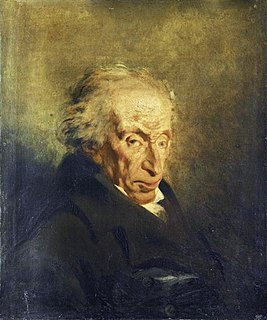 | |
| Date of Birth | November 11, 1761 |
| Place of Birth | Pisa |
| Date of death | September 17, 1837 (75 years old) |
| Place of death | Paris |
| Citizenship | |
| Occupation | , |
| Education | |
Biography
He received a good education in an old aristocratic family, counting the famous Michelangelo among his ancestors. He studied literature and jurisprudence at the University of Pisa (Doctor of Law), where he began to publish the newspaper Gazetta Universale. Acquainted with the encyclopedists and especially with the works of Jean-Jacques Rousseau , Buonarroti became an ardent supporter of ideas that inspired the first figures of the French Revolution . Having incurred the anger of the Grand Duke of Tuscan Leopold II with his free-thinking, Buonarroti fled (1790) to Corsica , where he actively opposed the separation of the island from France, wrote in “Giornale patriottico di Corsica”. There he met the Bonaparte family. He began publishing the magazine l'Amico della liberta italiana and founding democratic unions, the ramifications of which spread throughout Italy. Returning in June 1791 to his native Tuscany , he was arrested.
When the First French Republic was proclaimed in France, Buonarroti arrived in Paris and immediately took an influential position in the Jacobin club and the Montagnard party. On May 27, 1793, the National Convention granted Buonarroti the title of French citizen and sent him to Corsica in order to prevent the separatist Pascal Paoli from transferring the island into the hands of the British. But he arrived there too late. After some time, Buonarroti was appointed civil commissar in the Italian army. In 1794-1795 he was a national agent in Onelier . After the fall of Robespierre (1794), he, as a supporter of Jacobinism, was arrested by the Thermidorian authorities , but released a few months later. In Plessis prison, he met Gracchus Babeuf and became a fan of his ideas.
Finding himself at large (1795), he took an active part in the activities of the Pantheon Society (Pantheon Club). The meetings took place in the refectory of the former Monastery of St. Genevieve, whose proximity to the famous tomb of the Pantheon gave the name to society. When the leftist mood in the club became prevailing, by decision of the Directory of 7th plunger of the fourth year, the Society was closed. On November 9th, this mission was personally carried out by the commander of the “internal army” (that is, the Paris garrison), General Bonaparte . For the Babuvists, the “Conspiracy of Equals” was the next step in the fight against the Directory.
The Secret Directory of Public Salvation was established on the 10th Germinal IV year (March 30, 1796). It originally had four members:
- Gracch Babeuf
- Felix Lepeliete
- Sylvain Marechal
- Pierre Antoine Antonell .
But soon the Secret Directory included:
- Philip Buonarroti
- Augustin-Alexander Darte
- Robert-Francois Debon (Debon; 1755—?) - before the Revolution he lived in England and the USA, was arrested after 9 Thermidors, and met Babeuf and Buonarroti in Plessis prison.
The Secret Directory lasted only 40 days. About 250 people were arrested, 65 were brought to trial, according to Buonarroti, only half were directly or indirectly related to the conspiracy. The trial was held out of fear of unrest in the city of Vendome . 56 people were acquitted, 7 defendants, including Germain and Buonarroti, were sentenced to exile, 2 more - Babeuf and Darthe - to the guillotine. Arrested 22 floreal and placed together with Babeuf in the Temple tower, then betrayed to the Vendome court, Buonarroti boldly set out to judges his ideal of social reorganization.
G. Babeuf and O.-A. Darthe was executed on the 8th prairial year V (May 27, 1797). The following were sentenced to expulsion: Germain, Cazin, Blondo, Buen, Morois, Monsieur. They were brought to the Cherbourg fortress on the island of Pele in an iron cage. Then Buonarroti was imprisoned on the island of Oleron . In 1800, on Napoleon’s personal order, the report was replaced for Buonarroti with simple police surveillance in the town of Sospello in the Alpes-Maritimes department.
In 1801, Napoleon wanted to win Buonarroti to his side, offering him an important office, but Buonarroti, guessing the ambitious plans of Bonaparte's acquaintance from the island of Corsica , rejected his offer. An irreconcilable revolutionary and republican, Buonarroti, using his residence on the border of France and Italy, sought to establish closer relations between the republics of both countries.
Transferred to Grenoble in 1806, Buonarroti did not stop drawing up plans against Napoleon. After the Bourbon Restoration, Buonarroti settled in Geneva , continuing with unbending energy to propagate his ideas. In 1808, Buonarroti founded the Masonic Lodge “Sincere Friends” (“Les Sublimes Maitres Parfaits”). City authorities demanded the eviction of a dangerous rebel. In 1813 he was deported to Grenoble . Being in constant relationship with the Carbonar vents and Masonic lodges , Buonarroti was the soul of all republican revolutionary attempts. The brutal suppression of the movement of 1820-21 in Piedmont and Naples did not deprive him of courage; in spite of his meager means, learned from his lessons, he gave wide hospitality to all fugitives and exiles. For political reasons, severed relations with Giuseppe Mazzini .
In 1828, he was forced to leave Geneva and went to Brussels , where he published, in pursuance of Babeuf’s dying will, “Conspirantion pour l'Egalite, dite de Babeuf, suivie du proces auquel elle donna lieu " ). The July Revolution (1830) in France revived his hopes and called him to Paris, where he spent the last years of his life. Buonarroti died in 1837, remaining the strict, incorruptible idealist republican until the end of his life. Buonarroti's archive was in Bodeman's possession, and after his death was transferred to the National Library of France (1910).
In substantiating communist ideas, Buonarroti differed from Babeuf in the following: a significant acceptance of rationalism and deism , sympathy for the possibility of the immortality of the soul, and, consequently, the religious justification of socialism for Henri Saint-Simon . He recognized the need to establish a revolutionary dictatorship immediately after the uprising. He influenced the views of L.O. Blanca and other representatives of French utopian communism of the 30-40s. In the process of preparing the revolution, Buonarroti attached decisive importance to the creation of an illegal, hierarchical and strictly conspiratorial organization. These views were accepted by the Blanquists.
Works
- Histoire des sociétés secrètes de l'armée (1815)
- Conspiration des égaux (1828)
- Histoire de la Conspiration pour l'Égalité dite de Babeuf (1828)
- Riflessi sul governo federativo applicato all'Italia (1831)
- Del governo d'un popolo in rivolta per conseguire la libertà (1833)
- Observations sur Maximilien Robespierre (1836)
See also
- Babeuf, Gracchus
- Babuvists
Literature
- Buonarotti, Filippo Michele // Brockhaus and Efron Encyclopedic Dictionary : in 86 volumes (82 volumes and 4 additional). - SPb. , 1890-1907.
- Georges Weill, "Philippe Buonarroti (1761-1837)", Revue historique , Tome 76, mai-août 1901, Paris, Félix Alcan éditeur, p. 241-275. [2]
- Georges Weill, "Les papiers de Buonarroti"], Revue historique , Tome 88, mai-août 1905, Paris, Félix Alcan éditeur, p. 317-323. [3]
- Paul Robiquet, Philippe Buonarroti et la secte des Égaux d'après des documents inédits , Paris, Hachette, 1910, 330 pages. [four]
- Albert Mathiez, La politique de Robespierre et le 9 Thermidor expliqués par Buonarroti , Le Puy, Imprimerie Peyriller, Rouchon & Gamon, 1910, 33 pages. [five]
- Walter Haenisch, La vie et les luttes de Philippe Buonarroti , Paris, Au bureau d'éditions, 1938, 112 pages.
- Alessandro Galante Garrone, Buonarroti e Babeuf , Turin, Francesco de Silva editore, collection "maestri e compagni", Vol. XII, 1948.
- Samuel Bernstein, Buonarroti , Paris, Hier et Aujourd'hui, 1949, 272 pages.
- Armando Saitta, Filippo Buonarroti. Contributi alla storia della sua vita e del suo pensiero , Edizioni di Storia e letteratura, Rome: 1950-51, 2 volumes (293 et 314 pages).
- Julien Kuypers, Les Égalitaires en Belgique. Buonarroti et ses sociétés secrètes, d'après des documents inédits (1824-1836) , Bruxelles, Librairie Encyclopédique, 1960, 152 pages.
- Alessandro Galante Garrone, Philippe Buonarroti et les révolutionnaires du XIXe siècle (1828-1837) , Paris, Champ libre, 1975, 396 pages.
- Arthur Lehning, De Buonarroti à Bakounine. Études sur le Socialisme International , Paris, Champ libre, 1977, 351 pages.
- Jean Defranseschi, "L'expérience de Philippe Buonarroti. Les structures agraires de la Corse, au début de la Revolution française" in Annales historiques de la Revolution française , n ° 260, 1985, p. 236-258. [6]
- Federici Libero, L'egualitarismo di Filippo Buonarroti , Saonara (Padoue), Il Prato, collection "I Cento Tallerii", 2006, 132 pages.
- Jean-Marc Schiappa, Buonarroti l'inoxydable (1761-1837) , Paris, Éditions Libertaires, 2008, 236 pages.
Notes
- ↑ AA.VV. Dizionario Biografico degli Italiani - 1960.
- ↑ Revue historique (Paris)
- ↑ Revue historique (Paris)
- ↑ Buonarroti et la secte des Égaux: d'après des documents inédits / Paul Robiquet
- ↑ La politique de Robespierre et le 9 Thermidor expliqués par Buonarroti / par Albert Mathiez
- ↑ Landing (inaccessible link) . Date of treatment April 3, 2012. Archived September 24, 2015.
Links
- Solomatin Vyacheslav Vladimirovich. The formation and evolution of the worldview of Filippo-Michele Buonarroti on the eve and in the early years of the French Revolution. (1777-1797 gg.). Abstract of dissertation for the degree of candidate of historical sciences. - Tyumen: Tyumen State University, 2003. (PDF)
- M. Dommanzhe. Babeuf and the conspiracy of equals (inaccessible link)
- P. Schegolev. Babeuf's plot
- D. Tugan-Baranovsky. Napoleon and the Republicans
- I. Erenburg. Conspiracy of equals (inaccessible link)
- Chertkova G. From Babeuf to Buanorotti: the movement for equality or the Conspiracy of Equals? (inaccessible link)
- Inventory of the F. Buonarroti Foundation in the Russian State Archive of Socio-Political History