Gustav Ivanovich Radde ( German: Gustav Ferdinand Richard Radde , November 15 [27], 1831 , Danzig - March 3 [16], 1903 , Tiflis ) - Russian geographer and naturalist , corresponding member of the St. Petersburg Academy of Sciences .
| Gustav Ivanovich Radde | |||
|---|---|---|---|
| him. Gustav Ferdinand Richard Johannes von Radde | |||
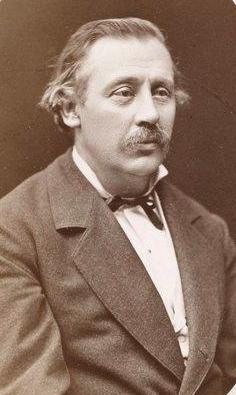 Gustav Radde, 1883 | |||
| Date of Birth | |||
| Place of Birth | Danzig | ||
| Date of death | |||
| Place of death | Tiflis | ||
| A country |  Russian empire Russian empire | ||
| Scientific field | Geography , Zoology , Botany | ||
| Place of work | Caucasian Natural History Museum | ||
| Awards and prizes | |||
| Taxonomy of wildlife | |
|---|---|
The author of the names of a number of botanical taxa . In the botanical ( binary ) nomenclature, these names are supplemented by the abbreviation " Radde " . List of such taxa on the IPNI website Personal page on IPNI website The researcher who described a number of zoological taxa . The names of these taxa (to indicate authorship) are accompanied by the designation " Radde " . |
Winner of the Konstantinovsky Gold Medal - the highest award of the Imperial Russian Geographical Society , the Queen Victoria Gold Medal of the Royal Geographical Society for outstanding services in geographical research, laureate of the Demidov Prize - the most honorable non-governmental award in Russia.
He participated in expeditions in Eastern Siberia , the Caucasus and other regions of Russia, as well as in the Trans-Caspian region and in Persia and Turkey ; collected extensive zoological , botanical and ethnographic collections.
A German by birth and upbringing, he fell in love with Russia and Russian nature with all the forces of his mighty soul and gave them to serve all of himself, all his inexhaustible energy and colossal natural mind
- such farewell words were written about him by P. I. Mishchenko [3] .
The Way in Life and Science
Born in a poor family of a school teacher, he graduated from the real gymnasium of St. Peter and Paul in Danzig [4] . Due to lack of funds, he did not receive the correct natural history education and was forced to enroll in pharmacies [5] . Since childhood, who loved nature and read about long journeys, Gustav Radde dreamed of going on scientific expeditions himself. Most of all he was attracted by Spain and Russia ( Crimea ). Well aware that such enterprises needed solid knowledge, Radde independently (mainly at night) earnestly studied botany and zoology , determined plants collected during the excursions, and stuffed carcasses of birds. Professor A. Menge, who was so enthusiastic about science and very susceptible to knowledge, noted. He supervised Radde's pharmacy classes, helped with tips and books [4] .
In 1852, Radde turned to the Russian consul in Danzig, A. F. Adelung, with a request to facilitate a trip to Russia, to the Crimea. Adelung provided the young man with a passport and gave him a letter of recommendation to his son-in-law, Academician P. I. Köppen, who lived at that time on the southern coast of Crimea [4] . The Danzig Society of Naturalists sent him to collect in the Crimea. Here Radde spent two years traveling, met Kh. H. Steven and remained in Russia forever [5] .
Eastern Siberia
Having learned that the Russian Geographical Society plans to organize an expedition to Siberia and received recommendations for participating in this expedition from Steven, Köppen, academician F.F. Brandt and life physician E.I. Rauch , Radde left for St. Petersburg in February 1855. taking for the Petersburg Academy of Sciences collections collected in Crimea [4] .
Arriving in St. Petersburg , Radde, on the advice of Steven, was identified as a draftsman and collector in the mathematical department (under the command of astronomer L. E. Schwartz ) of an expedition to study Eastern Siberia . His journeys lasted five years [5] .
In 1855, Radde explored the surroundings of Irkutsk , traveled around Lake Baikal with a fishing boat, visited the island of Olkhon , the mouth of the Upper Angara , the Barguzinsky Bay , the Tolstoy Cape , and reached the Goose Lake (in the Selenginsky district ) by dry route.
The year 1856 was dedicated to the steppes of Dauria and the Chokondo mountain group lying in the Trans-Baikal region , stretching out a narrow strip along the Chinese border. The route was as follows: Verkhneudinsk - Chita - Nerchinsk Plant - Argun - the peak of Sohondo . Only in January 1857, Radde returned to Irkutsk.
The years 1857 and 1858 were devoted to the middle course of the Amur : Chita - Shilka - Ust-Strelka (confluence of Shilka and Argun) - the mouth of the Onon - Blagoveshchensk - the mouth of the Bureya - the current village of Radde (where he settled and spent the winter) - Ussuri - the mouth of the Ussuri, then back to the village of Radde.
On May 24, 1858, Radde camp was visited by the Governor General of Eastern Siberia, N. N. Muravyov-Amursky . At his request, Gustav Ivanovich, near his hut, founded a Cossack village, designed for 24 Cossack families. This village, named after its founder, was named Raddovka ( ).
Radde himself wrote about this event like this:
The village I founded, which the Count called my name, and which the Cossacks renamed Raddovka or Raddina, soon became exemplary. She is one of the largest and most flourishing throughout the Amur [6] .
In the 1880s, Raddovka already had more than 100 houses and telegraph communication [7] . Work on the construction of the village, however, significantly interfered with any distant botanical excursions.
In 1859, the eastern part of the Sayan Range , Tunkinsk , Nilova Deserts , Aliber graphite mine , Munku-Sardyk (3491 m above sea level ; three ascents, the first two of which were unsuccessful; Radde was the first ascendant) were examined. January 10, 1860 Radde returned to St. Petersburg.
During the expedition to Siberia, Radde accepted Russian citizenship [4] .
St. Petersburg
In St. Petersburg, Radde was appointed conservative of the Zoological Museum of the Imperial Academy of Sciences and proceeded to cameral processing of the materials collected in Siberia.
Radde was twice sent to the south of Russia: in 1860 he accompanied academician F.F. Brandt as an assistant to raise the mastodon , found on the Ingul River near Nikolaev , and in 1862 - academician K.M. Baer on Manych and the Sea of Azov with the purpose of finding out the reasons for its shallowing [4] .
For the first volume of the description of travels in Siberia and the Amur Region, the University of Derpt chose Radde as his honorary master , and the University of Breslav awarded him the title of Doctor of Philosophy. The Imperial Academy of Sciences awarded Radde with its most prestigious award - the Demidov Prize .
Caucasus. Tiflis
In 1863, Radde, on the recommendation of Academician A. Ya. Kupfer, director of the St. Petersburg Observatory , was appointed assistant director of the Tiflis Physical Observatory .
Before leaving for the Caucasus on June 9 (21), Radde married the daughter of academician F. F. Brandt, Maria Fedorovna [4] .
Work at the Tiflis Physical Observatory did not work, however, Radda liked. In less than five months, he quarreled with the director of the observatory and left the service. He helped Gustav Ivanovich A.P. Berger (whom Radde met at the German club of Tiflis and was friendly): advised him to draw up a plan for biological and geographical research in the Caucasus and to transfer this plan to the head of the Main Directorate of the Viceroy of the Caucasus, Baron A.P. Nikolai for subsequent presentation To the viceroy of the Caucasus, Grand Duke Mikhail Nikolaevich . Radde followed this advice. A month after the submission of the research plan, Radda was officially charged with making scientific trips around the Caucasus, and the annual salary was set at 2,000 rubles. [4]
In 1864, Radde’s thirty-five expeditions in the Caucasus region began:
... Over a <...> rather long period, he made a huge number of scientific expeditions to the Caucasus, the listing of which would take up a lot of space. It can be said briefly that he proceeded throughout the Caucasus ... [8]
... it would be hard to say where he was in the Caucasus; his travels form a dense network in the Caucasus. [9]
Radde examined for scientific purposes almost the entire Russian Caucasus at that time: the valleys of Rioni , Tskhenistskali , Inguri (1864); Colchis , Abkhazia , the Kodori Valley, the Nakhar Pass and the slopes of Elbrus to an altitude of 14,300 feet (1865); Talysh (1866, 1870, 1879-1880); highlands of Armenia , upper Kura , Ardahan and Kars (1867); the surroundings of Kazbek (for mining tours and mountain turkeys , 1868); Ararat (for the extraction of wild sheep and bezoar goats , 1869); Erivan , Nakhichevan , Araks in Ordubad and Western Karabakh , New Bayazet and Lake Sevan (together with entomologist G.I. Sivers , 1870); Adjara , the second time the highlands of Armenia, the origins of Arax and Euphrates , Erzurum (1874); Once again the highlands of Armenia (1875); Khevsuretiya , Tusheti , Pshavia (1876); highlands of Dagestan , Nuhu (Sheki), the Main Caucasian ridge , Mount Shahdag , the sources of the Samur and Koisu rivers, Dyultydag , Bogos ridge (1885); Trans-Caspian region and the northern part of Khorasan (together with geologist A. M. Konshin and zoologist A. Walter, 1886); repeatedly Colchis, Svaneti (1888); repeatedly Karabakh (1890); The Black Sea coast of the Caucasus (together with the conservative E. G. Koenig collected plants, 1893); Chechnya , Dagestan, flat steppes to the Kuma River (collection of plants, 1894). [4]
During the expeditions, Radde collected a wealth of collection material. Unfortunately, most of the reports, articles and monographs of the scientist were published in German, and therefore these works were not in demand by the wide scientific community in Russia. [4]
In 1875, on the way from Tiflis to Alexandropol, Radde visited the villages of Dukhobor - Orlovka , Gorelovka and Elenovka .
In 1894, Radde from Tiflis made a long expedition through the North Caucasus and Dagestan along the route Vladikavkaz - Beslan - Georgievsk - Mozdok - Vladikavkaz - Nazran - Grozny - Gudermes - Khasav-Yurt - Kizlyar - Petrovsk - Temir-Khan-Shura - Gunib - Grozny Mountain Chechnya . In the monograph of Radde and Koenig, written on the basis of the results of this expedition, in addition to a large biological and geographical material, information on the history and ethnography of Chechens is contained. In addition, in their report, scientists provided information about the height of the firn and snow borders, the spread of moraines and plants in the gorge of the Khargab River. For many settlements located along the expedition, they determined the absolute height .
With the participation of Radde, the Caucasus Natural History Museum [10] was recreated and opened in 1867, which he headed. The museum under this name, created on the idea of V. A. Sollogub , already existed in Tiflis in 1852-1861. But the management of the museum broke up, the collections were left unattended, partially lost or spoiled. Radde set about rebuilding the museum. The Grand Prince Mikhail Nikolaevich approved the project for the establishment of the Caucasian Museum and its staff on June 2 (14), 1865, and the grand opening of the museum took place on January 2 (14), 1867. [4]
Radde became the director of the Caucasus Museum, and in 1868 also the director of the Tiflis Public Library (founded in 1846).
In 1868, construction began on a special building for the Caucasian Museum. It was built in 1869. The opening of the new museum building for public visits took place on September 1 (13), 1871.
Radde fruitfully collaborated with the St. Petersburg Imperial Botanical Garden . From the expedition to Eastern Siberia, Gustav Ivanovich brought up to 1,500 [5] to the botanical garden plant species, about 8,000 dry specimens and many seeds (this herbarium was processed by E. L. Regel and F. E. von Herder ). Having settled in Tiflis, Radda annually sent to the botanical garden the collections of live and dry plants and seeds that he collected during his trips to the Caucasus [11] .
Radde first described for science several species of birds and mammals . To some of these animals, Radde gave species epithets from the names of people who played a decisive role in his fate and to whom he was grateful all his life (including Academicians F.F. Brandt and K.M. Baer, Head of the East Siberian Expedition Department L. E. Schwartz).
In 1869, Radde was sent to St. Petersburg to attend the International Congress of Botanists and Gardeners; in 1872 - to Moscow to arrange the Caucasian department at the polytechnic exhibition ; in 1873 - to Vienna to arrange a Caucasian department at an international exhibition and lecture on the Caucasus in German cities; in 1878 - to Paris at the International Congress of Botanists ; in 1882 - to St. Petersburg and abroad; in 1884 - to Vienna at the first International Congress of Ornithologists , and after that to St. Petersburg to participate in the International Congress of Botanists and Gardeners; in 1889 - to St. Petersburg, then to London to accept the Queen Victoria Gold Medal awarded to him by the Royal Geographical Society, and then to Samarkand ; in 1900 - to Paris to arrange the Caucasian department at the world exhibition .
In the years 1890-1891, Radde accompanied the Grand Dukes Alexander Mikhailovich and Sergey Mikhailovich in sailing from Sevastopol to the Indian Ocean to Batavia and the island of Sulawesi on the yacht Tamara and traveling from Bombay to the Himalayas ; in 1895 and 1897 he accompanied the heir Georgy Alexandrovich in sailing in the Mediterranean Sea .
In the last years of his life, Radde was engaged in literary activity. In 1899, Gustav Ivanovich began a description of the collections of the Caucasian Museum (“Museum caucasicum”), which was to consist of six volumes. However, during the life of Radde, two volumes remained unreleased - the fourth ( ethnography ) and the sixth (museum building and garden). Radda did not have time to finish his autobiography, which was brought only to the beginning of the Caucasian period of life. The volumes of Museum caucasicum, published during Radda's lifetime, were vast, beautifully illustrated editions. They were dedicated to zoology, botany, geology and archeology of the Caucasus. They contained a detailed description of all the museum's collections, examined the history of the formation and processing of each collection, and in the botany department a general description of the plant formations of the Caucasus with original photographs was placed. [4]
For his merits in studying the nature of Russia, Radde was awarded the doctorate and the rank of Privy Councilor . Gustav Ivanovich was elected a corresponding member of the St. Petersburg Academy of Sciences. For many years of expeditions to the Caucasus, the Imperial Russian Geographical Society in 1899 awarded Radda with the Konstantinov gold medal (the highest award of society) [4] .
Many contemporaries noted that, having made a brilliant career, Radde remained a modest and accessible person, always saying that he was the son of a school teacher. In science and life, Gustav Ivanovich was a typical self-made man. Having large and strong ties in the ruling circles of the Caucasus, he used them only for the study of the Caucasus and for the development of his beloved brainchild - the Caucasian Museum. [4]
Gustav Ivanovich Radde died on 72 years of life on the night of March 2 (15) on March 3 (16), 1903 in Tiflis. The cause of death was probably kidney cancer [4] .
The remains of the scientist were transported for burial from Tiflis to the village of Likany near Borjomi . Here he had long been outlined for himself a place for eternal rest - a small elevation overgrown with pine trees. On the tombstone of G.I. Radde is placed an epitaph composed by himself:
Here lies tired
Gustav Ivanovich Radde.
Death is not scary for meShe is a sister of my sleep. [4]
Printed Scientific
To this day, a small fraction of Radde's works has been translated into Russian. Moreover, these translations were made by his contemporaries, Tiflis acquaintances and friends of Radde - natural Germans who were fluent in both German and Russian. Among the translators of Radde are the well-known in Tiflis, E. G. Weidenbaum, A. G. Walling, and K. F. Gan. In particular, the translation into Russian of the monograph “Khevsuria and Khevsura”, written by Radda with extraordinary love and exceptional thoroughness, was carried out by Weidenbaum. The translation of two parts of the sixth volume of the "Collections of the Caucasian Museum" was made by Walling [4] .
The works of Radde are part of a geographical character, part ethnographic, part natural-scientific:
- Animal life on Sivash // Tomsk State University Journal. natures sciences. - 1855. - No. 17 . - S. 523–540 . - Ending: No. 20. - S. 624-630
- Crimean Tatars // Vestn. Rus geo about-va. - 1856. - Part 19. - S. 290-330 . - Ending: 1857. - Part 18. - S. 47—64
- Travel to Southeast Siberia (1855-1859) // Zap. Imperial Rus. geo about-va. - 1861. - Prince. 4. - S. 1-78 .
- Berichte uber die biolog.-geogrph. Untersuch. in den Kaukasuslandern (German)
- Reisen im Suden von Ost-Sibirien. 1. Die Saugethierfauna. 2. Die Festlands Ornis (German) (1862 and 1864; there is also a Russian edition),
- Traveling in the Mingrel Alps and in their three upper longitudinal valleys: Rion, Tskhenis-Tskhali and Ingur // Zap. Kavk. Dep. Rus geo about-va. - Tiflis, 1866. - Issue. VII . - S. 1-292 .
- Notes on Khevsuria // Caucasian calendar for 1877. - Tiflis, 1876. - Part I. - S. 37–63 .
- Organic world in the Caucasus // Caucasian calendar for 1877. - Tiflis, 1876. - Part II. Branch 2. - S. 1–45 .
- Die Chewsuren und ihr land (ein monographisher versuch) untersucht im Sommer 1876 .-- Cassel, 1878 .-- 355 p. (German)
- Khevsuria and Khevsurs. Description of the journey made in the summer of 1876 // Zap. Kavk. Dep. Rus geo about-va. - Tiflis, 1880. - Issue. 2 . - S. 1—344 .
- Ornithological fauna of the Caucasus (Ornis Caucasica). - Tiflis, 1884 .-- 451 p.
- Aus den Dagestanischen Hochalpen, vom Schah-dagh zum Dulty und Bogos // Petermann geografische mittheilungen. - 1887. - No. 85 . - S. 1-64 . (German)
- A brief outline of the history of the development of the Caucasian Museum in the first 25 years of existence (from January 1, 1867 to January 1, 1892). - Tiflis, 1891.
- Das Ostufer des Pontus // Petermann geografische mittheilungen. - Gotha, 1894. - No. 112 . - S. 1-65 . (German) - together with E. Koenig.
- Der Nordfu. des Dagestan und das vorlagernde Tiefland bis zur Kuma // Petermann geografische mittheilungen. - Gotha, 1895. - No. 117 . - S. 1-65 . (German) - together with E. Koenig.
- The main features of the plant world in the Caucasus // Zap. Kavk. Dep. Rus geo about-va. - Tiflis, 1901. - Issue. 3 . - S. 1–199 .
- The work of Dr. Gottfried Merzbacher about the Caucasus // Izv. Kavk. Dep. Imperial Rus. geo about-va. - Tiflis, 1901. - T. XIV , No. 5 . - S. 190–201 .
- Caucasus (in the publication "Picturesque Russia"),
- Talysh and its inhabitants (German),
- Preliminary report on the expedition to the Trans-Caspian region and northern Khorassan (Russian and German),
- Scientific results of the Trans-Caspian scientific expedition. T. I. "Zoology" (German),
- 23,000 miles on a Tamara yacht. The journey of Their Imperial Highnesses of the Grand Dukes Alexander and Sergey Mikhailovich in 1890-1891. : In 2 tons. - SPb. : Type of. Eduard Goppe, 1892-1893. - T. 1, 2. - 226 + 211 s.
Named after Radda and in memory
Birch Radde ( Betula raddeana Trautv. ) Was named by R. E. Trautfetter in honor of Radde in 1887 |
The toponym is the village of Radde (now in the Obluchensky district of the Jewish Autonomous Region )
Animals:
- Viper Radde, or Armenian Viper ( Vipera raddei Boettger )
- Radde Shrew ( Sorex raddei Satunin )
- Mongolian Toad, or Toad Radde ( Bufo raddei Strauch )
- Hamster Radde, or Pre-Caucasian Hamster, or Dagestan Hamster ( Mesocricetus raddei Nehring )
- Baikal endemic planaria Baikalobia raddei (Zabussov, 1911)
Insects : Lepidoptera , or butterflies :
- longhaired moth Radde Nemophora raddei (Rebel, 1901) (Adelidae family) - Eastern Eurasia
- Radde grass flare Miyakea raddeella (Caradja, 1910) (Crambidae family) - Eastern Eurasia
- медведица Радде Nicetosoma raddei Dubatolov, 2012 (семейство Erebidae, подсемейство Arctiinae) - Сулавеси
- пеструшка Радде Aldania raddei (Bremer, 1861) (семейство Nymphalidae) - Восточная Евразия
В честь Радде названо множество видов растений .
Разное:
- В селе Гуниб , который посещал и исследовал Г. И. Радде (ныне Гунибский район Дагестана ), недалеко от Природного парка Верхний Гуниб и Горного ботанического сада Дагестанского научного центра Российской академии наук расположен пансионат «Радде».
Notes
- ↑ 1 2 Немецкая национальная библиотека , Берлинская государственная библиотека , Баварская государственная библиотека и др. Record #116322055 // Общий нормативный контроль (GND) — 2012—2016.
- ↑ BNF ID : 2011 Open Data Platform .
- ↑ Мищенко П. И. Памяти Густава Ивановича Радде // Тр. Ботан. сада Имп. Юрьевского ун-та. — Юрьев, 1903. — Т. IV , вып. 3 . — С. 209 . — Цит. по: Головлёв А. А. Густав Иванович Радде в Крыму, Сибири и на Кавказе // Самарская Лука: проблемы региональной и глобальной экологии. — Самара, 2009. — Т. 18 , № 1 . — С. 202—217 .
- ↑ 1 2 3 4 5 6 7 8 9 10 11 12 13 14 15 16 17 Головлёв А. А. Густав Иванович Радде в Крыму, Сибири и на Кавказе // Самарская Лука: проблемы региональной и глобальной экологии. — Самара, 2009. — Т. 18 , № 1 . — С. 202—217 .
- ↑ 1 2 3 4 Бородин, И. Коллекторы и коллекции по флоре Сибири. - SPb. : Тип. Имп. Acad. наук, 1908.
- ↑ Автобиография Г. И. Радде (неоконченная) // Коллекции Кавказского музея. — Тифлис, 1912. — Т. VI. Ч. 1. — 64 с.
- ↑ Сейчас основанный Радде населённый пункт называется Радде и административно располагается в Облученском районе Еврейской автономной области
- ↑ Мищенко П. И. Памяти Густава Ивановича Радде // Тр. Ботанич. сада императорского Юрьевск. ун-та. — Юрьев, 1903. — Т. IV , вып. 3 . — С. 209—215 .
- ↑ Липский В. И. Флора Кавказа. Свод сведений о флоре Кавказа за 200-летний период её исследования, начиная от Турнефора и кончая XIX веком // Тр. Тифлисск. ботанич. сада. - SPb. , 1899. — Вып. IV . — С. 184 . .
- ↑ Воссозданный Радде музей просуществовал под своим первоначальным названием до 1919 года.
- ↑ Ботанический Императорский сад // Энциклопедический словарь Брокгауза и Ефрона : в 86 т. (82 т. и 4 доп.). - SPb. , 1890-1907.
Literature
- Траутфеттер Р. Э. Observationes in plantas a Dre. G. Radde Anno 1870 in Turcomania et Transcaucasia lectas, nec non in alias quasdam // Тр. Имп. С.-Петерб. бот. сада. — 1871—1872. — Т. I , вып. I. — С. 15—34 .
- Кёппен Ф. П. Густав Иванович Радде (заметка о его жизни и научной деятельности) // Журн. мин-ва нар. просв. — 1903. — № 6 . — С. 109–128 .
- Мищенко П. И. Памяти Густава Ивановича Радде // Тр. Бот. сада имп. Юрьевск. ун-та. — Юрьев, 1903. — Т. IV , вып. 3 . — С. 209–215 .
- Автобиография Г. И. Радде (неоконченная) // Коллекции Кавказского музея. — Тифлис, 1912. — Т. VI. Ч. 1. — С. 1—64.
- Биография Г. И. Радде, составленная К. Ф. Ганом (директором I Тифлисской женской гимназии) // Коллекции Кавказского Музея. — Тифлис: Тип. Канц. Наместн. Его Императорского Величества на Кавказе, 1912. — Т. VI, ч. 2.
- Гептнер В. Г., Судиловская А. М. Густав Иванович Радде (1831—1903) // Отечественные физико-географы и путешественники / Под ред. Н. Н. Баранского, Н. Б. Дика, Ю. К. Ефремова, А. И. Соловьёва, Н. А. Солнцева. — М. : Гос. уч.-пед. изд-во мин-ва просв. РСФСР, 1959. — С. 344—351.
- Головлёв А. А. Густав Иванович Радде в Крыму, Сибири и на Кавказе // Самарская Лука: проблемы региональной и глобальной экологии. — Самара, 2009. — Т. 18 , № 1 . — С. 202—217 . — УДК 01+09.2
- Kropotkin PA Obituary. Gustav Radde // Geographical Journal. 1903. Vol. 21, № 5, May. P. 563—564.
Links
- Радде, Густав Иванович — статья из Большой советской энциклопедии .
- Радде, Густав Иванович // Энциклопедический словарь Брокгауза и Ефрона : в 86 т. (82 т. и 4 доп.). - SPb. , 1890-1907.