Shentalinsky district is an administrative-territorial unit and municipality in the north-east of the Samara region of Russia [3] . The area borders the Republic of Tatarstan.
| Municipal District | |||||
| Shentalinsky District | |||||
|---|---|---|---|---|---|
| |||||
| A country |  Russia Russia | ||||
| Included in | Samara region | ||||
| Includes | 10 municipalities | ||||
| Adm. center | railway station Shentala | ||||
| Head of the municipal district | Lemaev Alexander Mikhailovich | ||||
| History and Geography | |||||
| Date of formation | 1935 | ||||
| Area | 1338.16 [1] km² | ||||
| Timezone | MSK + 1 ( UTC + 4 ) | ||||
| Population | |||||
| Population | ↘ 15 597 [2] people ( 2017 ) (0.49%) | ||||
| Density | 11.66 people / km² | ||||
| Digital identifiers | |||||
| Telephone code | 84652 | ||||
| OKTMO | 36648000 | ||||
 | |||||

The administrative center is the Shentala railway station (located 188 km northeast of Samara ). [four]
Geography
The area of the district is 1,338.2 km². The main rivers are Kondurcha , Bolshoi Cheremshan , Bolshoi Surush . The area is located in the forest-steppe zone. The largest number of forests is located in the western part of the region, where a huge forest stretches. [5]
Railways pass through the district line Moscow - Ulyanovsk - Ufa .
Population
| Population size | ||||||
|---|---|---|---|---|---|---|
| 2002 [6] | 2006 | 2008 [7] | 2010 [8] | 2011 [7] | 2012 [9] | 2013 [10] |
| 18,288 | ↘ 17 800 | ↘ 17 302 | ↘ 16 656 | ↘ 16 586 | ↘ 16 387 | ↘ 16 238 |
| 2014 [11] | 2015 [12] | 2016 [13] | 2017 [2] | |||
| ↘ 16 115 | ↘ 15 924 | ↘ 15 805 | ↘ 15 597 | |||
- National composition
According to the 2010 census [14] :
- Chuvash - 5 510 people. (34.2%);
- Russians - 4,525 people (28.1%);
- Tatars - 3 124 people. (19.4%);
- Mordva - 2,527 people (16.1%).
Economics
| 2017 | |
|---|---|
| Local budget expenditures thousand rubles | 210,769 |
| Local budget revenues thousand rubles | 223,026 |
| Surplus, deficit (-) thousand rubles | 12 257 |
The main economic sector in the region is agriculture. In the district there are 18 collective farms, a state plant, 51 peasant farms . There is 1 bank and an insurance company. Also operating are the Shentalinsky Butter Plant OJSC, a building materials factory. The feed mill does not work, the district food processing plant has collapsed.
The industrial production of the district is represented by mining. Three large companies are operating in the region: Rosneft. Tatneft-Samara and Samaraivestneft. [16]
Policy
In 2007, a youth parliament was formed at the Assembly of Representatives, actively interacting with local authorities. As a result of the recent elections, Aleksandr Mikhailovich Lemaev became the head of the district [17] .
Culture
The museum of M.I. Chuvashov (Old Shental) is open in the building of the administration of Staroshentalinsky volost.
History
16th Century
The colonization of the north-east of the Samara province began in the XVI century after the annexation of Kazan. At the same time, the Bashkirs took citizenship, after which the Chuvashs, Cheremis, and Meshcheryka poured from the Kazan side to the Bashkirs. Basically, these were “walking people” from the landowners and monasteries.
The settlement of the north of the Samara region took place gradually and in a constant struggle with nomads (Kalmyks, etc.). The farmers settled: the Chuvash, Erzyans, Mokshans.
XVII — XVIII centuries
The northeast is a forest-steppe zone, and here the construction of strong points, fortresses and fortified lines, the presence of military garrisons were of paramount importance. The construction of such fortresses begins at the end of the 17th century, when the Zakamsky line was drawn. Later, that is, in 1731-1736, the New Zakamsky line (Sokskaya) was drawn, which passed through the entire territory of the modern district. It was built by service people of the Zakamsky line, peasants and townspeople of the Kazan province. Two fortresses were founded in the region - Cheremshanskaya and Kondurchinskaya.
Cheremshan fortress was founded in 1741. And, according to V. N. Tatishchev, “some runaway and dissolute revelers and rogues settled there, from whom it is impossible to get a good Kalmyk as well.” Tatars settled here in the middle of the XIX century.
Kondurcha fortress was founded in 1742. Retired soldiers were transferred here from Zakamsk suburbs to avoid begging and vagrancy. The immigrants received 10-15 tithes per family, the necessary tools, a loan with money and bread for travel and establishment.
Aksakovo and Tuarma were founded in 1756. The land was given to the peasants of these villages by the Bashkir Khan Nadyr. Afonkino received the name from the first migrant of Uhunka. Uhunka was the instigator of the escape, and the village in his honor was named Afonkino in Russian fashion. The peasants of this village were serfs of the Bashkir khan Nadyr Urazmetiev.
Emelkino was founded in 1742 and received the name from the first immigrant Emely. Saleikino also received the name from the first settler of Salei. According to legend, Salei came here from the Simbirsk province (Kurmyshsky or Buyan county) from the village of Sultrail. The second half of the population settles later, also from the Simbirsk province, the Korsun district, the village of Khomutar.
XIX century
Russian peasants from the former landowner peasants of the Spassky district of the Kazan province, settled here only in the 70s of the XIX century. At the same time, the Chuvash villages of Artyushkino, Vaskino, Kostyunkino, Tarhanovka, Timyashevo appeared.
Villages and villages begin to emerge, including Old Shentala. Its original name is Epiphany. The village was the center of the Shentalinsky volost. In 1827, the Stone Church was built and consecrated in the name of the Epiphany of the Lord. The church had land of 99 acres, a library that numbered 223 volumes. With the advent of the zemstvo, the village was the zemstvo station, (post office), there was a medical assistant. At that time, Old Shentala was a large village where there was a volost government, a volost court, a bazaar was going on Saturdays; there was a collection point of the military horse section. In the village there were 2 water mills, an oil mill. According to the census of 1886, 1905 people lived in the village.
Not far from the Old Shentaly was the village of Bagan. Subsequently, the peasants of this village moved to another place. The reason for the resettlement was the poor quality of the land, it was swampy. A new village was built on both sides of the Kondurcha River.
According to various documents, the resettlement of residents of the Cheremshan and Kondurchi interfluve should be attributed to the end of the XVII - the beginning of the XVIII century. At the same time, the Mordovian villages of Artyushkino, Kostyunkino, Timyashevo appeared .
So, in the notes of the local historian Semyon Fomich Mrez, a native of the village of Aksakovo, made in 1907, the date of foundation of the village of Chetyrla - 1742 is indicated. From that moment, the lands located in the basins of the Cheremshan and Kondurchi turned from an object of intensive colonization into an area of more or less stable economic development.
The village of Volchya was formed in the middle of the XIX century. The former landowner peasants Mezentseva from the Moscow province founded this village. The land was ceded to them by the state and peasants from Bagan. At the same time, the village of Kalinovka appears. Landowners receive and begin to buy land in the province only after 1798, that is, after land surveying. He receives the lands of N. S. Ermolov (Emelkino village), is bought by S. P. Shelashnikov (Kondurchinsky Forests beyond Shental), N. N Ermolaev, N. V. Ermolaev (village Nikolayevka) and Umov, Pavlov (Polyansky redoubt, Old Urmetyevo) , S. N. Kuzmin (Kuzminovka farm), S. B. Bryagin (Kozlovka village).
XX century
By a resolution of the Presidium of the Kuibyshev Regional Executive Committee of February 5, 1935, the Deniskinsky District was formed (by the name of the original district center). It included 18 village councils: 11 passed from Klyavlinsky district and 7 from Chelno-Vershinsky. During the formation of the district, there were institutions Staroshentalinsky, Deniskinsky, Adelaidovsky, Baganinsky, Aksakovsky, Sem-Charlinsky, Oykinsky, Novo-Shentalinsky, Stepanovsky, Senkinsky, Saleikinsky, Starosurkinsky, Tuarminsky, Tat. Abdikeevsky, Chetyrlinsky, Shentalinsky village councils. These councils included 74 settlements.
At the beginning of 1935, Szentala became a district center, the Deniskinsky district was renamed to Shentalinsky in April 1940. The first leaders of the district were the secretary of the CPSU (b) Nikolai Ivanovich Kharitonov and the chairman of the district executive committee, Ivan Dmitrievich Shaidukov.
Local industrial enterprises appeared: the Molot artel, the leshoz, the food industry, and the creamery. The role of the service industry enterprise was performed by the Kyzyl Yuldus artel of invalids, which included a hairdresser, a photograph, a shoe and sewing workshops, as well as a cooperage and sausage shop. In 1936, the Shentalinsky elevator was commissioned. At the same time, a school, buildings of the district party committee, district executive committee, and the editorial board of the district newspaper were built. The construction of departmental apartments began. The construction of private houses has gained wide scope.
Municipal Territory
The municipal district of Shentalinsky includes 10 municipalities with the status of a rural settlement :
| No. | Municipality | Administrative center | amount populated points | Population | Area, Km 2 |
|---|---|---|---|---|---|
| one | rural settlement Artyushkino | Artyushkino village | 5 | ↘ 696 [2] | 62.54 [1] |
| 2 | rural settlement Vasilyevka | village Vasilyevka | 10 | ↘ 743 [2] | 264.40 [1] |
| 3 | rural settlement Deniskino | village of Deniskino | 2 | ↘ 971 [2] | 61.85 [1] |
| four | rural settlement Kamenka | Kamenka village | 7 | ↘ 1261 [2] | 103.02 [1] |
| 5 | rural settlement Kanash | Romanovka village | 6 | ↘ 944 [2] | 112.28 [1] |
| 6 | rural settlement Saleikino | village Saleikino | 5 | ↘ 1189 [2] | 118.94 [1] |
| 7 | rural settlement of Old Shentala | village of Old Shentala | eleven | ↘ 921 [2] | 286.47 [1] |
| 8 | rural settlement of Tuarma | Tuarma village | 6 | ↘ 1158 [2] | 93.57 [1] |
| 9 | rural settlement Chetyrla | Chetyrla village | 5 | ↘ 896 [2] | 98.51 [1] |
| 10 | rural settlement of Shentala | Shental railway station | 2 | ↘ 6818 [2] | 59.15 [1] |
By the Law of Samara Region dated April 30, 2015 No. 38-ГД [18] , the rural settlements of Kamenka and Novy Kuvak were transformed, by combining them, into the rural settlement of Kamenka with the administrative center in the village of Kamenka .
Settlements
There are 59 settlements in Shentalinsky district.
| List of settlements of the district | ||||
|---|---|---|---|---|
| No. | Locality | Type of | Population | Municipality |
| one | Adelaide | village | 23 [8] | rural settlement Vasilyevka |
| 2 | Aksakovo | village | 308 [8] | rural settlement of Tuarma |
| 3 | Altunino | village | 23 [8] | rural settlement Chetyrla |
| four | Artyushkino | village | 223 [8] | rural settlement Artyushkino |
| 5 | Bagan | village | 399 [8] | rural settlement of Old Shentala |
| 6 | Balandaevo | railway junction | 0 [8] | rural settlement Deniskino |
| 7 | Balandaevo | village | 349 [8] | rural settlement of Tuarma |
| 8 | Bolshaya Tarkhanovka | village | 80 [8] | rural settlement Artyushkino |
| 9 | Vasilievka | village | 223 [8] | rural settlement Vasilyevka |
| 10 | Vasilievka | village | 32 [8] | rural settlement Kanash |
| eleven | Upper Khmelevka | village | 0 [8] | rural settlement of Old Shentala |
| 12 | Wolf | village | 0 [8] | rural settlement of Old Shentala |
| 13 | Knitting | village | 2 [8] | rural settlement Vasilyevka |
| fourteen | Deniskino | village | 1128 [8] | rural settlement Deniskino |
| fifteen | Deniskino | railway junction | 29 [8] | rural settlement Kamenka |
| 16 | Emelkino | village | 90 [8] | rural settlement Kanash |
| 17 | Ivanovka | village | 6 [8] | rural settlement Kanash |
| eighteen | Kalinovka | village | 8 [8] | rural settlement of Old Shentala |
| 19 | Kamenka | village | 528 [8] | rural settlement Kamenka |
| twenty | Karabikulovo | village | 117 [8] | rural settlement Kamenka |
| 21 | Kirgizovsky | village | 30 [8] | rural settlement Chetyrla |
| 22 | Kondurcha | railway junction | 78 [8] | rural settlement Artyushkino |
| 23 | Kostyunkino | village | 384 [8] | rural settlement Artyushkino |
| 24 | Krasny Yar | village | 100 [8] | rural settlement Chetyrla |
| 25 | Fortress-Kondurcha | village | 261 [8] | rural settlement of Old Shentala |
| 26 | Kuzminovka | village | 9 [8] | rural settlement of Old Shentala |
| 27 | Upland | village | 54 [8] | rural settlement of Tuarma |
| 28 | Lower Tuarma | village | 71 [8] | rural settlement of Tuarma |
| 29th | New Shentala | village | 5 [8] | rural settlement of Old Shentala |
| thirty | New Field | village | 59 [8] | rural settlement Vasilyevka |
| 31 | New Surkino | village | 90 [8] | rural settlement Vasilyevka |
| 32 | New Kuwak | village | 278 [8] | rural settlement Kamenka |
| 33 | Podlesnaya Andreevka | village | 79 [8] | rural settlement Saleikino |
| 34 | Homeland | village | 0 [8] | rural settlement of Old Shentala |
| 35 | Romanovka | village | 867 [8] | rural settlement Kanash |
| 36 | Red | farm | 7 [8] | rural settlement Artyushkino |
| 37 | Saleikino | village | 518 [8] | rural settlement Saleikino |
| 38 | Svetlaya Polyana | village | 0 [8] | rural settlement Kanash |
| 39 | Bright Key | village | 0 [8] | rural settlement Kamenka |
| 40 | Northern | village | 48 [8] | rural settlement of Shentala |
| 41 | Semenovo-Sharla | village | 178 [8] | rural settlement Chetyrla |
| 42 | Senkino | village | 247 [8] | rural settlement Vasilyevka |
| 43 | Smagino | village | 38 [8] | rural settlement Vasilyevka |
| 44 | Old shentala | village | 558 [8] | rural settlement of Old Shentala |
| 45 | Old Afonkino | village | 413 [8] | rural settlement Saleikino |
| 46 | Old Surkino | village | 138 [8] | rural settlement Vasilyevka |
| 47 | Surusha | village | 0 [8] | rural settlement Vasilyevka |
| 48 | Tatar Abdikeevo | village | 474 [8] | rural settlement Kamenka |
| 49 | Timyashevo | village | 209 [8] | rural settlement Saleikino |
| fifty | Fountains | village | 197 [8] | rural settlement of Tuarma |
| 51 | Tuarma | village | 268 [8] | rural settlement of Tuarma |
| 52 | Fadeevka | village | 2 [8] | rural settlement of Old Shentala |
| 53 | Cheremshanka | village | 0 [8] | rural settlement Kamenka |
| 54 | Black River | village | 2 [8] | rural settlement of Old Shentala |
| 55 | Chetyrla | village | 666 [8] | rural settlement Chetyrla |
| 56 | Chukhaevka | village | 71 [8] | rural settlement Kanash |
| 57 | Shelashnikovo | railroad station | 23 [8] | rural settlement Vasilyevka |
| 58 | Shentala | railroad station | ↘ 6613 [8] | rural settlement of Shentala |
| 59 | Yasnaya Polyana | village | 53 [8] | rural settlement Saleikino |
Famous Shentalins
More than 8 thousand Shentalins fought on the fronts of World War II, 4,400 of them died. Five - to captain Aleksei Vasilyevich Zhuravlev, senior lieutenant Pyotr Vasilievich Bochkarev, foreman Mikhail Romanovich Popov, sergeants Grigory Ilyich Kuznetsov and Grigory Nazarovich Guryanov were awarded the titles of Heroes of the Soviet Union. About 2,000 Shentalians were awarded military orders and medals.
A trace in the history of the district was left by the secretaries of the district party committee Nikolai Ivanovich Kharitonov, Petr Ivanovich Agapov, Mikhail Fedorovich Shishkov, Mitrofan Evdokimovich Evdokimov, Anton Leontyevich Shmelev; chairmen of the district executive committee: Ivan Dmitrievich Shaidukov, Andrei Ivanovich Bunkov, Vladimir Ivanovich Shamkin; collective farm leaders: Vasily Danilovich Turlachev, Viktor Nikolaevich Sheptalov. Nikolai Fedorovich Trofimov, Semyon Afanasevich Redin, Nigmat Gizyatullovich Garifullin, Vladimir Porfirevich Novikov and many others.
Eight people were awarded the title Heroes of Socialist Labor. This is Praskovya Alekseevna Darkaeva, Raisa Vasilievna Bogdanova, Tatyana Mikhailovna Maloletkova, Nikolay Petchovich Nechaev, Semyon Afanasyevich Redin, Mikhail Vasilyevich Pugin, Ekaterina Georgievna Levikova, Ivan Lavrentievich Osokin. They all lived and worked on the Kanash state farm.
Alexander Ivanovich Shamin - director of the Shentalinsky timber industry enterprise. During his leadership, the forest industry in the region was one of the foremost [19] .
Askhat Rakhimzyanovich Ziganshin, along with his comrades, drifted 49 days in the waters of the Pacific Ocean. The national poet of Chuvashia, Stikhvan Shavly, is a native of the village of Kamenka, Shentalinsky district.
Karaulov Vladimir Vladimirovich - awarded the Order of the Red Banner, Veteran of Labor of the USSR, medals For Valiant Labor and For Labor Valor.
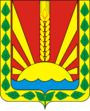
Coat of arms of the region
Верхний луч солнца изображен в виде колоска в котором 19 зерен, 18 по бокам и 1 сверху. Это означает, что в районе 18 колхозов и 1 совхоз — Госплемзавод «Канаш».
Notes
- ↑ 1 2 3 4 5 6 7 8 9 10 11 (Самарская область. Общая площадь земель муниципального образования
- ↑ 1 2 3 4 5 6 7 8 9 10 11 12 Численность населения Российской Федерации по муниципальным образованиям на 1 января 2017 года (31 июля 2017). Date of treatment July 31, 2017. Archived July 31, 2017.
- ↑ Шенталинский район
- ↑ http://www.samregion.ru Шенталинский район
- ↑ Администрация муниципального района Шенталинский
- ↑ 2002 All-Russian Population Census. Том. 1, таблица 4. Численность населения России, федеральных округов, субъектов Российской Федерации, районов, городских поселений, сельских населённых пунктов - райцентров и сельских населённых пунктов с населением 3 тысячи и более . Архивировано 3 февраля 2012 года.
- ↑ 1 2 Самарская область. Оценка численности постоянного населения на 1 января 2008-2013 годов
- ↑ 1 2 3 4 5 6 7 8 9 10 11 12 13 14 15 16 17 18 19 20 21 22 23 24 25 26 27 28 29 30 31 32 33 34 35 36 37 38 39 40 41 42 43 44 45 46 47 48 49 50 51 52 53 54 55 56 57 58 59 60 Всероссийская перепись населения 2010 года. Статистический сборник «Численность и размещение населения Самарской области» (zip). Дата обращения 29 октября 2018.
- ↑ Population of the Russian Federation by municipalities. Table 35. Estimated resident population as of January 1, 2012 . Date of treatment May 31, 2014. Archived May 31, 2014.
- ↑ The population of the Russian Federation by municipalities as of January 1, 2013. - M.: Federal State Statistics Service of Rosstat, 2013. - 528 p. (Table 33. The population of urban districts, municipalities, urban and rural settlements, urban settlements, rural settlements) . Date of treatment November 16, 2013. Archived November 16, 2013.
- ↑ Table 33. The population of the Russian Federation by municipalities as of January 1, 2014 . Date of treatment August 2, 2014. Archived on August 2, 2014.
- ↑ The population of the Russian Federation by municipalities as of January 1, 2015 . Date of treatment August 6, 2015. Archived on August 6, 2015.
- ↑ Population of the Russian Federation by municipalities as of January 1, 2016
- ↑ Итоги::Самарастат (недоступная ссылка) . Дата обращения 29 марта 2013. Архивировано 15 октября 2013 года.
- ↑ Федеральная служба государственной статистики База данных показателей муниципальных образований
- ↑ shentala/su Администрация муниципального района Шенталинский
- ↑ Шенталинский район
- ↑ Закон Самарской области от 30.04.2015 № 38-ГД «О преобразовании отдельных сельских поселений муниципальных районов Безенчукский, Исаклинский, Клявлинский, Шенталинский Самарской области путём их объединения и установлении границ вновь образованных сельских поселений соответствующих муниципальных районов Самарской области и о внесении изменений в отдельные законодательные акты Самарской области»
- ↑ «Твои лесничие, Россия», с. 639—642
Sources
- Тимашев В. Ф. Так это было: Очерки об истории Шенталинского района. — Самара, 2001. — 224 с.
See also
- Административно-территориальное деление Самарской области
- Гербы районов Самарской области