
Nuclear Refugees (Emergency Headquarters) Government of Canada , Eng. The Emergency Government Headquarters is a group of nuclear shelters created in the 1950s and 1960s, at the height of the Cold War for the government of Canada . Among opposition politicians got the nickname "Diefenbunker" , Eng. Diefenbunkers , in honor of the then Prime Minister of Canada, John Diefenbaker , who made the decision to build them. In total, over 50 bunkers were built, mainly in rural areas not far from the major cities of Canada.
List
The most famous and largest of the bunkers is the 4-storey bunker at the Karp military base, currently converted into a museum.
Various hierarchical levels of bunkers were provided:
- CEGHQ , Central Emergency Government Headquarters - The central reserve government headquarters , located at Karp base (Ontario) near Karp village, 30 km west of Ottawa. Designed for senior federal politicians and civil servants, as well as for the monarch.
- REGHQ , Regional Emergency Government Headquarters - Regional Government Reserve Headquarters . There were 7 of them, and they were located throughout Canada. In addition to these, spare bunkers were provided (see below).
- Nanaimo , British Columbia - Nanaimo Base
- Penhold , Alberta - Penhold Base
- Shilo , Manitoba - Shilo Base
- Borden , Ontario - Borden Base
- Valcartier , Quebec - Valcartier Base
- Debert , Nova Scotia - Base Debert
- IREGHQ , Interim Regional Emergency Government Headquarters , Interim Reserve Government Headquarters
- MEGHQ , Municipal Emergency Government Headquarters , Municipal Government Reserve Headquarters
- ZEGHQ , Zone Emergency Government Headquarters , the Government ’s Zonal Reserve Headquarters , built in the basements of existing homes, usually housed up to 70 personnel.
- RU , Relocation Unit , Spare bunker , or CRU , Central Relocation Unit , Central spare bunker . These were bunkers, built as a backup to the existing REGHQ and MEGHQ.
- Communication Bunkers, Communication Silos:
- Nanus Bay , British Columbia - transmitter for the base Nanaimo
- Penhold , Alberta - transmitter for Penhold Base
- Hughes , Manitoba - Transmitter for Shiloh Base
- North Bay , Ontario - Bunker of the 22nd wing of the North Bay, spare for the NORAD bunker in the Cheyenne Mountains
- Edenvale , Ontario - transmitter for the Borden base )
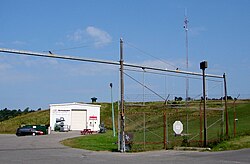
- Perth , Ontario - Transmitter for Carp Base (Main Government Bunker)
- Great Village , Nova Scotia - transmitter for the base Debert
- Saint-Raymond-Pornoff , Quebec. Transmitter for Valcartier base.
Among other bunkers, in addition to CEGHQ, Central Spare Bunkers (Central Relocation Units, CRU) are provided. These are not “real” bunkers, but simply fortified underground premises located in the basements of postal and other federal institutions. They are connected by telephone and teletype lines to the main bunker in Carp . Such MCCs were located in the following locations:
- Kemptville , Ontario
- Carlton Place , Ontario
- Cornwall , Ontario
- Smiths Falls , Ontario
- Pembroke , Ontario
- Arnprior , Ontario