Tatar Autonomous Soviet Socialist Republic ( Tatar Autonomous Soviet Socialist Republic , TASSR , Tataria ) ( Tat. Tatarstan Autonomial Council of Socialist Republics (TASSR, Tatarstan) , Latin Tat. Tatarstan Avtonomiäle Sovet Sotsialstik Cömhوو Russian Soviet Federative Socialist Republic , which existed from May 27, 1920 to August 30, 1990 .
| ASSR | |||||
| Tatar Autonomous Soviet Socialist Republic | |||||
|---|---|---|---|---|---|
| tat. Tatarstan Autonomyale Council of Socialist Republicans [1] | |||||
| |||||
| A country |  the USSR the USSR | ||||
| Entered | RSFSR | ||||
| Included | 37 districts, 17 cities, 24 urban-type settlements | ||||
| Adm Centre | Kazan | ||||
| Chairman of the Council of Ministers | M. Sh. Shaimiev | ||||
| Chairman of the Presidium of the Supreme Council | M.Z. Zakiev | ||||
| History and geography | |||||
| Date of education | May 27, 1920 | ||||
| Date of abolition | |||||
| Square | about 68 thousand km² | ||||
| Timezone | Msk | ||||
| Population | |||||
| Population | 3 637 809 [2] people ( 1989 ) | ||||
| Nationalities | Tatars , Russians , Chuvashs and others. [2] | ||||
| official languages | Russian , Tatar [3] | ||||
| Digital identifiers | |||||
| Abbreviation | TASSR | ||||
| |||||
 | |||||
| Notes: Data for 1989 | |||||
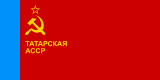
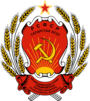
Content
History
On March 22, 1920, the Chairman of the Council of People's Commissars of the RSFSR V.I. Lenin received B.K.
It was proclaimed by the decree of the All - Russian Central Executive Committee and the Council of People's Commissars of the RSFSR of May 27, 1920 [5] and was formed on June 25 of the same year as the Autonomous Tatar Socialist Soviet Republic ( A.T.S.S.R. , Tatras Republic ) ( Tat. Avtonomiəle Tatarstan Sovet Sotsialstik Respublikas (ATSSR, Tatarstan) [6] ).
On June 25, 1925, the draft (initial) constitution of the Tatar Republic was adopted and approved on March 13, 1926 at the VI Congress of Soviets of the Tatar Autonomy. The text was not approved by the All-Russian Central Executive Committee of the RSFSR and the Congress of Soviets of the RSFSR.
The Extraordinary XI Congress of Soviets of the Tatar Autonomy on June 25, 1937 approved the constitution of the republic [3] , according to which the word order in its name was changed, being transformed into the Tatar Autonomous Soviet Socialist Republic .
In 1922 (when the USSR was formed), in 1936 and 1977 (when the USSR Constitution was adopted) and in 1952 - 1953 (when the Kazan , Chistopol , Bugulma regions were formed in the TASSR), the proposal to transform the TASSR into a union republic was not accepted}. [7]
During the “ parade of sovereignty ” in the Soviet Union on August 30, 1990, the Supreme Council of the TASSR adopted a declaration on the state sovereignty of Tatarstan, transforming it into the Tatar Soviet Socialist Republic - the Republic of Tatarstan [8] . On May 24, 1991, the Congress of People's Deputies of the RSFSR approved this name, amending part one of Article 71 and Article 171 of the Constitution of the RSFSR 1978 [9] .
Since May 16, 1992 - the Republic of Tatarstan [10] .
Top authorities and officials
According to clause 2 of the decree of the All-Russian Central Executive Committee "On the Autonomous Tatar Socialist Soviet Republic" of May 27, 1920 [5] , the apparatus of state power of the ATSSR consisted of local Councils of Deputies, the Central Executive Committee and the Council of People's Commissars of the ATSSR. Before their creation, the All-Russian Central Executive Committee formed the Temporary Revolutionary Committee of the Autonomous Soviet Socialist Republic.
On June 25, 1920, the Kazan Provincial Executive Committee completely transferred power to the Provisional Revolutionary Committee. On July 11, he accepted an appeal to all working people of the region on the creation of autonomy, and by September 11 he detailed its borders [11] . The main task of the WRC was the preparation of the Constituent Congress of Soviets of the Tat Republic. At the 1st Constituent Congress of the Soviets of Workers, Red Army and Peasant Deputies of the Autonomous Soviet Socialist Republic, held on September 26 - 27, 1920, the Presidium of the Tatar Central Executive Committee (TatTSIK) was elected and the first government was formed - SNK of the Tatras Republic.
Communist Party Tatar Regional Committee
The Tatar Regional Committee of the RCP (b) / CPSU (b) / CPSU is the central organ for managing the structures of the communist party in autonomy. The first secretary of the Tatar regional committee carried out political leadership of the republic.
Representative bodies
The supreme authority of autonomy at first was the republican Congress of Soviets of Workers, Peasants, and Red Army Deputies . For the general leadership of the republic in the period between congresses, he elected the Central Executive Committee - TatTSIK.
After 1936, the Soviets of Workers', Peasants' and Red Army Deputies were transformed into Soviets of Workers' Deputies. City, district, village and village Soviets of workers' deputies were elected by the population for 2 years.
In addition, the Tatar Autonomous Soviet Socialist Republic was represented by 11 deputies in the Council of Nationalities of the Supreme Soviet of the USSR .
With the adoption of the Constitution of the TASSR in 1937 [3], the TatTsIK was abolished, and the unicameral Supreme Council of the Tatar Autonomous Soviet Socialist Republic became the new supreme authority of the republic, elected for 4 years by the norm of 1 deputy from 20 thousand inhabitants, and its Presidium. In 1995, the Supreme Council was transformed into the State Council of the Republic of Tatarstan .
TatCIC
Chairmen of the Presidium of the TatTsIK [12] :
- 1920-1921 - Mansurov, Burkhan Khusnutdinovich
- 1921-1924 - Sabirov, Rauf Akhmetovich
- 1924-1927 - Shaimardanov, Shaygardan Shaimardanovich
- 1928-1929 - Akhmetshin, Minnigarey Akhmetovich
- 1929-1932 - Mrathuzin, Harris Ibrahimovic
- 1932-1934 - Yagudin, Migdat Gubaidullovich
- 1933-1937 - Baychurin, Gumer Gistinovich
- 1937-1938 - Dinmukhametov, Galey Afzaletdinovich - and. about. Chairman of the Presidium of TatTSIK
Armed Forces of the Republic of Tatarstan
Chairmen of the Presidium of the Supreme Council of the TASSR [12] :
- 1938-1951 - Dinmukhametov, Galey Afzaletdinovich
- 1951-1959 - Nizamov, Salyakh Nizamovich
- 1959-1960 - Faseev, Kamil Fatykhovich
- 1960-1983 - Batyev, Salikh Gilimkhanovich
- 1983-1985 - Bagautdinov, Anvar Badretdinovich
- 1986-1990 - Mustaev, Shamil Asgatovich
- 1990-1991 - Shaimiev, Mintimer Sharipovich
Government
The republican government was formed by the TatTsIK (later - the Supreme Council of the TASSR) as the highest administrative and executive body of autonomy.
The first government of the republic was the Council of People's Commissars of the Autonomous Soviet Socialist Republic. In 1946, it was renamed the Council of Ministers of the TASSR, which in 1991 was transformed into the Cabinet of Ministers of the Republic of Tatarstan .
Tatsovnarkom
Chairmen of the Council of People's Commissars of the Autonomous Soviet Socialist Republic / TASSR [13] :
- 1920-1921 - Said-Galiyev, Sahib-Garey
- 1921-1924 - Mukhtarov, Kashaf Gilfanovich
- 1924-1927 - Gabidullin, Hadji Zagidulla Oglu
- 1927 - Shaimardanov, Shaygardan Shaimardanovich
- 1928-1930 -
- 1930—1937 - Abramov, Kiyam Alimbekovich
- 1937 - Davletyarov, Akhmetsafa Mustafovich
- 1937-1940 - Tyncherov, Amin Halilovich
- 1940-1943 - Gafiatullin, Suleiman Halilovich
- 1943-1946 - Sharafeev, Said Mingazovich
Council of Ministers of the TASSR
Chairmen of the Council of Ministers of the TASSR [13] :
- 1946-1950 - Sharafeev, Said Mingazovich
- 1950-1957 - Azizov, Mirgarifan Zamleevich
- 1957-1959 - Sharafeev, Said Mingazovich
- 1959-1966 - Abdrazyakov, Abdulhak Asvyanovich
- 1966-1982 - Usmanov, Gumer Ismagilovich
- 1983—1985 - Sadykov, Ildus Harisovich
- 1985—1989 - Shaimiev, Mintimer Sharipovich
- 1990 - Sabirov, Muhammat Gallyamovich
Courts and prosecutors
The Supreme Court of the Tatar Autonomous Soviet Socialist Republic, consisting of two judicial boards (in criminal and civil cases) and the Presidium of the Supreme Court, was elected for a term of 5 years by the Supreme Council of the Republic.
The prosecutor of the Tatar Autonomous Soviet Socialist Republic was directly appointed by the Prosecutor General of the USSR for 5 years.
In 1937-1938, an extra-judicial organ, the “special troika” of the NKVD, also functioned in the TASSR [14] .
Administrative divisions
Initially, the ATSSR was divided into 10 cantons : Arsky , Bugulminsky , Buinsky , Laishevsky , Mamadyshsky , Menzelinsky , Sviyazhsky , Spassky , Tetyushsky and Chistopolsky . In 1921, the , Elabuga and Chelninsky cantons were created.
In 1924, the process of the abolition of the cantons and the formation of new administrative regions in their place began. It ended July 23, 1930 , when the district-cantonal territorial division was completely replaced by the district.
Until the end of the 1940s, the number of districts gradually increased. So, in 1948, the territory of the Tatar Autonomous Soviet Socialist Republic was divided into 70 districts and 3 cities of republican subordination (Kazan, Zelenodolsk and Chistopol).
In the early 1950s, the regional division of the Tatar and Bashkir Autonomous Soviet Socialist Republics began to implement the project. So, on May 8, 1952, 2 regions were formed on the territory of the Tatar Autonomous Soviet Socialist Republic: Kazan and Chistopol . On February 21, 1953, the Bugulma region was created. However, after the death of Stalin, the project was curtailed, and on April 30, 1953, all 3 regions of the TASSR were abolished.
After that, until 1963 , the number of districts began to decrease, until at the end of 1963 the restoration of the abolished districts began [15] .
Population
| People | 1926 year thousand people [sixteen] | 1939 year thousand people [17] | 1959 year thousand people [18] | 1970 year thousand people [nineteen] | 1979 year thousand people [20] | 1989 year thousand people [21] |
|---|---|---|---|---|---|---|
| Tatars | 1263.4 (48.7%) | 1421.5 (48.8%) | 1345.2 (47.2%) | 1536.4 (49.1%) | 1641.6 (47.6%) | 1765.4 (48.5%) |
| including kryasheny [22] | 99.0 (3.8%) | - | - | - | - | - |
| Russians | 1118.8 (43.1%) | 1250.7 (42.9%) | 1252.4 (43.9%) | 1328.7 (42.4%) | 1516.0 (44.0%) | 1575.4 (43.3%) |
| Chuvashi | 127.3 (4.9%) | 138.9 (4.8%) | 143.6 (5.0%) | 153.5 (4.9%) | 147.1 (4.3%) | 143.2 (3.7%) |
| Ukrainians | 3.1 | 13.1 | 16,1 | 16.9 | 28.6 | 32.8 |
| Mordva | 35.1 (1.4%) | 35.8 (1.2%) | 32.9 (1.2%) | 31.0 | 29.9 | 28.9 |
| Udmurts | 23.9 | 25.9 | 22.7 | 24.5 | 25.3 | 24.8 |
| Mari | 13.1 | 14.0 | 13.5 | 15.6 | 16.8 | 19.4 |
| Bashkirs | 1.8 | ... | ... | 2.9 | 9.3 | 19.1 |
| Belarusians | ... | 2.3 | 4.1 | 4.3 | 7.1 | 8.4 |
| Jews | 4.3 | 6.1 | 10.4 | 9.5 | 8.7 | 7.3 |
| Azerbaijanis | ... | 0.1 | 0.3 | 0.4 | 1,3 | 3.9 |
| Armenians | 0.1 | 0.4 | 0.6 | 0.5 | 1.2 | 1.8 |
Economic Development
Pre-war economy
In 1921, the republic, like the adjacent Volga region, was seized by drought, which caused massive famine . To combat it, in the years 1921-22, the Tatar Republic received more than 8 million pounds of seeds and 6 million pounds of various types of food from other regions of the country [4] .
After the end of the Civil War , the restoration of the national economy of autonomy began.
In the 1920s and 1930s , industrialization took place in the Soviet Union. From the predominantly agrarian economy, the Tatar Republic is moving to an agrarian-industrial one. The old enterprises underwent a radical reconstruction, new plants and factories were created. The industry of the Autonomous Soviet Socialist Republic developed, exceeding the average rate of industrial development in the RSFSR and the USSR [4] . During the years of the first five-year periods in autonomy, the largest enterprises of machine-building, chemical and light industry were built. The number of workers grew, national cadres were created. If in 1921 there were only 3.1 thousand people (or 15.5%) of Tatar workers, technicians and engineers at large enterprises, then in 1932 there were 16.4 thousand (or 33.6%) [4] .
However, the only industrial hub of the republic (with the exception of the Krasny Metallist plant and the Bondyuzhsky chemical plant ) was the capital, Kazan. In 1932, construction of a large aviation plant “Kazmash” began in it.
At the same time, the collectivization of agriculture autonomy was carried out. In 1930, the first MTS autonomy was created - Nurlat-Oktyabrskaya [23] . During the first five-year periods, mechanization proceeded at such a fast pace that on January 3, 1934, Tataria was awarded the Order of Lenin for successes in the development of agriculture.
World War II period
During World War II , factories were evacuated to the Tatar Autonomous Soviet Socialist Republic, as well as engineers from Moscow and the eastern regions of the country.
Significantly increased the output of enterprises created and modernized before the war: Kazan Optical and Mechanical Plant , film film factory No. 8 , gunpowder factory No. 40 named after Lenin .
In the fall of 1941, the Moscow Aviation Plant No. 22 named after Sokolov Ordzhonikidze was transferred to Kazan to the territory of Plant No. 124 named after Sergo Ordzhonikidze . S.P. Gorbunov . "
On July 1, 1942, the Chistopol Watch Factory created on the basis of the Second Moscow Watch Factory earned at full capacity.
Already in 1942, the Volga Rokada was launched - the railway along the Volga, from Sviyazhsk to Stalingrad .
Post-war years
In the postwar years, the oil and gas industry developed rapidly in Tataria. The super-giant Romashkinskoye oil field began to be developed.
In 1950, Tataria produced 867 thousand tons of oil, 12 times more than in 1947 [4] . Since 1956, Tatarstan has long held the first place in the USSR in oil production. In 1966, it produced 86,218 thousand tons — 32.5% of all oil extracted in the USSR [4] . In 1970, Tatarstan already produced: oil - 101.9 million tons, gas - 3882 million m³ [4] .
To transport oil from the Volga-Ural oil and gas province to the eastern European CMEA countries, the Druzhba and Druzhba II oil pipelines were built in the 1960s and 1970s .
New industrial centers were created for oil refining in Tatar itself: Bugulma ( Bugulmaneftemash ), Almetyevsk ( Tatneft ), Leninogorsk (Leninogorskneftestroy), Nizhnekamsk ( Nizhnekamskneftekhim ). An organic synthesis plant was built in the capital.
Other sectors of the national economy also developed rapidly. A compressor plant was built in Kazan, a medical-instrumental plant was expanded, a chemical-pharmaceutical plant and a household chemistry plant were reconstructed. In the 1950s, the aircraft factory No. 387 began production of helicopters , Zelenodolsk " Plant named after Sergo " - mastered the wide production of household refrigerators ("Mir", "Sviyaga").
Agriculture has also been developed. The material and technical base of collective farms and state farms was significantly strengthened (in 1972 there were 583 collective farms and 168 state farms in Tatarstan [4] ). Gross harvest of grain crops in 1960 amounted to 2317.2 thousand tons, in 1971 - 3340 thousand tons [4] .
With the commissioning of one of the largest condensing power plants in the world - Zainskaya TPP , the construction of a number of other large power plants: Kazan TPP-3 , Nizhnekamsk TPP-1 , Nizhnekamsk hydroelectric power station - the republic fully satisfied its own requests for electricity, becoming its exporter to other regions of the country.
In the 1970s , construction began on the Kama complex of automobile plants at Naberezhnye Chelny and the Nizhnekamsk tire factory . A railway was drawn to them from the Gorky and Kuibyshev lines.
For major successes in the development of the economy and culture and in connection with the 50th anniversary of the Tatar Autonomous Soviet Socialist Republic on June 24, 1970, she was awarded the Order of the October Revolution , and December 29, 1972 - the Order of Friendship of Peoples [1] .
In the 1980s, the industrial potential of Mendeleevsk was expanded (with the construction of the Novomendeleevsky Chemical Plant ). The construction of the Tatar NPP in the Kama glades and the Kama Tractor Plant in Elabuga was started, but not completed.
Insignia
- The Order of Lenin No. 625 was awarded on March 15, 1934, for outstanding successes in carrying out basic agricultural work (sowing, harvesting, filling seeds), strengthening collective farms and state farms, and fulfilling obligations to the state.
- Order of the October Revolution № ??? awarded June 24, 1970 , for major successes in the development of the economy and culture and in connection with the 50th anniversary of the Tatar Autonomous Soviet Socialist Republic.
- Order of Friendship of Peoples № ??? awarded December 29, 1972 .
In titles
- Kazan Higher Tank Command Red Banner School named after the Presidium of the Supreme Council of the Tatar Autonomous Soviet Socialist Republic
See also
- Tatarstan
Notes
- ↑ 1 2 Tatar Autonomous Soviet Socialist Republic - an article from the Great Soviet Encyclopedia .
- ↑ 1 2 1989 All-Union Population Census. The national composition of the population by region of Russia // Demoscope Weekly .
- ↑ 1 2 3 Constitution of the TASSR from June 25, 1937 // Collection of laws of the Tatar Autonomous Soviet Socialist Republic, decrees of the Presidium of the Supreme Council of the Tatar Autonomous Soviet Socialist Republic and resolutions of the Council of Ministers of the Tatar Autonomous Soviet Socialist Republic. - Kazan: Tatar book publishing house, 1970.
- ↑ 1 2 3 4 5 6 7 8 9 Mukharyamov M.K., Halikov A.Kh. Tatar Autonomous Soviet Socialist Republic // Soviet Historical Encyclopedia . - M .: Soviet Encyclopedia, 1973. - T. 14. - 524 p.
- ↑ 1 2 Decree of the All-Russian Central Executive Committee and Council of People's Commissars of May 27, 1920 “ On the Autonomous Tatar Socialist Soviet Republic ” // News of the Central Executive Committee . - 1920 - No. 115. - May 29; A collection of legalizations and orders of the Workers 'and Peasants' Government . - 1920. - No. 51. - June 8.
- ↑ It should be borne in mind that the writing of the Tatar language in the 1920s and 1930s has repeatedly changed.
- ↑ Tatarstan (inaccessible link) . Date of treatment January 20, 2013. Archived February 2, 2013.
- ↑ Declaration of the Supreme Council of the Tatar SSR of August 30, 1990 No. 334-XII "On State Sovereignty of the Tatar Soviet Socialist Republic." // "Communist of Tatarstan." - 1990. - No. 10; "Vedomosti of the Supreme Council of Tatarstan." - 1992. - No. 1. - C. 3.
- ↑ Law of the RSFSR of May 24, 1991 “On Amendments and Additions to the Constitution (Basic Law) of the RSFSR”. // constitution.garant.ru
- ↑ Law of the Russian Federation of April 21, 1992 No. 2708-I “On Amendments and Additions to the Constitution (Basic Law) of the Russian Soviet Federative Socialist Republic”. This law entered into force upon publication in the Rossiyskaya Gazeta on May 16, 1992 .
- ↑ To the 90th anniversary of the Tatar Autonomous Soviet Socialist Republic // Site of the Archival Service of the Republic of Tatarstan.
- ↑ 1 2 List of chairmen of the TatTsIK and the Presidium of the Supreme Council of the TASSR, the State Council of the Republic of Tatarstan // National Archives of the Republic of Tatarstan. Guide. The second edition is revised and expanded. - Kazan: Gasyr Publishing House, National Archives of the Republic of Tatarstan, 1999. - ISBN 5-93001-003-1 . - S. 570.
- ↑ 1 2 List of Chairmen of the Council of People's Commissars and the Council of Ministers of the TASSR, Cabinet of Ministers of the Republic of Tatarstan // National Archives of the Republic of Tatarstan. Guide. The second edition is revised and expanded. - Kazan: Gasyr Publishing House, National Archives of the Republic of Tatarstan, 1999. - ISBN 5-93001-003-1 . - S. 571.
- ↑ Stepanov A.F. Limit execution: from the history of political repressions in the TASSR in the years of the “Yezhovschina” . Archived on March 27, 2012. . - Kazan, 1999 .-- 312 p.
- ↑ See: Brief information on the administrative-territorial division of the Republic of Tatarstan . Archived March 4, 2016. // National Archives of the Republic of Tatarstan. Guide. The second edition is revised and expanded. - Kazan: Gasyr Publishing House, National Archives of the Republic of Tatarstan, 1999. - ISBN 5-93001-003-1 . - S. 566.
- ↑ Demoscope Weekly - Application. Handbook of statistical indicators
- ↑ Demoscope Weekly - Application. Handbook of statistical indicators
- ↑ Demoscope Weekly - Application. Handbook of statistical indicators
- ↑ Demoscope Weekly - Application. Handbook of statistical indicators
- ↑ Demoscope Weekly - Application. Handbook of statistical indicators
- ↑ Demoscope Weekly - Application. Handbook of statistical indicators
- ↑ In the materials of the 1926 census, the Kryashens are considered as a separate nationality. In 1939-1989, a separate allocation of kryashens was not provided for by the census materials development program - they were taken into account together with the Tatars.
- ↑ Azizov M.Z. Thirtieth anniversary of the Soviet Tatarstan // Ogonyok . - 1950. - June 25. - p. 4.