António Carlus Ribeiro de Andrada ( port Antônio Carlos Ribeiro de Andrada , September 5, 1878 , Barbacena , Minas Gerais , Brazilian Empire - January 1, 1946 , Rio de Janeiro , Brazil ) - Brazilian lawyer and politician, Governor of the State of Minin Gerais in the years 1926-1930.
| Antonio Carlus Ribeiro di Andrada | |||||||
|---|---|---|---|---|---|---|---|
| port. Antônio Carlos Ribeiro de Andrada | |||||||
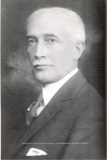 | |||||||
| Predecessor | Fernando di Melu Viana | ||||||
| Successor | Olegariu Masiel | ||||||
| Birth | September 5, 1870 Barbacena , Minas Gerais | ||||||
| Death | January 1, 1946 (75 years old) Rio de Janeiro | ||||||
| Education | |||||||


Content
- 1 Biography
- 2 memory
- 3 notes
- 4 References
Biography
António Carlus graduated from the Law Faculty of the University of São Paulo in 1891 and until 1902 was engaged in legal practice. He worked as a prosecutor in the city of Uba , taught world history and commercial law at the Academy of Commerce in Juis de Foret .
In 1902 he was appointed to the post of Minister of Finance of Minas Gerais , in 1905-1906 he worked as mayor of Belo Horizonte . The following year, Antoniu Carlus was elected to the Senate of Minas Gerais.
In 1911, Ribeiro di Andrada was elected to the Brazilian Chamber of Deputies. In 1917, he left Congress and took the post of Minister of Finance in the government of Wenceslas Bras . In 1918 he returned to the Chamber of Deputies, and in 1925 he became a senator .
In 1926, António Carlus led the state of Minas Gerais. According to the “ coffee with milk policy ”, it was he, as the governor of Minas Gerais, who was supposed to be a candidate for power in the 1930 presidential election. However, Brazilian President Washington Luis declared his successor Julio Prestis , Governor of São Paulo .
Ribeiro di Andrada refused to support the candidacy of Prestis and joined the opposition Liberal Alliance Zhetulio Vargasa . After the defeat of Vargas in the elections, Antoniu Carlus became the chief architect of the 1930 revolution [1] .
In 1932-1933, Ribeiro de Andrada headed the Constitutional Assembly of Brazil, after the adoption of the Constitution in 1934-1937, he served as chairman of the Chamber of Deputies of the country. He served as president for several days in 1935 during the visit of Vargas to Uruguay and Argentina . After the proclamation of Vargas, Estado Novo left the political arena.
Memory
Two municipalities in Minas Gerais and Santa Catarina are named after Antonio Carlus.
Notes
Links
- Biography (port.)