The 2010 general elections in Ethiopia were held on May 23 [1] [2] and became the fourth multiparty elections in the history of the country. [3] On this day, members of the , the lower house of the Federal Parliamentary Assembly , and deputies of the Regional Assemblies were elected. [2]
← 2005  2015 → 2015 → | |||
| General Elections in Ethiopia | |||
|---|---|---|---|
| Elections to the | |||
| May 23, 2010 | |||
| Voter turnout | 93.4% | ||
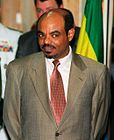 | |||
| Party leader | Meles Zenawi | Abdulfetah Shek Abdulahi | |
| The consignment | RDFEN | ||
| Seats received | 499 ( ▲ 172) | 24 ( ▲ 1) | |
| Past number of places | 327 | 23 | |
| Other batches | (9 seats), ANDP (8), (3), , and (1 ) | ||
| Election result | Unconditional victory of the ruling party RDFEN , won more than 90% of the seats in the House of People's Representatives | ||
The result of the election was the victory of the ruling party of the Revolutionary Democratic Front of the Ethiopian Peoples (RDFEN), which won 499 seats in the Ethiopian parliament from 547 (91.23%). Of the remaining 48 seats went to the Allies RDFEN. [4] Only one opposition party managed to enter parliament. 93.4% of eligible voters took part in the voting. [5] [6]
Content
Campaign
(NEBE) reported that a total of 29,170,867 voters were registered at these elections, [7] for which 43,000 polling stations were opened. [3] 6,939 candidates from 63 political parties applied for 547 parliamentary seats, while only 28 parties participated in the 2005 elections. [3] Most of the candidates were represented by the ruling party RDFEN - 501, the main opposition force of the country, the coalition - 421 candidates. [3] The 4,500 deputy seats of the regional assemblies were challenged by 4,525 applicants, including 1,349 from the ruling RDFEN, 374 members of front-allied parties, 2,798 candidates of opposition parties and 4 independent candidates. [eight]
The ruling RDFEN and opposition parties signed the Code of Conduct for Elections. They agreed on the temporary distribution of the media, although opposition leaders complained about the time allotted to them, saying that it was not fair for the ruling party to take the largest share of time. Public television showed pre-election debates. One of the opposition parties, the (AEUP), expressed its grave concern and refused to debate, demanding that they be broadcast live and with the presence of the public.
On April 13, 2010, the US State Department , based on facts about violence related to the previous general elections, recommended abandoning trips to Ethiopia during the period “before and after the national parliamentary elections scheduled for May 23, 2010”. The trip warning stated that “US citizens [should] ... maintain a high level of security awareness at all times and avoid political rallies, demonstrations and crowds of any kind. US citizens should avoid polling stations on election day and be aware that authorities will strictly comply with specific bans, such as taking photos at polling stations. ” [9]
Opposition activists expressed their concern that the elections would lead to violence and that their supporters would be arrested and imprisoned. The leader of the leading opposition party reportedly told US diplomats that "activists of the in " attacked members of the opposition party and destroyed their cars when they tried to register candidates in this section. Ethiopia. [10] The leader of the opposition Party stated that since the ruling rDFEN now controls all local administrations, these elections will be a struggle to ensure that Ethiopia does not become a one-party state . [11] [12]
Results
According to preliminary results published by the Electoral Council, from the very beginning of the counting of votes, the RDFEN was confidently leading in all regions of Ethiopia. [13] The announcement of the final election results in accordance with the electoral legislation is scheduled for June 21 . [3] The Chairman of the Electoral Council, Merg Bekan, stated that the front “definitely” won the election, taking the lead in 9 of the 11 regions that presented the results, including in the former Oromia opposition region. [14] [15] Human Rights Watch stated that the results were distorted by government intimidation of voters for several months. [16] European Union observers stated that the elections were “peaceful and calm”, but noted a number of complaints of violations. [14]
Opposition groups rejected the election results, the coalition and the All-Ethiopian Unity Party called for a re-election. Both opposition groups stated that their observers were not allowed to go to the polls during the elections on Sunday, May 23, and in some cases were beaten. The United States and the European Union have criticized the elections as not conforming to international standards. [17] However, Ethiopian government officials upheld the fairness of the elections, saying that their results accurately reflected the mood of the voters. The Ambassador of Ethiopia in the United Kingdom, Berkhan Kebede, said that voters rewarded Meles Zenawi and his party for their achievements. “The government pursued a successful development and growth policy. Over the past seven years, double-digit growth has been observed. Significantly improved enrollment in and health care . Over the past 10 years, more investment has been made in infrastructure than in the previous 100. " [18]
On June 21, 2010, NEBE published the final election results, which confirmed the preliminary results for the previous month. [19] A total of 91.95% of the voters who came to the polls voted for the ruling party and its allies, while only 8.05% were given to the opposition all over the country. As a result, the RDNEF won 499 of 547 seats in the lower house of the Ethiopian parliament (91.23%), 46 more seats went to frontline allies, which allowed supporters of the government to take over 99% of all seats, while opposition and independent candidates took just two places. [20] [21] In addition, the RDNEF and its allies won all but one of the 1,904 mandates in the regional elections. [20] The opposition appealed to the Electoral Council and the Federal Court of Ethiopia, but both appeals were rejected. [20] On July 20, the Court of Cassation, the highest court of Ethiopia, rejected the opposition’s final appeal. [22]
House of Representatives
| The consignment | Leader [23] | Mandates | +/– | |
|---|---|---|---|---|
| The Revolutionary Democratic Front of the Ethiopian Peoples (RDFEN) | Meles Zenawi | 499 | ▲ 172 | |
| Abdulfetah Shek Abdulahi | 24 | ▲ 1 | ||
| Hebtamu Hike | 9 | ▲ 1 | ||
| Afar National Democratic Party | Mohamed Cedir | eight | ▬ | |
| Umod Obong Alum | 3 | ▬ | ||
| Abdulkadir Mohamed | one | ▲ 1 | ||
| Yasin Hussein | one | ▬ | ||
| Birtukan Mideksu | one | ▲ 1 | ||
| Ayele Chamiso | 0 | ▼ 109 | ||
| 0 | ▼ 52 | |||
| 0 | ▼ 11 | |||
| Independent | 0 | ▼ 1 | ||
| Total | 547 | 0 | ||
| Source: [24] African Elections Database [6] | ||||
Regional assemblies
| Region | Party | Vote | % | Places |
|---|---|---|---|---|
| Amhara | 294 | |||
| Afar | Afar National Democratic Party | 93 | ||
| Afar People’s Democratic Organization | 3 | |||
| Benishangul gumuz | 99 | |||
| Gambela | 152 | |||
| Oromia | 537 | |||
| Somalia | 186 | |||
| Tigray | Popular Front Liberation Tigray | 152 | ||
| Harari | 18 | |||
| 18 | ||||
| South Ethiopia | 348 | |||
| Source: [24] | ||||
International surveillance
Independent observation of the vote was strictly limited. Ethiopian authorities allowed only observers from Europe and the countries of the African Union to vote, while their activities were restricted, in particular, some of them were not allowed to go to the polls. Independent observers, who were still allowed access to the voting process and the counting of votes, did not question the victory of the RDFEN, yet enough evidence was gathered that the actions of the Ethiopian authorities, including the intimidation of candidates and opposition supporters, influenced the election results. [21]
European observers said the elections did not meet international standards. Thus, the authorities did not bother to create an environment conducive to free and fair elections. RDFEN, I am the ruling party, limited the political space for opposition candidates and activists. At the local level, thousands of opposition activists complained of ill-treatment by the authorities, ranging from harassment with the submission of candidate forms and ending with attacks by front-line supporters. [21]
According to Human Rights Watch , the ruling party pursued a policy of systematically closing the space for political dissent and independent criticism. [25] According to Amnesty International , the final report of the EU Election Observation Mission noted violations of the freedom of expression, assembly and movement of members of the opposition party; abuse of state resources by the ruling party; lack of independent media coverage. Prime Minister Meles Zenawi called the report “useless trash”, and the EU’s main observer was not given access to Ethiopia to present the final report. [26]
Links
Notes
- Oun Announcement on the Fourth Round Electoral Process (unavailable link) . . The date of circulation is December 14, 2017. Archived on June 11, 2011.
- ↑ 1 2 2010 African election calendar . (December 2010). The date of circulation is December 14, 2017. Archived October 15, 2017.
- ↑ 1 2 3 4 5 Parliamentary elections began in Ethiopia . RIA "News" (May 23, 2010). The date of circulation is December 14, 2017. Archived on April 17, 2013.
- ↑ AFP . Ethiopia's ruling party wins landslide in general election (eng.) . The Guardian (June 22, 2015). The appeal date is December 13, 2017. Archived March 26, 2016.
- ↑ McConnell, Tristan . Western Ally Wins landslide in Ethiopia amid vote rigging claims (Eng.) , The Times (24 May 2010). The appeal date is May 24, 2010.
- ↑ 1 2 Elections in Ethiopia (English) . African Elections Database (21 August 2012). The date of circulation is December 14, 2017. Archived on May 27, 2012.
- ↑ Registered Voters for 2010 General Election / By Region / (eng.) (Not available link) . . The date of circulation is December 14, 2017. Archived August 2, 2012.
- ↑ Number of Political Parties / Independent Candidates for Regional Councils (2010 ) (not available link) . . The date of circulation is December 14, 2017. Archived on August 3, 2012.
- ↑ Ethiopia Travel Alert: The State Department alerts US citizens . ECADF Ethiopian News (13 April 2010). The date of circulation is December 14, 2017. Archived December 14, 2017.
- ↑ Cable: 10ADDISABABA328 . Ethiopian opposition leader voice concerns (English) . WikiLeaks . The date of circulation is December 14, 2017. Archived April 16, 2013.
- ↑ Potential For Violence Shadows Ethiopia's 2010 Election (Eng.) . Voice of America (November 2, 2009). The date of circulation is December 14, 2017. Archived February 9, 2013.
- ↑ US Concerned at the Ethiopia Opposition on Restrictions (English) . (20 November 2009). The appeal date is December 14, 2017. Archived September 6, 2012.
- ↑ Meles Zenawi's party 'heads for Ethiopia election win' (English) , BBC News (24 May 2010). Archived July 14, 2012. The appeal date is December 14, 2017.
- 2 1 2 Ethiopia ruling party set for sweep (English) , Al-Jazeera (24 May 2010). Archived February 21, 2013. The appeal date is December 14, 2017.
- ↑ Barry Malone . Ethiopia's ruling party on lands for landslide (eng.) , Reuters (24 May 2010). Archived September 17, 2012. The appeal date is December 14, 2017.
- ↑ Anita Powell ( AP ) . Early results: Ethiopia's ruling party won vote (English) , Ethiomedia.com (24 May 2010). Archived May 29, 2010. The appeal date is December 14, 2017.
- ↑ Ethiopia Opposition Leaders Call for New Vote (English) . Voice of America (May 26, 2010). The date of circulation is December 14, 2017. Archived on January 5, 2013.
- ↑ Xan Rice. Unease over lands of ruling party landslide in Ethiopia (Eng.) . The Guardian (May 26, 2010). The appeal date is December 14, 2017. Archived on April 7, 2014.
- ↑ AP . Ethiopia: ruling party landslide confirmed (English) , DireTube (21 June 2010). Archived June 28, 2010. The appeal date is December 14, 2017.
- ↑ 1 2 3 AFP . Ethiopia ruling party, allies win 99% of vote: result (eng.) , Google News (21 June 2010). Archived June 4, 2012. The appeal date is December 14, 2017.
- 2 1 2 3 Ethiopian Politics (English) . GlobalSecurity.org . The appeal date is December 14, 2017.
- ↑ Malone, Barry . Ethiopia court rejects final poll result challenge (English) , Reuters (July 20, 2010). Archived February 1, 2013. The appeal date is December 14, 2017.
- ↑ Political Parties that are Actively Participating in the Election (unavailable link) . Ethiopian Embassy in the Nordic Countries . The appeal date is December 14, 2017. Archived August 12, 2010.
- ↑ 1 2 Provisional Results of the 4th Round General Election (unavailable link) . . The date of circulation is December 14, 2017. Archived January 19, 2014.
- ↑ Ethiopia // Human Rights Watch World Report 2011. Events of 2010 / Joe Saunders. - New York City : Human Rights Watch , 2011. - P. 121-126. - 668 p. - ISBN 978-1-58322-921-7 . Archived October 13, 2012. Archival copy of October 13, 2012 on Wayback Machine (English) (inaccessible link) Archived April 14, 2015. Verified on December 14, 2017.
- ↑ Amnesty International . Ethiopia // Amnesty International Report 2011: The State of the World's Human Rights . - P : Pureprint Group, 2011. - P. 140–142. - 432 p. - ISBN 978-0-86210-462-7 . Archived May 16, 2011. (eng.)