Imyaslaviy ( nameath , in synodal documents - name , also called onomatodoxy ) is a religious dogmatic and mystical movement that became widespread at the beginning of the 20th century among Orthodox Russian monks on Mount Athos . The main theological position of the adherents of imyaslavia was the doctrine "of the invisible presence of God in divine names." In this sense, supporters of imyaslavia used the phrase: “The name of God is God Himself” [1] (“but God is not a name” [2] ), which became the most well-known brief expression of izylaviya [3] . The recognized leader of the movement was ieroshimonakh Antony (Bulatovich) [4] . In 1913, the Imyaslavtsev doctrine was condemned as heretical by the Most Holy Government Synod , and the unrest that arose in Russian monasteries on Mount Athos due to disputes around this doctrine was suppressed using Russian armed forces [5] . The theological controversy that has arisen in connection with the teachings of the Imyaslavs, revived in Russia the interest in the heritage of Gregory Palamas and the Hesychasts and had a noticeable influence on the development of Russian religious and philosophical thought.
Occurrence
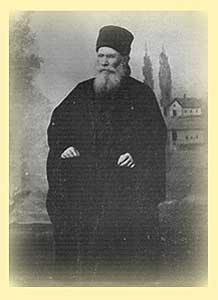
The beginning of the movement is associated with the controversy that arose around 1909 among Russian monks living on Athos about the book of Schemamonk Hilarion (Domrachev) “ On the Caucasus Mountains ”. [6] The author of the book himself spent about 20 years on Mount Athos, and then in the 80s of the XIX century he retired to the Caucasus, where he led the life of a hermit monk. Dedicated to the traditional ascetic practice of “smart doing” and the Jesus Prayer, the book “On the Caucasus Mountains” was published in 1907 with the blessing of Abbot Varsonofy Optinsky , then in 1910 it was republished with funds from Grand Duchess Elizaveta Fedorovna , and finally, in 1912, it was published for the third time in the Kiev-Pechersk Lavra, a huge for that time ten thousand copies. All three publications were endorsed by spiritual censorship and elicited numerous positive and even enthusiastic responses from the monastics and the faithful intelligentsia. One of the central places in the book was occupied by the thought of the presence of Christ himself and the divinity of his name in the name of Jesus Christ called: [7]
 | First of all, it is necessary to affirm in oneself that immutable truth, which agrees with both Divine revelation and with sound notions of reason, that God Himself is present in the name of God — by all His Being and (by all) by His infinite properties. |  |
| For every faithful worker of Christ, who loves his Vladyka and Lord, who prays earnestly to Him and His holy name reverently and kindly in his heart, His bearer - His all-decisive, tolerant and all-powerful name is like Himself the All-Lord God and the Most Redeemer Jesus Christ, who was first of all the age of the Father, is begotten; he is one and equal in all things to him. |
| In eternity in heaven, the One God: God the Father, God the Son, God the Holy Spirit; and if the name Jesus was there, then it is God, because nothing created there can be. |
It is these views about. Hilarion and became the subject of theological controversy that flared up shortly after the publication of the book. This controversy was initiated by the Athos monk Chrysanth, who in 1909 wrote an extremely negative book review on the book of Father Hilarion. With the approval of the monastic authorities, a handwritten review began to spread among the monks of the Russian monasteries on Mount Athos. Chrysanth accused the author of the book of heresy, pantheism, and double gods. Regarding the name "Jesus", the monk Chrysanth argued that this is a simple human name, received by Christ as a man, and therefore one should not "ascribe to this name an worshiping meaning when making a prayer, merge it with the Divine and give it a meaning equivalent to God Himself." The review of the monk Chrysanthus provoked heated debates among Russian Athonite monks. After its appearance, Russian monasticism on Mount Athos is actually divided into two parties — opponents and supporters of special reverence for the name of God: the first received from the second the nickname “name-wrestlers”, the second were called the first “name-worshipers”. The worshipers of the name of God themselves called themselves "Imyaslau". Disputes gradually began to become more and more violent, to involve new participants and to go beyond Athos. Chrysanth sent his review to both Father Hilarion (Domrachev) and the influential member of the Governing Synod to Archbishop Anthony of Volyn (Khrapovitsky) . Father Hilarion wrote a response for review, which was included in the second edition of his book as an annex. And in the archbishop Antonia, opponents of imyaslavia found a strong ally for themselves. From his submission in February 1912, the review of Chrysanth was published in the journal “Russian Monk” , published by the Pochayev Lavra , and in the newspaper “Kolokol” there was a correspondence from Athos, describing the course of the controversy in terms of the negative for imyaslavtsev. From this point on, controversy is largely transferred to Russia on the pages of both secular and church periodicals. And from about the same moment hieromonk Anthony (Bulatovich) , who eventually became one of the most famous leaders of the movement, began to speak out in defense of imiaslavia.
Back in 1908, the pastor of the Russian Panteleimon Monastery on Mount Athos on. Agafodor sent the book " On the Caucasus Mountains " to the hegumen of the Russian Athos St. Andrew Skete, Fr. Jerome with the words: “A very harmful book, written in the spirit of Farrar ”, with a request to find “an educated monk ” with the aim of “criticizing” the book. Jerome, in turn, ordered Hieromonk Anthony to give a critical review of the book. Bulatovich first critically reacted to his name. But then,
having come to the statement about. Hilarion, that the essence and effectiveness of the prayer of Jesus rests on the strength of the invoked Divine Name of the Lord Jesus Christ, to whom the worshiper should relate to the Lord Jesus Himself and who is the Lord Jesus Christ Himself , they [words] seemed to be wrong. But as I read further, I saw ... a beautifully laid down patristic teaching on the prayer of Jesus . Since the igumen ordered me to state my judgment about this book in writing, I decided, first, to write a letter about. Hilarion, in which he protested against this expression: "The Name of the Lord Jesus Christ is the Lord Jesus Christ Himself." But when I wrote this letter, a kind of peculiar heartbeat fell on me, and some kind of endless emptiness, coldness and darkness seized my heart. It was felt the abandonment of the grace of God; prayer was of no effect ...
, [8] after which Anthony opened the volume “ My life in Christ ” of his spiritual father [8] John of Kronstadt , published in 1905 , and found in him the following confirmations of his doubts:
“In this name [of the Most Holy Trinity, or the Lord of hosts, or the Lord Jesus Christ] you have the whole being of the Lord: in him His goodness is infinite, infinite wisdom, unapproachable light, omnipotence, immutability ...”, [9] “Name of the Lord or Our Lady , or an angel and a saint, let it be to you instead of the Lord Himself, the Mother of God, an angel or a saint; The closeness of a word to your heart shall be a pledge and an indication of closeness to your heart of the Lord Himself, the Most Pure Virgin, Angel or Holy One. The name of the Lord is the Lord Himself - this Spirit everywhere and filling all; the name of the Mother of God is the Mother of God herself ... " [10] . As a result, Hieromonk Anthony completely changed his mind and became the main proponent of the doctrine of imyaslavia, then publishing several books on this issue.
The teaching was also supported by the influential "old man" Gregory Rasputin at the Court. , he also had similarities with the teachings of Fr. John of Kronstadt [11] .
Essence of Name
The central position of the Imyaslaw scholars is that the name of God is inextricably linked with God himself.
Ieroshimonakh Anthony Bulatovich based the doctrine of the Divine Name of God primarily on the fact that the Name of God, according to the teachings of the Holy Fathers, is His energy or action (in Slavonic "action"; "action" is a translation of the Greek word "energy"), and the energy of God is God Himself. He wrote:
For what did God create man? - In order to make a created creature happy by the communion of His Divinity with it. ... in order to unite him with the union of Divine love and to make man a partaker of the Divine Nature. ... to adore him, the deification of man is that the Energy of the Divine is infused into the person. The essence of the Divine of God is an unapproachable creature, but Activity is attachable.
Thus, according to the name of God, the Name of God is His energy and He Himself .
According to Bishop Theophan of Poltava : “ God is everywhere; and, of course, He is in His own name ” [12] ; according to Fr. Pavel Florensky : “ The name of God is God; but God is not a name. The being of God is higher than His energy, although this energy expresses the being of the Name of God. " [13]
Proponents of imyaslavia insist that the logic of the orthodox theologian Fr. Anthony Bulatovich is fully consistent with the teachings of the Fathers of the Church , in particular Gregory Palamas about the barbarity of Divine energy. Orthodox opponents of imyaslavia indicate that in his writings Gregory Palaam never calls the energy of God "God" (Theos), but teaches us to call it "Divinity" (Theotis) [14] .
Metropolitan Hilarion Alfeyev believes that the dispute between the people of Imyaslau and the name of the sailors is a dispute between devotional prayer and theological scholarship, which is a continuation of the debate about deification - between the Orthodox and the Eunomians in the 4th century, between iconopaths and iconoclasts in the 8th — 9th centuries, between Symeon the New Theologian and his opponents in the XI century, between Gregory Palamas ( Hesychasts ) and Varlaam Calabria in the XIV century. [15] The Jesus prayer and teaching about the name of God was part of one - the monastic prayer - tradition that did not intersect with the other - the tradition of theological academies, where almost nothing was said about the monastic practice. Opponents of imiaslavia — Archbishop Anthony (Khrapovitsky) , Archbishop Sergius (Stragorodsky) , and Sergei Troitsky belonged to the tradition not of monastic, but of theological schools; they had a very approximate idea of monastic life; none of them had ever been a monk in a monastery [15] .
Initial reaction of church authority
The archbishop of Volynsk Antony (Khrapovitsky) became the most authoritative opponent of the new doctrine in Russia, who considered imyaslaviyu as heresy and a type of Khlystyiv region . In 1912, by the decision of the Holy Synod, the book On the Caucasus Mountains was banned in Russia; with the report of the archbishop. Anthony in the Synod was "unacceptable, impossible, brutal." [16] The book went to samizdat , but was not reprinted until 1998.
According to Vladimir Ern , the cause of the Imyaslav dispute was not the book “On the Caucasus Mountains”, but the negative review of her by the Athos monk Chrysanth (which he wrote instead of Bulatovich who refused) and then the publication of this book by Anthony (Khrapovitsky) in which there was a “cheeky, rude, and often blasphemous language” [19] , in the opinion of Metropolitan Hilarion (Alfeyev) , of “unjust, harsh and scandalous” publications. [20]
In September 1912, the book was condemned in the message of the ruling bishop of Athos, Ecumenical Patriarch Joachim III (although in 1907 he supported this book), the abbot of the Russian monastery of St. Panteleimon , who, like all the monasteries of Athos, was in the direct canonical jurisdiction of the Patriarch: the message called the new the teaching was "meaningless and blasphemous" and exhorted his supporters to "fall behind the wrongful delusion and stop arguing and interpreting things that they do not know."
In 1913, the doctrine was reviewed by a commission of teachers of the Theological School of the Ecumenical Patriarchate in Halki , headed by Metropolitan H. Seleucius, who was strongly influenced by German Protestant rationalism at the beginning of the 20th century, since most of its professors received a theological education in German universities. [21] The Commission, which did not read both of the books under consideration - Schemamonk Hilarion and Ieroshimonakh Anthony Bulatovich [18] - recognized the teaching as un-Orthodox; The Holy Synod of the Constantinople Orthodox Church condemned it as a blasphemous and heretical, and the new Patriarch Herman V sent to Athos a corresponding letter of April 5, 1913, which declared the teaching of imyaslavia pantheism .
In May 1913, a meeting of the Russian Holy Synod was held, chaired by Metropolitan of St. Petersburg Vladimir (Bogoyavlensky) , composed of Sergius, Archbishop of Finland , Anthony, Archbishop of Volyn , Nikon, the former. Archbishop of Vologda , Eusebius, Archbishop of Vladivostok , Michael, Archbishop of Grodno , Agapit, Bishop of Ekaterinoslav (seven in all); in which three independently prepared reports were heard: Archbishop Anthony (Khrapovitsky), Archbishop Nikon (Rozhdestvensky) and teacher of the seminary canonist Sergei Troitsky . All reports recognized the teachings of the “name-worshipers” as non-Orthodox. Following the meeting, a synodal ruling was passed unanimously, condemning the teaching of the “name-worshipers”; a corresponding Message was issued [22] , compiled by Archbishop Sergius (Stragorodsky) .
In August 1913, after the expulsion of the “name-worshipers” from Athos, the Synod issued a new resolution, even stricter, against the supporters of the new doctrine and adopted the “Formula for addressing the name-worshipers returning to the teachings of the Orthodox Church”. A paper condemning “name-worshiping” was sent to monasteries in Russia with a proposal to sign it (for example, such a document was signed, signed by all the elders of Optina Hermitage , who were at that time in the monastery). According to reports in the journal Russian Monk , in July 1913 the Resolution was actively supported on Valaam .
On Mount Athos, the name-worship spread only among Russian monks and practically did not affect monks from other countries. Since the charter of the Holy Mountain strictly prohibits heretics from staying on it, the cinema of Athos could “under the guise of heretics ... cleanse and generally Holy Mountain of Russians” [23] since it was expelled from Athos from one thousand to one and a half thousand Russian monks. [24] Russian monasticism on Athos has not been restored to this day: the number of inhabitants is now more than an order of magnitude less than in 1913.
Suppression of Rebellion
In accordance with the ordinance of the Holy Synod, on June 4 (in a number of sources - June 5) in 1913, the Russian gunboat " Donets " delivered the archbishop of Vologda Nikon and Professor Trinity to Mount Athos with the aim of "pacifying the monastic revolt" (on June 11, he was approached by the steamer "Tsar" with five officers and 118 soldiers) [25] . The census conducted by the Archbishop showed that among the 1,700 Russian monks, 661 recorded themselves as opponents of namelessness, 517 as namesmen, 360 avoided the census, and the rest were recorded as neutral [26] . During June, Archbishop Nikon negotiated with Imyaslavtsy and tried to force them to change their beliefs voluntarily, but failed.
On July 3, 1913, the steamer "Kherson" arrived, aiming at expelling the monks from Mount Athos. The Russian consul in Constantinople, Shebunin, ordered the soldiers of the 6th company of the 50th Belostok regiment to take the rebels by attack, but without bloodshed [27] . The monks actively resisted, some of them were poured with water from two fire hoses [28] (according to some Imyaslav sources, there were wounded and even dead [26] ); after the capture of Panteleimon Monastery, the monks from St. Andrew's Skete surrendered voluntarily.
The steamer “Kherson” delivered 621 monks from Athos to Russia [26] and threw anchor on July 13 in Odessa . Forty monks, recognized as unable to survive the transportation, were left in the hospital on Mount Athos. On July 17, the ship Chikhachev delivered another 212 monks from Mount Athos [26] . Part of the monks voluntarily left the monastery, some went to Kamchatka to the missionary father Nestor . The rest of the monks signed the paper, which rejects the name of worship.
After being interrogated in Odessa, eight of the detained monks were returned to Athos, 40 were sent to prison, and the rest were deprived of their dignity and exiled to various regions of the Russian Empire in accordance with their registration . The main head of the Imyaslavtsy on Afon, Anthony (Bulatovich), was exiled to his family estate in the village of Lutsykovka, Lebedinsky district, Kharkov province .
According to Hilarion , the Russian monasticism received in 1913 “the first powerful blow ... - a blow dealt by the hands of the hierarchs of the Holy Synod of the Russian Church. The second blow was the revolution and the subsequent persecution of the Church in Russia ” [24] . The Synodal administration of the Church, introduced by Peter the Great, ceased to exist after five years [29] .
The book "On the Mountains of the Caucasus" 6 years after its release, the Synod ordered to seize and destroy all monasteries. Its author, Schemamonk Hilarion, reacted to this news as follows: “This is the thing! Eternal fire, if they do not repent, will be those who have dared to do this. O our God! What a blinding and fearless! After all, the name of our God Jesus Christ is glorified there ... There in the book are all the Gospel and all Divine Revelation, the teachings of the Fathers of the Church and a detailed explanation of the Jesus prayer ... Angels sing in heaven and great Your Name, Jesus, and the monks, oh horror, burned like an intolerable thing. Without shudder, this cannot be remembered. ” [30]
Official assessment on expulsion from Athos
In February 1914, some of the nameplayers were favorably received by the Emperor All-Russian Nicholas II and Empress Alexandra Fyodorovna. Good reception was perceived by them as a sign of a changing fate. [24]
On May 7, 1914, under the chairmanship of the Metropolitan of Moscow, Macarius (Nevsky), the Moscow Synodal Office made a trial of the leaders of the name-worship, about which there are contradictory evidence. On May 10, this decision was partially recognized by the Holy Synod, which allowed the Imyaslavs to hold posts in the Orthodox Church without formal repentance, but determined that the doctrine itself should still be considered heresy. [24] In August 1914, Metropolitan Macarius received the official telegram of Ober-Procurator Vladimir Sabler , in which he was given access to the priesthood of those justified monks, whom he would find worthy, removed the canonical bans immediately from about 20 people and reported about this telegram about -prosecutor, and then allowed others.
August 27, 1914 the head of the movement about. Anthony Bulatovich asked to be sent as a military priest to the army, and his request was approved by the Holy Synod. [24]
In March 1915, the Jealous magazine published a letter from Schemamonk Hilarion, full of apocalyptic premonitions of the collapse of the existing order:
“I must say that I am deeply offended by the actions against me of spiritual power. Why did she, when she examined my book and condemn it, did not react to me with a single word or question about all those places in my book that were the cause of the perplexity that had arisen? <...> It seems to us that this terrible "straight" with God, for the most part, the highest members of Russia, the Hierarchs is a sure omen of the closeness of times, in which the last enemy of truth, the all - pernicious antichrist , has come. " [31]
The old and sick Hilarion were followed; The Archbishop of Stavropol Agafodor regularly received reports on the "activities" of Schemamonk Hilarion and his novices and novices. [32] He was also visited by diocesan missionaries who regularly selected books from him and found out the details of “false teaching” from him. [32]
Hilarion answered the accusations of heresy : “ Do I think that the name of God is the fourth Divine ? I answer - not at all. Never has this blasphemous teaching not only now, but throughout my whole life not found a place in my inner world, even for a single moment .. Do I adore the sounds and letters of the name of God and what do I mean by the Name of God? - Expressing “God's name is God Himself,” I understood not the sounds and letters, but the idea of God, the properties and actions of God, the qualities of God's nature ... This concept is very important for the prayer book, calling the name of God so that he does not think that he calls he beats another in words in vain through the air, but it is precisely Him who calls Him ... And we only use the sounds, call or call the name of God ... we draw it with letters, that is, we depict, write; but this is only the outer side of the name of God, and the inner side is the properties or actions that we have clothed with this form of pronunciation or writing. But even before this form, the true followers of Christ Jesus have always been in awe and venerated it on a par with the holy cross and holy icons ... [The Name of God] is in itself always holy, glorious and saving; but before us it produces an action, according to our attitude towards it. " [33]
On July 1, 1915, the Holy Synod received a letter from the founder of the teachings of Hilarion asking whether he was excommunicated (Hilarion lived as a hermit in the Caucasus and may not have been aware of the degree of unrest caused by his book). Hilarion died of dropsy on the 1st [32] or on June 2, 1916, without receiving a response.
After the fall of the monarchy
The All-Russian Local Council, which opened in August 1917, was aimed, in particular, at solving the problem of namelessness; it was attended by both active supporters and opponents of the teachings. Preparation of materials on the Imyaslavtsev case took place in a special Sub-Division of the Internal and External Mission, which included, among others, Bishop Feofan (Bystrov) , Sergiy Bulgakov and V.I. Zelentsov (later Bishop Basil) [34] . The council, however, did not have time to make any decision until its closure in September of the following year.
On October 8 (21), 1918, Patriarch Tikhon (Bellavin) and the Holy Synod of the Russian Church issued a resolution clarifying the significance of the court of Metropolitan Macarius :
<...> 1) The decree of the Moscow Synodal Office dated May 7, 1914, revered by Ierohimonakh Anthony as an acquittal for the very teaching of the name of the worshipers of the name of the worshipers of the name of the worshipers of the Athenian doctrine, brought to to the court of the Moscow Synodal Office and expressing the subordination of the Holy Church, under the proper testing of their belief, with the termination of a court case about them and the permission of the priesthood to those of them who were in holy 2) that such a resolution of the Moscow Synodal Office in this case was approved by the Holy Synod, by definition, No. 4136, dated May 10-24, 1914, with an instruction from the Synodal Office and Bishop Modest to bring the exhorted monks to consciousness, that the teachings of the name-worshipers, spelled out in the writings of Ieroshimonakh Anthony (Bulatovich) and his followers, were condemned by the Most Holy Patriarch and the Synod of the Church of Constantinople and the Holy Synod of the Russian Church, and that, rendering condescension to the infirmities of the erring, Saints this Synod does not change the previous judgment about the delusion itself <...>
In January 1919, the leader of the Imyaslavtsev Fr. Anthony Bulatovich broke off communion with Patriarch Tikhon [24] and returned to the family estate in Lutsykovka. There he was killed by robbers on December 5 of the same year, during the offensive of the Red forces.
At the beginning of the 1920s, there existed a philosophical group in Izyaslavsky, whose members were: A. F. Losev with his wife V. M. Loseva, S. N. Bulgakov , mathematicians D. F. Egorov and N. M. Solovyov, P. S. Popov , priest F. Andreev , actor M. N. Khitrovo-Kramskoy ; close to them was the priest Paul Florensky .
In 1927, after the leadership of the Patriarchal Church passed to the Deputy Patriarchal Locum Tenens, Metropolitan Sergius , many people in the USSR completely broke off communion with the Provisional Patriarchal Holy Synod and became part of the Catacomb Church , which was largely due to the rejection of the loyalists proclaimed by Metropolitan Sergius in relation to atheistic power in the USSR . In addition, the nameplayers could not help but remember that the synodal decree condemning the teaching of the “name-worshipers” was drafted by Sergius.
In the Russian emigration, priest Sergiy Bulgakov continued to develop the teachings of imiaslavia in the 1920s – 1930s, whose fundamental book Philosophy of the Name was published in Paris in 1953 posthumously. Sergius Bulgakov wrote: “The name of God is not only the means of designating the Divine or His invocation, but there is also a verbal icon, therefore it is holy. So, the names of God are the verbal icons of the Divine, the embodiment of Divine energies, theophany, they bear the stamp of Divine revelation ” [35] .
One of the leading ideologues of the ROCOR, Archbishop Seraphim (Sobolev), gave a detailed theological criticism of the “name-worshiping” teaching in his work against the sophiology of Vl. Solovyov , oh. Sergius Bulgakov and Fr. Pavel Florensky [36] . In this work, three chapters (No. 18, 19, 20) are devoted to the refutation of the teachings of “Imyaslavtsy” - for Fr. Sergius and Fr. Paul "sophiology" and "imyaslavie" were in close connection with each other.
Large Russian religious philosophers of the 20th century Vladimir Ern , Mikhail Novosyolov [37] , Mitrofan Muretov [38] , Fr. Pavel Florensky , about. Sergey Bulgakov [39] , Nikolai Berdyaev [40] , Alexey Losev . [41]
Sympathetic [ clarify the relationship ] to the name of the following Orthodox hierarchs and monks: Metropolitan of Moscow Macarius (Nevsky) [32] , Metropolitan of Kiev Flavian (Gorodetsky) [32] , Metropolitan of Aleutian Veniamin (Fedchenkov) , Exarch (c March 22, 1933 ) of the Moscow Patriarchate North America [42] [43] , Metropolitan of Volokolamsk Hilarion (Alfeyev) [41] , Archbishop of Poltava Feofan (Bystrov) [12] [44] , Bishop of Verey Modest (Nikitin) [32] , Bishop of Volokolamsky Theodore (Pozdeyevsky) [32 ] , Bishop Dmitrovsky Trifon (Turkestan) [32] , former Bishop Diomede (Djuban) [45] , arch Mandrit Sofrony (Sakharov) [32] .
In one of the non-canonical Orthodox jurisdictions, the Russian Orthodox Autonomous Church (RPAC) a number of clerics and laity (Hegumen Gregory (Lurie) , Hegumen Feofan (Areskin), and others) were accused of propagating ivyaslavy [46] and as a result they left the Synod of the RPATS. [47] [48] [49]
Nowadays, a number of old-age sticking adherents adhere to the so-called. True Orthodox denominations: Bishops' Conference of the ROAC (Gregory (Lurye)), Russian Orthodox Church (Damascus (Balabanova)), True Orthodox Church (Rafaila (Motovilova)), The Holy Orthodox Church of North America (HOCNA, "Boston Synod"), The Church of the True Orthodox Christians of Greece and Abroad (Kallinikita, “The Lamian Synod”), the Ukrainian Autonomous True Orthodox Church.
Holy supporters and opponents of name worship
Among the Orthodox saints of the Russian Orthodox Church and the Russian Orthodox Church Abroad are both supporters and opponents of imyaslavia. Both supporters and opponents of ivyaslavia claimed and claimed that he had ancient sources (supporters associate him with the Fathers of the Church and Hesychasm , while opponents associate him with ancient heresiarchs ).
Among those who sympathized with Imyaslavius, not sharing his position, they call the Metropolitan Macarius Macarius (Nevsky) [32] [50] , the martyr (canonized by the ROCOR) Bishop of Volokolamsk Theodore Pozdeyevsky [32] , the martyrs of the martyrs (in the ROCOR ) , the martyrs of the martyrs (in the ROCOR), the martyrs. Nicholas II [32] [51] and Empress Alexander Fedorovna [50] , martyr Grand Duchess Elizabeth Fedorovna [17] [50] , the new martyr Mikhail Novosyolov [50] [52] [53] , Rev. Varsonofy Optinsky [32] [54] , Monk Kuksha of Odessa [50] , the just John Cr nshtadtskogo . [12] [24]
Saints are opponents of imiaslavia: the Holy Martyr Metropolitan of Kiev Vladimir (Epiphany) , the Holy Martyr Bishop Hilarion (Troitsky) [55] , St. Patriarch Moscow and All Russia Tikhon (Bellavin) [24] [56] , St. Seraphim (Sobolev) [57] [58 ] ] .
Also, many others, both defenders and opponents of imiaslavia, after the October Revolution, ended their lives as martyrs — as uncanonized [59], Fr. Pavel (Florensky) [50] , Fr. Daniel (Sysoev) [60] ; many are numbered to the Cathedral of All Saints, who in the Russian land shone, or specifically, to the Council of Holy New Martyrs and Confessors of Russia .
Names and Mathematics
Archbishop Nikon, a fighter against his name, drew an analogy between names and mathematical concepts, implying that the latter do not exist in the real world. At the same time, a proponent of name allegiance mathematician and philosopher A. N. Parshin said that this argument can be turned in favor of name allegiance, recognizing that names, like mathematical concepts, exist, but in a “supersensible, intelligible” world. [61]
Close friends about. Pavel Florensky and philosopher Alexei Losev , named after scholars in theology, were the founders of the Moscow Mathematical School Dmitry Egorov [62] and Nikolai Luzin . While still at university, Florensky became a follower of Nikolai Bugayev , who developed the so-called arrhythmology - the mathematics of discontinuous functions. Subsequently, Florensky asserted the existence of parallels between abstract mathematics and religion.
The historian of science Loren Graham and the French mathematician Jean-Michel Kantor argue that the works of the Russian school of mathematics are still filled with mysticism as opposed to the French school of mathematics, which, in their opinion, is based on rationalism . [63] [64]
In literature
In June 1915, Osip Mandelstam dedicated a poem to the name of God:
And still on Mount Athos
The tree grows wonderful
On a steep green slope
The name of God sings.
In each rejoice the cell
Guardsmen:
The word is pure fun
Healing from longing!
Popularly, loudly
Chernets condemned;
But from the beautiful heresy
We should not be saved.
Every time we love,
We fall into it again.
Nameless we ruin
Together with the name of love.
Notes
- ↑ Appeal of confessors of the Name of the Lord to the court of the Sacred Council . pravoslav.de.
- ↑ about. Pavel Florensky : “The name of God is God; but God is not a name. The being of God is higher than His energy, although this energy expresses the being of the Name of God. ”- Pavel Florensky . About the Name of God.
- ↑ Bishop Hilarion (Alfeyev) . The sacred secret of the Church. Introduction to the history and issues of imyaslav disputes. Conclusion
- ↑ Bishop Hilarion (Alfeyev) . The sacred secret of the Church. Introduction to the history and issues of imyaslav disputes. Nameslavs.
- ↑ Bishop Hilarion (Alfeyev) . The sacred secret of the Church. Introduction to the history and issues of imyaslav disputes. The defeat of the name.
- ↑ Chronicle of Athos
- ↑ Schimonmon Hilarion. On the Caucasus Mountains
- ↑ 1 2 Bulatovich Antony , ieroshimonakh. "My struggle with the names of the sailors on the Holy Mountain." Petrograd , 1917
- ↑ “When you say to yourself in your heart or say the name of God, the Lord, or the Most Holy Trinity, or the Lord of hosts, or the Lord Jesus Christ, you have the whole being of the Lord in this name: His goodness is infinite, the wisdom is infinite, the light is impregnable , omnipotence, immutability. With the fear of God, with faith and love, touch your thoughts and heart with this omnipotent, all-inclusive, all-governing Name. That is why it is strictly forbidden the commandment of God to use the name of God in vain, because, that is, that His name is He Himself - the only God in three Persons, a simple being, depicted and consisted in one word, and at the same time not concluded, that is, not limited by him and by nothing. ” I. Kronstadt . My life is in Christ. V. 2. - SPb, 1893. - p. 129.
- ↑ “Praying! The name of the Lord, or of the Mother of God, or of the angel and the holy, be to you instead of the Lord Himself, the Mother of God, the angel or the holy; The closeness of a word to your heart shall be a pledge and an indication of closeness to your heart of the Lord Himself, the Most Pure Virgin, Angel or Holy One. The name of the Lord is the Lord Himself - this Spirit everywhere and filling all; the name of the Mother of God is the Mother of God Herself, the name of the Angel is the Angel, the holy is the holy one ” I. Kronstadt. My life is in Christ. T. 2. - SPb, 1893. - p. 237–238.
- ↑ The doctrine of John of Kronstadt was not condemned and namelessness in his writings was not seen before the emergence of this trend. The full quotation, referred to by the name of the men of the Slavs, asserting that John of Kronstadt shared their doctrine is as follows: "May the name of the Lord, the Virgin, the Angel or the Holy be to you instead of the Lord God Himself, the The Virgin, the Angel or the Holy." At the same time, between the teachings of St. John of Kronstadt and imyaslavtsev there are significant differences (Orthodox view on the veneration of the name of God Events on Mount Athos in 1913 by Reverend Sergius, Archbishop of Ternopil and Kremenets - Lions:... Publisher of the Missionary Department of the Lviv diocese of the UOC, 2003. - S. 102
- ↑ 1 2 3 “He [Archbishop. Theophan Bystrov ] once spoke out about this dispute about “ibemozhii” like this (I quote, vouching for authenticity). He was asked specifically about this book " On the mountains of the Caucasus ": can it be read? He replied: “The book is interesting and instructive!” And then, when they already banned this book, they also asked: how to look at it? It was then that he said: “They are not theologians: they failed to formulate. God is everywhere; and, of course, He is in His name. " Here he condemned all those who were against this book. Another time, reading Diary about. John [Kronstadt], he came to his words that "the name of God is God." He called Archimandrite R. (academician) and said in admiration: “This is what Father Says about. John". And this time he added: “Not only is his creation just to read; they need to be studied, like the works of the Holy Fathers . ” Veniamin (Fedchenkov) , Metropolitan. Name of glory . -Start number 1-4, 1998. Pp. ten
- ↑ about. Pavel Florensky . "On the Name of God."
- ↑ Orthodox view of the veneration of the name of God. Events on Mount Athos, 1913. - Lviv: Publishing house of the missionary department of the Lviv Diocese of the UOC, 2003. - p. 118.
- ↑ 1 2 Bishop Hilarion (Alpheus) . The sacred secret of the Church. Introduction to the history and issues of imyaslav disputes. Theological conclusions
- ↑ Metropolitan Benjamin (Fedchenkov) . Name of the Father about. John of Kronstadt. (1954)
- ↑ 1 2 “The well-known Metropolitan Anthony (Khrapovitsky) , who was the most ardent opponent of the Athos“ Name-worshipers ”, turned out not to read a sensational book, in which this expression was expressed about the name of God ,“ On the Caucasus Mountains ”<...> Once with him at dinner Elizaveta Fyodorovna began the conversation: why did he so strongly rebel against this book; and it was published at her expense and after approval by knowledgeable persons. Metropolitan Anthony, to the great surprise and grave embarrassment of Elizabeth Feodorovna, replied to her that he himself did not read this book, but the missionary reported to him! ” Benjamin (Fedchenkov) , Metropolitan. “Imyaslaviye.” - Beginning № 1-4, 1998. P. 121
- ↑ 1 2 “Genuine works of imaslavs were often not read at all by their critics. For example, the Halki theologians, who gave their comments on the book of Schemamonk Hilarion “On the mountains of the Caucasus” and on the “Apology” of Bulatovich, did not read these books; Archbishop Anthony (Khrapovitsky) also did not read the book On the Caucasus Mountains. In addition, the works of Schemamonk Hilarion and Ieroshimonakh Anthony (Bulatovich), as a rule, were considered together, whereas they belonged to two different authors and differed significantly in their theological content. ”Bishop Hilarion (Alfeyev) . The sacred secret of the Church. Introduction to the history and issues of imyaslav disputes. Theological conclusions
- ↑ Vladimir Ern . “Dispute about the Name of God.” Page. 102
- ↑ “If we talk specifically about the writings of opponents of imyaslaviya, then the most unfair, harsh and scandalous are the publications on this topic by Archbishop Anthony (Khrapovitsky). In the writings of Archbishop Nikon (Rozhdestvensky), less aggressive in tone, there are also quite a few weak points that we pointed out at the time. The most balanced, in many points close to imyaslavius, we consider the position of S. V. Troitsky, expressed by him in the report to the Holy Synod. In his subsequent publications, however, Troitsky made much sharper and less weighted statements, which greatly diminishes his significance as a critic of the Imyaslav position. ”Bishop Hilarion (Alfeyev) . The sacred secret of the Church. Introduction to the history and issues of imyaslav disputes. Theological conclusions
- ↑ Bishop Hilarion (Alfeyev) . The sacred secret of the Church. Introduction to the history and issues of imyaslav disputes. Theological conclusions
- ↑ Message of the Holy Synod 1913
- ↑ Archbishop Nikon (Rozhdestvenskiy) “My Diaries” // Orthodox view of the veneration of the name of God. Events on Mount Athos, 1913. - Lviv: The publishing house of the missionary department of the Lviv Diocese of the UOC. - 2003. - p. 9.
- ↑ 1 2 3 4 5 6 7 8 Bishop Hilarion (Alfey) . The sacred secret of the Church. Introduction to the history and issues of the Iyaslav disputes
- ↑ Names. Ch. 8 - St. Petersburg Society of Confessors of the Name of God, 2006.
- ↑ 1 2 3 4 Bishop Hilarion (Alfeyev) . The sacred secret of the Church. Introduction to the history and issues of imyaslav disputes. Ch. IX: The defeat of the name
- ↑ The truth about the events that took place in the first half of 1913 in the Panteleimon Monastery Archival copy of October 5, 2006 on the Wayback Machine .
- ↑ “It was received with them as with malicious heretics. It came even to the use of water-pumping intestine ... The “persecution” of them began! Of course, they behaved unworthily: not humbly, not peacefully, not disinterestedly. They thought that they were jealous of God. ”- Metropolitan Benjamin (Fedchenkov) . Name of the Father about. John of Kronstadt. - 1954.
- ↑ “The revolution will destroy not only the synodal system, but also the entire system of church-state relations, which has been formed over the centuries in the Russian Empire, together with the empire itself. After 1917, a new era will begin in the history of the Russian Church - martyrdom and confession. And only decades later it will become clear that the inactivity and lack of initiative of the church hierarchy in the pre-revolutionary time, its lack of real authority, its inability to solve the pressing problems of the spiritual life - all this largely contributed to the onset of the revolution and the most severe persecutions against the Church that followed. "- Bishop Hilarion (Alfeyev) . The sacred secret of the Church. Introduction to the history and issues of imyaslav disputes. Ch. IX: The defeat of the name .
- ↑ Forgotten pages of Russian names. - p. 238–239. - NIOR RSL . F. 765. K. 4. D. 31.
- ↑ Kuntsevich L.3. Correspondence with the hermit Hilarion, the author of the book On the Caucasus Mountains. - Journal "The Zealot" № 3. Voronezh, 1915. Pp. 31-33
- ↑ 1 2 3 4 5 6 7 8 9 10 11 12 13 Bishop Hilarion (Alfey) . The sacred secret of the Church. Introduction to the history and issues of imyaslav disputes. Chapter X: The Turnover in the Case of the Izylavs
- ↑ Kuntsevich L.3. Correspondence with the hermit Hilarion, the author of the book “On the Caucasus Mountains.” - Reviter No. 3, 1915. Quoted from. by: Beginning number 1-4, 1998, p. 185
- ↑ En Hilarion (Alfeyev) . The local council of 1917-1918 and the name of glory // Church and time. - 2004. - № 1. - p. 121.
- ↑ Archpriest Sergiy Bulgakov . Philosophy of the Name. - Paris: YMCA- Press, 1953. - Стр. 186
- ↑ Archbishop Seraphim (Sobolev). The new doctrine of Sophia the Wisdom of God. - Sofia, 1935.
- ↑ “... in intellectuals and Bursack rationalism , which has laid a wide path into our church society, to Protestant subjectivism and false spirituality, and ultimately to disbelief and apostasy. The Athos debate about the shrine of the Name of God clearly revealed this plague of our religious self-consciousness, which covered it with the robe of Orthodoxy. ” M.A. Novoselov . Letters to friends. M .: PSTBI. - 1994 p. 64
- ↑ A.V. Zhuravsky. In the name of truth and dignity of the Church. Biography and works of the martyr Cyril of Kazan. M, Ed. Sretensky Monastery, 2004
- ↑ Archpriest Sergiy Bulgakov . Philosophy of the Name. - Paris: YMCA- Press, 1953. - Стр. 186.
- ↑ Nikolay Berdyaev . Spirit dampers
- ↑ 1 2 Bishop Hilarion (Alpheus) . The sacred secret of the Church. Conclusion
- ↑ Metropolitan Benjamin (Fedchenkov) . Name
- ↑ Correspondence between Metropolitan Sergius and Metropolitan Veniamin
- ↑ St. Theophan of Poltava , New Recluse. Creations SPb., 1997. Pp. 683-725,742-759
- ↑ Decree of the Bishop of Anadyr and Chukot Diomede on the Condemnation of the Heresy of Name Combat. 2008
- ↑ Minutes of the meeting of the Synod of the ROAC No. 52 of September 5, 2005
- Dialogue on imiaslav between hieromonk Gregory (Lurie) and Vladimir Moss
- ↑ Continuing the debate about God's Name in our time
- ↑ Lurie V.M. True Orthodox Church and World Orthodoxy: history and reasons for separation
- ↑ 1 2 3 4 5 6 The Sacred Secret of the Church
- ↑ Bishop Hilarion (Alfeyev) . The sacred secret of the Church. Introduction to the history and issues of imyaslav disputes. Archival copy of August 30, 2002 on the Wayback Machine Chapter X: The turning point in the name of the painters. Section "The participation of the Sovereign in the fate of imyaslavtsev. Court of the Moscow Synodal Office "
- ↑ “Is it not this hula [the decision of the Synod of March 18, 1913] that is the cause of the impotence of the paralytic state in which our ruling hierarchs are? ... the helmsmen of the Church, like old-timers, just glance out of the windows of their alms-house of verbal sheep, which, instead of a single, strict, everlasting, living and life-giving Truth of Orthodoxy, are offered diverse surrogates of humanistic morality, melodramatic preaching, liturgical pseudo-aesthetics ... This question is disproportionately more important than all raised in All wasps Churches Cathedral and raised at the present Supreme Church Administration. Our religious future is hidden in the right decision. ”New Martyr Mikhail Novoselov . Words of nameliness (inaccessible link)
- ↑ “I am telling you, as a friend and brother in the Lord: delve into this great controversy about the Name of God, which you have so far bypassed, as if afraid to burn yourself ... I will tell you this about myself. Consciousness of the exceptional importance of the question of the god-worshiping of the Name of God, on which our present and future, extending into eternity, and the recognition of the name-worshiper, this fruit and the causes of religious unbelief and fearlessness, the most dangerous enemy of our faith, cause me to give all my the forces to convict this deceptive delusion and to elucidate the opposite truth — imenius. ” Mikhail Novosyolov . Name and fame (unavailable link)
- ↑ Blessed Optina. Optina Pustyn and outstanding figures of the Russian Orthodox Church
- ↑ “He fights against the name of God, but he himself (needs to think) did not do the prayers of Jesus!” Veniamin (Fedchenkov) , Metropolitan. Name of glory. - Beginning number 1-4, 1998. Pp. 123
- ↑ Vladimir Moss. An open appeal to the Synod of the Russian Orthodox Church. 2001
- ↑ Five theological ideas of St. Seraphim (Sobolev)
- ↑ Bishop Hilarion (Alfeyev) . The sacred secret of the Church. Introduction to the history and issues of imyaslav disputes. Chapter 12: Names after the Ilaslav disputes Archival copy of February 7, 2012 on the Wayback Machine
- ↑ Rev. Athanasius of Parossk . Honoring the martyrs before glorifying them
- ↑ Priest Victor Kuznetsov. “Martyrs of our time. Holy Daniel Sysoev. "The Light of Orthodoxy, 2011, ISBN 978-5-89101-261-7 (err.)
- ↑ A. N. Parshin . Way. - M., 2002. - p. 222.
- ↑ Demidov S.S. Professor of Moscow University DF Egorov and property in Russia in the first third of the XX century. - Historical and mathematical research. Issue 4 (39). M, 1999. Pp. 123–145
- ↑ Graham L., Cantor J.-M. The names of infinity: the true story of religious mysticism and mathematical creativity. - SPb: Publishing House of the European University at St. Petersburg, 2011. - 230 p. - ISBN 978-5-94380-114-3 .
- Ore Loren Graham and Jean-Michel Kantor Russian Religious Mistiques and French Rationalists: Mathematics, 1900-1930
Literature
- Archbishop Hilarion (Alfeyev) . Imyaslavie / / Orthodox encyclopedia . - M .: Church Research Center "Orthodox Encyclopedia" , 2009. - T. XXII. - p. 457-495. - 752 s. - 39 000 copies - ISBN 978-5-89572-040-0 .
- Schimonk Hilarion . On the Caucasus Mountains (1907)
- Hieromonk Anthony (Bulatovich) . My thought is in Christ. Chapter V: Of the Name of the Lord, of the Inseparability of His Verbs from the Lord, and of His Name
- Philosopher Vladimir Ern . Analysis of the Epistle of the Holy Synod about the Name of God. M: edition of the "Religious and Philosophical Library", 1917
- Name of glory. Anthology / Ed. Polishchuk E.S. - M .: Factorial Press, 2002. - 544 p. - ISBN 5-88688-061-5 .
- Forgotten pages of Russian name. Collection of documents and publications on the Athos events of 1910-1913. and the movement imyaslaviya in 1910-1918. - M .: Pilgrim, 2001. - 525 c. - ISBN 5-87464-101-9 .
- Archpriest Konstantin Borsch . Name of glory . M: "Pilgrim", 3184 p., Weight 3.25 kg, 2009, circulation 3000 copies.
- Archpriest Serge Bulgakov . Philosophy of the name . - M., 1997.
- Mathematician Alexey Parshin . Way. Mathematics and other worlds. - M .: “Dobrosvet”, 2002. - 240 p. - ISBN 5-7913-0053-0 .
- “The Orthodox view of the veneration of the name of God. Events on Athos in 1913. "With the blessing of His Eminence Sergius, Archbishop of Ternopil and Kremenetsky. - Lviv: Publishing house of the missionary department of the Lviv Diocese of the UOC, 2003. - 132 p.
- Senina, TA (nun Cassia) . Last Byzantine. Religious and philosophical thought of Ieroskhimonakh Anthony (Bulatovich) and its Byzantine context. - SPb .: Dmitry Bulanin, 2013. - 448 p., Ill. - ISBN 978-5-86007-731-7 .
- Materials to the dispute about the veneration of the Name of God / Ed. 2nd, additional .. - Moscow : A.I. Snegirevoy, 1913. - 104 p.
- P. Malkov The Soteriological Aspect of the Orthodox Teaching on the Name of God // PSTU Bulletin. Theological collection number 11 pp. 39 - 53
Links
- Igumen Peter (Pigol) Athos tragedy. Pride and satanic designs . 2005
- Chronicle of the Athos Case (compiled by S. M. Polovinkin)
- The theological dispute about the Name of God: history and modernity
- Svyatogorsky monk Clement. Immuno-rebellion, or the fruits of the teachings of the book "On the mountains of the Caucasus." A brief historical sketch of the Athos distemper
- Metropolitan Benjamin (Fedchenkov) . Name of glory . "Beginning" № 1-4, issue 2, M, 1998, pp. 119-140. Imylav Report
- Bishop Basil (Zelentsov) . The overall picture of the relationship of the Russian highest ecclesiastical authority to the name of the goddess in connection with the dogma of the name of God. - Theological works number 33. M, 1997. Pp. 165—203
- Bishop Hilarion (Alfeyev) . The sacred secret of the Church. Introduction to the history and issues of the Iyaslav disputes
- Priest Peter Andrievsky . Heresy of Zambia in the past and present
- Priest Daniel Sysoev Short motives and reasons for his disputes
- Archpriest Dimitri Leskin. Materials on the history of disputes about the name of God 1912-1917.
- Hieromonk Simeon (Gagatik). The problem of the truth of philosophical discourse and the debate about honoring the name of God . Bulletin of Kharkov University № 474, 2000
- Priest Pavel Florensky . Imeslaviye as a philosophical premise , a brief sketch of the life of Elder Hilarion and the history of Imyaslavia in Russia
- Losev A.F. Name , thing and name
- Novoselov Michael . Words about imyaslavii (inaccessible link) , Nameslavy and name-name (inaccessible link)
- Troitsky S.V. Nameslavy or priests? A brief sketch of the ideas that determined the essence of the Athos dispute // Teaching of St.. Gregory of Nyssa about the names of God and the name-worshipers. Krasnodar, 2002. pp. 260-301.
- Khoruzhiy S. S. Name and Glory of the Silver Age
- Senina, Tatiana A. Athos namellery: degree of knowledge of the issue and prospects for research , Imylavtsy or name-worshipers? The controversy about the nature of the Name of God and the Athos movement imyaslavtsev , the philosophical and anthropological views of AK Bulatovich in the context of Byzantine culture
- Smirnov Igor. Imposture and the philosophy of the name // Star. - 2004. - № 3 .
- Loren Graham and Jean-Michel Kantor. Mathematics, 1900-1930, Russian Religious Mistiques and French Rationalists
- Name