Bolshaya Orlovka - a settlement in the Martynovsky district of the Rostov region .
| Sloboda | |||
| Bolshaya Orlovka | |||
|---|---|---|---|
| |||
| A country |  Russia Russia | ||
| Subject of the federation | Rostov region | ||
| Municipal District | Martynovsky | ||
| Rural settlement | Bolsheorlovskoe | ||
| Chapter | Igrishin Vladimir Alekseevich | ||
| History and Geography | |||
| Based | July 15, 1787 | ||
| Timezone | UTC + 3 | ||
| Population | |||
| Population | ↘ 4063 [1] people ( 2010 ) | ||
| Nationalities | Russians, Turks, Azerbaijanis, Ukrainians | ||
| Katoykonim | (more) Orlovites | ||
| Digital identifiers | |||
| Telephone code | +7 86395 | ||
| Postcode | 346680 | ||
| OKATO Code | 60230805001 | ||
| OKTMO Code | |||
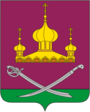
The administrative center of the Bolsheorlovsky rural settlement .
Content
Physico-geographical characteristics
Geographical position
Bolshaya Orlovka is located in the central part of the Rostov region . The nearest highway is Rostov-on-Don - Volgodonsk . The distance to the regional center of Rostov-on-Don is 170 km. The distance to the district center Bolshaya Martynovka 35 km. The river flows through the settlement. Sal .
Streets
|
|
|
Etymology
The name of the settlement comes from Vasily Petrovich Orlov, as the land given to him in possession.
History
In the Khazar time, settlements of the Saltovo-Mayatsk culture existed in the Bolshoi Orlovka area. In the nearby burial ground, many archaeological sites have been found [2] .
Russian Empire
Bolshaya Orlovka is the second most important and in its historical fate settlement after Bolshaya Martynovka . Before the revolution, there were no differences between them, both settlements were volost centers of the 1st Don Circle .
The birthday of the settlement of Bolshaya Orlovka was established on July 15, 1787.
Through the efforts of local historians of Bolshoi Orlovka, genuine documents confirming this date were found in the Rostov State Archive of the Rostov Region (GARO) - a letter authorizing Colonel Vasily Petrovich Orlov to own the land and settle it with peasants “On July 15, 1787, the Donskoy Troop Civil Government issued a determination: to allow Colonel Vasily "Petrovich Orlov take a place under the mill on the Sal river above the Four Yars mouth of the Oblivska (Oblivnaya) beam.
Land is received, but without workers, it will not give any income, it will not be cultivated. Vasily Petrovich Orlov invites here residents of the south of Ukraine, accustomed to living in the steppe. He promises the “Golden Mountains” - land and freedom, which at that time was a real boon for working peasants. Workers from the Voronezh province, where they also speak Ukrainian, reached for peasants-Taurians. From here and remained with the indigenous people, still Ukrainian dialect. Thus a settlement called the settlement appeared , where the peasants settled with special privileges. The 19th century historian Nikolai Kostomarov describes these privileges as follows: “If the owner has a lot of land, he promises the villagers who agree to live on the land benefits, that is: they will have less land and less land.” The inhabitants of the Salsk settlements were officially considered free, since the Don foremen were noblemen and did not have the right to possess serfs.
USSR
When the question arose of creating a district, in the regional center they tried on for a long time where to be to the regional center; either in Bolshoi Orlovka or Bolshoi Martynovka. The choice fell on Martynovka, but the chairman of the district executive committee was Bolsheorlovites Zakhar Filimonovich Kovalev. Thus, a compromise was found.
Sloboda Holidays
The birthday of the settlement of Bolshaya Orlovka was established on July 15, 1787, but is celebrated in the second half of September.
Population
National composition
National composition as of 01.01.2008:
| Nationality | Number people |
|---|---|
| Russians | 2702 |
| Turks | 850 |
| Azerbaijanis | 433 |
| Ukrainians | 186 |
| Belarusians | 29th |
| other nationalities | 116 |
| Total population | 4326 |
Demographics
| Population | |
|---|---|
| 2002 [3] | 2010 [1] |
| 4300 | ↘ 4063 |
Social Sphere
Education
In 1872, a three - year parish school was opened with 60 students. The main subject was the Law of God . The main teacher was Pop Fedor.
In 1910, with the funds raised by the inhabitants of the settlement, a four-grade elementary school was built. The first director of the new school was Chaykin Ivan Dmitrievich. After the October Revolution, the school began to be called - School of the first stage .
In 1923, the second-level school was opened in the building of the merchant Nechaev. Pupils of 5th, 6th and 7th grades studied in it. This school was named: School of Peasant Youth (ShKM). In 1940, the seven-year school expanded and turned into a secondary school. But she did not release - the war prevented. In 1953-1954, the first graduation of Bolsheorlovskaya secondary school.
In 1962, a new two-story school building was built. By this time, the school already had 25-26 classes of 35 people per class, all in all about 900 students.
In 1985, a new three-story school building for 624 students was built in the settlement, which accepts students in our time.
Social Protection
Martynovsky Nursing Home for the Elderly and Disabled
The state budgetary institution of social services for the population “Martynovsky nursing home for the elderly and disabled” was opened on April 19, 2001.
in accordance with the resolution of the Head of the Administration of the region dated September 1, 2000 "On the creation of the state regional institution of social protection of the population" Martynovsky boarding house for the elderly and disabled. "
The boarding school is home to 60 places, with one charity department (25 places). Located in 2 buildings built in 1968 (Previously, these buildings housed a kindergarten). The boarding house is served by 62 employees, of which 30 are medical personnel. The boarding school is a type 4 institution.
Kindergartens
In Soviet times, there were 2 kindergartens. But at the present time only one works, in the building of the second there is now a boarding house for the elderly and disabled.
Sport
The settlement has its own football team, as well as a stadium where matches for the district cup are held.
It is planned to build a swimming pool on the territory of Bolsheorlovsk secondary school.
Attractions
Church of the Nativity
There is an opinion among the population that the first church was erected here after three years as the land was given to Orlov, that is, 1790. The wooden church was transported from the Voronezh or Oryol provinces. The fate of this church is unknown, but in 1942 during the bombing of the settlement, the stone church was damaged, and subsequently demolished on the banks of the Sal River. A new church has existed since 2001. In the future, it is planned to build a church on the model of a stone church destroyed during the Great Patriotic War.
Literature
Verse by E.P. Kazmina about the settlement of Bolshaya Orlovka:
Boasting your native side is not clever
After all, we do not have gray-haired towers and churches.
But still, our Big Orlovka
For residents of local relatives and shallows.
She sheltered in the bends of Sala
Freely lies on open spaces of steppe.
And the warriors and riots she experienced
But with honor always came out of them.
You didn’t seek fame for yourself
But she knew one task.
Sometimes she herself went hungry
But she fed the country with bread.
And winters and springs fly over you
But you never counted the year.
I was proud of freedom, my fate
Rebellious Salsky you, settlement!
Sources
- Kosyanenko V.M. Burial near the settlement of Bolshaya Orlovka - an early monument of the Salt-Mayak culture // Problems of chronology of archaeological sites of the steppe zone of the North Caucasus.- Rostov-on-Don, 1983. (Komar V.)
- Ilyukov L.S., Kosyanenko V.M. Early medieval complex from Bolshaya Orlovka // Medieval antiquities of the Don. Digest of articles. - M.: Bridges of Culture – Gesharim, 2007. - P. 85–113.
- Bezuglov S.I. About a coin from Bolshaya Orlovka (to an assessment of dating opportunities) // Medieval antiquities of the Don. Digest of articles. - M.: Bridges of Culture – Gesharim, 2007. - P. 114–118.
Notes
- ↑ 1 2 Results of the 2010 All-Russian Population Census. Volume 1. The number and distribution of the population of the Rostov region
- ↑ Kosyanenko V.M. Burial near the settlement of Bolshaya Orlovka - an early monument of the Salt-Mayak culture // Problems of chronology of archaeological sites of the steppe zone of the North Caucasus.- Rostov-on-Don, 1983. (Komar V.)
- ↑ 2002 All-Russian Population Census. Tom. 1, table 4. The population of Russia, federal districts, constituent entities of the Russian Federation, regions, urban settlements, rural settlements - district centers and rural settlements with a population of 3 thousand or more . Archived February 3, 2012.
Links
- Bolshaya Orlovka (settlement)
- V.S. Flerov (2015), TsIMLYAN COMPLEX OF THE KHAZAR TIME AT THE LOWER DON. POVOLZH ARCHEOLOGY