White Cliffs of Dover [1] [2] ( English White Cliffs of Dover ) [1] - cliffs framing the English coastline of the Strait of Pas de Calais . They are part of the Upland. The slope of the rock reaches 107 meters in height [3] and has a striking appearance due to the fact that it includes chalk , underlined by strips of black flint . The cliffs stretch west and east of the city of Dover in the county of Kent , an ancient and still significant English port.
| White Cliffs of Dover | |
|---|---|
| English White cliffs of dover | |
 | |
| Location | |
| A country |
|

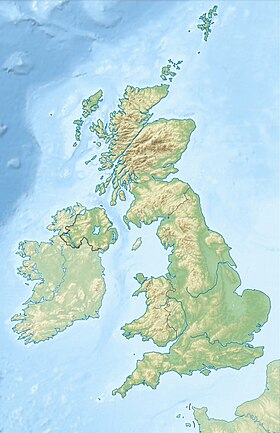

Dover cliffs due to the bright color can be seen from the French Cape " Cape Gray "). Although such chalk cliffs are not uncommon in the southeast of England , it is the Dover ones that are the most popular. Many works have been devoted to them [4] . Dover White Cliffs have long served among sailors as a symbol of approaching the shores of England.
The formation of these rocks occurred in the Cretaceous period [5] .
Dover Castle , nicknamed the " Key to England ", is located on the rocks.
See also
- Albion
- Cliffs of Seven Sisters
- Beachy Head
Notes
- ↑ 1 2 Shmeleva Elena Evgenievna. Linguoculturological features of marine vocabulary in English. - Moscow, 2009 .-- S. 181.
- ↑ The future of science . - International collection. - Knowledge, 1983 .-- T. 16 .-- S. 81.
- ↑ White Cliffs of Dover wildlife walk (inaccessible link) . Visit> South East & London . National Trust . Date of treatment September 28, 2013. Archived October 2, 2013.
- ↑ Cliffs of Dover or “Key to England”
- ↑ White Cliffs - Dover, UK