The German Union ( German: Deutscher Bund ) is an association of independent German states and free cities created after the Vienna Congress on the site of the Holy Roman Empire dissolved in 1806.
| Confederation | |||||
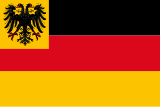
| German union | |||||
|---|---|---|---|---|---|
| Deutscher bund | |||||
| |||||
 | |||||
←  ←  ←  ←  ↓ 1815 - 1866 | |||||
| Capital | Frankfurt | ||||
| Largest cities | Vienna , Berlin , Hamburg , Munich , Cologne , Frankfurt , Stuttgart , Prague | ||||
| Languages) | Deutsch | ||||
| Area | 630,100 km² | ||||
| Population | (1839) 29.2 million people. | ||||
| Form of government | Confederation | ||||
| The president | |||||
| • 1815-1835 | Franz II | ||||
| • 1835-1848 | Ferdinand I | ||||
| • 1848-1866 | Franz Joseph I | ||||
| Story | |||||
| • June 8, 1815 | Congress of Vienna | ||||
| • August 23, 1866 | Dissolution | ||||
| Predecessors and successors | |||||
| |||||


Content
- 1 History
- 2 Organization of the union
- 3 Power structures
- 4 Foreign policy
- 5 Consequences of the Vienna Congress
- 6 German society
- 6.1 Biedermeier
- 6.2 Science and culture
- 6.3 Radical nationalism
- 6.4 Jews in German society
- 7 Customs Union
- 8 Beginning of the Industrial Revolution
- 9 1848 Revolution
- 10 Age of Iron and Blood
- 11 Notes
- 12 Literature
- 13 Links
History
The Union was founded on June 8, 1815 at the Vienna Congress as the heir to the Holy Roman Empire, which collapsed in 1806. At first, 39 states entered the German Union, but in 1866 (by the time of dissolution), 32 countries remained in it [1] , which are traditionally distinguished in Germany by the exceptional diversity of state forms.
The union included: one empire ( Austrian ), five kingdoms ( Prussia , Saxony , Bavaria , Hanover , Württemberg ), the duchies and principalities, as well as four republic cities ( Frankfurt , Hamburg , Bremen and Lübeck ).
As in previous times, this German association included territories under foreign sovereignty - the king of England (the kingdom of Hanover until 1837), the king of Denmark (the duchies of Holstein and Saxe-Lauenburg until 1864), the king of the Netherlands (the grand duchy of Luxembourg until 1866).
The indisputable military-economic superiority of Austria and Prussia gave them a clear political priority over other members of the union, although formally it proclaimed the equality of all participants. At the same time, a number of lands of the Austrian empire ( Hungary , Dalmatia , Istria , etc.) and the Prussian kingdom ( East and West Prussia , Poznan ) were completely excluded from allied jurisdiction. This circumstance once again confirmed the special position in the union of Austria and Prussia.
Prussia and Austria only in those territories were part of the German Union, which were already parts of the Holy Roman Empire. The territory of the German Union in 1839 amounted to about 630,100 km² with a population of 29.2 million people.
After the Austro-Prussian War (June 17 - July 26, 1866), the German Union on August 23 in the city of Augsburg disbanded.
Union Organization
The German Union was a confederate entity. The main aspiration of the small states that made up the union was to maintain the status quo in Germany. The governing body of the German Union was the Allied Assembly ( Bundesversammlung ). It consisted of commissioners from 34 German states (including Austria) and 4 free cities and met in Frankfurt . In full force (69 votes), meetings of the Union Sejm were very rare, basically all decisions were made in its narrow composition (17 votes). The chairmanship of the union belonged to Austria, as the largest state in terms of territory and population of the German Union.
Each of the states united in the union possessed sovereignty and its own management system. In some, autocracy remained, in others, irregular estate-representative bodies functioned, and only seven adopted constitutions that limited the power of the monarch ( Bavaria , Baden , Württemberg , Hesse-Darmstadt , Nassau , Braunschweig and Saxe-Weimar ). [2]
The nobility had power over the peasantry , corvee , "bloody tithe" (tax on slaughtered cattle), a feudal court . Absolutism remained virtually untouched.
But capitalism was making its way in these unfavorable conditions. In Württemberg , Hesse , Coburg serfdom was abolished, corvée was supplanted by the more productive labor of hired laborers . Industrial production developed, especially in the Rhine region (Prussian) . In 1834, the German Customs Union was created .
The German Union lasted until 1866 and was liquidated after the defeat of Austria in the Austro-Prussian war (by 1866, it included 32 states). Its only member, which has maintained independence and has not suffered a single regime change, is the Principality of Liechtenstein [3] .
Power structures
- Federal Army ( Bundesheer )
- Federal Navy ( Bundesflotte )
Foreign Policy
At the German Federal Assembly, they were accredited as envoys of individual Union states (Bavaria, Austria, Hamburg, Bremen and Lubeck), as well as envoys of foreign states (France, Sardinia (Italy since 1862), the Netherlands, Denmark, Sweden, Great Britain, Russia, Spain, the United States of America, from 1840 - Belgium), the Federal Assembly did not have its own envoys to foreign states. Of the Union states, the Austrian Empire, the Kingdom of Prussia, the Kingdom of Bavaria, the Kingdom of Saxony, the Kingdom of Württemberg, the Grand Duchy of Baden and Hanseatic cities had their own embassies both in foreign countries and in other states of the union. In the same states of the union there were embassies of foreign states.
Consequences of the Vienna Congress
At the Congress of Vienna (1814-1815), England, in an effort to prevent the possible strengthening of France in the future, assisted Prussia in spreading its territory to the Rhine. At the same time, the plans of England did not include the excessive strengthening of Prussia and its transformation into a dominant European power.
In turn, Prussia agreed to the annexation of the Grand Duchy of Warsaw to Russia as a response step to the agreement on the accession of Saxony to Prussia. Talleyrand , then Prime Minister of France, used the "Saxon question" to end France’s international isolation and supported Austria and England, which had a secret agreement to disrupt these plans. As a result, 40% of the territory of Saxony was transferred to Prussia.
The resulting federal education consisted of 34 states and 4 cities: Frankfurt, Lübeck, Hamburg and Bremen. States did not have the right to join alliances threatening the Federation or its individual members, but could have their own constitutions. The federal body of the Bundestag met under the leadership of Austria in Frankfurt am Main with the participation of state representatives. Decisions taken by the dominant members of the Federation, Austria and Prussia, could be balloted even if delegations from four kingdoms spoke in their support: Saxony, Bavaria, Hanover and Württemberg. Germany of that time was connected only by a common language and culture.
Multinational Austria, in which by that time there were half as many Germans as other nationalities, with disastrous finances, was politically very weak.
Prussia, in which Hardenberg carried out his reforms until his death in 1822, came to the conclusion that a return to the days of absolute monarchy became impossible. However, the formation of a liberal-bourgeois society was hindered by the strong influence of the aristocracy in power structures and especially in the army.
The development of liberalism in the Federation was extremely uneven: Austria and Prussia ignored article 13 of the Federal Act, which obliged the introduction of a constitutional form of government. But it was introduced in Saxe-Weimar in 1816, in Baden and Bavaria in 1818, in Württemberg in 1819, in Hesse-Darmstadt in 1820.
German society
Compared to the previous century, German society of the 19th century was externally egalitarian. There was no significant difference in clothing, behavior and tastes. Significant property differences were hidden behind the facade of universal equality. Marriages between representatives of the former aristocracy and prosperous natives have become commonplace. At the same time, marriages were committed by mutual attraction. Already in 1840, about 60% of those employed in production were workers and small owners. Old forms of social inequality were replaced by new ones. From 20 to 30% of the population resorted to the help of various charitable organizations. In Chemnitz, the difference in the weekly wages of printer workers was 13 times.
Biedermeier
The era that followed the Napoleonic Wars, when society began to relax from the disorder and uncertainty of wartime, is called Biedermeier in Germany. At this time, thanks to the growth of the welfare of a significant part of society, caused by the economic upsurge and growth of labor productivity, a new class began to take shape, which would later be called the middle class, which became the basis for the stability of the state. Representatives of this class, due to their relative security, were not supposed to wage a fierce struggle for life every day. They had free time and money in order to seriously deal with family issues and raising children. Moreover, the family provided protection from troubles from the outside world. The rationalism of the previous century was replaced by a conversion to religion. This era found its convincing reflection in the neutral and conflict-free work of the German artist Spitzweg .
Science and Culture
In the first half of the century, Germany was a "country of poets and thinkers", which gave the world many new ideas. Schelling and a group of "natural philosophers" opposed Newtonian materialism with the assertion that Nature can only be known through reflection and intuition. Doctors Feuchtersleben from Vienna and Rigzais from Munich came up with the idea of abolishing the materialistic approach to medicine and the need to base prayer and meditation on the treatment.
In contrast to these manifestations of the denial of rationalism, names appeared in German science that significantly influenced the development of modern scientific knowledge. The outstanding scientist was Justus Liebig , who was introduced into the great science by Alexander Humboldt . Liebig actually became the creator of modern agricultural chemistry .
The group of politically engaged writers “Young Germany” showed itself in literature, which included Heinrich Heine , whose ratings ranged from a “fiery patriot” to a “cynical traitor” and from a “principled republican” to a “paid footman”. He had the courage to remain himself, and in many cases history has shown that he was right. [four]
Radical Nationalism
During the war of liberation, the idea that the Bundestag should become an effective federal body - the forum of the entire German nation was very widespread. This idea continued to live in student societies, especially Giessen and Yen, where the most radical students fell into revolutionary activity.
In 1815, a fraternity of university students ( German Burschenschaft ) was organized in Jena , which became the most influential organization calling for constitutional reforms, the acquisition of civil liberties and national unification. As a unifying symbol, they chose a black-red-gold flag, repeating the colors of the uniform of "Luttsov's rangers" from the time of the Liberation War in Germany . Of the total number of German students, about 8,000 joined the movement from one to one and a half thousand.
On October 18, 1817, students, with the permission of the Grand Duke in Eisenach near the walls of the Wartburg Castle, held their festival dedicated to the 300th anniversary of the beginning of the Reformation and the four-year anniversary of the “ Battle of the Peoples ” near Leipzig . Gathered about 500 people. On the very first day, the most radical group made a bonfire on which they began to burn "non-German" books, including the texts of the " Napoleon Code " and objects symbolizing the reprisals of the old regime. Police made arrests, but student organizations continued to exist underground.
On August 23, 1819, one of the radical students, Karl Ludwig Zand, killed in Mannheim a popular writer and observer from the Russian Empire, an opponent of German romanticism August von Kotzebue . King Frederick William III , inclined to overestimate the influence of radical sentiments, in a very moderate nationalist movement at that time, took a number of decisive measures.
Zand was publicly beheaded on May 29, 1820 , and his heroic behavior turned him into an idol of movement, and the chips from the scaffold were turned into an object of veneration by his supporters. In his honor in 1859 a monument was erected.
Prince Metternich , who was at the time of the assassination attempt in Rome , for several months hesitated to return from it, and on August 1, 1819 , meeting with Friedrich Wilhelm III in Teplice and convinced him to stop the reforms and establish strict supervision of universities. In his opinion, the time has come for a decision to choose between revolution and reaction. Adopted under his pressure in the presence of representatives of the Bundestag, the Carlsbad Decree ensured Austria's dominant role in the Federation, and obliged all members to establish control over universities. Student societies were prohibited, academic freedoms were abolished. All books containing less than 320 pages were subject to censorship. The country has created an atmosphere of suspicion and fear, paralyzing intellectual life.
In July 1830 , a revolution took place in Paris and the “bourgeois king” Louis Philippe sat on the throne instead of Karl. This event was echoed in Germany by the further development of liberal sentiments and the adoption of constitutions in its northern lands on the model of what had already taken place in the south of the country [ 4] .
Jews in German society
The Jews who had their job in 1816 made up about 1.1% of the population of the German Empire. By 1871, this share remained virtually unchanged - 1.2%. During this time, the Jewish community noticeably stratified into a relatively small group of very rich families and the bulk of the poor. The Jewish community, together with government officials, made attempts to attach this mass to work in agriculture, but to no avail. The centuries-old practice of segregation affected in which the most accessible professions were trade and finance. Already in 1882, 20% of bank and exchange employees were Jews. On the other hand, by the end of the century, the number of Jewish street vendors fell to 2%.
The inability to serve in the army, which made it possible to climb the social ladder, forced Jewish youth to apply for university education. In the 80s, already about 10% of Prussian students came from their midst. A significant number of doctors, lawyers, and people in liberal professions were also Jews. But only in 1859 one of them occupied the professorship in Göttingen , and the other became the first Jewish judge in Hamburg only in 1860 .
The position of a loyal Jew in German society was formulated by the famous liberal writer Bertold Auerbach as follows: “I am German and I cannot be anyone else, I am Swabian and I do not want to be anyone else, I am Jewish and this confusion corresponds to the essence of who I am". [5] On the other hand, for thousands of years in German society there existed not only an audit, but also a general discussion that the word “German” is synonymous with the word “Christian”. And society demanded from its member a definite answer to the question of its nationality, inseparable from belonging to a particular religious denomination. In this regard, such a complicated formulation was incomprehensible to the masses.
Domestic and administrative anti-Semitism has deeply rooted in European history. It has various forms of expression, including in the form of distrust and suspicion of the nation as a whole, based on the categorical rejection by the Jewish communities of the ongoing mixing of the population in the process of assimilation. Orthodox representatives of the Jewish population rightly feared assimilation, threatening the fall in authority of the Law of Moses . Representatives of the clergy shared the same fears - rabbis. In the XIX century. to all manifestations of antipathy was added envy to the successes demonstrated by Jewry in the fields that became accessible to him.
Nevertheless, the influence of Jewish culture on German culture and the reverse influence were certainly fruitful for each of the parties. [four]
Customs Union
Liberal transformations in Germany took place most intensively in the field of economics, where there was a tendency towards the formation of a common German market. In this direction, there was a system of high customs duties, which to some extent protected the goods produced within the Federation from competition from England. Prussia was the initiator in this matter, in which in 1818 all existing customs between the Prussian provinces were canceled and Prussia became a free trade territory. Austria opposed the very idea of free trade, which found among the members of the Federation an ever-increasing number of supporters. On January 1, 1834 , the German Customs Union ( German Zollverein ) was created, which included Bavaria, Prussia and another 16 German principalities. As a result, the territory with a population of 25 million people, out of 18 members of the Federation, was under the control of the Prussian bureaucracy. Prussian coin, thaler , became the only used coin in Germany . Austria was not a member of the customs union [2] [4] .
Beginning of the Industrial Revolution
Until the middle of the century, industrial production grew at a very moderate pace. Back in 1846 - 1847, less than 3% of the working population in the countries of the Customs Union could be classified as industrial workers. However, the construction of railways that has begun has radically changed the economic situation.
In 1784, the Scottishman William Murdoch ( Eng. William Murdoch ) built a prototype of a steam locomotive (locomotive). February 21, 1804 the Englishman Richard Trevitik , created a full-scale active copy, which was used for in-plant transport. He received a patent for his invention in the same year. Basically, rail tracks in Europe were used to move cars by horses harnessed to them.
During the Napoleonic Wars, prices for grain and feed increased, which made them look for a replacement for horses. At first, the use of steam traction was hampered by the fact that the correct ratio was not found between the weight of the locomotive, the slope of the road and the required traction, which led to the erroneous opinion that it was impossible to drive on smooth rails.
Back in 1814, George Stephenson built his first Blucher locomotive, and then, improving the design, created his own “Rocket”. The first locomotive public railway track was opened in England between Stockton and Darlington in 1825 , and then, on the Reinhill tests, its Rocket showed its outstanding qualities. In Germany, this construction was started by the opening of a railway link between Nuremberg and Fuerth in 1835 .
Then began a railway boom throughout Europe. Even conservative delegates from the general German parliament from Austria were forced to travel along the Rhine by boat to Dusseldorf , and then by train to Berlin .
Railway communication in a short time reduced transport costs for the delivery of goods by 80%. The social effect of railway communication was also manifested in the significant democratization of society. King of Prussia Frederick William III lamented that from now on the lower classes could go to Potsdam at the same speed as he did.
However, the much more important significance of railway construction was that it became an incentive for the development of the mining and steel industries , as well as mechanical engineering, in which German industry occupied a leading position [4] .
1848 Revolution
In the middle of the century, famine began in Europe. Mass unemployment, hunger and poverty have swept many lands in Germany. The series of crop failures that followed the year 1845 caused hunger riots in Berlin , Vienna , Stuttgart and Ulm . In Upper Silesia , more than 80,000 cases of typhoid have been reported. 18,000 patients died. Potatoes, which had by then become one of the main dishes of the national diet, became unfit for food because of the disease that struck him. This triggered a “Potato Uprising” in Berlin in 1847 . The real wage of industrial workers between 1844 and 1847 fell by 45%. The catastrophic situation was confirmed by the widespread report of the liberal medical professor, creator of the cell theory in medicine and biology, Rudolf von Virchow .
The most difficult situation was a group of small entrepreneurs in Silesia, who owned 116,832 obsolete textile factories. Only 2,628 of them were mechanized. Silesian weavers were not able to compete with English goods. All this led to rebellion. Workers smashed factories and offices, burned debt books. The approaching army restored order within three days.
Liberal artists such as Heine , Gerhardt Hauptmann and Kete Kolwitz expressed sympathy for the rebels, considering them innocent victims of the industrial revolution. The events that actually happened gave Karl Marx an occasion for his well-known generalization containing the statement that pauperization of the working class is an inevitable feature of industrial capitalism.
Before 1848, the situation in the economy began to improve markedly and its accelerated rise was outlined. However, on February 24, 1848, fights on the barricades began in Paris . King Louis Philippe I fled and France again became a republic. In March, the radicals, led by the Hungarian nationalist Kossuth, raised the question of liquidating the Habsburg monarchy. This was reflected in German lands, and the parliament of Baden raised the question of transforming the Federation into a state on the model of the United States of America.
Revolutionary fermentation, which often represented the conflicting interests of various social groups, swept the country. The Bundestag recognized on May 9, 1848, a three-color flag as a state one. In many German states, governments were replaced by more liberal ones. In Austria, Metternich was forced to flee, and the Prussian king Frederick William IV issued an order on March 18 to abolish censorship and expressed support for the adoption of the constitution. A crowd filled the Berlin castle and, in order to restore order, General Pritwitz was forced to order the troops to disperse the crowd. In response, barricades arose and 230 people died in battles. Then the king ordered the troops to leave the city on March 19 , personally participated in the funeral of the victims of the clashes, and wearing a three-color bandage, drove through the streets. On the same day he issued a proclamation containing a phrase, the meaning of which remained unclear: "From now on, Prussia enters Germany."
A moderately liberal government was formed under the leadership of banker Ludolf Camphausen and industrialist David Hansemann , who pursued a course to support economic growth and the monarchy. Radical groups at that time were rather weak. The attempt by the radical Friedrich Haecker to establish a republic by force of arms was easily terminated by the army. On the other hand, the right-wing opposition in the person of Bismarck , Prince William and Gerlach was isolated.
On May 18 , a parliament was elected in Frankfurt am Main , elected according to the old scheme, with 350 delegates participating in St. Paul's Church . The Bundestag was dissolved, and Germany received a new, completely impotent government that did not have full power, did not have money, did not have power over the armed forces in the absence of a common constitution for the country with a parliament divided into opposing factions. In spring and summer, in Prussia, there were 50 conservative associations, 300 liberal constitutional organizations, and 250 democrat groups. But the most organized and numerous were Catholics, demanding that the rights of the church be written in the constitution. In October, they held the All-German Catholic Congress in Mainz , which became the most influential extra-parliamentary organization.
Then in Germany political parties had not yet formed, and members of self-identifying groups gathered in beer bars and hotels, by whose name parliamentary factions were called. As Bismarck noted, many resolutions were adopted and votes were taken, but nothing of practical value was expressed.
But nationalist trends posed a serious problem. Delegates from the Polish lands , South Tyrol , Bohemia and Moravia , and also Denmark insisted on guaranteeing their rights. In December, Friedrich Wilhelm dissolved the National Assembly and proclaimed a new constitution. [four]
The parliament in Frankfurt insisted on the inclusion of Austria in the empire, but without its territories, inhabited by non-Germans, which was unacceptable to the young Austrian emperor Franz Joseph, since it meant the division of his empire. Then the parliament decided to propose the crown to Frederick William IV, who refused to accept the crown from the "street children". His refusal put an end to hopes for the reunification of Germany, Prussia denied the parliament legitimacy and recalled its delegates on May 14.
This decision caused a wave of protest, and even in Prussia, Landwehr units opposed the regular army. The left-wing parliamentary majority decided to move to Stuttgart, thereby getting out of control of the Austrian and Prussian troops stationed in Frankfurt.
Prince Wilhelm (future first emperor) resolutely pursued the poorly armed rebel forces, for which he earned the nickname "card prince" (de. Grapeschot Prince). As a result, 1.1 million Germans left Germany during these years, who emigrated mainly to America. The revolution was defeated because the radicals did not have a clearly defined position and were not united. In addition, it became clear that Austria, which supported anti-Prussian protests, finally lost the chance to become the dominant country in the German Union. The conservative strata in Prussia retained their positions in state administration, and especially in the army. The bourgeoisie gave up their political ambitions and concentrated on production and financial activity. As a result, the years between 1846 and 1873 became the years of the formation of the middle class and a substantial increase in its well-being.
In 1858, Prince William was appointed regent under the mentally ill king and, to everyone’s surprise, replaced the unpopular government, creating an office of conservative liberals.
The Age of Iron and Blood
Otto von Bismarck , who created the Second Reich in the wars with Denmark, Austria and France (the small one without Austria), largely satisfied the long-standing need for the unification of Germans under one roof. After that, his task was to eliminate the danger of a war on two fronts, which he considered a deliberately losing state. He was haunted by the nightmare of coalitions, which he tried to eliminate by categorically refusing to acquire colonies, which would inevitably significantly increase the risk of armed conflict in the clash with the interests of the colonial powers, especially with England. He considered good relations with her as a guarantee of German security, and therefore he directed all his efforts to solving internal problems. [four]
Notes
- ↑ German Union in TSB (Unavailable link) . Date of treatment March 14, 2014. Archived March 14, 2014.
- ↑ 1 2 Caratini R. 943.2 - De la Prusse au III e Reich. - A - La Prusse et l'Allemagne avant Bismarck. - b) Prise de conscience du sentiment national. - c) L'Europe de 1815. - B - L'Allemagne jusqu'à la guerre de 1914. - a) Bismarck. // Bordas Encyclopédie. 5 a - Histoire universelle (2). De l'Antiquité à nos jours: l'Europe. - 1st ed. - M .: Bordas-Éditeur, 1969. - S. 25-26. - 500 s. RERO R003578261 (fr.)
- ↑ Liechtenstein was in a defensive alliance with the Austrian Empire , further maintaining close ties with Austria-Hungary . Another neutral state that did not disappear , Luxembourg , was expelled from the German Union, in fact, for neutrality in the Austro-Prussian war. If he entered the war, he would have been annexed by Prussia or would have joined the North German Union . As a result, Luxembourg was annexed in turn by the German Empire and the Third Reich in 1914 and 1939, respectively.
- ↑ 1 2 3 4 5 6 7 Martin Kitchen . The Cambridge Illustrated History of Germany: -Cambridge University Press 1996 ISBN 0-521-45341-0
- ↑ Nachum T. Gidal . Die Juden in Deutschland von der Römerzeit bis zur Weimarer Republik. - Gütersloch: Bertelsmann Lexicon Verlag GmbH, 1988. ISBN 3-89508-540-5
Literature
- Jürgen Müller. Deutscher Bund und deutsche Nation 1848-1866. Vandenhoeck & Ruprecht, Göttingen 2005, ISBN 3-525-36064-9
- Jürgen Angelow. Der Deutsche Bund. Wiss. Buchgesellschaft, Darmstadt 2003, ISBN 3-534-15152-6
Links
- Wiener Schlussakte vom 15. Mai 1820 (German)
- Forschungsprojekt: Quellen zur Geschichte des Deutschen Bundes (German)
- Der Deutsche Bund (German)
- HGIS Germany (German)
- Deutsche Bundesakte vom 8. Juni 1815 (German)
- Karte: Deutscher Bund (German)
- Auszug aus Meyers Konversationslexikon (German)