Gold and silver euro coins are issued by each country in the Eurozone . They are minted in gold and silver , as well as other metals in a limited edition. Austria was the first Eurozone country to introduce a commemorative silver euro coin in January 2002. Here is a complete list of Austria's euro commemorative coins, excluding two-euro coins .
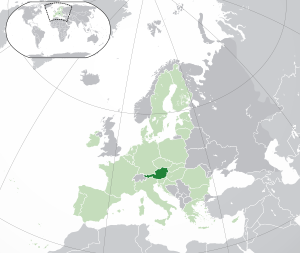 | |
| ISO code | ISO 3166-2: AT |
These coins, issued at the Austrian Mint , are accepted for payment only in Austria, unlike Austrian euro coins of regular minting , which are legal tender in all countries of the Eurozone [1] . All coins presented in this article, as a rule, fall into private collections and therefore are called collectibles .
Austria's euro collection coins are dedicated to anniversaries of various events and historical events , sometimes to current events that are important for the country. Since 2002, Austria has been minting six variations of these coins from various precious metals in denominations of 5, 10, 20, 25, 50 and 100 euros. In addition to these coins, Austria mintes five investment coins of a single design, called the Vienna Philharmonic. These coins are issued in denominations: 1,5 (silver) and 10, 25, 50, 100 euros (gold). A coin with a face value of 100,000 euros was issued only once in 2004 in a small print run. In 2009, a commemorative gold coin with a face value of 2,000 euros was issued, dedicated to the 20th anniversary of the Vienna Philharmonic. Coins in denominations of 5, 10, 20 euros are issued from silver . The coin of 25 euros is bimetal: the outer ring is made of silver, the inner part is made of niobium . Coins in denominations of 50 and 100 euros are issued from gold .
Denominations and coin metals
By March 2012, 8 variations of collectible coins of Austria were issued. In total, the National Bank of Austria issued such coins: eleven coins in 2002, twelve in 2003, fourteen in 2004, thirteen in 2005, thirteen in 2006, thirteen in 2007, fifteen in 2008, fifteen in 2009, thirteen in 2010, fourteen in 2011 and five in 2012 [2] .
This table shows the number of coins issued in each year. In the first block of columns, coins are grouped by coin metal , and in the second, by value .
| Year | Total | Metal | Coin value | ||||||||||||||
| Gold (Au) | Silver (Ag) | bimetal ( Ag + Nb ) | € 100,000 | € 2,000 | € 100 | € 50 | € 25 | € 20 | € 10 | € 5 | € 1.50 | ||||||
| 2002 | eleven | 6 | five | - | - | - | 2 | 2 | one | 2 | 3 | one | - | ||||
| 2003 | 12 | 6 | five | one | - | - | 2 | 2 | 2 | 2 | 3 | one | - | ||||
| 2004 | 15 | 7 | 6 | one | one | - | 2 | 2 | 2 | 2 | 3 | 2 | - | ||||
| 2005 | 13 | 6 | 6 | one | - | - | 2 | 2 | 2 | 2 | 3 | 2 | - | ||||
| 2006 | 13 | 6 | 6 | one | - | - | 2 | 2 | 2 | 2 | 3 | 2 | - | ||||
| 2007 | 13 | 6 | 6 | one | - | - | 2 | 2 | 2 | 2 | 3 | 2 | - | ||||
| 2008 | 15 | 6 | eight | one | - | - | 2 | 2 | 2 | 2 | 3 | 3 | one | ||||
| 2009 | 15 | 7 | 7 | one | - | one | 2 | 2 | 2 | 2 | four | 2 | one | ||||
| 2010 | 13 | 6 | 6 | one | - | - | 2 | 2 | 2 | 2 | 3 | 2 | one | ||||
| 2011 | 14 | 6 | 7 | one | - | - | 2 | 2 | 2 | 3 | 3 | 2 | one | ||||
| 2012 | four | one | 3 | one | - | - | - | one | one | 2 | one | one | - | ||||
| 2012 | - | one | 6 | - | - | - | one | one | one | one | 2 | one | one | ||||
| Total | 141 | 63 | 68 | ten | one | one | 20 | 21 | 20 | 23 | 31 | 20 | four | ||||
| |||||||||||||||||
Series and coin metals
Silver Coins
| Series | Face value | Coin Name | Date of issue | Try |
| “Austria and its people. Castles of Austria » | € 10 | Ambras Castle | April 24, 2002 | Ag 925 |
| € 10 | Eggenberg Palace | September 10, 2002 | Ag 925 | |
| € 10 | Schloss Hof Castle | April 9, 2003 | Ag 925 | |
| € 10 | Schonbrunn Palace | October 8, 2003 | Ag 925 | |
| € 10 | Helbrunn Castle | April 21, 2004 | Ag 925 | |
| € 10 | Arstetten Castle | October 13, 2004 | Ag 925 | |
| "60 years of the Second Republic" | € 10 | 60 years of the Second Republic | May 11, 2005 | Ag 925 |
| € 10 | Opening of the Burgtheater and Vienna State Opera in 1955 | October 12, 2005 | Ag 925 | |
| “Austria and its people. Famous Abbeys of Austria » | € 10 | Nonberg Abbey | April 5, 2006 | Ag 925 |
| € 10 | Gottweig Abbey | October 11, 2006 | Ag 925 | |
| € 10 | Abbey Melk | April 18, 2007 | Ag 925 | |
| € 10 | St. Paul's Abbey in Lavantal | October 10, 2007 | Ag 925 | |
| € 10 | Klosterneuburg | April 16, 2008 | Ag 925 | |
| € 10 | Seccau Abbey | October 8, 2008 | Ag 925 | |
| "Myths and legends of Austria" | € 10 | Basilisk in Vienna | April 15, 2009 | Ag 925 |
| € 10 | Richard the Lionheart | October 7, 2009 | Ag 925 | |
| € 10 | Erzberg in Styria | April 14, 2010 | Ag 925 | |
| € 10 | Charlemagne at Untersberg | October 13, 2010 | Ag 925 | |
| € 10 | Lindworm in Klagenfurt | May 4, 2011 | Ag 925 | |
| € 10 | Ah my dear Augustine | October 12, 2011 | Ag 925 | |
| "Federal states of Austria" | € 10 | Styria | April 25, 2012 | Ag 925 |
| € 10 | Carinthia | September 26, 2012 | Ag 925 | |
| € 10 | Lower austria | May 15, 2013 | Ag 925 | |
| € 10 | Vorarlberg | October 16, 2013 | Ag 925 | |
| "Austria. Way through the Ages ” | € 20 | Renaissance ( Ferdinand I ) | June 12, 2002 | Ag 900 |
| € 20 | Baroque | September 12, 2002 | Ag 900 | |
| € 20 | The Biedermeier Period | June 11, 2003 | Ag 900 | |
| € 20 | Post-war period | September 17, 2003 | Ag 900 | |
| "Austria on the high seas" | € 20 | The ship " Novara " | June 16, 2004 | Ag 900 |
| € 20 | Ship " Archduke Ferdinand Max " | September 15, 2004 | Ag 900 | |
| € 20 | “ Admiral Tegethof Ship ” - Austrian Polar Expedition | June 8, 2005 | Ag 900 | |
| € 20 | Cruiser St. George | September 14, 2005 | Ag 900 | |
| € 20 | Austrian merchant fleet | June 7, 2006 | Ag 900 | |
| € 20 | Ship "Viribus Unitis" | September 13, 2006 | Ag 900 | |
| "Austrian Railways" | € 20 | Emperor Ferdinand Railway | June 13, 2007 | Ag 900 |
| € 20 | Railway Vienna-Trieste | September 12, 2007 | Ag 900 | |
| € 20 | Beautiful era | June 11, 2008 | Ag 900 | |
| € 20 | Austrian Western Railway | September 10, 2008 | Ag 900 | |
| € 20 | Electric railway | June 17, 2009 | Ag 900 | |
| € 20 | Railway of the future | September 9, 2009 | Ag 900 | |
| "Rome on the Danube" | € 20 | Virinum | May 5, 2010 | Ag 900 |
| € 20 | Vindobona | September 8, 2010 | Ag 900 | |
| € 20 | Carnunt | April 13, 2011 | Ag 900 | |
| € 20 | Aguntum | September 7, 2011 | Ag 900 | |
| € 20 | April 11, 2012 | Ag 900 | ||
| € 20 | Brigantium | June 13, 2012 | Ag 900 | |
| "Living background" | € 20 | Triassic | April 17, 2013 | Ag 900 |
| € 20 | Yura | September 11, 2013 | Ag 900 |
Gold Coins
| Series | Face value | Coin Name | Date of issue | Try |
| "2000 years of Christianity" | € 50 | Catholic Order of St. Benedict | March 13, 2002 | Au 986 |
| € 50 | Christian mercy | March 12, 2003 | Au 986 | |
| "Great composers" | € 50 | Joseph Haydn | March 20, 2004 | Au 986 |
| € 50 | Ludwig van Beethoven | February 16, 2005 | Au 986 | |
| € 50 | Wolfgang Amadeus Mozart | February 1, 2006 | Au 986 | |
| "Famous doctors of Austria" | € 50 | Gerard van Sviten | January 31, 2007 | Au 986 |
| € 50 | Ignaz Philippe Semmelweis | January 30, 2008 | Au 986 | |
| € 50 | Theodore Billroth | February 11, 2009 | Au 986 | |
| € 50 | Clemens Baron von Pirke | May 26, 2010 | Au 986 | |
| “Klimt and his women” | € 50 | Portrait of Adele Bloch-Bauer | January 25, 2012 | Au 986 |
| € 50 | Expectation | February 27, 2013 | Au 986 | |
| "Artistic treasures of Austria" | € 100 | Sculpture | November 13, 2002 | Au 986 |
| € 100 | Painting | November 5, 2003 | Au 986 | |
| Vienna Modern | € 100 | Vienna Secession | November 10, 2004 | Au 986 |
| € 100 | Steinghof Cathedral | November 9, 2005 | Au 986 | |
| € 100 | Vienna River Gate | November 8, 2006 | Au 986 | |
| € 100 | Vienna architecture | November 7, 2007 | Au 986 | |
| "Crowns of the Habsburg House" | € 100 | Imperial crown of the Holy Roman Empire | November 5, 2008 | Au 986 |
| € 100 | Crown of the Archduke of Austria | November 4, 2009 | Au 986 | |
| € 100 | Hungarian crown of St. Stephen | November 10, 2010 | Au 986 | |
| € 100 | Czech crown of St. Wenceslas | November 9, 2011 | Au 986 | |
| € 100 | Crown of the Austrian Empire | November 14, 2012 | Au 986 | |
| "Our wildlife" | € 100 | Red deer | October 30, 2013 | Au 986 |
Coins of the Vienna Philharmonic
Philharmoniker - Austrian gold coin, the first gold coin issued in euros. The official face value of a 1 ounce coin is 100 euros .
| The Vienna Philharmonic Coins [3] are made of 999.9 gold (24 carats). Each year there are four ratings, sizes and weights. They are investment coins , although they mainly settle in private collections. According to the World Gold Council , these investment coins were leaders in terms of sales in 1992, 1995, 1996, and 2000 [4] . Coins depict musical instruments used by the Vienna Philharmonic Orchestra . On the obverse and reverse of the coin the text is Wiener Philharmoniker (“Vienna Philharmonic”). The large organ in the Golden Hall of the Vienna Musikverein is depicted on coins. On the front side of the coin denomination in euros, weight and year of issue. Since February 2008, silver coins in denominations of 1.50 euros are also issued, the design of which is identical to gold. | |||
| Picture | Face value | Try | Painter | Weight | Diameter | Thickness | Year of issue / Circulation |
|---|---|---|---|---|---|---|---|
| € 100,000 | Au 999.9 | Thomas Pesendorfer | 31.103 kg | 370 mm | 20 mm [5] | 2004/15 coins | |
| € 2,000 | Au 999.9 | Thomas Pesendorfer | 622 g | 74 mm | 8.3 mm | 2009 year / 6027 coins | |
| € 100 | Au 999.9 | Thomas Pesendorfer | 31.103 g | 37 mm | 2.0 mm | 2002/164 2003/179,881 2004/176 319 2005/158 564 2006/82 174 2007 / 108.675 2008 / 715.800 2009 / 903.000 2010 / 512,000 | |
| € 50 | Au 999.9 | Thomas Pesendorfer | 15,552 g | 28 mm | 1.6 mm | 2002/40 922 2003/26 848 2004 / 24,269 2005 / 21,049 2006/20 085 2007 / 25.091 2008 / 73.800 2009 / 92.300 2010 / 56.600 | |
| € 25 | Au 999.9 | Thomas Pesendorfer | 7.776 g | 22 mm | 1.2 mm | 2002/40 807 2003/34 019 2004 / 32,449 2005 / 32,817 2006 / 29,609 2007 / 34.631 2008 / 97.100 2009 / 172.000 2010 / 84.900 | |
| € 10 | Au 999.9 | Thomas Pesendorfer | 3.121 g | 16 mm | 1.2 mm | 2002/75,789 2003/59 654 2004/67 994 2005 / 62,071 2006 / 39,892 2007 / 76.325 2008 / 176.700 2009 / 437.700 2010 / 226.700 | |
| € 1.50 | Ag 999.9 | Thomas Pesendorfer | 31.103 g | 37 mm | 3.2 mm | Silver coins "Vienna Philharmonic" are also investment (bullion coin). Circulation: 2008 / 7.800.000 2009 / 9.000.000 2010 / 11.300.000 |
European Numismatic Program
In 2004, two years after the euro was introduced in cash, seven Eurozone countries (Austria, Belgium, Germany, Spain, the Netherlands, Portugal and France) came together to issue coins of a single theme. The following year, the undertaking was continued. It was called the European Numismatic Program (series) . As part of this program, coins are issued by various EU countries (not only those belonging to the Eurozone). The number of participants is not constant. Each year is dedicated to a topic that illuminates the culture and history of Europe [6] .
From the very first issue, the logo of the series has become the so-called Eurostar, which is a combination of the Euro symbol and the star.
Under the program, Austria issues coins of 5 or 20 euros.
| Year | Theme of the year | Face value | Coin Name | Date of issue | Try |
| 2004 | “Enlargement of the European Union” | € 5 | EU enlargement | January 28, 2004 | Ag 800 |
| 2005 | "Peace and freedom" | € 5 | Anthem of Europe | May 11, 2005 | Ag 800 |
| 2006 | “Outstanding European Persons” | € 5 | 200 years since the birth of Wolfgang Mozart | February 01, 2006 | Ag 800 |
| 2007 | "European achievements" | € 5 | 100 years of suffrage reform | January 10, 2007 | Ag 800 |
| 2008 | "Cultural heritage" | € 5 | Herbert von Karayan's 100th Birthday | May 09, 2008 | Ag 800 |
| 2009 | European Heritage | € 5 | 200 years since the death of Joseph Haydn | January 14, 2009 | Ag 800 |
| 2011 | "European Researchers" | € 20 | Nicolaus Jacques | February 23, 2011 | Ag 900 |
| 2012 | "European artists" | € 20 | Egon Schiele | March 14, 2012 | Ag 900 |
| 2013 | European Writers | € 20 | Stefan Zweig | March 20, 2013 | Ag 900 |
Commemorative Coin of 2008
In 2008, the Austrian Mint issued a commemorative medal weighing 20 kg and a batch of commemorative silver coins in honor of the 500th anniversary of the coronation of the Holy Roman Emperor Maximilian I. Their obverse repeated the design of the coin of 1508, issued in honor of the same event. The main difference from silver euro coins is that the face value of this issue is indicated in monetary units of the New Time - in talers .
2002 Coins
| Catholic Order of St. Benedict [7] | ||||
|---|---|---|---|---|
| Artist: Helmut Andexlinger | Austrian Mint | |||
| Value: € 50 | Metal: Au 986 | Circulation: 50,000 | Quality: Proof [8] | |
| Diameter: 22 mm | Date of issue: March 13, 2002 | Weight: 10.14 g | Edge: smooth | |
| The second coin from the series “2000 Years of Christianity ”. The first two were minted in 2000 and 2001 with a nominal value of 500 shillings . The coin is dedicated to Saint Benedict . Saint Benedict is the patron saint of Western Europe and monasticism. The rules of monastic life, or the rules of St. Benedict, developed in the VI century, are relevant today. Obverse: Saint Benedict and his sister making up the set of rules. The Holy Scholastic is depicted as a dove [9] . Together with his sister, Benedict founded the monastic Order of St. Benedict , which follows his rules [10] . Circular legend: it. Republik Österreich ( Russian Republic of Austria ), German Benedictus ( Rus. Benedict ), German. Scholastika ( Rus. Scholastica ) and the face value of "50 Euro". Reverse: A monk working at a desk on a manuscript. Copying books was one of the works of monks in the Middle Ages , when books were copied manually, it was a huge work to preserve a large amount of knowledge. | ||||
| Ambras Castle [11] | ||||
| Artists: Andreas Zanashka and Herbert Weiner | Austrian Mint | |||
| Value: € 10 | Metal: Ag 925 | Circulation: 130,000 20,000 50,000 | Quality: UNC Special unc Frosted proof | |
| Diameter: 32 mm | Date of issue: April 24, 2002 | Weight: 17.3 g | Edge: smooth | |
| The first coin from the series “Austria and its people. Castles of Austria. " Obverse: Renaissance castle south of Innsbruck . The inscription at the top of the coin: it. Republik Österreich ( Russian Republic of Austria ), the nominal value of the coin “10 Euro” and the date of minting are located at the bottom of the coin, as well as its inscription . Schloss Ambras ( Russian: Ambras Castle ). Reverse: A copy of the engraving of 1569, which depicts three court musicians in the Spanish Hall. | ||||
| 250th anniversary of the Vienna Zoo [12] | ||||
| Artists: Herbert Weiner and Helmut Andexlinger | Austrian Mint | |||
| Denomination: € 5 | Metal: Ag 800 | Circulation: 500,000 100,000 | Quality: UNC Special unc | |
| Diameter: 28.5 mm | Date of issue: May 8, 2002 | Weight: 10g | Edge: smooth [13] | |
| This coin is the first in the release of a new generation of Austrian coins in denominations of “5 Euro”. Obverse: The same for the whole series is a 9-sided star, symbolizing the 9 federal states of Austria , in the center of which is the face value of the coin “5” with inscriptions on it. Republik Österreich ( Russian Republic of Austria ) and the Euro. Reverse: Emperor's pavilion at the Vienna Zoo surrounded by a variety of animals. The dates "1752-2002" refer to the anniversary of the zoo and the date of issue of the coin. At the top of the coin is the inscription: German. 250 Jahre Tiergarten Schönbrunn ( Rus. 250th anniversary of the Schönbrunn Zoo ). | ||||
| Renaissance ( Ferdinand I ) [14] | ||||
| Artists: Herbert Weiner and Thomas Pesendorfer | Austrian Mint | |||
| Value: € 20 | Metal: Ag 900 | Circulation: 50,000 | Quality: UNC Special unc Frosted proof | |
| Diameter: 34 mm | Date of issue: June 12, 2002 | Weight: 20g | Edge: smooth | |
| The first coin from the series “Austria. Way through the ages. " Obverse: “Swiss Gate” in the Hofburg Palace in Vienna. Ferdinand I ordered them in the Renaissance style. Two soldiers on either side of the gate are a reminder of the siege of Vienna in 1529 . The circular legend is German. Republik Österreich ( Russian Republic of Austria ) and the nominal value of “20 Euro”. Reverse: Portrait of the Holy Roman Emperor and founder of the Austrian line of the Habsburg dynasty Ferdinand I. The inscription in the upper left part of the coin: Ferdinand I ("Ferdinand I"). | ||||
| Eggenberg Palace [15] | ||||
| Artists: Andreas Zanashka and Thomas Pesendorfer | Austrian Mint | |||
| Value: € 10 | Metal: Ag 925 | Circulation: 130,000 20,000 50,000 | Quality: UNC Special unc Frosted proof | |
| Diameter: 32 mm | Date of issue: September 10, 2002 | Weight: 17.3 g | Edge: smooth | |
| The second coin from the series “Austria and its people. Castles of Austria. " Obverse: Eggenberg Palace . It was built by Hans Ulrich von Eggenberg , the coin shows astronomical themes: four large towers represent four seasons, 365 windows represent the number of days in a year, 24 rooms symbolize the number of hours in a day. The palace was built from 1625 to 1642 (after the death of Hans Ulrich). At the top of the coin is the inscription: German. Schloss Eggenberg ( Russian: Eggenberg Palace ). The inscription at the bottom of the coin: it. Republik Österreich ( Russian Republic of Austria ) and the nominal value of "10 Euro". Reverse: Portrait of the scientist and astronomer Johannes Kepler , who was personally acquainted with Hans Ulrich von Eggenberg and most likely influenced the construction of the palace. In the foreground is Kepler’s masterpiece, a Lat model . Mysterium Cosmographicum ( Russian. Mystery of the Universe ). The inscription on the left: Johannes Kepler ("Johannes Kepler"). | ||||
| Baroque [16] | ||||
| Artists: Andreas Zanashka and Thomas Pesendorfer | Austrian Mint | |||
| Value: € 20 | Metal: Ag 900 | Circulation: 50,000 | Quality: Frosted Proof | |
| Diameter: 34 mm | Date of issue: September 11, 2002 | Weight: 20g | Edge: smooth | |
| The second coin from the series “Austria. Way through the ages. " Obverse: The main staircase in the palace of Prince Eugene of Savoy , currently it houses the Austrian Ministry of Finance. The gods and demigods hold the base of the stairs, while Hercules stands on the stairs. On the left in a semicircle is the inscription: German. Republik Österreich ( Russian Republic of Austria ), the nominal value of the coin is indicated below - “20 Euro”. Reverse: Portrait of Prince Eugene of Savoy, reminiscent of his equestrian statue near the Hofburg Palace in Vienna. Typical baroque design: guns, flags and standards adorn the background. At the top of the coin is the inscription: German. Prinz Eugen v Savoyen ( Russian Prince Eugene of Savoy ). On the right side of the coin are the years of the life of Eugene of Savoy - 1663-1736. On the left side of the coin there are banners, under which there are two guns and a nucleus. | ||||
| Sculpture [17] | ||||
| Artists: Herbert Weiner and Thomas Pesendorfer | Austrian Mint | |||
| Value: € 100 | Metal: Au 986 | Circulation: 30,000 | Quality: Proof | |
| Diameter: 30 mm | Date of issue: November 13, 2002 | Weight: 16.2g | Edge: smooth | |
| The first coin from the series “Artistic Treasures of Austria”. Obverse: Portrait of one of the greatest baroque sculptors George Rafael Donner against the backdrop of the Lower Belvedere Palace. This palace is currently a museum of the Baroque era in Vienna, and it houses many of Donner's works. At the top of the coin in a semicircle is the inscription: German. Republik Österreich ( Russian Republic of Austria ) and denomination "100 Euro". Reverse: The Provendentia Brunnen Fountain, located in the center of Vienna, is the work of the same sculptor. In the center of the coin, the allegorical figure of Providentia is displayed with a medallion of the Roman god Janus , who has two faces. The symbolic figures closest to the fountain represent the tributaries of the Danube River. At the top of the coin in a semicircle is the inscription: German. Provendentia Brunnen ( Rus. Providentia Fountain ). | ||||
2003 Coins
| 700 years of the city of Hall in Tyrol [18] | ||||
|---|---|---|---|---|
| Artists: Herbert Weiner and Helmut Andexlinger | Austrian Mint | |||
| Value: € 25 | Metal: Ag 900 and Nb 998 | Circulation: 50,000 | Quality: Special UNC | |
| Diameter: 34 mm | Date of issue: January 29, 2003 | Weight: 17.15 g | Edge: smooth | |
The first coin in the world when minted using niobium metal [19] . Austria continued this tradition in the future [20] . On this coin, the Austrian federal government decided to place a view of the city of Hall in Tirol, which turned 700 years old. The image of the city of Hall was also present on the coin issued in 1809. A silver commemorative coin with the same plot was also issued in 1486 - Guldiner . Obverse: A satellite photographing the city of Hall [20] . On the right is the inscription dumb. Republik Österreich ( Russian Republic of Austria ) and the nominal value of “25 Euro”. Reverse: Hall at the Tyrol Museum. The design is made in the form of a negative image symbolizing the history of the hall in the center of the coin. At first, this coin had a small circulation [18] , but it was increased due to the importance of the event depicted on the coin. On the silver rim of the coin there is an inscription located in a circle around it. 700 Jahre Stadt Hall in Tirol ( Rus. 700 years of the city of Hall in Tirol ). | ||||
| Christian Mercy [21] | ||||
| Artist: Helmut Andexlinger | Austrian Mint | |||
| Value: € 50 | Metal: Au 986 | Circulation: 50,000 | Quality: Proof | |
| Diameter: 22 mm | Date of issue: March 12, 2003 | Weight: 10.14 g | Edge: smooth | |
| The fourth coin from the series “2000 Years of Christianity ”. Obverse: Image of a modern example of Christian mercy - a nun works as a nurse caring for a sick person in accordance with the precepts of Christ. Also on the coin there is an inscription adapted to a round coin: it. Republik Österreich ( Russian Republic of Austria ) and the nominal value of “50 Euro”. Reverse: Image of one of the most famous parables from the New Testament, the story of the merciful Samaritan. In this parable, Christ gives three different answers to the question of a Samaritan who was attacked and robbed. The coin shows the Samaritan taking the wounded from the horse, and providing him with medical care. On the right side of the coin, there is a text: German. Barmherziger Samariter ( Russian: Merciful Samaritan ). | ||||
| Schloss Hof Castle [22] | ||||
| Artist: Andreas Zanashka | Austrian Mint | |||
| Value: € 10 | Metal: Ag 925 | Circulation: 130,000 | Quality: UNC | |
| Diameter: 32 mm | Date of issue: April 9, 2003 | Weight: 17.3 g | Edge: smooth | |
| The third coin from the series “Austria and its people. Castles of Austria. " The coin was issued in honor of the Schloss Hof castle, located on the Moravian field (plain east of Vienna), on the border of today's Slovakia and Hungary . Obverse: View of the castle with terraces from the garden. At the top of the coin is the inscription: German. Republik Österreich ( Russian Republic of Austria ), the denomination “10 Euro” is indicated below. Reverse: Two gardeners dressed in baroque style. | ||||
| Hydropower [23] | ||||
| Artists: Herbert Weiner and Thomas Pesendorfer | Austrian Mint | |||
| Value: € 5 | Metal: Ag 800 | Circulation: 500,000 | Quality: UNC | |
| Diameter: 28.5 mm | Date of issue: May 14, 2003 | Weight: 10g | Edge: smooth | |
| The coin was issued in the "International Year of Freshwater", held by decision of the United Nations. Reverse: In the foreground is a mountain source used to produce hydroelectric power. Stylized drops of water and fish indicate the environmental importance of the use of water resources. At the top of the coin is the inscription: German. Wasserkraft ( Rus. Hydropower ). | ||||
| The Biedermeier Period [24] | ||||
| Artist: Andreas Zanashka | Austrian Mint | |||
| Value: € 20 | Metal: Ag 900 | Circulation: 50,000 | Quality: Frosted Proof | |
| Diameter: 34 mm | Date of issue: June 11, 2003 | Weight: 20g | Edge: smooth | |
| The third coin from the series “Austria. Way through the ages. " Obverse: An early construction steam locomotive (AJAX) on the first railway line in Austria, the Kaiser Ferdinand Railway ( Nordbahn ). Now the AJAX steam locomotive is in the museum of Austrian railway transport. At the top of the coin is the inscription: German. Republik Österreich ( Russian Republic of Austria ), the face value is indicated below - “20 Euro”. Reverse: Portrait of a famous statesman, Prince Clement Wenzel von Metternich . Behind it is a map of Europe, redrawn from the image of the beginning of the XIX century. This map shows the borders of Europe approved by the Vienna Congress, after the defeat of Napoleon Bonaparte. | ||||
| Post-war period [25] | ||||
| Artists: Thomas Pesendorfer and Herbert Weiner | Austrian Mint | |||
| Value: € 20 | Metal: Ag 900 | Circulation: 50,000 | Quality: Frosted Proof | |
| Diameter: 34 mm | Date of issue: September 17, 2003 | Weight: 20g | Edge: smooth | |
| The fourth coin from the series “Austria. Way through the ages. " Obverse: The plot is dedicated to the Second Austrian Republic - broken chains on the claws of an eagle symbolize the revival of an independent state. On the right is the red-white-red flag of Austria and on the left is the flag of the European Union. At the top of the coin is the inscription: German. Republik Österreich ( Russian Republic of Austria ), the face value is indicated below - “20 Euro”. Reverse: The plot is based on two famous posters of the time: Jeep and ERP (European Recovery Program). At the top of the coin is the inscription: ERP . The left side of the coin depicts a Jeep car of the 1940s model, in which there are three people. At the bottom of the coin is an inscription: it. Wiederaufbau in Österreich ( Russian. Reconstruction in Austria ). | ||||
| Schonbrunn Palace [26] | ||||
| Artists: Helmut Andexlinger and Andreas Zanashka | Austrian Mint | |||
| Value: € 10 | Metal: Ag 925 | Circulation: 100,000 | Quality: UNC | |
| Diameter: 32 mm | Date of issue: October 8, 2003 | Weight: 17.3 g | Edge: smooth | |
| The fourth coin from the series “Austria and its people. Castles of Austria. " Obverse: The central part of the facade of the palace behind one of the large fountains. At the top of the coin is the inscription: German. Schloss Schönbrunn ( Rus. Schönbrunn Palace ). At the bottom of the coin is an inscription: it. Republik Österreich ( Russian Republic of Austria ) and the nominal value of "10 Euro". Reverse: Garden behind the glass known as the Palmenhaus . When it was built in the 19th century, it was conceived as a museum of exotic plants. At that time, it was the largest steel and glass building in Europe. | ||||
| Painting [27] | ||||
| Artists: Herbert Weiner and Thomas Pesendorfer | Austrian Mint | |||
| Value: € 100 | Metal: Au 986 | Circulation: 30,000 | Quality: Proof | |
| Diameter: 30 mm | Date of issue: November 5, 2003 | Weight: 16.2g | Edge: smooth | |
| The second coin from the series “Artistic Treasures of Austria”. Obverse: Famous artist of the Vienna School (Viennese school Jugendstil ) Gustav Klimt . Klimt is in his studio and is completing work on two paintings. The inscription is adapted to the round coin . Republik Österreich ( Russian Republic of Austria ) and denomination "100 Euro". Reverse: One of Klimt's famous works, German. Der Kuss ( Rus. Kiss ), represented on the back of the coin, Klimt created it in 1908 in his "golden period". | ||||
2004 Coins
| Enlargement of the European Union [28] | ||||
|---|---|---|---|---|
| Artists: Herbert Weiner and Thomas Pesendorfer | Austrian Mint | |||
| Value: € 5 | Metal: Ag 800 | Circulation: 275,000 | Quality: UNC | |
| Diameter: 28.5 mm | Date of issue: January 28, 2004 | Weight: 10g | Edge: smooth | |
| Reverse: Map of Europe, new EU countries on it are indicated by small flags. The names of the countries - new EU members are written at the bottom of the coin, each in its own language. There is a logo indicating that the coin belongs to Austria. In addition to Austria, several European countries issued similar coins. The inscription is located in the upper left part of the coin: it. EU-Erweiterung ( Russian: EU Enlargement ). | ||||
| 150th anniversary of the Alpine Railway [29] | ||||
| Artists: Thomas Pesendorfer and Helmut Andexlinger | Austrian Mint | |||
| Value: € 25 | Metal: Ag 900 and Nb 998 | Circulation: 50,000 | Quality: Special UNC | |
| Diameter: 34 mm | Date of issue: February 19, 2004 | Weight: 17.15 g | Edge: smooth | |
| Silver and niobium bimetallic coin of 25 euros. The color of the central part of the niobium coin is green. Obverse: Two locomotives - ancient and modern. This is a symbol of improving the design of trains from 1854 to 2004. The upper half depicts a modern train. Below is the first alpine railway locomotive built by Wilhelm von Engert . On the silver ring of the coin in a semicircle is the inscription: German. Republik Österreich ( Russian Republic of Austria ) and the nominal value of “25 Euro”. Reverse: A steam locomotive exiting a tunnel in the Alps. The circular legend says: it. 150 jahre Semmeringbann ( Rus. 150 years of the Alpine Railway ) | ||||
| Joseph Haydn [30] | ||||
| Artist: Herbert Weiner | Austrian Mint | |||
| Value: € 50 | Metal: Au 986 | Circulation: 50,000 | Quality: Proof | |
| Diameter: 22 mm | Date of issue: March 20, 2004 | Weight: 10.14 g | Edge: smooth | |
| The first coin in the Great Composers series. The coin is dedicated to Joseph Haydn, one of the most creative and innovative composers studied by Mozart and Beethoven. Obverse: Esterhazy Castle in Eisenstadt , where Haydn lived and worked for many years. Notes are depicted above the castle. At the top of the coin is the inscription: German. Schloss Esterházy ( Russian: Esterházy Castle ). The semicircle shows the inscription: German. Republik Österreich ( Russian Republic of Austria ) and the nominal value of “50 Euro”. Reverse: Portrait of Haydn together, his signature and the years of life "1732 1809". To the left and right of the portrait is the name of the composer - Joseph Haydn (Joseph Haydn). | ||||
| Helbrunn Castle [31] | ||||
| Artists: Herbert Weiner and Thomas Pesendorfer | Austrian Mint | |||
| Value: € 10 | Metal: Ag 925 | Circulation: 130,000 | Quality: UNC | |
| Diameter: 32 mm | Date of issue: April 21, 2004 | Weight: 17.3 g | Edge: smooth | |
| The fifth coin from the series “Austria and its people. Castles of Austria. " The coin was issued in honor of Helbrunn Castle. The building was built by Marcus von Hohenems , the Archbishop of Salzburg from 1612 to 1619, in the Baroque style and is surrounded by a magnificent garden. The castle is located in the vicinity of Salzburg. Obverse: The path to Helbrunn Castle from his courtyard. The castle is located in the background of the mountains in Salzburg. The inscription is minted at the top of the coin: German. Republik Österreich ( Russian Republic of Austria ). At the bottom of the coin is the name of the castle . Schloss Hellbrunn ( Rus. Castle Helbrunn ) and the face value of "10 Euro". Reverse: Portrait of Archbishop Marcus von Hohenems making up the plan for the construction of Salzburg Cathedral. In the background is the Roman Theater in Helbrunn. Also there is an inscription: it. Erzhbishop Markus Sitticus von Hohenems 1612 - 1619 ( Rus. Bishop Marcus von Hohenems 1612 - 1619 ). | ||||
| 100th anniversary of football [32] | ||||
| Artist: Herbert Weiner | Austrian Mint | |||
| Value: € 5 | Metal: Ag 800 | Circulation: 600,000 | Quality: UNC | |
| Diameter: 28.5 mm | Date of issue: May 12, 2004 | Weight: 10g | Edge: smooth | |
| The coin depicts football players (view of the field from behind the goal net), in the foreground the goalkeeper. At the bottom of the coin in a semicircle is the inscription: German. 100 jahre fussball ( Rus. 100 years of football ). | ||||
| The ship "Novara" [33] | ||||
| Artists: Thomas Pesendorfer and Herbert Weiner | Austrian Mint | |||
| Value: € 20 | Metal: Ag 900 | Circulation: 50,000 | Quality: Frosted Proof | |
| Diameter: 34 mm | Date of issue: June 16, 2004 | Weight: 20g | Edge: smooth | |
| The first coin from the series "Austria on the high seas." Obverse: The frigate “Novara” under sail during his circumnavigation of the years 1857-1859. Novara became the first vessel of the Austro-Hungarian fleet to travel around the world. Seagulls around the ship show proximity to the ground. At the top of the coin is the inscription: German. Weltumsegelung der SMS Novara 1857 - 1859 ( Rus. Round-the-world trip SMS Novara 1857 - 1859 ). The inscription is minted at the bottom of the coin: German. Republik Österreich ( Russian Republic of Austria ) and the nominal value of “20 Euro”. Reverse: Double portrait of Archduke Ferdinand Max , commander of the Austrian fleet, and Commodore Bernhard von Wüllerstorf-Jürber , who commanded the frigate Novara during a round-the-world voyage. In front of them is a globe, a model of a large ship and navigation tools. At the top of the coin in a semicircle is the inscription: German. Erzherzog Ferdinand Max Bernhard von Wüllerstorf-Urbair | ||||
| Ship " Archduke Ferdinand Max " [34] | ||||
| Artists: Thomas Pesendorfer and Herbert Weiner | Austrian Mint | |||
| Value: € 20 | Metal: Ag 900 | Circulation: 50,000 | Quality: Frosted Proof | |
| Diameter: 34 mm | Date of issue: September 15, 2004 | Weight: 20g | Edge: smooth | |
| The second coin from the series "Austria on the high seas." Obverse: Armored frigate Archduke Ferdinand Max . Like all early steam ships, it has three masts and sails. The ship was named after the naval commander in chief and brother of Emperor Archduke Ferdinand Max. At the top of the coin is the inscription: German. Panzerfregatth SMS Erzherzog Ferdinand Max ( Rus. Armored Frigate SMS Erzherzog Ferdinand Max ). The inscription is minted at the bottom of the coin: German. Republik Österreich ( Russian Republic of Austria ) and the nominal value of “20 Euro”. Reverse: Rear Admiral Wilhelm von Tegethoff from the painting by Anton Romako stands on the bridge of the Archduke Ferdinand Max. In front of him, four sailors turn the helm. The inscription located at the top of the coin reads: German. Admiral Wilhelm von Tegetthoff ( Russian: Admiral Wilhelm von Tegethoff ). | ||||
| Arstetten Castle [35] | ||||
| Artists: Thomas Pesendorfer and Herbert Weiner | Austrian Mint | |||
| Value: € 10 | Metal: Ag 925 | Circulation: 130,000 | Quality: UNC | |
| Diameter: 32 mm | Date of issue: October 13, 2004 | Weight: 17.3 g | Edge: smooth | |
| Sixth coin from the series “Austria and its people. Castles of Austria. " Obverse: Arstetten Castle, which is located above the Danube in an area known as Wachau . The building, built in the 13th century, today is a typical castle with corner towers and unique domes. At the top of the coin are inscriptions: it. Republik Österreich ( Russian Republic of Austria ), German Schloss Artstetten ( Rus. Arstetten Castle ). At the bottom of the coin denomination is indicated - "10 Euro". Reverse: Entrance to the crypt of the Hohenberg family. There are two portraits in the left field of the coin, which depict Archduke Franz Ferdinand and his wife Sofia, Duchess of Hohenberg . At the top of the coin in a semicircle is the inscription: German Erzherzog Franz Ferdinand, Erzherzogin Sophie von Hohenberg ( Rus. Archduke Franz Ferdinand, Archduke Sofia von Hohenberg ). | ||||
| Vienna Secession [36] | ||||
| Artist: Helmut Andexlinger | Austrian Mint | |||
| Value: € 100 | Metal: Au 986 | Circulation: 30,000 | Quality: Proof | |
| Diameter: 30 mm | Date of issue: November 10, 2004 | Weight: 16.22 g | Edge: smooth | |
| The first coin from the Vienna Modern series. Obverse: View of the exhibition hall of the Secession , which is located in Vienna. Secession translates as “schism”, as it was in the past, when unrecognized artists who designed the building worked here. At the top of the coin is the inscription: German. Republik Österreich ( Russian Republic of Austria ), the nominal value of the coin is indicated below - “100 Euro”. Reverse: A small part of the world famous Gustav Klimt Gallery “ Beethoven Frieze ”. The coin depicts part of the picture: a knight in armor representing the "Force", the first woman in the background, symbolizing "Ambition", holding a wreath of victory. The second woman, representing Sympathy, is standing with her head bowed and hands clasped. The inscription on the right side of the coin: it. Beethovenfries ( Russian Beethoven Frieze ). | ||||
2005 Coins
| 100 years of skiing [37] | ||||
|---|---|---|---|---|
| Artist: Herbert Weiner | Austrian Mint | |||
| Value: € 5 | Metal: Ag 800 | Circulation: 500,000 | Quality: UNC | |
| Diameter: 28.5 mm | Date of issue: January 26, 2005 | Weight: 10 g | Edge: smooth | |
| Reverse: The design of the coin depicts a crystal that symbolizes winter sports, against which a skier is depicted. | ||||
| Ludwig Van Beethoven [38] | ||||
| Artists: Helmut Andexlinger and Herbert Weiner | Austrian Mint | |||
| Value: € 50 | Metal: Au 986 | Circulation: 50,000 | Quality: Proof | |
| Diameter: 22 mm | Date of issue: February 16, 2005 | Weight: 10.14 g | Edge: smooth | |
| The second coin from the Great Composers series. Obverse: Facade of the Lobkowicz Palace and the title page of Beethoven's “Heroic” Symphony , with a feather below. At the top of the coin is the inscription: German. Republik Österreich ( Russian Republic of Austria ), at the bottom is the denomination “50 Euro”. Reverse: Portrait of Beethoven, his signature, as well as years of life (1770-1827). Drawing August Klober made in 1818, served as a model for the portrait. Above is a semicircle inscription: it. Ludwig van Beethoven ( Russian: Ludwig van Beethoven ) | ||||
| 50 years of television [39] | ||||
| Artist: Helmut Andexlinger | Austrian Mint | |||
| Value: € 25 | Metal: Ag 900 and Nb 998 | Circulation: 65,000 | Quality: Special UNC | |
| Diameter: 34 mm | Date of issue: March 9, 2005 | Weight: 17.15 g | Edge: smooth | |
| Obverse: The middle part of the front side of the purple niobium coin depicts a test card, which was first used in 1950 to calibrate the TV. On the silver rim is the inscription: German. Republik Österreich ( Russian Republic of Austria ) and the nominal value of “25 Euro”. Reverse: A fragment of the world in the background on the niobium core. In the foreground is a small television antenna, which during the early analogue television serves as a means for receiving a signal. The outer silver circle depicts several milestones from the history of television: an old television, an old camera, family members using a remote control, and finally, a room in which the TV channel is tuned with a satellite dish . Also on the rim of a coin made of silver, there is an inscription on it. 50 Jahre Fernsehen ( Rus. 50 years of Television ). | ||||
| 60 years of the Second Republic [40] | ||||
| Artists: Helmut Andexlinger and Herbert Weiner | Austrian Mint | |||
| Value: € 10 | Metal: Ag 925 | Circulation: 130,000 | Quality: Circulation | |
| Diameter: 32 mm | Date of issue: May 11, 2005 | Weight: 17.3 g | Edge: smooth | |
| The first coin from the series “60 Years of the Second Republic”. Obverse: The figure of Athena-Pallas , the Greek goddess of wisdom, standing in front of the parliament building in Vienna. It is a symbol of the Republic of Austria and is surrounded by the arms of 9 federal states. At the top of the coin is the inscription: German. Republik Österreich ( Russian Republic of Austria ), behind the Athenian figure is the face value of the coin - “10 Euro”. Reverse: Austrian parliament building with a broken chain and a jubilant crowd of citizens. A broken chain symbolizing the liberation of Austria is also present on the claws of the Austrian national eagle. Under the broken chain is the inscription mute. 60 Jahre Zweite Republik ( Rus. 60 years of the Second Republic ). | ||||
| Anthem of Europe , written by Ludwig van Beethoven [41] | ||||
| Artist: Herbert Weiner | Austrian Mint | |||
| Value: € 5 | Metal: Ag 800 | Circulation: 275,000 | Quality: UNC | |
| Diameter: 28.5 mm | Date of issue: May 11, 2005 | Weight: 10g | Edge: smooth | |
| Reverse: The Old Kärntnertor Theater, which is located in the land of Carinthia. The coins also depict the gates that stood near the current opera house until 1870. It was in this theater that Beethoven's symphonies were first publicly performed: Symphony No. 9 and Ode to Joy . A portrait of Beethoven, with a note of the choral theme of his symphony, is located in the lower right of the coin. At the top of the coin is the inscription: German. Beethoven Vien ( Rus. Beethoven Vienna ), the inscription above the portrait of Beethoven: German. Europa hymne ( Russian Anthem of Europe ). | ||||
| Ship Admiral Tegethoff - Austrian Polar Expedition [42] | ||||
| Artists: Thomas Pesendorfer and Herbert Weiner | Austrian Mint | |||
| Value: € 20 | Metal: Ag 900 | Circulation: 50,000 | Quality: Frosted Proof | |
| Diameter: 34 mm | Date of issue: June 8, 2005 | Weight: 20g | Edge: smooth | |
| The third coin from the series “Austria on the High Seas”. Obverse: The ship "Admiral Tegethoff", which was built in the city of Bremerhaven ( Germany ), especially for the Austro-Hungarian polar expedition. The ship is depicted at the beginning of the journey, entering the cold waters beyond the Arctic Circle . The ship was named after one of the most famous admirals of Austria: Wilhelm von Tegethoff . At the top of the coin above the ship is the inscription: it. Expeditionsschiff Admiral Tegetthoff ( Rus. Expeditionary ship Admiral Tegethoff ). At the bottom of the coin is the inscription: German. Republik Österreich ( Russian Republic of Austria ) and the nominal value of “20 Euro”. Reverse: An expedition led by the commander of the naval expedition, Karl Weiprecht, and the first lieutenant, Julius von Payer . Researchers stand on the ice of the Arctic Sea, and the ship is located behind them. At the top of the coin is the inscription: German. Julius von Payer Karl Weyprecht ( Rus. Julius von Payer Karl Weiprecht ). | ||||
| Cruiser St. George [43] | ||||
| Artist: Thomas Pesendorfer | Austrian Mint | |||
| Value: € 20 | Metal: Ag 900 | Circulation: 50,000 | Quality: Frosted Proof | |
| Diameter: 34 mm | Date of issue: September 14, 2005 | Weight: 20g | Edge: smooth | |
| The fourth coin from the series “Austria on the High Seas”. Obverse: The cruiser St. George, sailing to New York on May 17, 1907, while passing in front of the Statue of Liberty monument. This happened during the last visit of an Austrian warship to the United States. At the top of the coin is the inscription: German. Panzer kreuzer sms st. Georg ( Russian: Armored cruiser St. Georg ). At the bottom of the coin is the inscription: German. Republik Österreich ( Russian Republic of Austria ) and the nominal value of “20 Euro”. Reverse: The naval arsenal of the base of Pula , one of the main buildings of the naval base of the Austro-Hungarian fleet , starting in the mid-nineteenth century. St. George is standing in one of the docks. In the foreground is a steamboat. At the top of the coin is the inscription: German. Seearsenal pola ( rus. Naval arsenal of polar expeditions ). | ||||
| Opening of the Burgtheater and Vienna State Opera in 1955 [44] | ||||
| Artists: Helmut Andexlinger and Herbert Weiner | Austrian Mint | |||
| Value: € 10 | Metal: Ag 925 | Circulation: 130,000 | Quality: UNC | |
| Diameter: 32 mm | Date of issue: October 12, 2005 | Weight: 17.3 g | Edge: smooth | |
| The second coin from the series “60 years of the Second Republic”. The coin is dedicated to the 50th anniversary of the reopening of the restored National Theater ( Burgtheater ) and the National Opera . Obverse: Two buildings, the National Opera a little behind the Opera House. At the bottom of the coin is an inscription: it. Republik Österreich ( Russian Republic of Austria ) and the nominal value of "10 Euro" Reverse: Two typical theater symbols - comedy and tragedy masks, and an inscription on the rim of a coin: German. Wiedereröffnung von und Burg Oper 1955 ( Russian re-opening of the National Theater and Opera, 1955 ). | ||||
| Steinghof Cathedral [45] | ||||
| Artists: Thomas Pesendorfer and Helmut Andexlinger | Austrian Mint | |||
| Value: € 100 | Metal: Au 986 | Circulation: 30,000 | Quality: Proof | |
| Diameter: 30 mm | Date of issue: November 9, 2005 | Weight: 16.22 g | Edge: smooth | |
| The second coin from the Vienna Modern series. Obverse: Main entrance to the Steinghof cathedral. At the top of the coin is the inscription: German. Republik Österreich ( Russian Republic of Austria ), the nominal value of the coin is indicated below - “100 Euro”. Reverse: Stained glass window by Koloman Moser at the main entrance. In the central part of the coin is God the Father, sitting on a throne. The window is framed by a pair of bronze angels in the Art Nouveau style , a drawing designed by designer Otmar Schmitzkovich . | ||||
2006 Coins
| Austrian EU Presidency [46] | ||||
|---|---|---|---|---|
| Artists: Herbert Weiner and Helmut Andexlinger | Austrian Mint | |||
| Value: € 5 | Metal: Ag 800 | Circulation: 250,000 | Quality: UNC | |
| Diameter: 28.5 mm | Date of issue: January 18, 2006 | Weight: 10 g | Edge: smooth | |
| Reverse: Hofburg Imperial Palace . Equestrian statue of Joseph II in the center of the coin in front of the Hofburg Palace. On the right is the wing of the palace, which houses the Spanish Riding School and also has ballrooms . The inscription at the top of the coin: it. Österreichische Präsidentschaft im rat der EU ( Rus. Austrian Presidency of the EU ). At the bottom of the coin is the name of Vienna Square: Josefsplatz . | ||||
| Wolfgang Amadeus Mozart [47] | ||||
| Artists: Helmut Andexlinger and Herbert Weiner | Austrian Mint | |||
| Value: € 50 | Metal: Au 986 | Circulation: 50,000 | Quality: Proof | |
| Diameter: 22 mm | Date of issue: February 1, 2006 | Weight: 10.14 g | Edge: smooth | |
| The third coin from the Great Composers series. Obverse: Getreidegasse street in Salzburg . In the foreground is the house where Mozart was born, and Getreidegasse street is shown on the right side. Also there is an inscription: it. Republik Österreich ( Russian Republic of Austria ) and the nominal value of “50 Euro”. Reverse: Portrait of Mozart. Left in the background is his father, Leopold Mozart , also a musician. Leopold holds an easily recognizable unique musical gift from his son, who gave him proper instructions and manuals. Their portraits are based on contemporary paintings. The inscription on the rim: German. Leopold Wolfgang Amadeus Mozart ( Rus. Leopold and Wolfgang Amadeus Mozart ) and the face value of 50 euros. | ||||
| European satellite navigation [48] | ||||
| Artists: Herbert Weiner and Thomas Pesendorfer | Austrian Mint | |||
| Value: € 25 | Metal: Ag 900 and Nb 998 | Circulation: 65,000 | Quality: Special UNC | |
| Diameter: 34 mm | Date of issue: March 1, 2006 | Weight: 17.15 g | Edge: smooth | |
| The coin has a silver ring and the middle part of niobium is “golden brown”. Obverse: In the central part of the coin is depicted a wind rose indicating all directions of the world . The inscription shows the exact location of the coordinates of the Austrian Mint in Vienna . Also there is an inscription: it. Republik Österreich ( Russian Republic of Austria ) and the nominal value of “25 Euro”. Reverse: The central part from niobium depicts the global navigation satellite navigation in orbit of the Earth. The silver ring shows various vehicles (aircraft, container ship, train and truck) for which satellite navigation was developed. On the rim of the coin, the inscription is mute. Europäische satellitennavigation ( rus. European satellite navigation ) | ||||
| Nonberg Abbey [49] | ||||
| Artist: Thomas Pesendorfer | Austrian Mint | |||
| Value: € 10 | Metal: Ag 925 | Circulation: 130,000 | Quality: UNC | |
| Diameter: 32 mm | Date of issue: April 5, 2006 | Weight: 17.3 g | Edge: smooth | |
| The first coin from the series “Austria and its people. Famous Abbeys of Austria. " Obverse: Benedictine monastery Nonberg . On the top of the hill, in the background of the Hohensalzburg Castle, the Kajetaner Church is visible. The inscription at the top of the coin: it. Benediktinerinnenabtei Nonnberg ( Russian: Bendektin Abbey Nonnberg ). Also there is an inscription: it. Republik Österreich ( Russian Republic of Austria ) and the nominal value of "10 Euro". Reverse: A crypt dedicated to Saint Erentrudis , niece of Saint Rupert, depicts a statue of the first abbess of the monastery. Next to the statue is the inscription Erentrudis ("Erentrudis"). | ||||
| 250th anniversary of the birth of Wolfgang Amadeus Mozart [50] | ||||
| Artists: Herbert Weiner and Helmut Andexlinger | Austrian Mint | |||
| Value: € 5 | Metal: Ag 800 | Circulation: 375,000 | Quality: UNC | |
| Diameter: 28.5 mm | Date of issue: May 10, 2006 | Weight: 10g | Edge: smooth | |
| In 2006, the world celebrated the two hundred and fiftieth anniversary of the birth of Mozart, this coin was issued for this anniversary. Reverse: Portrait of Mozart and the cathedral in Salzburg in the background. The symbol of the euro and European stars are depicted on the coin, which characterizes the coin in the framework of the Europe series, minted in a number of EU countries. The inscription at the top of the coin: it. Wolfgang Amadeus Mozart ( Rus. Wolfgang Amadeus Mozart ). | ||||
| Austrian Merchant Fleet [51] | ||||
| Artists: Helmut Andexlinger and Herbert Weiner | Austrian Mint | |||
| Value: € 20 | Metal: Ag 900 | Circulation: 50,000 | Quality: Frosted Proof | |
| Diameter: 34 mm | Date of issue: June 7, 2006 | Weight: 20g | Edge: smooth | |
| The fifth coin from the series “Austria on the High Seas”. Obverse: The ship “Kaiser Franz Joseph I” (named after Franz Joseph I ), the largest and fastest in the Austrian fleet, during a campaign in the city of Trieste . In the background you can see the Lloyd Brunn ship arriving at the port and buildings in the foreshore. The inscription at the top of the coin: it. Österreichische handelsmarine ( Rus. Austrian merchant fleet ). Also there is an inscription: it. Republik Österreich ( Russian Republic of Austria ) and the nominal value of “20 Euro”. Reverse: View of the port of Trieste. The harbor is full of steamboats and sailing ships. In the foreground on the right are old things from the time of the Austro-Hungarian Empire . The inscription at the top of the coin: it. Hafen von Triest ( Rus. Port of Trieste ). | ||||
| Ship Viribus Unitis [52] | ||||
| Artists: Helmut Andexlinger and Thomas Pesendorfer | Austrian Mint | |||
| Value: € 20 | Metal: Ag 900 | Circulation: 50,000 | Quality: Frosted Proof | |
| Diameter: 34 mm | Date of issue: September 13, 2006 | Weight: 20g | Edge: smooth | |
| The coin became the sixth and last of the series “Austria on the High Seas”. Obverse: The flagship “ Viribus Unitis ” from the deck of the ship accompanying him on a campaign. Two other senior class ships are in the background. At the top of the coin is the name of the ship SMS Viribus Unitis . Also there is an inscription: it. Republik Österreich ( Russian Republic of Austria ) and the nominal value of “20 Euro”. Reverse: Tribute to the traditions of the navy of Austria-Hungary , the ship is shown from the front. The coin was issued not only in memory of the ship Viribus Unitis , but also the participation of the Austro-Hungarian fleet in the First World War . The inscription in it is in the upper right part of the coin . Kriegsmarine ( Rus. Navy ). | ||||
| Gottweig Abbey [53] | ||||
| Artists: Herbert Weiner and Thomas Pesendorfer | Austrian Mint | |||
| Value: € 10 | Metal: Ag 925 | Circulation: 130,000 | Quality: UNC | |
| Diameter: 32 mm | Date of issue: October 11, 2006 | Weight: 17.3 g | Edge: smooth | |
| The second coin from the series “Austria and its people. Famous Abbeys of Austria. " Obverse: Abbey with fortress towers on top of a hill, surrounded by trees and vineyards. The inscription at the top of the coin: it. Benediktinerstift Göttweig ( Rus. Benedictine Abbey Gottweig ). Also there is an inscription: it. Republik Österreich ( Russian Republic of Austria ) and the nominal value of "10 Euro". Reverse: Imperial Stairs that lead to apartments in Great Abbey. The apartments in Gottweig were prepared for Emperor Charles VI . His portrait is depicted in the foreground. The inscription at the bottom of the coin: it. Kaiserstiege Carolus ( Russian: The Imperial Staircase of Karl ). | ||||
| Vienna River Gate [54] | ||||
| Artist: Helmut Andexlinger | Austrian Mint | |||
| Value: € 100 | Metal: Au 986 | Circulation: 30,000 | Quality: Proof | |
| Diameter: 30 mm | Date of issue: November 8, 2006 | Weight: 16.22 g | Edge: smooth | |
| The third coin from the Vienna Modern series. River gates, which were built between 1903 and 1906 and were open to the general public from November 15, 1906. As part of the celebration of the centenary of their opening, in 2006 the gate was chosen as the main motive for the release of this coin. Obverse: Gate to the more visible side, where the river is adjacent to the Vienna City Park. Also there is an inscription: it. Republik Österreich ( Russian Republic of Austria ) and denomination "100 Euro". Reverse: One of the entrances from the street. In general, the gates are one of the most beautiful Art Nouveau buildings that are visible from many points in Vienna . The inscription at the bottom of the coin: it. Wienfluss-Portal ( Rus. Vienna river gates ). | ||||
2007 Coins
| 100 years of universal suffrage [55] | ||||
|---|---|---|---|---|
| Artist: Herbert Weiner | Austrian Mint | |||
| Value: € 5 | Metal: Ag 800 | Circulation: 150,000 | Quality: UNC | |
| Diameter: 28.5 mm | Date of issue: January 10, 2007 | Weight: 10g | Edge: smooth | |
| Towards the end of the 19th century , the Austrian half of the dual monarchy began to move towards constitutionalism. In Austria-Hungary, a constitutional system was introduced with parliament ( Reichsrat ), and in 1867 the Bill of Rights was adopted. The law on suffrage was amended in the lower house of the Reichstag, which resulted in the introduction of equal suffrage for all male citizens in 1907. Reverse: In the foreground are 2 oval portraits of Franz Joseph I and Baron Max von Beck, authors of the reform of suffrage. The inscription at the top of the coin: it. 100 jahre wahlrechtsreform ( Rus. 100 years of the reform of suffrage ), The inscription at the bottom of the coin: it. Kaiser Franz Josef I. Freiher von Beck ( Rus. Franz Joseph I. Baron von Beck ). The coin's design is based on a historical photograph of the opening of the parliamentary session in 1907 after the election. | ||||
| Gerard van Sweeten [56] | ||||
| Artist: Helmut Andexlinger | Austrian Mint | |||
| Value: € 50 | Metal: Au 986 | Circulation: 50,000 | Quality: Proof | |
| Diameter: 22 mm | Date of issue: January 31, 2007 | Weight: 10.14 g | Edge: smooth | |
| The first coin of the series “Famous doctors of Austria”. Gerard van Sweeten was born in the Netherlands . Maria Theresa chose him as her personal physician, then he became the founder of the First Vienna School of Medicine. His legacy in the world of medicine is huge and therefore he was chosen for the first coin in the new series of gold coins “Famous doctors of Austria”. Obverse: Portrait of Gerard van Sweeten with a book. The inscription at the top of the coin: Gerard van Swieten (Gerard van Swieten). Also there is an inscription: it. Republik Österreich ( Russian Republic of Austria ) and the nominal value of “50 Euro”. Reverse: Building of the Austrian Academy of Sciences , handwritten text of the reform: German. Planen pour la Faculté de Medizin ( Russian. Recruitment plan for the Faculty of Medicine ). Text on the left rim: German. Akademie der wissenschaften ( Russian Academy of Sciences ), on the right - a branch of a plant from the genus Swietenia , the Meliev family and the inscription Swietenia mahagoni are separated by a semicircle. | ||||
| Austrian Aviation [57] | ||||
| Artists: Herbert Weiner and Thomas Pesendorfer | Austrian Mint | |||
| Value: € 25 | Metal: Ag 900 and Nb 998 | Circulation: 65,000 | Quality: Special UNC | |
| Diameter: 34 mm | Date of issue: February 28, 2007 | Weight: 16.5g | Edge: smooth | |
| Obverse: View of the cockpit of a modern passenger plane. Also there is an inscription: it. Republik Österreich ( Russian Republic of Austria ) and the nominal value of “25 Euro”. Reverse: pilot Igo Etrich-Taube , as well as his glider Zanonia - and in which Igo Etrich-Taube sits in an open cockpit. The inscription at the top of the coin: it. Luftfahrt in Österreich ( Russian. Aviation in Austria ). | ||||
| Melk Abbey [58] | ||||
| Artists: Thomas Pesendorfer and Herbert Weiner | Austrian Mint | |||
| Value: € 10 | Metal: Ag 925 | Circulation: 130,000 | Quality: UNC | |
| Diameter: 32 mm | Date of issue: April 18, 2007 | Weight: 17.3 g | Edge: smooth | |
| The third coin from the series “Austria and its people. Famous Abbeys of Austria. " Obverse: Facade of the monastery church with 2 low side wings. The double baroque tower and the large dome of the church are depicted. In the lower right corner are objects from Melk Abbey (including the cross of St. Peter). The inscription, divided by a tower of it. Stift Melk ( Rus. Melk Abbey ). Also there is an inscription: it. Republik Österreich ( Russian Republic of Austria ) and the nominal value of "10 Euro". Reverse: Looks at the central dome of the church; Sky painting by artist Johann-Michael Rottmeyer . The three-dimensional effect of the cross of this abbey is achieved by the efforts of the engraver, also in the foreground there is an inscription on the coin: it. Das Kreuz Melker ( Rus. Cross of Abbey Melk ). This precious relic from the treasury of Melk Abbey is a fourteenth-century work and is made of gold and precious stones. | ||||
| Basilica of the Nativity of the Virgin Mary in Mariazella [59] | ||||
| Artists: Herbert Weiner and Thomas Pesendorfer | Austrian Mint | |||
| Value: € 5 | Metal: Ag 800 | Circulation: 450,000 | Quality: UNC | |
| Diameter: 28.5 mm | Date of issue: May 9, 2007 | Weight: 10g | Edge: smooth | |
| The Basilica of Mariazel (also called the Basilica of Maria Geburt or the Basilica of the Nativity of the Virgin Mary ) is located in the city of Mariazell and it is the most important place for pilgrimage in Austria , one of the most famous in Europe . The church has a beautiful wooden image of the Virgin. Reverse: Facade of the basilica with a characteristic central Gothic tower surrounded by two baroque towers. The inscription at the top of the coin: it. 850 jahre Mariazell ( Rus. 850 years of the Basilica of Mariazel ). | ||||
| Railroad of Emperor Ferdinand [60] | ||||
| Artists: Thomas Pesendorfer and Helmut Andexlinger | Austrian Mint | |||
| Value: € 20 | Metal: Ag 900 | Circulation: 50,000 | Quality: Frosted Proof | |
| Diameter: 34 mm | Date of issue: June 13, 2007 | Weight: 20g | Edge: smooth | |
| The first coin from the Austrian Railways series. Obverse: The first steam locomotive in the empire and its inscription . Republik Österreich ( Russian Republic of Austria ) against the background of cars of the first, second and third class, in addition, the denomination is indicated: "20 Euro". The inscription at the bottom of the coin: it. Dampflokomotive. Österreich. 1837 ( Russian. Steam locomotive. Austria. 1837 ). Reverse: Train on the bridge over the Danube on its first public trips from the Vienna North Station to Deutsch-Wagram on January 6, 1838. It caused a real sensation, it was watched and greeted by crowds of spectators along the entire route. On the circumference from top to bottom the inscription: German. Kaiser-Ferdinands-Nordbahn ( Rus. Imperial Northern Railway Ferdinand ). | ||||
| Vienna-Trieste Railway [61] | ||||
| Artists: Herbert Weiner and Thomas Pesendorfer | Austrian Mint | |||
| Value: € 20 | Metal: Ag 900 | Circulation: 50,000 | Quality: Frosted Proof | |
| Diameter: 34 mm | Date of issue: September 12, 2007 | Weight: 20g | Edge: smooth | |
| The second coin from the Austrian Railways series. Obverse: Steinbrück steam locomotive at the Zemmering railway station in the background. The engine of the Steinbrück steam locomotive is today in the Vienna Technical Museum. This is the oldest existing steam engine built in Austria: it was built in 1848 for the Austrian Southern Railway. The inscription at the top of the coin: it. Republik Österreich ( Russian Republic of Austria ) and the nominal value of “20 Euro”. The inscription at the bottom of the coin: it. Dampf-lokomotive. Steinbrück. 1848 ( Russian. Steam locomotive. Steinbrück. 1848 ). Reverse: Harbor of Trieste and a locomotive of type 17c372 , standing on a flyover leading to the railway station. Sailing ships are also shown. The inscription at the top of the coin: it. KK Südbahn Wien - Triest ( Rus. Southern Railway Vienna - Trieste ). The inscription at the bottom of the coin: it. Dampflokomotive. 17c372 ( Russian. Steam engine. Model 17c372 ). | ||||
| St. Paul's Abbey in Lavanthal [62] | ||||
| Artists: Thomas Pesendorfer and Herbert Weiner | Austrian Mint | |||
| Value: € 10 | Metal: Ag 925 | Circulation: 130,000 | Quality: UNC | |
| Diameter: 32 mm | Date of issue: October 10, 2007 | Weight: 17.3 g | Edge: smooth | |
| The fourth coin from the series “Austria and its people. Famous Abbeys of Austria. " Obverse: View of the monastery, located on a wooded hill above the city. The inscription at the top of the coin: it. St. Paul im Lavantal ( Rus. St. Paul in Lavantal ). The inscription at the bottom of the coin: it. Republik Österreich ( Russian Republic of Austria ) and the nominal value of "10 Euro". Reverse: South portal of the church, built in 1618. | ||||
| Vienna Architecture [63] | ||||
| Artists: Thomas Pesendorfer and Helmut Andexlinger | Austrian Mint | |||
| Value: € 100 | Metal: Au 986 | Circulation: 30,000 | Quality: Proof | |
| Diameter: 30 mm | Date of issue: November 7, 2007 | Weight: 16.227 g | Edge: smooth | |
| The fourth and last coin in the Vienna Modern series. Obverse: Buildings with semicircular corners of both wings. In the center is the work of the sculptor Otmar Schmitzkovich. The inscription at the top of the coin: it. Republik Österreich ( Russian Republic of Austria ) and denomination "100 Euro". Reverse: The elevator in the entrance of the house, its iron gates and fences are decorated with the best design of the Art Nouveau style. On the left side of the coin is a sample of gold jewelry by Koloman Moser . | ||||
2008 Coins
| Ignaz Philippe Semmelweis [64] | |||||
|---|---|---|---|---|---|
| Artist: Thomas Pesendorfer | Austrian Mint | ||||
| Value: € 50 | Metal: Au 986 | Circulation: 50,000 | Quality: Proof | ||
| Diameter: 22 mm | Date of issue: January 30, 2008 | Weight: 10.14 g | Edge: smooth | ||
| The second coin from the series “Famous doctors of Austria”. Obverse: Portrait of the famous Dr. Ignaz Philip Semmelweis. He holds the Staff of Asclepius , which is a symbol of doctors. The name of the doctor is minted on the top of the coin: Ignaz Philipp Semmelweis (“Ignaz Philippe Semmelweis”), the inscription is German. Republik Österreich ( Russian Republic of Austria ) and the nominal value of “50 Euro”. Reverse: View of the old hospital in Vienna, where Semmelweis worked in the labor clinic. Right - two doctors wash their hands before examining a patient. The circular legend says: it. Allgemeines Krankenhaus Wien ( Rus. Vienna Hospital ). | |||||
| Football (2 coins) [65] [66] | |||||
| Artists: Helmut Andexlinger and Thomas Pesendorfer | Austrian Mint | ||||
| Value: € 5 | Metal: Ag 800 | Circulation: 225,000 | Quality: UNC | ||
| Diameter: 28.5 mm | Date of issue: February 27, 2008 | Weight: 10g | Edge: smooth | ||
| These two coins were minted for the 2008 European Football Championship and complement each other. They expressed the emotional side of the sport. The first coin shows the players at the beginning of the match, the other - the striker, who is trying to reach the ball. In the background, fans are waving a banner. The coin depicts the finals of the championship. The first coin lists four Austrian cities where the championship took place: Bern, Basel, Innsbruck, Klagenfurt. The second coin lists the other four Austrian and Swiss cities where championship matches were held: Vienna, Salzburg, Geneva, Zurich. On both coins there is an inscription: it. Fussbal 2008 ( Russian Football 2008 ). | |||||
| Artificial Lighting [67] | |||||
| Artist: Herbert Weiner | Austrian Mint | ||||
| Value: € 25 | Metal: Ag 900 and Nb 998 | Circulation: 65,000 | Quality: Special UNC | ||
| Diameter: 34 mm | Date of issue: March 12, 2008 | Weight: 16.5g | Edge: smooth | ||
| Obverse: A scene of the nineteenth century when Karl Auer von Velbach invented gas lighting. This invention was used on the square in front of the Vienna City Hall. Also there is an inscription: it. Republik Österreich ( Russian Republic of Austria ) and the nominal value of “25 Euro”. Reverse: Portrait of Velbach. In the center of the coin made of niobium, there is a natural source of illumination - the Sun. Along the rim of the coin are several ways of artificial lighting: gas lighting, electric lighting , neon lamps and modern LEDs . At the top of the coin there is an inscription: German. Neon ( Russian Neon ). | |||||
| Klosterneuburg [68] | |||||
| Artist: Thomas Pesendorfer | Austrian Mint | ||||
| Value: € 10 | Metal: Ag 925 | Circulation: 130,000 | Quality: UNC | ||
| Diameter: 32 mm | Date of issue: April 16, 2008 | Weight: 17.3 g | Edge: smooth | ||
| The fifth coin from the series “Austria and its people. Famous Abbeys of Austria. " Obverse: View of the monastery from the slopes of Leopoldsberg hill in the Alps . Gothic basilicas are visible, as well as copper domes with the imperial crown. The inscription at the top of the coin: it. Stift Klosterneuburg ( Russian: Klosterneuburg Monastery ). At the bottom of the coin is the inscription: German. Republik Österreich ( Russian Republic of Austria ) and the nominal value of "10 Euro". Reverse: Cloister of a Gothic monastery, in the foreground a stained glass window of Margrave of Austria Leopold III. | |||||
| Herbert von Karayan’s 100th Birthday [69] | |||||
| Artists: Helmut Andexlinger and Thomas Pesendorfer | Austrian Mint | ||||
| Value: € 5 | Metal: Ag 800 | Circulation: 150,000 | Quality: UNC | ||
| Diameter: 28.5 mm | Date of issue: May 9, 2008 | Weight: 10g | Edge: smooth | ||
| Reverse: Karayan is depicted on a silver coin in one of his dynamic poses, which he usually took while he was making music. In the background is the work on Beethoven’s Ninth Symphony . The inscription on the coin is "Herbert von Karajan" ("Herbert von Karayan"). | |||||
| The beautiful era [70] | |||||
| Artists: Thomas Pesendorfer and Helmut Andexlinger | Austrian Mint | ||||
| Value: € 20 | Metal: Ag 900 | Circulation: 50,000 | Quality: Frosted Proof | ||
| Diameter: 34 mm | Date of issue: June 11, 2008 | Weight: 20g | Edge: smooth | ||
| The third coin from the Austrian Railways series. Obverse: Steam locomotive kkStB 310 (developed by Karl Golsdorf ). At the top of the coin is the inscription: German. Republik Österreich ( Russian Republic of Austria ) and the face value of the coin is “20 Euro”. At the bottom of the coin is the inscription: German. Dampflokomotive ( Rus. Steam locomotive ) and model number - kkStB 310 . Reverse: Hall of the Second North Station in Vienna. On the left is the train schedule before arriving at the platform. In the foreground is a woman dressed in the fashion of the 19th century, which symbolizes the old era of rail travel. At the bottom of the coin is the inscription: German. Nordbahnhof Wien ( Rus. North Station in Vienna ). | |||||
| Austrian Western Railway [71] | |||||
| Artists: Herbert Weiner and Thomas Pesendorfer | Austrian Mint | ||||
| Value: € 20 | Metal: Ag 900 | Circulation: 50,000 | Quality: Frosted Proof | ||
| Diameter: 34 mm | Date of issue: September 10, 2008 | Weight: 20g | Edge: smooth | ||
| The fourth coin from the Austrian Railways series. Obverse: Steam locomotive kkStB 306.01 at the intersection of the railway bridge on the Austrian Western Railway. The locomotive was developed by Karl Golsdorf in 1908. At the top of the coin is the inscription: German. Republik Österreich ( Russian Republic of Austria ) and the face value of the coin is “20 Euro”. At the bottom of the coin is the model number - kkStB 306.01 and the year of issue of the coin is 2008. Reverse: Passengers in the hall of the West Vienna Railway Station. The style of this building was inspired by a romantic style. On the right side of the coin is a statue of Empress Elizabeth . This statue still stands at this station. Text at the bottom of the coin: mute. Kaiserin - Elisabeth - Westbahn ( Russian: Western Railway of the Empress - Elizabeth ) | |||||
| Seccau Abbey [72] | |||||
| Artists: Herbert Weiner and Thomas Pesendorfer | Austrian Mint | ||||
| Value: € 10 | Metal: Ag 925 | Circulation: 130,000 | Quality: UNC | ||
| Diameter: 32 mm | Date of issue: October 8, 2008 | Weight: 16g | Edge: smooth | ||
| Sixth coin from the series “Austria and its people. Famous Abbeys of Austria. " Obverse: View of Sekkau Monastery. The basilica located in the center of the monastery with two powerful towers was built in the Baroque style, and other monastery buildings are in this style. The inscription at the top of the coin: it. Benediktinerabtei Seckau ( Rus. Benedictine Abbey Seckau ). At the bottom of the coin is the inscription: German. Republik Österreich ( Russian Republic of Austria ) and the nominal value of "10 Euro". Reverse: View from the main entrance to the church on the altar, above which is the scene of the Crucifixion. Seckau Abbey is located in the province of Styria . Founded in 1142 by a local bishop, it existed in the federal state of Styria until 1782, when Joseph II liquidated the abbey, and the bishop was forced to move to Graz . After 100 years, the monastery was acquired for the Benedictine monks by the German Abbey of Beuron , and the abbey of Sekkau was restored. After a fire in 1259, the original wooden arches were replaced by Gothic ones . | |||||
| Imperial crown of the Holy Roman Empire [73] | |||||
| Artist: Thomas Pesendorfer | Austrian Mint | ||||
| Value: € 100 | Metal: Au 986 | Circulation: 30,000 | Quality: Proof | ||
| Diameter: 30 mm | Date of issue: November 5, 2008 | Weight: 16g | Edge: smooth | ||
The first coin from the series “Crowns of the Habsburg House”. Obverse: Imperial crown of the Holy Roman Empire. This is an octagonal crown, which is made of gold and precious stones, it was created specifically for the coronation of Otto I in 962. At the top of the coin is the inscription: German. Republik Österreich ( Russian Republic of Austria ) and denomination "100 Euro". The inscription is indicated at the bottom of the coin . Krone des hl Römischen Reiches ( Rus. Crown of the Holy Roman Empire ). Reverse: Emperor Otton I, in the background St. Peter's Basilica in Rome, where this coronation took place. Behind the monarch there is an inscription: “Otto I” (“Otton I”). | |||||
Coins 2009 release
| 200th anniversary of the death of Joseph Haydn [74] | ||||
|---|---|---|---|---|
| Artist: Helmut Andexlinger | Austrian Mint | |||
| Denomination: € 5 | Metal: Ag 800 | Circulation: 450,000 | Quality: UNC | |
| Diameter: 28.5 mm | Date of issue: January 14, 2009 | Weight: 8g | Edge: smooth | |
| Reverse: Composer profile. On the right are two violins with his name “Joseph Haydn” and the dates of his life (1732-1809). At the top of the coin is the inscription: Joseph Haydn (Joseph Haydn). | ||||
| Theodore Billroth [75] | ||||
| Artists: Helmut Andexlinger and Herbert Weiner | Austrian Mint | |||
| Value: € 50 | Metal: Au 986 | Circulation: 50,000 | Quality: Proof | |
| Diameter: 22 mm | Date of issue: February 11, 2009 | Weight: 10g | Edge: smooth | |
| The third coin from the series “Famous doctors of Austria”. Theodor Billroth was born on the island of Rügen , Germany in 1829, he studied medicine in Göttingen , Berlin and Vienna . Although he applied innovative methods of work in abdominal surgery, he recognized the role of bacteria as the cause of postoperative traumatic fever. Introducing antiseptics , Billroth laid the foundation for future security operations. In 1879, he founded the Rudolfiner Clinic in Vienna. Billroth died in 1894 at the age of 64. Obverse: The portrait of Billroth is depicted along with the instrument of Asclepius and the years of his birth and death. The inscription at the top of the coin: " Theodor Billroth " 1829-1894 (Theodor Billroth 1829-1894). The inscription at the bottom of the coin: it. Republik Österreich ( Russian Republic of Austria ) and the nominal value of “50 Euro”. Reverse: Image of Billroth during operation. At the bottom left of the coin, the Rudolfiner Hospital is visible. The inscription at the bottom of the coin: it. Der Billroth'sche hörsaal ( Russian: Billroth Audience ). | ||||
| World Year of Astronomy [76] | ||||
| Artist: Herbert Weiner | Austrian Mint | |||
| Value: € 25 | Metal: Ag 900 and Nb 998 | Circulation: 65,000 | Quality: Special UNC | |
| Diameter: 34 mm | Date of issue: March 11, 2009 | Weight: 16.5g | Edge: smooth | |
| The theme of this coin is the World Year of Astronomy , celebrated in 2009. The coin was also issued in honor of the 400th anniversary of the invention of the Galileo Telescope , which was used in 1609 to observe the moon. Obverse: Portrait of Galileo Galilei (1564-1642) and his telescope. The coin points to one of his first drawings of the surface of the moon, he was the first to tell the world about lunar mountains and craters . The coin also shows: the Isaac Newton telescope , the Kremsmunster Abbey Observatory, a modern telescope, a radio telescope and a Space Telescope . Also there is an inscription: it. Jahr der astronomie ( Rus. Year of astronomy ). Reverse: Coins depict the history of exploration of the surface of the moon . The color of niobium is golden yellow, it depicts the sun. On the outer ring are inscriptions: German. Republik Österreich ( Russian Republic of Austria ) and the nominal value of “25 Euro”. The inscription on the inner circle of niobium: it. Rückseite des Mondes ( rus. The far side of the moon ) | ||||
| Basilisk in Vienna [77] | ||||
| Artist: Thomas Pesendorfer | Austrian Mint | |||
| Value: € 10 | Metal: Ag 925 | Circulation: 130,000 | Quality: UNC | |
| Diameter: 32 mm | Date of issue: April 15, 2009 | Weight: 16g | Edge: smooth | |
| The first coin of the series "Myths and Legends of Austria" Obverse: Schönlatern Lane in Vienna . On the left side of the coin, a house is visible, on the facade of which is a fresco with a legendary student and a mirror. The inscription ( German Schönlatern gasse ( Russian Lantern Avenue ) and the denomination “10 Euro” is engraved on the upper part of the coin. The inscription on the lower part of the coin: German Republik Österreich ( Russian Republic of Austria ). Reverse: The basilisk, located at the bottom of the well, looks at its reflection in the mirror, behind which the baker’s disciple stands. The inscription at the bottom of the coin: it. Der basilisk ( Russian Basilisk ). | ||||
| Tyrolean resistance 1809 [78] | ||||
| Artist: Thomas Pesendorfer | Austrian Mint | |||
| Denomination: € 5 | Metal: Ag 800 | Circulation: 150,000 | Quality: UNC | |
| Diameter: 28.5 mm | Date of issue: May 6, 2009 | Weight: 8g | Edge: smooth | |
| Reverse: a portrait of Andreas Gofer in his characteristic hat. Next to him is Giuseppin Negrelli with the flag of Tyrol. This "lady captain" represents the little-known role of women in the popular uprising against Napoleon. The inscription at the top of the coin: it. Tiroler freiheit ( Rus. Freedom of Tyrol ). | ||||
| Electric Railway [79] | ||||
| Painter: | Austrian Mint | |||
| Value: € 20 | Metal: Ag 900 | Circulation: 50,000 | Quality: Proof | |
| Diameter: 34 mm | Date of issue: June 17, 2009 | Weight: 18g | Edge: smooth | |
| Fifth coin from the Austrian Railways series Obverse: Electric model of the engine 1189 (also called “Crocodile”), the locomotive leaves the Arlberg tunnel . The inscription at the top of the coin: it. Republik Österreich ( Russian Republic of Austria ) and the nominal value of "10 Euro". The inscription at the bottom of the coin: it. E-Lok baureihe 1189 Krokodile ( Rus. Electric locomotive model 1189 Crocodile ). Reverse: One of the most beautiful Alpine railway bridges: the impressive Trisanne bridge , which, when it was opened in 1884, was rated as the longest steel arch bridge in the world. A passenger train with an 1100 electric engine model crosses the 231-meter bridge of the Arlberg railway , against the backdrop of the mountain and Weissburg castle. The inscription at the top of the coin: it. Die Arlbergbahn ( Russian railway Arlberg ). The inscription at the bottom of the coin: it. Trisanna - brücke ( Rus. Trisanne bridge ). | ||||
| Railway of the Future [80] | ||||
| Artists: Helmut Andexlinger and Thomas Pesendorfer | Austrian Mint | |||
| Value: € 20 | Metal: Ag 900 | Circulation: 50,000 | Quality: Proof | |
| Diameter: 34 mm | Date of issue: September 9, 2009 | Weight: 18g | Edge: smooth | |
| Sixth coin from the Austrian Railways series Obverse: Railjet , a new high-speed train of the Austrian company ÖBB, which was commissioned in 2008–09. The Railjet sets new standards for long-distance travel in terms of speed, comfort, design and equipment. At the top of the coin is the face value of “20 Euro”. The inscription at the bottom of the coin: it. Republik Österreich ( Russian Republic of Austria ). Reverse: it is dedicated to the transportation of goods and shows a general view of marshalling yards with various types of freight cars. In the foreground is an electric locomotive of class 1063. The inscription at the bottom of the coin: it. Verschublok 1063 ( Rus. Shunting 1063 ). | ||||
| Richard the Lionheart [81] | ||||
| Painter: | Austrian Mint | |||
| Value: € 10 | Metal: Ag 925 | Circulation: 130,000 | Quality: UNC | |
| Diameter: 32 mm | Date of issue: October 7, 2009 | Weight: 16g | Edge: smooth | |
| The second coin from the series "Myths and Legends of Austria" Obverse: Troubadour Blonde on a horse, located at the castle of Durnstein . He sings a song composed by Richard the Lionheart. The inscription at the top of the coin: it. Republik Österreich ( Russian Republic of Austria ). Also in the upper part of the coin is a curved paper tape with an inscription indicating the name of the castle - “Du rnstein” (Dürnstein). At the bottom is the face value of the coin “10 Euro”. Reverse: Richard the Lionheart, he was captured by Leopold and two soldiers. On Richard, a pilgrim cloak, which shows the image of three lions on his chest. At the bottom of the coin is the inscription: German. Gefangennahme von Richard Lowenherz ( Rus. Capturing Richard the Lionheart ). | ||||
| Crown of the Archduke of Austria [82] | ||||
| Artist: Helmut Andexlinger | Austrian Mint | |||
| Value: € 100 | Metal: Au 986 | Circulation: 30,000 | Quality: Proof | |
| Diameter: 30 mm | Date of issue: November 4, 2009 | Weight: 16g | Edge: smooth | |
| The second coin from the series “Crowns of the House of Habsburg” Obverse: Crown of the Archdukes of Austria , which lies on a pillow decorated with embroidery. The inscription at the top of the coin: it. Republik Österreich ( Russian Republic of Austria ). The inscription at the bottom of the coin: it. Österreichischer erzherzogshut ( Rus. Austrian Archduke crown ). The face value is also “100 Euro”. Reverse: The procession that accompanies the heir receiving the title of Archduke of Austria , from Hofburg Castle to St. Stephen's Cathedral . The inscription at the bottom of the coin: it. EfbHuldigung ( Rus. Hereditary shrine (memory) ). | ||||
2010 Coins
| Skiing [83] | |||||
|---|---|---|---|---|---|
| Artist: Helmut Andexlinger | Austrian Mint | ||||
| Denomination: € 5 | Metal: Ag 800 | Circulation: 225,000 + 225,000 | Quality: UNC | ||
| Diameter: 28.5 mm | Date of issue: January 20, 2010 | Weight: 10g | Edge: smooth | ||
| Two coins of the series "Winter Olympic Games 2010". Each coin in this series represents a winter sport in which Austria is a world leading power. The athlete in the center of the coin is preparing for the competition. Text at the top of both coins: dumb. Winterspiele 2010 ( Russian Winter Games 2010 ). | |||||
| Erzberg in Styria [84] | |||||
| Artists: Thomas Pesendorfer and Helmut Andexlinger | Austrian Mint | ||||
| Value: € 10 | Metal: Ag 925 | Circulation: 130,000 | Quality: UNC | ||
| Diameter: 32 mm | Date of issue: April 14, 2010 | Weight: 17.3 g | Edge: smooth | ||
| The third coin from the series "Myths and Legends of Austria". Obverse: shows the features of coal mining from the Erzberg deposit, located in Styria. In the foreground are two miners mining ore. In the background, surrounded by trees, Mount Erzberg is shown in a stylized form. The inscription at the top of the coin: it. Republik Österreich ( Russian Republic of Austria ). The inscription “Erzberg” is included in the curved ribbon located also at the top of the coin. At the bottom of the coin is a denomination of 10 Euro. Reverse: Sleeping Water . His body extends from the left to the right edge of the coin. He lies on the lake. Beyond Vodyany, partially separated by bushes, two men approach Vodyany. One of them holds a jacket for capture. Between two men and the edge of the coin is the inscription: it. Entdeckung des Erzberges ( Rus. Discovery of Erzberg Mountain ). | |||||
| Virinum [85] | |||||
| Artists: Helmut Andexlinger and Herbert Weiner | Austrian Mint | ||||
| Value: € 20 | Metal: Ag 900 | Circulation: 50,000 | Quality: Proof | ||
| Diameter: 34 mm | Date of issue: May 5, 2010 | Weight: 20g | Edge: smooth | ||
| The first coin from the new series “Rome on the Danube” Obverse: Portrait of the young emperor Claudius , whose reign lasted from 41 to 54 years, with a laurel wreath. When it was founded, Virinum , a city in the province of Norik . The bust of the emperor is shown next to fragments of inscriptions and four horses trotting from left to right. The names “Virunum” (Virinum), 2010 and also the face value “20 Euro” are written. The inscription at the top of the coin: it. Republik Österreich ( Russian Republic of Austria ). Reverse: Roman province of Norik, which included the modern province of Vorarlberg . On the left we see a blacksmith at work. Three swords lie on the anvil, later they will be transferred to the Roman legion. A soldier carries a matron through the city. The building against the backdrop of the coin is the nowadays preserved remains of the walls of the city of Virinum. Below is the inscription "Virunum" (Virinum). | |||||
| Clemens Baron von Pirke [86] | |||||
| Artists: Helmut Andexlinger and Herbert Weiner | Austrian Mint | ||||
| Value: € 50 | Metal: Au 986 | Circulation: 50,000 | Quality: Proof | ||
| Diameter: 22 mm | Date of issue: May 26, 2010 | Weight: 10g | Edge: smooth | ||
| The fourth coin of the series “Famous Doctors of Austria” Pirke founded the theory of allergies and created the concept of “ allergy ”. Pirke has developed a diagnostic tool to detect tuberculosis infection. Obverse: Portrait of the doctor Clemens Baron von Pirke and the staff of Asclepius , a symbol of the medical profession. The inscription on the coin: "Clemens von Pirquet" ("Clemens von Pirke"), the date of birth and death of the doctor. The inscription at the bottom of the coin: it. Republik Österreich ( Russian Republic of Austria ) and the nominal value of “50 Euro”. Reverse: Children's Hospital of the University of Vienna in 1920. In the foreground is a nurse, the child is lying on the bed. Above the building the text is mute. Univ-Kinderklinik ( Russian: Children's Clinical University Hospital ). Separately, on the right side of the coin, Pirke is shown behind a microscope. The text is dumb. Begründer der allergielehre ( Rus. Founder of the study of allergies ) is adapted to a round coin. | |||||
| 75th anniversary of the alpine road Grosslokner [87] | |||||
| Artist: Helmut Andexlinger | Austrian Mint | ||||
| Denomination: € 5 | Metal: Ag 800 | Circulation: 250,000 | Quality: UNC | ||
| Diameter: 28.5 mm | Date of issue: June 16, 2010 | Weight: 10g | Edge: smooth | ||
| Reverse: Alpine road Grosslokner on the background of the Alps . An elegant classic car, released at the time of the construction of the road, and a sports car of our time symbolically indicate the 75th anniversary of the famous road in the Alps. The inscription at the top of the coin: it. Grossglockner hochalpen-strasse 1935 - 2010 ( Rus. Alpine road Grosslockner ). | |||||
| Windobona [88] | |||||
| Artists: Thomas Pesendorfer and Helmut Andexlinger | Austrian Mint | ||||
| Value: € 20 | Metal: Ag 900 | Circulation: 50,000 | Quality: Proof | ||
| Diameter: 34 mm | Date of issue: September 8, 2010 | Weight: 20g | Edge: smooth | ||
| The second coin of the series "Rome on the Danube" Obverse: Roman Emperor Marcus Aurelius on horseback. According to sources, he reigned in the years 161-180 and led the army during the Markoman War , when the army stood in the camp of Vindobona (modern Vienna). To the right of the emperor, a Roman legionary is on guard, and on the opposite side of the coin, the second legionary holds a small scroll in his hand. The presentation of the coin was inspired by the relief with a scene of the Marcoman war, depicting the Roman army of Marcus Aurelius. Background coins of a military camp. The inscription at the top of the coin: it. Republik Österreich ( Russian Republic of Austria ) and the inscription " Vindobona " ("Vindobona"). The inscription at the bottom of the coin: " Kaiser Mark Aurel " ("Emperor Marcus Aurelius") and the nominal value of "20 Euro". Reverse: A centurion in front of a line of legionnaires of the legion of Vindobon , built on the road near the fortress. Background coins of the fortress Pricipalis - one of the four goals of the legion of Windobon. The inscription at the top of the coin: " Vindobona " ("Vindobona"). | |||||
| Charlemagne at Untersberg [89] | |||||
| Artists: Thomas Pesendorfer and Helmut Andexlinger | Austrian Mint | ||||
| Value: € 10 | Metal: Ag 925 | Circulation: 130,000 | Quality: UNC | ||
| Diameter: 32 mm | Date of issue: October 13, 2010 | Weight: 17.3 g | Edge: smooth | ||
| The fourth coin from the series "Myths and Legends of Austria". Obverse: A gnome that is opposite a seated shepherd boy by the mountain. The dwarf points to Mount Untersberg and says: Emperor Charlemagne is sleeping under the mountain. A flock of sheep is visible on the right side of the coin. On the slopes of the legendary mountain four crows circling. The inscription at the top of the coin: it. Republik Österreich ( Russian Republic of Austria ). In the free space above the mountain, the text “Untersberg” is included in the curved ribbon. On the right side of the coin is a denomination of 10 Euro. Reverse: The gnome and the shepherdess enter the large hall located under the mountain and find Emperor Karl sleeping on the throne. Next to Karl, a soldier who is leaning on his spear is sleeping in a standing position. In the background is a staircase, which is the exit from the cave located under the Untersberg mountain. At the top of the inscription: German. Kaiser Karl der im Untersberg ( Rus. Karl in Untersberg ). | |||||
| Renewable Energy Sources [90] | |||||
| Artist: Helmut Andexlinger | Austrian Mint | ||||
| Value: € 25 | Metal: Ag 900 and Nb 998 | Circulation: 65,000 | Quality: Special UNC | ||
| Diameter: 34 mm | Date of issue: March 10, 2010 | Weight: 16.5g | Edge: smooth | ||
| Obverse: Figure symbolizing the cycle of nature and energy sources. A spiral comes from a tree, which includes four elements: earth, fire, air and water. The tree has a strong position in the earth and stands for a healthy ecosystem. The sun's rays bring the fire of the sun, life-giving warmth. Leaves fall to the floor and deliver water and nutrients to the tree. The inscription at the top of the coin: it. Republik Österreich ( Russian Republic of Austria ) and the nominal value of “25 Euro”. Reverse: dedicated to renewable energies. A turbine rotates in front of a stylized globe. Water flows from the nozzle and turbine discs. Left arrows indicate the energy of geothermal heat. Drops of water do not fall to the ground, which made it possible to create a new source of energy, thanks to geothermal heat - water vapor. Against the background of a coin, a wind power station. The sun's rays are collected using solar panels that provide solar energy. The inscription at the bottom of the coin: it. Erneuerbare energie ( rus. Renewable energy sources ). | |||||
| Hungarian crown of St. Stephen [91] | |||||
| Artist: Helmut Andexlinger | Austrian Mint | ||||
| Value: € 100 | Metal: Au 986 | Circulation: 30,000 | Quality: Proof | ||
| Diameter: 30 mm | Date of issue: November 10, 2010 | Weight: 16g | Edge: smooth | ||
| The third coin from the series “Crowns of the House of Habsburg” Obverse: Crown of St. Stephen . The inscription at the top of the coin: it. Republik Österreich ( Russian Republic of Austria ). On the left is the year of issue, and on the right the face value of the coin is “100 Euro”. The inscription at the bottom of the coin: it. Stephanskrone ( Rus. Crown of St. Stephen ). Reverse: Maria Theresa on horseback after her coronation, in 1741 in Presburg . The empress was to go to the palace in an imperial costume, and during the coronation, and take on the obligation to protect the borders of the Kingdom of St. Stephen. In the background is the largest castle in Bratislava. The inscription at the top of the coin: it. Maria Theresia königin von Ungarn ( Rus. Maria Theresa, Queen of Hungary ). | |||||
2011 Coins
| 300th anniversary of the bell of Pummerin [92] | ||||
|---|---|---|---|---|
| Artist: Helmut Andexlinger | Austrian Mint | |||
| Denomination: € 5 | Metal: Ag 800 | Circulation: 50,000 | Quality: Special UNC | |
| Diameter: 28.5 mm | Date of issue: December 22, 2010 | Weight: 10g | Edge: smooth | |
| Reverse: Pummerin is a large bell on St. Stephen's Cathedral , depicted on a 5-euro silver coin. The old bell was destroyed after a big fire in 1945, the new bell was blessed in 1952. The design of the bell contains a description of the immaculate conception of the Virgin Mary, the new model was made exactly in accordance with the old bell. On the right side of the coin stands St. Stephen's Cathedral. On the right side of the coin is the inscription Pummerin (“Pummerin”) and the years 1711-1945, 1952-2011 . | ||||
| 200th anniversary of the Universalmuseum Joanneum in Graz [93] | ||||
| Artists: Helmut Andexlinger and Herbert Weiner | Austrian Mint | |||
| Value: € 50 | Metal: Au 986 | Circulation: 50,000 | Quality: Proof | |
| Diameter: 22 mm | Date of issue: January 26, 2011 | Weight: 10g | Edge: smooth | |
| In 2010, a series of 50 euro coins in gold “The Famous Doctors of Austria” was completed; on January 26, 2011, the Austrian Mint issued a coin that is not part of the series “200 years of the Universalmuseum Joanneum in Graz”. Obverse: The main entrance to the Universalmuseum Joanneum, in the background is the Kunsthaus Exhibition Center, which was established in 2003. At the top of the coin is the nominal value of 50 Euro. The inscription at the bottom of the coin: it. Republik Österreich ( Russian Republic of Austria ). Reverse: The room in which the armor of the medieval knights are standing. In the foreground is the luxurious armor of Michael Witz from Innsbruck in 1550. Graz has the largest arsenal of medieval weapons in the world. The inscription adapted to the coin: German. Landeszeughaus Graz ( Russian. Country Museum in Graz ). | ||||
| Nicolaus Jacques [94] | ||||
| Artists: Helmut Andexlinger and Herbert Weiner | Austrian Mint | |||
| Value: € 20 | Metal: Ag 900 | Circulation: 50,000 | Quality: Proof | |
| Diameter: 34 mm | Date of issue: February 23, 2011 | Weight: 20g | Edge: smooth | |
| Single European Series. "European researchers." Obverse: Nikolaus Jacquen stands next to one of his many discoveries in botany - the Iris Variegata plant. The inscription adapted to the coin: German. Republik Österreich ( Russian Republic of Austria ) and the nominal value of “20 Euro”. Under the portrait there is the inscription Nikolas, Joseph von Jacquin (Nikolaus Jacen). Reverse: Nicolaus Jacques on a scientific trip to the Caribbean . During this trip, Nikolaus systematized his discoveries in botany. At the top of the coin is the inscription: German. Karibik-Expedition 1754-1759 ( Russian Caribbean Expedition 1754-1759 ). | ||||
| Robotization [95] | ||||
| Artists: Helmut Andexlinger and Herbert Weiner | Austrian Mint | |||
| Value: € 25 | Metal: Ag 900 and Nb 998 | Circulation: 65,000 | Quality: Special UNC | |
| Diameter: 34 mm | Date of issue: March 16, 2011 | Weight: 16.5 g | Edge: smooth | |
| Obverse: Drawing by Leonardo da Vinci , Vitruvian man in the image of a robot. To the left of the robot is a binary code, and to the right are three gears, this composition is a symbol of cooperation between two industries: mechanics and electronics, which are used in robotics. At the top of the silver ring is the inscription: German. Republik Österreich ( Russian Republic of Austria ) and the year of issue "2011". The inscription at the bottom is “ROBOTIK”. In the inner circle of niobium is the face value of "25 Euro". Reverse: Mars surface and starry sky . In the foreground is a robot that explores the planet by deep drilling. On the right is a grid of coordinates. At the bottom of the coin is an inscription: it. Mars-Roboter ( Russian Martian Robot ). | ||||
| Carnunt [96] | ||||
| Artists: Helmut Andexlinger and Herbert Weiner | Austrian Mint | |||
| Value: € 20 | Metal: Ag 900 | Circulation: 50,000 | Quality: Proof | |
| Diameter: 34 mm | Date of issue: April 13, 2011 | Weight: 20g | Edge: smooth | |
| The third coin from the series “Rome on the Danube”. Obverse: Portrait of the Roman emperor Septimius Severus , there is an inscription under the portrait: "Septimius Severus". To the right of the emperor are the Pagan gates in Karnunt, which have survived to this day and represent the Arc de Triomphe . Below is the inscription " Carnvntvm 2011 ". There are also inscriptions around the circumference: "20 Euro", German. Republik Österreich ( Russian Republic of Austria ) and Septimius Severus (Septimius Severus). Reverse: Villa Urbana (the villa is the home of a wealthy Roman merchant). In front of the villa is a Roman legionnaire with a spear. On the right are two ancient Romans in togas. The inscription at the bottom of the coin is “ Carnuntum ”. | ||||
| Lindmore in Klagenfurt [97] | ||||
| Artists: Helmut Andexlinger and Thomas Pesendorfer | Austrian Mint | |||
| Value: € 10 | Metal: Ag 925 | Circulation: 30,000 | Quality: Special unc | |
| Diameter: 32 mm | Date of issue: May 4, 2011 | Weight: 17.3 g | Edge: smooth | |
| The fifth coin from the series "Myths and Legends of Austria". The Bank of Austria issued a coin dedicated to the fabulous dragon Lindworm . Lindmore since 1583 stands on the New Square ( German: "Neuer Platz" ) Klagenfurt . Obverse: The statue of the dragon of Lindmore and the fountain dedicated to him. The inscription at the top of the coin inscription: it. Republik Österreich ( Russian Republic of Austria ). At the bottom is the face value of the coin “10 Euro”. The inscription is engraved in the upper part of the coin: it. Lindwurm brunnen ( Russian: Dragon Fountain ). Reverse: A stone castle whose purpose is to protect Klagenfurt from a dragon. In the foreground is Lindworm, captured by a chain of two people. The inscription at the bottom of the coin reads: German. Der Lindwurm in Klagenfurt ( Rus. Lindwurm in Klagenfurt ). | ||||
| Austria - Country of Forests [98] | ||||
| Artist: Helmut Andexlinger | Austrian Mint | |||
| Value: € 5 | Metal: Ag 800 | Circulation: 50,000 | Quality: Special UNC | |
| Diameter: 28.5 mm | Date of issue: June 15, 2011 | Weight: 10g | Edge: smooth | |
| The theme of the coin was the international year of forests announced for 2011.
| ||||
| Aguntum [99] | ||||
| Artists: Helmut Andexlinger and Herbert Weiner | Austrian Mint | |||
| Value: € 20 | Metal: Ag 900 | Circulation: 50,000 | Quality: Proof | |
| Diameter: 34 mm | Date of issue: September 7, 2011 | Weight: 20 g | Edge: smooth | |
| The fourth coin from the series “Rome on the Danube”. Obverse: Portrait of the Roman emperor Constantius II , there is an inscription under the portrait: “Aguntum” . Behind the portrait of the emperor are the gates to the quarter of artisans of Aguntum. To the right in a circle is the inscription “ Constantius II ” (Constantius II). Text to the left around the circle: German. Republik Österreich ( Russian Republic of Austria ). The coin denomination is also indicated: “20 Euro”. Reverse: Life of ordinary people of Aguntum: a woman came to the market for a jug, two townspeople are walking near the market. The inscription at the top of the coin: "Aguntum" (Aguntum). | ||||
| Ah my dear Augustine [100] | ||||
| Artists: Helmut Andexlinger and Thomas Pesendorfer | Austrian Mint | |||
| Value: € 10 | Metal: Ag 925 | Circulation: 30,000 | Quality: Special unc | |
| Diameter: 32 mm | Date of issue: October 12, 2011 | Weight: 17.3 g | Edge: smooth | |
| This coin completed the series "Myths and Legends of Austria." Obverse: Musician Augustine, who survived the plague in Vienna in 1678–1679. The inscription at the top of the coin: it. Republik Österreich ( Russian Republic of Austria ). Also, the inscription is engraved in the upper part of the coin . Wien 1679 ( Rus. Vienna 1679 ). At the bottom is the denomination - “10 Euro”. Reverse: Augustine plays in one of Vienna's zucchini, visitors to the institution listen to him. In the background is the old quarter of Vienna. The inscription at the bottom of the coin: it. Der liebe Augustin ( Rus. Ah, my dear Augustine ). | ||||
| Czech crown of St. Wenceslas [101] | ||||
| Artists: Helmut Andexlinger and Thomas Pesendorfer | Austrian Mint | |||
| Value: € 100 | Metal: Au 986 | Circulation: 30,000 | Quality: Proof | |
| Diameter: 30 mm | Date of issue: November 9, 2011 | Weight: 16.227 g | Edge: smooth | |
| The fourth coin from the series “Crowns of the House of Habsburg”. Obverse: Crown of St. Wenceslas . The crown lies on a silk fabric decorated with the coat of arms of the Czech Republic . The inscription at the top of the coin: it. Republik Österreich ( Russian Republic of Austria ). The inscription at the bottom of the coin: it. Wenzelskrone ( Rus. Crown of St. Wenceslas ). The center shows the face value of "100 Euro" and the year of issue - 2011. Reverse: portrait of Rudolph II on the background of Charles Bridge , 3 of 30 sculptures are visible. Behind the bridge you can see the spiers of the famous St. Vitus Cathedral , where the crown of St. Wenceslas is kept. Text at the bottom of the coin: mute. Rudolf könig v Böhmen ( Rus. Rudolf king of Bohemia ). | ||||
2012 Coins
| 200th anniversary of the Vienna Society of Music Lovers [102] | ||||
|---|---|---|---|---|
| Artist: Helmut Andexlinger | Austrian Mint | |||
| Value: € 5 | Metal: Cu | Circulation: 300,000 | Quality: UNC | |
| Diameter: 28.5 mm | Date of issue: December 14, 2011 | Weight: 10g | Edge: smooth | |
| Reverse: Large organ of the Golden Hall. On the right is a caryatid . At the bottom in two lines are the inscriptions: "1812-2012" and it. Gesellschaft der muskfreunde in Wien ( Russian Society of Music Lovers in Vienna ). | ||||
| Portrait of Adele Bloch-Bauer [103] | ||||
| Artists: Thomas Pesendorfer and Herbert Weiner [104] | Austrian Mint | |||
| Value: € 50 | Metal: Au 986 | Circulation: 30,000 | Quality: Proof | |
| Diameter: 22 mm | Date of issue: January 25, 2012 | Weight: 10.14 g | Edge: smooth | |
| The first coin from the new series "Klimt and his women." The Austrian Mint has launched a new series of coins for the 150th anniversary of Austrian artist Gustav Klimt . It is called "Gustav Klimt and his women." The Mint plans to issue one coin with a face value of 50 euros per year. Obverse: Portrait of Gustav Klimt. To the left and top of the portrait is the name of the country: German. Republik Österreich ( Russian Republic of Austria ), at the bottom the denomination is “50 Euro”. Reverse: Fragment of Gustav Klimt's painting “ Portrait of Adele Bloch-Bauer ”. | ||||
| Bionics [105] | ||||
| Artists: Thomas Pesendorfer and Herbert Weiner | Austrian Mint | |||
| Value: € 25 | Metal: Ag 900 and Nb 998 | Circulation: 65,000 | Quality: Special UNC | |
| Diameter: 34 mm | Date of issue: February 22, 2012 | Weight: 16.5g | Edge: smooth | |
| The central part of the coin is made of pink niobium . Obverse: Shell of a snail Nautilus . The structure of the shell is sometimes a model for the construction of buildings according to original designs. These are other examples of bionics: a soaring eagle, a lotus flower, a shark. The inscription is minted on the silver rim of the coin: German. Republik Österreich ( Russian Republic of Austria ); on the inside - the face value of “25 Euro” and the year of issue of “2012”. Reverse: “Bionics in architecture”. In the foreground are the divergent rays of a radiolarium. The backdrop is the courtyard of the Olympic Stadium in Munich , research in the field of bionics helped build its unique roof. Symbolic structures are depicted on the outer silver ring. The text of Bionik is at the top of the silver ring. | ||||
| Egon Schiele [106] | ||||
| Artists: Thomas Pesendorfer and Helmut Andexlinger | Austrian Mint | |||
| Value: € 20 | Metal: Ag 900 | Circulation: 50,000 | Quality: Proof | |
| Diameter: 34 mm | Date of issue: March 14, 2012 | Weight: 20g | Edge: smooth | |
| Single European Series. "European artists." Obverse: Portrait of Egon Schiele. In the upper left part of the coin is a fragment of the picture “Crouching”. Under the figure is the face value of the coin “20 Euro”, the inscription below: it. Republik Österreich ( Russian Republic of Austria ) and under it the year of issue - 2012. The artist’s name “ Egon Schiele ” and “Eurostar” are also indicated - the logo of the single monetary program. Reverse: One of Schiele's paintings is “ Portrait of Wally ”. The inscription on the left side of the coin: " Egon Schiele 1912. " | ||||
| Lauriakum [107] | ||||
| Artists: Thomas Pesendorfer and Helmut Andexlinger | Austrian Mint | |||
| Value: € 20 | Metal: Ag 900 | Circulation: 50,000 | Quality: Proof | |
| Diameter: 34 mm | Date of issue: April 11, 2012 | Weight: 20g | Edge: smooth | |
| The fifth coin from the series “Rome on the Danube”. Obverse: On the left side of the coin is a portrait of Emperor Grazian . The right side of the coin depicts the patron saint of the province of Upper Austria , St. Florian of Lorch. According to the rim of the coin, their names are “Hl. Florian ”and“ Kaiser Gratianus ”respectively. At the bottom of the coin is the name of the Roman camp “Lauriacum” and the year of issue of the coin “2012”. The inscription is minted on the silver rim of the coin: German. Republik Österreich ( Russian Republic of Austria ) and the nominal value of “20 Euro”. Reverse: The coin is dedicated to the construction of roads and bridges by the Romans. The name of the camp is minted at the top of the coin: “Lauriacum”. | ||||
| Styria [108] | ||||
| Artists: Thomas Pesendorfer and Victoria Reicht | Austrian Mint | |||
| Value: € 10 | Metal: Cu , Ag 925 | Circulation: 130.000 | Quality: Proof | |
| Diameter: 32 mm | Date of issue: April 25, 2012 | Weight: 17.3 g | Edge: smooth | |
| The first coin from the series "Federal states of Austria". Obverse: The capital of Styria is the city of Graz. The coin depicts the world-famous buildings of the city: Eggenberg Palace, Clock Tower, City Hall, mausoleum and church tower. At the top of the coin, the name of the city is Graz. At the bottom of the coin is the face value of 10 Euro and the year of issue of the coin is 2012. The inscription is minted on the silver rim of the coin: German. Republik Österreich ( Russian Republic of Austria ). Reverse: The nature of the state of Graz is depicted. The name is minted on the left side of the coin . Steiermark ( Russian Styria ). | ||||
| Brigantium [109] | ||||
| Artists: Herbert Vener and Helmut Andexlinger | Austrian Mint | |||
| Value: € 20 | Metal: Ag 900 | Circulation: 50,000 | Quality: Proof | |
| Diameter: 34 mm | Date of issue: June 13, 2012 | Weight: 20g | Edge: smooth | |
| The sixth and last coin from the series “Rome on the Danube”. Obverse: Portrait in profile of the Roman emperor Valentinian I. Behind the emperor are depicted - urban buildings located on the site of modern Bregenz , next to which is a lake. To the left of the portrait is the name of the Roman settlement: “Brigantium”, and also the year of issue: “2012”. The inscription is minted on the silver rim of the coin: German. Republik Österreich ( Russian Republic of Austria ). Reverse: Port of Brigantium, which was discovered about 40 years ago during excavation work in Bregenz by archaeologists. The harbor was built during the era of Emperor Valentinian I. A Roman warship leaves the port. In the foreground is an empty boat and two Roman legionnaires. The name is located in a semicircle at the top of the coin: "Brigantium". | ||||
| Carinthia [110] | ||||
| Artists: Thomas Pesendorfer and Helmut Andexlinger | Austrian Mint | |||
| Value: € 10 | Metal: Cu , Ag 925 | Circulation: 130.000 | Quality: Proof | |
| Diameter: 32 mm | Date of issue: September 26, 2012 | Weight: 17.3 g | Edge: smooth | |
| The second coin from the series "Federal states of Austria". Obverse: Landskron Castle, in the foreground - a plot dedicated to falconry, thanks to which the castle is famous, and it is included in the list of immaterial cultural heritage of Austria. At the top of the coin is an inscription in it. Falknerei ( Rus. Falconry ). At the bottom of the coin is the face value of “10 Euro” and the year of issue of the coin “2012”. The inscription is minted on the silver rim of the coin: German. Republik Österreich ( Russian Republic of Austria ). | ||||
| 2013 Alpine Skiing World Championship [111] | ||||
| Artist: Helmut Andexlinger and Herbert Weiner | Austrian Mint | |||
| Value: € 5 | Metal: Cu Ag 800 | Circulation: 300,000 50,000 | Quality: UNC Special unc | |
| Diameter: 28.5 mm | Date of issue: October 24, 2012 | Weight: 10g | Edge: smooth | |
| Reverse: A skier rushes along a mountain slope, it is a symbol of the 42nd World Alpine Skiing Championship. Against the background of falling snowflakes, the year of the championship - “2013” was struck. The inscription is minted on the silver rim of the coin: "Schladming 2012". | ||||
| Crown of the Austrian Empire [112] | ||||
| Artists: Helmut Andexlinger and Thomas Pesendorfer | Austrian Mint | |||
| Value: € 100 | Metal: Au 986 | Circulation: 30,000 | Quality: Proof | |
| Diameter: 30 mm | Date of issue: November 14, 2012 | Weight: 16.227 g | Edge: smooth | |
| The fifth and final coin from the series “Crowns of the Habsburg House”. Obverse: The crown of the Austrian Empire occupies the central part of the coin. The coin face value “100 EURO” is minted on the left, the year of issue “2012” is on the right side of the coin. The inscription at the top of the coin: it. Republik Österreich ( Russian Republic of Austria ). The inscription at the bottom of the coin: it. Die Österreichische Kaiserkrone ( Rus. Crown of the Austrian Empire ). Reverse: portrait of Franz Joseph I against the background of the coat of arms of the Austrian Empire, the scepter in the emperor’s left hand. To the right of the emperor is a crown on a silk pillow. Text at the top of the coin: German. Franz Joseph I ( Rus. Franz Joseph I ). | ||||
2013 Coins
| Viennese Waltz [113] | ||||
|---|---|---|---|---|
| Artist: Helmut Andekslinger and Thomas Pesendorfer | Austrian Mint | |||
| Value: € 5 | Metal: Cu Ag 800 | Circulation: 300,000 50,000 | Quality: UNC Special unc | |
| Diameter: 28.5 mm | Date of issue: December 12, 2012 | Weight: 10g | Edge: smooth | |
| Reverse: A couple whirls in a waltz against the backdrop of festive fireworks. On the right is the inscription: German. Wiener Walzer ( Russian Viennese Waltz ). | ||||
| Tunneling [114] | ||||
| Artists: Herbert Weiner | Austrian Mint | |||
| Value: € 25 | Metal: Ag 900 and Nb 998 | Circulation: 65,000 | Quality: Special UNC | |
| Diameter: 34 mm | Date of issue: January 23, 2013 | Weight: 16.5g | Edge: smooth | |
| Obverse: Tunnel complex, crashes into a mountain range. Tunneling in Austria is one of the developed areas in railway construction. In particular, over 400 tunnels pass through the Austrian Alps. The inscription is minted on the silver rim of the coin: German. Republik Österreich ( Russian Republic of Austria ); on the inside - the face value of "25 Euro" and the year of issue of "2013". Reverse: In the foreground is a motorway leading into a tunnel. The background is the peaks of the Alpine mountains. A rim of a silver ring shows a schematic view of the fortifications of tunnels in the 19th - early 20th centuries. The inscription is minted at the bottom of the silver ring . Tunnelbau ( Russian. Tunneling ). To the right of the inscription, the ring shows a working sinker with a jackhammer in his hands. | ||||
| Waiting [115] | ||||
| Artists: Thomas Pesendorfer and Helmut Andexlinger | Austrian Mint | |||
| Value: € 50 | Metal: Au 986 | Circulation: 30,000 | Quality: Proof | |
| Diameter: 22 mm | Date of issue: February 27, 2013 | Weight: 10.14 g | Edge: smooth | |
| The second coin from the new series "Klimt and his women." Obverse: Frieze from the Stockle Palace , “The Tree of Life” in a quadrangular frame, the inscription is minted on the left and on top of the coin: German. Republik Österreich ( Russian Republic of Austria ); below is the coin value - “50 EURO”. In the lower left part above the face value of the coin, the year of issue of the coin is indicated - “2013”. Reverse: Fragment of the “Waiting” fresco, created by Gustav Klimt in the period 1904-1907. | ||||
| Stefan Zweig [116] | ||||
| Artists: Helmut Andexlinger | Austrian Mint | |||
| Value: € 20 | Metal: Ag 900 | Circulation: 50,000 | Quality: Proof | |
| Diameter: 34 mm | Date of issue: March 20, 2013 | Weight: 20g | Edge: smooth | |
| Single European Series. "European writers." Obverse: Portrait of Stefan Zweig behind a typewriter. In the upper left part of the coin there is an engraved “Eurostar” (logo of the unified coin program), the face value of the coin is “20 Euro”. On the right side of the coin, the vertical inscription: it. Republik Österreich ( Russian Republic of Austria ) and the year of issue - 2013. The artist’s name " Stefan Zweig " is indicated in capital letters at the bottom of the coin. Reverse: A collage based on the famous work of Zweig - “ Chess story ”. Zweig ponders the move in a chess game. Behind Zweig is a man by the window and a vertical inscription in it. Schachnovelle ( Rus. Chess short story . | ||||
| Triassic [117] | ||||
| Artists: Herbert Weiner and Helmut Andexlinger | Austrian Mint | |||
| Value: € 20 | Metal: Ag 900 | Circulation: 50,000 | Quality: Proof | |
| Diameter: 34 mm | Date of issue: April 17, 2012 | Weight: 20g | Edge: smooth | |
| The Austrian Mint has launched a new series of silver coins - Living Background, in the framework of which coins dedicated to the prehistoric theme will be issued. The first coin is dedicated to the Triassic period and, accordingly, the fauna of that era is depicted on it. Obverse: Image of Ammonita on a cliff with the inscription Trias engraved on it. The inscription is minted on the silver rim of the coin: German. Republik Österreich ( Russian Republic of Austria ), the year of issue of the coin is “2013”, and the face value is also indicated: “20 EURO”. The dates of the beginning and end of the Triassic period are also presented below. Reverse: Marine predators are an ichthyosaur swallowing ammonite and a notosaurus . The background is marine fauna. | ||||
Notes
- ↑ Collectible coins of Austria . Euro Information Catalog. Date of treatment March 20, 2012. Archived May 21, 2012.
- ↑ Austria. Collectible Euro coins . Euro-Coins.News. Date of treatment March 19, 2012. Archived May 28, 2012.
- ↑ Philharmoniker . The Austrian Mint. Date of treatment March 12, 2012.
- ↑ Gold coins: The Vienna Philharmonic . www.goldmoney.com. Date of treatment July 29, 2008. Archived May 21, 2012.
- ↑ This is not an official thickness.
- ↑ Under the sign of the Eurostar . Euro-Coins.News. Date of treatment March 19, 2012. Archived May 28, 2012.
- ↑ The Christian Religious Orders coin . Austrian Mint. Date of treatment March 9, 2012.
- ↑ There are contradictions about the quality of minting gold coins even in the information of the Austrian Mint. For this 50-euro gold coin, the Austrian Mint in three different editions declared three different types of coinage quality. Proof on the Austrian Mint website . , Special Uncirculated on Austrian Flyer . and UNC in the Austrian Mint 2002 program announcement . Date of treatment March 10, 2012.
- ↑ St. Bendict of Nursia Neopr . Catholic Online. Date of treatment July 31, 2008. Archived April 22, 2012.
- ↑ St. Scholastica (inaccessible link) . St. Benedict Parish. Date of treatment July 31, 2008. Archived April 22, 2012.
- ↑ Ambras Castle coin . Austrian Mint. Date of treatment March 9, 2012.
- ↑ 250 Years Vienna Zoo coin . Austrian Mint. Date of treatment March 9, 2012.
- ↑ Coin combines the plot of three different coins in denominations in Austrian shillings issued before the introduction of the euro
- ↑ The Renaissance (Ferdinand I.) coin . Austrian Mint. Date of treatment March 9, 2012.
- ↑ Eggenberg Palace coin . Austrian Mint. Date of treatment March 9, 2012.
- ↑ Baroque coin . Austrian Mint. Date of treatment March 9, 2012.
- ↑ Sculpture coin . Austrian Mint. Date of treatment March 9, 2012.
- ↑ 1 2 700 Years of City of Hall in Tyrol coin . Austrian Mint. Date of treatment March 9, 2012.
- ↑ Niobium coins: the charm of color . Euro-Coins.News. Date of treatment March 12, 2012. Archived on May 28, 2012.
- ↑ 1 2 Catalog of Austria's collection of precious metal coins . The world of coins. Date of treatment March 19, 2012. Archived May 21, 2012.
- ↑ Christian Charity coin . Austrian Mint. Date of treatment March 9, 2012.
- ↑ The Castle of Schlosshof coin . Austrian Mint. Date of treatment March 9, 2012.
- ↑ Water power coin . Austrian Mint. Date of treatment March 10, 2012.
- ↑ The Biedermeier Period coin . Austrian Mint. Date of treatment March 10, 2012.
- ↑ The Post-War Period coin . Austrian Mint. Date of treatment March 9, 2012.
- ↑ The Palace of Schoenbrunn coin . Austrian Mint. Date of treatment March 9, 2012.
- ↑ Painting coin . Austrian Mint. Date of treatment March 9, 2012.
- ↑ EU Enlargement coin . Austrian Mint. Date of treatment March 9, 2012.
- ↑ 150 Years Semmering Alpine Railway coin . Austrian Mint. Date of treatment March 9, 2012.
- ↑ Joseph Haydn coin . Austrian Mint. Date of treatment March 9, 2012.
- ↑ The Castle of Hellbrunn coin . Austrian Mint. Date of treatment March 9, 2012.
- ↑ 100 Years Football coin . Austrian Mint. Date of treatment March 9, 2012.
- ↑ SMS Novara coin . Austrian Mint. Date of treatment March 9, 2012.
- ↑ SMS Erzherzog Ferdinand Max coin . Austrian Mint. Date of treatment March 9, 2012.
- ↑ The Castle of Artstetten coin . Austrian Mint. Date of treatment March 9, 2012.
- ↑ Secession coin . Austrian Mint. Date of treatment March 9, 2012.
- ↑ 100 Years of Skiing coin . Austrian Mint. Date of treatment March 9, 2012.
- ↑ Ludwig van Beethoven coin . Austrian Mint. Date of treatment March 9, 2012.
- ↑ 50 Years Television coin . Austrian Mint. Date of treatment March 9, 2012.
- ↑ 60 Years Second Republic coin . Austrian Mint. Date of treatment March 9, 2012.
- ↑ The European Anthem-Ludwig van Beethoven coin . Austrian Mint. Date of treatment March 9, 2012.
- ↑ Admiral Tegetthoff-The Polar Expedition coin . Austrian Mint. Date of treatment March 9, 2012.
- ↑ SMS Sankt Georg coin . Austrian Mint. Date of treatment March 9, 2012.
- ↑ Re-opening of Burgtheater and Opera 1955 coin . Austrian Mint. Date of treatment March 9, 2012.
- ↑ Steinhof Church coin . Austrian Mint. Date of treatment March 9, 2012.
- ↑ EU Presidency coin . Austrian Mint. Date of treatment March 9, 2012.
- ↑ Wolfgang Amadeus Mozart coin . Austrian Mint. Date of treatment March 9, 2012.
- ↑ European Satellite Navigation coin . Austrian Mint. Date of treatment March 9, 2012.
- ↑ Nonnberg Abbey coin . Austrian Mint. Date of treatment March 9, 2012.
- ↑ 250th Birthday Wolfgang Amadeus Mozart coin . Austrian Mint. Date of treatment March 9, 2012.
- ↑ The Austrian Merchant Navy coin . Austrian Mint. Date of treatment March 9, 2012.
- ↑ SMS Viribus Unitis coin . Austrian Mint. Date of treatment March 9, 2012.
- ↑ Göttweig Abbey coin . Austrian Mint. Date of treatment March 9, 2012.
- ↑ River Wien Gate coin . Austrian Mint. Date of treatment March 9, 2012.
- ↑ 100 Years Universal Male Suffrage coin . Austrian Mint. Date of treatment March 9, 2012.
- ↑ Gerard van Swieten coin . Austrian Mint. Date of treatment March 9, 2012.
- ↑ Austrian Aviation coin . Austrian Mint. Date of treatment March 9, 2012.
- ↑ Melk Abbey coin . Austrian Mint. Date of treatment March 9, 2012.
- ↑ Mariazell coin . Austrian Mint. Date of treatment March 9, 2012.
- ↑ Empirior Ferdinand's North Railway coin . Austrian Mint. Date of treatment March 9, 2012.
- ↑ South Railways Vienna-Triest coin . Austrian Mint. Date of treatment March 9, 2012.
- ↑ St. Paul im Lavanttal coin . Austrian Mint. Date of treatment March 9, 2012.
- ↑ Linke Wienzeile Nr. 38 coin . Austrian Mint. Date of treatment March 9, 2012.
- ↑ Ignaz Philipp Semmelweis coin . Austrian Mint. Date of treatment March 9, 2012.
- ↑ Soccer coin one . Austrian Mint. Date of treatment March 9, 2012.
- ↑ Soccer coin two . Austrian Mint. Date of treatment March 9, 2012.
- ↑ Fascination Light coin . Austrian Mint. Date of treatment March 9, 2012.
- ↑ Klosterneuburg coin . Austrian Mint. Date of treatment March 9, 2012.
- ↑ 100th Birthday of Herbert von Karajan coin . Austrian Mint. Date of treatment March 9, 2012.
- ↑ Belle Epoque coin . Austrian Mint. Date of treatment March 9, 2012.
- ↑ Empress Elisabeth Western Railway coin . Austrian Mint. Date of treatment March 9, 2012.
- ↑ Seckau Abbey coin . Austrian Mint. Date of treatment March 9, 2012.
- ↑ The Crown of the Holy Roman Empire coin . Austrian Mint. Date of treatment March 9, 2012.
- ↑ 200th Anniversiary of the Death of Joseph Haydn Commemorative Coin . Austrian Mint. Date of treatment March 9, 2012.
- ↑ Theodor Billroth Commemorative Coin . Austrian Mint. Date of treatment March 9, 2012.
- ↑ Year of Astronomy Commemorative Coin . Austrian Mint. Date of treatment March 9, 2012.
- ↑ 10 euros, Austria (Basilisk in Vienna) . Euro-Coins.News. Date of treatment January 23, 2012. Archived on May 28, 2012.
- ↑ 5 euros, Austria (200 years of the Tyrolean uprising of 1809) . Euro-Coins.News. Date of treatment January 23, 2012. Archived on May 28, 2012.
- ↑ 20 euros, Austria (Electric Railway) . Euro-Coins.News. Date of treatment January 23, 2012. Archived on May 28, 2012.
- ↑ 20 euros, Austria (Railway of the future) . Euro-Coins.News. Date of treatment January 23, 2012. Archived on May 28, 2012.
- ↑ 10 euros, Austria (Richard the Lionheart) . Euro-Coins.News. Date of treatment January 23, 2012. Archived on May 28, 2012.
- ↑ 100 euros, Austria (Crown of the Archdukes of Austria) . Euro-Coins.News. Date of treatment January 23, 2012. Archived on May 28, 2012.
- ↑ 5 euros, Austria (Winter Olympics 2010) . Euro-Coins.News. Date of treatment January 23, 2012. Archived on May 28, 2012.
- ↑ 10 euros, Austria (Erzberg in Styria) . Euro-Coins.News. Date of treatment January 23, 2012. Archived on May 28, 2012.
- ↑ 20 euros, Austria (Virinum) . Euro-Coins.News. Date of treatment January 23, 2012. Archived on May 28, 2012.
- ↑ 50 euros, Austria (Clemens Pirke) . Euro-Coins.News. Date of treatment January 23, 2012. Archived on May 28, 2012.
- ↑ 5 euros, Austria (75 years of the Alpine Grossglockner road) . Euro-Coins.News. Date of treatment January 23, 2012. Archived on May 28, 2012.
- ↑ 20 euros, Austria (Windobona) . Euro-Coins.News. Date of treatment January 23, 2012. Archived on May 28, 2012.
- ↑ Austria, 10 euros (Charles the Great at Untersberg) . Euro-Coins.News. Date of treatment January 23, 2012. Archived on May 28, 2012.
- ↑ 25 euros, Austria (Renewable energy) . Euro-Coins.News. Date of treatment January 23, 2012. Archived on May 28, 2012.
- ↑ 100 euros, Austria (Hungarian crown of Stephen I the Great) . Euro-Coins.News. Date of treatment January 23, 2012. Archived on May 28, 2012.
- ↑ 5 euros, Austria (300 years to the bell of Pummerin) . Euro-Coins.News. Date of treatment January 23, 2012. Archived on May 28, 2012.
- ↑ 50 euros, Austria (200 years of the Universalmuseum Joanneum in Graz) . Euro-Coins.News. Date of treatment January 23, 2012. Archived on May 28, 2012.
- ↑ 20 euros, Austria (Nikolaus Jacen) . Euro-Coins.News. Date of treatment January 23, 2012. Archived on May 28, 2012.
- ↑ 25 euros, Austria (Robotization) . Euro-Coins.News. Date of treatment January 23, 2012. Archived on May 28, 2012.
- ↑ 20 euros, Austria (Karnunt) . Euro-Coins.News. Date of treatment January 23, 2012. Archived on May 28, 2012.
- ↑ Austria, 10 euros (Lindworm in Klagenfurt) . Euro-Coins.News. Date of treatment January 23, 2012. Archived on May 28, 2012.
- ↑ 5 euros, Austria (Country of forests) . Euro-Coins.News. Date of treatment January 23, 2012. Archived on May 28, 2012.
- ↑ 20 euros, Austria (Aguntum) . Euro-Coins.News. Date of treatment January 23, 2012. Archived on May 28, 2012.
- ↑ 10 euros, Austria (Ah, my dear Augustine) . Euro-Coins.News. Date of treatment January 23, 2012. Archived on May 28, 2012.
- ↑ 100 euros, Austria (Czech crown of St. Wenceslas) . Euro-Coins.News. Date of treatment January 23, 2012. Archived on May 28, 2012.
- ↑ Austria, 5 euros (200 years of the Vienna Society of Music Lovers) . Euro-Coins.News. Date of treatment January 23, 2012. Archived on May 28, 2012.
- ↑ Austria, 50 euros (Portrait of Adele Bloch-Bauer I) . Euro-Coins.News. Date of treatment January 23, 2012. Archived on May 28, 2012.
- ↑ 150 years to the artist Gustav Klimt . infocoin.ru. Date of treatment March 3, 2012. Archived May 21, 2012.
- ↑ Austria, 25 euros (Bionics) . Euro-Coins.News. Date of treatment February 23, 2012. Archived on May 28, 2012.
- ↑ Austria, 20 euros (Egon Schiele) . Euro-Coins.News. Date of treatment January 23, 2012. Archived on May 28, 2012.
- ↑ Austria, 20 euros (Lauriakum) . Euro-Coins.News. Date of treatment April 11, 2012. Archived on May 28, 2012.
- ↑ Austria, 10 euros (Styria) . Euro-Coins.News. Date of treatment May 11, 2012. Archived May 28, 2012.
- ↑ Austria, 20 euros (Brigantium) . Euro-Coins.News. Date of treatment June 13, 2012. Archived January 10, 2013.
- ↑ Austria, 10 euros (Carinthia) . Euro-Coins.News. Date of treatment September 26, 2012. Archived January 10, 2013.
- ↑ Austria, 5 euros (Schladming 2013) . Euro-Coins.News. Date of treatment October 24, 2012. Archived May 10, 2013.
- ↑ Austria, 100 euros (Crown of the Austrian Empire) . Euro-Coins.News. Date of treatment November 14, 2012. Archived on May 10, 2013.
- ↑ Austria, 5 euros (Vienna Waltz) . Euro-Coins.News. Date of treatment January 23, 2012. Archived on May 10, 2013.
- ↑ Austria, 25 euros (Tunneling) . Euro-Coins.News. Date of treatment January 23, 2013. Archived on May 10, 2013.
- ↑ Austria, 50 euros (“Waiting”) . Euro-Coins.News. Date of treatment February 27, 2013. Archived on May 10, 2013.
- ↑ Austria, 20 euros (Stefan Zweig) . Euro-Coins.News. Date of treatment March 20, 2012. Archived May 10, 2013.
- ↑ Austria, 20 euros (Triassic period) . Euro-Coins.News. Date of treatment April 17, 2013. Archived May 10, 2013.