The black stilt is similar to an ordinary stilt , however, it is easily distinguished from the latter by its completely black plumage. The legs are also slightly shorter, and the beak is slightly longer than that of the related species. The legs are pink. The wings and back have a green glow.
In young birds, the face, neck and underside of the body are white. And in the second year of life, young black stilt have white spots in the plumage.
Black Stilt is an endemic of New Zealand. While it used to be common on both islands of New Zealand, today it lives only in the Mackenzie Basin in the center of South Island. Outside of the nesting period, most birds remain close to the nesting site, some move to the coast, and very few continue their way and winter on the North Island.
Black stilt are lonely birds. Their nesting period falls between September and January. The masonry consists of 3-6 eggs, which both partners hatch. The food consists mainly of larvae of mayflies , caddis flies , spring flies , dragonflies and long-billed , as well as small fish, less often also of grown insects, mollusks and worms.
In general, the behavior is similar to stilt.
Some zoologists consider the black stilt to be a subspecies of the common stilt ( Himantopus himantopus ). An ordinary stilt with a subspecies ( H. h. Leucocephalus ) is also represented in New Zealand. On occasion, both species cross, the resulting hybrid is similar to an ordinary stilt, but it is typical for it that the neck and spots on the chest and belly are black.
In the 1940s, there were approximately 500 to 1,000 black stilt. First of all, predators brought to New Zealand, such as cats and weasels, as well as rats and hedgehogs, caused a reduction in the population by eating birds, their eggs and chicks. The drainage of wetlands, as well as the straightening of rivers also contributed to a characteristic reduction in the population.
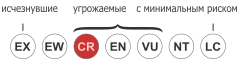
In 2001, there were only 7 breeding pairs. Since then, the number of nesting birds has steadily increased due to intensive conservation measures and in 2005 reached 17 individuals. With this extremely small amount, the black stilt is classified by IUCN as endangered.
Protection measures include renaturation in previously drained areas, as well as active control of predators in bird nesting sites. So around the nesting places traps are set. 25 black stilt are kept in captivity; their release on an island free of predators is being prepared.