Acetylcholine muscarinic receptor (muscarinic cholinergic receptor, m-cholinergic receptor ) belongs to the class of serpentine receptors that transmit the signal through heterotrimeric G-proteins .

Content
General Information
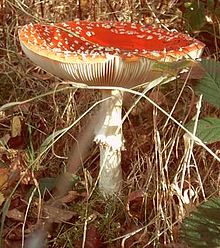
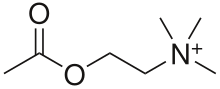
The muscarinic receptor family was first discovered due to their ability to bind alkaloid muscarin. They were indirectly described at the beginning of the 20th century in the study of the effects of curare . Their direct research began in the 20-30s of the same century, after the acetylcholine (ACh) compound was identified as a neurotransmitter , transmitting a nerve signal in neuromuscular synapses . Based on the similarity of the effects of acetylcholine and natural plant alkaloids , two general classes of acetylcholine receptors have been distinguished: muscarinic and nicotine. Muscarinic receptors are activated by muscarin and blocked by atropine , while nicotinic receptors are activated by nicotine and blocked by curare ; over time, a significant number of subtypes have been discovered within both types of receptors. In the neuromuscular synapses only nicotinic receptors are presented. Muscarinic receptors are found in muscle and gland cells and, together with nicotinic, in the nerve ganglia and neurons of the CNS .
Structure
A muscarinic receptor of any type consists of one polypeptide chain with a length of 440–540 amino acid residues, with an extracellular N-terminus and an intracellular C-terminus. A hydropathic analysis of the amino acid sequence revealed seven lengths of 20-24 residues, which form helical structures that permeate the cell membrane of the neuron . The amino acid sequence in these segments is very conservative (more than 90% match) in all five types of muscarinic receptors. Between the fifth and sixth domains, which penetrate the membrane, is a large intracellular loop, which is very variable in its composition and size in different types of receptors. At the third intracellular loop, as well as at the C-terminus of the receptor molecule, there are several successive segments at which phosphorylation occurs during the transmission of a nerve impulse. The cysteine residues , one of which is located near the third transmembrane segment, and the other in the middle of the second extracellular loop, are linked by a disulfide bridge.
Due to mutational analysis, areas on the receptor molecule were identified that are involved in the process of binding ligand and G-proteins. Acetylcholine binds to a region that lies in a crease formed by helically twisted transmembrane domains. The aspartate residue in the third transmembrane domain is involved in ionic interaction with quaternary acetylcholine nitrogen , while sequences of tyrosine and threonine residues located in the transmembrane segments approximately one third of the membrane surface, form hydrogen bonds with muscarin and its derivatives. According to the results of pharmacological studies, the antagonist binding site overlaps the site with which acetylcholine binds, but in addition attracts to its composition the hydrophobic regions of the protein molecule to the receptor and the surrounding cell membrane. Muscarinic receptors, moreover, contain a site (or sites), due to which the receptor response is regulated by a large number of compounds, in particular, by halamin , which reduces the dissociation of cholinergic ligands. The halamine binding site includes a sixth transmembrane domain, as well as a third extracellular loop.
A large number of sites of this receptor are involved in the interaction with the transmitting G-proteins. This is especially true for the structures of the second intracellular loop and the N- and C-terminal segments of the third intracellular loop. The desensitization of muscarinic receptors, reliably, causes phosphorylation of the threonine residues at the C-terminal segment of the receptor molecule, as well as at several sites of the third intracellular loop.
Classification
M-cholinergic receptors are located in the postsynaptic membrane of cells of effector organs at the endings of postganglionic cholinergic (parasympathetic) fibers. In addition, they are found on the neurons of the vegetative ganglia and in the CNS - in the cerebral cortex, reticular formation). The heterogeneity of m-cholinergic receptors of different localization was established, which is manifested in their unequal sensitivity to pharmacological substances.
The following types of m-cholinergic receptors are distinguished:
- m 1 - cholinergic receptors in the CNS and the autonomic ganglia (however, the latter are located outside the synapses);
- m 2 - cholinergic receptors - the main subtype of m-cholinergic receptors in the heart; some presynaptic m 2 cholinergic receptors reduce acetylcholine release;
- m 3 - cholinergatives - in smooth muscles, in most exocrine glands;
- 4 m-cholinergic receptors - in the heart, the wall of the pulmonary alveoli, the central nervous system;
- 5 m-cholinergic receptors - in the central nervous system, in the salivary glands, iris, in mononuclear blood cells.
Muscarinic receptors were initially pharmacologically divided into M1 and M2 types, based on the difference in their sensitivity to pirenzepine , which turned out to be a selective M1 receptor antagonist. It has been proven that stimulation of the M1 receptor activates phospholipase C (PLC), leading to the release of the second messenger inositol 3-phosphate and subsequent mobilization of intracellular calcium. Activation of the M2 receptor inhibits adenylate cyclase activity, which leads to a decrease in the intracellular level of cAMP.
Muscarinic receptors can be divided into subtypes according to their ability to mobilize intracellular calcium (m1, m3, m5) or inhibit adenylate cyclase (m2, m). Subtypes m1, m3 and m5 activate phospholipases A2, C and D, tyrosine kinase and calcium intake. Subtypes M2, M also increase the activity of phospholipase A2. In signal transduction from the b-adrenergic receptor G proteins.
Functions
Muscarinic receptors carry a whole range of diverse physiological functions. In particular, they are represented in autonomous ganglia and postganglionic fibers that extend from these ganglia to target organs. Thus, these receptors are involved in the transmission and modulation of such parasympathetic effects as smooth muscle contraction , vasodilation, reduction in heart rate , and increased secretion in the glands .
In the central nervous system, cholinergic fibers, which include interneurons with muscarinic synapses, are localized in the cerebral cortex , brain stem nuclei, hippocampus , striatum, and in a smaller number - in many other regions. Central muscarinic receptors affect the regulation of sleep , attention, learning and memory . Less important functional characteristics of these receptors are participation in the regulation of limb movements, analgesia and regulation of body temperature.
M2 and M4 type receptors can be found on presynaptic membranes and regulate the release of the mediator in the synapse ; but mostly the muscarinic receptors of types M2 and M4 are postsynaptic.
M1 type receptors are involved in the regulation of potassium channels, and in the suppression of slow, volt-independent calcium currents. M2 receptors are involved in the formation of bradycardia , contraction of the smooth muscles of the stomach, bladder and trachea . M3 type receptors affect the secretion of saliva , constriction of the pupils and contraction of the gallbladder . Type M4 receptors are involved in the regulation of some aspects of locomotor activity (including modulation of the effects of dopamine ).
Conducting Nerve Signals
Muscarinic receptors are able to change the activity of the cells on which they are located, using a large number of signal transduction pathways. The activation of the biochemical pathways of nerve impulse transmission occurs depending on the nature and number of the receptor subtype, effector molecules, as well as protein kinases, which are expressed in a given tissue and the possibility of mutual influence between different transmission chains of nerve signals. Phospholipase C releases a second messenger, diacylglycerol and inositol triphosphate, with phosphatidyl inositol. Diacylglycerol activates protein kinase C, while inositol trisphosphate releases Ca 2+ from intracellular reservoirs. The paired numbers of receptor subtypes inhibit adenizate cyclase, involving G-proteins of the Gі subtype in this process.
See also
- Muskarinosensitive M 2 -cholin receptor
- N-cholinergic receptor