The Permanent Court of Arbitration ( PCA ) is an international arbitration court based in The Hague , Netherlands .
| Permanent Court of Arbitration | |
|---|---|
| Cour permanente de arbitrage Permanent Court of Arbitration | |
 | |
| View | international judicial authority |
| Instance | higher court |
| Established | 1899 year |
| Conference hall | |
 | |
| The Peace Palace in The Hague, where the residence of the Permanent Chamber of International Justice was located | |
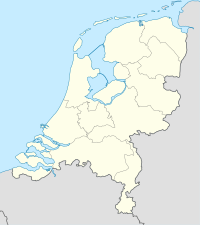
| Location |  The Hague , Netherlands The Hague , Netherlands |
| Coordinates | |
| Site | |
| pca-cpa.org | |

Content
Creation History
It was established in 1899 by the decision of the first Hague Peace Conference , convened at the initiative of the Emperor of Russia Nicholas II , and is the oldest organization for the resolution of international disputes. Located in the Peace Palace , specially built in The Hague in 1913 with donations from Andrew Carnegie .
Activities
Members of the court are more than 100 states [1] .
The court accepts for consideration both claims on interstate disputes and claims of private organizations of an international nature. In the absence of an advance agreement on another, the PPTS may consider a case only with the consent of all the disputing parties.
Hearings often take place behind closed doors and even decisions often remain confidential at the request of the parties.
Judges
Each state appoints up to 4 authoritative specialists in international law to the PPTS. The Chamber Secretariat maintains a list of such judges, of which, in case of a dispute, the state has the right to choose arbitrators to consider a specific case.
Two or more countries may agree to elect one or more members together. The same person can be elected by different countries. Court members are appointed for 6 years . Their appointments may be renewed.
The members of the PPTS from the Russian Federation are [2] Ambassador Extraordinary and Plenipotentiary , Director of the Legal Department of the Russian Ministry of Foreign Affairs Kirill Gevorgyan and doctors of legal sciences, professors Kamil Bekyashev , Yuri Kolosov and Stanislav Chernichenko [3] .
PPTS and International Court of Justice
- PPTS operates in the same building as the International Court of Justice
- According to the Statute of the International Court of Justice of the United Nations , candidates for membership in this court are not nominated by states, but by “national groups” of the PPTS, that is, groups of judges of the PPTS representing the same state.
Criticism
Critical remarks made to the Permanent Court of Arbitration include, in particular, the following [4] :
- The chamber is not a tribunal administering justice, but only a list of persons from which the parties to the dispute in each case choose arbitrators, thus establishing a court.
- In some cases, such a court may prefer to issue decisions “based on fairness and goodwill” ( ex aeque et bono ), to one degree or another satisfying both parties, rather than by applying legal rules.
- Since the members of the court are in each case selected by the parties to the dispute, there is no continuity in the administration of justice.
From the foregoing, it is concluded that the Permanent Court of Arbitration is “not a real court in the usual sense of the word” [4] .
References and notes
- ↑ Member States (inaccessible link)
- ↑ As of August 2014
- ↑ Members of the Permanent Court of Arbitration (inaccessible link) . Permanent Court of Arbitration (August 21, 2014). Date of treatment August 23, 2014. Archived on August 26, 2014.
- ↑ 1 2 Tolstoy V. L. Course in international law . - M .: Walters Clover, 2009 .-- S. 475. - 1056 p. - ISBN 978-5-466-00401-4 .