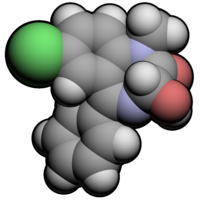
The active substance (INN) Temazepam (Temazepam) - refers to sedatives of the benzodiazepine series .
| Temazepam | |
|---|---|
 | |
 | |
| Chemical compound | |
| IUPAC | 7-Chloro-1,3-dihydro- 3-hydroxy-1-methyl-5-phenyl- 1,4-benzodiazepin-2-one |
| Gross formula | C 16 H 13 ClN 2 O 2 |
| Molar mass | 300.7 g / mol |
| Cas | |
| PubChem | |
| Drugbank | |
| Classification | |
| ATX | |
| Pharmacokinetics | |
| Bioavailable | 96% |
| Metabolism | liver |
| The half-life. | 8–20 hours |
| Excretion | Kidney |
| Route of administration | |
| Therapeutic: Oral Recreational Abuse: Intravenous (IV), Intramuscular (IM), Insufflated, Sprinkled in ethanol, smoked | |
Content
Indications for use
Sleep disorders of various origins, sedation in preparation for surgical interventions and diagnostic procedures.
Contraindications
Hypersensitivity, respiratory disorders of central origin, severe respiratory failure, drug or alcohol dependence, impaired consciousness, myasthenia gravis, angle-closure glaucoma, pregnancy, lactation, age up to 18 years (safety and efficacy have not been determined).
Application restrictions
Impaired liver and / or kidney function, depression.
Pregnancy and lactation
Contraindicated in pregnancy (the risk associated with the use of temazepam in pregnant women exceeds the potential benefit). At the time of treatment should stop breastfeeding.
Side effects
According to the results of controlled clinical trials.
From the nervous system and sensory organs:
- drowsiness (9.1%),
- headache (8.5%),
- fatigue (4.8%),
- increased irritability (4.6%),
- lethargy (4.5%),
- dizziness (mild - 4.5%, pronounced - 1.2%),
- aftereffect (2.5%),
- anxiety (2.0),
- depression (1.7%) or euphoria (1.5%),
- general weakness (1.4%),
- confusion (1.3%),
- blurred vision (1.3%),
- nightmares (1.2%);
- 0.5-0.9% - lack of appetite, impaired coordination of movements and balance, tremor, sleep disturbance (deepening sleep, increased number of dreams);
- less than 0.5% - amnesia, hallucinations, horizontal nystagmus, paradoxical reactions (including agitation).
From the digestive tract:
- nausea (3.1%)
- dry mouth (1.7%),
- diarrhea (1.7%)
- discomfort in the abdomen (1.5%),
- vomiting (0.5-0.9%).
Other:
- 0.5-0.9% - shortness of breath, palpitations, pain in the back, lower back, sweating, burning in the eyes.
Perhaps the development of drug dependence, withdrawal syndrome (see "Precautions").
Interaction
Drugs that depress the central nervous system ( antipsychotics , barbiturates , narcotic analgesics, antidepressants , drugs for anesthesia, etc.) enhance the effect of temazepam. Alcohol , in addition to enhancing the inhibitory effect on the central nervous system, can provoke paradoxical reactions ( psychomotor agitation , aggressive behavior, state of pathological intoxication).
Overdose
Symptoms : drowsiness, disorientation, illegible speech, oppression of reflexes, coma; respiratory depression, hypotension are possible.
Treatment : induction of vomiting and administration of activated charcoal (if the patient is conscious), gastric lavage through a probe (if the patient is unconscious), monitoring of vital functions, symptomatic treatment, intravenous fluids (to enhance urine output). With the development of excitation, barbiturates should not be used. A specific antidote is flumazenil (an antagonist of benzodiazepine receptors).
Dosage and administration
Inside. The dosage regimen and duration of treatment are set individually. Treatment begins with a minimum effective dose. The average dose for adults is 10-20 mg (up to 30 mg) once 30 minutes before bedtime. The duration of therapy is an average of 7-10 days.
Premedication: 20-40 mg 30-60 minutes before surgery or diagnostic procedure.
Precautions
Use with caution to patients over 65 years of age (half doses are recommended). In patients with impaired liver and / or kidney function, a dose reduction is recommended.
The absence of a clinical effect in the treatment of insomnia after 7-10 days may indicate the presence of other diseases. In patients taking temazepam for more than 2-3 weeks, a periodic reassessment of effectiveness is necessary to determine the feasibility of its further use.
When taking temazepam, drug dependence and withdrawal syndrome may develop. To prevent withdrawal syndrome, the dose is reduced gradually (with abrupt cancellation, especially with prolonged therapy or high-dose therapy, sleep and mood disorders, mental disorders) are possible.
During treatment and within 3 days after the cancellation of temazepam, it is necessary to refrain from driving vehicles and other activities that require increased attention, rapid mental and motor reactions. Do not simultaneously use other drugs that depress the central nervous system, as well as alcohol.