John Silas Reed ( born John Silas Reed ; October 22, 1887 , Portland , USA - October 17, 1920 , Moscow ) is an American journalist , socialist [5] , author of the famous book “ Ten Days That Shook the World ” (1919).
| John reid | |
|---|---|
| John reed | |
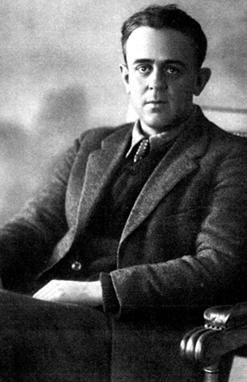 | |
| Birth name | John Silas Reed |
| Date of Birth | |
| Place of Birth | Portland ( Oregon , United States ) |
| Date of death | |
| Place of death | Moscow ( RSFSR ) |
| Citizenship (citizenship) | |
| Occupation | journalist , prose writer |
| Language of Works | English |
| Autograph |  |

Content
Biography
Childhood. College and University Studies
John Reid was born on October 22, 1887, at his maternal grandmother’s mansion in Portland , Oregon. [6] His mother, Margaret Green Reed, was the daughter of a wealthy Portland entrepreneur who made a fortune by owning the following ventures: the first gas plant in Oregon, the first cast iron plant on the west coast, and Portland’s waterworks [7] . His father, Charles Jerome Reed, was a sales representative for a large agricultural machinery company. His father quickly gained recognition in the business community of Portland [8] . John's parents got married in 1886.
John's childhood was surrounded by sisters and servants, and all his friends and friends were offspring of the highest class. John's brother, Harry was 2 years younger than him. [9] John and his brother were sent to the newly founded Portland Academy, a private school [10] . John was talented and smart enough to take exams in the subjects that were read there, but he was bored and uninterested in studying at good grades, since he believed that teaching at school was dry and boring. In September 1904 , John was sent to Morristown School, New Jersey , in order to prepare for college, as his father, who never went to university, wanted his sons to study at Harvard .
John’s first attempt to enter the university failed, but he did the second, and in the fall of 1906 he began his studies at Harvard [11] . Tall, handsome, cheerful, John took part in almost all student events. He was a member of the cheerleader team, a member of the swimmers team, and participated in meetings of the Drama Club. He was a member of the editorial board of the student magazine Lampoon and Harvard Monthly , and was also president of the Harvard student choir. John was not a member of the university football team, but excelled in less prestigious sports such as swimming and water polo .
Reed also participated in the meetings of the Socialist Club, where his friend Walter Lippman was president. Despite the fact that Reid did not become a member of this club, these meetings had a certain influence on his views. The club was absolutely legal, and constantly criticized the university leadership for not paying all university employees a living wage, and petitioned for a course on socialism [12] .
Reid graduated from Harvard in 1910 and went on a journey that summer. During his trip, he visited England , France and Spain [13] .
Beginning of a reporting career
John Reid wanted to become a journalist and decided that the most suitable place for his reporting career was New York , where all the major publications of that time were concentrated. Thanks to a university acquaintance with the journalist Lincoln Steffens , who was involved in journalistic revelations and who greatly appreciated John for his intelligence and talent, it was easier to take the first step. Steffens helped Reid take up a not-so-significant post in American Magazine — John's responsibilities included reading the manuscripts, proofreading , and then editing . To earn more, John took over as manager in the recently opened quarterly journal Landscape Architecture [14] .
John settled in Greenwich Village , a booming region of artists and poets. John Reid fell in love with New York , constantly exploring it and wrote poems about him. The magazines in which he worked regularly paid him, but these were the earnings of a “free artist,” and John wanted to achieve some stability. For six months, John tried to publish his stories and essays about a six-month stay in Europe , everywhere being refused. Nevertheless, he achieved success - the Saturday Evening Post newspaper agreed to print his works. During the same year, Reed was published in Collier’s , The Forum , and The Century Magazine . One of his poems was put to music by composer Arthur Foote , and The American magazine offered him a place in the state and began to print it [15] . John Reid's career went uphill.
His interest in social issues was prompted by his acquaintance with Steffens and Ida Tarbell. But fast enough, John took a much more radical position than them. In 1913, John became an employee of The Masses magazine, where Max Eastman was the editor in chief, and his sister Crystal helped him. John has published over 50 articles and reviews in this publication.
One of the main topics that interested him was the revolution . He was first arrested at 26 when he took part in a workers' strike in Patterson . The brutal suppression of workers ’speeches, as well as the ensuing short-term arrest, made Reed’s views even more radical. At this time, John was approaching the syndicalist union " Industrial Workers of the World " [16] . John expressed his position and opinion on what happened in the article "The War in Patterson", which was published in June.
In the fall of 1913, John was sent by the Metropolitan Magazine to Mexico to prepare a report on the Mexican Revolution [17] . John was in the Pancho Villa camp for four months and, together with Villa, was a representative of the Constitutional forces after they defeated the Federal forces near Torreon . This victory opened the way to Mexico City [18] . Over the four months, Reed published a series of reports on the Mexican Revolution that created him a reputation as a war journalist. John Reid deeply sympathized with the plight of the rebels and was categorically against American intervention (which began shortly after he left Mexico). John warmly supported Vilya, and Venustiano Carranza was indifferent to him. Later, these Mexican reports were reprinted in a book called The Rising Mexico and was published in 1914.
On April 30, 1914, John arrived in Colorado, where the Ludlow massacre recently occurred. He stayed there for a little more than a week, exploring what had happened, speaking at rallies on behalf of the miners , wrote a vivid article “The Colorado War” and came to the conclusion that the class conflict in society was much more serious than it seemed to him [19] .
John spent the summer of 1914 in Provincetown , Massachusetts, together with Mabel Dodge and her son, where they prepared for the publication Rebellious Mexico and also interviewed President Wilson on the Mexican Revolution .
War Correspondent
Almost immediately after the outbreak of World War I, John Reed, as a Metropolitan reporter, went to Italy, neutral at that time. Reed met with Mabel Dodge, who became his mistress, and together they went to Paris . Reed believed that war was only a new round of the trade struggle between the imperialists. John did not sympathize with any of the participants in the war. In an unsigned article, The Merchants' War, which was published in The Masses in September 1914, John wrote [20] :
The real war, for which this outbreak of death and destruction is just an incident, began long ago. The war went on for decades, but we did not notice the battles of this war. This is a war of merchants.
What is democracy doing in alliance with Tsar Nicholas ? Was liberalism in the dispersal of the Gapon demonstration , in the Odessa pogroms? ..
We socialists should hope not - to believe that because of these terrible bloodsheds and terrible destruction, global social changes will occur, and we will be one step closer to our dream - a World among People
This is not Our War.
In France, John Reid was in apathy due to censorship imposed during the war, and also because it was very difficult for him to get to the front. Reed and Mabel went to London , from where Mabel went to New York to help John from there. True, staying in Europe, thanks to Mabel, allowed Reid to get acquainted with a number of outstanding cultural figures, such as, for example, Pablo Picasso and Arthur Rubinstein .
The rest of 1914, John spent in exile with the leader of the Mexican Revolution - Pancho Villa , where he wrote his book "Risen Mexico."
He returned to New York and remained there until the end of 1914, writing articles about the war.
In 1915 he went to Eastern Europe , on a journey he was accompanied by Canadian artist and journalist The Masses Bourdman Robinson . They began their journey from Thessaloniki , then they went to Serbia , where they witnessed the devastation, visited the bombed Belgrade , they also visited Bulgaria and Romania. John Reid and Bourdman Robinson drove through the Pale of Settlement in Bessarabia , but in Helm they were arrested, held for several weeks in prison, and would probably have been sentenced to death for espionage if not for the intervention of the American ambassador.
Their journey through Russia did not go unnoticed - the American ambassador in Petrograd believed that Reed and Bourdman were spies; Reed was amazed at this. Reed and Robinson were again detained when they attempted to illegally cross the border with Romania. This time they were helped by the intervention of the British ambassador (Robinson was a British citizen), who finally helped to get permission to leave, but this only happened after all of their documents were seized in Kiev . From Bucharest they headed to Constantinople, hoping to see the Gallipoli campaign . All these events formed the basis of John Reid's book “ The War in Eastern Europe, ” which was published in April 1916.
Soon John Reid returned to the United States, he went to Portland, where he visited his mother.
At this time, John met Louise Bryant , who soon moved to him on the East Coast [21] .
At the beginning of 1916, Reed met Eugene O'Neill , the future Nobel laureate in literature , and in early May, John Reed, Louise Bryant and Eugene rented a cottage in Provincetown together. Shortly afterwards, Bryant and O'Neill began an affair [22] .
That summer, John Reed supported President Woodrow Wilson in his intention to run for a second term, as Reed believed that Wilson would fulfill his promise and not allow the United States to enter the war. [23]
The year 1916 turned out to be full of various events for John - getting married to Louise Bryant in Peekskill ( English : Peekskill, New York ) in November; a kidney removal operation performed at the Johns Hopkins Clinic in Baltimore , where John remained until the end of December [24] . In 1916, John also published at his own expense the book of Tamerlane and other poems with a circulation of 500 copies.
As the country approached the war, Reed became even more radical: his relationship with the Metropolitan was over. John lays his late father’s watch and also sells his cottage in Cape Cod (a peninsula, a charming place south of Boston ) to Margaret Sanger, a birth control supporter.
After Woodrow Wilson declared war on April 2, 1917 , J. Reed shouted at a hastily convened People's Council meeting in Washington: ". This is not my war, and I will not support it. This is not my war, and I will have nothing to do with it ” [25] .
In July and August 1917, Reed continued to write aggressive and angry articles for Masses , which refused to be mailed to the US Postal Service . John Reed also wrote for the magazine Seven Arts , which, in the end, lost financial support due to Reed's articles, as well as one article by Randolph Bourne - as a result, the magazine ceased to appear [26] . J. Reed was stunned by the war-militarized war sentiment popular in the country — his career was crumbling.
Witness of the Revolution
On August 17, 1917, John Reed and Louise Bryant sailed from New York to Europe, after assuring the US Department of State that they would not represent the Socialist Party at the upcoming conference in Stockholm [27] . John and Louise wanted to visit Russia as journalists in order to witness what was happening there, as well as to collect material for reporting on events in the young Russian republic. Traveling through Finland , the couple arrived in Petrograd immediately after the unsuccessful attempt of a military coup by L. G. Kornilov . John and Louise were at the epicenter of the October Revolution.
The food situation was very difficult, John later wrote:
... last month under the Kerensky regime, there was a reduction in the rate of delivery of bread - from 2 pounds a day to 1 pound, then to half a pound, a quarter pound, and, in the last week, there was no bread at all. Armed robberies and street crime have become so frequent that you can barely walk the streets. Newspapers write about this only. Not only the government cannot work, but the municipal authorities as well. The city police were rather disorganized, nothing worked as it should ... [28]
The Bolsheviks, who advocated the creation of a government consisting entirely of socialists, as well as the immediate cessation of Russia's participation in the war, sought to transfer power to the Kerensky Congress of Soviets , which was to be convened in October 1917 . Kerensky saw this as a desire to remove him from power and decided to close the Bolshevik newspapers, ordered the arrest of the Bolshevik leaders, was about to send the troops of the Petrograd garrison, which was considered unreliable, back to the front. The Military Revolutionary Committee of the Soviets, in which the majority were Bolsheviks, was preparing to seize power on behalf of the future congress. At 11 o’clock in the evening of November 7, 1917, the Winter Palace, the seat of the Kerensky government, was captured; Reed and Bryant were present during the capture of the Winter Palace [29] [30] .
John Reid was an active supporter of the new revolutionary socialist government; he participated in the work of the People's Commissariat of Foreign Affairs , translating decrees and news about the actions of the new government into English. “I also took part in collecting materials and data and distributing documents that went to the German trenches,” Reid later recalled [31] . By December, his funds were almost exhausted, and he began to work for the American Raymond Robbins - the representative of the Red Cross . Robbins wanted to create a newspaper that defended American interests; Reed agreed, but in the first issue of the newspaper, which he was the one who was preparing to print, Reid posted a warning right under the heading: “This newspaper is dedicated to protecting the interests of American capital” [32] .
John was closely acquainted with many members of the new government. He met with Leon Trotsky and met Lenin during the dispersal of the Constituent Assembly (6) on January 19, 1918 .
Later, he wrote a book about these events in Russia - “Ten Days That Shook the World,” about which V. I. Lenin responded as follows:
Having read John Reed's book, “The Ten Days That Shook the World,” with tremendous interest and unflagging attention, I heartily recommend this essay to workers of all countries. I would like to see this book distributed in millions of copies and translated into all languages, as it provides a truthful and unusually lively account of events that are so important for understanding what the proletarian revolution is, what the dictatorship of the proletariat is [33] .
The last years of life
For two months, the US State Department refused to give John Reid an entry visa to the United States. Only on April 28, 1918, Reed returned to New York.
Reed made about 20 campaigns around the United States, speaking in defense of the October Revolution, against American intervention in Soviet Russia, in connection with which he was prosecuted 5 times on charges of “anti-American activities” [34] .
In February 1919, together with Louise Bryant , Albert Rhys Williams and Bessie Betty, testified before the US Senate anti-communist committee .
He became one of the founders of the US Communist Workers Party in August-September 1919.
In October 1919 he came to Moscow and was elected a member of the Executive Committee of the Comintern .
In July-August 1920 he became a delegate to the Second Congress of the Comintern . He traveled a lot in Soviet Russia, collecting material for a new book. For some time he lived in the former estate of Prince Gagarin in Kuznetsovo (Konakovo). In Soviet times, the John Reed Museum worked there, in which hundreds of documents from his personal archive were presented, during the perestroika the museum did not function and was given for the economic needs of the Karacharovo boarding house, as a result many documents and photographs were lost.
October 19, 1920 he died in Moscow from typhus .
He was buried in Red Square near the Kremlin wall .
Memory
Streets in Serpukhov , Chekhov , Astrakhan , in the Nevsky district of St. Petersburg are named after John Reed. On October 22, 1987, the USSR postage stamp was published in connection with the 100th anniversary of the birth of John Read
The Uzbek writer, playwright and journalist Jonrid Mukhitdinovich Abdullakhanov received a name in honor of John Reed.
Addresses in Petrograd
- 1917-1918 - Troitskaya street, 23, apt. 36.
Addresses in Moscow
- Gagarinsky Lane , 11 (former home of the architect N. G. Faleev ).
Family
In 1916 he married Louise Bryant . There were no children in the marriage.
Artwork
- Reed J. Favorites: in 2 book: book 1. The ten days that shocked the world ; Risen Mexico [Text]: Per. from English / J. Reed. - M.: Politizdat , 1987 .-- 543 p.
- Reed J. Favorites: in 2 book: book 2. Essays. Articles. Poems. Autobiography. Letters. Memoirs of John Reid [Text]: Per. from English / J. Reed. - M .: Politizdat , 1987 .-- 527 p.
- Reed J. Selected Works [Text]: Per. from English / J. Reed. - M .: publishing house of foreign lit., 1957. - 254 p.
- Reed, John . 10 days that shocked the world. With the preface by V.I. Lenin and N.K. Krupskaya. - M .: State. publishing house watered. literature, 1957.- 352 p.
Screen versions and dramas
- In 1927, Sergei Eisenstein released the first silent film adaptation (the title was “ Ten Days That Shook the World ”; the film was released under the title “ October .”)
- On the basis of D. Reed’s book, the first post-Stalinist film about the October Revolution, “ In the Days of the October Revolution ”, 1958, was made, where he (performed by actor A. Fedorinov) is one of the characters.
- 1965 , the play “Ten days that shook the world” by Yuri Lyubimov at the Taganka Theater
- 1969 The Truth! Nothing but the truth! ” D. N. Al . On the stage of the Bolshoi Drama Theater. G.A. Tovstonogov John Reed is played by People's Artist of the USSR Leonid Vitalievich Nevedomsky .
- Based on the books and biography of John Reid, director Sergei Bondarchuk filmed the Red Bells dilogy. C / s: Mosfilm (USSR), Kanosite-2 (Mexico), Vides International (Italy), In the role of John Reed - Franco Nero :
- 1982 - Movie 1. Mexico on Fire
- 1983 - Film 2. I saw the birth of a new world
- The biography of John Reed formed the basis of Warren Beatty 's film " Reds ", where the latter starred in the title role.
Notes
- ↑ 1 2 BNF identifier : Open Data Platform 2011.
- ↑ Encyclopædia Britannica
- ↑ 1 2 SNAC - 2010.
- ↑ Reed John // Great Soviet Encyclopedia : [in 30 vol.] / Ed. A. M. Prokhorov - 3rd ed. - M .: Soviet Encyclopedia , 1969.
- ↑ [1] Letter to American Workers
- ↑ Granville Hicks with John Stuart, John Reed: The Making of a Revolutionary. New York: Macmillan, 1936. Page 1. (en)
- ↑ Hicks with Stuart, John Reed, pg. 2.
- ↑ Eric Homberger, John Reed. Manchester: Manchester University Press, 1990. Pages 7-8
- ↑ Homberger, John Reed, pg. eight
- ↑ Homberger, John Reed, pg. 9
- ↑ Hornberger, John Reed, pg. 12.
- ↑ Hicks with Stuart, John Reed, page 33
- ↑ Hicks with Stuart, John Reed, pg. 51
- ↑ Hicks with Stuart, John Reed, pg. 65
- ↑ Hicks with Stuart, John Reed, pg. 66
- ↑ Homberger, John Reed, pg. 49.
- ↑ Homberger, John Reed, pg. 55.
- ↑ Homberger, John Reed, pg. 69.
- ↑ Homberger, John Reed, pp. 75-76.
- ↑ John Reed, “The Trader's War”, The Masses, v. 5, no. 12, whole no. 40 (Sept. 1914), pp. 16-17. The article appears without a byline, attributed to "a well-known American author and war correspondent who is compelled by arrangements with another publication to withhold his name."
- ↑ Dangulov A.S., Dangulov S.A. Legendary John Reed. - M .: Soviet Russia, 1978.
- ↑ Homberger, John Reed, pg. 114.
- ↑ Homberger, John Reed, pp. 112-116.
- ↑ Homberger, John Reed, pg. 118.
- ↑ Homberger, John Reed, pg. 122.
- ↑ Homberger, John Reed, pp. 128-129.
- ↑ Testimony of John Reed, Brewing and Liquor Interests and German and Bolshevik Propaganda: Report and Hearings of the Subcommittee on the Judiciary, United States Senate ..., vol 3. pg. 563. Hereafter: Overman Committee Report, v. 3.
- ↑ Testimony of John Reed, Overman Committee Report, v. 3, pg. 575.
- ↑ Testimony of John Reed, Overman Committee Report, v. 3, pg. 569.
- ↑ Testimony of John Reed, Overman Committee Report, v. 3, pg. 570.
- ↑ Testimony of John Reed, Overman Committee Report, v. 3, p. 565.
- ↑ Homberger, John Reed, pp. 159-60
- ↑ From the preface to the publication: J. Reed. 10 days that shocked the world. M., 1957.
- ↑ Abramov Alexey Sergeevich. At the Kremlin wall. - M .: Publishing house of political literature, 1987.
Literature
- Gilenson, B. A. John Reid at the origins of socialist realism in US literature. - M .: Higher. school., 1987. - 111, [1] c.
- Gladkov T.K. John Reed. M .: Mol. Guard, 1962 .-- 288 p. - (ZhZL. Issue 14 (347)).
- Dangulov A.S., Dangulov S.A. Legendary John Reed - M .: Sov. Russia, 1982. - 288 p.
- Kireeva I.V. Pre-October work of J. Read (on the problem of the method) // Lit. connections and traditions. Uch. app. Bitter Univ., vol. 160. - Gorky, 1973.
- Kireeva I.V. Literary work of John Reed. Gorky, 1974.- 150 p.
- Krasnov I.M. John Reed: The Truth About Red Russia. M .: Sov. Russia, 1987 .-- 304 p.