| |||||||
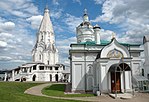
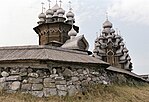
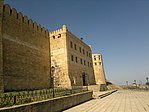
Some cultural heritage sites of Russia included in the UNESCO World Heritage List Clockwise, starting from the upper right corner: the Solovetsky Islands cultural and historical ensemble • the Kizhi Pogost architectural ensemble • the Bulgar architectural and historical complex • the historical center of St. Petersburg and related monument complexes • Naryn-Kala fortress • Moskovsky Kremlin • Ascension Church in Kolomenskoye |




Objects of cultural heritage ( historical and cultural monuments ) of the peoples of the Russian Federation - objects of real estate (including objects of archaeological heritage) and other objects with historically related territories, paintings , sculptures , arts and crafts , objects of science and technology and other material objects culture, resulting from historical events, representing the value in terms of history, archeology , architecture , urban planning , art , science and the iki, aesthetic , ethnological or anthropological , social culture, and are evidence of epochs and civilizations , authentic sources of information about the origin and development of culture [1] .
Regulatory framework
The fundamental standards for the protection of cultural and historical heritage are enshrined in Art. 44 of the Constitution of the Russian Federation :
2. Everyone has the right to participate in cultural life and use cultural institutions, to access cultural property.
3. Everyone is obliged to take care of the preservation of historical and cultural heritage, to preserve historical and cultural monuments.
The identification, use, accounting and preservation of cultural heritage of the Russian Federation are regulated by the following regulatory legal acts:
- Federal Law of June 25, 2002 No. 73-ФЗ “On Objects of Cultural Heritage (Monuments of History and Culture) of the Peoples of the Russian Federation”;
- Decree of the President of the Russian Federation of November 30, 1992 No. 1487 “On Especially Valuable Objects of the Cultural Heritage of the Peoples of the Russian Federation”;
- Decree of the Government of the Russian Federation of July 15, 2009 No. 569 “On the Approval of the Regulation on State Historical and Cultural Expertise”;
- Decree of the Government of the Russian Federation of September 12, 2015 No. 972 “On approval of the Regulations on the zones of protection of cultural heritage objects (historical and cultural monuments) of the peoples of the Russian Federation and on the recognition as invalid of certain provisions of regulatory legal acts of the Government of the Russian Federation”;
- Decree of the Government of the Russian Federation of February 20, 2014 No. 127 “On the approval of the Rules for the issuance, suspension and termination of permits (open sheets) for the identification and study of archaeological heritage sites”;
- Order of the Ministry of Culture of the Russian Federation of October 3, 2011 No. 954 “On approval of the Regulation on the Unified State Register of Cultural Heritage Objects (Monuments of History and Culture) of the Peoples of the Russian Federation”;
- Order of the Ministry of Culture of Russia dated 02.07.2015 No. 1905 “On approving the procedure for identifying objects that have the attributes of a cultural heritage object and state registration of objects that have the signs of a cultural heritage object”;
- Order of the Ministry of Culture of the Russian Federation dated July 2, 2015 No. 1906 “On approval of the passport form of a cultural heritage object”.
Types of Cultural Heritage Sites
In accordance with the following types of cultural heritage objects:
- Monuments - separate buildings, buildings and structures with historically developed territories (including religious monuments related to religious property); memorial apartments; mausoleums , separate burials; works of monumental art; objects of science and technology, including military; objects of archaeological heritage [1] [2] ;
- ensembles - groups of isolated or united monuments, buildings and structures of fortification , palace , residential, public, administrative, commercial, industrial, scientific, educational purposes, as well as religious monuments and structures, including fragments of historical plans, clearly localized in historically developed territories and settlement buildings, which can be attributed to urban ensembles; works of landscape architecture and landscape art ( gardens , parks , squares , boulevards ), necropolises , objects of archaeological heritage [1] ;
- places of interest - creations created by man, or joint creations of man and nature, including the places of existence of folk art crafts ; centers of historical settlements or fragments of urban planning and development; memorials, cultural and natural landscapes associated with the history of the formation of peoples and other ethnic communities in the Russian Federation, historical (including military) events, the lives of prominent historical figures; archaeological heritage sites; places of worship; burial places of victims of mass repressions; religious and historical places. Monuments and (or) ensembles [1] [3] may be located within the boundaries of the territory of a landmark.
Categories of Cultural Heritage
Cultural heritage objects are divided into the following categories of historical and cultural significance:
- objects of cultural heritage of federal significance - objects of historical, architectural, artistic, scientific and memorial value, of particular importance for the history and culture of the Russian Federation, as well as objects of archaeological heritage;
- objects of cultural heritage of regional significance - objects of historical, architectural, artistic, scientific and memorial value, of particular importance for the history and culture of the subject of the Russian Federation ;
- objects of cultural heritage of local (municipal) significance - objects of historical, architectural, artistic, scientific and memorial value, of particular importance for the history and culture of the municipality .
In addition, the Federal Law “On Objects of Cultural Heritage (Monuments of History and Culture) of the Peoples of the Russian Federation” defines the category of identified objects of cultural heritage , which includes newly identified objects until they are entered in the unified state register [1] .
Especially valuable cultural heritage sites
Along with the types and categories of objects of cultural heritage, Russian legislation identifies particularly valuable objects of cultural heritage . These include historical, cultural and natural complexes located on the territory of the Russian Federation, architectural ensembles and structures, enterprises, organizations and cultural institutions, as well as other objects representing material, intellectual and artistic values of a reference or unique nature from the point of view of history, archeology , culture, architecture, science and art.
Cultural heritage sites, classified by the Decree of the President of the Russian Federation as particularly valuable, are included in the State Code of Especially Valuable Cultural Heritage of the Peoples of the Russian Federation , the depository of which is the Ministry of Culture of Russia, and can also be submitted to UNESCO for inclusion in the World Heritage List on behalf of the Russian Federation [4] .
According to the unified state register of objects of cultural heritage (historical and cultural monuments) of the peoples of the Russian Federation, as of June 26, 2016, 59 especially valuable objects were registered on the territory of the state, including the noteworthy place Borodino Field (including monuments, monuments and architectural constructions) [5] and the Pulkovo Observatory ensemble, which is a component of the UNESCO World Heritage Site “The Historic Center of St. Petersburg and its associated memorial complexes kov ”(serial number 540-008) [6] . Accounting for cultural heritage is a fundamental area in the protection of historical and cultural monuments in the Russian Federation. Accounting is carried out by the Ministry of Culture of the Russian Federation . To systematize and streamline the registration of cultural heritage objects, special forms and automation systems are used.
Notes
- ↑ 1 2 3 4 5 Federal Law of June 25, 2002 No. 73-ФЗ “On Objects of Cultural Heritage (Monuments of History and Culture) of the Peoples of the Russian Federation” .
- ↑ Federal Law of November 30, 2010 N 327-ФЗ "On the Transfer to Religious Organizations of State-or Municipal- Property of Religious Purpose" .
- ↑ Resolution of the Committee of Ministers of the Council of Europe of April 14, 1976 No. 76 (28) “On the adaptation of legislation and regulatory legal acts to the requirements of the integrated conservation of architectural heritage” // Collection of international treaties of the USSR and the Russian Federation. - 1994. - Vol. Xlvii. - S. 430-437.
- ↑ Decree of the President of the Russian Federation of November 30, 1992 No. 1487 “On Especially Valuable Objects of the Cultural Heritage of the Peoples of the Russian Federation” .
- ↑ Borodino field and monuments on it . Unified state register of cultural heritage objects (historical and cultural monuments) of the peoples of the Russian Federation . Ministry of Culture of Russia. Date of treatment June 25, 2016.
- ↑ Pulkovo Observatory . Unified state register of cultural heritage objects (historical and cultural monuments) of the peoples of the Russian Federation . Ministry of Culture of Russia. Date of treatment June 25, 2016.
Links
- The Unified State Register of Cultural Heritage Sites (Monuments of History and Culture) of the Peoples of the Russian Federation . Ministry of Culture of the Russian Federation.
- State Duma of the Russian Federation . Federal Law of June 25, 2002 N 73-ФЗ “On Objects of Cultural Heritage (Monuments of History and Culture) of the Peoples of the Russian Federation” (current version) . The official online resource . Legal Encyclopedia "Guarantor". Date of treatment November 7, 2017.
- Ministry of Culture of the Russian Federation. “The Regulation on the Unified State Register of Cultural Heritage Sites (Historical and Cultural Monuments) of the Peoples of the Russian Federation” . The official online resource . Legal Encyclopedia “Guarantor” (2018). Date of treatment November 21, 2018.