Tetsu Katayama ( Jap. 片 山 哲 Katayama Tetsu , July 28, 1887 - May 30, 1978 ) - Japanese politician , as well as the 46th Prime Minister of Japan from May 24, 1947 to March 10, 1948 . He was the first socialist and Christian in the history of Japan to take the post of prime minister [1] [2] .
| Tetsu Katayama | |||||||
|---|---|---|---|---|---|---|---|
| 片 山 哲 | |||||||
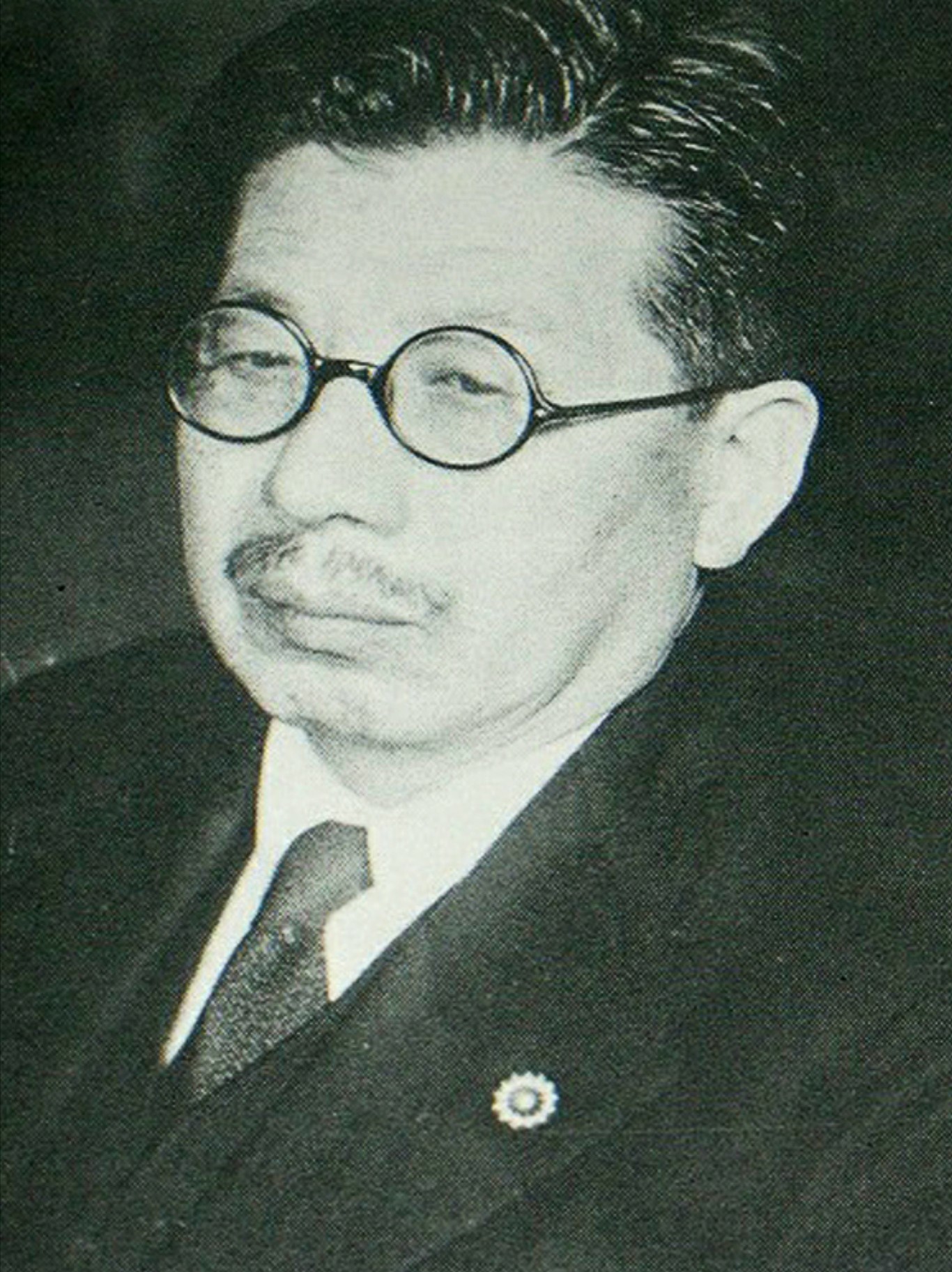 | |||||||
| Monarch | Sowa | ||||||
| Governor | Douglas MacArthur | ||||||
| Predecessor | Shigeru Yoshida | ||||||
| Successor | Hitoshi Asida | ||||||
| Birth | July 28, 1887 Tanabe ( Japan ) | ||||||
| Death | May 30, 1978 (90 years old) Fujisawa (Japan) | ||||||
| The consignment | Socialist Party of Japan | ||||||
| Education | Tokyo Imperial University | ||||||
| Religion | Protestantism | ||||||
| Autograph | |||||||
| Awards | |||||||

Content
Biography
The early years
Katayama was born on July 27, 1887 in the city of Tanab , Wakayama Prefecture . In 1912 he graduated from Tokyo Imperial University [3] , having received a specialist diploma in German law . After several years, he practiced legal law with his father in Wakayama . Even in his student years, Katayama became a supporter of the Christian-socialist ideas of Abe Iso . In 1919, in Tokyo, in the office rented by the YMCA, he opened his own legal office, specializing in the field of labor law [1] . Since that time, he has become an active member of the Japanese trade union movement. In addition, in 1920 - 1930, Katayama was a teacher at Tokyo Women's University. Also at this time several of his books were published: Laws Related to Women, Laws on the Protection of Mothers and Children, Practical Guide to Pension Savings, and Excerpts from the Civil Arbitration Court.
Political career
In 1926, Katayama became one of the founders of the Socialist People's Party ( Jap. 社会 社会 党 Shakai Minshu: then:) ; he was elected her secretary general [2] . In 1930, he was admitted to the House of Representatives as a deputy from Kanagawa Prefecture . A year later, the Socialist People’s Party was banned by the government, and Katayama took an active part in organizing its replacement in the form of the Socialist Mass Party ( п 大衆 党 Shakai Taishu: then :) , in 1932 Katayama was elected to the executive committee of this party [2] . In parliament, Katayama became known as the leader of the Social Democratic wing of the party and consistently defended the rights of workers, women and socially vulnerable citizens. In 1940, he was expelled from the party due to the absence of the House of Representatives at a plenary meeting, at which a decision was made to expel Takao Saito for his antiwar speeches [1] . During World War II, Katayama moved away from politics and devoted himself to advocacy.
Prime Minister
After the war ended, in November 1945 , Katayama helped organize the Socialist Party of Japan , in which he took the post of Secretary General, and in September of the following year, he served as chairman of the party’s executive committee. In the April 1947 parliamentary elections , not a single party managed to get enough votes to create a one-party government, as a result of which a coalition was formed, which included the Socialist Party, the Democratic Party ( Japanese. Minsuto:) and the People’s Cooperative Party ( Japanese. 国民 協同 党 Kokumin Kyo: to: then :) ) [1] . In June, Katayama became prime minister of the coalition cabinet. Under his administration, the Ministry of the Interior was liquidated and the bureaucratic apparatus was reformed. Just eight months later, in February 1948 , Katayama lost support in the left wing of his own socialist party, and his government was forced to resign [4] .
Further Life
After resigning as prime minister, Katayama remained an active figure in the left spectrum of Japanese political life. In 1950, a split occurred in the Socialist Party and Katayama was removed from the post of president of the party, although until 1951 he was its most influential adviser. In 1952, he left the Socialist Party. In 1954, he became chairman of the People’s Alliance for the Defense of the Constitution , in 1960 he took the post of chief adviser to the Party of Democratic Socialism [2] , and since 1961 acted as chairman of the New People’s Congress for the Protection of the Constitution . After losing the parliamentary elections of 1963, Katayama left politics [1] . On October 1, 1969, the authorities of Kanagawa Prefecture , which he had long represented in parliament, declared Katayama an honorary citizen. He died on May 30, 1978 in Fujisawa [5] at the age of 90.
Notes
- ↑ 1 2 3 4 5 Historical Figures . - Website of the National Parliamentary Library of Japan . Date of treatment October 2, 2009. Archived on April 8, 2012.
- ↑ 1 2 3 4 JAN PALMOWSKI. Katayama Tetsu A Dictionary of Contemporary World History. 2004 . Encyclopedia.com. Date of treatment October 4, 2009. Archived April 8, 2012.
- ↑ KATAYAMA Tetsu // Japan from A to Z. A popular illustrated encyclopedia. (CD-ROM). - M .: Directmedia Publishing , "Japan Today", 2008. - ISBN 978-5-94865-190-3 .
- ↑ JAPAN: New Road (English) (February 23, 1948). - An article in TIME Magazine. Date of treatment October 4, 2009. Archived April 8, 2012.
- ↑ Milestones (Eng.) (June 12, 1978). - Obituary of TIME Magazine. Date of treatment October 4, 2009. Archived April 8, 2012.