The Bukhara Socialist Soviet Republic , abbreviated Bukhara SSR or BSSR is the successor state of the Bukhara People's Soviet Republic (BNSR) , which existed for only 40 days. Bukhara was the capital and largest city of the state, whence the name of the republic itself came from. The remaining largest cities of the republic are Karshi , Termez , Chardzhui , Kulyab , Dushanbe and Shakhrisabz .
| Historical state | |||
| Bukhara Socialist Soviet Republic | |||
|---|---|---|---|
| Uzbek بخارا شورا سوسیالیست جمهوریاتی Persian. جمهوری سوسیالیستی شوروی بخارا | |||
| |||
 | |||
←   → → → → → →September 19 - October 27, 1924 | |||
| Capital | Bukhara | ||
| Largest cities | Bukhara , Karshi , Termez , Chardzhui , Kulob , Dushanbe , Shakhrisabz | ||
| Languages) | Uzbek , Persian (Tajik) and Russian | ||
| Religion | Secular state The main religion is Islam | ||
| Currency unit | Bukhara ruble Bukhara tanga Ruble of the RSFSR The ruble of the USSR | ||
| Area | 182 193 km² | ||
| Population | About 2.5 million people Mostly Uzbeks and Tajiks , as well as Turkmens , Pamir peoples , Russians and others | ||
| Form of government | Socialist Soviet Republic | ||
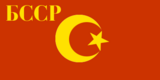
Geography
It bordered on the north-west by the Khorezm Socialist Soviet Republic , on the west on the Trans-Caspian region of the Turkestan ASSR , on the south by the Emirate of Afghanistan (through the Amu Darya and Pyanj rivers), on the east by the Ferghana region of the Turkestan ASSR, and on the north by the Samarkand and Syrdarya regions of the Turkestan ASSR . Turkestan ASSR was part of the RSFSR .
Government structure
The ruling party in the republic was the Bukhara Communist Party . The republic had its own armed forces - the Bukhara Red Army . The Bukhara NDS was transformed into the Bukhara SSR during the 5th and last All-Bukhara Congress of Soviets on September 19, 1924 . On the same day, the entry of the Bukhara SSR into the USSR as the union republic was announced. At the end of October of the same year, a national-territorial demarcation began in the USSR, and on October 27 the Bukhara SSR was abolished, and its territory was divided between the newly formed republics on the basis of nationality - the Uzbek SSR , the Turkmen SSR and the Tajik Autonomous Soviet Socialist Republic (as part of the Uzbek SSR).
Economics
The Bukhara ruble , the RSFSR ruble (Sovznaki) , the USSR ruble , and the Bukhara tanga were in circulation in the republic. The economy of the republic was based on agriculture (mainly the cultivation of vegetables and fruits , cotton and wheat ), animal husbandry (including astrakhan husbandry ), silkworm breeding , fishing (on the Amu Darya river and lakes of the republic), as well as folk crafts and crafts, such as carpet weaving , manufacture of ceramic dishes and products. The economy of the republic was closely connected with the economy of the Turkestan ASSR , which was part of the RSFSR .
Population
The official languages of the Bukhara SSR were Uzbek , Persian (Tajik) and Russian . The Bukhara SSR, like the Bukhara NDS, was a secular state , but the overwhelming majority of the population were Muslims, mostly Muslims - Sunnis , to a lesser extent Shia Muslims and Ismailis . Also, part of the population professed Christianity (mainly Orthodoxy ), as well as Judaism and Zoroastrianism . About two and a half million people lived in the republic. The bulk of the population were Uzbeks and Tajiks . Turkmens , Pamir peoples , Central Asian Iranians and Central Asian (Bukhara) Jews , as well as Russians , Central Asian Arabs , Tatars , Ukrainians and Kyrgyz , also lived in significant numbers.
Literature
- Bukhara People's Soviet Republic // = Great Soviet Encyclopedia . - Moscow: Soviet Encyclopedia, 1926-1990.
- Bukhoro Halқ Republican Council // = National Encyclopedia of Uzbekistan . - Tashkent, 2000-2005.
- Ishanov A.I. Bukhara People's Soviet Republic. Tashkent, 1969 (bibl. P. 381-390)
- The path of Bukhara and Khiva to socialism (History of the Bukhara and Khorezm people's Soviet republics), M., 1967
See also
- Bukhara People's Soviet Republic